


German, Austrian rebar price hikes gain acceptance
The latest announcements by German rebar mills of price hikes lifting base levels to €400/tonne ($461/t) appear to have been largely accepted by the market, Kallanish notes.
Mills are reportedly keeping their offer volumes low. In Austria, the Alpine price gap has virtually closed after the latest announcement from Italian mills.
According to German sources, the rise is seen across all domestic mills, and equals around €50/t, although in some cases more, depending on the previous level. Adding size extras of €265/t, the delivered price would come to €665/t, “and it will have to be paid,” a Ruhr-based buyer is sure.
Sources in Austria agree. The sudden hike seen in Germany at the end of last week is not being reported from Austria, where an announcement of more than €30/t came already, shortly after the US-Israeli attack on Iran.
Austrian sources also report a €30/t hike announcement from Italian mills, with the Italian domestic market striving for an increase of as much as €70/t.
To Austria, the latest offers are at €660/t delivered, so do not make much difference to the price of German mills. Observers note recent transport costs have risen to the point they eat up the price advantage of Italian mills.
The cost factor is a strong driver, with rising fuel and other energy prices looming due to the crisis in the Persian Gulf. Buyers express sympathy for the increases, but also note that demand on the market has not risen from its long-term trough.
One manager believes the current offers apply mostly to existing inventories at mills, “and once they are sold off, they might revert their prices”. He adds that fear of further hikes is the only cue that is making people buy.
However, another manager says such a move might be a good cause to spur activity. “As a trend, the customer buys when they believe prices will go up,” he says. He notes that mills are currently playing hard-to-get, offering only small volumes for sale, to keep avenues open for further increase.


European stainless flats prices gain momentum
European stainless flat prices continue to rise, with further increases expected on coils and sheets for June and July delivery compared with May offers, market participants tell Kallanish.
A large stainless steel processor says demand remains broadly unchanged from the second half of 2025, with no significant order intake increase. However, the supply chain has changed with very low imports and EU mill lead times now extending into late May.
Producers are expected to implement further price increases for cold and hot rolled coils for June and July delivery. Delivery delays are gradually improving, although some mills continue to face disruptions due to technical issues and other operational problems.
For May delivery, mills are quoting and agreeing CRC deals at €2,500–2,570/tonne ($2,877-2,960/t) delivered, while hot rolled coil is heard at around €2,300-2,350/t. HRC and CRC imports have both declined sharply in recent weeks due to CBAM, the upcoming safeguard changes and other protectionist measures. Some mills have already begun offering CRC at around €2,600/t delivered in certain markets for June delivery.
A mill source expects further increases in raw material, energy and logistics costs in the coming weeks. Another mill source says uncertainty remains over how far prices can be pushed given rapidly rising scrap costs.
According to the source, levels of around €2,600/t would only offset cost increases without restoring margins. For June and July delivery, CRC prices could rise to around €2,700/t, a third source suggests.
Another mill source highlights difficulties in securing raw materials, particularly scrap, as well as logistical constraints since the start of the conflict.
The second half of the year is expected to be seasonally weaker, and at price levels of around €2,600/t for CRC, mills would generate no profit.
At the same time, downstream demand remains subdued, with consumption still limited. Several buyers report shifting towards lower-priced products, saying they cannot afford higher price levels for larger volumes.
One buyer notes they are reducing purchasing volumes, while another comments that “distributors are not performing any better and are coming off a year of financial strain”.
Italy is lagging slightly behind northern Europe in terms of CRC prices, although the market has also seen a sharp increase in recent weeks. From levels of around €2,250/t delivered in February, buyers are now paying €2,470–2,480/t delivered for CRC.
Scrap prices are also rising. For April, mill sources and sellers expect 304 scrap to exceed €1,400/t. Mills have been using lower-cost semis and raw materials imported from Asia before the implementation of CBAM and are now turning to scrap, which is both expensive and in limited supply.
With scrap at these levels, sources expect CRC prices to move above €2,650/t in the coming weeks.
Placing orders for Asian coils would see deliveries in the third quarter, when the new safeguard measures will be in force. This, together with rising scrap prices, is providing strong support for further price increases.
One steel processor and coil producer says it is suspending sales for its products. It notes that the outlook for the first half of 2026 is largely set, with CRC prices and scrap costs continuing to rise and imports remaining limited due to protectionist measures. The outlook for the second half of the year, however, remains uncertain.
Meanwhile, service centres in northern Europe report improving activity, with a more positive order intake and increasing sheet prices to €2,700-2,750/t ex-works, Kallanish notes.

European domestic steel HRC prices steady amid import limitations, low consumption
European domestic prices for steel hot-rolled coil remained steady on Wednesday March 18 following prolonged limitations on imports resulting from trade regulations and shifting geopolitical dynamics, Fastmarkets understands.
The introduction of the EU’s Carbon Border Adjustment Mechanism (CBAM) early in the year, and the conflict in the Middle East disrupting normal trade flows, have shifted market dynamics toward domestic production.
According to market sources, prices will continue to rise as long as the US-Iran conflict persists, while market representatives also noted that real consumption in Europe was still low.
Fastmarkets’ daily steel hot-rolled coil index, domestic, exw Northern Europe, was calculated at €710.12 ($817.38) per tonne on March 18, down by €0.01 per tonne from €710.13 per tonne on March 17.
Estimates of tradable prices were heard around €700-720 per tonne ex-works, but no new trading was reported during the day.
The index was up by €4.14 per tonne week on week and by €47.31 per tonne month on month.
Meanwhile, in Italy, estimates of workable prices were heard around €700 per tonne ex-works, again with no fresh trading heard during the assessment period.
Fastmarkets’ daily steel hot-rolled coil index, domestic, exw Italy, was calculated at €698.33 per tonne on Wednesday, up by €0.83 per tonne from €697.50 per tonne on March 17.
The index was up by €9.58 per tonne week on week and by €43.33 per tonne month on month.

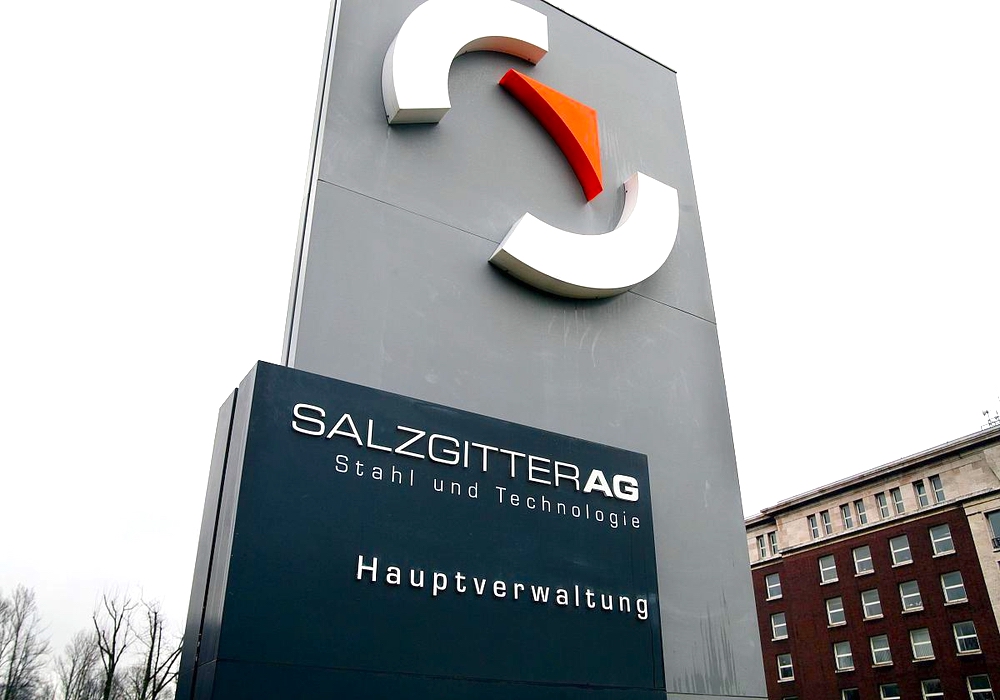
Salzgitter launches construction initiative to expand low-carbon steel solutions
Germany-based steel producer Salzgitter AG has announced that it has launched a new “Construction Initiative” aimed at strengthening its position in the construction sector by offering integrated steel solutions and low-emission products.
The initiative is designed to provide centralized access to the group’s full service portfolio for clients, planners and construction companies.
The launch highlights the company’s strategy to align its steel offering with decarbonization goals and evolving construction sector requirements, while strengthening its role as a partner for large-scale projects.
Integrated steel solutions for construction sector
Under the initiative, Salzgitter will combine the capabilities of its group companies to deliver coordinated products, services and technical expertise for construction and infrastructure projects. The company stated that closer integration within the group will enable more efficient project execution and reliable processes, supporting customers across the construction value chain.
A key element of the initiative is the offering of low-emission steel products under the SALCOS® program, which is part of Salzgitter’s broader decarbonization strategy.
Supporting infrastructure and circular economy solutions
Salzgitter stated that the initiative combines:
- carbon-reduced steel products,
- technological expertise,
- and reliable supply chains,
while also incorporating circular economy principles into construction solutions.
The company added that the initiative is intended to support the sustainable expansion of infrastructure projects in Germany.


Assofermet: Increased prices risk undermining EU downstream sector
Concerns are growing in the flat service centre segment over the ability of European manufacturers to absorb the rising prices, Kallanish learns from a note by Italian trade association Assofermet.
Market conditions continue to be characterised by complexities and concerns surrounding CBAM, the new safeguard measures and increasing costs linked to the US-Iran conflict. Increasing costs and prices may lead to the gradual loss of competitiveness of the European manufacturing sector and the relocation of certain production facilities to third countries. This is due to the ongoing uncertainty and implementation challenges surrounding CBAM and other trade measures, the note warns.
The conflict in the Middle East is adding pressure to an environment that remains “complex and highly volatile”.
Moreover, the new safeguard measures will entail a significant reduction in available quotas and a sharp increase in duties on out-of-quota import volumes for coils, as well as the extension of anti-dumping duties on cold rolled coils from key exporting countries.
“The resulting regulatory framework, [which is] complex and particularly burdensome, is expected to lead to a structural increase in the cost of imported steel in Europe, while at the same time strengthening the position of EU producers in pursuing higher price levels,” the note states.
The past month was characterised by generally weak trading activity in the flats segment, in line with the trend already seen in January. Service centres showed limited interest in purchasing coils, while end-users restricted procurement to immediate needs. Regarding CBAM, the European Commission has indicated that, at this stage, default country values should be used as the basis for calculating costs, the note concludes.

EU to support energy-intensive sectors with temporary decarbonization fund propos
The proposal presented by the Commission on December 17, 2025, covers producers in the aluminum, fertilizer, iron, and steel sectors, as well as other energy-intensive sectors at risk of carbon leakage.
The gradual phasing out of free allocations for CBAM-compliant products under the EU Emissions Trading System (ETS) by 2034 places exporting EU producers at a competitive disadvantage in international markets. In this context, the Temporary Decarbonization Fund (TDF) will act as a temporary bridge solution and provide short-term support for specific products during the 2026-2027 production period.
The proposed fund will be financed by 25% of the revenues generated by member states from CBAM certificates, and the total resources of the fund are estimated at approximately EUR 633 million. The fund will be directed exclusively toward producers of designated energy-intensive products, with applications to be accepted in 2028 and payments to be made in 2029.
For the fund to be applicable, operators must have implemented energy audit reports or committed to investments in equivalent emission reduction measures. Applications will be evaluated by national competent authorities, and the amount of support will be calculated based on the losses incurred due to the removal of free allocations.
The EU Commission will implement the TDF through a direct management model, and national competent authorities (NCA) will review applications and process payments. Details of the support provided under the fund will be reported to the EU legislative bodies by the end of 2030.
Sector representatives and experts have concerns regarding the temporary and limited scope of the fund. Eurofer criticized the narrow range of products covered by the fund and its short duration, while the European Aluminium Association demanded specific solutions for exports. Environmental organizations, on the other hand, warned that the fund could undermine the integrity of carbon pricing.
The EU Commission stated that the TDF aims to reduce the risk of carbon leakage in energy-intensive sectors during the ETS and CBAM compliance process and to provide support to producers during the transition period.


Italy’s crude steel production increased by 2.6% in february
According to data released by the Italian Steel Producers’ Federation (Federacciai), the country’s crude steel production increased by 2.6% y-o-y in February, reaching 1.9 million tons. Following the 1.6% increase recorded in January, the recovery in production was seen to be gaining momentum.
When the first two months of the year are evaluated together, Italy’s total crude steel production rose to 3.6 million tons, a 2.1% y-o-y increase. This confirmed that the recovery trend observed in the Italian steel sector in 2025 has carried over into 2026.
In the hot-rolled product group, the divergence between long and flat products continued. Production of long products for the construction sector increased by 5.0% y-o-y in February to 1.1 million tons, while it rose by 8.6% y-o-y to 2.1 million tons in the first two months of the year. In contrast, flat product production for the automotive, machinery, and white goods sectors decreased by 7.4% y-o-y in February, remaining at 737,000 tons. In the first two months, flat product production fell by 4.4% y-o-y to 1.5 million tons.

Tata Steel UK’s support for circular economy initiative
The initiative launched nationwide brings together organizations from different sectors to encourage practices such as reuse, remanufacturing, and high-quality recycling.
Tata Steel UK, which is among the founding signatories, will collaborate with sector stakeholders to integrate circular thinking into its business processes and contribute to the large-scale implementation of solutions in this field. This step by the company is considered an important part of its strategy to transition to a more sustainable and resource-efficient model in steel production.
Electric arc furnace transformation stands out
Tata Steel UK CEO Rajesh Nair stated that the company is entering a new era in steel production, noting that recycling will be placed at the center of operations with the transition to electric arc furnace (EAF) technology. Nair emphasized that thanks to this transformation, high-quality, UK-made steel will be produced using more sustainable methods.
With the company’s transition to an EAF-based production model, it is planned to use UK-sourced scrap steel as the primary raw material. This approach aims to contribute to the more efficient use of resources by increasing circularity in the steel value chain.
Acting in partnership with the supply chain
Rajesh Nair drew attention to the importance of close collaborations to be established with the supply chain, stating that in this process, waste will be reduced, resources will be used more wisely, and the resilience of the UK manufacturing sector will be strengthened.
The initiative in question will initially be supported by a task force consisting of organizations from different sectors. Through this structure, it is aimed to expand circular economy practices, implement practical solutions, and share the experiences gained.
The fact that steel can be recycled, reused, and repurposed repeatedly without loss of quality places the sector at the heart of the circular economy, while Tata Steel UK’s participation in this initiative stands out as an important step reinforcing the company’s sustainable production approach.

Dillinger’s Power4Steel Project awarded in Europe
