


ArcelorMittal pushes EU coil offers up EUR50/t
ArcelorMittal has increased domestic coil offers by EUR50/t compared to previous offers, market sources told McCloskey on 17 February.
The new target prices for May shipment were reported at EUR750/t delivered for hot-rolled coil, at EUR880/t delivered for cold-rolled coil and at EUR870/t delivered for hot-dipped galvanized coil. The steelmaker had previously increased offers by EUR50/t in January and by EUR30-40/t in December.
Several market sources reported the new offers have already been sent to buyers, while some market participants said they were yet to receive official offers, but that sales representatives of the steelmaker confirmed the intent to increase offers to the aforementioned levels.
Sources were somewhat bemused by the higher offer levels given the previous target prices were reportedly not achieved in deals they said.
McCloskey assessed domestic prices for HRC in Northwest Europe at EUR655/t ex-works on 13 February, based on a few deals and offers heard at EUR640-670/t ex-works.
At the beginning of the week, some sources reported transactions for domestic HRC around EUR690-700/t delivered, but the information was not widely confirmed in the market, and some integrated mills were reported giving offers at around EUR645/t ex-works.
The upbeat sentiment of January has turned gloomier in February due to lack of real demand recovery. In addition, concerns have grown the domestic price rise and growing protectionism in steel imports will open the door for the import of steel containing goods into the EU.
And while the European authorities are planning to address this issue, some market participants believe that any remedies would not be introduced in a timely manner.
While these concerns are acknowledged by both buyers and sellers in Europe, the majority of sources remain bullish in the price outlook, although questioning the pace of the current price hike.
The introduction of the Carbon Border Adjustment Mechanism (CBAM) in 2026 and the anticipated reduction of import steel quotas by 47% has already made European buyers more cautious regarding importing steel. As a result, domestic mills are expected to grow market share, replacing overseas material and somewhat offsetting the effects of the lack of real demand improvements.


Relaxation to CBAM suspension clause likely: Commission
A representative for the European Commission suggested that a proposed suspension clause for the EU’s Carbon Border Adjustment Mechanism (CBAM) is unlikely to be implemented in its current form, as stated in an industry webinar 18 February, alluding to backlash that the provision undermines operational certainties.
The webinar was hosted by the Sustainable Procurement Pledge, on the topic of CBAM readiness and preparatory best practices, featuring speakers from the European Commission and CBAM software platform and consultancy, CBAMBOO.
Article 27a was presented as an inserted amendment to the CBAM regulation as part of the Commission’s CBAM extension proposal in December, and would authorize the Commission to remove goods from the scope of the regulation, potentially with retroactive effect, “[w]here the Commission, taking into account the relevant evidence, considers that the inclusion of a good […] causes severe harm to the Union internal market due to serious and unforeseen circumstances related to the impact on the prices of goods.”
Martin Becker, the Deputy Head of Unit of the Directorate-General for Taxation and Customs Union (DG TAXUD) responsible for CBAM, stated that Article 27a was “very unlikely” to be implemented in its proposed form by EU co-legislators, clarifying that the intention of the measure was to protect against “truly extraordinary” circumstances such as “war or a pandemic,” rather than the more general inflationary effect of the regulation on the EU market.
Becker’s comments were in response to speaker Gabriel Rozenberg, CEO of CBAMBOO, questioning the logic of embedding a retroactive suspension clause into a framework that has already been plagued by myriad uncertainties and delays.
While the steel manufacturing sector has not been as visible as other sectors in calling for a suspension of CBAM for steel goods, instead preferring to pressure for a broadened and more immediate extension to downstream steel-consuming imports, visible weaknesses in the framework could threaten to undermine companies’ willingness to invest in CBAM preparedness.
Pauline Miquel, Policy and Research Lead at CBAMBOO, spoke with McCloskey to clarify further:
“It’s great to hear the Commission clarify the intentions behind Article 27a and put to rest a lot of the speculation we have witnessed in the markets as a result of the uncertainties. Clarification on the legislative process was sorely needed.
“Fertilizer importers in particular have been extremely hesitant to engage in any kind of international transactions, and in some cases the noise has resulted in importers assuming that this clause is already in effect, when in reality we are still just at the proposal stage. This also touches on decarbonization investments, as producers globally are obviously unwilling to commit at scale if policy change will later invalidate their efforts.”
Ahead of last week’s European Industrial Summit in Antwerp, industry organizations including the Business for CBAM Coalition “represent[ing] industrial champions investing in clean hydrogen, ammonia, steel, and fertilizers both within and outside the European Union” singed a joint letter calling on the European Commission to remove Article 27a on similar grounds of operational and investment certainty.
ArcelorMittal recently confirmed intentions to proceed with their decarbonization investments at their Dunkirk plant (though at a reduced scale of development of only a single EAF, and no direct-reduced iron facilities), directly attributing the investment decision to CBAM’s improvement to the outlook for domestic industrial competitiveness.
Separately, Becker also addressed the delay to the drafting and official publication of relevant implementing acts, admitting that the drafting process had been more complex than anticipated, describing the context of uncertainty as “very bad” for European importers. The latest of the implementing acts on CBAM’s technical application (concerning the default values) was published in the EU’s Official Journal on the very last day of 2025, giving importers the minimum possible notice on official calculation metrics for their CBAM costs.
The regulatory delays were primarily caused by issues with the creation of the Commission’s default emissions values dataset – especially as relates to the iron and steel sector – which were consolidated from global public databases using a model designed by the Joint Research Centre.
The default values – both as embedded into official EU legislation and published in an excel file on the Commission’s CBAM webpages – contain errors, such as for steel imports from North Macedonia and Taiwan, China which Becker said would be fixed as soon as possible, though the legislative design of the regulation presents difficulties in how best to correct the values. Becker also stated that no substantive changes would be made to the default values at said time, as a result of engagement with industry stakeholders.

German environment minister demands domestic steel in cars
German environment minister Carsten Schneider has called on carmakers to source their input materials from domestic producers.
“We should expect more patriotism from the automotive groups for their home location,” he told daily newspaper Frankfurter Rundschau. With domestic, Schneider is referring in particular to Germany, but also to the larger European Union, Kallanish understands. “In Europe, we should prefer purchasing from European suppliers,” he is quoted as saying.
He added that Germany needs a functional steel industry of its own, to be independent and strong. He dismissed proposals to relocate the upstream phases of steel production to offshore places like Saudi Arabia and have only processing and refinement done in Germany.
“I favour lead markets for steel made from green hydrogen,” he said and expressed regret that carmakers are still reserved in that respect. He proposed that plug-in hybrid cars could offset their higher emissions if low-emission steel is used in their assembly. He noted this is the German position in Brussels, and “I am aware that not everybody in the industry likes that”.
German car production fell by 9% on-year in January to some 306,000 passenger cars, partly due to there being one fewer working day than last year. However, registrations of fully and partially electric cars rose by almost 23% to just over 64,000 units, according to carmakers federation VDA.


UK’s TRA amends TRQ for merchant bars, sections
The UK’s Trade Remedy Authority is recommending that the tariff-rate quota on category 12A products – alloy merchant bars and light sections – be varied following a review, Kallanish reports.
This comes following a review requested by the Confederation of British Metalforming (CBM), alleging a change in circumstances with “no current viable domestic production” of the products.
Data in the Statement of Intended Final Determination show trade flows of the product category have changed since 2017/18. Total import volume has “massively” increased, led by a significant rise in the quantity of goods imported from Spain and Poland, while imports from nearly all other sources have decreased significantly.
The period of investigation for the review was 1 October 2024 to 30 September 2025. During this time, there was a 62% increase in volume to 94,009 tonnes versus June 2017-2018.
Much of the review focuses on the status of Speciality Steel UK (SSUK), amid claims production of goods in the scope ceased production in 2025. SSUK, registered as an interested party, said it has the capabilities to produce these goods but did not provide evidence supporting this, nor addressed the allegations of mothballing at the Rotherham site.
The review notes the winding up and appointment of the Official Receiver for SSUK in August 2025.
Several downstream importers registered to the case, including Solid Swivel, Cooper and Turner, and Tinsley Bridge, stated they attempted to procure category 12A products during the POI from SSUK and were unsuccessful.
While the TRA does consider this to be a change in circumstance, it also says “there is sufficient evidence that UK producers have not ceased production of category 12A goods, and we therefore do not have the legal power to revoke the TRQ for category 12A,” following submissions by 7 Steel and British Steel.
“We have therefore concluded that the safeguard measure is appropriate to allow downstream users of category 12A products to purchase imports without a significant risk of incurring the out-of-quota safeguarding duty, and therefore the amount of tariff rate quota is appropriate for domestic market conditions,” it adds.
The TRA intends to recommend a varying of the allocation of the quota such that it applies only to category 12A goods produced in the UK during the POI. This would see the measure varied to no longer allocate imports of the following commodity codes to the TRQ for category 12A: 7228 3041 00; 7228 3061 00; 7228 3069 00; 7228 3020 00; 7228 3070 00; 7228 6020 00.
The safeguard measure should be varied to only allocate imports of the following commodity codes to the TRQ for category 12A: 7228 3089 00; 7228 7010 00.

European leaders seek ETS review amid energy concerns
Several European country leaders are urging the European Commission to review the ETS system, Kallanish learns.
Italy’s president Giorgia Meloni, Germany’s Chancellor Friedrich Merz and Belgian’s Prime Minister Bart De Wever as well as several other country leaders held an informal meeting last week in Alden Biesen, Belgium, to discuss European competitiveness. The focus of their meeting was regulatory simplification, a reduction of energy prices as well as trade policies.
Meloni has called for a rapid revision of the ETS mechanism and a stop to the “financial speculation” behind the system, she has reportedly told the press on the sidelines of the informal meeting.
Amongst other measures to relaunch the European industry Meloni states that one of the main issues is the energy costs and the revision of other systems such as CBAM is necessary for Europe’s industrial relaunch.
“For our country, where unlike in the rest of Europe natural gas-fired generation is the main source of electricity production, the distortion created by the ETS system is particularly significant. The specific nature of our energy mix, combined with the ETS framework introduced in Brussels, has resulted in Italy having the highest electricity prices in Europe for too long,” Antonio Gozzi, president of steel producers’ association Federacciai says in a note obtained by Kallanish.
“This has forced the government to introduce protection measures for energy-intensive consumers, who are fully exposed to the unsustainable price gap compared with their counterparts in France and Germany. Now that the issue has formally been raised at EU level, it will be essential to follow the dossier closely and consistently, in the interest of national competitiveness and the coherence of European energy policies,” he adds.
Gozzi says that for the first time, the issue of ETS shortcomings has been placed at the centre of the political debate in Brussels.
Commission President von der Leyen has outlined the actions needed to strengthen Europe’s competitiveness, speaking at the Parliament plenary session, the Antwerp European Industry Summit and at an informal leaders’ meeting in Alden Biesen. “We have the second-largest economy in the world, but we are driving it with the handbrake on,” she says in her statement following the informal retreat obtained by Kallanish.
“To the next European Council, I will bring different options and findings on whether it is time to move forward on the market design or whether we are still good on this market design. And we will come as planned and as it is in the law with an ETS review,” she states.
ArcelorMittal increases longs prices: sources
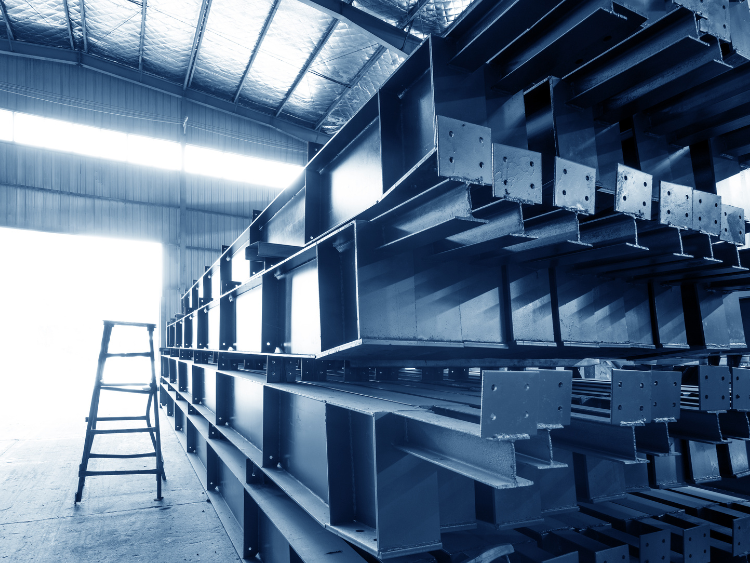
ArcelorMittal is pushing up prices by €20/tonne ($23.73/t) for new contracts across the commodity grades of its long products portfolio, including rebar, sections and wire rod, sources in the market tell Kallanish.
The move follows a €20/t rise implemented in January and brings total increases to around €70/t compared with the lowest levels recorded last October.
The price hike is said to be driven by further production cost increases pushing several other longs producers in different countries to also implement increases of €20-30/t, another sections producer confirms.
The market leader’s hike is mostly driven by the €40/t average rise in scrap prices in Europe compared to the levels seen in the fourth quarter, alongside elevated gas and electricity prices. Energy costs have increased this winter by between 35% and 80% depending on each European country. The high production costs are further squeezing producer margins and reinforcing the need to restore sustainable pricing.
With the construction high season approaching, sources expect activity to improve. Some distributors report early signs of restocking, although overall demand remains uncertain, Kallanish notes.

EU coil mills ‘play stop-and-go’ with offers
Reports of a new €50/tonne ($59) coil price hike by the market leader are yet to reach some northwestern European market participants, but sources were anticipating an increase after mills fell silent last week.
Last week, various buyers told Kallanish that some mills had left the market after collecting sufficient orders and were not providing new quotes or replying to enquiries. “They know how to play the game, and it changes daily,” one said. The tactic is not alarming buyers, however, as demand remains weak and they feel in no rush to conclude purchases.
“Mills played a bit of stop-and-go to test the market for the price they can realistically ask for, and to avoid betting too low,” one buyer notes.
The mark of €700/t ($828) for hot rolled coil, as defined by the market leader, was not yet achieved in transactions, and yet that supplier is now quoting €750, according to some sources (see separate story).
Still, “as we [transactions] were coming nearer to the €700 defined earlier, it does make some sense to ask for even more at an early stage,” one German manager says. He notes that he has not heard of the latest hike himself, neither directly nor through others. But, “knowing how the game goes, only this morning I imagined something like this would come soon.”
So far, German market participants see the upper end for HRC at around €670/t, while €680 is heard from the Benelux. When some mills previously left the market, they meant to return with a new offer soon. This was expected to be €700, according to a Dutch manger, or still below that, according to a German source. Neither foresaw €750/t.
Nevertheless, it will not mean a sudden leap, “but a phased repositioning of the price level”, the Dutchman says. He expects that offer validity periods will be shortened, discounts reduced, and delivery times stretched as rolling schedules are well-booked.

European CRC, HDG prices aided by changing landscape for importers
European flat steel prices increased in the week to Wednesday February 18 amid heightened pressure on imports from new regulations, although higher offers are still not achieved in the market, Fastmarkets heard.
According to sources, the domestic market has seen some improvement since the introduction of the EU’s Carbon Border Adjustment Mechanism (CBAM) earlier this year, which has affected buyers’ appetite for imported products.
“There is low interest in imports because they have become too risky,” a distributor source said, adding that there is a “big focus” on domestic production.
With limited supply of imported materials due to regulatory changes, and increasing trade risks, domestic producers have found themselves in a better position to push for higher offers, Fastmarkets understands.
Northern Europe
In Northern Europe, mills were heard offering April delivery CRC at around €795-830 per tonne ex-works. However, these levels were yet to be reflected in transactions.
Estimates of tradable market levels were heard hovering €770-780 per tonne ex-works, compared with €760-770 per tonne ex-works during the previous assessment period.
Fastmarkets’ weekly price assessment for steel cold-rolled coil domestic, exw Northern Europe was €770-780 per tonne on Wednesday, rising from €760-770 per tonne the previous week.
According to a market source, mills are looking to achieve levels closer to €800 per tonne for CRC, which they said are “absolutely not workable” as buyers are not in a hurry to make “big decisions”.
Meanwhile, CRC import prices for Northern Europe were stable for CFR, while DDP prices edged up slightly.
Fastmarkets’ weekly price assessment for steel cold-rolled coil, import, cfr main port Northern Europe was stable at €630-660 per tonne on Wednesday, unchanged week on week.
Fastmarkets’ weekly price assessment for steel cold-rolled coil, import, ddp Northern Europe was €730-770 per tonne ex-works on Wednesday, widening up from €730-760 per tonne the previous week.
The lower end of the assessment was pegged on offers from Brazil at €730 per tonne DDP, while the upper end represents offers from China and South Korea, heard hovering €760-770 per tonne DDP.
No new trading activity was reported during the assessment period.
On the other hand, domestic HDG coil prices also increased in Northern Europe.
Fastmarkets’ weekly price assessment for steel hot-dipped galvanized coil domestic, exw Northern Europe was €770-780 per tonne on Wednesday, rising from €760-770 per tonne the previous week.
Estimates of workable levels were heard hovering €770-780 per tonne ex-works, compared with €760-770 per tonne ex-works the previous week.
Higher offers were also reported at €790-820 per tonne ex-works, but no transaction was heard at those levels.
Regarding HDG import prices in Northern Europe, DDP levels narrowed in the week to Wednesday, while CFR levels remained stable.
Fastmarkets, weekly price assessment for steel hot-dipped galvanized coil import, ddp Northern Europe was €760-770 per tonne on Wednesady, narrowing up from €740-770 per tonne the previous week.
The lower end of the assessment is pegged to an offer from Vietnam heard at €760 per tonne DDP, while offers from other Asian origins were also reported within the range of €760-770 per tonne DDP.
Fastmarkets’ weekly price assessment for steel hot-dipped galvanized coil import, cfr main port Northern Europe was stable at €650-700 per tonne on Wednesday.
Sources attributed the lack of offers for imported HDG to complications with CBAM and safeguard measures.
Southern Europe
Domestic CRC and HDG prices in Southern Europe were mostly stable in the week to Wednesday, despite reports of higher offers in the market.
For domestic CRC, offers were heard hovering €800-820 per tonne ex-works, but these levels had not been yet reflected in transactions.
An offer for May-delivery CRC was also heard at €865 per tonne ex-works but was discarded as it fell outside Fastmarkets’ specified timeframe for evaluation.
Fastmarkets’ weekly price assessment for steel cold-rolled coil domestic, exw Southern Europe was €770-780 per tonne ex-works, unchanged week on week.
The lower end of the assessment was pegged to a deal heard at €770 per tonne ex-works, while estimates of workable levels were reported around €780 per tonne ex-works.
Meanwhile, Fastmarkets’ weekly price assessment for steel hot-dipped galvanized coil domestic, exw Southern Europe was €775-780 per tonne on Wednesday, narrowing up from €770-780 per tonne the previous week.
Estimates of workable prices were heard around €775-780 per tonne ex-works.
Higher offers were also reported within the range of €790-820 per tonne ex-works, but no transaction was reported happening at those levels.
An offer for May-delivery HDG was also heard at €855 per tonne ex-works but was discarded as it fell outside Fastmarkets’ specified timeframe for evaluation.
Regarding imported CRC to Southern Europe, DDP levels increased in the week to Wednesday, while CFR levels were stable.
Fastmarkets’ weekly price assessment for steel cold-rolled coil import, ddp Southern Europe was €730-780 per tonne on Wednesday, compared with €710-750 per tonne the previous week.
The lower end of the assessment matches offers from Brazil heard at €730-740 per tonne DDP, while the upper end of the assessment matches offers from South Korea heard at €780 per tonne ex-works.
Fastmarkets’ weekly price assessment for steel cold-rolled coil import, cfr main port Southern Europe was €620-650 per tonne on Wednesday, unchanged week on week.
Fastmarkets’ weekly price assessment for steel hot-dipped galvanized coil import, ddp Southern Europe was €750-770 per tonne on Wednesday, narrowing up from €740-770 per tonne the previous week.
The lower end of the assessment matches an offer from Taiwan heard around €750-770 per tonne DDP, while offers from other Asian origins were heard within the range of €760-770 per tonne DDP.
A bid was also reported at €750 per tonne DDP.
On the other hand, Fastmarkets’ weekly price assessment for steel hot-dipped galvanized coil import, cfr main port Southern Europe was stable at €660-700 per tonne on Wednesday.


Italian rebar prices extend decline; other markets hold firm
Rebar prices in the domestic market of Italy continued moving downward in mid-February while other European markets remained firm, Fastmarkets heard on Wednesday February 18.
“Unfortunately, weather conditions are not in our favor. It has been raining for quite some time and this doesn’t help construction activities,” a cut-and-bend producer said.
“Rebar price continues to be under pressure,” a trading source said.
Prices varied within the range of €565-600 ($668-709) per tonne ex-works during the reported week compared with €570-620 per tonne ex-works a week earlier. Prices closer to the lower end traditionally refer to northern regions while the upper end refers to the south.
Fastmarkets’ weekly price assessment for steel reinforcing bar (rebar) domestic, exw Italy changed accordingly, falling to €565-600 per tonne on February 18 from €580-620 per tonne ex-works on February 11.
In Spain, meanwhile, rebar prices remained strong with the base price, which corresponds to 16 mm diameter 12 m length material, hovering at €665 per tonne ex-works. The average extra for other diameters is said to be €15 per tonne.
Thus, Fastmarkets’ weekly price assessment for steel reinforcing bar (rebar) domestic, delivered Spain remained stable on February 18 at €665-680 per tonne.
In northern Europe, prices also remained stable although market participants noted some tension between buyers and sellers.
Sellers in the region are trying to at least maintain prices, referring to high production costs, particularly scrap and electricity, while buyers cite sufficient stocks and a lack of demand, which is traditional for the winter season, which this year is tougher than normal.
Offers for rebar varied within the range of €615-640 per tonne delivered, depending on supplier and country, with higher levels traditionally observed in the Netherlands and Nordic countries while the lower end is for Germany and Austria. Estimates of workable prices in the latter were heard at €610-620 per tonne delivered.
Fastmarkets’ weekly price assessment for steel reinforcing bar (rebar) domestic, delivered Northern Europe continued varying within €610-640 per tonne, stable week on week.
European steel HRC prices up again on firm offers, strong order books at local suppliers
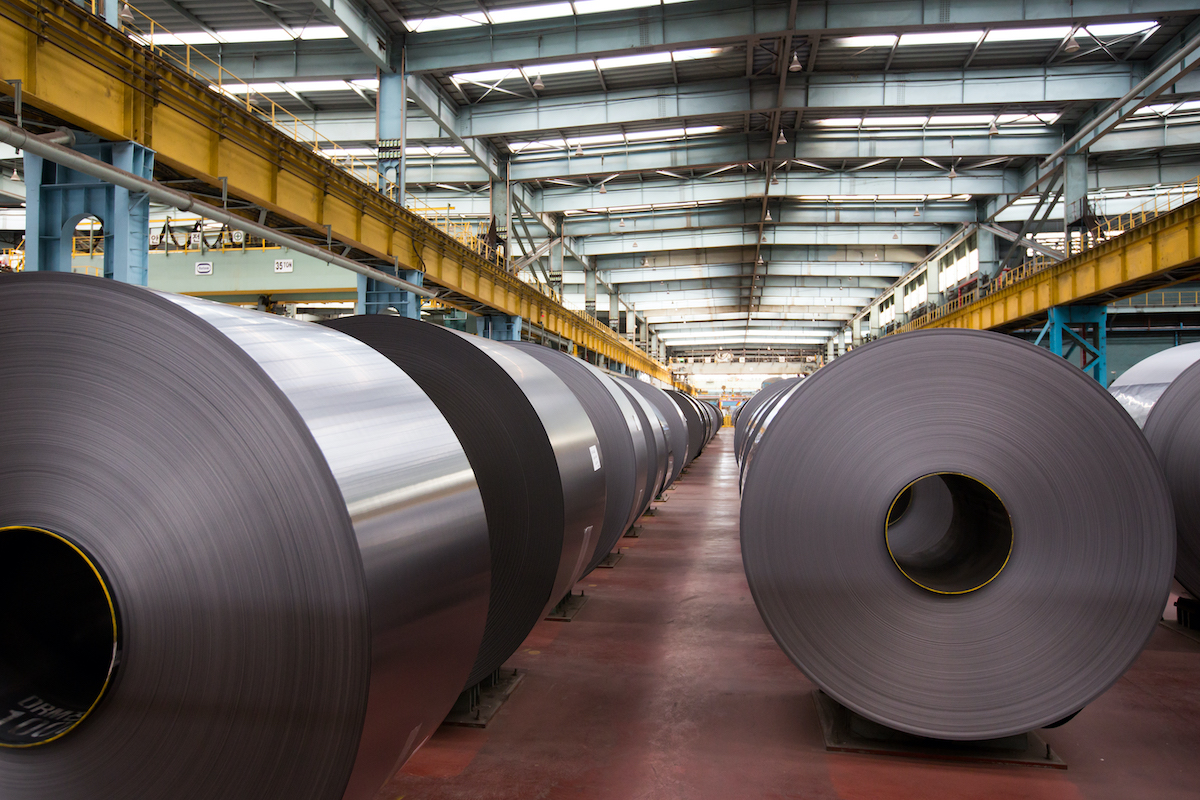
European prices for steel hot-rolled coil (HRC) have gone up in the latest trades, following ArcelorMittal’s move to increase offer prices for May-delivery coil, Fastmarkets heard on Thursday February 19.
Even though transaction prices are still lagging behind offer levels, sentiment was still firm, supported by the effects of trade regulations on new imports and good order books at European mills.
In Northern Europe, transactions were heard at €680 ($807) per tonne ex-works in Germany and the Benelux area.
German suppliers were said to be hoping for €700 per tonne delivered (around €685 per tonne ex-works) with minor tonnages of April delivery coil said still to be available.
Italy-origin coil was offered to Germany at €700-720 per tonne delivered with April and May lead times.
Several market sources noted that availability of Italian coil in Germany has been lower over the past few weeks because Italian suppliers preferred to focus on domestic sales.
“Italy is missing import tonnages because of the Carbon Border Adjustment Mechanism [CBAM] and local mills can get better prices there,” a buyer source in Italy said.
In the Benelux area, offers of May-delivery HRC were reported at €680 per tonne ex-works from one supplier.
Earlier this week, leading European flat steel producer ArcelorMittal increased prices for HRC with May lead times to €750 per tonne delivered (around €735 per tonne ex-works).
“ArcelorMittal’s move gave the market another push. Even though they are not achieving these new offers in deals, overall prices continue to climb and other suppliers are pushing offers up as well,” a trading source in Germany said.
Domestic prices for coil across Europe continued to strengthen, following the ArcelorMittal move, even though some buyers remained skeptical about the sustainability of the current uptrend, citing a lack of support from real steel consumption.
As a result, Fastmarkets’ daily steel hot-rolled coil index, domestic, exw Northern Europe, was €671.50 per tonne on Thursday, up by €8.69 per tonne from €662.81 per tonne on Wednesday.
The index was up by €16.50 per tonne week on week and by €30.87 per tonne month on month.
Another market source pointed out that ArcelorMittal’s new offers to the spot market were actually in line with, or even exceeded, long-term contract prices for the first half of 2026, which was a rather unusual situation.
“Some long-term HRC contracts for the first half of 2026 with automotive [original equipment manufacturers] were finalized at slightly above €700 per tonne, which is very close to the spot market now. So for the second half of 2026, mills will definitely try to get substantial increases [for contracts],” a steel-service center (SSC) in Germany said.
“Spot sales might not be actually very interesting for European mills that have contracts with automotive OEMs,” a second SSC said. “They are well booked so far. [European producers] need to give a clear signal to end-users that prices [for flat steel] are rising in the spot market in order to strengthen their position in the second round of negotiations [of long-term contracts for the second half of 2026].”
In Southern Europe, meanwhile, Fastmarkets’ daily steel hot-rolled coil index, domestic, exw Italy, was calculated at €662.50 per tonne ex-works on Thursday, up by €7.50 per tonne from €655.00 per tonne on Wednesday.
The index was also up by €11.50 per tonne week on week and by €30.83 per tonne month on month.
Italian integrated suppliers were heard to be hoping for €720 per tonne delivered (around €705 per tonne ex-works) for May-delivery HRC, although April-delivery coil was heard still to be available.
Re-rollers were offering their last tonnages of April-delivery coil at lower prices, with market sources reporting prices of €660-670 per tonne ex-works. But target offers for May delivery were heard at €700 per tonne ex-works.
Buyers estimated achievable prices at €660-670 per tonne ex-works.
In the secondary market, meanwhile, 4mm HR sheet was on offer around €750-760 per tonne delivered, up slightly week on week. But market source said that SSCs that were using old HRC feedstock for production had practically run out of stock, so new offers were likely to increase to around €800 per tonne CPT, taking into consideration more expensive HRC.
Meanwhile, in the import coil market, because of the CBAM cost uncertainty, import purchases on a CFR basis were no longer viable for many buyers, leaving DDP-based bookings – with CBAM costs at least partly incorporated – as the only practical option, typically offered by large trading houses.
Market sources reported a transaction for 20,000 tonnes of Turkey-origin HRC around €630-650 per tonne DDP to Italy, inclusive of CBAM costs.
Indian HRC was offered to Europe around $600-620 per tonne CFR.
Several market sources also reported offers of Indonesian coil at €475 per tonne CFR – but this was before Lunar New Year celebrations in Asia. One source suggested that Indonesian material was offered at lower prices than other origins due to extremely high default emissions values for Indonesia, which were making this origin more risky and therefore less attractive for European buyers.