


European Parliament approves steel trade regime interinstitutional negotiations
The European Parliament plenary has confirmed the International Trade Committee (INTA)’s decision to enter into interinstitutional negotiations on the proposed new steel trade regime.
The Parliament, Council and Commission have now been authorised to negotiate the final wording of the document, before it goes back to Parliament for a reading. Time is of the essence, as once this is completed, the Commission will still need to negotiate access to the EU steel market with free trade agreement partners, before the new measure is due to come into force from 1 July, Kallanish notes.
INTA voted last month to approve the proposed new steel trade regime with amendments.
The committee has since released a document summarising its position. It says the proposed measure needs regular evaluation to ensure production increases at highly competitive companies and it “goes hand in hand with efforts to ringfence export markets and cooperation in fighting global overcapacity together with likeminded trading partners”. Annual reporting would be in line with this type of trade instrument, it adds.
The importance of the melt and pour rule was also stressed, to ensure product traceability and prevent circumvention. It is proposed that importers provide “verifiable” evidence at the moment of importation. This includes a mill certificate issued by the original steel producer, identifying the corresponding heat number and containing the technical and production data necessary to trace the origin of steel.
Steel imports from Russia and Belarus are banned. Slab imports from Russia, currently exempted and receiving a quota, are to be reviewed.
“For products currently subject to derogation under Article 3g(1), point (d), of Council Regulation (EU) No 833/2014 until 1 October 2028, a significant price gap has been materialised since the Russian invasion in 2022 between products originating from Russia vis-à-vis other third countries, and such products originating from Russia have increased their market shares in relation to other third countries, especially in relation to Ukraine,” the document states.
“Those import flows also provide the Russian Federation with significant revenues, thereby directly contributing to its ability to sustain its war of aggression, while simultaneously maintaining strategic dependencies. The Commission should deliver an assessment of Union industry’s substantially unutilised capacity to supply such products”, with a view to phasing out slab imports from Russia.


Salzgitter acquires German steel processor Thyrolf & Uhle to bolster defense offerings
Salzgitter has acquired Thyrolf & Uhle, a German steel processor specializing in ballistic protection components, as the second-largest German steelmaker seeks to expand its presence in Europe’s growing defense sector.
The deal, announced on Feb. 11, gives Salzgitter access to Thyrolf & Uhle’s expertise in processing high-grade security steels, including 400, 450, 500, and 600 SECURE grades used in military vehicle construction and infrastructure protection, the German steelmaker said in a statement.
Thyrolf & Uhle, based in Dessau-Rosslau with around 100 employees, processes over 12,000 metric tons/year of steel at its facility and holds key certifications for manufacturing ballistic protection components under German military standards TL-2350-0000 and DIN 2303 Q3 BK.
The acquisition positions Salzgitter to capture growing demand for armored steel components as European nations boost defense budgets, the company said in the statement.
“This acquisition marks a further step in our active portfolio management involving targeted acquisitions in growth markets,” said Gunnar Groebler, CEO of Salzgitter AG. “Germany and Europe need an efficient defense industry with a qualified materials base in order to prevail in the face of geopolitical upheaval. This is precisely where we as Salzgitter AG are strengthening our offerings,” Groebler added.
Germany announced plans to significantly increase military spending following Russia’s invasion of Ukraine in 2022, driving demand for specialized steel products used in military vehicles and protective infrastructure.
Thyrolf & Uhle has operated as a steel processor since 1859, providing steel construction, component manufacturing, and sheet metal processing services. The company supplies steel components for both civil and military vehicle construction across Germany and Europe.
Financial terms of the transaction were not disclosed, with the transaction subject to the fulfillment of the agreed closing conditions, in particular, official approvals.
Platts, part of S&P Global Energy, assessed Feb. 10 domestic hot-rolled coil in Northern Europe at Eur650/mt ex-works Ruhr, stable day over day.


European carbon prices slide as Germany’s Merz says EU ETS may need revamping
European carbon prices were trading near six-month lows on Feb. 12 after German Chancellor Friedrich Merz said the EU’s Emissions Trading System should be revised or postponed if it undermines industrial competitiveness, comments that could reshape debate at an EU leaders’ summit.
EU Allowances stood at Eur73.01/mtCO2e ($86.75mtCO2e) at 1207 GMT on Feb. 12, the lowest since Aug. 14, according to Intercontinental Exchange data.
EUAs have slumped by almost Eur20/mtCO2e since Jan. 15 amid news that the European Commission is looking to reform the EU ETS, with changes expected around free allocations and allowance supply caps.
“This system [EU ETS] is not the system to generate new revenues. This system is implemented to reduce CO2 emissions and, at the same time, to enable the companies to come to CO2-free production lines,” Merz said at the European Industry Summit in Antwerp late Feb. 11. “If this is not achievable and if this is not the right instrument, we should be very open to revise it or at least to postpone it as we did with EU ETS2.”
Other European leaders have adopted a similar stance on reforming the bloc’s carbon market.
On Feb. 12, ahead of the EU summit, Czech Prime Minister Andrej Babis said EU Allowances were “destroying our industry” and called for a revision of the ETS, arguing that carbon prices should be capped at Eur30/mtCO2e to save European industry.
High carbon and energy costs
Merz acknowledged that the EU was discussing this matter seriously and assured the industry that steps would be taken to address their concerns.
“The elephant in the room is the EU ETS question, but note that we are talking about it in the EU Council,” Merz said. “We had some very strong comments from colleagues in the east but also from the western parts of the EU.”
Merz’s intervention comes as European manufacturers face mounting pressure from high energy costs and carbon prices that exceeded Eur90/mtCO2e in mid-January.
The comments suggest growing political willingness to reconsider the pace of EU climate policy implementation if it threatens industrial output and jobs.
The summit will see EU leaders discuss “European competitiveness in a changing geoeconomic context,” according to the meeting’s agenda.
Merz’s comments follow European Commission President Ursula von der Leyen’s defense of the EU ETS at the same event, in which she said she would push member states to reinvest more of the revenues from carbon permit auctions into industrial decarbonization.
The European Commission has already scheduled an ETS review for the third quarter of 2026, with many governments pushing for greater price predictability through extended free allocations or changes to allowance caps.
The sharp fall in EUAs reflects growing pushback against the expected increase in carbon prices, with an expanding political coalition keen to revisit carbon market rules to ensure prices remain manageable for industry, according to Coralie Laurencin, director of European gas, power, and carbon policy at S&P Global Energy CERA.
“The discussion will take many months to find a landing zone, but many are in favor of a less tight carbon market and lower prices,” said Laurencin. “This is no longer just some countries ranting; this is Europe’s industrial heartland that wants significant change.”

ArcelorMittal to halt blast furnace in Spain for ‘several months’
ArcelorMittal Spain said in a statement Feb. 13 that it will take its halted blast furnace B at Aviles, Spain, offline for “several months” after failing to repair a production issue that started after a maintenance in 2025.
The unit will be cooled and fully halted so that the blast furnace can be completely cleaned out in order to allow a “safe restart at a later date,” the company said in the statement.
Aviles is Spain’s largest steel production site, with a capacity of 4.7 million metric tons/year via its two blast furnaces, a company spokesperson said Feb. 13, without providing a breakdown.
The fault in blast furnace B originated following a maintenance-related halt in September 2025, the spokesperson told S&P Global Energy.
Specialist operators have been working on the issues since October 2025, the spokesperson said, with the last attempt made Feb. 12, before taking the decision to empty out the unit.
According to a report in local press La Nueva Espana dated Feb. 10, the site has been operating at a reduced rate of around 20% since the issues. AM did not comment on the operating rate.
The company said in its statement that it will aim to “minimize the impact” and “protect the needs of its clients” during the unit’s time offline.
AM is the largest operator in terms of capacity in Spain at around 9 million mt/year, according to company data.
It is also in the process of expanding capacity while decarbonizing its production in Spain. Its Sestao EAF is carrying out upgrades to boost capacity from 1.1 million mt/year to 1.6 million mt/year, while the company is also installing a new 1.1 million mt/year EAF at the Gijon cluster, close to the Aviles site.
Both upgrades could be operational in 2026, according to company estimates.
A third decarbonization project, to build a 2.3 million mt/year hydrogen-fed direct reduced iron plant at Gijon was put on hold in November 2024 amid a slower-than-expected development of green hydrogen infrastructure.
Platts, part of S&P Global Energy, assessed hot-rolled coil CIF Antwerp at a midpoint $611.05/mt Feb. 12, up 5% from a month prior.
EU steelmakers demand electricity price cut to safeguard the bloc’s competitiveness
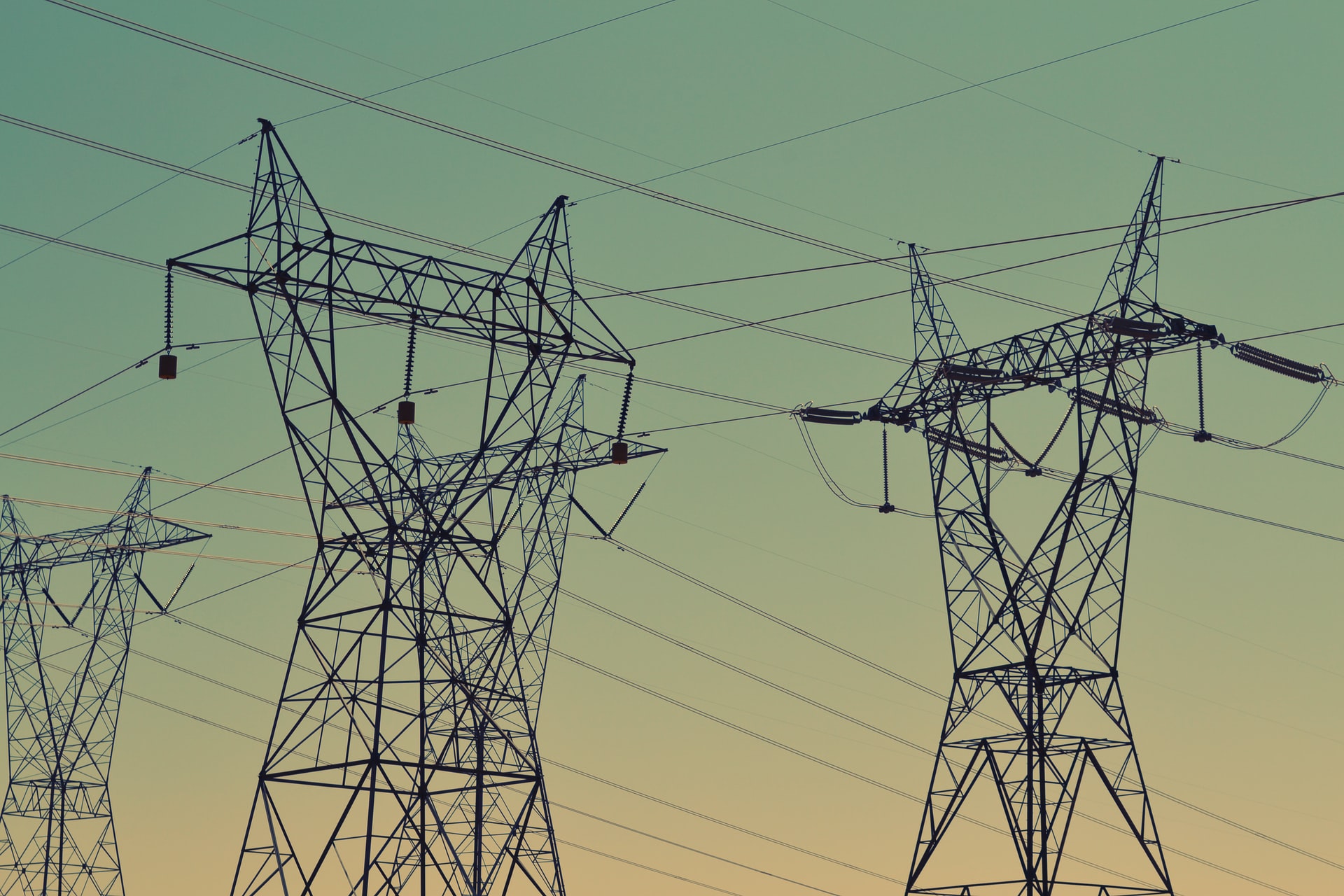
European steelmakers called on the EU to cut electricity prices to around Eur50/MWh to safeguard the bloc’s industrial competitiveness and enable investment in low-carbon steel production, warning that persistently high power costs are driving investment decisions away from the region.
Eurofer, the European Steel Association, backed the broader industry call to action on Feb. 11 that demands urgent EU measures to reduce electricity prices, which the group said have become a major barrier to electrification and decarbonization in the steel sector. The appeal comes ahead of an EU leaders’ retreat on Feb. 12, where industrial policy is expected to be discussed.
Eurofer said restoring electricity prices closer to pre-2021 levels of Eur44/MWh, before the energy crisis, is essential for strengthening Europe’s steel industry and protecting industrial value chains. Current power prices, inflated by high taxes and carbon costs, are threatening investment decisions that steelmakers are making now, the association said.
“Steel is at the heart of Europe’s industrial ambition, but it is being held back by sky-high electricity prices and costs,” Henrik Adam, president of Eurofer and executive chairman of Tata Steel Netherlands Holding, said. “If the EU wants investment in low-carbon steel to happen in Europe, it must deliver total electricity costs closer to Eur50/MWh – across all member states.”
The steel industry’s concerns reflect broader worries about Europe’s industrial competitiveness as manufacturers face higher energy costs than rivals in other regions. For steelmakers, electricity is a particularly critical input as the sector transitions toward electric arc furnaces and other low-carbon production methods that require significant power consumption.
Eurofer has repeatedly urged Europe to address this critical issue for the steel industry, as short-term support measures are needed to maintain steel production and investment in Europe while longer-term structural reforms are implemented to decouple electricity prices from fossil fuel prices. Without effective relief from high power costs, investment will shift to other regions and European capacity will be lost, the group said.
“Steelmakers are taking decisions now,” Axel Eggert, director-general of Eurofer, said. “Without effective relief from high electricity prices, investment will move elsewhere and capacity will be lost. Keeping steel production in Europe is not just an industrial issue – it is essential for Europe’s economic security and strategic autonomy.”
The call to action was adopted by European companies and industries in Antwerp and was shared just before the EU leaders’ retreat. Eurofer was represented at the Antwerp event by two of its vice-presidents, Geert Van Poelvoorde, CEO of ArcelorMittal Europe, and Mario Arvedi Caldonazzo, CEO of Arvedi Group.

EU policy boosts thyssenkrupp in Jindal talks: Lopez Borrego
The increasingly supportive EU policy environment is improving steelmakers’ valuations and playing into the hands of thyssenkrupp during its negotiations to sell a stake in its Steel Europe business to India’s Jindal Group, says thyssenkrupp group chief executive Miguel Lopez.
CBAM came fully into force from 1 January, while the new EU steel trade regime to replace existing safeguards is anticipated to begin from 1 July.
“The sentiment has turned into a positive one for the last four months. We have seen increases in [EU stock market listed steel companies’] share prices of around 50% and more. So there is a clear positive sentiment,” Lopez said during thyssenkrupp’s earnings call on Thursday monitored by Kallanish.
“It is also clear that this is due to the tariff situation, as mentioned before, and the limitation also of the import quota for Europe. And of course, the idea of resilience – and I’ve been reporting, you remember about the steel summit with [German] Chancellor [Friedrich] Merz and also talks that we had directly with [European Commission President] Ursula von der Leyen and her team. So yes, there is a clear positive sentiment here. And of course, that will have, for sure, to get into an input for the conversations with our colleagues from Jindal, no doubt about that,” he added.
The German industrial conglomerate remains in “intense” due diligence discussions with Jindal, he said. Its aim remains to sell a majority stake to the Indian group.
CBAM and the new trade regime have not had a tangible impact so far but do present an upside potential.
“It is expected that we will see improved pricing after the tariffs will be introduced in Europe,” Lopez said. “And also the CBAM – concrete CBAM actions will, I believe, also help. We will not see anything this fiscal year around it because we expect the European Union to decide on the tariffs around May, June. And until then everything is really getting into the orders; we will see an impact for sure next fiscal year. But the likelihood that we see this fiscal year some positive effects already in our view is, for the time being, very limited.”
Work on the Duisburg direct reduced iron plant continues to move ahead “with full commitment”, he noted. Formwork and reinforcement operations and major concreting work have been completed for the tower of the DRI plant and the two smelters, as have extensive construction measures for the plant’s technical infrastructure.

Czech industries call for ETS, climate targets revision
Czech energy-intensive industries, including steelmakers, have issued another call for policy measures to ensure their survival. These include limiting CO2 emissions certificate price volatility and speculation, reinvesting ETS revenues in decarbonisation and revising climate targets to account for competitiveness, Kallanish notes.
In a joint declaration signed by the Czech and Slovak steel association, Steel Union, industry representatives say a review of ETS and the Market Stability Reserve should be carried out in 2026 to “limit excessive price volatility of allowances and at the same time reduce the scope for purely speculative behaviour on the market”, they note.
The associations are aiming for “more predictable price developments that will continue to create a clear investment incentive for decarbonisation, but at the same time will not cause sudden cost shocks in energy-intensive industries and will not weaken their ability to plan production, modernise operations, and enter into long-term contracts,” they continue.
There should meanwhile be a revision of the ambitious climate targets for 2040 and 2050 “based on an evaluation of progress towards the 2030 target and the real impact of the existing rules on competitiveness, employment, and investment,” they note. “The proposed emission reduction target must be assessed with full knowledge of the impact on industry and infrastructure and must be aligned with the decarbonisation targets of other global players, i.e., China, the US, and India.”
The parties also call for Czech energy prices for industry to be brought below the EU average. Costs for network development and integration of renewable sources should be shared so that there are no sudden price increases. In justifiable cases, part of the system costs can be temporarily covered from public budgets.
“For the most affected sectors, we should introduce temporary, strictly targeted relief or compensation where there is a risk of production cuts and job losses. We should advocate for the creation of a single EU energy market,” they add.
Daniel Tamchyna, president of the Czech Chemical Industry Association, another declaration signatory, says electricity and gas prices should be reduced to €50/MWh and €20/MWh respectively. ETS certificates should then cost no more than €30/tonne.
Moravia Steel chairman Petr Popelar meanwhile said in a social media post that ETS should be revised to reduce the phase out of free allowances and prevent speculators from manipulating prices. EU energy policy must be unified and not left to individual member states as this creates unequal market conditions, he added.
The declaration was made earlier this week before Wednesday’s Antwerp European Industry Summit. On Thursday, EU leaders will meet at Alden Biesen to discuss industrial policy.

EU prioritises ETS decarbonisation re-investment, cross-border energy flow
EU countries need to invest more Emissions Trading System (ETS) revenue into supporting industrial decarbonisation investments, says European Commission President Ursula von der Leyen. The Commission meanwhile aims to resolve grid bottlenecks to allow clean energy to flow freely to demand areas, and to help facilitate reduced national taxes on energy.
At EU level, 100% of ETS revenues are re-invested in industrial innovation. The €100 billion ($119bn) Industrial Decarbonisation Bank is an example of that, with the first pilot auction worth €1 billion to be concluded next week. “It will finance the decarbonisation of how you fire furnaces, melt metals or mix chemicals,” Von der Leyen said during Wednesday’s Antwerp European Industry Summit.
However, member states invest less than 5% of ETS revenues in industrial decarbonisation, Kallanish notes. The Commission President said she plans to raise the topic during Thursday’s Alden Biesen summit with EU leaders.
“Channelling more ETS revenues back to industry will therefore be a core focus of the upcoming reform of the Emissions Trading System this summer. Because these resources come from the industry and they must be reinvested in the industry itself, where the money comes from,” she noted.
Energy price spikes in one country should be avoided by allowing cheaper energy to flow across borders, something the European Grids Package announced in December aims to achieve. This involves fast-tracking the construction of so-called Energy Highways across Europe. As an example, the Bornholm Energy Island will connect offshore wind from the Baltic Sea to the Danish and German national grids, transforming Baltic wind into “shared European power”, von der Leyen noted.
“We will tackle all these bottlenecks – one by one. The goal is simple. Clean energy must flow freely all across our Union so that cheap energy can flow where it is needed, when it is needed,” she added.
Besides reducing national taxes on energy to bring down prices, power-purchase agreements and contracts for difference should be rolled out across all members states to lock in energy prices for the long term, she continued.
Von der Leyen also mentioned the Industrial Accelerator Act, which will be presented later in February. This will introduce specific EU content requirements for strategic sectors, including low-carbon requirements in public procurement. “And of course, this will be based on rigorous economic analysis. But it will create a stable demand for industries, and it will kick off a virtuous cycle of growth,” she concluded.
Eurofer said on Wednesday that EU policymakers must restore electricity prices closer to pre-energy crisis levels while implementing reforms to stabilise markets (see separate story).
UK steel quotas should be halved, says Tata
The UK’s steel safeguard quotas should be halved to protect the domestic industry from becoming a “dumping ground” for global overcapacity, warns Russell Codling, commercial director at Tata Steel UK.
The comments were made during a Business and Trade Committee hearing this week, monitored by Kallanish.
“We need half the quotas that are in position as they stand at the moment. [The UK] need to take similar levels of sweeping action in the way in which the EU and the US is choosing to take. Otherwise, we’re just left exposed as the dumping ground of the world for the excess amount of steel,” he said.
He highlighted China’s record level of exports in 2025, reported at 119 million tonnes for finished steel.
Codling highlighted how the US administration has “taken action” against imports with its 50% tariff on all countries, other than the UK, a move he said he understood. “The US recognises the steel industry to be a critical strategic industry for the country, and they’ve decided they need to take protections against imports and the oversupply globally,” he added.
He highlighted other countries are now also taking measures, including Canada, Mexico, Brazil and South Africa. The EU has meanwhile proposed to reduce its import quota volumes and apply a 50% out-of-quota tariff rate from 1 July.
“The safeguard position expires at the end of June this year, exposing the UK steel industry to the full force of that global oversupply around the world,” Codling noted. He added that the safeguards as “ineffective in their own right” and were designed “around a period when the steel markets were substantively larger than they are today”.
“The UK government has two months in which to save the UK steel industry, because this is a death toll for the industry at large and all of its supply chains,” Codling warned.
He said the UK is “still processing” while others have acted, which risks “over-analysing, over-assessing, and ending up with something that either doesn’t deliver against the goal of protecting … the last bite of that industry, because there’s not a steel company in the UK that’s really making any form of a profit. They’re all just about teetering on the edge and just about being able to maintain their position. That isn’t going to last much longer.”
Without the reduced safeguard quota volumes, there will be no domestic industry left to meet UK steel demand. “Otherwise, we will have to be looking at how we respond in our own cost base, which will impact on communities, our downstream assets across the country,” he warned.
Tata Steel said last week its UK losses will continue until the government revises its safeguards or steel prices increase.

Voestalpine plans plant in India, eyes further acquisitions
Voestalpine is planning to establish a production site for tubes and sections in Inda, its executives have said during a virtual press conference for its third quarter results.
They highlighted India as one of three focus fields of activity, along with its Railway Systems and Warehouse and Rack Solutions businesses. The Austrian group so far operates five plants in India, with 1,000 employees and a revenue of around €190 million ($225m). It has no timetable for the new plant yet, nor did it give a planned location.
“We are looking for a building of 15-16,000 metres squared,” ceo Herbert Eibensteiner said at the conference. “We will start with three machines, and then gradually build up over five years, as we did in the USA or Brazil,” he told Kallanish. He noted that the plant will produce special tubes and section, but no commodity grades.
Eibensteiner also announced the potential for additional acquisitions in the Railway Systems and Warehouse and Rack Solutions segments. He did not name targets but said that “we have a long list and a short list,” suggesting that acquisition could happen shortly.
In Q3 its revenue fell by 5.1% year-on-year to €11.1 billion, due to the extensive reorganisation measures. Most impacted by this is the group’s plant in Kindberg, Austria, partly due to lower business opportunities since the USA introduced its safeguard measures.
According to cfo Gerald Mayer, voestalpine loses a two-digit million amount from the US measures, partly due to duties, but also due to lost business. Eibensteiner added that this also impacts its operations in Brazil, where measures are under way.
The profit from operations (EBIT) rose by 20.9% year-on-year to €473m, while after-tax profit increased by 25.1% to €259m. For the full year, the group confirmed that it continues to expect Ebitda in the range of €1.4-1.55 billion for the 2025/26 fiscal year.