


Shifting paradigms: AI reinvents established industry processes
Advances in artificial intelligence, especially agentic capabilities, have the potential to transform chemicals innovation and manufacturing fundamentally, enabling greater efficiencies.
The use of artificial intelligence in chemical research and development is no longer a future concept but a reality that helps companies to accelerate the discovery of new materials. Chemical companies are also increasingly integrating AI into every aspect of their operations while looking for partnerships with academic institutions and technology companies that would enable them to advance their AI capabilities.
AI is rapidly becoming a cornerstone of materials innovation, but significant challenges around computational speed, intellectual property security and trust are tempering its full-scale adoption, according to the findings of the recently published Accelerating Discovery: AI Trends in Materials R&D Report by Matlantis Corp. (Tokyo).
Matlantis is a company that develops tools and services using AI and computational science to advance materials development.
The report is based on a survey that includes companies from the energy, chemicals, semiconductors and automotive industries, and indicates a shift in how these firms approach innovation, with almost half of all R&D teams now using AI in some capacity.
Meanwhile, AI and machine-learning methods now drive an average of 46% of all simulation workloads, signaling a move from experimental trials to routine application, the report said.
Faster discovery is the primary catalyst for AI adoption, with 94% of survey respondents reporting that R&D teams have been forced to abandon promising projects due to prohibitive time requirements or computational resource constraints, the report said.
This pressure has created a strong willingness among researchers to embrace new, faster methodologies, even if it means a slight trade-off in precision, it said. About 73% of respondents would accept minor deviations in accuracy in exchange for simulations that run 100 times faster, it added.
“Nearly every team is experimenting with AI to push past bottlenecks, and they’re hungry for solutions that deliver results in days, not months, securely and accurately,” said the CEO of Matlantis, Daisuke Okanohara, cited in the report.
In addition, the financial incentive is clear, with organizations reporting an average saving of approximately $100,000 for every R&D project by leveraging computational simulation over purely experimental work, according to the report.

GRAF: Two waves of innovation change R&D.
The adoption of AI is not a general replacement of established techniques but rather the evolution of a hybrid workflow, the report said. R&D teams are blending conventional simulation methods with new AI-powered tools, with 42% of teams currently using AI-native platforms and another 34% in the process of piloting AI-augmented tools, it said.
“By harnessing AI and simulation together, we can explore materials faster than ever imagined … We see a future where breakthrough materials [for energy, climate, health] are discovered in a fraction of the time,” Okanohara said.
This hybrid approach extends to the underlying computer infrastructure, with the report finding no single dominant environment for running these complex simulations. Workloads are distributed across a mix of on-premises high-performance computing (HPC) clusters, private clouds, public clouds and hybrid cloud models, reflecting a flexible and diversified IT strategy, it said.
Significant barriers nevertheless remain, with security and intellectual property (IP) protection universal concerns, the report said. All survey respondents expressed caution about using external or cloud-based tools for sensitive research, the report added.
Trust in the output of AI-driven simulations is also still developing, with only 14% of respondents feeling “very confident” in the results generated by AI-accelerated tools, pointing to a need for greater validation, transparency and explainability in AI models, it said.
AI-driven R&D
AI is ushering in a new era for the chemical industry, with two distinct waves of innovation changing the way research and development is being carried out, according to Jeff Graf, global head of business development at SandBoxAQ (Palo Alto, California).
The first wave centers on large language models (LLMs) such as ChatGPT that are increasingly being adopted by chemical companies, Graf said. Many organizations are now developing proprietary, in-house LLMs trained on decades of historical data, including digitized lab notebooks and experimental records, he said. This approach effectively creates a “super scientist” — an AI system that can access and synthesize the collective knowledge of the organization, he added.
This does not represent new scientific discovery, but it revolutionizes knowledge management by making years of research easily searchable and actionable, accelerating scientific workflows, Graf said. Despite the clear benefits, adoption across the sector remains uneven, with some companies still in the process of digitizing and integrating their data, he said.
A second, more disruptive wave of AI is now emerging, mirroring the transformation seen in the pharmaceutical industry following the introduction of AlphaFold, he said. Unlike LLMs, this form of AI goes beyond summarizing existing knowledge, Graf said. It can model and understand complex chemical and biological systems, enabling new scientific discoveries, he added.
AlphaFold, an AI system developed by Google DeepMind that predicts a protein’s 3D structure from its amino acid sequence, has enabled pharma companies to design proteins de novo, fundamentally altering R&D strategies and fostering new partnerships focused on protein engineering, Graf said. “This shift has yet to fully materialize in the chemical sector, but recent developments suggest a similar transformation is imminent,” he said.
SandboxAQ emerged in 2022 as an independent, growth capital-backed company from Alphabet Inc. (Mountain View, California), the parent company of Google LLC (Mountain View). SandboxAQ focuses on the intersection of AI and quantum technology.
SandboxAQ is leveraging advanced AI models, building on the work done at Alphabet under its “moonshot” initiatives program, Graf said. The company has addressed earlier limitations in advanced simulation by enhancing the underlying physical models, incorporating more accurate density functional theory (DFT) calculations and expanding the dataset to include commercially relevant materials such as iron, cobalt and lithium, he said.
The result is a tool designed for industrial discovery, enabling companies to explore chemical space and identify new catalysts and materials with unprecedented speed and accuracy, he added. The public release of these advanced models marks a pivotal moment for the industry, “democratizing” access and fostering collaborative innovation, Graf said.
As AI-driven R&D becomes more sophisticated, companies that embrace these technologies are poised to lead the next wave of chemical innovation, whether in carbon capture, ammonia synthesis or other transformative applications, Graf said. Companies that continue to rely solely on traditional high-throughput laboratory screening risk falling behind, echoing the paradigm shift seen in pharma, he added.
AI for project delivery
Accenture PLC published two reports in its “Powered for Change” research series that focused on the evolving landscape of industrial decarbonization and how best to address it. The recently published second report explores how AI-driven solutions can be deployed consistently to support companies in heavy industries such as chemicals to adopt a multigenerational approach to their decarbonization efforts.
Reducing the unit cost of infrastructure required for decarbonization is a common challenge across heavy industries, including chemicals, power generation and green hydrogen production, according to Rob Hopkin, net-zero infrastructure lead at Accenture.

COLEGRAVE: AI policy aims to foster culture of trust.
Whether constructing new transmission lines, power plants or foundational infrastructure such as concrete and piling, the opportunity to accelerate delivery and improve capital efficiency lies in shifting from a project-centric to a portfolio-based approach, Hopkin said.
Many chemical companies continue to organize their capital project delivery around individual, standalone projects, with dedicated teams and stage-gate processes guiding investment and execution from design to commissioning, he said.
This approach is familiar, but it often results in bespoke solutions that limit opportunities for replication, whether in design, supply chain partnerships or team expertise, which restricts the learning and scale effects that can drive significant efficiencies in capital project execution, he said.
By viewing each project as part of a multigenerational investment portfolio, organizations can maximize repeatability across concepts, designs, supply chain relationships and delivery teams, Hopkin said. This institutionalizes best practices and lessons learned, enabling continuous improvement and driving down costs and timelines with each successive generation of projects, he said.
While this transition poses organizational challenges, the value gains can be substantial, Hopkin said. Other sectors such as shipbuilding have demonstrated the benefits of this approach, where building a series of ships as a single program results in dramatic cost reductions and supply chain optimization by the final vessel, he said.
The principles of standardized, multigenerational infrastructure delivery are highly relevant to the chemical industry, particularly among specialty chemical producers, said Serge Lhoste, global chemicals strategy lead at Accenture.
A typical specialty chemical company may operate several production sites worldwide, and despite similarities in technology across business units, operational commonality is often lacking even within the same business unit, Lhoste said. This fragmentation presents a significant opportunity for improvement, he said. By harnessing AI and embracing repeatable, standardized processes across multiple project cycles, chemical companies can drive substantial gains in cost efficiency at each site, he said. The focus is on leveraging digital tools to identify best practices, optimize operations and enable consistent performance improvements across the enterprise, Lhoste said.
Hopkin added that AI is increasingly recognized as a powerful tool for enhancing repeatability and efficiency in capital project delivery within the chemical sector.
Traditionally, engineering teams select project concepts and carry out front-end design, but this process often leads to divergence from standardized approaches due to a series of complex, incremental decisions, Hopkin said. Such variations can undermine the benefits of replication, making it difficult to identify and assess their impact, he said.
AI offers a solution by analyzing extensive engineering documentation, pinpointing deviations from established standards, and providing visibility into where and why such divergences occur, Hopkin said. This enables organizations to make informed decisions about whether these variations are justified, balancing the advantages of standardized equipment and buying power against potential operational gains from customization, he said.
AI-driven insights facilitate optimization across portfolios, ensuring that repeatability and operational performance are maximized, he added.
AI is also set to revolutionize end-to-end processes, particularly risk management, Hopkin said. Effective risk identification and mitigation are critical to project success, yet current practices are hampered by fragmented data and complex documentation, he said. AI can integrate information across the engineering, scheduling, cost and supply chain domains, rapidly connecting data points to surface risks earlier and providing a richer understanding of their implications, he added.
Existing technologies already analyze historical risk registers and optimize schedules to recover from delays, Hopkin said. The next step is integrating these capabilities through agentic AI, orchestrating the entire risk-management process and compressing the time from risk identification to mitigation, he noted. AI eliminates cognitive biases and siloed communication, enabling seamless access to comprehensive project data and enhancing the quality of decision-making, he said.
Integrating AI in chemistry
Specialty chemicals producer Syensqo SA is integrating AI into its operations. The company has established a dedicated team tasked with advancing AI across the organization. Syensqo.ai has adopted a bottom-up approach over the past two years, soliciting input from across the company and evaluating more than 600 potential use cases for AI deployment, according to Vincent Colegrave, head of AI at Syensqo. “This collaborative effort has enabled the team to identify and test promising applications while concurrently defining several strategic priorities,” Colegrave told CW.
The development of SyGPT, Syensqo’s proprietary internal chatbot launched in June 2024, is such an initiative. SyGPT is designed to foster trust and understanding of generative AI among Syensqo’s employees, Colegrave said. It reflects the company’s commitment to confidentiality and security, which are core values for an IP-driven business, he said. “The chatbot has been made accessible to all staff, enabling widespread experimentation and feedback while ensuring that no employee is left behind in the adoption of new technologies,” Colegrave added.
Meanwhile, Syensqo has introduced its first AI policy, which was developed in close consultation with its European works council and labor unions, he said. Key principles of the policy, now approaching its first anniversary, include maintaining a human-in-the-loop approach to decision-making and a firm stance against using AI for employee surveillance, Colegrave said. “These measures are designed to foster a culture of trust and transparency as AI becomes increasingly embedded in Syensqo’s operations,” he said.
Syensqo’s AI journey is not solely about technology, Colegrave said. It is also viewed as a strategic imperative requiring attention to modify management, adoption and training, he said. Building on this foundation, the company has pursued additional strategic use cases and partnerships, he added.
Syensqo signed a memorandum of understanding with Microsoft last year that is focused on the integration of AI into scientific research. As one of the first partners of Microsoft’s Discovery platform, Syensqo is pioneering agentic AI workflows that leverage advanced agents to analyze publications, patents and internal data, streamlining the process of identifying high-impact research targets, Colegrave said.
Parallel efforts include the deployment of machine-learning models to accelerate the development of new polymers, with successful implementations reported in several business units, he said. “The Discovery platform is expected to scale these capabilities across Syensqo’s research operations, though the company acknowledges that adoption and impact will take time, requiring ongoing engagement and feedback from its diverse scientific community,” he said.
Syensqo is also applying AI to its commercial engine through its SYGROW solution that uses generative AI to identify promising leads and uncover blind spots while aggregating data from multiple systems to produce comprehensive customer reports, Colegrave said. The solution was developed in collaboration with the company’s sales team, and it has been able to streamline internal collaboration and enhance the efficiency of commercial operations, he said.
Syensqo is also exploring AI-driven workflows to optimize maintenance, with a focus on operational uptime and sustainability, Colegrave said. “Initial results have been encouraging, and the company is now evaluating opportunities to scale these approaches more broadly,” he said.

LIN: Redefining chemical synthesis.
Merck KGaA is another chemical company using AI as a “critical enabler” across its chemicals and materials R&D activities, it said. AI is not just a tool for efficiency, but a prerequisite for solving complex scientific challenges and accelerating innovation across the company’s business sectors, Merck told CW.
Merck uses AI to accelerate the discovery and development of next-generation drugs and materials while harnessing data and AI to enhance product quality, improve manufacturing yields and strengthen supply security, the company said. “AI is helping us move from an era of discovery to one of engineering — particularly as we leverage the convergence of chemistry, AI, and high-performance computing. This is central to deliver next-generation materials and chemicals faster and more effectively than traditional approaches allow,” Merck said.
AI-focused partnerships
Partnerships are one of the main ways in which chemical companies are able to advance their AI capabilities. Syensqo announced a partnership with Mohammed VI Polytechnic University (UM6P; Benguerir, Morocco) in October 2025 to advance AI within the chemical industry.
The collaboration is designed to foster creative approaches to technology development, leveraging the expertise and fresh perspectives of UM6P’s College of Computing and AI research teams, Colegrave said. “Recognizing the opportunity to bridge the gap between current capabilities and future ambitions, Syensqo and UM6P have jointly established an AI lab dedicated to exploring cutting-edge solutions,” Colegrave added.
The initiative aims to build a Syensqo-UM6P team, with recruitment efforts underway to attract young graduates and emerging talents who possess a strong understanding of core AI technologies and the scientific foundations central to Syensqo’s business, he said.
The core objective of the AI lab is to deepen Syensqo’s technological capabilities, particularly in transforming data into actionable knowledge, Colegrave said. The partnership will focus on foundational models and advanced scientific topics, with UM6P serving as a key collaborator in these specialized areas, he said.
Syensqo also plans to work with major hyperscale providers to ensure scalability and enterprise-grade implementation, while dedicating significant resources to fine-tuning and customizing solutions at the university level, Colegrave said. “Interest in the initiative has been robust, with students and professionals at UM6P eager to participate. The collaboration strengthens Syensqo’s presence in Morocco and opens doors to the broader African market. Morocco’s strategic geographic position enables effective engagement with Europe and the United States, offering a pragmatic approach to global expansion,” he added.
In addition, Syensqo is actively engaging with industry partners in China, a market recognized for its rapid technological advancement, Colegrave said. The company has initiated the formation of a dedicated team to evaluate opportunities and potential collaborations with leading institutions in the region, he said.
Discussions are ongoing, and Syensqo is taking a measured approach to ensure that it aligns with the right players within the local ecosystem, Colegrave said. “Syensqo adopts a pragmatic approach in navigating its evolving technological ecosystem, recognizing that advancements in AI are fundamentally shifting industry paradigms,” he said.

Meanwhile, in January 2026, Merck signed a memorandum of understanding with ChemLex Ltd. (Singapore) to explore collaboration to enhance the speed, efficiency and reproducibility of chemical research across early discovery and development workflows within Merck’s various business sectors.
ChemLex is a technology startup that has developed a platform for AI-driven automated chemical synthesis. The company’s high-throughput automated laboratory and AI technology platform will provide chemical synthesis and related services to Merck aimed at shortening Merck’s R&D cycle and optimizing resource allocation, Merck said.
ChemLex is building the world’s most advanced self-driving laboratory, which is an R&D engine that enables rapid, low-risk synthesis of molecules that were previously too costly or time-consuming to produce, according to Sean Lin, founder and CEO of ChemLex. “Our strategic priority is to redefine how chemical synthesis is done by creating a ‘new language of discovery,’ reflected in the name, ChemLex: Chemistry meets Lexicon. Through a high-throughput, AI-powered platform and a central AI scheduling system, we make the exploration of chemical space faster, safer, greener and more efficient, allowing scientists to focus on innovation rather than technical constraints,” Lin said.
ChemLex’s AI-powered chemical synthesis is designed to learn in the way human chemists do, but with active learning at machine scale, Lin said. It operates as a closed-loop system that integrates an automated wet lab with an AI-powered dry lab, allowing design, execution and learning to happen continuously, he said.
“In simple terms, the robots are the hands of the chemist, running experiments with speed and precision, while the AI is the brain, designing reactions, analyzing results and deciding what to do next. Each experiment feeds high-quality data back into the system, enabling the AI to improve, adapt and tackle increasingly complex chemistry over time,” Lin said.
This fundamentally changes how chemistry is done, he said. By combining automation with AI, ChemLex turns chemical synthesis from a slow, manual process into a scalable discovery engine, opening up vast areas of chemical space that were previously inaccessible and enabling faster innovation at lower cost across pharmaceuticals, materials and specialty chemicals, Lin said.


European Commission seeks contractor to build CBAM certificate platform
The European Commission has launched a tender to establish the Common Central Platform, which will manage the sale and repurchase of certificates under the EU’s Carbon Border Adjustment Mechanism, with the system expected to become operational by February 2027.
The tender, issued by the Commission’s Directorate-General for Taxation and Customs Union late Feb. 16, will remain open until March 20, 2026.
“By Aug. 31, 2026, the contractor must have developed a pre-operational version of the CCP, incorporating all core functionalities necessary to support sales, repurchase and reconciliation operations, and ready for testing,” the Commission said in the tender.
This marks a key step in implementing the EU’s CBAM, which requires importers of carbon-intensive goods to purchase certificates corresponding to the emissions embedded in products entering the bloc. The mechanism aims to prevent carbon leakage by ensuring imported goods face similar carbon costs to those produced within the EU, potentially affecting trade flows of iron and steel, aluminum, cement, fertilizers, electricity and hydrogen.
EU’s CBAM started its definitive phase on Jan. 1, 2026, but importers will only be able to purchase CBAM certificates starting in February 2027 to cover the emissions embedded in their imports for 2026, giving businesses more time to adapt to this carbon pricing mechanism.
The Common Central Platform will serve as the centralized system for managing CBAM certificate transactions, handling both primary sales to importers and potential repurchases, according to the Commission.
The aim of CBAM is to level the playing field for EU companies, as most exporting countries either do not have a carbon price as high as that of the EU Emissions Trading System or do not have a price on emissions altogether.
Carbon permits in Europe are currently around seven times more expensive than compliance prices in China, the world’s industrial powerhouse.
Platts, part of S&P Global Energy, assessed EU Allowances for December 2026 at Eur70.21/mtCO2e ($83.09/mtCO2e) Feb. 17. This compares with China’s compliance emission allowance, or CEA, which was valued at Yuan 76.14/mtCO2e ($10.94/mtCO2e) Feb. 6, according to the Shanghai Environment and Energy Exchange.

Trump threatens new 10% global tariff under Section 122 after Supreme Court deems IEEPA tariffs illegal
The order would be issued under Section 122 of the Trade Act of 1974, Trump said, adding that the new duties could apply on top of existing tariffs.
The provision allows the president to impose tariffs as high as 15% for as long as 150 days on any country, in response to “large and serious” balance of payments problems. It does not require an investigation or other procedural steps.
Trump also noted on Friday that he will invoke separate authority under Section 301 to initiate investigations into unfair trade practices, a process that not only could take several months to complete, but could ultimately yield additional tariffs.
The announcement came just hours after the Supreme Court ruled that Trump has acted illegally in unilaterally imposing sweeping global tariffs under the supposed authority of the country’s International Emergency Economic Powers Act (IEEPA).
“There was always the notion that [implementing the IEEPA tariffs] was a risk, that the administration was taking a risk with expanding the mandate at a scale that’s never been done before,” Samir Kapadia, managing principal of the Vogel Group, told Fastmarkets in an interview on Friday.
The Supreme Court ruling held that only the US Congress, not the president, has the power to impose taxes, with trade sources saying that some market participants were caught off-guard by the decision.


EU softens ‘Buy European’ requirement: German sources
A new version of the European Union’s Industrial Accelerator Act (IAA) draft has German steel players agitated, because it suggests that green steel could be sourced outside the EU.
Reports by Handelsblatt and Spiegel say that they have received a draft that no longer includes steel in the annex of materials or services that must be sourced in the European Union for public tenders. The draft does include the requirement of “green/low-emission steel”, but not the obligation to buy it locally.
In a social media post, seen by Kallanish, thyssenkrupp Steel, head of European affairs Julian Schorpp expressed concern, asking “is the EU about to undermine its own Clean Industrial Deal?”.
The latest leak contradicts the core logic of the Clean Industrial Deal itself to accelerate decarbonisation in Europe by strengthening demand for clean products manufactured in the EU, Schorpp writes.
He points at the investments on the way by EU mills in the interest of a technical transition. “Lead markets that stimulate consumption without strengthening European production would weaken investment incentives, delay projects, and increase the risk that new low-carbon capacity is built outside the EU”.
The apparent new draft would agree with a requirement worded by German chancellor Friedrich Merz last week, which left Germany’s steel industry unamused.
Merz suggested that a rule like “Made in Europe” should be adjusted to “Made with Europe”, to allow international trade partners to supply green steel, too.
In a separate interview with Spiegel, Marie Jaroni, ceo of thyssenkrupp Steel, notes that such an adjustment would potentially invite 70 countries with which the EU holds trade partnerships.
Along the same lines, Schorpp also points at an effect an IAA draft without steel would have on importing. “CBAM, meanwhile, will incentivise foreign producers to channel their cleanest steel to the EU market,” he says.

Non-prime coil gaining favour in Europe
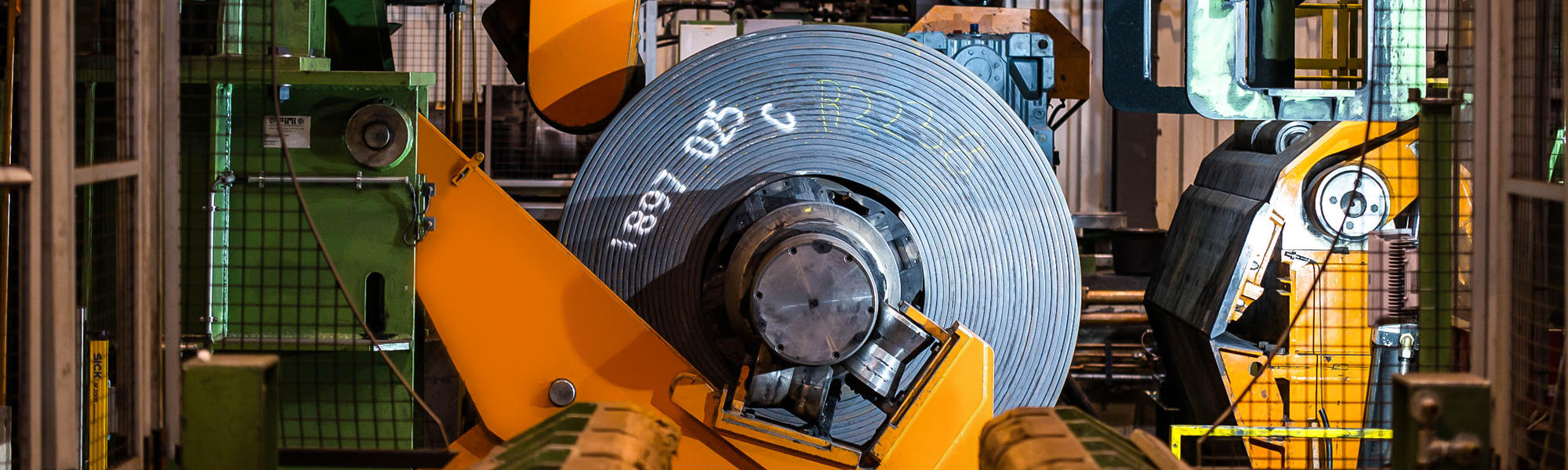
Non-prime coil is gaining traction in Europe, with recent announcements highlighting the growth of declassified strip products.
Swedish green steel venture Stegra agreed a multi-year deal with thyssenkrupp Materials Services for the supply of future coil volumes for the pan-European distribution group of non-prime material in January.
In times of an inert market and low price, as seen through most of 2025, non-prime material appears to be growing in attractiveness to buyers to minimise risk as high-standard customers remain reserved.
“The demand is too low, and I see more people asking for non-prime material,” one Benelux trader tells Kallanish. “Many try to get even cheaper than the low prices we have for prime material now,” he adds.
Regular prices are slowly but continuously recovering since then, and longer lead-times indicate more orders for prime coil. But then, the hurdles for imports imposed by the Carbon Border Adjustment Mechanism (CBAM) could mean an advantage for non-prime imported coil.
Another trader notes that the actual role of a trader as an intermediate is stronger when trading declassified material. If dealing with prime material, customers can gather an idea of a price/tonne on numerous channels, so the pricing in that segment is very transparent, he says. “This is not quite so in the non-prime segment, where good prices and offers depend very much on the trader’s network.”
To some extent, such preferences for non-prime are observed in the traditional fields of domestic prime material. According to a service centre manager, “it really depends on the purpose, [such as] if it’s a visible part or not. Customers are relatively flexible.” He notes that customers normally do not proactively “ask for 2A material, but they do accept it if offered.”
One typical mill strategy in times of low sales is the nominal declassification of 1A material to 2A, as a means of justification to offer at a discount. If the current recovery of prices becomes substantiated by a recovery of demand, such offers will likely disappear.

US Supreme Court strikes down Trump’s Liberation Day tariffs
According to the majority opinion, written by Chief Justice John Roberts, “IEEPA does not authorize the President to impose tariffs.”

European Committee for Wire Drawing urges EU action over galvanized wire imports
The European Committee for Wire Drawing (CET) is calling for the European Commission for help to curb surging galvanised wire imports, Kallanish learns.
The association warns that low-priced Chinese and Turkish suppliers have captured around 25% of the EU market since 2023, equivalent to roughly €200 million ($235.3m) in imports. This has left European producers with falling sales and idle production lines, creating what CET describes as an unsustainable situation.
CET says the import surge is severely damaging an industry that produces about 900,000 tonnes annually across at least 12 EU member states, generates roughly €750m in yearly sales and directly employs more than 4,000 people. It is seeking urgent measures to restore fair competition and safeguard a sector supplying essential materials to Europe’s construction, manufacturing and agricultural industries.
It represents manufacturers of steel wire and steel wire products across Europe, with members including associations and producers in Germany, Spain, France, Italy, Poland, Portugal, Sweden, the UK and Türkiye, covering the majority of European wire drawers.
Under EU trade defence procedures, the Commission may open an anti-dumping investigation if sufficient evidence shows imports are unfairly priced and cause material injury to EU producers. Such investigations typically last up to 14 months.

Fagor Arrasate joins EUROMETAL as Associate Member
EUROMETAL is pleased to welcome Fagor Arrasate as a new Associate Member.
Headquartered in the Basque Country, Fagor Arrasate is a global leader in the design and manufacture of customised solutions for steel, aluminium and stainless steel forming. Its portfolio includes advanced presses and stamping systems, cutting and processing lines for metal coils, and complete systems for the production of complex metal components. The company also specialises in composite forming, hot and cold forging systems, and hot stamping technologies.
With more than 60 years of industrial expertise, Fagor Arrasate operates six production plants, five technical assistance service centres and a dedicated R&D&I centre, supported by a global sales network. The company employs approximately 660 professionals across its facilities in Spain, China, Mexico, Germany and the United States. In recent years, its average annual turnover has exceeded €200 million, with exports representing around 85% of production.
Fagor Arrasate serves leading global manufacturers in the automotive sector, including the Volkswagen Group, General Motors, Ford and Stellantis, as well as major Tier-1 suppliers such as Gestamp and CIE. Its client base also includes prominent steel producers and processors such as Tata Steel, ArcelorMittal, Acerinox, Gonvarri and Bamesa, alongside major household appliance manufacturers including Bosch-Siemens, Whirlpool, Mabe, General Electric and Haier.
As a founding member of MONDRAGON Corporation, one of Europe’s largest industrial groups with approximately 70,000 employees, Fagor Arrasate combines technological leadership with strong industrial roots.
EUROMETAL looks forward to working closely with Fagor Arrasate in strengthening the European steel value chain and supporting innovation in metal forming and processing technologies.
Learn more: fagorarrasate.com

European heavy plate round-up: EU plate prices stable, demand from projects healthy
The European heavy plate market traded sideways in the week to 20 February, with project-based ordering underpinning longer-term support for the market, and interesting dynamics on input slab purchasing.
In North Europe, heavy plate price indications clustered around EUR750/t ex-works for s235 grade, and at around EUR800/t delivered for s355 grade. Offers for s235 grade were generally heard in closer proximity to the settlement price, while offers for s355 ex-Germany and Austria ranged between EUR830-880/t delivered. Offers from Central Europe were said to be targeting the same EUR800/t delivered price, generally considered the tradable level for s355 grade into Germany at present.
Import offers were heard to Antwerp at EUR780/t DDP ex-India for s355 grade, and to the Italian market at EUR630-640/t CFR ex-India for s275 grade.
The Italian market appears similarly stable to North Europe, as reported by both buy- and sell-side sources. Deals for spot volumes were heard in a range of EUR710-730/t ex-works, and project-based deals at around EUR750/t ex-works. Project buyers are requesting extended lead times into the final quarter of 2027, supporting producers but doing little to fill immediate orderbooks.
That said, near-term demand wasn’t viewed as too much of an issue, with activity described as “ongoing – but not fantastic,” by an Italian trader.
Indications for input slab costs for Italian re-rollers were reported stable at around $510/t CFR from India; Chinese material is currently unavailable due to the ongoing Lunar New Year holiday, but exporters are expected to return to the market with prices of around $550/t CFR Italy.
Late in the week, McCloskey reported that a single European buyer present across Europe had ordered over 300,000t of slab ex-Brazil –the majority of slab available in the Brazilian spot market – leaving almost no volumes to other buyers, including re-rollers that do not have their own semi-finished steel production.
Market participants speculated as to the motivations of the buyer, highlighting the comparatively low-risk associated with Brazilian slab imports under the Carbon Border Adjustment Mechanism (CBAM), due to their competitive default values relative to other exporting origins.
As an example, a single ton of slab imported under default values from Indonesia, would threaten a CBAM cost at a 1,700% premium to Brazilian costs of around EUR30/t, or a 400% premium to Chinese, or Russian origin.
| Weekly European heavy plate, slab and green steel | |||||
| Unit | Term | 20-Feb-26 | Change | ||
| Weekly heavy plate | |||||
| Northwest Europe ex-works heavy plate | EUR/t | EX-WORKS | 750.00 | 0.00 | |
| Germany delivered heavy plate (Northwest Europe) | EUR/t | DEL | 800.00 | 0.00 | |
| Italy ex-works heavy plate | EUR/t | EX-WORKS | 720.00 | 0.00 | |
| Weekly steel slab | |||||
| Italy CFR slab | $/t | CFR | 530.00 | 0.00 | |
| Weekly green steel | |||||
| Green heavy plate premium (scopes 1-3 CO2 under 1t) | EUR/t | 25.00 | 0.00 | ||


Blastr bids to buy Speciality Steels UK
Norwegian-UK green steel producer Blastr is among bidders to acquire Speciality Steels UK (SSUK), formerly owned by Liberty Steel, according to reports in the UK media.
In August last year, the High Court placed SS UK Limited into compulsory liquidation.
Reports also suggest Blastr is considering relocating its holding company to the UK from Norway.
SSUK has plants in Rotherham and Stocksbridge. The Rotherham site is equipped with two electric-arc furnaces (EAFs) with a total annual capacity of 1.1 mt of liquid steel, according to the website of the past owner Liberty Steel UK.
Blastr currently does not have any production capacity and in 2023 the company announced a greenfield project to produce up to 2.5 mt of carbon-reduced flat steel in Inkoo, Finland. Among other installations, the steelmaker planned to build a pelletizing plant in the UK to produce around 6 mt/yr of DR-grade pellets.
To learn more about decarbonisation projects in Europe and globally – check Global Green Steel Profile.
Blastr will produce ultra-low CO2 steel, with emissions up to 90% lower than conventional steel for scopes 1 to 3, the company states on its website. The company also provides an estimate of the CO2 intensity of conventional steel at 2.6 t of CO2 per tonne of steel, meaning the green steel of the new plant could have a CO2 footprint as low as 0.26 tCO2/ts
Arabian Gulf Steel Industries (AGSI), headquartered in the UAE, and 7 Steel UK, low-carbon steel producers were also identified as bidders for SSUK. 7 Steel UK acquired 100% of Celsa Steel UK and Celsa Nordic from Spanish company Celsa Group in 2024.
Blastr’s spokesperson declined to comment on the matter.