


European steel HRC imports hit by new regulations; CFR prices lower while DDP shows growth
Demand for imports of steel hot-rolled coil has weakened further in the European market following the introduction of new regulations, with the focus now shifting toward domestic production, Fastmarkets heard on Wednesday February 18.
The introduction of the EU’s Carbon Border Adjustment Mechanism (CBAM) and new trade policies, which will replace current safeguard measures, was affecting buyers’ appetite for imported coils.
According to a market source, imports of flat steel products have become “too risky” due to uncertainty about the costs of CBAM and other regulations, improving the situation for local producers, although demand levels remained low.
Fastmarkets’ weekly price assessment for steel hot-rolled coil, import, cfr main port Northern Europe, was €490-530 ($578-625) per tonne on Wednesday, widening downward from €500-530 per tonne the previous week.
The lower end of the assessment matched a deal from India heard at €490 per tonne CFR, while the higher end of the assessment was estimated on offers from Turkey heard around €530 per tonne CFR.
Fastmarkets’ weekly price assessment for steel hot-rolled coil, import, cfr main port Southern Europe, was €475-530 per tonne on Wednesday, also widening downward from €500-530 per tonne the previous week.
The lower end of the assessment related to an offer from Indonesia reported at €475 per tonne CFR, with the upper end to an offer from Turkey heard at €530 per tonne CFR.
A deal from India was also heard at €490 per tonne CFR.
Meanwhile, European buyers have focused more on DDP-based bookings to overcome some of the challenges of CBAM-related cost hurdles.
Fastmarkets’ weekly price assessment for steel hot-rolled coil, import, ddp Northern Europe, was €610-640 per tonne on Wednesday, narrowing upward from €600-640 per tonne the previous week.
The lower end of the assessment matche an offer from India heard at €610 per tonne DDP, while an offer from Turkey was heard at €630-640 per tonne DDP.
Meanwhile, Fastmarkets’ weekly price assessment for steel hot-rolled coil, import, ddp Southern Europe, was €610-650 per tonne on Wednesday, rising from €600-630 per tonne in the previous assessment.
The increase was supported by a deal from Turkey for 20,000 tonnes of HRC heard around €630-650 per tonne DDP. Additional Turkish offers were heard around €610-640 per tonne DDP.


German fabricators demand increased ‘local content’
The association of German steel and metal fabricators, Wirtschaftsverband Stahl- und Metallverarbeitung (WSM) is calling on policy makers in Berlin and Brussels for regulations that make local procurement mandatory.
WASM is demanding a strategic framework with the idea of “Buy European” that is practical and binding, so that fairness can be reinstated on European markets.
“We need to react adequately to the strategies of the USA and China that work to the disadvantage of European industries,” says WSM’s managing director, Christian Vietmeyer. “When others close their markets, or push into ours, we need to take such measures, too,” he adds.
Requirements and standards of local content should be introduced on a broad scale, including the commercial procurement sector to retain added value, employment and taxes for resilient Europe, Kallanish hears from Vietmeyer.
He underlines that “such wishes are not a result of protectionist thinking, but of economic realism.” WSM considers a “EU content standard” the only way to balance the clear disadvantage for European companies in international competition.
In this context, WSM demands that subsidies for electric cars should only be granted to cars made in Europe. “It makes little sense that other economies benefit from subsidies paid by our taxpayers,” says WSM president Ulrich Flaken (see Kallanish 18 Feb).


Badische bemoans lack of profitability for domestic rebar
Badische Stahlwerke (BSW) saw a loss during 2025 despite high utilisation, Kallanish learns from a statement by the German rebar mill, located in Kehl in the southwest.
The company finds that the steel industry is at a crossroads at which increasing imports are compounding low domestic demand and low margins on a battled market.
The family-owned company does not reveal figures of production volume, revenue, or profits, but states that 2025 was its third year of losses in a row.
“Our target markets, especially residential construction, continues to be a cause for concern in Germany and Europe,” says managing director Florian Glück.
To meet the challenges, Badische has strategically repositioned itself, and merged with Dutch group Van Merksteijn in spring 2025 to become Reinforcing Steel Europe, with locations in Germany, the Netherlands, Belgium and France.
Besides Badische Stahlwerke (BSW), this also includes its associated processing and distribution companies Moselstahlwerk (MSW), Baustahlgewebe, Neckardraht and Bewehrungsstahl Vertriebsgesellschaft (BVG).
With Van Merksteijn as the largest independent wire processor in Europe as partner, “we are positioning ourselves more broadly and more stably in the market,’ says Glück. “We now operate as a European entity. The group’s greater sales potential ensures high capacity utilisation for production at BSW.”
The wire rod produced in Kehl is processed entirely within the new group.
“For 2026, we must continue to review routines, optimise processes and reduce costs,” Glück says.
Governmental politics will play a main role in improving the economic environment, he adds. “Above all, we need better framework conditions for steel production in Germany.”

Europe cannot afford ‘green’ steel hesitation: SEI
Europe cannot afford to hesitate on “green” steel, an industry that could still unlock industrial competitiveness for the region, according to researchers at the Stockholm Environment Institute (SEI).
“Scaling up European primary green steelmaking is essential for supply chain resilience and the competitiveness of strategically important downstream industries. By failing to move from innovation to deployment, the EU risks losing its relevance in global industrial development,” they warn in a report seen by Kallanish.
Chinese producers are squeezing European firms out of global markets. This has happened in sectors such as solar panels, battery cells and electric vehicles. Similar dynamics are now emerging in wind turbines and electrolysers, SEI notes.
The paper comes as Swedish firm Stegra struggles to close a funding round to implement its green hydrogen, green iron and green steel ambitions. Last year, the prospective producer received state aid from the Swedish government, which was below the amount approved by the European Commission. Despite securing customer deals, Stegra still faced additional state aid rejection for port infrastructure and write-downs.
“As the case of Sweden and Stegra illustrates, EU-level initiatives must be complemented by effective coordination across the Commission and member states to ensure delivery of the European Green Deal,” comment SEI research associate Jindan Gong and co-authors, including Max Åhman, professor and head of division, Environmental and Energy Systems Studies at Lund University.
Green steel is estimated to have a premium price of 20-30%, although costs will vary geographically. Northern Scandinavia, Portugal and Spain are said to offer unique cost advantages in Europe.
Separate research by Åhman suggests that the EU Emissions Trading System and the enforcement of the Carbon Border Adjustment Mechanism (CBAM) could make hydrogen-based steel production in these locations competitive by 2026. With a green hydrogen cost of €4.12-5.5/kg ($4.8-6.5/kg), the H2-DRI-EAF steelmaking route could be competitive with conventional production routes, the researchers claim.
However, the institute argues that if the costs of producing green steel are likely to be higher everywhere else in the near term, “the strategic question for Europe is not whether to act, but how decisively [it will act]”.
It notes the EU has three clear options: transition to low-carbon primary steelmaking using domestically produced clean energy or green iron imports; offshore its steel production; or continue to rely on fossil fuel imports. SEI concludes the consequences of delaying or retreating would be “profound” for European innovation, strategic autonomy and competitiveness.
The institute suggests that by 2030, green steel cost will range from €625 to €906/tonne.
Slovakian tubemaker prioritises hot-rolled, eyes policy-driven price improvement
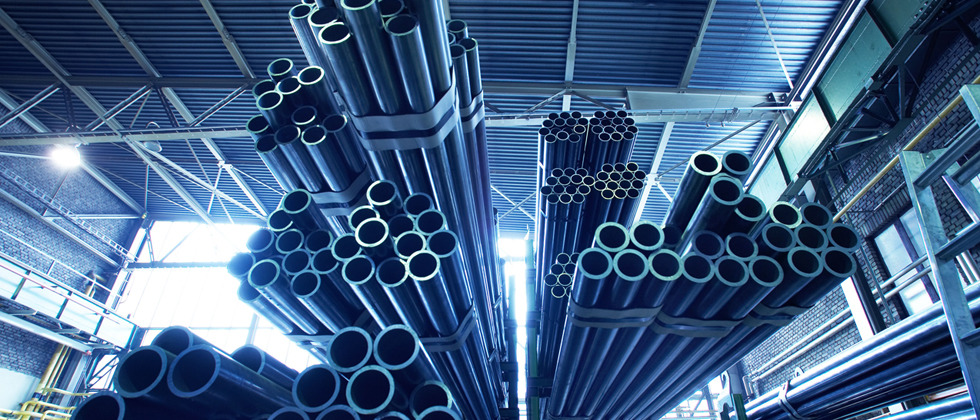
Železiarne Podbrezová is looking into reducing precision seamless cold-drawn tube sales in favour of growing seamless hot-rolled tube deliveries, which it can sell in larger volumes and are more profitable, the Slovakian producer notes. The firm hopes the EU’s new trade regime will allow it to increase product prices later this year.
In 2025, the firm failed to meet sales targets amid a challenging market. Cold-drawn tube activity was more difficult as automotive, mechanical engineering and energy sector output remained on the decline. However, overall sales were “satisfactory”, the firm says, without providing tonnages, with hot-rolled tube performing better for a third consecutive year.
Precision tube sales are not threatened by imports from outside the EU, with competition being almost exclusively between EU mills, but the market is shrinking. Hot-rolled tube is seeing growing imports from China and Ukraine in the long term, but imports are also currently having a limited impact given this is a low value-added product and transport costs play a major role in trade.
In terms of electricity prices, “we would accept comparable conditions as EU countries. However, we know that even if any state aid were to come, it would not be at a level that would make us competitive in the world,” commercial director Vladimír Soták Jr says in the company’s latest newsletter seen by Kallanish. The firm expects the Slovakian government to implement support measures this year.
Sourcing electricity competitively is a problem as both European futures contracts and spot market prices are elevated, it adds, leaving state compensation as the only solution.
As for the prospects for increasing exports, “if we want to gain new customers or some new markets, we have to be better than current suppliers in something. However, competition is very strong in the world and everything also depends on the input costs of individual manufacturers. So I do not see a very realistic massive expansion of our customer portfolio,” says Soták.
“We see a light at the end of the tunnel, which is also due to the fact that we have better gas contracts agreed and purchased in advance every year. And also, because imports from countries outside the EU will be limited to a certain extent [by the new trade regime], we will be able to slightly increase the prices of our products, which will also certainly help us,” he concludes.
Electric arc furnace-based Železiarne Podbrezová increased crude steel production 12% on-year in 2024 to 273,160 tonnes, according to the latest data, of which 215,031t was used captively for tube production. Tube production rose 8% to 176,508t, utilising 88% of capacity.
Steel bloom sales totalled 59,752t, all for export, with hot-rolled tube sales up 6% to 122,668t and precision tube sales falling to 40,160t. Exports comprised 94% of overall tube sales.
The firm installed a new 63-tonne ladle at the EAF in 2025. It uses mainly scrap as feedstock.
EU’s Industrial Accelerator Act to require 70% local content in EVs
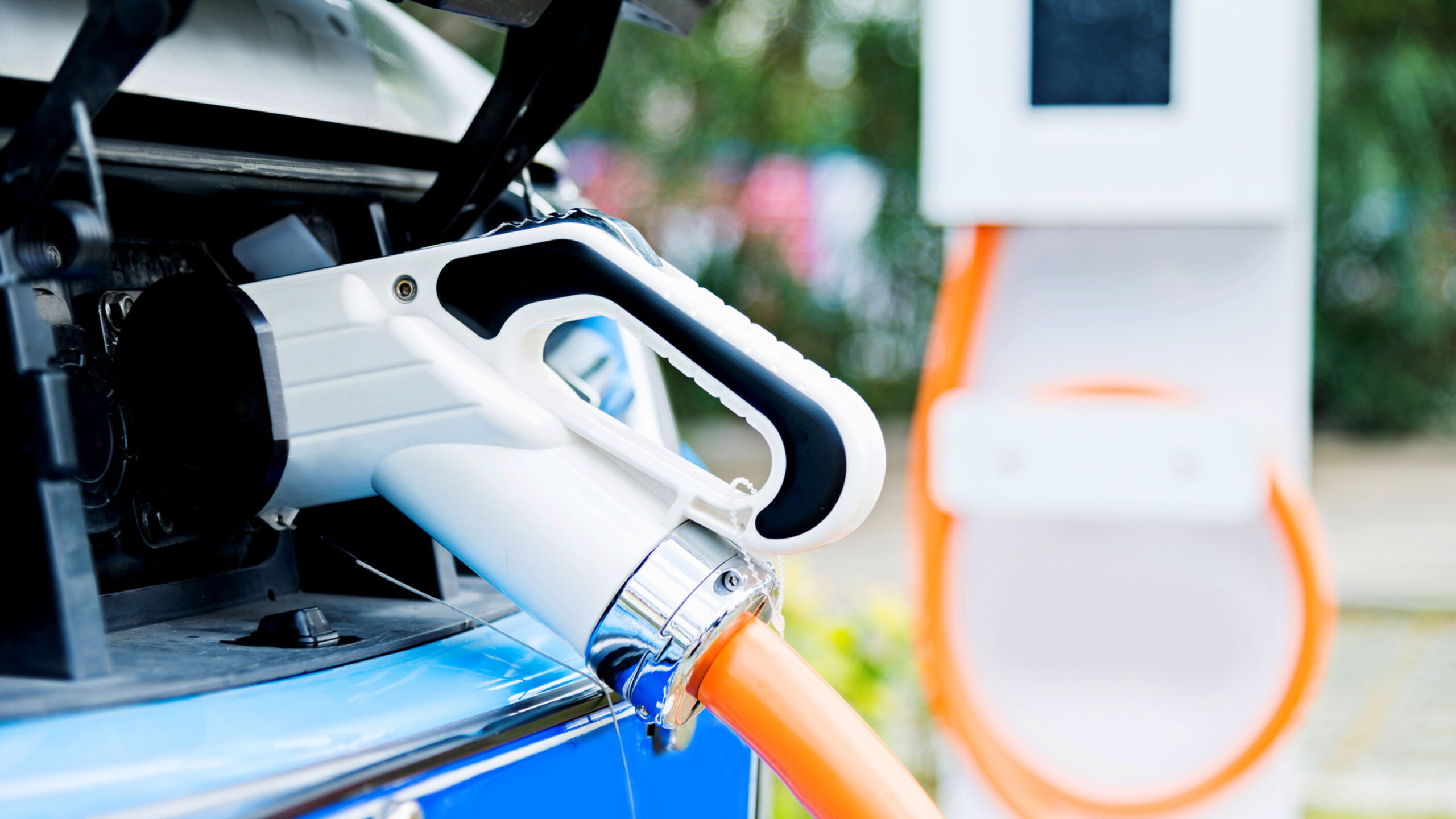
The EU plans to require electric vehicle manufacturers that receive state support to source 70% of their car components from within the trading bloc. This will include 25% of aluminium products that are low-carbon, while for steel the requirement will focus on meeting a 25% low-carbon threshold without rules-of-origin conditions, Fastmarkets heard on Wednesday February 18.
The Industrial Accelerator Act (IAA) that will set out these requirements will be part of the EU’s wider “Made in Europe” strategy, which was intended to reinforce strategic autonomy by reducing external dependencies in critical manufacturing sectors.
The automotive sector uses a range of raw materials, and supply chains for modern electric or hybrid cars include a range of ferrous, non-ferrous and battery materials.
In recent years, the EU has been trying to promote industry while adhering to its strict net-carbon-zero regulations, despite the automotive industry being reliant on China to process critical minerals for batteries.
This has resulted in a range of policies. One of these is the “made in Europe” scheme to boost the demand side, while the ResourceEU and CRMA frameworks were intended to diversify supply for critical raw materials, such as lithium, graphite and cobalt for batteries.
Improvements have yet to be seen, with the Eurozone manufacturing purchasing managers’ index at 49.5 in January 2026, below the 50-point threshold that indicated that European business was still contracting due to weak demand and production.
The EU’s local battery industry also recently called for extra support to develop an independent European battery supply chain while gigafactories plans were being cancelled.
“This is no trial period: Automotive suppliers have announced more than 100,000 job cuts since 2024,” Benjamin Krieger, secretary at the European Association of Automotive Suppliers (CLEPA), said.
Initial versions of the act identified steel as the main focus, suggesting that public procurement and state aid for steel should require low carbon emissions and origin from the EU. But revisions to the act made in the week ended February 13 represented a significant shift, softening the “made in EU” rules and allowing certain third countries to be treated like EU producers in the public procurement of key industrial goods.
In the recently leaked Annexes to the IAA, seen by Fastmarkets earlier this week, public procurement procedures would require that at least 25% of the steel used in buildings, infrastructure and transport projects be low-carbon. A parallel 25% threshold would apply to aluminium.
But the wording differed for the two materials. For steel, the text specifies that “at least 25% of the total volume of steel used shall be low-carbon.” For aluminium, it states that “at least 25% of the total volume of aluminium used shall be low-carbon and of Union-origin.” This introduces a rules-of-origin requirement for aluminium that is not present for steel.
The same distinction applied to public support plans for construction, renovation and vehicle purchases, where aluminium must meet both low-carbon and Union-origin criteria, while steel is required only to meet the low-carbon threshold.
Aluminium markets face supply constraints with the closure of the Mozal smelter in Mozambique and the introduction of costs arising from the EU’s Carbon Border Adjustment Mechanism (CBAM) on January 1, 2026.
The secondary aluminium and billet market premiums were already starting to reflect these changes, as well as the reversion of import duty to 6% from 4%.
Fastmarkets’ weekly assessment of the aluminium 6063 extrusion billet premium, ddp North Germany (Ruhr region), was $540-570 per tonne on February 13, compared with $490-530 per tonne on January 2.
Supply constraints were expected to affect the primary aluminium market in the next few months, with the IAA adding further pressure on European producers to meet demand.
Meanwhile, for green steel, the IAA was expected to help with unlocking green steel demand through public procurement, if implemented decisively.
Europe’s green steel market continued to be under strain while subdued demand clashed with shifting policy support. Trading in both flat and long products has slowed significantly, with buyers pushing back against the current premiums for low-emission steel.
Industry participants continued to highlight the lack of downstream demand. Distributors and service centers have shown limited interest and producers maintained that stronger demand from end-users would be essential for green steel to move beyond its current niche status.
Reflecting the muted trading environment, Fastmarkets’ weekly assessment of the green steel domestic, flat-rolled, differential to HRC index, exw Northern Europe, was unchanged at €100-150 ($119-178) per tonne on February 12.

European steel HRC prices steady despite subdued demand
European prices for steel hot-rolled coil remained steady in the week to Wednesday February 18, following recent market shifts linked to the effects of the EU’s Carbon Border Adjustment Mechanism (CBAM) and other regulatory changes, Fastmarkets heard.
Market sources said that, while the sector increasingly focused on domestic production, demand levels remained low because the market was still adjusting to changing dynamics, but sentiment remained positive.
“The [domestic] market is a bit better than it was before. With imports less interesting because of CBAM, there is a big focus on domestic production now,” a market source in Northern Europe said.
Another source said that mills were pushing for higher offer prices but that it might take a few weeks for those levels to be achieved in the market.
Some estimates of workable prices were said still to hover around €650-660 ($772-783) per tonne ex-works, no new trading activity was reported during the day.
Fastmarkets’ daily steel hot-rolled coil index, domestic, exw Northern Europe, was €662.81 ($782.49) per tonne on February 18, unchanged from February 17.
The index was up by €10.31 per tonne week on week and by €22.31 per tonne month on month.
In Italy, market sources also noted low demand in the market. Estimates of workable prices were reported within the range of €650-660 per tonne ex-works.
Fastmarkets’ daily steel HRC index, domestic, exw Italy, was calculated at €655.00 per tonne on February 18, down by €1.20 per tonne from €656.20 per tonne on Tuesday.
But the index was up by €7.83 per tonne week on week and by €23.75 per tonne month on month.

GMH Gruppe launches ProMateria to advance digital manufacturing
GMH Gruppe has launched ProMateria, a start-up focused on advanced metal powder production and additive manufacturing, with a particular emphasis on high-nitrogen alloyed steel (HNS).
The new company integrates in-house powder production, additive serial manufacturing and final processing, aiming to industrialise metal 3D printing for high-performance applications in aerospace, medical technology, energy, mechanical engineering and luxury goods.
High-nitrogen steel offers a strong combination of corrosion resistance, strength and biocompatibility, making it suitable for demanding and safety-critical components. ProMateria produces certified metal powders for both prototyping and serial production and uses the MoldJet process to manufacture complex, ready-to-install parts.
Applications include medical-grade metal powders as alternatives to cobalt- and nickel-based alloys, as well as mass-customised components such as precision-engineered golf clubs.
With ProMateria, GMH Gruppe continues its transformation from traditional steelmaking towards digital manufacturing, combining advanced materials and additive technologies to expand the future applications of steel.

Staalfederatie calls for urgent clarification on CBAM
The Koninklijke Staalfederatie has issued a strong call for clarification regarding the implementation of the Carbon Border Adjustment Mechanism (CBAM), warning that the current framework risks causing serious disruption to the Dutch manufacturing industry and wider European steel supply chains.
According to the Staalfederatie, the introduction of CBAM — designed to apply a carbon price to imported products in order to ensure a level playing field with EU producers subject to strict climate policies — remains highly complex in practice for the Dutch steel market. While the mechanism aims to prevent carbon leakage and protect European industry, its operational rollout is creating uncertainty across the supply chain.
A central concern is the absence of a fully workable verification procedure for embedded emissions. The first financial settlement under CBAM will take place in 2027 for imports made in 2026. However, importers currently lack clarity on how actual emissions will be verified. In the meantime, many companies must rely on default values established at EU level. These values are reported to be significantly higher than expected real emission intensities, resulting in potentially inflated cost projections.
This uncertainty makes it difficult for importers to determine final cost exposure and, consequently, what should be passed on to customers. The Federation warns that this situation could have serious implications for the competitiveness of downstream companies operating within the Dutch manufacturing sector. At present, comparable levies have not yet been introduced for many downstream products, adding to market imbalance risks.
Staalfederatie also highlights broader implementation challenges. Available calculation tools and current default values are said not to provide a realistic picture of the financial impact. In some cases, existing commercial contracts may no longer be economically viable once full CBAM costs are factored in. As a result, price predictability is weakened and supply chain stability may be affected.
In addition, practical compliance obligations — including mandatory registration in the CBAM registry and authorisation by the Dutch Emissions Authority for imports exceeding 50 tonnes of steel or aluminium — add further administrative complexity.
Staalfederatie therefore calls for the CBAM system to be simplified and made operationally workable as quickly as possible. In particular, it urges the accelerated introduction of a functioning verification process, no later than 1 July 2026, to ensure that companies gain timely clarity on the real financial impact and can price contracts for 2027 with greater certainty.


European steel HRC sentiment positive as market leader pushes for higher prices
The mood in the European domestic steel hot-rolled coil markets was upbeat on Monday February 16 amid news that the market leader was pushing for higher prices, Fastmarkets has heard.
Earlier in the day, several market sources reported that ArcelorMittal had increased its offer price for hot-rolled-coil to €750 per tonne delivered Northern Europe for May delivery, from the price of €700 per tonne delivered that was announced for April-delivery coil.
The information had not been officially confirmed by the company at the time of publication of this report. Few market sources believed that there would be an official announcement of this price rise by the company in the next few days, with strong order books being given as one of the key reasons for the upbeat tone.
One source reported the supplier selling some tonnages at €700 per tonne delivered, which would be equivalent to €685 per tonne ex-works.
“They want to pass the €700 per tonne delivered threshhold,” another buyer said.
Estimates of workable prices from other integrated mills in the region were said still to vary within the range of €650-660 per tonne ex-works, with an offer from a re-roller in the Benelux area reported at €650 per tonne ex-works, with trading said to be muted.
Fastmarkets’ daily steel hot-rolled coil index, domestic, exw Northern Europe, was €660.00 ($782.34) per tonne on February 16, up by €4.17 per tonne from €655.83 on February 13.
The index was up by €6.67 per tonne week on week and by €19.50 per tonne month on month.
In Italy, the workable price range was very wide, depending on the tonnage, at €630-660 per tonne exw.
Minor tonnages were reported sold at €650-660 per tonne ex-works, while large tonnages, which were nowadays an exception, changed hands at €630-640 per tonne ex-works.
Fastmarkets’ daily steel HRC index, domestic, exw Italy, was calculated at €651.60 per tonne on February 16, up by €4.10 per tonne from €647.50 per tonne on Friday.
The index was up by €6.60 per tonne week on week and up by €20.35 per tonne month on month.