


EU steelmakers reiterate existential threat without energy relief
Power costs remain one of the biggest barriers to investment and decarbonisation in Europe. Policymakers must restore electricity prices closer to pre-energy crisis levels while implementing reforms to stabilise markets, the European Steel Association (Eurofer) has reiterated.
Persistently high electricity prices are undermining investment and threatening the continent’s industrial competitiveness, assert European steelmaker representatives. They are bringing the issue back to the top of the agenda as EU leaders prepare to meet on Thursday at an informal retreat in Alden Biesen to address Europe’s economic resilience, Kallanish notes.
Without rapid relief, steelmakers caution that investments in low-emission steel production risk shifting outside Europe, potentially leading to permanent capacity losses across the bloc.
The so-called Antwerp appeal, endorsed by major European industries ahead of the summit, urges EU leaders to move from strategy to delivery through emergency industrial policy measures in 2026. They argue that high energy and carbon costs, fragmented markets and rising global competition are accelerating site closures and job losses across Europe.
Industry groups stress that Europe is increasingly seen as an uncompetitive destination for long-term industrial capital, while competitors in the US and China deploy assertive industrial policies.
The Alden Biesen retreat will see EU leaders discuss strengthening the Single Market and reducing strategic dependencies, themes closely linked to maintaining domestic steel capacity, which remains essential for Europe’s manufacturing and construction supply chains.
Steelmakers say the sector is not seeking protection from change, but the conditions needed to lead Europe’s green and industrial transition. The meeting is therefore viewed as a test of whether EU leaders can deliver rapid, tangible support to stabilise Europe’s steel industry before further production shifts abroad.
Wednesday saw the Antwerp European Industry Summit take place, at which European Commission President Ursula von der Leyen called for ETS revenue reinvestment into industrial decarbonisation, as well as resolving pan-EU energy grid bottlenecks (see separate story).

Acciaierie d’Italia plans ramp-up in steel output to 4 million tpy amid government-led restructuring
AdI (formerly ILVA) plans to restart blast furnace (BF) No2 during the course of the next few days, the release reads.
At the same time, on February 28, the company will start planned maintenance at BF No4, scheduled to last about 60 days. Also, within the same time frame, the company will restart coke batteries 7,8 and 12, which have being temporarily shut down for maintenance recently.
Restart of BF No2 (installed capacity of 2 million tpy of pig iron) and following restart of BF No4 (installed capacity of 2.3 million tpy of pig iron) will allow AdI to ramp up steel output to around 4 million tpy, the company said.
AdI is the largest steelmaker in Italy, with installed capacity for 8 million tpy of pig iron and 10 million tpy of crude steel. But the steelworks managed to produce just 3 million tonnes of steel in 2023, below the target of 4 million tonnes. In 2024, the company produced less than 2 million tonnes of steel, market sources said. The company had equipment to produce hot-rolled coil, cold-rolled coil, galvanized coil, plate and tubes.
As for the other BFs, industry sources said that BF No3 was completely out of operation, while BF No 5 — the largest one, with capacity for 3.7 million tpy — would require significant investment and effort in a revamp.
As of February 2026, BF No1 remains under judicial seizure and cannot be operated, after being shut down following a fire in May, which led a judge at the Court of Taranto to order a more in-depth investigation. On Thursday February 12, the Court of Taranto dismissed the application to release BF No1 from seizure, local media reported.
The Italian government took over the administration of AdI in February 2024, removing ArcelorMittal from operational management, Fastmarkets reported.
“Since February 2024, over €997 million ($1.19 billion) has been allocated to maintenance activities and industrial investments, confirming the Extraordinary Administration’s commitment to ensuring the full functionality of the facilities,” the release reads.
ADI was officially put up for sale by the Italian government in August 2024.
The sale process is unfolding against the backdrop of a long-running dispute between ArcelorMittal and the Italian state over the management and alleged expropriation of the former Ilva assets.
Earlier this week, the European Commission approved a €390 million rescue loan for the Italian steelmaker.
The measure was aimed “to ensure that AdI can cover its operating costs until the business is transferred to a new operator that will be selected in tender procedure that is currently ongoing,” the Commission said.
Author: Julia Bolotova


New leaked IIA draft softens ‘Made in EU’ rules, opens door to import steel in public procurement
The latest leaked draft of the EU’s Industrial Accelerator Act (IIA) introduces a significant shift in its “Made in EU” procurement rules, allowing selected third countries to be treated as equivalent to EU producers in public purchasing for strategic industrial goods – including steel, Fastmarkets learned on Thursday February 12.
The change will mark a notable softening of earlier proposals outlined in the first IIA leaked draft and was widely seen as reflecting concerns among some EU member states about excessively rigid Union-origin requirements that could disrupt supply chains and create trade tensions.
The revised text retains the definition of “Union origin” as covering EU and European Economic Aewa (EEA) production but adds a mechanism allowing the European Commission to designate specific third countries as equivalent through delegated acts.
To qualify, countries must demonstrate reciprocal international commitments with the EU and contribute to the Union’s competitiveness, resilience and economic security objectives, according to the draft document seen by Fastmarkets.
The Commission would also be able to revoke this status in the event of serious breaches.
The provision applies to energy-intensive industrial products and net-zero manufacturing technologies listed in Annex II, which has yet to be published but was expected to include steel.
The addition of third-country equivalence underscores the major change, which is that the IIA is no longer framed purely as a “Made in EU” decarbonization tool, Fastmarkets understands.
The IIA draft was still subject to change ahead of being formally adopted, with a final version expected to be published on February 25.
Implications for steel market
The earlier draft leaned toward mandatory combinations of Union-origin and low-carbon production requirements in public procurement and state aid plans, effectively favoring domestically produced low-emissions steel.
The new draft was less prescriptive, allowing member states to apply either Union-origin criteria, or low-carbon criteria, or both.
For steel, this reduces the risk of a rigid “double requirement” system that industry sources had warned could disrupt supply.
“South Korean or Japanese plate is used for wind industry projects in the EUt,” a buyer source in the EU said. “Both countries can supply steel produced with reduced carbon emissions content, so this ‘third country’ addition is an important amendment.”
According to sources familiar with the matter, Germany had pushed back against strict origin rules, citing the integration of EU steelmaking with global raw materials and automotive supply chains. The trusted partner mechanism appeared to reflect that pressure.
At the same time, the draft maintained plans for a carbon intensity label for steel, intended to differentiate low-carbon production – a key objective for EU mills investing in electric-arc furnaces (EAFs) and hydrogen-based direct-reduced iron (DRI) modules.
The practical effect will depend on the still-unpublished annexes defining which steel products will be covered, the origin thresholds and the carbon emissions intensity methodology, Fastmarkets understands.
Steel industry stakeholders agreed that IIA had the potential to “unlock” green steel demand through public procurement.
The shortage of public infrastructure projects in Europe that are capable of mandating green steel procurement has been deemed a significant obstacle to stimulating demand for low-carbon steel, Fastmarkets heard.
“If authorities do not push for green steel use through public procurement, then [green steel] will remain a niche market,” a mill source said.
“The effect of energy prices and also the cost of steel within the green transformation [are among] the key issues,” the distributor source said. “The distribution of green steel will be working… if we make green steel, put a label on it and make it part of public procurement.”
Reflecting the muted trading environment, Fastmarkets’ weekly assessment of the green steel, domestic, flat-rolled, differential to HRC index, exw Northern Europe, remained at €100-150 *$119-178) per tonne on February 12.

French steel prices hold, buyers resisting further increases
French longs transaction prices are largely stable compared with early February, while asking prices for coil derivative products continue to edge higher, Kallanish notes.
Sheet and tube producers are again attempting to raise prices, due to higher hot rolled coil costs. However, customers are pushing back and refusing the latest offers. Several buyers say activity levels remain challenging, with margins under pressure.
For February delivery, sheet re-rollers and tube producers are seeking further increases of around €30-40/tonne ($35.35-47.38/t). Buyers complain that prices are already “too high” and say they are unable to pass additional increases downstream. If implemented, hot rolled sheet prices would rise to around €770-780/t delivered. One buyer says he will purchase only minimum volumes.
A purchasing group adds that many companies lack the financial capacity to buy at higher price levels. According to several market participants, 2025 was a difficult year for buyers, with banks reducing credit insurance and more closely monitoring their financial performance. Margins for downstream sheets and tubes remain particularly low.
In the longs segment, prices are largely stable week-on-week, although section producers are seeking further increases of around €20-30/t this month, which buyers have yet to accept. Market participants tell Kallanish they intend to negotiate more limited rises.
First-category section prices are currently holding at around €740/t delivered, while merchant bar is flat on-week at around €230/t. Rebar prices are also unchanged compared to the beginning of February at approximately €600-610/t delivered.
The recent wave of price increase announcements for long products across Europe is translating into modest gains so far. While demand is present, activity over the past two weeks has been sluggish. Several mill sources say they expect prices to continue rising gradually due to rising production costs.
Last week some producers in northern Europe confirm they temporarily halted sales in order to assess the impact of recent rises in energy and raw material costs before issuing new price lists (see Kallanish passim).

European prices to rise despite demand conditions: Tata
Steel prices in Europe are set to rise on increased regulation, despite weaker demand conditions, according to Tata Steel.
The evolving tariff framework and CBAM in Europe are “pivotal for rebalancing EU market dynamics”, chief executive T V Narendran said in the firm’s earnings release last week.
During the earnings call monitored by Kallanish he noted that sentiment in the EU is improving, supported by the CBAM rollout and expected safeguard revision from June.
Koushik Chatterjee, executive director and chief financial officer, said: “The effectiveness and timing of the CBAM effect and the trade-related quotas will determine how quickly the imports retreat from the EU market and the utilisation of the local steel industry increases, which will have positive implications on the price regime.”
He added: “Irrespective of the demand condition, there will be an uptick in prices because, arithmetically, it has to work in that manner. And then comes the steel action plan. So there are two very fundamental regulatory triggers in the EU, which will push up the prices.”
There is a CBAM markup of 10% in 2026 and 20% in 2027. “Until the verification happens, the markup keeps increasing. So, technically, the prices should increase,” he noted.
There is an expectation that EU prices will move away from Asian prices and closer towards US prices, Narendran added. The executives expect a gradual increase of around €100/tonne ($119/t) over the full year rather than a jump.
“It will happen at least in two stages. One is CBAM now, and secondly is when the tariff comes in post-June 2026,” Chatterjee suggested.
For its Netherlands operations, Tata expects an Ebitda expansion, with an additional 400,000 tonnes on-quarter to be sold in the March quarter. The IJmuiden plant is well positioned to take advantage of the higher prices, Narendran added.
Tata is also calling for changes to safeguards in the UK, where its operations continue to make a loss.
“Given the actions being taken in the US, in Europe, in India, and elsewhere, we expect the UK government also to be taking these actions,” Narendran said. “Once it happens, hopefully, we are on track to make sure that the UK is on positive Ebitda territory.”
Chatterjee expects a UK price increase of around £100/t ($137/t) plus if the quotas are similar to the EU’s, which will “significantly” help profitability.
“It is also important for the UK to do that in the context of the fact that the EU has come out with the quotas and with their steel action plan and, therefore, there is a need to harmonise it,” he added.
ADI eyes 4 mt/y steel output by April 2026
Acciaierie d’Italia (ADI) plans to double steel production to 4 million tonnes per year by April 2026, the extraordinary administration of ADI announced on 11 February.
Testing at blast furnace (BF) No. 2 has been completed and full-scale production will be restarted “in the coming days”, according to ADI.
In the meantime, scheduled maintenance on BF No. 4 will start on 28 February and will take around 60 days. Following the restart, the steelmaker will operate both BFs, McCloskey understands, with output reaching 4 mt/y.
ADI is also planning to recommission temporarily idled coking batteries No. 7, 8 and 12.
The administrators said that since February 2024, over EUR997m has been allocated to support production at ADI. Earlier this week, the European Commission approved a rescue loan of up to EUR390m to ADI under EU state aid rules.
“The funds were allocated to ensure that the steelmaker can cover operating costs until the new owner is selected in the ongoing tender,” the ADI release said.
ADI is currently in the process of being sold, with Flacks Group, a United States-based investment firm focused on the turnaround of distressed businesses, discussed in the market as a likely new owner. The tender is not yet finalised.
ADI’s new output target is in line with the plans disclosed by Flacks Group for 2026. In addition, as part of its decarbonisation initiative Flacks Group plans to replace existing blast furnaces (BFs) with two electric-arc furnaces (EAFs) and keep only one BF running.
To learn more about decarbonisation projects in Europe and globally – check Global Green Steel Profile.
Market participants believe that increased domestic production in Europe might slow down or put an end to the bullish trend settled in the market. Real demand has not recovered, and domestic price increases have been mainly driven by the impact of the Carbon Border Adjustment Mechanism (CBAM), launched earlier this year and the anticipated reduction of import quotas. The first policy has made imports riskier, increasing costs for imports arriving in the EU, with buyers switching from purchases on a CFR-basis to DDP in an attempt to protect themselves from additional risks. The anticipated reduction of quotas for steel imports by 47% in the second half of the year will further restrict access of imports to the EU market.
A combination of these factors has increased the market share of European steelmakers and also boosted prices. However, an increase in domestic output risks disrupting this dynamic, sources said.
At the end of last year, ArcelorMittal resumed production at its Fos-sur-Mer plant in southern France.
Author: Maria Tanatar


European long steel round-up: domestic rebar prices stable on subdued demand
Northwest European rebar prices held stable in the week to 11 February on subdued consumption dynamics and a lack of immediate need for distributor restocking, while interest in imported rebar appears to be growing.
McCloskey’s sources reported price indications for Northwest European rebar on a delivered basis, at Eur610-620/t delivered. Offers in the German market were heard between EUR620-630/t delivered – in line with recent increases – but the hesitancy of buyers to commit to volumes amid regulatory and consumption uncertainties is limiting the possibility of producers realizing these levels at present.
That said, producers are “cautiously optimistic” of a bullish trend later in the year – confirmed by IREPAS’ market outlook for February – anticipating stronger pricing power once existing inventory levels wind down and buyers return for more substantive purchasing. Import accessibility will also see further restrictions – already burdened by Carbon Border Adjustment Mechanism (CBAM) liabilities – from reductions to EU tariff-free quota volumes for steel products.
Importers are generally becoming more comfortable with navigating the specifics – and pitfalls – of CBAM, agreeing to share liability with producers via indemnification or hedging clauses. Both producer and trader sources confirmed that third country exporters are increasingly agreeing to fix CBAM liability at a certain emissions level, with either the exporter or importer compensating the other where verified (or forced default) emissions declarations result in higher or lower values than fixed at the time of the trade.
In that context, increased interest was identified in the EU market as regards imports, especially from origins closer-to-home like Turkey, Algeria, or Egypt – though importing still seems subdued as compared to usual levels. Offers from said origins were reported in the range of EUR500-510/t CFR Antwerp, which when accounting for potential CBAM, safeguard, and logistical costs, still offers insufficient margin to engage much interest from non-incumbent suppliers, to the benefit of domestic market share.
| Weekly European long steel markers | |||
| EUR/t | Term | 11-Feb-26 | Change |
| Northwest Europe DEL rebar | DEL | 620.00 | 0.00 |
| Northwest Europe CFR rebar | CFR | 510.00 | 0.00 |
Author: Benjamin Steven
Suppliers, buyers still at odds in European steel HRC market
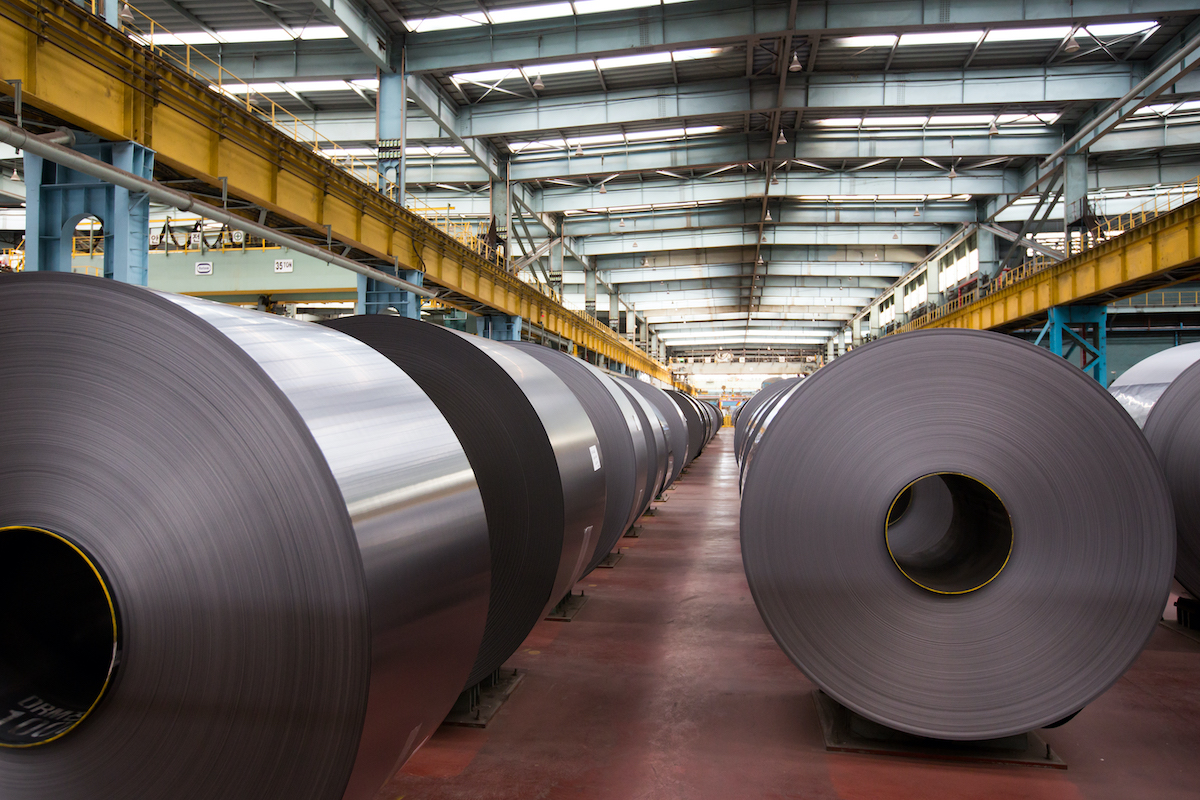
European suppliers of steel hot-rolled coil remained optimistic on Wednesday February 11, testing the market with higher offer prices. Meanwhile, however, buyers continued to resist higher prices, claiming that they did not need to restock.
A German supplier was offering April-delivery coil at €680 ($808) per tonne ex-works, but market sources considered this price unworkable.
Earlier this week, an offer from a leading European steelmaker was reported at €700 per tonne delivered (around €685 per tonne ex-works).
Buyers, however, were estimating achievable prices no higher than €650-660 per tonne ex-works, citing slow downstream sales.
“We do not need to restock now. [We need] only hand-to-mouth bookings to cover gaps in supply,” a steel service centre in Germany told Fastmarkets.
“Automotive demand is not improving. There is no chance to push higher offers [for coil] downstream,” another source in Germany said.
Fastmarkets’ daily steel hot-rolled coil index, domestic, exw Northern Europe, was €652.50 per tonne on Wednesday, down by €1.67 per tonne from €654.17 per tonne on Tuesday.
The index was, however, up by €1.50 per tonne week on week and by €17.50 per tonne month on month.
Fastmarkets’ daily steel hot-rolled coil index, domestic, exw Italy, was calculated at €647.17 per tonne on Wednesday, up by €2.17 per tonne from €645.00 per tonne on Tuesday.
The index was down by €0.33 per tonne week on week, but up by €17.17 per tonne month on month.
In Italy, offers of April-delivery HRC were heard around €660 per tonne ex-works. But earlier this week, trade sources said that some suppliers were testing the market with offers about €685 per tonne ex-works.
Buyer-side estimates of a workable market level were heard at €645-650 per tonne ex-works, supported by deals within that range.
One trader said that lead times for HRC in Italy were still eight weeks but did not extend further.

European Commission to keep free allocations for steel, refining for 2026-30 unchanged
The European Commission plans to maintain the same number of free allocations under the EU Emissions Trading System for steel producers and refiners for the 2026-2030 period, according to a leaked presentation seen by Platts, part of S&P Global Energy.
These preliminary benchmarks, circulating ahead of an informal EU leaders summit on the bloc’s industrial competitiveness in Cyprus on Feb. 12, show a less aggressive reduction in free allocations of EU Allowances for most chemicals and cement facilities. Glass and ceramics producers, however, face tighter allocations, while those for steel and refining remain stable.
These sectoral benchmarks determine the share of free EU ETS permits allocated to industrial facilities based on their emissions intensity relative to the most efficient producers.
Free allocations are based on benchmarks derived from the average greenhouse gas emissions of the 10% most efficient installations covered by the EU ETS for that product.
The European Commission is expected to adopt implementing regulations in April 2026 that will update these benchmark values under Article 10a(2) of the EU ETS Directive.
A spokesperson at the European Commission declined to comment on the leaked preliminary benchmarks.
Industry reaction
“Several steel clients I spoke with were comfortable with the outcome, noting a clear preference for the benchmark to remain unchanged,” said Dan Maleski, a senior environmental markets consultant and CBAM lead at Redshaw Advisors.
“Softer benchmarks for cement and chemicals are unsurprising. These sectors are among the hardest to abate, with limited technological options and high costs. Many cement clients are already heavily reliant on government support to continue abatement efforts, so any potential relief in this area is being welcomed,” Maleski said.
The development comes as the European Commission reassesses free allocation rules under the EU ETS, which currently require a complete phaseout by 2034 for sectors covered by the EU’s Carbon Border Adjustment Mechanism. Calls have been made for extensions amid faltering competitiveness and concerns about carbon leakage.
“As regards free allocation, the ETS has always provided effective protection against the risk of carbon leakage and will continue to do so beyond 2030,” a Commission spokesperson told Platts on February 10. “The 2026 ETS Revision will assess various ways of providing this protection while supporting the industry in its decarbonization.”
EU carbon prices have slid sharply in recent weeks on news that the European Commission is looking to tweak free allocations and allowance supply caps.
EU Allowances were trading at Eur77.87/mtCO2e ($92.56/mtCO2e) at 1459 GMT on Feb. 11, the lowest in five months, according to the Intercontinental Exchange.


ArcelorMittal to invest EUR1.3bn in single Dunkirk EAF
ArcelorMittal will invest EUR1.3bn in installing replacement electric-arc steelmaking capacities at its Dunkirk plant, scheduled for first operations in 2029, the company announced 10 February.
According to the steelmaker, the new 2 mt electric-arc furnace (EAF) will be capable of producing steel with “three times less CO2 than a blast furnace,” at 0.6t CO2e/t, and will operate on a mixture of scrap, direct-reduced iron/hot-briquetted iron (DRI/HBI), and pig iron. Half of the EUR1.3bn investment will be financed publicly with Energy Efficiency Certificates.
France’s President, Emmanuel Macron, was present for the announcement at the French site, accompanied by company leadership.
“I am delighted we are now able to launch this €1.3 billion investment in Dunkirk, which underscores our Group’s long-term commitment in France,” said CEO Aditya Mittal in a press statement. “I must thank President Macron and the French government who – very early on – understood the challenges the European steel industry was facing.”
Mittal’s comments reference steelmakers’ long-cited issues with the competitiveness of the European steel sector against global pressures, which the European Commission is attempting to remedy with new industrial support policies, and regulatory simplification. Policies initially proposed by the Commission in last year’s Steel and Metals Action Plan – such as new long-term steel trade protections, the implementation of the Carbon Border Adjustment Mechanism (CBAM), and the upcoming Industrial Accelerator Act (IAA) – are intended to better support the ‘investment case’ for industrial decarbonisation, which for European steelmaking, is largely characterized by the transition from blast-furnace to basic-oxygen furnace (BF-BOF), to EAF steelmaking fed by scrap and direct-reduced iron (DRI).
In its press release, ArcelorMittal states that it “appreciates the progress made by the European Commission to better protect the European steel industry,” and “expects [proposed measures] to restore fair and competitive conditions in the European steel market, thus securing a sustainable future for steel production within the European Union.”
ArcelorMittal has suspended the majority of its European decarbonisation projects, citing aforementioned burdens on competitiveness, as illustrated in McCloskey’s recent Global Green Steel Profile. Postponement to the renovations at Dunkirk specifically related to the high cost of gas and hydrogen in Europe, as stated by company leadership in the French Parliament last year.
The steelmaker’s latest announcement on its decarbonisation plan appears reduced from its initial scope, confirming the construction of only a single EAF, as opposed to previous commitments to construct two EAFs, and a 2.5 mt/y DRI plant. The two EAFs were originally scheduled for initial operations in 2027.
Secondary steelmaking sources have suggested that this indicates ArcelorMittal is abandoning its DRI investment plans and will instead import DRI/HBI to facilitate decoupled steelmaking.
McCloskey’s recent coverage of the leaked draft of the EU’s upcoming Industrial Accelerator Act (IAA) indicates that the European Commission is planning to introduce a ‘sliding scale’ into its new green steel definition, represented by a voluntary low-carbon label that gives a better ‘green classification’ the lower the share of constituent scrap. This could give DRI-EAF steel an advantage over the EU’s existing scrap-EAF production in achieving equivalent, or even improved classifications, despite the lower emissions profile of high-percentage scrap-fed steels.
The EU’s independent EAF steelmakers have largely opposed the inclusion of the sliding scale, fearing that it will give integrated steelmakers undue access to secondary steelmakers’ core construction sector demand as low-carbon markets become increasingly (and at times inconsistently) regulated by instruments such as the IAA.
Despite the fact that the thrust of the European Commission’s regulatory efforts in the steel sector are to protect the ‘investment case’ for decarbonisation without undermining industrial resilience, some market sources have argued that the current trajectory of steel policy across CBAM, the new permanent steel quotas, and green steel standardisation are instead facilitating the gradual decoupling of iron and steelmaking on the continent.
These sources allege that integrated steelmakers are lobbying for ‘sliding scale’ based green standards of universal scope in order to consolidate their access to future domestic low-carbon demand, supporting a limited transition to decoupled EAF steelmaking, while simultaneously closing the market to downstream imports but retaining access to low-cost DRI/HBI from abroad. If true, this would threaten to off-shore primary steel production, undermining the Commission’s push for industrial resilience, and potentially stimulating domestic steel price inflation beyond what consuming industries can tolerate.
The French Democratic Confederation of Labour (CFDT) – France’s largest trade union by membership – boycotted Macron’s visit to the Dunkirk site on similar factors, describing the announcement as “political staging.”
“This announcement is a smoke screen and will not suffice; we are very far from the initial plan […] while ArcelorMittal has obtained everything it wanted!” stated the union in an associated press release. “Behind the hollow words and the promises, there are thousands of jobs threatened and eliminated, weakened industrial basins, and shattered lives.”
ArcelorMittal released its full-year 2025 results this week, reporting $3.2bn net income, and foreseeing an improved outlook for European steel prices and demand in 2026.