

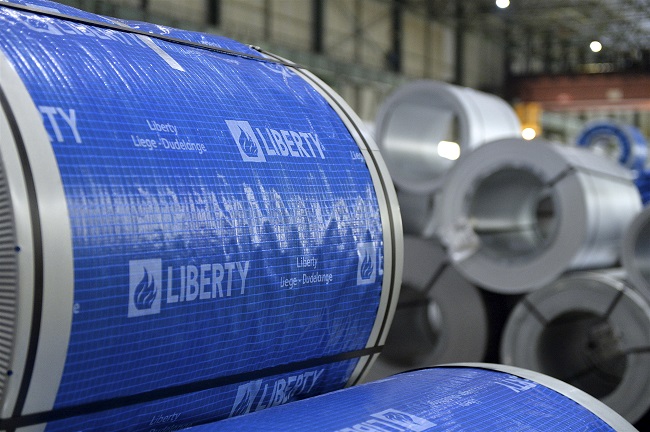
Liberty Galati to auction mill in March: reports
Troubled Romanian steelworks Liberty Galati will seek a strategic investor to acquire its steel mill through a tender in March, says Remus Borza, president of Euro Insol, the company’s bankruptcy administrator.
“We will organize the international auction on 12 March and the participation guarantee will be 7%,” he is reported as saying in Ziarul Financiar.
“The asset valuation was carried out by the Romanian company Darian, which specialises in industrial and real estate asset valuations. As part of the sale procedure, 13 investors have expressed interest in taking over the plant so far,” he adds.
Among those interested are industrial groups from India, China, Turkey, Ukraine and Iraq, as well as the Romanian company UMB Grup, Kallanish notes.
Also on the list of potential buyers are JSW Steel and Jindal Group from India, DeLong Steel from China, KMC Steel from Turkey, Galiawa Group from Iraq and Metinvest from Ukraine. The Ukrainian group is already present in Romania, after its acquisition of the ArcelorMittal Tubular Products factory, which completed in December.
Liberty Galati and Euro Insol had not replied to requests for comment by Kallanish at the publication deadline.
Liberty Galati has amended an earlier restructuring plan proposed by the two administrators, which was approved by the Galati County Court.
The plant has annual production capacity of around 2.5 million tonnes of steel for the construction, naval, oil and gas, and power generation sectors. It was acquired by Liberty Steel Group from ArcelorMittal in July 2019.
The plant is part of the Liberty Group and entered into a preventive arrangement in March 2024, in an attempt to avoid bankruptcy. Since then, the plant’s activity has been severely affected.
Last summer, Liberty Galati resumed operations at its metallurgical plant following a pause of almost a year.


CBAM to strongly impact European plate market
Heavy plate prices and availability will be particularly impacted by the Carbon Border Adjustment Mechanism (CBAM), according to German consultant Andreas Schneider of Stahlmarkt Consult.
In contrast to most other products, Europe’s plate market is a hungry absorber of slab as the semi-finished input material used by many re-rollers in Italy, and other countries. The CBAM fees will be imposed on imports of plate as well as slab, meaning that this value chain will see barriers on both channels, Schneider says.
“The effect of CBAM on the costs of heavy plate and slab is even more unclear than for other product groups,” he tells Kallanish. The fee on plate could well range between €100-300/tonne ($118-354/t), he adds.
The EU’s gradual phasing out of Russian slab until 2028, or its potential ban from July this year as part of the new trade regime, has already caused a diversion to Asian sources. But countries like China and Indonesia will easily face default fees of €300/t or more, which will render them unattractive.
Most recently, slab from traditional Asian suppliers, excluding CBAM costs, were still reported at around $520/t cfr southern European ports (see Kallanish 30 January).
Among European re-rollers, the subsidiaries of NLMK in Belgium and Denmark are most dependent of material from Russia and will need to gradually divert to other sources. Although European mills have excess capacity of slab for coil production, these are normally thinner and cannot be easily used for rolling heavy plate.
European integrated mills are reportedly tempted by the low prices of Russian and Brazilian slab. Market sources suggest they occasionally do buy slab from import, rather than using their own production, and such transactions are sometimes heard in the market, but remain unconfirmed.
According to Schneider, “it’s one of the best-kept secrets – that [European] mills buy slab from overseas imports.”

Italian coil derivative prices increase
Coil derivative prices in Italy are rising sharply with buyers resuming purchases of tubes and sheet products amid higher coil prices linked to safeguard measures and the impact of CBAM, re-rollers and service centres tell Kallanish.
Some renewed buying interest is currently emerging for sheet and strip, as customers procure material in anticipation of further price increases. One source notes that higher price levels are welcomed, as they increase the value of existing inventories, but notes that it does not reflect a genuine improvement in real demand.
According to market participants, downstream consumption remains unchanged compared with last year’s levels.
The market has started the year slowly, with January remaining subdued following some restocking activity in December. However, hot rolled sheet contract prices have moved higher, rising from around €720/tonne ($852.79/t) base delivered at the start of January to €750–760/t this week, with higher grades reported at €780–790/t delivered.
These increases reflect price hikes implemented last week by service centres.
“Below these levels, service centres are unwilling to accept orders,” one source comments.
Several service centres warn that further price escalation could follow in the coming weeks, citing sharp increases in coil prices linked to CBAM and other protectionist costs.
The Italian market remains highly competitive due to its fragmented structure, but rising costs are reducing steel processors’ willingness to grant price concessions. Several market participants note that sheet prices continue to lag recent coil increases and will need to rise further in February.
Meanwhile, tube prices are also moving higher, with re-rollers this week narrowing discounts to around 40 points. A shortage of certain grades is emerging, driven by slow customs clearance of imported coils and production cuts.
One purchasing group says that while January started slowly, volumes for sheet and tube products were satisfactory overall. The group expects prices to continue rising in the coming weeks.

Italian rebar makers seek increases
Italian rebar prices are ticking up moderately, by around €10/tonne ($11.89/t), compared with early January. Producers are seeking new increases to €320/t base ex-works, driven by rising scrap costs, Kallanish notes.
Market activity, however, remained subdued in January and consumption is still weak following some year-end restocking in December. In central Italy, prolonged heavy rainfall has slowed construction activity and steel deliveries, a construction company and an agent confirm.
Despite this, producers’ determination to raise prices remains strong amid high production costs, with some mills quoting at as high as €350/t base ex-works. These increases are meeting market resistance, as consumption does not support higher levels.
Nevertheless, contract prices last week edged up from around €280/t base ex-works in mid-January to €290-300/t base. One seller reports concluding a single truckload sale at €320/t; a truckload represents around 30 tonnes.
Mesh prices are also ticking up to €390-400/t base ex-works, plus approximately €300/t in extras. Including size extras of €260-270/t, effective rebar transaction prices are currently assessed at €550-570/t ex-works, sources suggest.
Sidenor president becomes chairman of Spanish train manufacturer
The president of steelmaker Sidenor, José Antonio Jainaga, who heads the consortium that has taken control of Tren Articulado Ligero Goicoechea Oriol (Talgo), has been appointed chairman of the Spanish train manufacturer.
He will succeed Carlos de Palacio Oriol, who is stepping down after 38 years at the company. The handover marks the departure of the founding families from the top management of the Basque train manufacturer, Kallanish notes.
Last December, Sidenor acquired a 27.4% stake in Talgo’s share capital, paying €156 million ($185.9m).

German steel market participants reaffirm bullish outlook for February: Platts survey
German steel market participants reaffirmed their outlooks and expected an increase in prices, inventories and production levels in February, data from the latest Platts German Steel Sentiment Survey showed.
Price index
With expectations of a stronger safeguard mechanism from H2, along with the active Carbon Border Adjustment Mechanism, both sides of the market expected domestic prices to increase in February as imports became less desirable.
The overall index for the month stood at 76.88 points, up from 70.83 points in January. Participants continued to share bullish expectations since the start of Q4 2025.
Trader, stockholder and service center sentiment on price was measured at 68.75 points, while producer sentiment stood at 85 points – the highest both have been measured since the survey began.
Despite these expectations, sources continued to highlight that low end-user demand and relatively high stock levels in Europe would weigh on the extent of any price increases.
Platts, part of S&P Global Energy, last assessed domestic HRC in Northern Europe Jan. 30 at Eur640/mt ex-works Ruhr, up Eur20 month over month, and the highest level assessed since May 2025.
Platts last assessed domestic rebar in Northwest Europe Jan. 28 at Eur585/mt ex-works, up Eur5 across the same period.
| Month: | September 2025 | October 2025 | November 2025 | December 2025 | Janaury 2026 | February 2026 |
| Index: | 54.17 | 65.63 | 66.67 | 70.83 | 70.83 | 76.88 |
Production index
The overall index for production stood at 68.75 points, a large jump up from the 37.50 points measured in January.
Trader, stockholder, and service center sentiment increased over the month from around 33 points to 62.5 in February. Producer sentiment was recorded at 75 points, up from around 42 in the month prior.
After some time of producers undergoing seasonal maintenance combined with steady buying activity, both sides of the market expected production levels to finally ramp up as import regulations pushed buyers to purchase locally.
| Month: | September 2025 | October 2025 | November 2025 | December 2025 | January 2026 | February 2026 |
| Index: | 66.67 | 53.13 | 41.67 | 37.50 | 37.50 | 68.75 |
Inventory index
The index showed that market participants expected inventory levels to rise slightly in February as material ordered in Q4 2025 arrived, with some service centers and stockholders holding material in expectation of higher prices later in the year.
Overall, the index was measured at 53.75 points, up from just 25 in January. This was made up of 62.5 points from traders, service centers and stockholders, and 45 points from producers.
Even with expectations of higher inventories, sources noted that uncertainty surrounding pending regulation and costs was making some buyers hesitant over ordering material.
| Month: | September 2025 | October 2025 | November 2025 | December 2025 | January 2026 | February 2026 |
| Index: | 43.75 | 40.63 | 47.92 | 25 | 25 | 53.75 |
Demand picture
Surveyed participants agreed that demand for domestic materials was likely to improve in the coming year due to reduced imports.
According to EUROFER, imports had a share of 27% in relation to European apparent steel consumption in Q2 2025, a historically high level.
With a new safeguard system expected in H2 and CBAM cost uncertainty, the share imports make up in the European steel market was expected to fall, but this was yet to be seen.
Downstream goods
The majority of surveyed participants also added that more downstream products, like cold-rolled coils and hot-dipped galvanized steel, were likely to increase in price faster than HRC in 2026 because they are markets that traditionally rely on cheaper imported material.


Northern European steel heavy plate prices rise; Italy market stable amid bullish offers
Northern European steel heavy plate prices increased further during the week to Thursday January 29 on higher offers, but trading remained subdued.
Meanwhile, Italian domestic plate prices were flat for the second consecutive week, despite bullish offers and fresh bookings.
Northern Europe
Prices in Northern Europe moved up in the past seven days amid rising offers and muted import demand because of Carbon Border Adjustment Mechanism (CBAM) uncertainty and cost considerations.
Higher offers for April and even May shipments were made between €750 ($898) and €820 per tonne ex-works during the pricing session.
Fastmarkets’ weekly price assessment for steel domestic plate, 8-40mm, exw Northern Europe was €750-780 per tonne on Thursday, up by €30 per tonne from €720-750 per tonne a week earlier.
But trading was still subdued, with one distributor source saying that competitive prices for plate cut from coil — being a cheaper option for limited end-use applications — were encouraging some buyer reluctance to accept higher market levels.
Concerns continued to swirl around CBAM, the EU’s newly implemented carbon levy on imports based on embedded emissions, with a trader source describing uncertainty around “not finally defined costs” for CBAM and future tighter safeguard measures.
“[The uncertainty] makes it very difficult on the import side to develop definitive business plans on how to proceed for all types of steel consumers and fabricators with the required certification procedures to handle these regulations,” the trader source told Fastmarkets.
Italy
Italy plate prices in Southern Europe’s domestic market remained stable following fresh deals at €700-720 per tonne ex-works.
Fastmarkets’ weekly price assessment for steel domestic plate, 8-40mm, exw Southern Europe was €700-720 per tonne on Thursday, unchanged week on week.
But Italian re-rollers continued to push for higher market levels, with offers made at €680-750 per tonne ex-works during the week.
One producer source said there were “plenty of sales” in the region, with shipments now rolling into March delivery.
In addition, steel slab import prices to Italy have also moved higher in the past two weeks, largely because of CBAM cost uncertainty.
“The biggest problem for Southern Europe is from where to obtain slab at reasonable prices and quantities as CBAM requires [verified emissions data] and compliance with EU verification requirements,” the trader source said. “This drives up slab import prices.”

Polish long steel prices keep climbing amid higher costs, less pressure from import
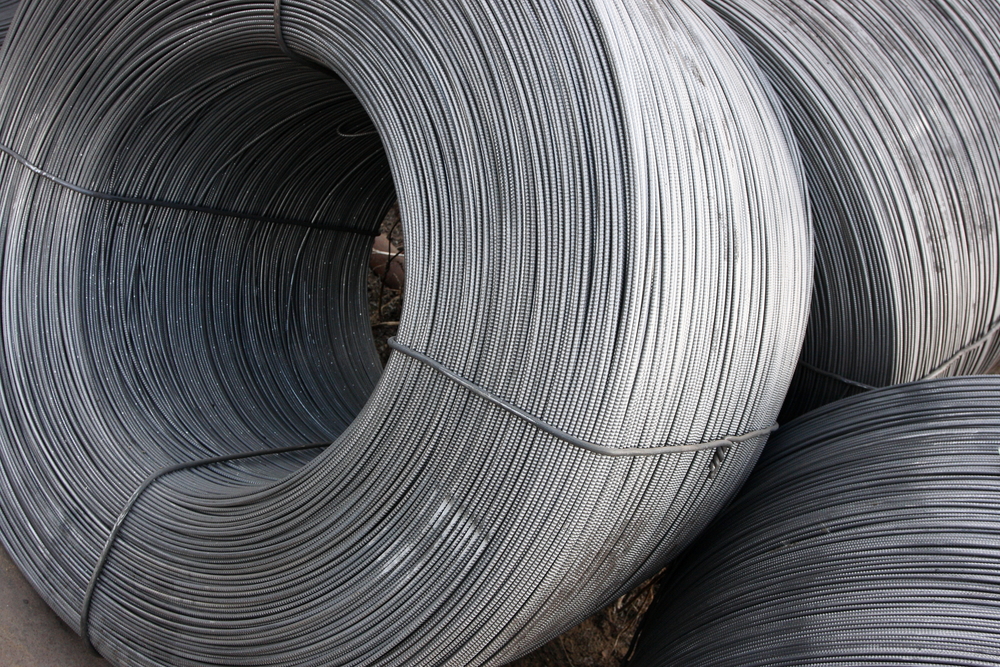
Rebar and wire rod prices continued to climb in the Polish domestic market during the week to Friday January 30, supported by continuing growth in feedstock costs and a lack of pressure from the import side.
The introduction of the Carbon Border Adjustment Mechanism (CBAM) in January 2026 resulted in a slowdown in import activity across the steel sector due to uncertainty over the cost of CBAM certificates and the long steel sector was not an exception.
Last week, Ukraine’s ArcelorMittal Kryvyi Rih (AMKR) announced plans to halt the blooming line at its steel mill in central Ukraine during the second quarter of 2026, citing CBAM as a key reason.
At the same time, scrap and energy costs continued climbing in the EU, pushing finished long steel prices higher.
In Poland, rebar offers narrowed upward to 2,650-2,700 zloty ($716.43-758.57) per tonne CPT in the week to January 30, compared with 2,550-2,700 zloty per tonne CPT the previous week.
Workable levels were estimated within the range of 2,600-2,650 zloty per tonne.
Fastmarkets’ weekly price assessment for steel reinforcing bar (rebar), domestic, cpt Poland was 2,600-2,650 zloty per tonne on Friday, up 50 zloty from 2,550-2,600 zloty per tonne tonne one week prior.
Wire rod offers came within the wide range of 2,750-2,950 zloty per tonne depending on supplier, with the highest bids from customers not exceeding 2,750 zloty per tonne.
Fastmarkets’ weekly price assessment for steel wire rod (drawing quality), domestic, delivered Poland was 2,750-2,800 zloty per tonne, up 150 zloty from 2,600-2,650 zloty per tonne one week prior.

European domestic HRC prices rise as pressure from import reduces
European domestic hot-rolled coil prices rose on Monday February 2 as customers accepted higher prices amid limited import activity.
The introduction of the EU’s Carbon Border Adjustment Mechanism (CBAM) in January 2026 resulted in the slowdown of imports overall in the steel segment, due to the uncertainty over the cost of CBAM certificates.
The effect on the HRC market was evident, since the imported volume in 2025 totaled 9.5 million tonnes, according to Global Trade Tracker statistics.
As a result, the demand for locally-produced coils increased, which allowed domestic producers to raise prices, although sales levels are still below mills’ bullish targets.
Notable strengthening was reported in Italy, where mills increased offers to €660-685 ($779-808) per tonne ex-works for April shipment, depending on supplier, with some sales heard done at €645-655 per tonne ex-works versus €630-635 per tonne ex-works heard last week.
Estimates of workable prices varied within the wide range of €640-665 per tonne ex-works.
Fastmarkets’ daily steel hot-rolled coil index domestic, exw Italy was €651.67 per tonne on Monday, up by €13.67 per tonne from €638 per tonne on Friday January 30.
The index was up by €14.17 per tonne week on week and by €28.55 per tonne month on month.
Most recent offers from integrated mills in Northern Europe came at €670-685 per tonne ex-works for April delivery coil, with sporadic bookings heard done within the range of €650-660 per tonne ex-works.
Fastmarkets’ daily steel hot-rolled coil index domestic, exw Northern Europe was €650.83 per tonne on February 2, up by €0.83 per tonne from €650 per tonne on January 30.
The index was up by €4.58 per tonne week on week and by €23.63 per tonne month on month.
In the import segment, some minor tonnage of HRC from India was heard booked in Italy at €600 per tonne DDP last week, CBAM costs included.
Turkish HRC was on offer to Italy at €630-640 per tonne DDP, CBAM costs included.

European coil and green steel round-up: European coil prices rise on CBAM, new quotas
European coil prices congregated higher in the week to 30 January, as the extension of mill lead times gave further strength to the firmness of offers for April delivery.
Only a few steelmakers were said to have allocation remaining for the first quarter, settling deals for March delivery hot-rolled coil (HRC) at prices of around EUR650/t ex-works. Strong stock levels limited the tractability of price increases for Q1 delivery, especially given end-consumer reluctance to absorb steel price inflation.
Downstream cold-rolled and hot-dip galvanized coils (CRC/HDG) were said to be fully booked out under Q2, trading at a substantial premium to HRC, between EUR750-760/t ex-works.
Mills were said to be targeting a minimum of EUR700/t ex-works or delivered for HRC, depending on location, and EUR800/t ex-works or delivered for CRC/HDG on indicative offers for second-quarter delivery.
Italian HRC prices similarly incremented higher on week, at parity or a slight discount to Northwestern price levels.
“Prices are slowly moving up, but the pace isn’t really increasing as buyers have enough in stock,” said a Benelux distributor. “That’ll all change however once imports face new quotas.”
The European Commission’s proposal to replace the EU’s existing steel safeguard was approved with amendments by Parliamentary committee earlier this week, and must now be reviewed by the European Council. This would authorise the Commission to proceed in negotiating with WTO trading partners to secure its desired increase to a 50% base steel tariff rate, necessary before July when current protections lapse.
Market participants are thus fairly unanimous in holding bullish expectations for steel prices in the latter half of this year, as lead times extend past the presumed entry into force of the proposed 47% cut to steel import quota levels in July.
“Demand remains weak, but the sentiment is bullish,” said a German distributor. “Lead times are getting longer and when the mills close their March orderbooks they’ll be on stronger grounds to increase prices further.”
Distributors were generally of a more positive mood over the week – though still lamenting depressed steel consumption – with one German distributor explaining that the return of mill lead times to traditional levels better facilitated stockholding as an enterprise, reducing opportunities for end-consumers to secure material from mills directly. That said, allegedly not all are following the market to higher price levels, and prefer to take profit where possible.
“Some distributors are acting stupidly and not increasing prices in line with the mills,” said a German distributor. “End-users are slowly catching up with the price trend – as they were less familiar with CBAM and upcoming quota effects – so realising higher levels isn’t impossible.”
The import market remains largely unattractive to European buyers due to regulatory costs from the Carbon Border Adjustment Mechanism (CBAM), and quota pressures later in the year, though one German distributor did suggest that HRC offers around EUR600-610/t DDP (including CBAM costs) were more competitive due to relative gains in the euro.
Offers into the Italian market were reported at EUR600-630/t DDP ex-Turkey, Algeria, and Taiwan, China.
Green steel
Following the recent leak of the Industrial Accelerator Act (IAA), the market is largely in wait-and-see mode and holding back from low-carbon sourcing in the domestic market.
Abroad however, traders are actively visiting suppliers to assess their emissions monitoring and CBAM readiness, optimistic that CBAM declarations will be successfully verified in reference to ‘actual’ (rather than ‘default’) emissions values, and beginning to look more granularly at exporters’ specific production processes to minimise CBAM liabilities.
As the IAA allows for the certification of international steel under its proposed “voluntary low-carbon label” for access to the EU’s public procurement markets; and indicates the EU’s intentions to align relevant emissions accounting processes under Emissions Trading System (ETS) and CBAM data for domestic and imported steel, respectively – traders actively anticipating the importance of transparency could see significant advantages as a result.
| Weekly European steel coil | |||||
| EUR/t | Term | 30-Jan-26 | Change | ||
| Weekly Northwest Europe steel coil | |||||
| Northwest Europe ex-works HRC | EX-WORKS | 650.00 | 10.00 | ||
| Northwest Europe ex-works CRC | EX-WORKS | 755.00 | 25.00 | ||
| Northwest Europe ex-works HDG | EX-WORKS | 760.00 | 15.00 | ||
| Weekly South Europe steel coil | |||||
| Italy ex-works HRC | EX-WORKS | 640.00 | 10.00 | ||
| South Europe CIF HRC | CIF | 530.00 | 0.00 | ||
| Source: McCloskey by OPIS. | © 2026 Dow Jones Energy Limited. | ||||
| Weekly green steel | |||
| EUR/t | Term | 30-Jan-26 | Change |
| Green Northwest Europe HRC premium (scopes 1-3 CO2 under 0.8t) | 70.00 | 0.00 | |
| Green Northwest Europe ex-works HRC (scopes 1-3) | EX-WORKS | 720.00 | 10.00 |
| Green HRC premium (scopes 1-2 CO2 under 0.5t) | 70.00 | 0.00 | |
| Green Northwest Europe ex-works HRC (scopes 1-2) | EX-WORKS | 720.00 | 10.00 |
| Green HRC reduced carbon price (scopes 1-3) | 49.08 | 7.41 | |
Author: Benjamin Steven & Maria Tanatar
