

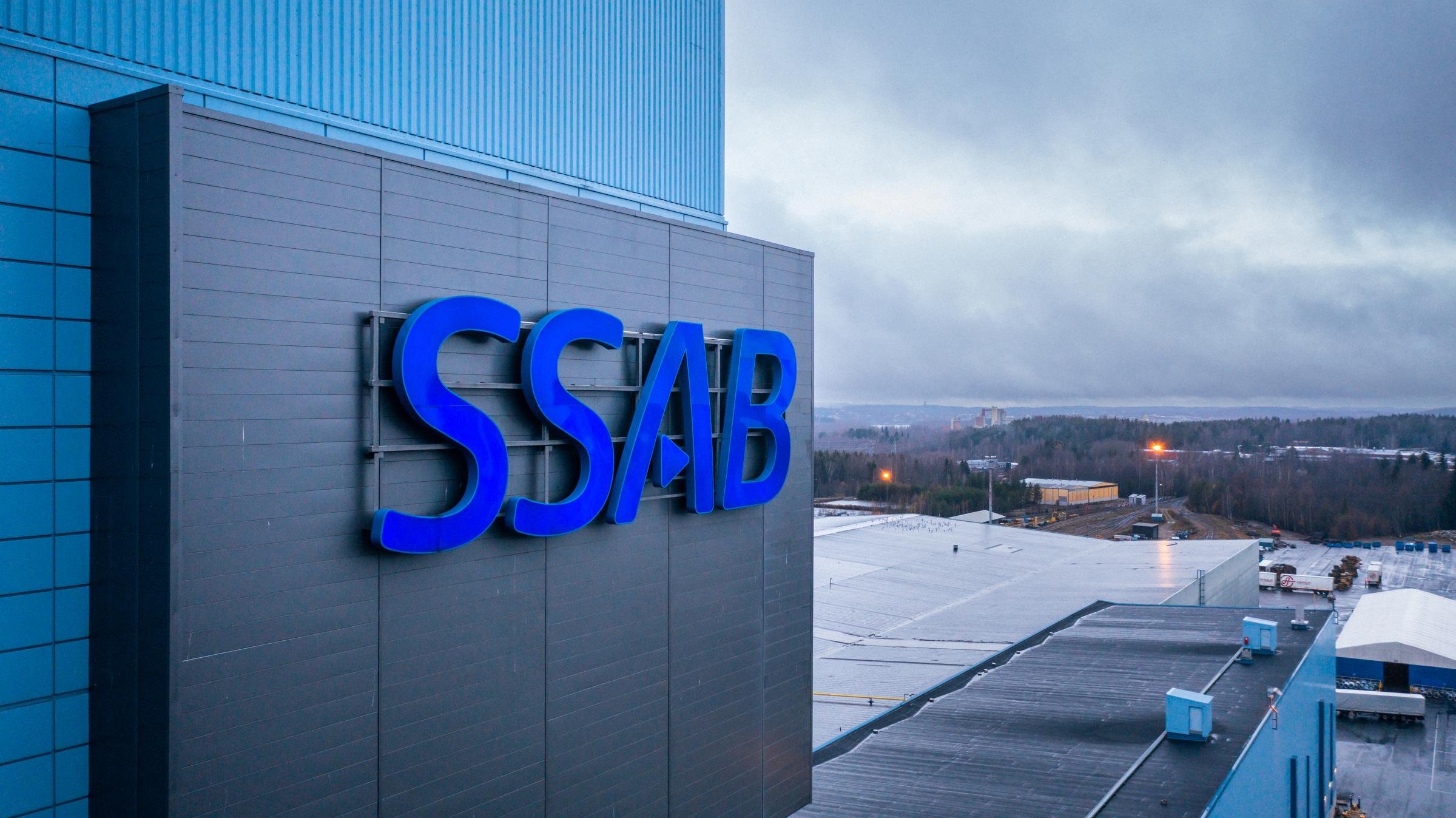
SSAB highlights minimal US tariff impact
SSAB, which operates production sites in Europe and the USA, has so far seen only a limited direct impact of the US steel tariffs, chief executive Johnny Sjöström said during a conference call this week.
He underlined how SSAB is well-positioned with significant local production in the US. Only a limited volume of special products, especially high-strength steels for the automotive industry, are exported from the Nordics and shipped to North America, and many other overseas locations.
Recently, “we have been selling some more volumes of special steels to the USA, but we don’t have to,” he said. If demand in the USA should go down, the group can divert deliveries to Europe easily, Kallanish heard him say during the call.
SSAB’s US operations at its SSAB Americas division were the main driver behind the group’s improved operating result of SEK 756 million ($86m) in the fourth quarter 2025, up from SEK 486m in Q4 2026. The group notes its strong position in the US heavy plate market was a notable factor that supported the result.
Over the full year, figures saw a year-on-year decline, due to lower steel prices in the group’s main regions. Operating profit fell by SEK 1.7 billion to SEK 6.1 billion, on revenue that dipped by SEK 7.2 billion to SEK 96 billion.
The group’s international setup and the global customer base for its special products are an advantage in principle. However, the nominal figures quoted in a strengthening Swedish krona are affected by a depreciated US dollar, in which most transactions are defined.
Shipments rose slightly at all three divisions, totalling 3.29 million tonnes at SSAB Europe, 1.84mt at SSAB Americas, and 1.24mt at SSAB Special Steels.
For the first quarter this year, the group predicts higher shipments for Europe and Special Steels, and slightly higher sales at Americas, which last year saw the highest volume increase. Prices are expected to climb “somewhat higher” than in Q4, except for Special Steels, which is subject to different market dynamics, and where price hikes will take effect with a delay (see Kallanish 29 January).
Italian heavy plate rises on CBAM slab costs
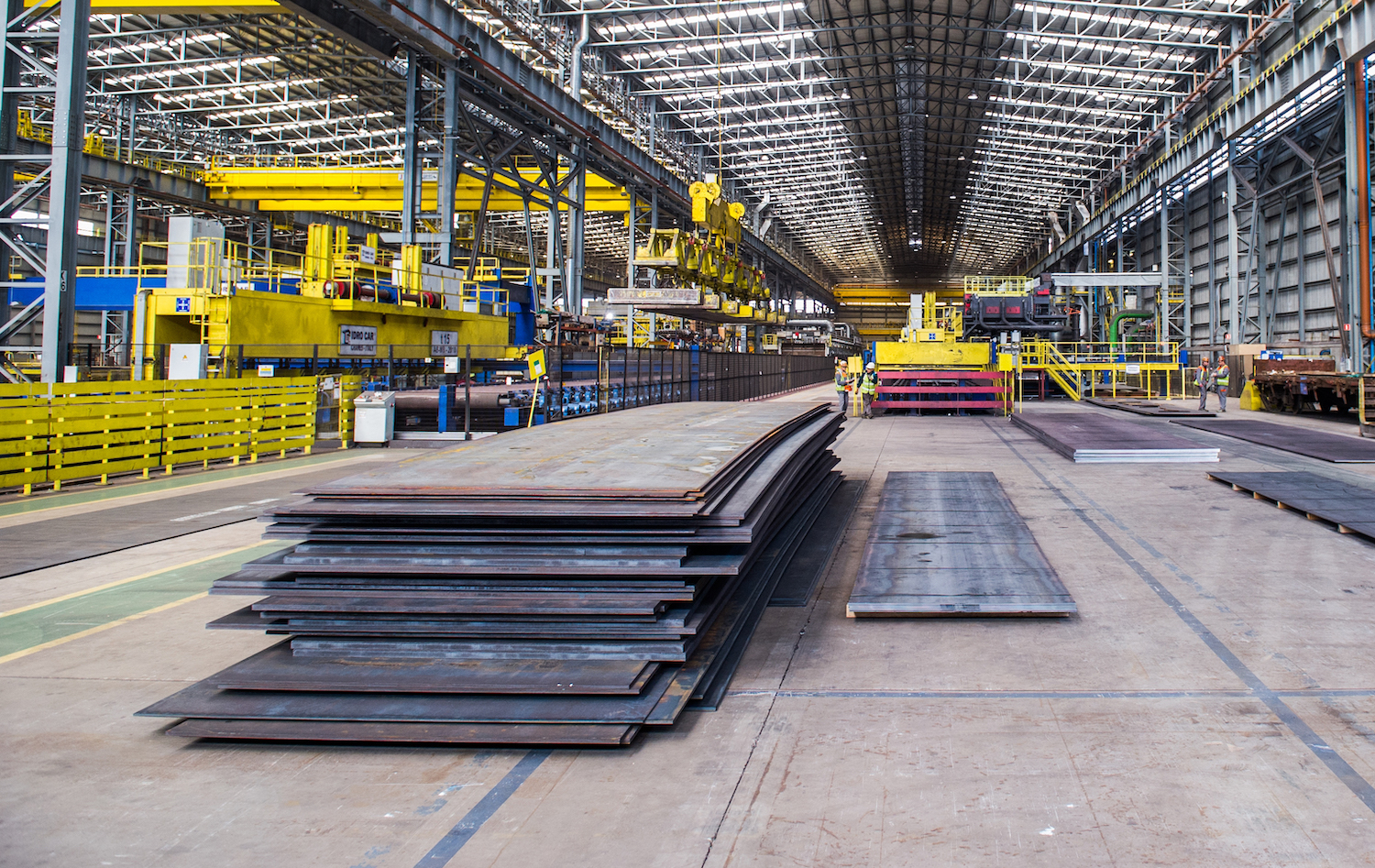
Italian heavy plate prices continue to rise, driven by higher imported slab costs linked to CBAM, Kallanish learns.
Market activity has been relatively quiet following the Christmas break, although mills report satisfactory order intakes. Lead-times have now extended into March, while import offers are said to be largely absent or not much below domestic prices.
Producers are also implementing further price increases this month, as CBAM slab costs remain particularly uncertain. One source says there is a possibility that plate prices could move to the €800/tonne ($951.21/t) level as early as February. “The market has to become accustomed to higher prices as protectionist costs take effect. CBAM will be another form of anti-dumping,” a mill source comments.
Mills are continuing to source slabs from their traditional Asian suppliers. Slab values, excluding CBAM costs, are reported at around $520/t cfr southern European ports.
However, prices are expected to rise significantly once CBAM charges are factored in, which sources say are currently difficult to quantify but are expected to be significant.
One slab buyer states that he has been actively working with his suppliers to support the certification of their direct emissions and is confident that, with the assistance of European experts, the certification process will proceed smoothly and costs will be contained. At present, however, CBAM costs appear extremely high when considering default values.
Italian mills are currently quoting around €750/t for S235 plate, with premiums of €30–35/t for S355 and approximately €10–15/t for S275. This represents an increase from around €700/t before to the holiday period. Current contract values before the increases for S325 material remain at €710-720/t ex-works on average.
One distributor says he is currently receiving good volumes of plate orders, but warns that demand could soften if prices reach €800/t, as downstream buyers may reduce tonnages.
Meanwhile, plate price dynamics are diverging between north and south of the Alps, with Italian values rising, while the northwest European market is not yet gaining pace.
Consequently, prices either side of the Alps are equal at present, so ordering Italian material makes little sense for buyers in Austria or southern Germany.
Given that Italian mills have little to no European slab base, they need to follow prices for slab imports, which have risen notably along with the full implementation of the CBAM. Hence, southern prices for S355 plate have reached €730/t in a short time. In northwestern Europe, that has been the desired mark for some two months now, amid limited movement and deals often closing at lower levels (see Kallanish 14 January).
Author: Natalia Capra France

ArcelorMittal rejects €7bn Ilva claim, confirms court summon
ArcelorMittal says there is no legal basis for the €7 billion ($8.32 billion) claim brought by the special commissioners of Acciaierie d’Italia (ADI) in relation to the Taranto steelworks formerly known as Ilva. The global steelmaking group confirms it has been served with a writ to appear before the Court of Milan.
In a note obtained by Kallanish, the steelmaker rejects all allegations contained in the claim. These include the claim that it induced ADI directors and local management to engage in mismanagement as part of a strategy to run down the Italian assets, damage ADI’s business and extract profits from Italy. It denies that its actions caused damages estimated at around €7 billion.
Since 2021, ADI’s holding company, Acciaierie d’Italia Holding (ADIH), has been under joint and equal control with Invitalia, the Italian state investment entity. Invitalia was appointed by the Italian government to implement a public private partnership to relaunch and ultimately acquire the former Ilva assets.
According to ArcelorMittal, it fulfilled all of its contractual obligations, did not exert improper influence over the management and invested around €2 billion in an attempt to turn around what it describes as “a structurally challenged business”.
The steelmaker argues that shortly after acquiring the former Ilva, operations were “affected by an adversarial attitude and wilful acts and omissions on the part of Invitalia and Ilva as well as omissions and illegitimate legislative interventions by the Italian Government”.
“Most notably, in 2019 – less than a year after ArcelorMittal had commenced leasing the business units – the Italian government removed legal protections that were necessary for ArcelorMittal to implement the environmental plan without risk of criminal liability stemming from the status of the plants. This removal, resulting in an unfulfillment of the conditions precedent to the purchase, ultimately led to ArcelorMittal’s withdrawal from the relevant lease agreement,” the group notes.
Invitalia failed to meet its commitments stated in the relaunch plan, despite several proposals put forward by ArcelorMittal. Moreover, measures adopted in February 2024 allowed Invitalia to place ADI under special administration, which resulted in what ArcelorMittal says was “substantially expropriating” its investment.
Blaming ArcelorMittal overlooks Invitalia’s responsibilities and those of the Italian government under the public private partnership, as well as the impact their actions had on ADI’s output, cash flow and planned investments, ArcelorMittal says.
It adds it has filed several claims related to damage to its investment. In June 2025, it launched international arbitration proceedings against the Republic of Italy, alleging unlawful expropriation and discriminatory, unfair and disproportionate measures, which it says caused losses of more than €1.8 billion.
Earlier this month, ADI’s special commissioners lodged a claim with the Milan tribunal against ArcelorMittal, seeking €7 billion in damages linked to the condition in which ArcelorMittal allegedly left the Taranto plant. The amount increased from the level initially contemplated by the Italian government. In December, Italy’s Minister for Enterprises and Made in Italy, Adolfo Urso, told the Chamber of Deputies that the commissioners were preparing a €5 billion claim against ArcelorMittal over the alleged neglect of equipment at ADI’s Taranto plant (see Kallanish passim).

EU Steel Distribution: Stability holds as price expectations firm up
The latest EUROMETAL Market Sentiment Survey for January 2026 confirms a market that has entered the new year with greater stability but limited momentum.
While current activity remains broadly unchanged and inventories continue to be managed cautiously, price expectations have consolidated at positive levels, suggesting that sentiment is gradually improving on the pricing side, even as demand fundamentals remain weak.
Based on responses from around 200 industry participants, the survey highlights a sector that is no longer deteriorating, but still waiting for clearer signals of recovery.
Current activity remains broadly stable
The assessment of current activity shows little change compared with the final months of 2025. Activity levels remains at the neutral line, but the absence of further decline confirms that the market has stabilised after the volatility seen earlier in 2025. This prolonged period of flat activity points to a market that has found a temporary equilibrium, albeit at subdued levels.
Near-term outlook improves slightly
Expectations for activity in the next quarter show a modest improvement compared with late 2025. While confidence remains fragile, the January results suggest that pessimism has eased somewhat, with fewer respondents expecting a further deterioration. This cautious improvement reflects hopes that demand conditions may gradually normalise as 2026 progresses, although visibility remains limited.
Inventory strategies remain defensive
Stock volume expectations continue to signal disciplined inventory management. Most distributors expect stock levels to remain broadly stable over the next three months, with no indication of aggressive restocking. This reflects ongoing risk aversion and a preference for flexibility in a market still characterised by weak demand and uncertain order books.
Price expectations consolidate at positive levels
Price expectations remain the most positive indicator in the January survey. After improving steadily in the second half of 2025, sentiment on prices has now consolidated clearly above the neutral line. This suggests that a growing share of distributors expect prices to hold firm or increase moderately in the coming months.
While not yet indicative of a strong upward cycle, this trend may reflect tighter supply conditions, lower import availability, or the anticipation of gradual restocking once demand stabilises.
Key takeaway
The January 2026 survey confirms a steel distribution market that has moved out of decline and into a phase of stabilisation, but without a clear demand-driven recovery. Activity remains subdued and inventories are tightly controlled, underscoring continued caution across the sector.
At the same time, the consolidation of positive price expectations stands out as a potentially important signal. If demand fundamentals begin to improve, this could mark the early stages of a more constructive market environment in the months ahead. Until then, prudence and short-term visibility continue to define sentiment across Europe’s steel distribution sector.
This analysis is based on the EUROMETAL Market Sentiment Survey, reflecting the views of approximately 200 industry participants for January 2026.


EUROMETAL at UAHE Webinar on CBAM Definitive Phase
EUROMETAL Vice-President Fernando Espada participated yesterday as a speaker in a webinar on the definitive phase of the Carbon Border Adjustment Mechanism (CBAM), organised by the UAHE – Unión de Almacenistas de Hierros de España.
The webinar brought together around 60 participants from the Spanish steel distribution sector, who had the opportunity to deepen their understanding of the CBAM mechanism, its effects and consequences for steel importers and downstream operators. The session provided an overview of how the mechanism works, how CBAM costs are calculated, and how the system is expected to evolve over time.
EUROMETAL warmly thanks Fernando Espada for his time and UAHE for the invitation and the excellent organisation of this timely and informative event.

India-EU agreement cuts car tariffs as EU eyes 4 million vehicle market
The European Automobile Manufacturers’ Association (ACEA) welcomed the conclusion of negotiations for a free trade agreement between the European Union and India, with the association saying Jan. 27 that the successful end to negotiations is a “landmark moment in global trade relations” as it will help European automobile exports enter a market of 4 million passenger cars that, until now, has been protected by import tariffs of up to 110%.
This is the largest trade agreement that both the EU and India have concluded, with both sides expected to benefit strongly from it, including the EU automotive industry as well as steel and iron sectors.
According to the EU-India Free Trade Agreement fact sheet, the EU exported vehicles valued at Eur1.6 billion, with tariffs expected to see a gradual reduction in customs duties for vehicles to 10% under a quota of 250,000 vehicles per year and complete tariff elimination for car parts after 5-10 years. Europe exported iron ore and steel valued at Eur1.5 billion, with current tariffs up to 22% that will reach 0% for almost all products under the agreement.
As reported in ACEA’s statement, the trade agreement still comes with restrictions such as quota limitations and residual tariffs that will limit the potential benefits to some extent. However, a full assessment of the detailed terms of the deal will begin once the texts are published in the coming weeks.
The potential for the car sector is high, as reported by the VDA, the German car association. In India, there are 34.3 cars per 1,000 inhabitants, which given India’s population represents a sizable number of cars, but still leaves room for growth compared to other industrialized nations. For comparison: Germany has 582.4 cars per 1,000 inhabitants, the EU has 585.3, the US has 877.6, and China has 137.4.
The Indian government has also set targets to increase the share of electric vehicles to 30% by 2030 for passenger cars, 70% for trucks and buses, and 80% for two- and three-wheelers.
Notably, the annex EC document shows that in the agreement, the EU and India have agreed on rules of origin that ensure only products that have been significantly processed in one of the parties can benefit from the tariff preferences of the agreement. This will help prevent other countries from simply exporting to India and re-exporting to the EU to benefit from the tariffs.
Looking at steel, according to the latest European Steel Association document, in the first eight months of 2025, the main origins for finished steel imports into the EU market were: Turkey, South Korea, China, India, Ukraine, Taiwan and Indonesia. The main destinations for EU steel exports were the United Kingdom, the United States, Turkey, Switzerland and India.
As India is the second-largest steel producer after China and one of the main exporters of steel into the EU, with its steel produced primarily by blast furnaces, it currently faces headwinds from the Carbon Border Adjustment Mechanism. The Indian commerce ministry said Jan. 27 that no exemptions were extended to India under the CBAM as part of the free trade pact. However, the EU has assured that if any future flexibilities are granted to most-favored nations, India’s steel exports will be taken into account for potential exemptions.


EU car sales rise in 2025 as hybrid-electric vehicles increase 14%
New EU car registrations rose 1.8% year over year in 2025 to 10.82 million units, with hybrid-electric vehicles increasing by 13.7% to 3.74 million unit, giving them a 34.5% market share, data from the European Automobile Manufacturers’ Association (ACEA) showed Jan. 27.
Despite the rise in total new registrations, they remained well below pre-pandemic levels.
Battery-electric cars accounted for 17.4% of the EU market, as they demonstrated a strong, 29.9% year-over-year rise to 1.58 million units, while plug-in hybrid units showed an even sharper increase of 33.4% to 1.05 million units, with a market share of 9.4%.
In contrast, the combined market share of petrol and diesel vehicles fell to 35.5% in 2025, from 45.2% in 2024. Petrol vehicles dropped to a 26.6% share of the market at 2.88 million units, from 33.3% a year earlier, while diesel registrations fell 24.2% to 960,024 units, an 8.9% share.
December 2025 saw a 51% surge in battery-electric cars and a 36.7% rise for plug-in hybrid units, while hybrid-electric recorded a 5.8% increase.
The shift reflects changing consumer preferences that could significantly affect European refined product demand, particularly gasoline and diesel consumption, as well as the need for battery metals on top of carbon steel, the main materials of vehicle production, with approximately 900 to 1,400 kilograms of steel used for an average passenger car.
Platts, part of S&P Global Energy, assessed Jan. 26 domestic hot-rolled coil in Northern Europe at Eur640/mt ($766/mt) ex-works Ruhr and in Southern Europe at Eur630/mt ex-works Italy, both steady from the previous session.
Swedish steelmaker SSAB sees higher demand, shipments in Q1 2026
Swedish steelmaker SSAB expects shipments to increase in the first quarter of 2026, compared with the previous quarter, driven by seasonal demand, according to its 2025 performance report released Jan. 28.
The company expects special steel shipments to be “significantly” higher quarter over quarter in Q1, with stable prices. SSAB Europe’s and SSAB Americas’s shipments are expected to be higher with prices “somewhat higher,” according to the company. Its special steels segment includes quenched, tempered and advanced high-strength steels.
For Q1, the company expects strong demand, particularly from the renewable energy sector in the EU and from the transmission and oil and gas sectors in the US.
SSAB estimates weak demand from the construction sector and uncertainty around automotive demand, the report said.
In Q4, production was relatively stable year over year and quarter over quarter, at 1.8 million metric tons of crude steel. Production was 7.54 million mt in 2025, compared with 7.35 million mt in 2024, according to the report.
Steel shipments were up 4% year over year and up 2.68% month over month to 1.51 million mt in Q4. Special steels were impacted by turbulence triggered by tariffs and trade barriers, but activity improved in the European market, according to SSAB.
Steel shipments in 2025 were 6.36 million mt in 2025, compared with 6.13 million mt in 2024.
SSAB’s push to green steel production continued in 2025, with investments made during the year executed according to plan, the company said.
Construction of a new electric arc furnace is underway at SSAB’s Oxelösund steel plant. The steelmaker also began building a high-efficiency mini-mill in its Luleå steel plant in the summer of 2025, with the production expected to start at the end of 2029.
The company underlined that SSAB’s transformation plan depends on the necessary infrastructure being in place on time, particularly regarding electricity supply, and there are currently pending appeals related to the power line to Oxelösund.
“Conversion involves the closure of the existing blast furnaces and coke plant. At the same time, most operations in Oxelösund, including the advanced rolling mill and unique Q&T lines that produce high-strength steel, will continue as before,” SSAB said in its report.
Platts, part of S&P Global Energy, assessed Northwest European hot-rolled coil carbon-accounted at Eur705/mt ex-works Ruhr Jan. 27, stable day over day. Platts assessed HRC in Northern Europe at Eur640/mt ex-works Ruhr and in Southern Europe at Eur630/mt ex-works Italy, both unchanged day over day.
ArcelorMittal denied all allegations in the case related to its Ilva plants in Italy
ArcelorMittal has confirmed that it has been summoned by the Milan Court in connection with a lawsuit involving Acciaierie d’Italia SpA (ADI), which operates under Ilva SpA currently under Extraordinary Administration.
ArcelorMittal has stated that the allegations brought forward by the Extraordinary Commissioners of ADI have no legal or factual basis, stressing that the company will firmly defend its position before all competent authorities.
In its statement, ArcelorMittal categorically rejected the claims made in the lawsuit, which allege that the company misled ADI’s management and local authorities, caused the collapse of the plants, deliberately sought to “destroy” the company’s operations, and “looted” profits from Italy.
Within the scope of the lawsuit, ArcelorMittal is accused of having caused damages of approximately EUR 7 billion to ADI. The company stated that these allegations are entirely unfounded.
The company recalled that Acciaierie d’Italia Holding (ADIH), the parent company of ADI, has been operating under a joint and equal management structure with Invitalia, the investment arm of Italy’s Ministry of Economy and Finance, since 2021.
It was noted that Invitalia was appointed under a public–private partnership framework to relaunch the Ilva facilities, with the ultimate objective of transferring full ownership of ADI to the public sector.
ArcelorMittal emphasized its strong track record in turning around underperforming assets and stated that it has invested approximately EUR 2 billion in its Italian operations.
A significant portion of this investment, the company said, was allocated to the implementation of an extensive environmental plan required under Italy’s Integrated Environmental Authorization. ArcelorMittal stressed that substantial resources were devoted to meeting environmental obligations.
The company also rejected any claims of improper influence over local authorities, stating that all obligations were fulfilled in full compliance with the law.
ArcelorMittal noted that the situation deteriorated after the Italian government revoked criminal liability protection in 2019 for the implementation of the environmental plan.
According to the company, this decision exposed it to criminal risks and undermined the fundamental conditions of the acquisition. As a result, ArcelorMittal initiated its withdrawal from the lease agreement, which was later followed by the establishment of the joint management structure with Invitalia.
In its statement, ArcelorMittal said that hostile behavior, deliberate actions and negligence by Invitalia and Ilva, combined with inadequate and unlawful interventions by the Italian authorities, severely undermined the operating environment.
Despite presenting several restructuring proposals, the company claimed that Invitalia failed to meet its commitments throughout the process.
ArcelorMittal further noted that temporary legislative measures adopted in February 2024 enabled ADI to be placed under extraordinary administration, a move the company described as a de facto expropriation of its investments.
The company stated that these measures negatively affected production capacity, cash flow, and planned investments.
ArcelorMittal announced that it has initiated multiple legal proceedings in response to the damage suffered. In June 2025, the company filed an international arbitration case against the Republic of Italy.
The claim alleges unlawful expropriation, discriminatory and disproportionate treatment, and violations of the company’s legitimate expectations.
ArcelorMittal stated that its investments have been severely devalued as a result of these actions, that its European interests have been harmed, and that its total compensation claim exceeds EUR 1.8 billion.

UK continues anti-dumping measures on Chinese flat-rolled products
The UK government has decided to extend the existing anti-dumping duty on flat-rolled products originating from China and maintain current measures.
According to the announcement published by the Trade Remedies Authority (TRA), these measures will remain in effect for five years from 30 January 2021.
Under the decision, the anti-dumping duty rates applied to flat-rolled products imported from China into the UK are also maintained. Products exported by Valin Group are subject to a 7.9% duty, while the rate for all other Chinese exporters remains at 24.0%. Products from Valin Group are processed under the A930 code, whereas other exporters are under the A999 supplementary code.
The measures cover hot-rolled and irregularly wound coil flat-rolled products made of iron, non-alloy steel, or alloy steel, excluding stainless steel. These products are classified under the UK Global Tariff codes 7213 10 00, 7213 20 00, 7213 91 10, 7213 91 20, 7213 91 41, 7213 91 49, 7213 91 70, 7213 91 90, 7213 99 10, 7213 99 90, 7227 10 00, 7227 20 00, 7227 90 10, 7227 90 50, and 7227 90 95.
Authorities stated that the decision was shaped by evaluations indicating that the UK flat-rolled industry would continue to suffer or experience recurring injury if anti-dumping measures ended. In this context, the current measures aim to preserve the competitiveness of domestic producers.