


Pittini revamps southern Italian plant
Italian long steel producer Pittini is investing in revamping its SiderPotenza rolling mill in the south of the country.
With hot start-up scheduled for 2027, the project will improve production efficiency while reducing billet reheating gas consumption and overall CO2 emissions, in line with Pittini Group’s sustainability strategy, Kallanish notes.
Italian equipment maker Danieli was awarded the contract. It explains that the revamp will include a new rolling mill featuring 20 SHS cartridge stands, enabling a billet size increase to 165mm. This configuration is designed to prepare the plant for the installation of a spooler line, initially producing coils of 2.5 tonnes, with provisions for a future upgrade to 5t coils through the addition of a horizontal billet welder (HBW).
The upgraded mill will supply the existing bar line, producing sizes from 2x8mm up to 40mm, as well as a future spooler line for coils ranging from 10mm to 25mm. Safety and working conditions will be improved through advanced design solutions, Danieli notes.
One of the main challenges is carrying out the project within a 45-day shutdown, achieved through customised engineering and extensive pre-assembly to minimise on-site installation and commissioning time, it adds.
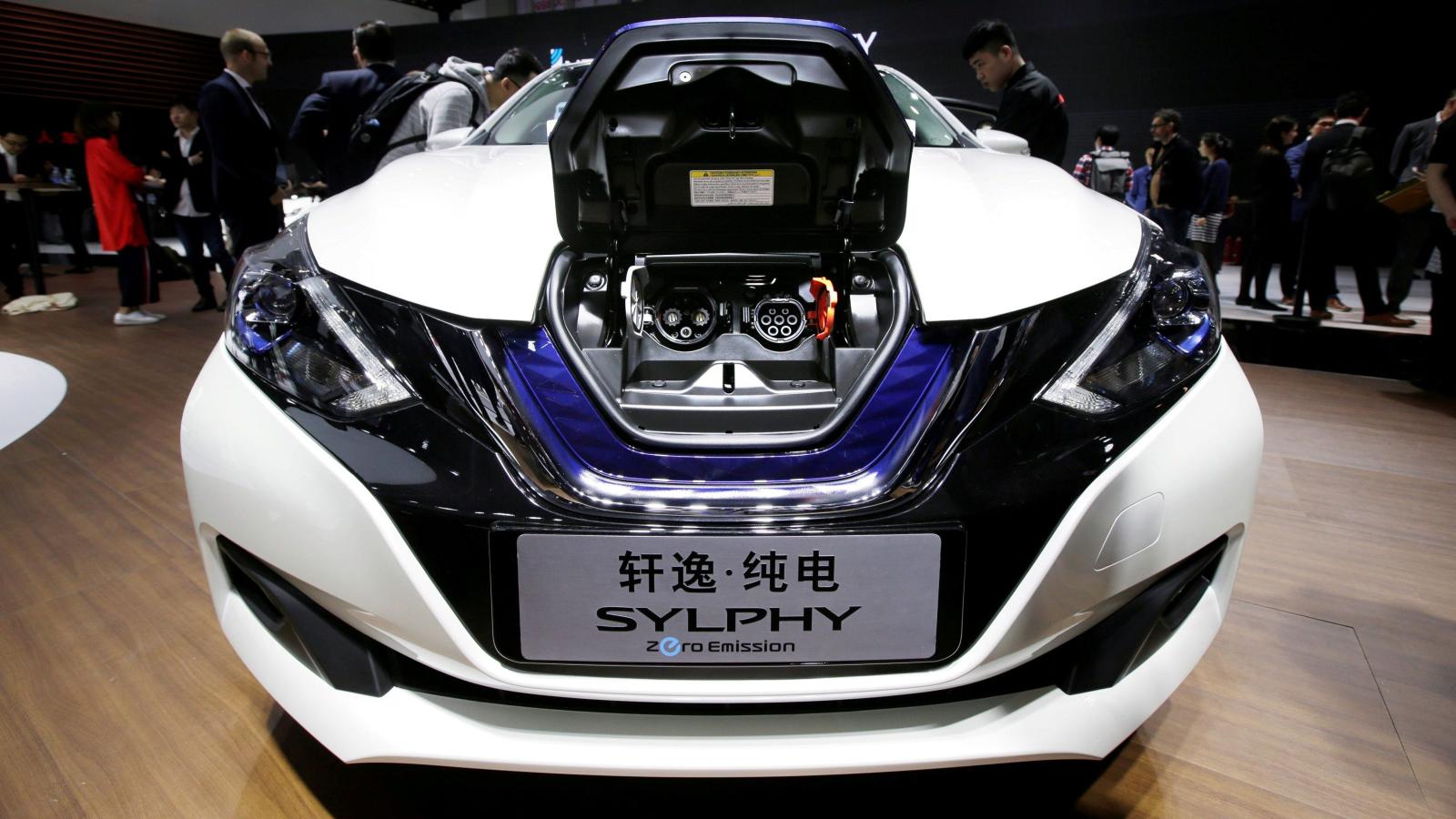
Automakers face Chinese competition, AI integration: Gartner
China’s pace of innovation, simultaneously managing the integration of artificial intelligence (AI), cybersecurity risks, and the complex transition to electric vehicles (EVs), will be major challenges for global carmakers in 2026, says consultancy Gartner, Inc.
The global automotive industry has entered 2026 in an environment of increasing uncertainty, with long-term predictability giving way to volatility. “Beyond 2025, marked by profit warnings, tariff shocks, and slower-than-expected adoption of EVs, the scale and long-term planning are becoming irrelevant due to geopolitical tensions, supply chain instability, and rapid technological change,” the organisation notes.
While many manufacturers see AI as a path to greater agility, Gartner warns of a looming reality check as companies realise their current AI capabilities offer less of a competitive advantage than expected, Kallanish notes.
“The automotive sector is going through a period of euphoria regarding AI, where many companies want to achieve disruptive value even before building solid foundations in artificial intelligence,” says Gartner vice president Pedro Pacheco. “This euphoria will eventually turn into disappointment, as these organisations will not be able to achieve the ambitious goals they have set for AI.”
“China will remain the most complex and crucial market, with experts arguing that success there increasingly determines global leadership,” the consultancy observes. “Strategies such as ‘Made in China, for China’, adopted by groups like Volkswagen and Audi, could become a model for others. Electric vehicles are expected to confidently enter the mainstream in Europe as battery costs fall and smaller, more affordable models emerge, supported by renewed incentives in markets like Germany.”
At the same time, most automakers will reconsider their supply chain reliance on China, even if deep technological interdependence makes complete decoupling unrealistic. Under these circumstances, Gartner concludes that the winners in 2026 will not be large companies, but rather those with agility, speed, and organisational adaptability.
EU’s new steel import quota period makes strong start
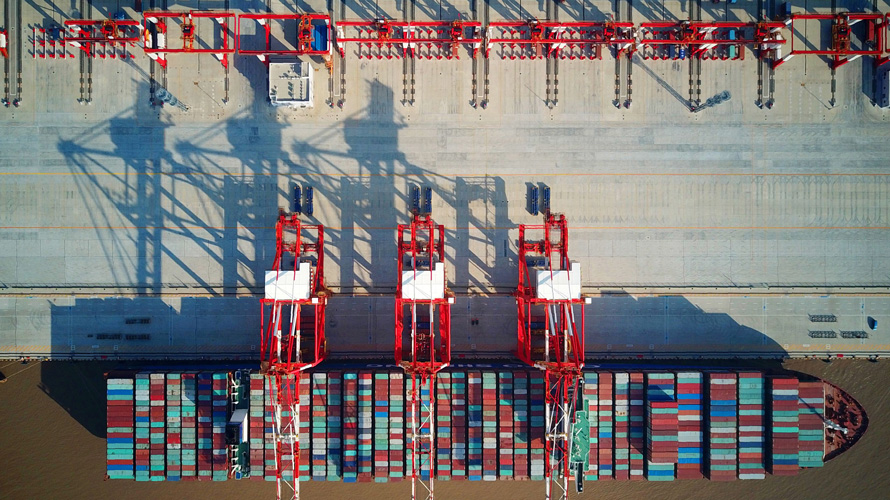
Within the first seven days of January, within the new EU quota period between January 1 and March 31 some of the import quotas for certain steel products allocated for India, China, Turkey, and certain countries under the “other countries” category have been exceeded, while over 70 percent of quotas for some steel products have been used up.
Looking at the exceeded quotas, India has exceeded the quotas of 222,829 mt for HRC (1A) and 31,416 mt for stainless bars and light sections, with 289,320 mt and 49,361 mt of the given products respectively waiting at EU ports. The country has also exceeded the quotas of 7,347 mt for tin mill products and 5,955 mt for other welded pipes, with 18,569 mt and 8,206 mt of the given products respectively waiting for customs clearance. China has exhausted its quotas of 126,937 mt for metallic coated sheets (4B), 138,863 mt for merchant bars and light sections, 34,005 mt for other seamless pipes, and 6,929 mt for sheet piling, with 192,566 mt, 192,643 mt, 36,837 mt and 7,123 mt of the given products respectively waiting at EU ports. In addition, the country has also exceeded its quota of 5,504 mt for hollow sections allocated under “other countries”.
Regarding the quotas allocated for Turkey, the country has exceeded its quotas of 83,109 mt for hollow sections, 48,938 mt for gas pipes, and 14,782 mt for large welded tubes (25B), with 111,528 mt, 54,716 mt and 19,553 mt of the given products respectively waiting for customs clearance.
The countries’ EU steel import quota usage over 70 percent can be seen in the table below.
| Product | Country | Quota tonnage (mt) | Used (%) |
|
HRC (1A) |
Turkey | 393,977 | 79.41 |
| Taiwan (under “other countries”) | 110,266 | 71,38 | |
|
CRC |
Turkey (under “other countries”) | 43,033 | 92.94 |
| Vietnam (under “other countries”) | 43,033 | 75.43 | |
| Taiwan (under “other countries”) | 43,033 | 113.22 | |
|
Metallic coated sheets (4A) |
Turkey (under “other countries”) | 116,832 | 90.88 |
| Vietnam (under “other countries”) | 116,832 | 111.21 | |
| Taiwan (under “other countries”) | 116,832 | 74.03 | |
|
Organic coated sheets |
India | 77,805 | 74.7 |
| South Korea | 70,318 | 72.89 | |
| Taiwan | 22,536 | 99.06 | |
| Turkey | 15,559 | 94.28 | |
| Vietnam (under “other countries”) | 10,608 | 156.02 | |
|
Tin mill products |
Taiwan | 13,256 | 96.25 |
| Turkey (under “other countries”) | 7,347 | 154.04 | |
|
Angles and sections |
China (under “other countries”) | 4,912 | 132.39 |
| UAE (under “other countries”) | 4,912 | 89.64 | |
|
Gas pipes |
India | 18,833 | 73.49 |
| UAE (under “other countries”) | 3,298 | 147.76 | |
| Other welded pipes | China | 7,992 | 74.46 |


European domestic HRC market still mostly quiet but mood remains positive
“There is no change in the market as people are coming back,” a trader said, adding that they expect changes in the future with the rollout of new trade regulations.
The EU’s Carbon Border Adjustment Mechanism (CBAM) came into full effect on January 1. This is expected to increase the cost of imported steel products while supporting domestic production.
In Northern Europe, offers for HRC varied within the range of €630-650 ($738-761) per tonne ex-works, depending on the month of delivery and the supplier. The upper end of the range reflected offers for March delivery.
Meanwhile, estimates of workable prices were heard at €630 per tonne ex-works.
Fastmarkets’ daily steel hot-rolled coil index domestic, exw Northern Europe was €631 per tonne on Wednesday, up by €1 per tonne since Tuesday January 6.
The index was up by €3.50 per tonne week on week and by €8.50 per tonne month on month.
Fastmarkets’ daily steel hot-rolled coil index domestic, exw Italy was calculated at €624 per tonne on Wednesday, up by €0.88 per tonne since Tuesday.
The index was up by €0.88 per tonne week on week and by €10.67 per tonne month on month.
Estimates of workable levels were heard within the range of €610-620 per tonne ex-works, while offers were reported within the range of €630-640 per tonne ex-works.


New EU Steel Quota period kicks off with several products already full
The new quota period in the EU has started as of January 1. Although the volumes awaiting at the ports are not cleared through customs yet, given the high volumes of imports waiting at the ports, for some products, the quota volumes have already been exhausted.
In the table below, you can see the products for which quotas have already been exhausted and also those for which more than 70 percent of quotas have been used up.


Austria supports machine learning research at steelmakers
Johannes-Keppler-Universität Linz is launching a research series on machine learning and signal processing in steelmaking, together with voestalpine Stahl, Kallanish notes.
The project at the University’s Christian Doppler Laboratory for Signal Processing and Machine Learning in the Steel Industry (CD) institute will run until 2032. It has been endowed with €2.7 million ($3.2m) by Austria’s Federal Ministry of Economy, Energy and Tourism.
The laboratory will work on the development of theoretical principles and algorithms to improve signal processing for monitoring steel manufacturing processes for the next few years.
“Production processes – such as those at voestalpine Stahl GmbH – are monitored by sensors whose signals are processed by specialised algorithms,” says project head Oliver Lang. He explains there are various kinds of signals. “One type of signal that occurs frequently are so-called approximate periodic signals,” he identifies as one example. “There has been very little research on these signals in the past and we only have very few algorithms that are able to process them.”
The reason these occur rather often at strip mills is because of the many continuous processes involved, Kallanish understands. “The rotations and oscillations create these almost periodic signals, but they also cause a lot of critical interfering signals,” Lang concludes.

UK’s TRA removes Vietnam’s rebar quota exemption
The UK’s Trade Remedies Authority (TRA) has removed Vietnam’s exemption from the tariff-rate quota (TRQ) for rebar imports following a review, Kallanish learns from a published government notice.
The category 13 steel products are defined by commodity codes 72142000 and 72149910. The review was initiated on 10 November 2025 after an application was lodged by UK steel producer 7 STEEL UK on the grounds of a substantial change in circumstances. The application indicated that imports from Vietnam of rebar may have surpassed the threshold for exceptions for developing countries.
According to UK regulations, imports from developing country members of the World Trade Organisation (WTO) that account for 3% or less of total imports into the UK should be exempt from TRQs.
The period of investigation (POI) for the review to assess the change in circumstances was 1 October 2024 to 30 September 2025. It found Vietnam had shipped 21,184 tonnes during this period, accounting for 5.535% of imports. The representative period for assessing traditional trade flows was 2017 to 2019.
The TRA recommended to the Secretary of State of Business and Trade that the TRQ should be altered so that rebar imports from Vietnam are no longer excepted from the application of the safeguard measure, and should now have access to the residual quota.
The updated tariff-rate quota applies from 1 January 2026 to 30 June 2026. The residual quota will have 23,514t available for the current quarter, with the 20% cap for any individual exporting country set at 4,703t.
The update also confirms that Ukraine continues to be suspended from the safeguarding measure.
Author: Carrie Bone UK


10 end-user associations oppose new EU steel quotas
European steel end-user associations have expressed concerns regarding the negative impact the proposed tougher alternative to safeguard measures will have on the EU’s downstream manufacturing industries, according to a joint statement released on 6 January.
The statement was signed by 10 associations, including European Automobile Manufacturers’ Association (ACEA), Home Appliance Europe Association (APPLIA), Metal Packaging Europe Association and the Committee for European Construction Equipment (CECIMO).
The European Commission released its official proposals for the replacement of the EU’s steel protection framework on 7 October last year, detailing extensive cuts variable across product category volumes – detailing the CN code categorization of steel products and their respective allocation of the overall quota volume of 18,345,922 tons – a total reduction of 47%. And the tariff-rated quotas were proposed at 50%, compared to safeguard duties currently in place of 25%.
The new measures are expected to come into effect in July 2026, after the expiry of the current safeguard system.
While the associations acknowledge that certain protectionism in needed to tackle the effects of global overcapacity and to secure a level playing field, they strongly oppose the proposed parameters of the measures and believe that the Commission might “go too far in ring-fencing the European market.”
The significant reduction of the quota volume, combined with the doubling of tariff-rated duties to 50% means that more imports will fall outside the allocated quotas and end-users will have to “shoulder between 5 and 9 billion Euros a year in extra tariff costs,” according to the associations, assuming import volumes similar to those in 2024.
The groups estimate the resultant increase in steel prices could be far higher than the 3.25% average forecast by the European Commission. Price increases could reach up to 30% in certain product categories, hitting both importers and companies that rely on exports of finished goods from the EU, they warned.
And the introduction of a “melt-and-pour” rule will further increase the administrative burden on smaller companies. “Obtaining origin information for low-value consignments will be practically impossible. Such a burdensome rule needs to be implemented in a much more careful and practical way and phased in within realistic timelines,” the statement said.
Under the proposed system, the specialised, high-quality steel imports needed for complex industrial applications will be significantly harder. Such products are often manufactured only by a handful of exporters globally and there is no sufficient supply from within the EU.
In addition, the effects of the Carbon Border Adjustment Mechanism (CBAM) and the phaseout of free EU ETS (Emissions Trading System allowances) will drive costs up for both imported and domestic steel and it will have a cumulative impact on the competitiveness of European downstream industries.
European buyers of imported steel have already started to look for domestic alternatives to imports due to the effects of CBAM and have been buying imports via big traders on a DDP basis instead of CFR, paying higher prices to protect themselves from risks of paying higher CBAM duties.


EU steel market starts 2026 on a cautious note
In the first days of the new year, the European steel market is showing a calm picture, marked by low trading activity and limited price movements as the holiday slowdown continues to weigh on market dynamics.
While underlying demand remains weak, market participants are increasingly focused on forward-looking expectations, regulation-driven cost risks, and supply-side developments. Although selective upward price tests are being observed across several segments, these movements are largely driven by cost pressures and risk perceptions rather than by a genuine recovery in end-user demand.
Recent production and investment moves indicate that restructuring across the European steel sector is progressing in a strategic rather than uniform manner. ArcelorMittal’s decision to permanently shut down one of its sinter plants in Gijón, Spain, along with its move to divest the Hunedoara plant in Romania to UMB Group, highlights the ongoing exit from high-cost and carbon-intensive assets. By contrast, Liberty Steel has restarted production at its Dalzell plate mill in Scotland under a government-backed contract, enabling a limited recovery in capacity. In Italy, uncertainty continues to surround the future of Acciaierie d’Italia’s assets, which have long been affected by financial and operational challenges.
In early January, flat steel prices across Europe remain broadly stable, while producers are cautiously testing higher price levels. In Germany, hot-rolled coil (HRC) prices are reported at approximately €620–630/t ex-works, cold-rolled coil (CRC) at €720–725/t, and hot-dip galvanized (HDG) at €735–740/t. In Italy, HRC is trading at €615–625/t, CRC at €720–725/t, and HDG at €725–735/t, while in Spain HRC offers are heard at €630–650/t ex-works.
Despite these marginal increases compared with the previous month, price movements continue to be driven primarily by expectations linked to energy costs, carbon-related expenses, and the evolving trade regime rather than by a recovery in physical demand. Buyers view current price increases not as the start of a sustained rebound, but as an early reflection of anticipated cost risks. Trading volumes remain subdued, and the market continues to see upward price testing. Market sources indicate that one of Europe’s leading producers has circulated HRC offers at around €660/t.
A large share of market participants expects inventories to decline during January. While some buyers had partially rebuilt stocks ahead of CBAM implementation, many remain cautious in committing to new purchases due to uncertainty surrounding regulatory implementation. The prevailing strategy is to closely monitor market direction rather than increase short-term inventory exposure. Trading activity remains limited following the year-end holiday period; however, clearer production planning and greater regulatory visibility in January are expected to translate into more pronounced price dynamics in the coming weeks.
As CBAM begins to generate direct financial obligations from 2026 onward, the structure of price competition in steel and metals trade is undergoing a fundamental shift. Competition is increasingly expected to be shaped not only by product specifications and logistics costs, but also by production methods and the availability of verifiable emissions data. Even products with identical technical specifications may generate materially different cost structures depending on the carbon intensity of the supplier. With CBAM certificate prices indexed to the EU carbon market, companies are being forced to reassess their cost bases, while the mechanism is becoming a decisive factor influencing procurement strategies, supplier selection, and long-term contracting structures.
According to EUROFER’s Economic and Steel Market Outlook 2025–2026 (Fourth Quarter) report, demand prospects point to a limited but fragile recovery in 2026. Apparent steel consumption in Europe is projected to increase by approximately 3%, conditional on a recovery in industrial production and an easing of global geopolitical uncertainties. Should these conditions fail to materialize, consumption risks remaining below pre-pandemic levels.
EUROFER also highlights that elevated energy costs and global economic uncertainty continue to exert pressure on the sector. Risks stemming from US trade policies are expected to remain a key factor influencing European demand and trade flows. Against this backdrop, the market is likely to maintain a cautious stance in the first quarter of 2026, with only a gradual and limited recovery expected in the later part of the year. This outlook confirms that, despite modest upward price testing, the market has yet to establish a strong and sustainable demand base.
Looking ahead, the European steel market appears to be entering a period of gradual rebalancing rather than a rapid recovery. As regulatory costs become increasingly visible, producers are adopting more selective approaches to capacity and investment decisions. On the demand side, the pace and scale of any recovery remain uncertain, reinforcing a cautious stance among buyers. Market direction in the coming months will therefore be shaped jointly by trends in energy costs, the practical implementation of carbon obligations, the impact of trade measures, and the trajectory of industrial output.


Tighter EU steel safeguards degrade competitiveness: downstream groups
The European Steel Using Industries, a group of lobby organisations representing manufacturers of goods ranging from cars and home appliances to agricultural machinery, has warned that the European Commission’s proposal to extend and tighten safeguards on steel imports risks undermining the competitiveness of Europe’s downstream industries, Kallanish notes from a joint press statement.
While supporting the objective of addressing global overcapacity and ensuring a level playing field for European steelmakers, the associations argue that the parameters proposed would excessively ring-fence the EU market and fail to strike a fair balance between steel producers and users. They caution that the proposal would almost halve overall import quota volumes while doubling the out-of-quota tariff to 50%, potentially imposing an additional €5-9 billion/year in tariff costs on downstream industries, assuming import volumes remain at 2024 levels.
The commission estimates an average 3.25% rise in EU steel prices under the proposal, but the associations say this is a conservative assumption, noting that price increases of up to 30% could materialise in certain product categories. Such increases would hit not only importers but also companies reliant on EU-produced steel, weakening both European and international competitiveness.
Concerns are raised over the planned introduction of a “melt-and-pour” rule, which the associations say would significantly increase administrative burdens, particularly for SMEs. They warn that tracing origin for low-value consignments would be practically unworkable and argue that any such requirement should be implemented more cautiously and phased in over realistic timelines.
The associations add that tighter safeguards would make it harder to source specialised, high-quality steel inputs required for complex industrial applications, many of which are produced by only a limited number of suppliers globally and not in sufficient volumes within Europe.
They stress that these effects would compound the impact of other policy measures, including the carbon border adjustment mechanism and the phase-out of free ETS allowances, further increasing steel costs across the value chain. The proposal would affect close EU trade partners that do not contribute to global overcapacity but instead supply high-quality, sustainable and specialised steel to integrated EU value chains.
Switzerland is cited as an example of a partner that should be excluded from the scope of the measure.
If adopted in its current form, the proposal would have a negative impact on Europe’s steel-using industries, the associations conclude. They urge EU policymakers to pursue a more balanced approach that adequately reflects the concerns of downstream manufacturers alongside the interests of European steel producers.
The statement is jointly signed by European Automobile Manufacturers’ Association, APPLiA (Home Appliance Europe), Committee for European Construction Equipment, European Association of the Machine Tool Industries and Related Manufacturing Technologies, European Taps and Valves Association, European Agricultural Machinery Association, European Construction Industry Federation, Metal Packaging Europe, Europe’s Technology Industries group known as Orgalim, and Pneurop, which is the European association representing manufacturers of compressors, vacuum pumps, pneumatic tools and related equipment.