


Bulgarian longs market stabilizes after recent gains, further price rises prove difficult
The recent upward movement in Bulgaria’s longs market has lost momentum this week, with prices remaining broadly unchanged from last week and the market showing little support for another increase. Billet availability remains tight and demand has shown a slight improvement compared with the particularly weak conditions seen earlier, but neither has been strong enough to trigger a new round of price increases. Overall purchasing activity remains slow, while buyers continue to resist higher quotations and generally limit their orders to current requirements. Some suppliers have nevertheless attempted to test higher levels, but these efforts have so far gained little acceptance, leaving the market largely unchanged from last week.
Domestic rebar prices are heard broadly unchanged at around €630-650/mt CPT, while wire rod quotations remain at approximately €670-680/mt CPT. Rebar levels of around €660/mt CPT are reported to have been tested in some cases, but market participants say such prices are difficult to achieve under current market conditions.
Import activity has remained very limited, with almost no fresh purchases reported as weak buying activity in the domestic market continues to weigh on interest in imported material. Turkish rebar offers are currently heard at around $620-635/mt FOB, corresponding to approximately €570-580/mt CFR Bulgaria with freight estimated at $25/mt, compared with around €550-565/mt CFR last week. Egyptian rebar is offered at approximately $610-615/mt FOB, equivalent to around €560-570/mt CFR with freight of about $30/mt, versus roughly €540-550/mt CFR previously. Egyptian wire rod offers are, meanwhile, heard at around $625-630/mt FOB, translating to approximately €575-580/mt CFR Bulgaria, compared with around €560-575/mt CFR a week earlier.


OECD: Global steel excess capacity to reach 721 million mt by 2027, threatening decarbonization
Global steel excess capacity is projected to increase from 601 million mt in 2024 to 721 million mt by 2027, undermining producers’ ability to invest in low-emission technologies and raising the risk that subsidized capacity expansion will further delay the industry’s decarbonization, according to the OECD’s report, Navigating the Steel Transition amid Global Excess Capacity.
The organization stated that persistent overcapacity depresses steel prices, squeezes profit margins and increases financing costs, while government support that sustains inefficient producers slows the retirement of emission-intensive facilities.
BF-BOF capacity additions continue to outpace closures
According to the report, approximately 25.8 million mt of blast furnace-basic oxygen furnace (BF-BOF) capacity is expected to be withdrawn during 2025-2027, including 15.6 million mt in China, accounting for around 60 percent of the total. However, these closures will be outweighed by 62.1 million mt of new BF-BOF capacity, primarily in China and India. Only 6.9 million mt, or 27 percent, of the identified BOF closures are associated with corresponding electric arc furnace (EAF) installations at the same locations, suggesting that deteriorating market conditions remain a stronger driver of closures than decarbonization.
Meanwhile, Chinese overseas investment is contributing to the relocation of emission-intensive production, with around 60 million mt of anticipated capacity expansion in ASEAN linked to Chinese investment, potentially prolonging reliance on high-emission steelmaking.
DRI and EAF expansion does not necessarily reflect decarbonization
The OECD identified 30.7 million mt of planned direct reduced iron-electric arc furnace (DRI-EAF) steelmaking capacity additions and 61.7 million mt of scrap-based EAF additions during 2025-2027. Nevertheless, much of this expansion reflects raw material availability, energy advantages and expectations of stronger demand rather than explicit emissions reduction strategies.
Among the DRI projects scheduled to come online by 2027, only around 19 million mt of capacity appears to be driven by low-emission objectives. The report emphasized that DRI production is not inherently low-emission, particularly where coal-based technologies are used, while natural gas-based projects require credible plans for a subsequent transition to hydrogen to support near-zero-emission production.
Low-emission projects face delays as investment conditions weaken
As of the second quarter of 2025, announced low-emission steelmaking projects representing 15.5 million mt of capacity had been suspended or postponed amid excess capacity, high energy costs and regulatory uncertainty. Projects involving conversion from BF-BOF to EAF production recorded the highest suspension rate at 27 percent, followed by hydrogen-based DRI projects at 18 percent and carbon capture, utilization and storage projects at 15 percent.
The OECD noted that weaker profitability restricts internal funding while earnings volatility and higher borrowing costs make external financing more difficult, leaving producers with limited financial capacity for major technological upgrades.
Lower conventional steel prices increase the relative green premium
Falling conventional steel prices also weaken the commercial case for low-emission products by increasing the relative premium buyers would need to pay. Using an estimated production cost difference of approximately $160/mt between conventional BF-BOF steel and green hydrogen-based DRI-EAF steel in Europe, the OECD calculated that declining hot rolled coil prices during 2022-2025 increased the implied relative premium from 17 percent to 25 percent.
Similar calculations showed increases from 16 percent to 22 percent in China and from 15 percent to 22 percent in Japan, illustrating how depressed conventional steel prices can discourage demand for cleaner alternatives even when the absolute production cost gap remains unchanged.
Transition policies must support capacity retirement
The OECD warned that subsidized expansion of lower-emission steelmaking could generate a new wave of excess capacity unless investment incentives are accompanied by effective retirement of existing facilities.
In economies driving oversupply, the organization called for transition measures to be combined with mandatory closures, binding capacity replacement requirements and the removal of market-distorting subsidies. Meanwhile, carbon-related market access requirements can help protect investment in cleaner production, although subsidized low-emission imports could still undermine market-based producers.
The report concluded that addressing excess capacity is essential to restoring investment capacity and strengthening demand for low-emission steel, while decarbonization policies should promote genuine restructuring rather than simply change the technological composition of global oversupply.
European domestic HRC prices see slight increase; producers remain bullish despite limited demand
Steel domestic hot-rolled coil (HRC) prices edged up slightly in Northern Europe and in Italy, despite subdued market activity and buyers resisting higher offers from mills, Fastmarkets heard on Thursday September 24.
Sources in Northern Europe said that mills remain “quite aggressive” with their offers, trying to increase their prices for HRC, although noting that buyers are not easily accepting higher prices.
“Customers are reluctant, and although they need to buy, they are waiting for better deals or a general increase in market prices,” the source said.
Indications of workable levels were reported around €740-750 ($844-855) per tonne ex-works, while offers were heard hovering at €750-760 per tonne ex-works for October and November deliveries.
Higher offers were also reported at €770-780 per tonne ex-works, but market participants did not consider those levels to be achievable in deals yet.
No reports of new trading activity were heard during the day.
Fastmarkets’ daily steel hot-rolled coil index domestic, exw Northern Europe was calculated at €741.67 per tonne on September 24, up by €1.67 per tonne from €740 per tonne on September 23.
The index was up by €3.34 per tonne week on week and by €11.67 per tonne month on month.
Meanwhile, demand in Italy also remained weak for HRC, with no reports of new offers or deals from market sources during the day.
Sources indicated workable levels at around €730-745 per tonne ex-works.
Fastmarkets’ daily steel hot-rolled coil index domestic, exw Italy was calculated at €737.5 per tonne on September 24, up by €2.5 per tonne from €735 per tonne on September 23.
The index was up by €6.25 per tonne week on week and by €18.12 per tonne month on month.

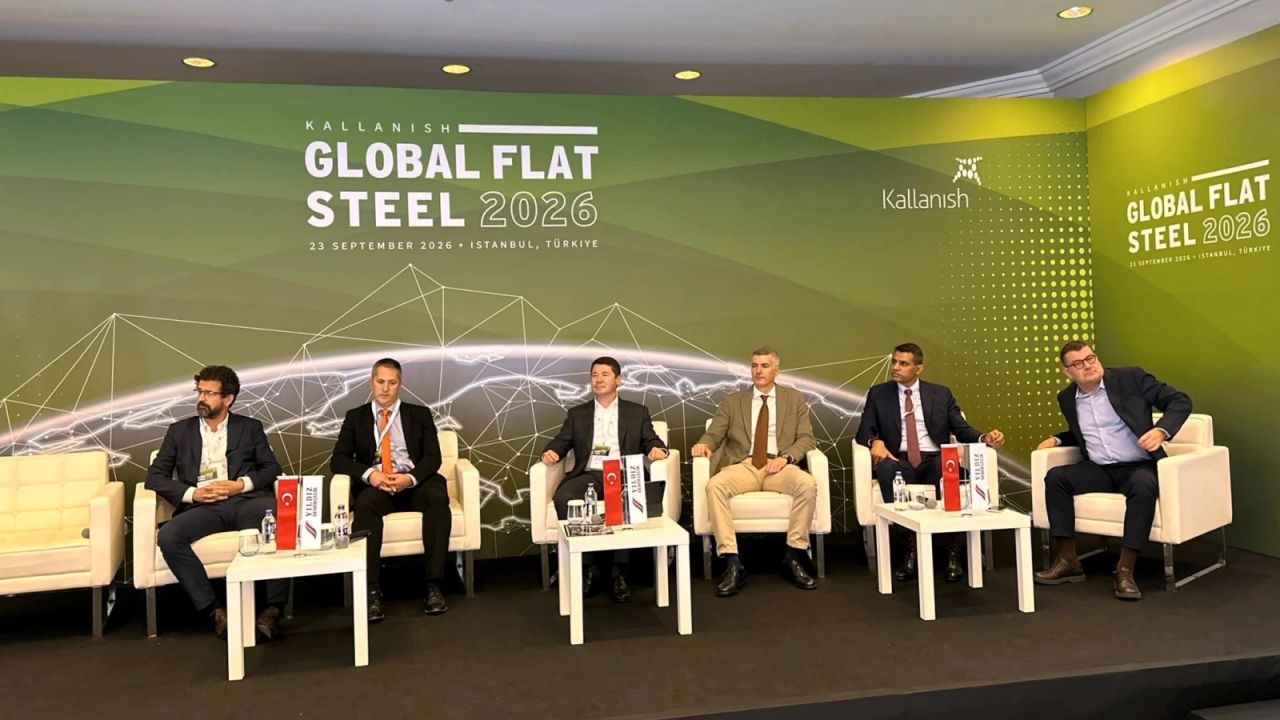
Regulation costs squeeze flat steel traders: Kallanish GFS26
Carbon and quota compliance costs are becoming a permanent part of flat steel pricing and are testing traders, speakers said in the closing session of Kallanish Global Flat Steel 2026 in Istanbul on Wednesday.
Stanislav Zinchenko, chief executive of GMK Center, said CBAM default values and delayed verification would add around €10/tonne ($11.4/t) for Indian material and €20/t for Indonesian product coming into the EU. “We have a new cost factor that will support price – a regulation factor, a carbon factor,” he said.
Zack Newman, commercial director at M7 Metals, said traders must plan for the worst on quotas, CBAM and cash tied up in guarantees. “You have to make your assumptions based on the worst-case scenario,” he noted, adding that some traders would be caught out.
Kutay Ulku, trade manager at Tata International, said it is essential to post extra collateral with EU customs. “I’ll be very happy if the EC [European Commission] would just abolish all the quotas,” he said, and apply a flat 50% duty to every origin.
Ankur Mishra, trading lead for steel at Cargill Metals, said regulatory and financing costs would ultimately be passed to consumers. “At some point, there will be a pushback. There will be demand destruction,” he said.
Gorkem Bolaca, managing director of Galex Steel International, noted that buying decisions had changed. “It’s all about buying the material at a landed, risk-free, regulatory-free price,” he observed.
Guvenc Temizel, executive committee member at Borcelik, said Turkey’s economy was stagnating under high interest rates and inflation, but the steel sector was resilient. “We have had many crises, but we never stop,” he commented.
Asked where they would put $1 billion of investment, the panel was split, each with a different rationale. Mishra chose India. He said that while US prices look attractive, a plant would take three years to build, and India’s per-capita consumption remains well below the global average, giving a 20-year demand runway despite coking coal constraints.
Bolaca chose Africa, citing its young population, the AI-driven data-centre build-out and the need for an investment horizon beyond three years. Temizel would back US grain-oriented electrical steel, as data-centre construction is being slowed by transformer shortages and most transformer steel is imported.
Newman would avoid steelmaking, citing overcapacity, and favour low-carbon DRI and HBI spread across several countries, since cheap gas locations carry higher political risk. Ulku would split funds evenly: European electrical steel and tinplate for data centre and EV demand, and scrap collection in Europe and Africa rather than DRI. Zinchenko would avoid US steel assets over fears they could be lost to political or banking pressure. He said he would put half into North African metallics and half into European re-rolling, where he sees at least €200/t margins for five years.

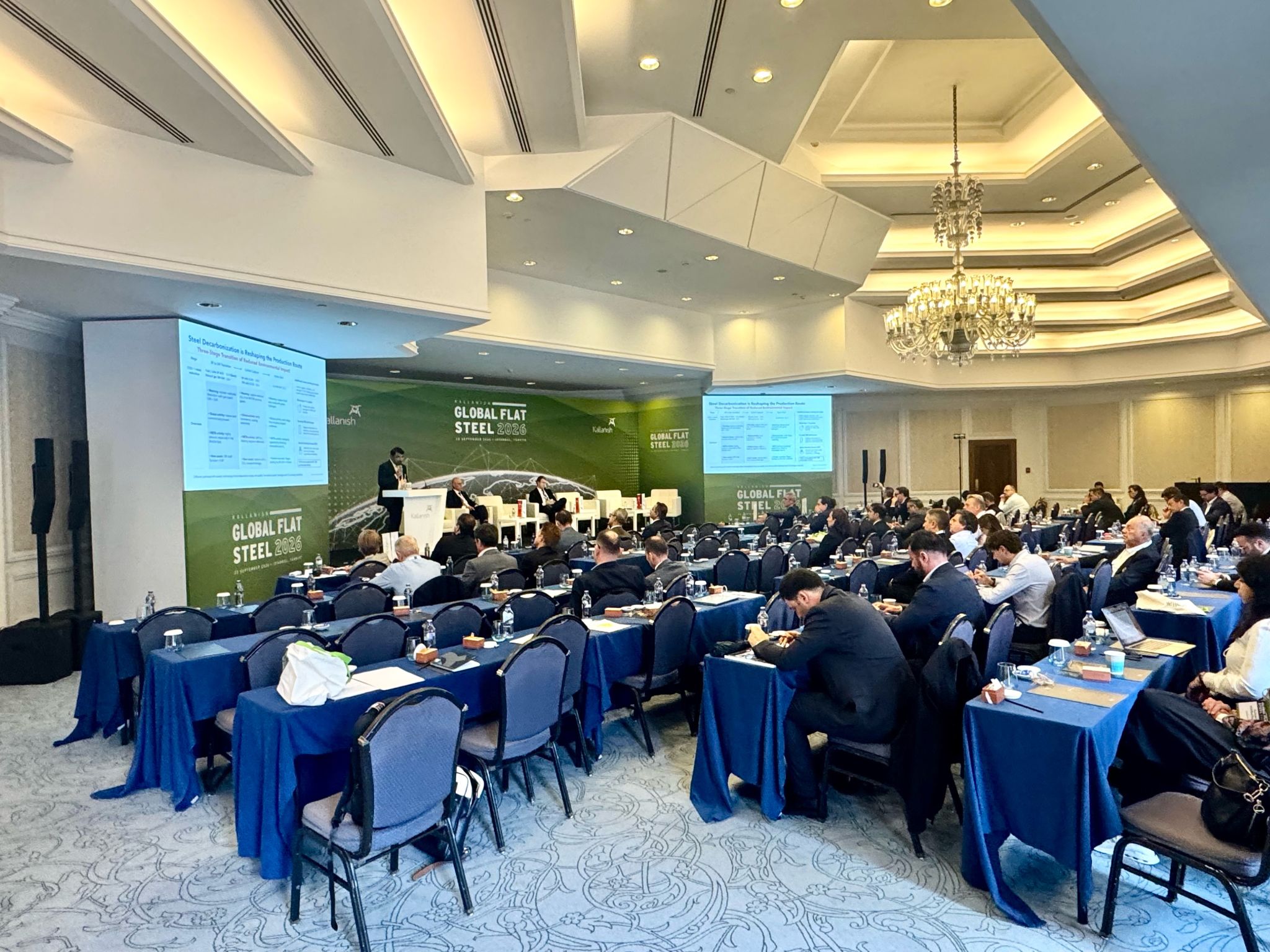
Overcapacity, protectionism, geopolitics reshape steel: Kallanish GFS26
Overcapacity, protectionism and geopolitical disruption are reshaping global steel trade, panellists said during the opening keynote session of Kallanish Global Flat Steel 2026 in Istanbul on Wednesday.
Turkish Flat Steel Import, Export and Industry Association (Yisad) chairman and Colakoglu Metalurji board member Metin Tayfun Iseri said global overcapacity has left producers unable to protect margins. “The ship is sinking, and everybody is trying to protect their own market,” he said, adding that further capacity growth and investment need to stop.
Kallanish managing editor, Asia, and head of data Tomas Gutierrez said China’s steel sector has structurally peaked as Beijing redirects investment towards strategic technology sectors, while steel exports remain high despite thin margins. “If the demand in China is less than the supply, the steel will go somewhere, and that caps prices here and everywhere else,” he said. He put sustainable Chinese exports at around 130 million tonnes this year.
Yildiz Demir Celik general manager Selçuk Yilmaz argued that Turkey’s electric arc furnace-heavy production base should provide a CBAM advantage for supplying into the EU. But Turkish exporters remain exposed to quotas and the incoming “Made in Europe” restrictions.
He also pointed to the toll of regional conflict on trade flows. “Everyone’s talking about overcapacity, but geopolitical conflict matters too. The Israel-Iran war may not hit steel markets directly, but closing shipping routes changes everything – oil prices rise, freight goes higher than before the war. And since 2022 there’s the Russia-Ukraine war, and nobody knows how that resolves,” he said.
MAN Industries president – group procurement and strategy Manish Lunker, who sources pipeline-grade steel for infrastructure projects, said 2026 has been among the toughest years for securing material on time. “Ensuring the material is available at all times is the biggest challenge we as industry are facing today,” he said.
He pointed to Red Sea shipping disruption as a key driver: “The current disruptions in the Red Sea have led to a lot of uncertainty in the shipping industry,” he noted, citing vessel shortages and port congestion. He called for the industry to develop longer-term, 12-24-month pricing mechanisms to support project-based capacity booking, as well as for further investment in special grade steel supply.

HKM permanently shuts down BF A in Duisburg after 53 years
Germany-based steelmaker Salzgitter AG has announced that its subsidiary Hüttenwerke Krupp Mannesmann (HKM) has permanently shut down blast furnace A at its Duisburg plant after more than 53 years of production, as part of its transition toward lower-carbon steelmaking. The final tapping of the furnace took place on September 19.
Blast furnace A was commissioned in 1973 and produced approximately 93 million mt of pig iron over five campaigns during its operating life. A few days before its closure, HKM also shut down coke oven battery No. 2 at its Duisburg plant, as SteelOrbis previously reported.
BF route to be replaced with EAF from 2029
HKM plans to produce lower-carbon steel in Duisburg using a new electric arc furnace (EAF) from 2029. The EAF will have an annual production capacity of up to 2.5 million mt, making it Germany’s largest EAF and the second-largest in the EU.
The project is receiving €200 million in funding from Germany’s federal government and the state of North Rhine-Westphalia under the Federal Funding for Industry and Climate Protection program. Construction of the project started in August this year, while completion is scheduled for 2029.
Gunnar Groebler, Salzgitter CEO, said the closure represents another step toward the group’s goal of completing its transition to nearly carbon-neutral steel production by the mid-2030s. The company plans to replace the conventional blast furnace route in Duisburg with EAF-based production as part of this strategy.
Blast furnace B to maintain production during transition
Until the new EAF is completed, blast furnace B will maintain production at the Duisburg site. The furnace was restarted several weeks ago following a refurbishment lasting several months.
HKM’s two blast furnaces produced approximately four million mt of pig iron in 2025. Due to the refurbishment of blast furnace B and the permanent shutdown of blast furnace A, pig iron production is expected to decline to around three million mt in 2026. From 2027, HKM’s annual production capacity will stand at up to 2.5 million mt, initially using one blast furnace and subsequently the new EAF.

Italy’s ABS strengthens northern European presence with new service center in Sweden
Italian special steel producer ABS – Acciaierie Bertoli Safau, the steelmaking division of Danieli Group – has inaugurated a new service center in Värnamo, Sweden, which will serve as the company’s hub for its Scandinavian operations. According to reports in the local Swedish press, this is ABS’s first service center outside Italy. The opening completes the project launched in 2025 with the development of ABS Steel Nordic and strengthens the group’s presence in the northern European market.
The new ABS Steel Nordic Service Centre covers an area of approximately 25,000 square meters and includes a newly constructed 5,500-square-meter building. The center combines stock availability, processing, cut-to-length services, logistics and metallurgical consulting, enabling ABS to serve large industrial customers, small and medium-sized enterprises and machine shops. The facility was built in approximately ten months and is equipped with automated and robotic systems for material handling and cutting.
The facility has also obtained Miljöbyggnad Silver environmental certification, the second level of Sweden’s leading building sustainability certification system managed by the Sweden Green Building Council (SGBC), confirming performance above the minimum requirements set by Swedish regulations in terms of energy efficiency, indoor environmental quality, and the selection and traceability of materials.
The center will serve key northern European markets
Värnamo was selected for its strategic location in relation to the key markets of Sweden, Norway, Denmark and Finland. The availability of material in stock will enable just-in-time deliveries and shorter response times to customers’ requirements.
The service center will focus on special steels and will stock, among other products, hot rolled products, peeled, cold drawn and ground bars, as well as forged products, with a dimensional range of approximately 20-300 mm. The cutting equipment installed at the center can handle larger-sized materials of up to approximately 560 mm. The product range will include carbon steel, case-hardening steel, quenched and tempered steel, and micro-alloyed steel, while technical and metallurgical support will be provided through the expertise of the ABS Centre Métallurgique (ACM) research center.
Camilla Benedetti, president of ABS Acciaierie, stated that the opening represents a decisive milestone in the company’s international growth, adding, “The Nordic market demands quality, sustainability and service. She emphasized that the new hub is aimed at bringing ABS even closer to its customers by integrating steel supply, logistics, cut-to-length services and technical consulting.

European domestic HRC prices conditioned by limited downstream restocking; imports rise on latest deals
Steel hot-rolled coil (HRC) prices edged down slightly in the domestic market of Northern Europe under pressure from the downstream market and sufficient inventory. Italian prices remained broadly stable day on day, while imports in the region increased on latest deals, sources told Fastmarkets on Wednesday September 23.
In Northern Europe, participants said that weak downstream demand was limiting price increases in the market, as buyers were not rushing to restock. Meanwhile, mills were firm on their offerings due to the lack of importing competition.
Latest indications of workable levels in the market were reported within the range of €730-760 ($836-871) per tonne ex-works on Wednesday, while offers from mills were heard at €750-760 per tonne ex-works.
Higher offers reached €780-790 per tonne ex-works but they were considered unworkable for the moment, sources told Fastmarkets.
A distributor said that demand was even falling, while mills were trying to increase prices slightly, citing high energy costs in Europe.
Thus, Fastmarkets’ daily steel hot-rolled coil index domestic, exw Northern Europe was calculated at €740 per tonne on September 23, down by €3.75 per tonne from €743.75 per tonne on September 22.
The index was down by €5 per tonne week on week but up by €17.92 per tonne month on month.
Meanwhile, a supplier source said that steel service centres in Germany and Italy were willing to accept limited stock replacement not higher than €750 per tonne delivered, which they indicated around €730-740 per tonne ex-works.
“There is no appetite to take substantial volumes at these prices – no real stock-outs yet and difficulties to consolidate sheet prices at target levels of €850 [per tonne] CPT and higher,” the same source said.
The supplier added that steel sheet prices were pushed down by some producers in Northern Europe, putting realistic HRC levels in line with the Italian market, where sheets were supported by higher prices.
Despite the weak downstream demand in the market, HRC prices in Italy were holding a firm workable level around €730-740 per tonne ex-works, based on sources’ indications.
A distributor said that competition in the market was strong due to low demand, leading to narrowing margins.
Fastmarkets’ daily steel hot-rolled coil index domestic, exw Italy was calculated at €735 per tonne on September 23, stable day on day.
The index was up by €6.67 per tonne week on week and by €22.50 per tonne month on month.
In Central Europe, HRC mills were heard facing difficulties with production planning due to longer steel slab deliveries, taking around 60-90 days to arrive from overseas destinations. Restricted access to raw materials such as iron ore and coke was also limiting production accordingly, a source familiar with the matter told Fastmarkets.
However, no price increases were initiated this week, and the latest levels were indicated in line with previous deals at €730-740 per tonne ex-works reported on September 16.
Fastmarkets’ weekly price assessment for steel hot-rolled coil domestic, exw Central Europe was €730-740 per tonne on Wednesday, stable week on week.
On the import side, HRC deals into Southern Europe were heard at €555-570 per tonne CFR from Turkey and at $710-720 (€620-629) per tonne CFR from India on Wednesday.
Higher offers from Turkey were reported at €640-660 per tonne CFR but no deals were confirmed at these levels. Meanwhile, Egypt was heard offering material around €628-633 per tonne CFR.
As a result, Fastmarkets’ weekly assessment of steel hot-rolled coil import, cfr main port Southern Europe was at €555-629 per tonne on September 23, up from €550-620 per tonne a week earlier.
Book-and-claim could accelerate green steel transition: RMI
A book and claim (B&C) system for iron and steel could support a faster transition to net zero steelmaking, the Rocky Mountain Institute (RMI) says in a new report seen by Kallanish.
While multiple pathways already exist for decarbonising the sector, their deployment has been “frustratingly slow” due to high up-front costs and long lifetimes of existing assets, the clean energy think tank adds. On the buyers’ side, companies willing to pay a premium for low-emissions steel often find themselves unable to directly procure it.
A B&C model, RMI says, can help address this gap by enabling more market participants to support low-emissions steel supply beyond traditional procurement pathways. Essentially, the mechanism separates a product’s verified environmental attributes from the physical product. Producers can sell environmental attribute certificates (EACs) linked to verified low-emissions steel production, creating an additional revenue stream when physical delivery is not possible. For buyers, purchasing EACs offers a credible, transparent way to support green steel production and claim the associated emission benefits.
Some steelmakers such as Stegra already apply book and claim to the non-prime steel it produces. Last week, Google agreed to purchase EACs for a volume of up to 91,000 tonnes of steel from Stegra’s future steel production in Boden, Sweden. A year ago, the prospective steelmaker signed the first purchasing agreement for EACs with Microsoft.
“There is a clear demand for near-zero-emission steel and a willingness to pay a premium, especially in geographies where there is a cost for carbon,” Stegra was quoted as saying by RMI. “Unlocking the potential for customers more broadly to purchase the green value, through use of environmental attribute certificates, will spur further production for sustainably sourced steel.”
RMI proposes a dedicated B&C framework for iron and steel, featuring verified certification for low-emissions steel, a secure registry to issue, transfer, and retire certificates, and clear guidance for buyers to claim the associated emission benefits. These safeguards, it adds, are essential to prevent double counting, ensure climate integrity and build trust among market participants.
The think tank has developed its own framework for the sector, although it is not yet a formal certification standard or operational registry. Further testing and collaboration across the steel value chain will be required to strengthen certification, verification, tracking and governance the report concludes.
Steel remains ‘people’s business’ despite increasing complexity: conference
Buying steel in the 2020s has become a game of multiple skills and challenges, but ultimately, relationships and communication matter most, said speakers at the MBI Stahltag conference in Frankfurt on Tuesday.
“There was a time when a buyer only needed to buy steel,” Martin Brückner, managing director of conference organiser MBI Infosource, said in his opening speech. “Today, they need to know about emission trading, geopolitics, CBAM, artificial intelligence, and more; and, by the way, eventually they need to ask for the price.”
Provokingly, he said that “in Germany, we have the cleanest steel in the world, but no more customers who can afford it”. Brückner pointed out that “steel procurement will remain a people’s business. It takes trust, and a sense of judgement: Is the mill salesman being truthful about high capacity utilisation and long lead times, or is he only fibbing?”
A similar conclusion was drawn by Hans Boot of consultancy DDVC. “After all, man is an animal of communication,” he said at the event attended by Kallanish. “People want to talk with one another, and not only on [Apple calling application] FaceTime.”
This conclusion complemented several ideas he presented on artificial intelligence, which could help procurement, but is not yet extensively used. “The technology is there, we just need to train for it,” Boot said. The same is true for digital procurement platforms. Boot advocated a “Just do it!” approach. “I see people consider trying it, but after half a year they still talk about it, rather than giving it a try,” he observed.
He also addressed the widening range of tasks being taken on by purchasing departments. “In the future, the buyer will be more of an optimiser of supply chains, and will be called supply chain manager,” Boot said.
Moreover, he recommended that industry recruiters of Generation Z should consider people’s soft skills – “another term nobody used 20 years ago”.