

Turkey could become EU’s largest steel producer by year-end: Dalbeler
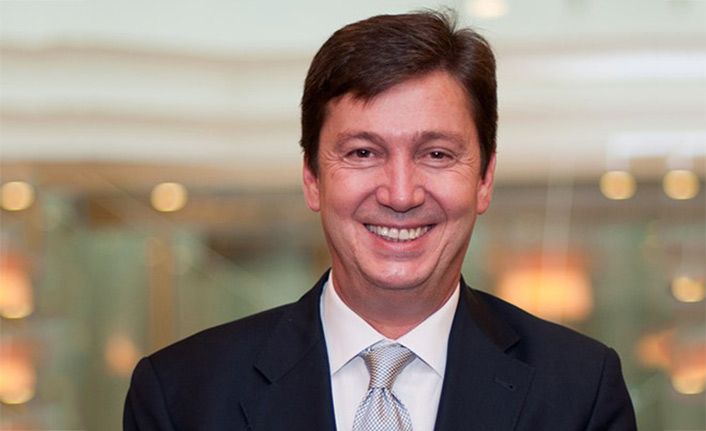
Highlighting that Turkey, which is currently the second largest steel producer in the EU, has caught up to Germany as of the end of September, Ugur Dalbeler, the CEO of major steel maker Colakoglu and the vice president of Turkish Steel Exporters’ Association (CIB) told local news agency Bloomberg HT that Turkey could become EU’s largest steel producer by year-end.
Steel production in Turkey exceeded last year’s performance as of the first nine months of 2020, Dalbeler said, adding that this situation is different compared with other parts of the world.
“The growth figure in China, which has a 60% share in total global steel production, reached 4.9%, while other parts of the world shrinked by 10%,” Dalbeler said adding that the 1% growth figure that Turkey reached is showing that Turkey is better compared to its rivals.
In that sentiment Turkey could become EU’s largest steel producer by year-end by surpassing Germany, Dalbeler said.
Drawing attention that shipments to South East Asian markets notably supported Turkish mills’ exports, amid China’s performance in the first quarter of the year as a result of the coronavirus pandemic, Dalbeler also said he is expecting the rise in exports to that region to continue in the coming years.
Turkish mills’ rebar exports to that region especially increased notably. According to the latest Turkish Statistical Institute (TUIK) data observed by S&P Global Platts, Singapore became one of Turkey’s main rebar export markets in the first eight months of 2020, taking 235,700 mt, while Turkish mills’ rebar exports to Hong Kong totaled 207,000 mt. Turkish mills also exported 52,500 mt of rebar to Malaysia in January-August.
Dalbeler also said Turkey’s natural gas reserve discovery is important for Turkey, as the country is meeting most of its raw materials and energy needs by imports.
Turkey recently discovered a large gas field in the Black Sea with as much as 405 billion cubic meters, as Platts has reported.
The CEO of Colakoglu however also noted that the rise in exchange rates has a negative impact on Turkish steel producers, as they are dependent on raw material imports like iron ore and scrap. Having stability in exchange rates is very important when it comes to forward planning, he said.
— Cenk Can

Italian construction performance improves
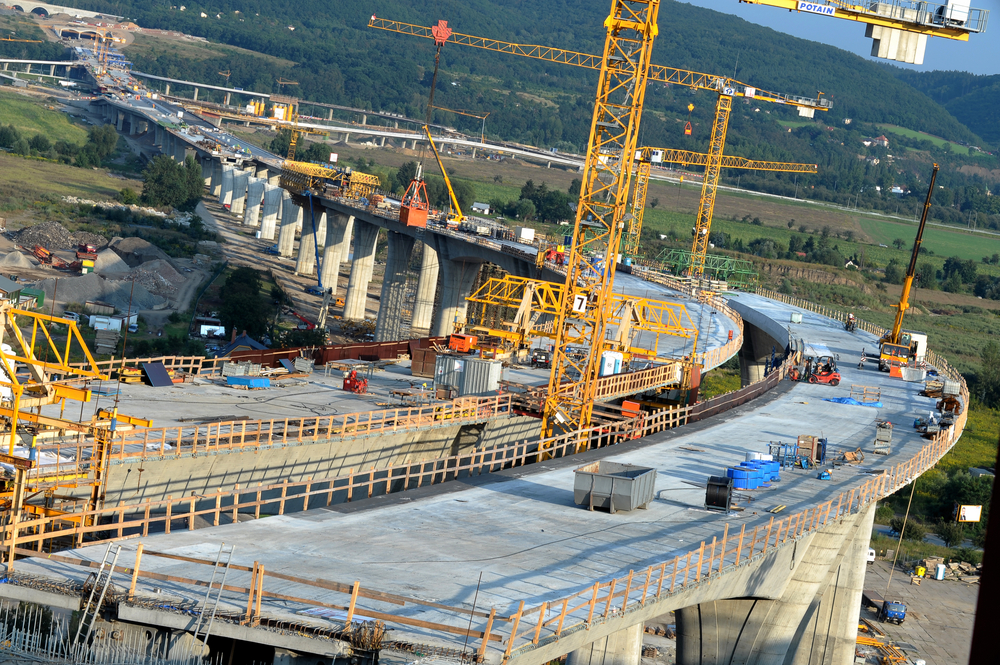
Italian construction sector output increased in August, growing by 12.9% year-on-year, according to a National Institute of Statistics (Istat) report monitored by Kallanish.
This positive result confirms the upward trend registered since May and follows the lower output seen during the Covid-19 lockdown.
From June to August construction output skyrocketed by 70.8% compared with the previous three-month period. This is due to the complete halt of activity during lockdown, Istat says. In January-August construction output also increased by 12.8% y-o-y.
Meanwhile, the country’s industrial production increased by 7.7% month-on-month in August and by 34.6% in June-August compared to the previous three months, Istat adds.

Dillinger plate supplies world’s largest offshore wind farm

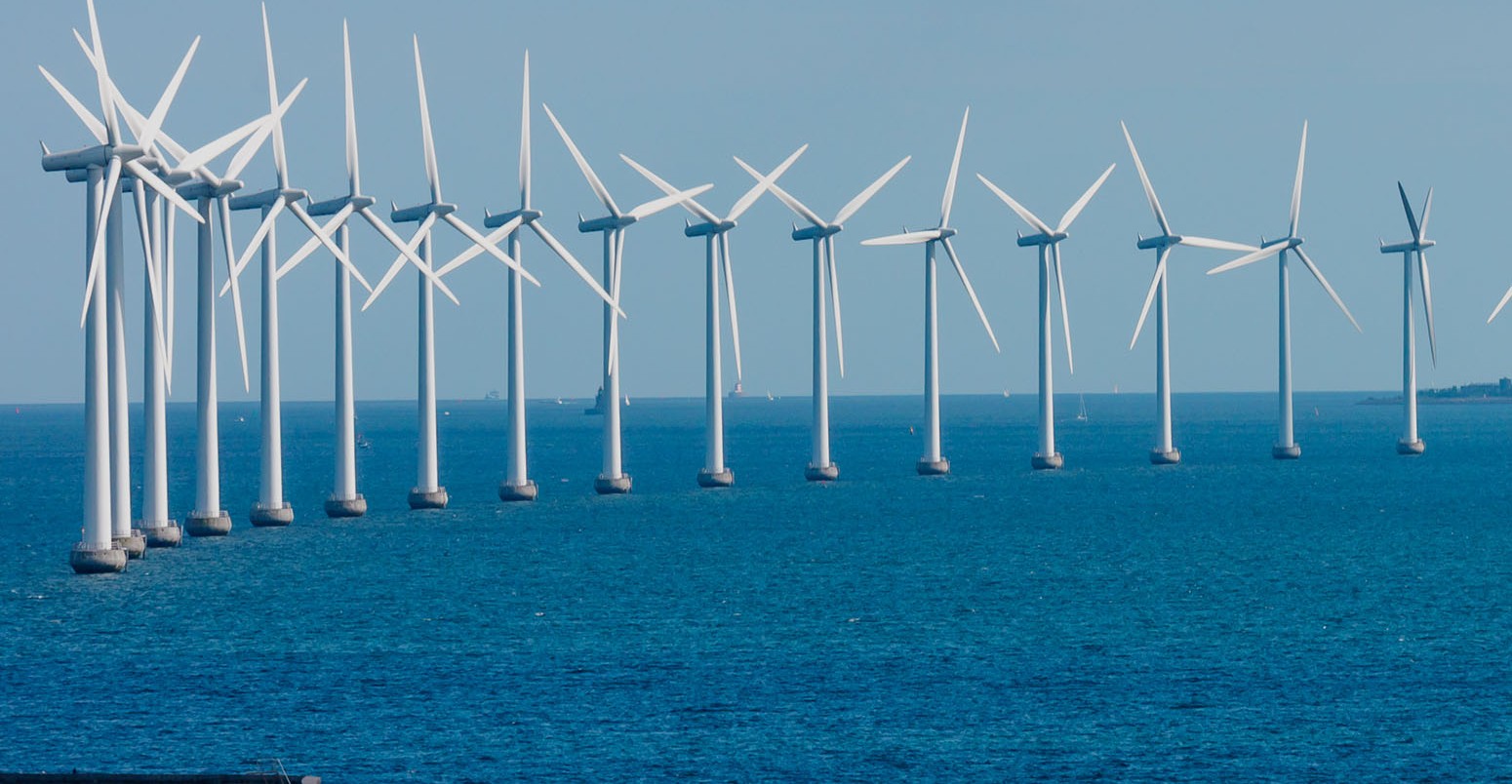
Now that the final wind turbine has been installed at Hornsea One, the world’s largest offshore wind farm is about to be commissioned. Dillinger Hütte has supplied 99,000 tonnes of heavy plate for the monopile foundation structures.
Hornsea One is the first wind farm in the world with a capacity of more than 1GW, Kallanish hears from operator company Ørsted. It generates enough wind power annually to supply well over 1 million homes in the UK with green electricity.
Located 120km off the east coast of the UK, Hornsea One is further from the mainland than any other offshore wind farm completed to date. The park contains a total of 174 7MW wind turbines and covers an area of 407 km2. The towers have a height of 190 metres, with rotor blades that are 75m long, and a rotor diameter of 154m.
The thermomechanically rolled heavy plate ranges from 30-90mm in thickness.

New e-commerce platform targets excess tonnage trading
A new e-commerce venture targeting excess steel capacities that have accrued during the Covid-19 pandemic has been established in Berlin under the name of Vanilla Steel.
The company targets steel producers and processors in Europe that generate excess material and are looking to sell, it says in an announcement sent to Kallanish. It notes that “…excess material has no price tag attached by definition,” and that Vanilla Steel helps suppliers to find a fair market price through online auctions.
The firm provides the details of the winning bidders to the suppliers and the transaction is finalised directly between the supplier and buyer on the pre-agreed terms, the founders say.
“Steel suppliers are under pressure to reinvent themselves in a market full of uncertainty with low demand,” says Alexis Ducros, one of the co-founders. “Covid-19 has accelerated the need for digital sales channels for steel that reduce the cost of selling as well as the cost of inventory.”
The company was launched officially in June, had transactions from the first week onwards and now counts suppliers and buyers across 20 countries in Europe, the statement claims. It highlights that most other online shops belong either to producers or distributors, and that Vanilla Steel is positioned as the only independent digital platform for the European steel sector.
The largest previous independent e-commerce platforms for steel established in Germany, Mapudo and Netzwerk Stahl, later renamed steel.shop, both folded in spring 2019.
Eurofer welcomes investigation into Chinese wind tower imports
European steelmakers association Eurofer has welcomed the initiation this week of an investigation by the European Commission into the possible dumping of wind towers from China.
Wind towers are mainly built with steel and Eurofer believes this new investigation shows that “…steel-using sectors also need adequate trade remedies”.
In a note seen by Kallanish, the association explains that wind plate and electrical steels are among the most used steel products to produce wind towers. Imports of these products from China are already subject to anti-dumping measures. For that reason, measures on imports of downstream finished products are welcomed by the association.
“Maintaining and developing the steel-based industrial value chain in Europe is key to both the survival and sustainability of the European steel industry, but also of the sectors downstream of it,” says Axel Eggert, director general of Eurofer.
According to European rules, provisional measures on Chinese wind towers could be imposed by June next year.

Global steel groups urge the Global Forum on Steel Excess Capacity to expand efforts to address growing steel crisis
- Steel industry associations in the Americas, Europe, Asia and Africa today renewed their call for governments of steel-producing economies to intensify their work in the Global Forum on Steel Excess Capacity (GFSEC).
- The scale and persistence of excess capacity in the steel industry calls for more ambition in the transparency and policy-related work of the GFSEC
- The steel associations also call on non-participating governments to resume active participation in the GFSEC’s work.
Worldwide, October 22, 2020 – Steel industry associations in the Americas, Europe, Asia and Africa today renewed their call for governments of steel-producing economies to intensify their work in the Global Forum on Steel Excess Capacity (GFSEC).
Steel industries throughout the world expressed tremendous concern about the recent increase in steel overcapacity at a time when steel demand is severely depressed by the COVID-19 pandemic, reversing a trend of gradual decreases in overcapacity in the three years after the GFSEC was established (2016 – 2019).
The associations noted the uneven state of recovery in macro-economic conditions and steel production across the world and are particularly concerned about a risk of potential destabilisation of international steel markets.
Steel industries commend the commitments taken by the members of the steel forum to create transparency in regional market and capacity evolutions and review capacity increases based on the agreed policy principles and recommendations set out in the Berlin Ministerial report.
However, the scale and persistence of excess capacity in the steel industry calls for more ambition in the transparency and policy-related work of the GFSEC.
The steel associations specifically call on participating governments of the forum to:
- Develop stronger disciplines on industrial subsidies and other support measures that contribute to excess capacity and distort markets;
- Uphold effective trade remedies to ensure a level playing field driven by market forces and fair trade;
- Deepen the analysis of the drivers of steel capacity expansions to expose subsidised or non-market driven investments;
- Make a reliable forecast for steel demand in the markets where investments are to be made;
- Add value to the transparency work by developing open communication and information to the public; and
- Communicate to G20 Leaders on the need for expanded efforts to address the growing steel excess capacity crisis.
The steel associations also call on non-participating governments to resume active participation in the GFSEC’s work. Effectively addressing the global steel crisis is in the interest of all economies, steel producers, and steel consumers worldwide, and requires the active engagement of all G20 economies.
Contacts for more information around the world:
AISI – Lisa Harrison, lharrison@steel.org, 202.452.7115
EUROFER – Charles de Lusignan, charles@eurofer.eu, 0032 2738 79 35
CSPA – Catherine Cobden, c.cobden@canadiansteel.ca, 613.238.6049
CANACERO – Salvador Quesada, squesada@canacero.mx, 52 (55) 5448-8162
SMA – Annie Stefanec, stefanec@steelnet.org, 202.296.1515
Alacero – Fernanda Valente, fevalente@alacero.org, (55 11) 3195-5803
Brazil Steel Institute – Débora Oliveira, debora.oliveira@acobrasil.org.br, 55 (21) 3445-6327 | 6300
JISF – Shigeru Hagiuda, hagiuda@jisf.or.jp, 81 3 3669 4835
Russian Steel – Alexey Sentyurin, senturin@russtal.ru 79 153226225
Turkish Steel Producers Association – Veysel Yayan, veyselyayan@celik.org.tr, 90 3124663734
ESTA – François Michalet, francois.michalet@esta-tube.com, 33 1 41 31 56 43
AMME – Alisher Zholdybayev, zholdybayev@agmp.kz, 87029141261
SAISI – Charles Dednam, charles@saisi.org, 27 12 380 0900
KOSA – Taekyung Koh, taekyung.koh@ekosa.or.kr, 82 2-559-3546
Ukrmetalurgprom – Oleksandr Kalenkov, office@ukrmetprom.org, 38 (044) 279 05 25
SSINA – Larry Lasoff, LLasoff@kelleydrye.com, 202.342.8530
CPTI – Tamara Browne, tbrowne@schagrinassociates.com, 202.223.1700
CFSBI – Casey P. Bouton , cbouton@taubensee.com, 800-459-5101
SEIFSA – Michael Ade, michael.ade@seifsa.co.za, 011 298 9432
Acero Argentino – Carlos A. Vaccaro, c.vaccaro@acero.org.ar, (5411) 4311-6368 / 637

NLMK to invest further in Clabecq plate mill

NLMK has announced the launch of a €30 million ($35m) upgrade plan for its plate mill located in Clabecq, Belgium.
The investment will allow the mill to produce thin plate in high strength ranges with better tolerances, while reducing gas consumption and CO2 output. It will push forward the positioning of the mill as a key player in this market, in particular for quenched and tempered steel plate, NLMK says.
“The revamping of the rolling mill includes the installation of a new descaling system with two new de-scalers and the modernisation of the four-stand finishing mill,” the company says in a note sent to Kallanish. The works should be concluded in late 2021.
Civil engineering pulls EU construction out of crisis
The European civil engineering sector registered its first year-on-year growth in August since the drop caused by the Covid-19 outbreak, according to the latest data published by Eurostat and seen by Kallanish.
Overall EU construction sector output dropped -1.5% y-o-y in August, its smallest fall since the downtrend started in March. Building activity was down -2% y-o-y, but civil engineering output picked up 0.9% y-o-y.
Among the largest markets in Europe, France was the best performing country in August. Overall construction output in the country was in line with that of August 2019, therefore returning to pre-coronavirus levels. Germany, on the other hand, saw its output still down -1.8% y-o-y and Spain registered a fall of -8.6% y-o-y.

Vattenfall manager to head Salzgitter
Heinz Jörg Fuhrmann will step down as chief executive of Salzgitter at the end of June 2021, to be succeeded by Vattenfall manager Gunnar Groebler.
Fuhrmann will have reached the age of 65 in 2021, and will therefore be retiring upon expiry of his employment contract on 30 June, Kallanish learns from Salzgitter.
In a note labelled “…disclosure of insider information”, the company announces its supervisory board appointed Groebler over the weekend. He is currently head of Vattenfall’s business area for wind energy. Groebler joined Vattenfall in 1999 and has been essential in making the Swedish power company a leader in renewable energy production.
A strategy of “…solidity and innovation, along with social and economic responsibility” pushed by Fuhrmann at Salzgitter will be continued, says supervisory board chairman Heinz Gerhard Wente. “Especially for this reason, I am delighted that Mr. Groebler has been gained as his successor. He holds a great deal of expertise and experience in important aspects of the key future topics decisive for Salzgitter AG,” Wente says.
Federcciai welcomes new stainless anti-dumping investigation
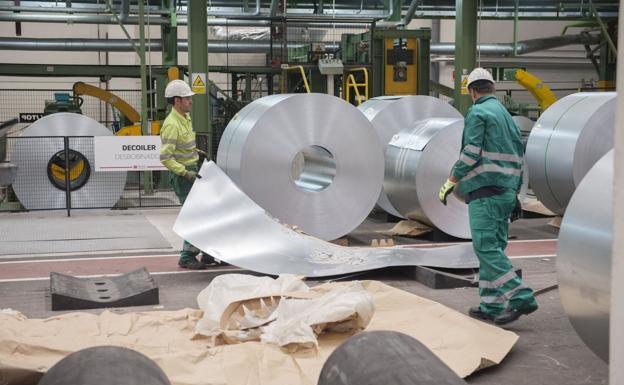
Italian producers’ association Federacciai has welcomed the start of further anti-dumping proceedings into imports of stainless cold rolled products from India and Indonesia.
In a note sent to Kallanish, it urges the EU to fight unfair commercial practice by foreign producers. This comes after Italian steel trade association Assofermet expressed concern regarding the proceedings and said that new duties would lead to substantial market distortion (see Kallanish 15 October).
“The European market is a free market where local players already operate in a highly competitive context while having to face environmental and energy efficiency restrictions that do not exist in other parts of the world; for this reason this market has to be protected from the imports of those companies that operate in foreign countries without the respect of the same rules,” says Federacciai president Alessandro Banzato.
India and Indonesia were responsible for 20% of imports of stainless re-rolled flat products into the EU and 15% of Italian imports in 2019. Should the investigation lead to the imposition of duties, the market would remain competitive and open to imports from other countries. Last year, the above material was also imported from Taiwan, South Korea, South Africa, Vietnam, Malaysia, Turkey and other countries, Federacciai concludes.