


Kleinere Unternehmen geraten in Rückstand
Um flexibel auf wirtschaftliche Veränderungen reagieren zu können, setzen Unternehmen verstärkt auf digitale Prozesse. Viele kleine und mittelständische Unternehmen geraten bei dieser Entwicklung in Rückstand. Das Fraunhofer IPA stellt in einer Studie den aktuellen Stand und künftige Bedarfe sowie Ansätze zur Digitalisierung und Industrie-4.0-Anwendungen im Metall- und Stahlhandel zusammen.
Kerngeschäft des Metall- und Stahlhandels ist neben dem Handel auch der Zuschnitt und die Anarbeitung von Halbzeugen. Bei Letzterem finden weitere einfache Fertigungs- schritte wie beispielsweise Bohren, Anfasen oder Planfräsen statt. Der moderne Stahl- und Metallhandel wird damit immer mehr aktiver Teil der Wertschöpfungskette, wobei er sich mit steigenden Anforderungen auseinandersetzen muss. Industrie-4.0-Anwen-dungen und digitale Produkte können dabei unterstützen.
Die befragten Unternehmen konzentrieren sich bei der Integration dieser Anwendungen auf bestimmte Anforderungen: Datenauswertung, Transparenz und Echtzeitfähigkeit von Systemen sind besonders wichtig, während Flexibilität in den Produktionsstrukturen, Vernetzung von Produktionsmitteln und Dezentralisierung von Informationsspeicherung eher in den Hintergrund rücken.
Die größte Herausforderung bei der Umsetzung von Industrie-4.0-Systemen in der Anarbeitung liegt aus Sicht der Befragten in der Einbindung von Bestandsmaschinen und in der Schnittstellenproblematik. Umsetzungsbeispiele bestehender Produkte von Industrie-4.0-Anwendungen zeigen große Potenziale, sind jedoch oft noch nicht in gewünschter Reife am Markt oder werden nur wenig genutzt. Die Erfassung von Daten findet bisher größtenteils schriftlich oder lokal in der Maschinensteuerung statt. Eine Nutzung von außen ist oft nicht möglich. Digitale Anwendungen könnten allerdings helfen, um beispielsweise leichter zugängliche Prozessdaten für die Auftrags- und Produktionsplanung zu gewinnen.
Nach eigener Definition gaben 80 Prozent aller Teilnehmer an, keine Erfahrungen mit Industrie-4.0-Anwendungen zu haben. Allerdings möchten 60 Prozent der Befragten zukünftig digitale Applikationen nutzen und sind auch zu Investitionen bereit. Der Automatisierungsgrad in der Produktion des Stahl- und Metallhandels zeigt ebenfalls ein hohes Potenzial. 95 Prozent der Studienteilnehmer gaben einen Grad von unter 50 Prozent an.
Alle Unternehmenshierarchien akzeptieren digitalisierte Produkte im Unternehmen, die Führungsebene steht dem Thema Industrie 4.0 jedoch offener gegenüber als die Werker an den Maschinen. Die Akzeptanz ist außerdem abhängig vom Alter der Mitarbeiter.
Die vorliegende Studie basiert auf der Befragung von 66 Unternehmen und neun Interviews mit Branchen-Experten.
Die Studie steht hier zum Download zur Verfügung.
Quelle: Fraunhofer-Institut für Produktionstechnik und Automatisierung IPA

Turkey exhausts rebar/wire rod EU import quotas – already
Some key import quotas within the EU’s new permanent safeguard system appear to be exausted until the end of June, Kallanish learns from the latest data from European customs analysed by Siderweb. The permanent safeguards were introduced officially at the beginning of February.
The safeguard system sets tariff-free import quotas for the period February-June 2019, calculated for the biggest suppliers using a country-based mechanism.
Following a period of uncertainty, customs are set to start the clearance of volumes of products currently at European ports during next week. According to European customs data, for some key products such as Turkish rebar and wire rod, most or all of the quotas allocated for the February-June period are already sitting at the docks awaiting clearance. This has also been highlighted by the Turkish Steel Federation (see separate article).
According to Siderweb calculations, Turkish wire rod volumes at the docks currently represent 103% of the allocated tariff-free quotas for the February-June period. The equivalent of 94% of Turkish rebar quotas for the same period also appear to be awaiting clearance.
The tensions surrounding Turkish rebar and wire rod were anticipated by the fact that preliminary quotas in place until the end of January 2019 were exhausted well before 2018 ended. This confirmed that demand for imports of these products remains above the quotas allocated by the European Commission system.
One trader confirms the issue and notes that some customs bodies in Europe are already requesting a deposit for the 25% tariff for wire rod imports prior to clearing the volumes. This is as per the requirements of the safeguard measures.
Most of the other country-based quotas allocated for different products are not experiencing the same pressure. Chinese automotive grade HDG importers, for example, have used only 35% of the quotas up to now.
EU accelerates anti-dumping legislation for welded tube
No imports of welded tube nor hollow sections arrived at European ports in January. This may be the consequence of the new European Union (EU) anti-dumping investigation into imports of hollow sections, welded tubes and pipes from Russia, Turkey and former Yugoslavian Republic of Macedonia. Material may still be imported in February and in the months to come however, sources interviewed by Kallanish believe.
One source says that the EU is proceeding speedily with the investigation. Preliminary duties may be imposed by the end of April and definitive measures should start in September. “If duties are applied in April and they are retroactive by say 3 months, the material that is imported in February may be subjected to anti-dumping duties,”, the source comments. He adds that buyers – particularly non-English speakers – may not have been informed of this investigation or may have been misinformed therefore they are not considering the risks of importing.
The European Commission confirmed the initiation of a new anti-dumping investigation into imports of hollow sections, welded tubes and pipes from Russia, Turkey and former Yugoslavian Republic of Macedonia in September 2018. This followed a complaint lodged by the EU’s welded steel tube industry defence committee in August.
The products subject to this investigation are “… welded tubes, pipes and hollow profiles of square or rectangular cross-section, of iron other than cast iron or steel other than stainless, but excluding line pipe of a kind used for oil or gas pipelines and casing and tubing of a kind used in drilling for oil or gas,”.

Definitive EU Safeguard Quotas for Mettalic Coated Sheets have been Shifted

Definitive EU Safeguard Quotas for Metallic Coated Sheets have been Shifted in favor of category B, non passivated coated sheets for automotive use
In the definitive EU steel safeguards, the total quota for 4A +4B Metallic Coated Sheets is unchanged. 4A+4B quotas per country are also unchanged.
But in the definitive safeguard quotas, there is a shift of volumes in favor of category 4B (non passivated) at the expense of category 4A (passivated).

EC increases automotive HDG safeguard quota

The European Commission has amended the hot-dip galvanized tariff-free quota from its first proposal on permanent safeguard measures presented to the World Trade Organisation.
The first proposal, released at the beginning of January 2019, confirmed permanent safeguard measures and made stricter the existing quotas system. The measures were then implemented at the end of January. In the final document 50% of approved HDG quotas were moved from section 4a –related to structural HDG regulated by anti-dumping – to section 4b – specifically grouping HDG for automotive use, not included in the anti-dumping system.
According to Kallanish calculations, the biggest change was registered for South Korean HDG. In the final version of the measures the country was awarded some 121,000 tonnes more of tariff-free quota for the 4b group during the period February-June 2019. India also saw its 4b quota increase by 58,000t during the same period, while China’s automotive grade HDG quota only moved up 7,000t compared to the first draft.
On an annual level the 4b group has been allocated overall some 600,000t more quotas than in the first proposal at the WTO, Kallanish notes.
The new permanent safeguard measures allocate quotas to 28 different steel product groups; only HDG in group 4a and 4b registered a change between the first proposal and the final version.
A European trading source speculates the change could have happened following the fierce complaint lodged by European automotive carmakers association ACEA after the first draft was published.

ThyssenKrupp and Tata JV may need HDG divestments
The European Commission might ask ThyssenKrupp and Tata Steel to divest some automotive galvanised steel capacity to enable their joint venture to proceed.
It has long been anticipated that the companies would have to divest electrical steels and tinplate capacity.
But not as many were expecting remedial action in the galvanised sector, despite the companies influence in the automotive segment. Some participants suggest the firms are below the 40pc market share level by which the commission is typically guided, although their total combined share is unclear.
ThyssenKrupp has a particularly big presence, with a number of galvanised lines, most of which have automotive capabilities. Tata has three galvanised lines in Ijmuiden in the Netherlands, all of which are capable to some extent of producing automotive grades. It also has a line at Liege in Belgium.
The commission is expected to send its statement of objections to the parties in the next week or so, including its concerns about their automotive galvanised share. Neither ThyssenKrupp nor Tata Steel proposed potential divestments to the commission when they notified it of their planned joint venture.
ThyssenKrupp did not respond to Argus‘ request for comment, while the commission refused to comment.
“Tata Steel and ThyssenKrupp are committed to working closely with all relevant regulators to ensure the success of this transaction. It is not appropriate to comment on, or speculate on, the specifics of the regulatory approval process,” a Tata Steel spokesman said.
13e Journée suisse du commerce de l’acier 2018
Le commerce face à de nouveaux défis – quelles sont les prévisions pour la branche?
Nouveaux défis. C’est sous cette devise que l’Association suisse du commerce de l’acier et de la technique du bâtiment (ASCA) a convié ses membres et des in vités le 15 novembre dernier au Seedamm Plaza à Pfäffikon SZ à l’occasion de la Journée suisse du commerce de l’acier et de la technique du bâtiment.

Lack of quota clarity not dissuading EU flats importers
European importers of flat steel products have continued to place orders, even though the European Commission will not allocate any material to its new quotas until February 18, trading sources said.
Following the implementation of permanent safeguards on steel imports on February 2, the EC is not allocating any material for 11 working days, meaning importers will not be able to see how much has been imported, and from which country, until February 18.
“Where a new tariff quota is opened, the Commission shall not allocate quantities under that tariff quota before the 11th working day following the date of publication of the Union act opening that tariff quota,” the EC regulation stated.
All member states can update their systems, according to UK HM Revenue & Customs.
As of Wednesday, there was no new allocation volume shown on the EC website after preliminary quotas ceased on February 1. A source at the EC told S&P Global Platts this week that companies can make requests now, but the quota allocation decisions will only be effective after the 11-day period and allocations will be done in chronological order of dates of the acceptance of customs declarations.
The quota database website could theoretically show an amount of volumes awaiting allocation during that time, according to UK HM Revenue & Customs. In a letter dated February 5, it said, “this will not be a true reflection of the total amount claimed from all member states.”
Sources, however, said this blocking period has not stopped them from placing orders.
“We are still booking imports. We haven’t got a stop sign from corporate that we hold back — quite to the contrary,” said a France-based source, adding that as the quotas would be new and risks of them being filled quickly for flat steel, there would be no reason not to import.
Over the past few days, however, import offers particularly from India and Turkey have increased. This makes imports, particularly for hot-rolled coil, unattractive as the current spread between domestic and import prices has shrunk to around Eur30/mt. Sources said the lowest CIF Antwerp import prices were at Eur470/mt for HRC, up by around Eur10-15/mt. One source said he also heard prices at Eur490/mt CIF.
“Turkey is not willing to give anything for free,” one trader said.
While sources commented that the global quarterly HRC quota would be “generous,” the case might be different for hot-dipped galvanized, as coated sheets have been split into two categories specifying more grades, including Chinese and Korean grades primarily used for the automotive industry.
The EC said that it had fielded concerns that automotive grades should be excluded based on a lack of material availability. Following an investigation, however, the EC found that there would not be a shortage of coated sheets in the EU.
The case might also be different for wire rod and rebar, as sources said that quotas could be filled quickly. “There are a lot of tons waiting to be cleared for longs,” the trading source said.
— Laura Varriale
Antwerp Railhouse shipping facility set to begin operations
Belgian shipping company Conti 7 has completed the equipping of its first warehouse for steel at the port of Antwerp, and expects to have the second one completed in mid-March.
Together with its partners, logistics companies Van Dyck and Zuednatie, Conti 7 has established a new company named Antwerp Railhouse, for break bulk and steel. The first warehouse in Antwerp is dedicated to handling plate with a magnet, mainly on behalf of one customer. Warehouse number 2 will have a Container Freight Station (CFS), a facility in which shipments for less-than-container load shipping are bundled or separated.
Meanwhile, Conti 7’s head of projects, Peter Larose, confirms to Kallanish that the company intends to expand the warehouse in Colombia that it opened in August. According to Larose, it has a handling capacity of up to 220,000 tonnes/year, and is meant to be expanded with a 5000m² open air storage area.
The company also has ambitions to gain a foothold in Ukraine and planning for this move is in progress, it confirms.
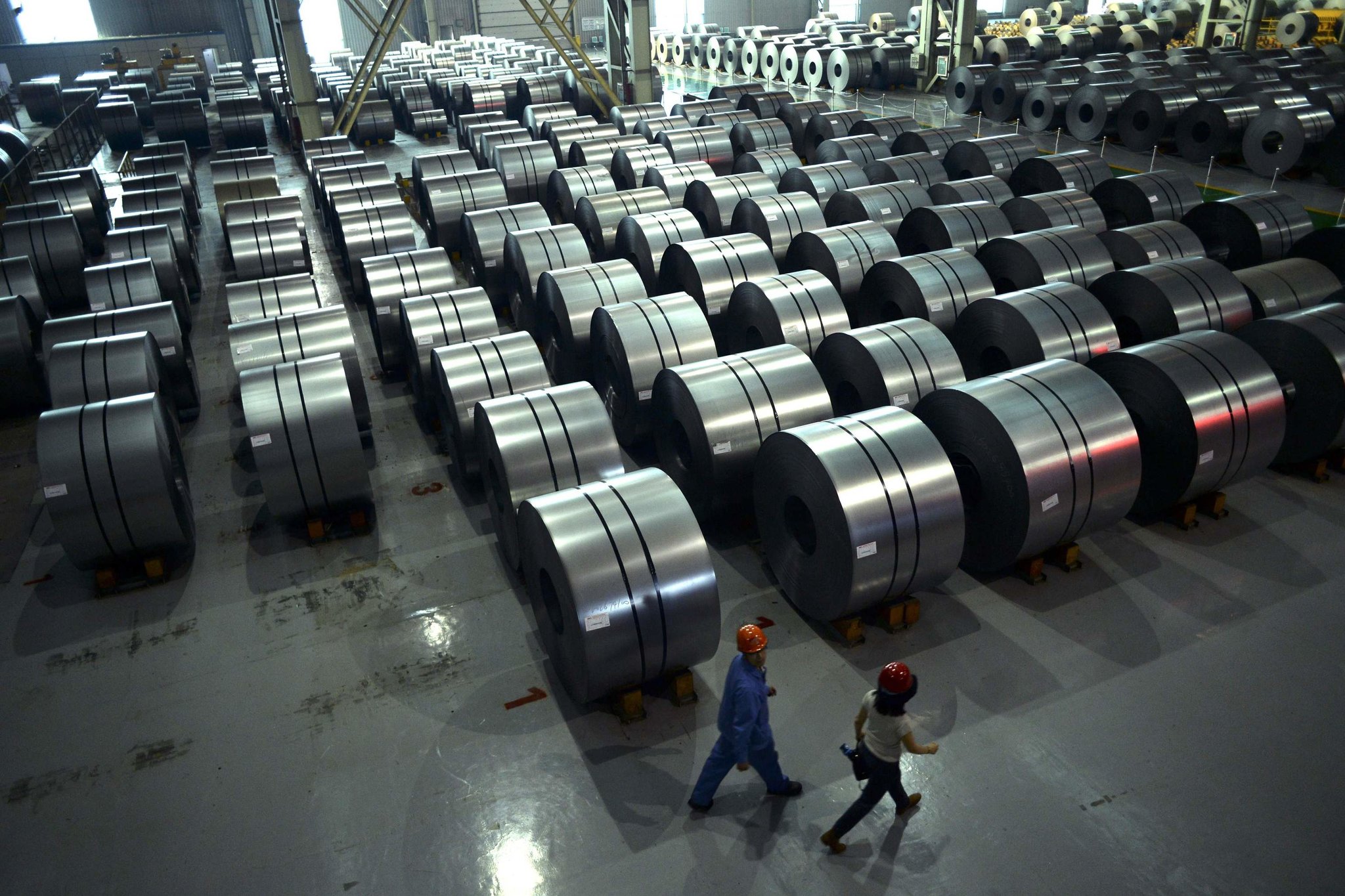
EU distribution activity suffered in 2018: EUROMETAL

Last year the activity of steel distributors across Europe suffered, according to the latest EUROMETAL data monitored by Kallanish.
Multi-products and proximity distributors increased their shipments by 0.6% year-on-year in 2018, but flat steel service centres (SSC) saw their shipments drop by -3.1%, EUROMETAL explains.
“Shipments at SSC decelerated mainly in the second half of 2018, with mounting uncertainties regarding the perspectives of the European automotive industry and related supplier sectors,” the note explains. “For the multi-products distributors, on the other hand, positive trends in the EU construction industry were supportive to this steel distribution segment.”