


Reliance Steel reports net sales increase for 2018
Driven by solid demand and increased prices, US-based Reliance Steel posted net sales of $11.5 billion for 2018, which represents an increase of 18.7% on-year over 2017, Kallanish reports.
“We experienced improved pricing conditions, healthy demand and excellent execution by our managers in the field. As a result, we generated the highest net sales in Reliance’s history of $11.53 billion, which, when combined with our solid gross profit margin of 28.4%, produced record gross profit dollars of $3.28 billion and our highest ever pretax income of $850.6 million,” says ceo Jim Hoffman.
Hoffman says Section 232 tariffs supported mill price increases through the first nine months of 2018, leading to an increase of 20.4% in Reliance’s average selling price.
“During the fourth quarter of 2018, demand remained healthy, subject to normal seasonal patterns, and overall metals pricing was relatively stable. However, the absence of meaningful mill price increases in the fourth quarter pressured our gross profit margin from elevated levels in the first three quarters of 2018,” he says.
Reliance reports net sales dropping to $2.8 billion in Q4 2018 as compared to Q3 net sales of $2.9 billion, a decrease of -5.4 %.

Neue Coilmatte zum Schutz von Blechcoils
Für die kurze Zwischenlagerung von Coils hat SpanSet secutex GmbH, Geilenkirchen, die leichte und bewegliche Coilmatte aus secutex-Prallschutz entwickelt. Damit können schnell Übergangslager geschaffen oder bestehende Lager erweitert werden.
Der Schutz der produzierten oder zur Weiterverarbeitung bestimmten Blechcoils wird immer wichtiger. Bei unsachgemäßer Lagerung, zum Beispiel, treten bei empfindlichen Feinblechcoils Druckstellen auf, die später zu Problemen bei der Umformung führen können.
Die flexible Coilmatte aus secutex-Prallschutz ermöglicht die schnelle, kurze und schonende Zwischenlagerung der Coils. Die Matte kann leicht und einfach von Hand positioniert werden. Sie ist extrem verschleißfest und beständig gegenüber Ölen und Schmierfetten.
Der neue Prallschutz ist ein Polyurethan-Elastomer mit besonderen physikalischen und chemischen Eigenschaften und kann in nahezu jede Form gebracht werden. Dank hauseigener Konstruktionsabteilung und CNC-gestütztem Formenbau entsteht bei SpanSet secutex für jeden Kundenwunsch schnell die passende Lösung. Der Prallschutz steht in verschiedenen Härtegraden zur Verfügung. Deshalb kann der Dämpfungsmoment des Prallschutzes optimal an die Oberflächenbeschaffenheit des jeweiligen Produktes angepasst werden.
Die Formteile lassen sich schnell und kostengünstig herstellen und Bolzen oder andere Komponenten werden einfach eingegossen.
Damit Lagerböden vor Verschmutzung mit Ölen geschützt sind, bietet der Hersteller die Coilmatte optional auch mit umlaufender Ölwanne an.
Quelle: SpanSet GmbH & Co. KG
Assofermet hopes for revision of safeguard measures
The Italian distributor, service centre and traders’ association, Assofermet, is hopeful for the implementation of some changes to the EU’s permanent safeguard measures for steel. Changes can be made to the measures during the first revision that the European Commission has programmed during the second quarter of 2019, Kallanish notes.
In a special event dedicated to the safeguard measures held this week in Milan, Assofermet president Riccardo Benso confirmed that the association is preparing its findings for the commission. “I am hopeful that something will be done during the revision. Specifically, I believe automotive HDG quotas will be reviewed upward because the current allocations for China and Korea, for example, are less than half the market [… volumes] seen last year,” he said.
Three set of quotas have already been completed. These are rebar and wire rod originating from Turkey for the period February-June and automotive HDG from general sources for the period February-March (see separate article).
Tommaso Sandrini, head of the steel group of Assofermet, also confirmed the anomalous situation for HDG automotive products. “Specific historical data for automotive HDG are not public, therefore the calculation is difficult. Nevertheless, the current quotas, even after the increase made between the first proposal and the approved version of safeguards, remain well below demand,” he explained.
“Personally, I believe the issue with the permanent safeguard system is the decision to allocate country-specific quotas. We can live with quotas, even calculated quarterly, but the decision to divide them into countries has no explanation because historically the market changes its sources rapidly due to different market dynamics. If we look at HRC, for example, where the Commission has decided to avoid the specific country-quotas, the problems do not exist and are very unlikely to materialise in the next two and half years,” Sandrini commented.
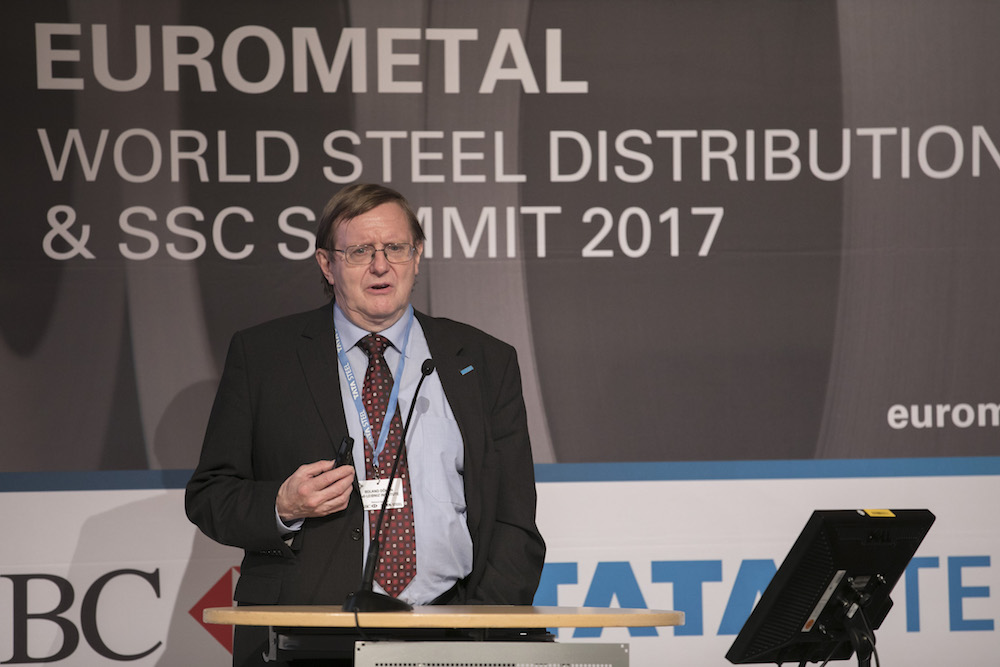
Deutsche Stahlnachfrage schwächt sich ab – Risiken für Stahlkonjunktur nehmen zu
Die gesamtwirtschaftlichen Rahmenbedingungen für die deutsche Stahlindustrie haben sich in den vergangenen Monaten verschlechtert. Ein starker Rückgang der Rohstahlerzeugung ist zwar noch nicht zu beobachten und die Auslastung der Kapazitäten ist im internationalen Vergleich weiterhin hoch. Allerdings hinterließ die schwächere Entwicklung im Verarbeitenden Gewerbe ihre Spuren. Die Produktion der Stahlverwender nahm im Jahr 2018 lediglich um 1,3 Prozent zu und damit nicht einmal halb so kräftig wie 2017. Hierin mach sich insbesondere der Rückgang der Herstellung von PKW im zweiten Halbjahr bemerkbar. Da der spezifische Stahlverbrauch im Trend ohnehin abnimmt, dürfte die Stahlverwendung im Jahresverlauf leicht rückläufig gewesen sein; im Jahresdurchschnitt stieg sie lediglich um 0,4 Prozent. Die Bilanz im Außenhandel mit Walzstahl blieb nahezu unverändert. Zwar sanken die Ausfuhr, die Einfuhren nahmen jedoch mit einer ähnlichen Rate ab. Nimmt man all dies zusammen, so gingen die Walzstahl- und die Rohstahlerzeugung im Jahresdurchschnitt 2018 zurück. Letztere sank gegenüber 2017 um 2,0 Prozent auf 42,4 Mill. t. Die Kapazitätsauslastung dürfte damit von rund 87½ auf knapp 86 Prozent zurückgegangen sein.
Die Aussichten für 2019 sind nicht allzu rosig. Die Konjunktur in Deutschland hat sich abgekühlt und der Aufschwung dürfte merklich an Tempo verlieren. In seiner Konjunkturprognose vom Dezember 2018 war das RWI für 2019 von einer Zunahme des BIP um 1,4 Prozent ausgegangen (Link: https://www.rwi-essen.de/presse/mitteilung/340/). Treibende Kraft sollten danach die Konsumausgaben bleiben, da die Beschäftigung wohl auch künftig ausgeweitet wird, die Löhne recht kräftig steigen und die verfügbaren Einkommen durch finanzpolitische Maßnahmen gestärkt werden. Bei den für die Stahlindustrie maßgeblichen Verwendungskomponenten werden hingegen nur moderate Zuwächse erwartet. Für die Ausrüstungsinvestitionen wird ein Plus von lediglich 2,7 Prozent prognostiziert. Die Warenausfuhren, die aufgrund des deutschen Exportportfolios besonders stahlintensiv sind, dürften um lediglich 2,4 Prozent zunehmen. Spezifische Belastungen für die Stahlexporte resultieren zudem aus der Zunahme protektionistischer Maßnahmen im Stahlbereich und aus den aktuellen Problemen der Automobilindustrie, einem der großen Stahlverwender. Ein Lichtblick ist, dass die Baukonjunktur aller Voraussicht nach kräftig bleiben wird. Die Auftragslage der Bauwirtschaft ist gut, und der Staat investiert mehr in die Infrastruktur.
Aus diesen gesamtwirtschaftlichen Rahmenbedingungen lässt sich eine Zunahme der Produktion der Stahlverwender im Jahr 2019 um lediglich 0,2 Prozent ableiten, nach 1,3 Prozent im Jahr 2018. Bei einer im Trend weiter rückläufigen Stahlintensität der Produktion übersetzt sich dies in einen um 0,6 Prozent rückläufigen Stahlbedarf. Da in den vergangenen Jahren die Lager bei Produzenten, Handel und Verwendern allem Anschein nach aufgestockt wurden, dürfte in wirtschaftlich unsicheren Zeiten ein Teil des Bedarfs aus einem Lagerabbau gedeckt wer-den, weshalb die am Markt realisierte Nachfrage nach Stahl noch etwas stärker zurückgehen dürfte, um 1,8 Prozent.
Die Außenhandelsbilanz mit Walzstahl dürfte 2019 ein etwas kleineres Defizit aufweisen als 2018. Die Nachfrage nach Stahl wächst langsamer, und die Kapazitätsauslastung der Stahlindustrie dürfte sinken. Beides führt zusammen-genommen zu einem leichten Rückgang der Einfuhren. Die nachlassende weltwirtschaftliche Dynamik und eine restriktivere Handelspolitik dämpfen zwar auch den Anstieg der Ausfuhren, jedoch nehmen diese per saldo wohl noch leicht zu.
Aus alledem resultiert ein Rückgang der Walzstahlerzeugung um 1,4 Prozent. Dieser übersetzt sich in einen Rückgang der Rohstahlerzeugung um 1,7 Prozent, mit der Folge, dass die Kapazitätsauslastung der deutschen Stahlwerke weiter leicht sinken wird. Mit gut 84 Prozent bliebt sie allerdings im internationalen Vergleich hoch. An der Beschäftigung dürfte dieser Rückgang nicht spurlos vorübergehen. Sie dürfte im Verlauf von 2019 reduziert werden, wenn auch keine kräftigen Einschnitte zu erwarten sind.
Seit Dezember 2018, als die gesamtwirtschaftliche Prognose erstellt wurde, aus der diese Projektion des Stahlmarktes abgeleitet ist, haben sich die gesamtwirtschaftlichen Rahmenbedingungen tendenziell weiter verschlechtert. Die Bundesregierung geht in ihrem Ende Januar 2019 veröffentlichten Jahreswirtschaftsbericht von einer Zunahme des deutschen Bruttoinlandsprodukts um lediglich 1 Prozent aus, und die EU-Kommission in ihrer Winterprognose von 1,1 Prozent. Vor allem die Erwartungen an das weltwirtschaftliche Wachstum wurden nach unten korrigiert.
Simulationsrechnungen zeigen, dass eine im Rahmen den üblichen Prognoseungenauigkeit schwächere welt- und gesamtwirtschaftliche Expansion die Rohstahlerzeugung zwar nach unten ziehen würde, dass die Konsequenzen aber insofern überschaubar wären, als unter diesen Voraussetzungen auch die Stahleinfuhren sinken dürften.
Gravierender wären freilich die Folgen einer handelspolitischen Eskalation, die etwa die Verhängung der von Präsident Trump angedrohten Strafzölle auf Automobile auslösen könnte. Die Stahlindustrie wäre davon in mehrfacher Hinsicht betroffen: Zum einen ginge die Produktion eines ihrer wichtigsten Kunden zurück. Zum anderen würden sich die Unternehmen wohl generell bei ihren Investitionen zurückhalten. Schließlich bliebe eine handelspolitische Eskalation nicht ohne Folgen für das weltwirtschaftliche Wachstum und damit für die Auslandslieferungen von Stahl. Der Produktionsrückgang könnte erheblich sein, und dies bei wahrscheinlich sinkenden Margen.
Der aktuelle Stahlbericht des RWI: https://www.rwi-essen.de/media/content/pages/publikationen/rwi-konjunkturberichte/rwi-kb_4-2018.pdf
Der Beitrag stammt von Prof. Dr. Roland Döhrn, RWI – Leibniz Institute for Economic Reseach, Head of Department Macroeconomics and Public Finance, RWI, Essen
Foto: RWI, Essen
Der Gastkommentar spiegelt die Meinung des Autors wider, nicht notwendigerweise die der Redaktion von marketSTEEL.
Stalprofil, Izostal consortium nears another pipe supply deal
A consortium of Stalprofil and Izostal has been chosen as the preferred bidder in the tender to supply DN 1,000 pipe to Gaz-System for the construction of the third Pogorska Wola-Tworzen pipeline. The line length is 64km. The bid amounted to PLN 149.14 million ($39m).
Delivery of the coated pipe is due to take place from 1 September 2019 to 31 January 2020.
Last year the same consortium won the contract to supply pipe for the second Pogorska Wola-Tworzen gas pipeline at a length of 65km (see Kallanish passim).
Last month Stalprofil and Izostal won a PLN 40.7m contract to supply coated pipe to Gaz-System to build a 19km pipeline between Poland and Slovakia.
Stalprofil’s steel sales in the nine months through September 2018 rose 5% on-year to 172,251 tonnes, while steel structures sales grew 23% to 2,307t. Nine-month revenue increased 28% to PLN 1.09 billion and net profit grew 43% to PLN 25.5m.
Megasa responds to pollution concerns with Portuguese investment
Portugal’s Megasa has responded to concerns raised by the Portuguese authorities over the levels of pollution of its EAF-based plant in Seixal with the announcement of new investment.
The company has told local authorities that it has already invested some €400 million ($454m) in the plant, but will spend a further €80m by 2020 to reduce the environmental impact of the mill. The investments should include a new gas unit and a better noise isolation.
Earlier this year the local authorities gave sixty days to Megasa to address the environmental issues, following complaints by local citizens filed to the European Union.
The Seixal mill produces long products and has a capacity of 800,000 tonnes/year of crude steel, according to Kallanish data.
NLMK Clabecq to restart production next week
NLMK Clabecq’s plate re-rolling plant in Belgium is expected to restart production from the beginning of next week. This follows an agreement between the unions and the management of the Sogepa, the state-owned company controlling 49% of the NLMK Belgian units.
Following the announcement by the management of NLMK of the intention to cut half the workforce at NLMK Clabecq, workers began demonstrations, affecting the plant’s activities since the beginning of February.
Earlier this week an agreement with Sogepa was reached, securing the restart of production at the mill next week. The unions will also allow the procedure to negotiate the reduction of the workforce to continue, Kallanish understands.
Similar blockades were implemented at the near-by coil plant of NLMK La Louviere earlier in February, but these were lifted with the help of the police and the authorities.
NLMK Clabecq can produce up to 750,000 tonnes/year of plates in a thickness range of 3-120mm.

Steel inventories at German stockholders up in January: BDS
German stockholders’ inventory of long and flat steel products rose in January as the sector pursued seasonal restocking, according to data from German stockholders’ association BDS published Thursday.
Long steel stocks increased 8.2% month-on-month while flat steel stocks were up by 7.4%.
Sources had consistently referred to unusually high stock levels of flat steel in January, but year on year stocks were up by just 0.3% at 1.46 million mt at the end of January.
Sales from stocks of flat steel saw a significant drop, down by 7.3% on year to 582,144 mt, and the market fundamentals last month were different than January 2018, when prices started to rise.
Price competition between stockholders and distributors was fierce in Germany last month, and this has continued in February. Steel prices have remained weak in early 2019 with end-customer demand not picking up sufficiently.
Long steel inventories also grew only slightly year on year, up by 1.1% to 875,783 mt as of January 31, while sales dropped 1.9% to 266,993 mt, having seen similar developments to the flat steel sector in January.
— Laura Varriale
Danieli supplies electrode water-cooling technology to Sidoc Colombia
Italian supplier Danieli tells Kallanish that it has won an order from Colombian long steelmaker Sidelúrgica del Occidente (Sidoc) for the supply of its, so called, Q-Smart equipment for electric arc furnaces. The technology, for the Acopi-Yumbo plant, in Valle del Cauca region, reduces electrode consumption in the EAF production process.
The electrode water-cooling is intended to produce a continuous water film that cools the electrodes, reducing the exposure and thus the oxidation rate, says Danieli. “Q-Smartec applies dynamic and independent control of the cooling water flow during any EAF operating phase to achieve the most efficient electrode cooling. This allows a drastic reduction of electrodes consumption related to air oxidation, up to 15% compared to conventional electrode cooling systems,” the Italian technology supplier confirms.
The Q-Smartec start-up is scheduled for March 2019.
Severstal increases sales through distribution arm
Russian steelmaker Severstal’s Distribution arm increased sales 31% on-year in 2018 to 2.3 million tonnes, the company says. The steelmaker sold 23% of all its saleable products through the channel, with Russian sales increasing by 10% on-year to almost 1mt,Kallanish notes.
Sales volumes through Severstal Distribution to Northern and Central and Eastern Europe increased by 50% and exceeded 1mt. The arm’s function in European sales is to work closely with large consumers, which require an individualised approach, including complex solutions, Severstal says. This was achieved partially through expanding the company’s distribution and storage solutions in Europe.
Eastern European buyers benefitted from new logistical solutions, which helped to reduce transport costs. Severstal also started manufacturing industrial pipes at its Riga facilities, it says.
This year the company will continue to expand the range of offers to its CIS and European buyers through the distribution arm. This will include hot rolled coil of 4-16mm thickness, galvanised with improved three-valence chrome coating and also a range of flat products for white goods production.
Severstal sold 11.18mt of steel products in 2018, 2% more than a year earlier, ramping up European sales considerably, especially in the last quarter, and reducing sales to the Middle East.