European definitive safeguard measures effective Feb 2
The European Commission has imposed definitive safeguard measures on imports of steel into the European Union effective February 2, the Commission said Friday.
Market sources told Platts that the website to monitor the imports would not be operational yet for the upcoming period and have doubts how the system would be running from Saturday, creating headaches for traders. Sources said that particularly for wire rod, quotas could be filled quickly.
The EC did not respond to Platts’ request for comment when asked about the monitoring operations.
The safeguard measures are a direct response to the US government’s introduction of 25% Section 232 tariffs and replace the existing provisional duties that the commission introduced in July last year.
“The restrictions on the US market caused by the Section 232 tariffs on steel are causing a diversion of trade flows into the EU,” the EC stated, adding that an investigation has proved that this has occurred since the US imposed the tariffs last year.
The EC notified the WTO ahead of Christmas of the new safeguard plan, which was ratified by European Union member states in January.
“These measures are fully in line with the EU’s WTO commitments and have been carefully shaped to preserve a continued flow of imports that guarantees effective competition in the European steel market and sufficient choice for the numerous EU users of steel,” the EC said.
The EC measures comprise tariff-rate quotas on a country-specific basis on the biggest steel-supplying nations combined with global quarterly quotas for all other countries for each of 26 products, exempting hot-rolled coil imports which would receive a quarterly global tariff-rate quota.
The safeguard measures are intended to be in place for three years, expiring June 30, 2021. Once a quota has been filled, a 25% duty on imports will apply.
The level of the tariff-rate quota should be increased by 5% in each period the measures are in force, the EC said. The periods are: February 2 to June 30 2019; July 1 2019 to July 30 2020; and July 1 2020 to June 30 2021.
When a country has exhausted its specific tariff-rate quota, it should be allowed to have access to the quarterly global tariff-rate quota for the specific steel product that would apply to all other countries, but only in the last quarter of each period.
European steel association Eurofer welcomed the start of the safeguards, but criticized the quota increase and said that the quota levels were set too high considering the steel demand outlook for Europe.
“This ‘relaxation’ of the measures is completely out of step with the evolution of the steel market, which is expected to be flat in 2019,” said Axel Eggert, Eurofer’s director general. “This disproportionate change will only benefit importers who, in any case, have taken market share of 25% up from a historical 17% in just three years.
“This upsets the delicate balance otherwise established by the safeguards: the notion that EU steel users should be able to access traditional trade flows without local steel producers being flattened by deflected and cut-price steel products from outside the EU.”
Eurofer urged the Commission to take into account actual market conditions at the time of the first revision of the final safeguard measures, in July 2019.
German steel federation WV Stahl also said that the revision clause should be used to take steel demand into account and adjust quotas accordingly.
— Laura Varriale

EC safeguard quotas’ revision plans concern Europe’s steelmakers
European steelmakers remain unhappy with some aspects of the European Commission’s definitive steel safeguard measures that came into force on 2 February (see separate article). Their trade association Eurofer has outlined the major issue in question in a note sent to Kallanish.
Quota conditions for the definitive measures differ from those in the provisional measures, bringing concerns which Eurofer outlines in the note. The main worry for the steelmakers concerns the projected 5% increase in quotas from those in the provisional measures to those in the definitive measures, and a further planned 5% increase in July 2019.
The quota was originally set at 100% of the average import levels over 2015-2017.
“This ‘relaxation’ of the measures is completely out of step with the evolution of the steel market, which is expected to be flat in 2019,” says Eurofer director general Axel Eggert. “2016 and 2017 were joint record years, meaning the quota was already set at the maximum level reached in a global market suffering massive overcapacity and distortions in foreign producer countries”.
“In 2018 imports rose 12% over and above the record 2017 level, even as domestic producers’ deliveries grew by a paltry 0.6%,” Eggert adds “This future relaxation of the quota could see the door being opened to even greater surges even as the market is expected to be flat.”
Steel consumption growth is expected to rise by just 0.5% in 2019, according to Eurofer’s latest economic and market outlook (see Kallanish 1 February). “This means the rise of the quota to around 110% of actual historical imports is many multiples the growth rate of the market,” Eurofer adds. The association says that it is urging the EC to take into account actual market conditions at the time of the first revision of the final safeguard measures in July 2019.
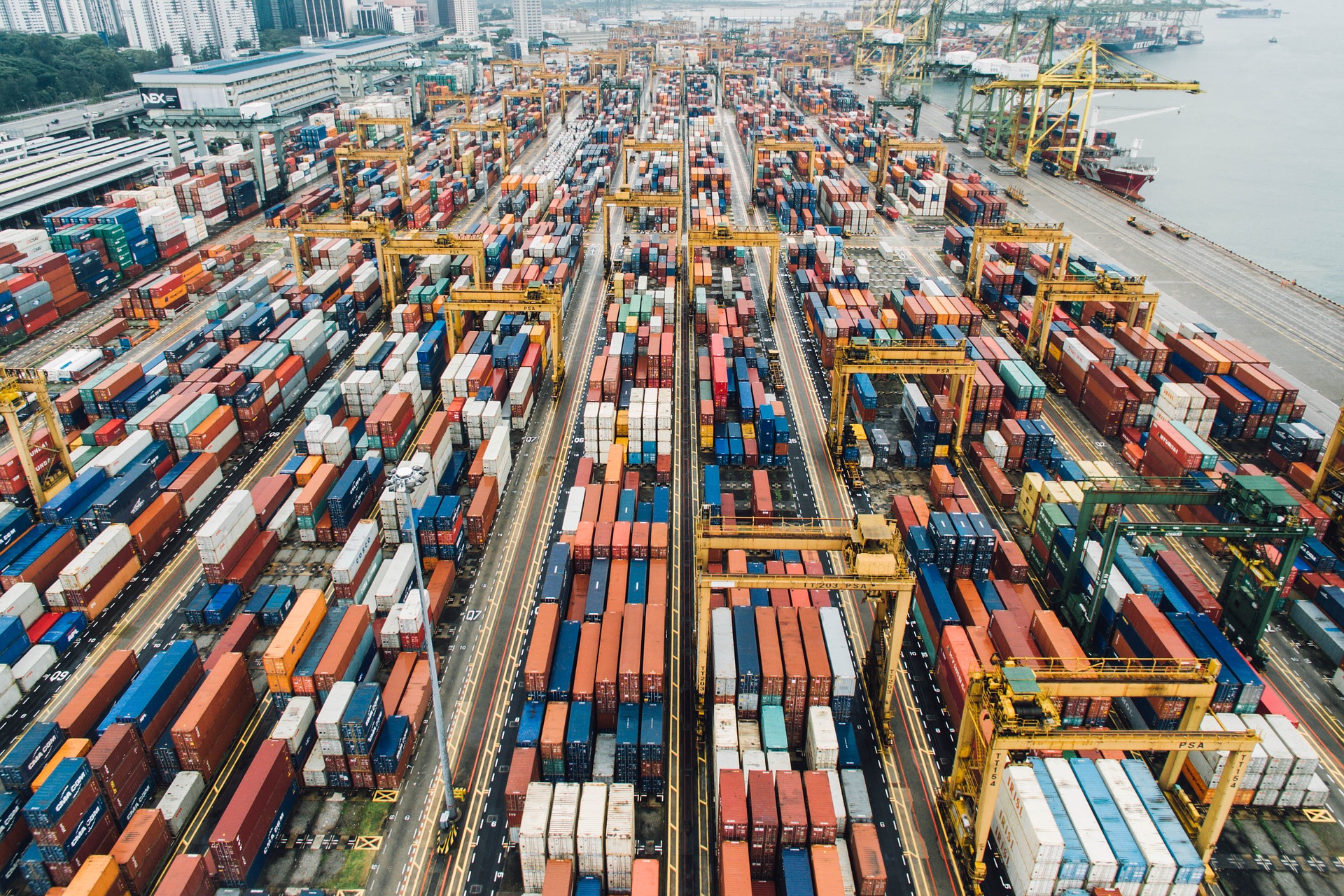
European Commission implements definitive steel safeguard measures

The European Commission (EC) has now formalised its definitive safeguard measures on imports of steel products. These measures take effect as from 2 February and replace the provisional ones in place since July 2018, the EC says in an announcement monitored by Kallanish.
The measures, both provisional and definitive, have been introduced as part of the response to the US Section 232 tariffs introduced in March 2018. The restrictions on the US market caused by the Section 232 tariffs on steel are causing a diversion of trade flows into the EU, the EC says.
“These measures are fully in line with the EU’s WTO commitments and have been carefully shaped to preserve a continued flow of imports that guarantees effective competition in the European steel market and sufficient choice for the numerous EU users of steel,” the statement reads.
The measures concern 26 steel product categories and consist of tariff-rate quotas above which a duty of 25% will apply. The tariff rate quotas fully preserve the traditional levels of imports into the EU and will be increased progressively. The measures should remain in place for a period up to three years, but can be reviewed in case of changed circumstances, the EC says.
“The Commission has also decided to suspend the prior surveillance mechanism for the same products covered by the definitive measures as long as they are in effect,” the EC says.
The provisional measures met with criticism from both those who will benefit from the new arrangement – European steelmakers – and those likely to see some fall-out, such as steel traders and end users.
European steelmakers, via umbrella trade association Eurofer, continue to have some reservations about the definitive measures .

Final EU steel safeguard measures published – EUROFER calls for coherent implementation
The European Commission has published the regulation imposing definitive safeguards on steel imported into the EU. This important measure continues the safeguards provisionally imposed in July 2018 and will come into force as of 2 February 2019.
ArcelorMittal reorganises in Austria, closes Eisen Wagner
ArcelorMittal Downstream Solutions division is restructuring its activities in Austria. This includes the closure of Ried-based distribution house Eisen Wagner and the spin-off of associated units, Kallanish learns from the company upon request.
“Despite the efforts after we took over ten years ago and despite some financial improvements achieved, we have not succeeded in making the distributor profitable,” said the division’s Austrian manager, Patrick Meesen.
Rebar bending shops in Ried and Wöllersdorf will be sold, as well as the laser-cutting centres in Hohenzell and Timelkamp. The activities for wall and roof activities will be continued within ArcelorMittal Construction. The closure of stockholder Eisen Wagner will affect 82 employees, for whom the company is preparing a social plan.
According to Austrian media, the service centre Metwex in Vienna will be taken over by the Frankstahl group. Local reports also quote the managing director at Ried, Klaus Jagereder, as saying that the labour market has good demand at present, and that many interested companies have already called.
The reports cite observers giving reasons for the closure as overcapacity, rising logistics’ costs, and, in this particular case, high rents. Local steelmaker voestalpine had ceased its distribution activities in Austria ten years ago.
EU steel consumption to grow, but modestly: Eurofer
EU apparent steel consumption growth is forecast to slow down to 0.5% in 2019 followed by 1.2% in 2020, less than one-third of the annual growth rate of apparent steel consumption over the 2014-2018 period, European steel association Eurofer said in an economic report published Thursday.
Last year’s consumption was estimated to have gone up by 2.6% from 2017, but according to Eurofer the increase in demand mainly benefited non-EU suppliers, owing to a 12.3% import increase. By contrast, European steelmakers shipped just 0.6% more steel to the EU market in 2018.
“The sharp increase in imports in the second half of 2018 is proof that in spite of the justified imposition of preliminary safeguard measures by the EU Commission last July the EU market is still under siege,” said Eurofer Director General Axel Eggert. “Market access to other regions has been blocked by protectionist measures in those places, thereby leading to a continued diversion of steel to the EU market.
“This diversionary trend is expected to continue in 2019 — especially as the safeguard’s quota size will be increased by 5% in February and by another 5% in July,” Eggert added. The new safeguard measures are expected to be put in place on Monday, February 4.
Overall EU steel market fundamentals are expected to remain moderately positive, although rising protectionism could have a negative impact.
Total output growth in the EU’s steel-using sectors is estimated to have amounted to 3.1% in 2018. It is forecast to grow by 1.5% in 2019 and by 1.7% in 2020, according to the report. Production lost momentum in the third quarter of 2018, particularly in the automotive sector. It is probable that this trend continued in the final quarter of 2018 and will persist into 2019 and 2020, the association noted.
Total automotive production in the EU is estimated to have expanded by 1.3% in 2018 and is forecast to rise by 1% in 2019 and by 2.4% in 2020. The output outlook is nevertheless subject to the impact of the WLTP (Worldwide Harmonized Light Vehicle Test Procedure) and the possible US imposition of tariffs on European car exports.
The EU construction industry is expected to gradually move into the late phase of the current business cycle over the course of 2019-2020. Construction activity is estimated to have risen by 4.6% in 2018 and is forecast to rise by 2.1% in 2019 and by 1.2% in 2020. Both private and public construction investments are expected to lose strength but the latter is likely to remain a growth driver over the forecast period. Investment will be increasingly geared at promoting sustainability and carbon dioxide reduction.

tk Schulte appoints new ceo

The German stockholding unit within the thyssenkrupp Materials Services group, thyssenkrupp Schulte, has appointed Martin Stillger as its new ceo, effective 1 February, Kallanish learns.
The appointment comes in the wake of the move of former ceo Ilse Henne having joined the tk Materials Services executive board at the beginning of the year as chief operating officer.
55-year-old Stillger studied mechanical engineering, and has more over ten years of management experience at thyssenkrupp Materials Services. Among other responsibilities, he has headed the company’s eastern European subsidiaries since 2012. He has also been responsible for the business units in the western Europe region and for the company’s Technical Services function since 2018. He will continue to hold these positions, the company says.
With 40 sites in Germany, thyssenkrupp Schulte claims to be the largest steel distributor in the country, with over 70,000 customers in the construction and manufacturing sectors.
ArcelorMittal extends sheet piling services in Europe
ArcelorMittal is expanding its sheet piling services for various types of applications, Kallanish learns from the company.
For water transport and deep maritime infrastructure such as quay walls and breakwaters, it is lining up its so-called HZ-M combined wall systems, AS 500 circular cells, and AMLoCor corrosion-resistant steel grades. The steelmaker claims that these grades of steel reduce the effect of corrosion by up to 5 times. The product has been used at the enlargement of the port of Køge in Denmark, it says.
For dykes and flood protection requiring short installation times, the widest sheet piles available, AZ-800 can be used. The reduction in installation time is due to the increased size of the piles, ArcelorMittal says.
The company also highlights that steel sheet piles are an option for transport infrastructure when building bridges, underpasses, underground car parks, foundations, retaining walls or noise barriers. Low-vibration installation techniques help delivering projects faster, saving costs and minimising the impact on the community. Building permanent bridge abutments with steel sheet piles reduces disturbance from traffic and achieves up to 15% in cost savings over the lifetime of the structure, according to the company.
Sheet piling may also be used for environmental protection purposes such as landfill deployment, soil remediation, riverbed cleaning operations, or pollution containment. In combination with sealant AKILA, they provide impervious enclosures suitable for contact with drinking water. Such a system already helps to protect the largest water treatment plant in Paris, the steelmaker confirms.

Revista Infoacero Enero 2019

En el siguiente enlace pueden acceder a la edición de Enero de nuestra revista Infoacero: Infoacero_Enero2019
A continuación destacamos algunos de sus contenidos:
- Opinión – D. Javier Úcar –Miembro de Junta Directiva de la UAHE.
- Evolución del Índice de Precios de Productos Siderúrgicos – UAHE.
- Programa del Steel Net Forum Iberia, 21 y 22 de Marzo, Sevilla.
- Producción Mundial de Acero en 2018- WorldSteel Association.
- Ayudas a la Digitalización.
Worldsteel sees potential upside to demand forecast
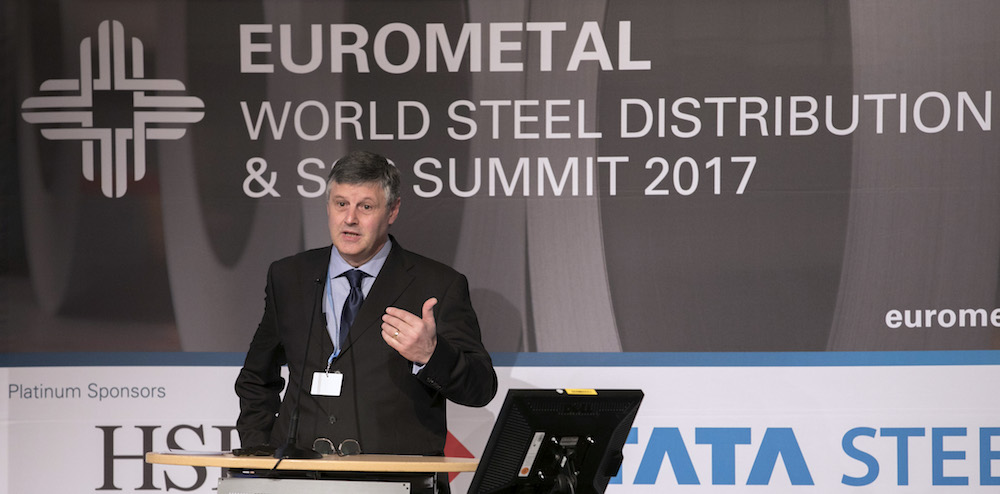
Worldsteel’s forecast of 1.4pc growth in global steel demand this year could prove conservative, depending on what happens in China, acording to director-general Edwin Basson.
The association assumes there will be no growth in Chinese steel demand this year, with Beijing comfortable allowing GDP growth to drop to 5.6-6.0pc, and no steel stimulus measures in sight. China’s economic planning system is of the “firm opinion” that the country does not need more steel than it currently produces, Basson added.
Any infrastructure investment announced this year to stimulate economic growth is likely to be away from residential construction in tier-2 and 3 cities — the primary locus of previous stimulus — and to focus on China’s less developed western regions.
Should such measures materialise, pushing Chinese internal steel demand from last year’s 780mn t, then exports could fall further to ensure domestic requirements are met. China produced 928mn t of crude steel last year, or around 853mn t on a finished steel basis, leaving 50mn-70mn t available for export.
No quick switch
Worldsteel does not expect an overnight move from blast furnace to electric arc furnace (EAF) production for three main reasons. Firstly, it is expensive to move from a basic oxygen furnace to an EAF. Secondly, in Europe — where producers have said they want to move to hydrogen-based production or other technologies — the cost of energy is uncompetitive compared with other regions, such as the US. And thirdly, any move to the EAF route requires a continuous and competitive supply of scrap. In Europe, initiatives such as the circular economy could prolong the life of steel in use, reducing scrap flows.
In 2015-17, the steel industry has been operating within the UN’s two-degree global warming scenario, which it is hoped will avert the worst consequences of climate change.
If the whole steel industry can perform at the same level as the best 15pc of performers, Worldsteel believes the industry can continue to operate within the two-degree scenario for a further decade or more. This would allow steelmakers to perfect and commercialise breakthrough technologies, such as hydrogen-based production.
Even in 2040, Worldsteel expects that 1bn t of blast furnace-based steel output will still be required to meet global requirements. While blast furnace-based output might be concentrated in certain areas, Basson does not expect any output cut in developed markets. Politically, there is now a real desire to have steelmaking capabilities, he said.