


Italian car output continues to decline
Italian passenger car production declined again in August and in the first eight months of the year, Kallanish notes from automotive association Associazione Nazionale Filiera Industria Automobilistica (Anfia) preliminary data.
Car output stood at only 4,500 units in August, down by 27.4% year-on-year. The volumes were lower by 31.6% in the first eight months of 2025, to 157,900 units.
In comparison, the UK recorded a y-o-y decline in August of 10.2% to 31,700 cars and a more moderate 5.9% decline to 492,000 units in January-August. Spain saw an increase by 14.3% to 63,400 cars in August and a decrease of 7.4% in January-August to 1.2 million units.
German production fell in August by 21% to 237,600 cars but still had a cumulative 2% uptick year-to-date to 2.8m units, Anfia says.
The most recent data indicate that French car production in January-June experienced a y-o-y increase of 15% to 543,500 cars.
“The automotive sector is operating within a broader context of declining Italian industrial production in August 2025 compared with the same month last year. The overall industrial production index recorded a 2.7% decrease in August, bringing the cumulative result for the first eight months of the year to -1% compared with the corresponding period in 2024,” Anfia says in a note.
Anfia emphasises the need for regulatory measures in line with market realities. The association urges that the “strategic dialogue on automotive” in Europe address the revision of CO2 emissions rules for light vehicles, advocating a return to technological neutrality, a review of the 2030 and 2035 targets, which are currently considered unattainable.
Italian car output in 2024 declined 42.8% versus 2023 to 309,758 units. The total number of vehicles produced in the country last year, including heavy duty vehicles, amounted to 519,000 units, reflecting a 32.3% decline versus 2023.
Natalia Capra France

Voestalpine continues cutbacks in Europe
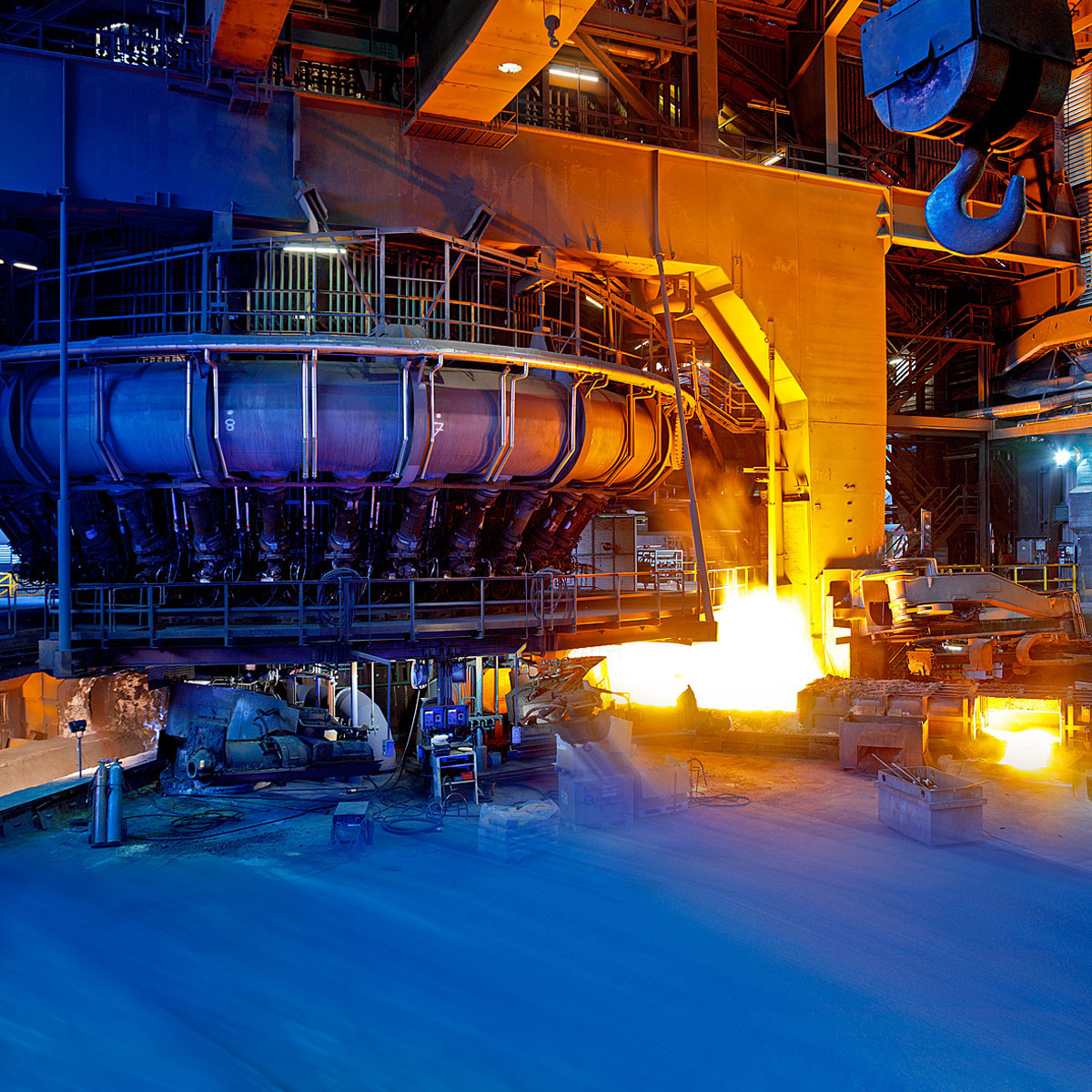
Voestalpine is pursuing production cutbacks in Austria and Germany, which include layoffs, since it does not expect the economic situation to improve in the coming months.
At voestalpine Tubulars, capacity adjustments may become necessary at the site in Kindberg, Austria, a decision which will be made by the end of this calendar year. The unit is exposed to considerable burden caused by tariffs in the main sales market of the US, and persistently low oil prices are leading to a noticeable decline in sales volumes, voestalpine explains.
During a video conference on Wednesday attended by Kallanish, chief executive Herbert Eibensteiner underlined the strong dependence of tubular products on the US market, and warned that production in Kindberg will be reduced from three to two shifts.
Also in Austria, voestalpine Böhler Bleche in Mürzzuschlag, a unit of the High Performance Metals division, faces capacity adjustments. The group says it is running a strategy project with the goal of positioning the unit and its processes in a way that enables products to be sold at marketable prices, despite difficult conditions.
In Germany, voestalpine will continue with consolidation at the Automotive Components sites it announced earlier. Eibensteiner noted that the difficulties of that division are not impacting the automotive steel strip made in Linz, which he said keeps performing well.
In the group’s first fiscal half-year – April through September 2025 – revenue declined by 5.6% year-on-year to €7.6 billion ($8.8 billion). Consolidated earnings before taxes increased by 12% to €278 million, while profit after tax rose by 8.6% to €199m.
Christian Koehl Germany

German rebar prices hardly move, some discounting reported
Rebar prices in Germany are not showing any sustained move in either direction this month, largely holding firm at slightly above €600/tonne ($695) delivered on average.
One buyer in Lower Saxony tells Kallanish of a deal done at €575/t from a German mill last week. However, he cautions that mills are about to fill order books enough to bring offer prices back up.
“Mills could be utilised into January, and will return to the €600,” he says. His particular deal was made with the one German mill that still offered a discount of €15-20, which other mills stopped offering earlier. All of them, however, still have discounts for wire mesh.
A northern German manager concedes that some offers have softened, but not by more than €10. He is not surprised about bargain offers as “order volumes are low altogether, and the mills want to make use of their capacities”.
Regarding the prospects for a notable recovery in the market, a southwestern German buyer expresses little optimism in the short run, as construction activity is still far too low. He has no great expectations for the government’s big infrastructure programme announced this year. “For us benders and builders, it will take two years for the measures to take an effect on plans that are sitting in the drawer, and before we feel anything,” he notes.
It is little wonder then that many benders keep making dumping-price offers to get jobs from builders. “And that won’t change much as long as the market is as it is,” he says.
Christian Koehl Germany

HRC prices finally start climbing in US
Pricing for domestically produced hot rolled coil in the US is finally starting to react to the recent mill hike announcements, Kallanish understands.
Spot prices for hot rolled coil have crept upward to a new range of $830-865/short ton, from $825-865/st a week ago. CRC is holding steady at $1,030-1,080/st.
On Monday, Nucor raised its published consumer spot price for HRC for a third consecutive week, by $5/st to a new base of $895/st (see Kallanish 11 November). Other North American producers announcing coil price hikes in recent weeks include NLMK USA, Dofasco and Stelco (see Kallanish passim), whilst major hot roll customer Atlas Tube issued an increase in concert. The announcements were not impactful immediately but are having some influence on the outlook.
“In general the prices have a chance to firm depending on the market,” a Great Lakes distributor comments.
The mills may not be pocketing much of their increases yet, but they have an eye towards the new year, according to other market participants.
“I am hearing from all my reps that the mills will keep pushing prices up so that they can collect big dividends in Q1 when everyone needs to restock,” reports an Ohio Valley distributor.
Nucor still promises lead times of 3-5 weeks. Cleveland-Cliffs, however, is closed for December tons, according to a notice posted in the customer-service section of its website.
A midwestern distributor says there were about a half-dozen mill outages in October and at least nine in the first half of November. At the same time, the mills were telling customers that order books are strengthening.
The Ohio Valley distributor points out that, for year-end tax purposes, some service centres do not wish to stock up before January. That is one reason why the slower production did not force prices upward even though it did temporarily trim availability and move some lead times out.
“The mill outages are mostly over now, and I don’t think it affected the market as much as people think it did,” the Ohio Valley distributor contends. “It did cause a lot of mills to be late with deliveries.”
Momentum is now building in the US coil market, and current order flow is already giving the producers confidence as they peer into the new year, according to a mill source.
“For sure, actual transactions have increased,” the mill source says. “EAFs are not making any money at the levels where prices were and they need to be higher. … Many end users are reporting good demand to start 2026.”
Dom Yanchunas USA

EC’s proposed safeguard to curb EU ferroalloy imports by 25%
The European Commission is proposing a three-year safeguard measure to reduce the EU’s imports of four silicon- and manganese-based alloying elements by 25% compared to the inflows over the last three years, according to an official document seen by Platts.
Initially, the safeguard investigation launched in December 2024 concerned imports of six ferro-alloying elements: silicon, ferro-manganese, ferro-silicon, ferro-silico-manganese, ferro-silico-magnesium, calcium-silicon. But silicon and calcium-silicon were later excluded, given stable imports of silicon and the end of domestic production of calcium-silicon.
Set to take effect Nov. 18 and run through Nov. 17, 2028, the measures will comprise product-specific tariff-rate quotas, or TRQs, allocated by country and product. They are set 25% below the average import volumes of 2022-2024 to allow EU ferroalloy producers to restore their domestic market share to 30%-40%.
Imports within TRQs will continue to enter the EU duty-free, with out-of-quota volumes incurring a variable duty equal to the difference between the actual import price and the price threshold, which is established at Eur1,316/mt for ferro-manganese, Eur2,408 for ferro-silicon, Eur1,392 for ferro-silico-manganese, and Eur3,647 for ferro-silico-magnesium.
The safeguards have no mechanism to change the minimum price, but the duty-free quota volumes will increase by 0.1% annually on Nov. 18, 2026, and Nov. 18, 2027.
Euroalliages, the European association of ferro-alloys and silicon producers, urged EU member states to support the proposed measures in a Nov. 13 LinkedIn post.
“Without these safeguards, the European ferroalloy industry will not exist in five years. A united approach will protect jobs, strategic autonomy and Europe’s ability to lead in innovation and security,” Euroalliages said.
Ferroalloys are essential for producing high-quality steel used in tanks, ammunition, and drones. Specifically, silicon-based alloys are critical for semiconductors, navigation systems, wind turbines, and next-generation batteries, according to Euroalliages.
Sharp rise in imports
The Commission states that its safeguard action responds to a sharp rise in ferro-alloy imports, which, from 2021 onward, penetrated the EU at prices 5%-17% below those of domestic producers.
The key findings showed that imports of ferro-alloys covered by the investigation rose from 1.14 million mt in 2019 to 1.33 million in 2024. The 17% surge was linked to global overcapacity and trade diversion. In 2023, global ferro-alloy capacity reached 46 million mt, significantly exceeding the consumption of 27.6 million mt. Further expansion is expected to increase overcapacity to 27 million mt, equivalent to 16 times EU demand.
In addition, US trade defense measures as of March 2025 restricted ferro-silicon imports from Brazil, Kazakhstan, and Malaysia, diverting approximately 73,000 mt to the EU, the equivalent of about 21% of 2024 EU production.
Over 2019-2024, the period spanned by the investigation, the EU ferro-alloy industry experienced a sharp deterioration across most indicators: the union consumption declined 7%, domestic production and sales fell 50% and 41%, respectively, with capacity utilization down from 56% to 35%, which was also the result of a double-digit fall in EU exports.
Imports from Norway and Iceland (47% of 2024 total) were found to contribute to the injury, but Ukraine is excluded from the scope of the safeguard, as are imports from WTO developing members, provided their share is less than 3%. Some developing countries have exceeded that limit; therefore, the measure will apply to imports from Brazil, China, Georgia, India, Malaysia, South Africa, Thailand, and Zambia.
Platts assessed standard ferrosilicon, ferromanganese, and silicomanganese prices Nov. 12 at Eur1,215/mt, Eur937.5/mt, and Eur955/mt, respectively, on a DDP Northwestern Europe basis, flat week over week. A trader said that “people stopped offering” material ahead of the EC safeguard announcement.
The announcement was initially expected by Aug. 18, which prompted ferrosilicon and ferromanganese prices to rise sharply to their Eur1,600/mt and Eur1,125/mt peaks on Aug. 20, up 65% and 16.5% from their respective levels at the end of July.


Italian rebar producers gradually push through price rises
“Mills are trying to put prices up, because they have to improve earnings before the year’s end,” a market source said.
Mills had increased their offers to €565-570 ($654-660) per tonne ex-works in the week to November 5, but only managed to secure deals within the range of €540-560 per tonne ex-works.
Offers rose again in the week to Wednesday, to €580-600 per tonne ex-works, while deals were reported in the range of €540-570 per tonne ex-works.
“The uptrend seems to be real,” the market source said. “Pittini’s EAF fire is beginning to have an effect on sales.”
Pittini Group’s flagship Ferriere Nord long steel plant at Osoppo in northeastern Italy was damaged by a fire in late October, which led to the shutdown of the facility’s electric-arc furnace (EAF).
The site is expected to resume operations in late November-early December. Meanwhile, the company is trying to secure billet supply from several European mills to keep its rolling activities on track.
“At the moment, customers are still in wait-and-see mode; but we think they’ll start to buy again in the next few days,” the source added.
Fastmarkets’ weekly price assessment for steel reinforcing bar (rebar) domestic, exw Italy was €540-570 per tonne on Wednesday, widening upward by €10 per tonne from €540-560 per tonne on November 5.

Romanian longs prices still stable but demand and liquidity constraints persist
The Romanian long steel market has remained stable again this week, with both rebar and wire rod prices showing no major changes.
Market participants describe overall activity as quiet, with limited sales amid weak demand and ongoing liquidity constraints. Most traders and the domestic producer have kept their offers unchanged, citing stable costs and a lack of market drivers for any revisions. Despite price stability, sentiment remains cautious, as financial strain, project delays and slow payments continue to limit buying interest. Sources note that the market currently reflects stagnation rather than a recovery, with little sign of an improvement in the coming weeks.
In the domestic market, rebar prices have stayed firm at €550-555/mt ex-works, as the country’s sole producer has maintained its existing offer levels. Spot traders have likewise kept prices stable, quoting at €555-565/mt ex-warehouse, similar to last week. A few distributors have continued to provide minor discounts to stimulate sales, with prices occasionally heard at around €540-545/mt ex-warehouse, particularly for larger orders.
The wire rod market has followed a similar trend, with trading volumes remaining low and prices unchanged over the past week. Offers have remained stable at €560-570/mt ex-warehouse, reflecting the ongoing weakness in both demand and liquidity.
On the import side, the market has shown a comparable weakness. While some Romanian buyers continue to purchase small or medium-sized lots to replenish inventories, overall import activity remains slow. Stable offer levels from external suppliers in recent weeks, combined with weak domestic conditions, have further limited trading interest and kept market dynamics muted. According to market sources, EU suppliers have maintained stable pricing, with the Bulgarian mill offering rebar at €570-580/mt CPT and the Moldovan supplier keeping levels at around €550/mt CPT, unchanged from last week. Among non-EU suppliers, Egyptian mills have kept their rebar offers at €485-490/mt CFR and their wire rod offers at €495-500/mt CFR. Turkish suppliers have applied minor reductions of about €5/mt over the past week, mainly due to exchange rate movements, with current offers at €485-500/mt CFR, based on an exchange rate of €1 = $1.16 and freight costs of €15-20/mt.


CBAM draft rules tighten link to EU carbon prices, raise compliance stakes for importers
Draft texts of the European Commission’s plans for the implementation of the Carbon Border Adjustment Mechanism (CBAM) show a decisive step toward market-aligned carbon pricing and tighter emissions verification.
The move was expected to reshape trade flows, compliance strategies and carbon-cost exposure for importers when the system becomes fully operational in 2026, Fastmarkets understands.
The two draft texts, seen by Fastmarkets on Tuesday November 12 but thought to have been leaked last week, outlined the methodology for calculating CBAM certificate prices and the principles for verifying embedded emissions in imported goods such as steel, aluminium, fertilizers, cement, electricity and hydrogen. Together, they form the regulatory foundation of the EU’s carbon border system ahead of its full rollout on January 1, 2026.
CBAM certificate prices
Under the pricing regulation, CBAM certificate prices will directly track the weighted average of auction clearing prices in the EU’s Emissions Trading System (ETS), ensuring that imports face a carbon cost equivalent to the cost paid by EU-based producers.
The certificates will be calculated quarterly in 2026 and weekly from 2027, based on auction clearing prices weighted by traded volumes. By aligning CBAM with ETS dynamics, Brussels hoped to close loopholes that could lead to carbon leakage or price distortions.
For market participants, the link will mean greater exposure to ETS volatility. With EU Allowance (EUA) prices hovering around €70-85 ($81-98) per tonne of CO2 in October-November 2026, steel traders expected CBAM certificate costs to follow closely.
“CBAM will effectively extend the ETS price signal to non-EU producers,” a trader in Germany said. “It’s a powerful incentive to decarbonize or lose market share. Let the ‘Hunger Games’ begin!”
Verifying embedded emissions
The companion verification regulation, outlined in another draft seen by Fastmarkets, sets strict conditions for emissions validation. Physical site visits by accredited verifiers will be mandatory in the first year of CBAM, though virtual inspections or waivers may be allowed later under defined low-risk conditions.
Verification will apply a 5% materiality threshold, but smaller discrepancies may still be deemed significant depending on risk assessments.
Industry sources warn that verification capacity, especially in non-EU jurisdictions, could be a problem. “Many exporters do not yet have accredited verifiers or reliable emissions data systems,” a second steel trader in Europe said. “That could limit shipments into Europe or delay customs clearance once CBAM kicks in.”
The Commission will standardize verification reports via the CBAM Registry, ensuring consistency and transparency. Both regulations will enter into force three days after publication in the Official Journal of the EU.
Steel market sentiment
Market participant who spoke to Fastmarkets said that the new rules, and also a potential cut in industrial benchmark emissions values under the ETS, could tighten CBAM-linked costs across supply chains, particularly in sectors such as steel and aluminium, which rely heavily on carbon-intensive production.
“We could see effective import costs rise by some €70 per tonne due to CBAM,” a steel hot-rolled coil buyer in Italy said.
While the Commission’s approach offers greater price transparency in theory, market sources said that the complexity of compliance will increase sharply in 2026 while importers, verifiers and producers adapt to the dual demands of emissions reporting and certificate purchasing.

Germany’s Miebach to supply Tata Steel UK with new laser welding machine
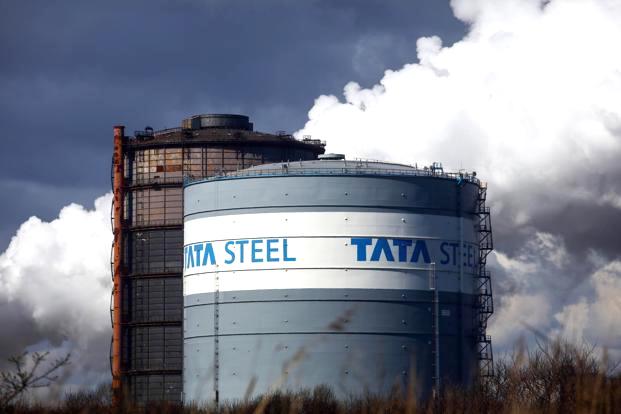
Germany-based equipment provider Miebach has announced that it will deliver a high-performance laser welding machine to Tata Steel UK’s upcoming pickling line in Port Talbot, one of the most technologically advanced coil-processing projects in the country.
The new line is designed to handle 1.8 million mt per year of steel strip and will form a critical part of Tata Steel UK’s plan to modernize its operations and reduce carbon emissions across the value chain. The line is scheduled for commissioning in 2028, according to Miebach’s announcement.
The Miebach system is engineered to meet the high demands of continuous steel production and will integrate seamlessly into Tata Steel’s new processing line. The company’s laser welding technology offers:
Compatibility with strip thicknesses from 1.4 mm to 6.2 mm
Continuous line integration for uninterrupted production flow
Robust weld seams suitable for various steel grades
Cold rolling compatibility ensuring smooth downstream processing
High process stability and maximum operational availability
By enabling high-precision coil joining, Miebach’s laser welding system is supposed to improve yield, reduce downtime and support consistent product quality, key factors in efficient, low-carbon production environments.

European steel HRC market still quiet amid push for higher offers
European domestic prices for steel hot-rolled coil were mostly unchanged on Wednesday November 12, with uncertainties persisting around new trade regulations and muted demand keeping prices stable, trade sources told Fastmarkets.
According to a distributor source, demand was “terribly low” while as the market prepared for new trade regulations, including the EU’s Carbon Border Adjustment Mechanism (CBAM), set to come into effect on January 1, 2026.
The source also said that new regulations have become the key drivers of price growth in the market, with real demand remaining subdued.
In Northern Europe, estimates of workable prices were heard at €600-620 ($694-717) per tonne ex-works.
Fastmarkets’ daily steel hot-rolled coil index, domestic, exw Northern Europe, was €611.67 per tonne on November 12, up slightly from €610.88 per tonne on Tuesday.
The index was up by €11.67 per tonne week on week and by €34.17 per tonne month on month.
Meanwhile, HRC prices in Italy dropped slightly on Wednesday.
Some estimates of workable prices for January deliveries were heard at €600-620 per tonne ex-works on Wednesday.
More recent levels for December-delivery coils were heard in the range of €580-600 per tonne ex-works.
Fastmarkets’ daily steel hot-rolled coil index, domestic, exw Italy, was calculated at €597.92 per tonne on Wednesday, down slightly from €598.75 per tonne on November 11.
The index was up by €3.75 per tonne week on week and by €52.92 per tonne month on month.