

German stockholders’ sales rise slightly in Q3
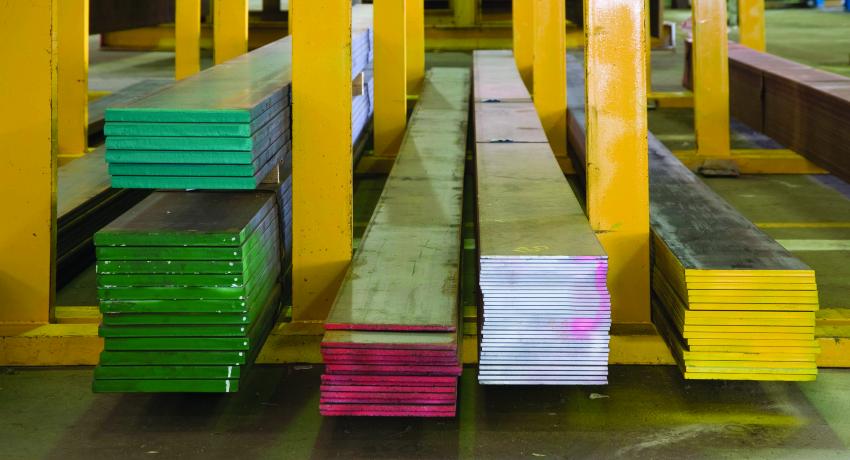
Germany’s stockholding distributors sold a combined 7.297 million tonnes of steel products in the first nine months of 2025, slightly less than in the corresponding 2024 period.
The average monthly tonnage value in the first quarter was 820,000t, marking an apparent increase from the corresponding 2024 value of 813,000t, Kallanish learns from German distributors’ association Bundesverband Deutscher Stahlhandel (BDS).
However, 2024 was also characterised by relatively strong average sales in the second quarter – 816,000t – while customers were more reserved in Q2 this year, with monthly sales at 784,000t.
Split by product group, the average monthly sales of flat products in Q3, 481,000t, marked an increase from Q2, at 456,000t, after Q1 reached 512,000t. This is a somewhat different dynamic from 2024, when average sales of flat products sank throughout the first three quarters. In the nine months of 2025, 4.347mt of flat products were sold by German stockholders.
For long products, 2.26mt were sold in the first nine months. Sales of “other products”, which include wire rod, totalled 680,000t in the first nine months.
In terms of inventory tonnage, the monthly average in Q3 was 1.865mt, down from Q3 2024 with 1.927mt, which itself was slightly down y-on-y from 1.961mt in 2023.
Christian Koehl Germany


Polish domestic long steel prices unchanged; weak demand
“Current price levels are unsustainable,” a producer source said.
“With energy prices increasing during the winter season we can only see prices going up,” they added.
In the week to Friday, estimations of workable levels for wire rod were heard around 2,580-2,650 zloty ($703-722) per tonne CPT, the same as in the previous assessment period.
Therefore, Fastmarkets’ weekly price assessment for steel wire rod (drawing quality), domestic, delivered Poland was also 2,580-2,650 zloty per tonne, unchanged week on week.
Polish rebar prices were also stable in the week to November 7.
Estimations of workable levels were heard hovering 2,420-2,450 zloty per tonne CPT, like in the previous week.
As a result, Fastmarkets’ weekly price assessment for steel reinforcing bar (rebar) domestic, cpt Poland was 2,420-2,450 zloty per tonne on Friday, also unchanged week on week.

European steel HRC market remains quiet, awaiting January revival
A buyer source, however, said that mills could deliberately keep some December volumes in stock until January because of an expected price increase connected with the introduction of the EU’s Carbon Border Adjustment Mechanism (CBAM) in January 2026.
Import regulatory measures were now considered the only driver for growth of local prices, with actual demand leaving much to be desired.
In Northern Europe, January delivery offers varied within the range of €620-650 ($716-751) per tonne ex-works, with the exception of a re-roller in the Benelux area, which offered January-rolling coil at €600 per tonne ex-works.
Estimates of workable prices were heard at €600-620 per tonne ex-works, but there have been few bookings so far, with market sources saying that the active phase will come in several weeks’ time. This price compared with €590 per tonne in the most recent sales of December-delivery cargoes.
Fastmarkets’ daily steel hot-rolled coil index, domestic, exw Northern Europe, was €610.00 ($704.23) per tonne on November 10, up from €606.67 per tonne on November 7.
The index was up by €8.75 per tonne week on week, and up by €32.50 per tonne month on month.
In Italy, the situation was similar with few volumes left for December.
Coil for January delivery was offered at €615-620 per tonne ex-works with estimates of workable prices being closer to €600 per tonne ex-works. No January bookings were heard on November 10, however.
Most recent sales of December-delivery coil were heard within the range of €580-590 per tonne ex-works.
Fastmarkets’ daily steel hot-rolled coil index, domestic, exw Italy, was calculated at €596.25 per tonne on Monday, up by €0.25 per tonne from €596.00 per tonne on Friday.
The index was up by €1.25 per tonne week on week, and up by €51.25 per tonne month on month.


German engineering manufacturers face sharp order decline amid global trade crisis
Germany’s mechanical engineering sector recorded a steep 19 percent year-on-year drop in new orders in September 2025, reflecting ongoing strain from the global trade crisis and weakening industrial demand, according to the German Engineering Federation (VDMA).
The decline also contributed to a slight contraction in total orders for the first nine months of the year.
Base effects mask deeper structural weakness
VDMA chief economist Dr. Johannes Gernandt said that part of the year-on-year decline stemmed from base effects, as September 2024 had benefited from large-scale plant orders that did not recur this year. “That should not obscure the fact that the machinery and equipment manufacturing industry continues to experience a noticeable slump in demand and underutilization,” Gernandt warned.
He stressed that a sustainable recovery depends on resolving global trade disputes, including US punitive tariffs, and on structural reforms in Germany and Europe to reduce cost burdens and stimulate investment.
The federation reaffirmed its forecast of a five percent contraction in real production for 2025.
Foreign demand collapses, euro zone more resilient
The September 2025 figures show a five percent drop in domestic orders and a 24 percent drop in foreign orders. Orders from euro zone countries fell by 13 percent, while those from non-euro zone countries decreased by 27 percent.
In the third quarter of 2025, overall orders were six percent lower than a year earlier, with domestic orders down by three percent and foreign orders down by seven percent, while orders from euro zone countries and non-euro zone countries fell by two percent and by nine percent, respectively, all on year-on-year basis.
In the January-September period of this year, total orders edged down by one percent compared with the same period last year, while euro zone orders increased by 10 percent and non-euro zone demand fell five percent, both on year-on-year basis.


Ecomondo 2025: European steel industry between climate challenge and economic sustainability
Decarbonization, energy and raw materials were at the heart of debates in Rimini at Ecomondo 2025, a leading international event dedicated to the green and circular economy.
Participants heard that the race toward low-emission steel continues, but challenges remain over costs, technology and regulatory stability.
The transformation of the European steel industry toward low-CO₂ production represents one of the most complex turning points in the continent’s industrial transition. During one of the conferences held at Ecomondo 2025, experts, analysts and industry representatives reviewed the progress toward a decarbonized steel sector, discussing its challenges, targets, and economic implications. Producing green steel means not only reducing environmental impact, but also fundamentally rethinking the entire production framework – from technology and energy supply to financial and market models.
The global map of decarbonization
The discussion highlighted how the race toward climate neutrality has now become a global process. More than 80 percent of the world’s steel production comes from countries that have already set net-zero targets, with Europe and East Asia taking a leading role. The European Union aims for carbon neutrality by 2050, while the United States, Japan and South Korea have adopted similar goals. China and India, which together account for well over half of global steel output, are expanding their carbon markets and introducing policies to define so-called Green Steel classifications.
Only Russia and Iran currently remain outside this shared decarbonization path.
Technology, energy and raw materials – the three critical pillars
The ecological transition of the steel industry requires a deep technological overhaul. Fully carbon-free solutions have not yet reached industrial maturity, and production costs remain significantly higher than those of traditional processes.
Replacing blast furnaces with electric arc furnaces will also lead to a sharp rise in electricity demand – energy that must be both renewable and cost-competitive. At the same time, developing a green hydrogen supply chain, intended to replace natural gas in thermal processes, is essential, though still far from full-scale deployment.
On the raw materials side, the availability of high-grade iron ore and high-quality scrap remains limited. This could intensify competition for resources and widen the price gap between conventional and low-emission steels.
Investments and regulation – transition needs stability
According to the analyses presented during the event, full decarbonization of the European steel industry will require investments estimated between €60 billion and €85 billion. It is an enormous commitment for a sector that, after years of weak margins and stagnant demand, must now finance the most extensive technological transformation in its history.
Speakers also stressed the need for a stable and coherent regulatory framework. The rapid evolution of EU rules on the Emissions Trading System (ETS) and carbon accounting risks creating uncertainty in a sector where investment cycles span several decades.
Recycling and circularity – a tangible contribution
Within the path to climate neutrality, steel recycling remains an immediate and scalable tool.
Data presented in Rimini confirmed that the steel packaging recovery in Italy has already generated significant environmental and economic benefits, with more than €1.4 billion worth of recovered material and over 500 million kilograms of CO₂ avoided between 2000 and 2024.
These results show how a circular steel industry can directly contribute to emission-reduction goals by lowering dependence on primary raw materials and maximizing the value of resources already within the production cycle.
Toward a more sustainable European steel industry
The decarbonization of Europe’s steel sector is clearly underway but remains riddled with uncertainties.
The transition requires a delicate balance between technological innovation, economic sustainability, and regulatory coherence.
As emphasized during the discussions at Ecomondo, the goal is not only to produce zero-emission steel, but to build an industrial model capable of remaining competitive in the long term – one that reconciles growth, environmental responsibility and energy security.

Assofermet Acciai: Italian market awakens amid protectionism, announced price hikes
In recent weeks, the Italian steel market has shown an unexpected revival, driven by the tightening of trade and economic protectionist measures.
Buying interest has returned significantly, with renewed dynamism both from end-users and from service centers specializing in carbon flat products, according to the market report dated November 6 from Assofermet, the association representing Italian companies involves in the trade, distribution and processing of steel, scrap and non-ferrous metals.
The upturn was mainly triggered by concerns over rising duties and the introduction of costs linked to the Carbon Border Adjustment Mechanism (CBAM), as well as by fears of stricter import quotas on raw materials. Many operators have therefore brought forward their purchases for the coming months in an effort to hedge against the price increases already announced by European mills. This behavior contributed to a temporary improvement in shipments during October, although early November has been marked by a slowdown in demand and a renewed sense of caution.
Overall, the situation remains complex. While rising prices are supporting producers’ margins, they also risk undermining the competitiveness of the European manufacturing industry – especially if trade barriers are not extended to finished or steel-intensive products. Without coordinated action at the EU level, Assofermet warns, there is a real risk of structural damage to the continent’s industrial base.
Meanwhile, European mills, backed by the existing customs barriers, are maintaining the announced price increases for deliveries scheduled in 2026, despite persistently weak demand. October closed with volumes below expectations and price levels insufficient to ensure satisfactory profitability, while domestic competition remains intense. However, the outlook for the coming months could mark a turning point, supported by the expected reduction in import volumes and by early purchasing activity driven by regulatory uncertainty.
In the stainless steel flat segment, the situation remains uneven: October recorded a modest recovery in long products, while difficulties persist for flats and tubulars. The construction sector is showing early signs of improvement, sustained by stronger demand for reinforcing bar and welded mesh, with prices gradually consolidating.
For ready-stock distributors, interest in European-origin material continues to grow, with domestic production now perceived as more competitive and stable than imports. Availability remains ample, yet some buyers are already reporting requests for slight price increases for 2026 – in line with the overall upward trend and within a still-weak but steady demand environment. As regards imports, pressure persists to ship volumes within the first half of next year, ahead of the enforcement of new, more restrictive safeguard measures.
In the tinplate segment, Assofermet highlights a steady increase in interest for EU-origin production, which is currently benefiting from greater stability and a competitive edge over imported material. Initial requests for slight price hikes in 2026 have already emerged, with availability expected to remain adequate thanks to the slowdown in domestic demand. At the same time, imports continue to push for deliveries within the first semester, in an effort to anticipate the entry into force of the upcoming European protection measures.
Overall, November appears likely to be a transitional phase for the steel sector: the combination of protectionist policies, environmental costs, and macroeconomic instability is reshaping purchasing strategies along the entire supply chain. Ahead of the industry fair in Maastricht scheduled for November 18–20, market participants see the coming weeks as a crucial period for discussion and assessment – to determine whether the recent rebound marks the beginning of a genuine trend reversal or merely a brief pause in an otherwise uncertain year for the European steel industry.

European coil and green steel round-up: Northwest European HRC prices rise despite trading slowdown
European coil market activity slowed in the week to 7 November as steelmakers are largely booked for the rest of the year, and are now signalling further price increases for 2026 offers.
Northwest European hot-rolled coil (HRC) prices did inch a little higher on week despite thin liquidity, with smaller volume deals reported directly to McCloskey at levels between EUR620-630/t ex-works, and price indications from sources generally clustering toward in the middle of EUR600-640/t ex-works.
Offers for January delivery are still currently available at prices of around EUR630-650/t ex-works, with only a few offers reported as low as EUR600/t ex-works – though distributors expect upward revisions from steelmakers in the near-term, with signals pointing toward EUR700/t delivered as reported by multiple stockholders.
“Trading activity is slower, and recent positivity is fading as a result,” said a German distributor. “Mills are indicating EUR700/t delivered for the next round of price increases.”
The tractability of further increases is still uncertain among the trade, as distributors are generally running high stock levels and are working through inventories at a slower pace due to depressed EU consumption. That said, the distribution segment considers the latest round of price increases as tied to regulatory developments rather than demand fundamentals, so expected that further policy changes could drive prices further given the uncertain market environment.
“There’s been no real demand improvement – the price recovery is being driven by regulatory changes,” said a trader.
Northwestern ports are also “full” of material imported to beat the new year deadline for CBAM-free clearance, as described by a German distributor, offered at effective prices of EUR600/t delivered (around EUR580/t base) into the Northwest European market. Import prices for delivery in the second quarter – increasingly offered by traders on a DDP basis in absorbing CBAM’s variable and uncertain cost pressures – were reported at the same EUR580/t DDP.
Prices for Italian HRC experienced similarly muted dynamics on week, finding some liquidity at levels of approximately EUR580/t ex-works given buyer bids at EUR580-590/t delivered. A producer source did expect that mill price discipline could falter before year’s end however, as sellers seek to offload excess December volumes.
“There’s more talk than activity in the market this week,” said the source. “I wouldn’t be surprised to see mills give discounts to get rid of December rolling material.”
Italian buyers were said to be referencing all-in import offers ex-Turkey at EUR560/t DDP, but with Turkish origin offers available at EUR490-500/t CFR, mill sources expected actual DDP pricing to lie closer to EUR580/t.
HRC from Indonesia was reported from multiple sources at the EUR560-570/t DDP price level, while imports ex-Turkey, Algeria, and the Far East were reported at around EUR610/t DDP.
One trader described the aggressiveness of Indonesian-origin HRC as threatening to “ruin the market for everyone,” being offered under the market consistently due to their WTO developing-country status exemption from the EU’s existing safeguard measures.
While limited to market speculation at present, McCloskey has discussed the feasibility of the European Commission initiating a developing country review for the safeguards in late-December, for January effect, as Indonesian HRC volumes now well-exceed the 3% annual share threshold required to neutralise its exemption.
At least one large trading outfit told McCloskey it had ceased sourcing HRC from Indonesia as far back as the Blechexpo trade fair in mid-to-late October, but McCloskey knows of several other import purchases due for arrival in late December, which would potentially face duties if delayed into January and the Commission does review existing protections.
Green Steel
While substantive green steel activity remains thin in Europe in the emerging low-carbon market due to rapid developments affecting traditional steel – seeing workable green HRC premia move sideways at EUR70-80/t – increased regulatory attention from events such as Germany’s Steel Summit further exemplified the political will to redefine steel procurement needs toward low-carbon, domestic offerings.
Speaking at the event, President of the German Steel Federation (Wirtschaftsvereinigung Stahl) Hans-Jürgen Kerkhoff said that the desire to support green steel demand development via public procurement was “very clear,” both supported “at the state level, and also through incentive systems in the private sector.”
As indicated by Commission communications, lead market support from proposals such as the Industrial Accelerator Act (quietly renamed from the Industrial Decarbonisation Accelerator Act), and adjacent policy initiatives are expected in the near-term.
| Weekly European steel coil | |||||
| EUR/t | Term | 07-Nov-25 | Change | ||
| Weekly Northwest Europe steel coil | |||||
| Northwest Europe ex-works HRC | EX-WORKS | 615.00 | 5.00 | ||
| Northwest Europe ex-works CRC | EX-WORKS | 695.00 | 0.00 | ||
| Northwest Europe ex-works HDG | EX-WORKS | 710.00 | -10.00 | ||
| Weekly South Europe steel coil | |||||
| Italy ex-works HRC | EX-WORKS | 580.00 | -5.00 | ||
| South Europe CIF HRC | CIF | 560.00 | 0.00 | ||
| Source: McCloskey by OPIS. | © 2025 Dow Jones Energy Limited. | ||||
| Weekly green steel | |||
| EUR/t | Term | 07-Nov-25 | Change |
| Green Northwest Europe HRC premium (scopes 1-3 CO2 under 0.8t) | 75.00 | 0.00 | |
| Green Northwest Europe ex-works HRC (scopes 1-3) | EX-WORKS | 690.00 | 5.00 |
| Green HRC premium (scopes 1-2 CO2 under 0.5t) | 75.00 | 0.00 | |
| Green Northwest Europe ex-works HRC (scopes 1-2) | EX-WORKS | 690.00 | 5.00 |
| Green HRC reduced carbon price (scopes 1-3) | 44.48 | -1.53 | |
Maria Tanatar Associate Director, Steel and Green Steel
Benjamin Steven Journalist, Steel


European heavy plate round-up: EU plate producers seek higher prices on rising costs
European heavy plate producers have been targeting higher prices in the week to 7 November, amid rising costs and reduced availability of imported material.
EU authorities have proposed new tariff-rated quotas, both reducing the existing quotas and increasing duties. As a result, buyers have been showing increased interest in domestic plate as import volumes are expected to drop in 2026.
Italian re-rollers have been trading heavy plate at EUR620-640/t ex-works. As transaction prices started to approach the current target price of EUR650/t ex-works, market sources reported new price ideas of suppliers at EUR670-700/t ex-works for the first quarter of next year.
European re-rollers rely on imported slab, and the implementation of the carbon border adjustment mechanism (CBAM) from 2026 will result in higher costs. Sources estimated that CBAM duty for imported slab would reach around EUR50/t, making an increase in finished steel prices critical for the mills.
Offers of imported slab from China and Vietnam have been heard at $520/t CFR Italy, and exporters were ready to grant discounts of around $10/t. But re-rollers in Italy have been aiming for maximum prices of $500/t CFR, taking into the account the additional CBAM costs.
Some sources reported deals for semi-finished products from Brazil at $500/t CFR Italy, but the supplier is trying to increase the prices.
Adding pressure on re-rollers, supply of imported slab will be reduced following implementation of the 19th round of sanctions against Russia adopted in the EU last week including measures against Evraz PLC, a UK-headquartered company with core steel manufacturing and mining assets in Russia. Some re-rollers will have to find alternative slab sources, which most likely will be more costly.
In Germany, prices have recovered over the week, with mills offering plate at EUR710-720/t ex-works.
Re-rollers from both Denmark and Czech Republic have offered plate at EUR680/t ex-works.
| Weekly European heavy plate, slab and green steel | |||||
| Unit | Term | 07-Nov-25 | Change | ||
| Weekly heavy plate | |||||
| Northwest Europe ex-works heavy plate | EUR/t | EX-WORKS | 710.00 | 10.00 | |
| Germany delivered heavy plate (Northwest Europe) | EUR/t | DEL | 730.00 | 10.00 | |
| Italy ex-works heavy plate | EUR/t | EX-WORKS | 645.00 | 0.00 | |
| Weekly steel slab | |||||
| Italy CFR slab | $/t | CFR | 510.00 | -5.00 | |
| Weekly green steel | |||||
| Green heavy plate premium (scopes 1-3 CO2 under 1t) | EUR/t | 25.00 | 0.00 | ||
Maria Tanatar Associate Director, Steel and Green Steel
Benjamin Steven Journalist, Steel

ArcelorMittal clarifies status of EU decarbonisations
Leading steelmaker ArcelorMittal has clarified the status of its decarbonisation projects in communications surrounding its third quarter earnings, released on 6 November, aligning the conditions for progress with those capitalised upon greenfield low-carbon steelmaking initiatives.
In its earnings release, ArcelorMittal lauded the European Commission’s proposal to strengthen the EU’s steel trade defences once – or potentially before – the existing safeguards lapse at the end of June 2026, seeing the measures as key to giving its European operations “the foundation […] to earn its cost of capital.”
Despite perceiving an improved outlook for steel market conditions to support its European operations, ArcelorMittal representatives were careful to limit expectations of continuations to its suspended decarbonisation plans across Europe, most prominently in Germany, Belgium, and France. The steelmaker suggested in its earnings call that said projects would be assessed on their own merits and progressed gradually, even if Q1 2026 brought strong market recovery on the continent.
ArcelorMittal’s earnings release said that while regulatory progress to restrict import accessibility was encouraging, further developments were needed to support specific decarbonisation investment cases across its operations.
“Of critical importance is visibility of industry access to competitive energy,” the steelmaker said. “At that point, the company will be able to review its investment priorities in its Europe segment.”
The company’s currently active decarbonisation renovations at its Spanish operations were described as “on track”. ArcelorMittal is constructing a new 1.1 mt electric-arc furnace (EAF) in Gijon, and is expanding its EAF capacity in Sestao to 1.6 mt, as described by McCloskey’s recently updated Green Steel Projects Database.
Conditionality on affordable energy aligns with greenfield low-carbon steelmaking projects in Europe such as Hydnum, Blastr, and Stegra, all of which are based in locations with access to competitive renewable energy sources in Spain and the Nordics.
Access to affordable renewables is particularly important for low-carbon EAF projects due to their relatively high electricity consumption, especially considering the removal of the ‘fuel/electricity exchangeability principle’ (FEP) from the calculation of ETS free allowances benchmarking from 2026 for EAF production processes. This will potentially improve EAF production competitiveness by eliminating current free allowance reductions for indirect emissions from electricity consumption within the ETS framework.
While some of McCloskey’s sources have questioned the fundamental necessity of cheap electricity for blast furnace (BF) producers’ decarbonisation investments given their relatively low exposure to energy prices on incumbent process routes, and benefits from the sale of electricity produced from captured off-gases, the issue has some nuance.
Blast furnace producers do currently recycle off-gases, but this is not only purposed for electricity generation and sale, but also recycled to heat rolling lines in optimising energy requirements downstream. Renovating to production via EAF would remove this optimisation route and impose additional energy requirements when heating rolling lines, as well as expose steelmakers to additional downstream ETS costs from ‘fall-back’ heat benchmarking.
When asked whether lower production during ETS reference periods could raise costs due to fewer free allowances, ArcelorMittal said it did not expect additional ETS exposure beyond the roughly 20% of emissions EU steelmakers already pay for, or the planned phase-out of free allocations from 2026.
European steelmakers – largely following the direct-reduced iron (DRI) to EAF decarbonisation route – must also convince financiers of the potential realisation of their investments on future, rather than present dynamics, making further relevant the “visibility of industry access to competitive energy,” as described by ArcelorMittal.
Salzgitter posts slightly positive pre-tax result in Q3 2025
Salzgitter, achieved a slightly positive pre-tax result in the third quarter of 2025, supported by its performance improvement program P28, steady results from the KHS Group, and income from its participation in Aurubis AG.
In the first nine months of 2025, the Group generated revenue of EUR 6.9 billion (9M 2024: EUR 7.7 billion), EBITDA of EUR 224 million (9M 2024: EUR 320.6 million), and a pre-tax loss of EUR 72.7 million (9M 2024: EUR –141.2 million). The result includes a EUR 83.5 million contribution from the equity-accounted investment in Aurubis AG and –EUR 68.2 million in valuation losses on derivatives. Net income after tax amounted to EUR –46.5 million (9M 2024: EUR –197.7 million), corresponding to EUR –0.93 earnings per share, while return on capital employed (ROCE) stood at –0.4%. The equity ratio remained solid at 41.8%.
According to CFO Birgit Potrafki, the Group’s P28 performance program contributed an additional EUR 89 million to earnings in the first nine months, nearly achieving the annual target of EUR 97 million. “Market conditions have not improved significantly since the beginning of the year. With our own measures, we have largely offset these challenges. The positive quarterly result underlines this progress,” Potrafki said. She added that the EUR 500 million convertible bond issued in October 2025 strengthened the company’s financing structure and reflected investor confidence.
Looking ahead, Potrafki noted that newly proposed EU trade policy instruments could enhance the competitiveness of the European steel industry, while an expected economic recovery in 2026 may further improve results.
Despite a recent moderate price recovery, margins are expected to remain under pressure throughout 2025, with the positive effects of higher prices likely to materialize only next year. The Group therefore adjusted its full-year forecast as follows:
-
Revenue slightly above EUR 9.0 billion (previously: EUR 9.0–9.5 billion)
-
EBITDA between EUR 300 million and EUR 350 million (previously: EUR 300–400 million)
-
Pre-tax result between EUR –100 million and EUR –50 million (previously: EUR –100–0 million)
-
Return on capital employed slightly above the previous year’s level
Salzgitter emphasized that fluctuations in raw material costs, precious metal prices, exchange rates, and the valuation of the October 2025 convertible bond could significantly influence the final 2025 results.
