


European heavy steel plate prices largely steady despite upward pressure in Italy
“Although these levels have not yet been realised in current spot transactions for the remainder of 2025,” a buyer said.
Fastmarkets’ weekly price assessment for steel domestic plate, 8-40mm, exw Southern Europe was €590-620 ($685-719) per tonne on Thursday, unchanged week on week.
Transactions at €620-630 per tonne exw were reported in the week, but the data was received after the pricing session had ended and so were not included in Fastmarkets’ final assessment.
In Northern Europe, domestic commodity-grade steel plate prices narrowed down in the week to Thursday amid ongoing muted trade.
Fastmarkets’ weekly price assessment for steel domestic plate, 8-40mm, exw Northern Europe was €650-680 per tonne on Thursday, narrowing down by €10 per tonne from €650-690 per tonne a week earlier.
Steel plate was imported in Germany at about €700 per tonne delivered, sources said.
And some market participants said that sentiment had recently improved in anticipation that prices and demand will be bolstered by the EU’s Carbon Border Adjustment Mechanism (CBAM) and safeguarding reforms.
“Sentiment remains cautiously firm, with Northern European producers already signaling a €20 per tonne price increase for 2026 production, suggesting confidence in steady demand and tighter supply expectations going forward,” a source told Fastmarkets.
Activity remained limited in Northern Europe, however, amid ongoing weak demand in the region.

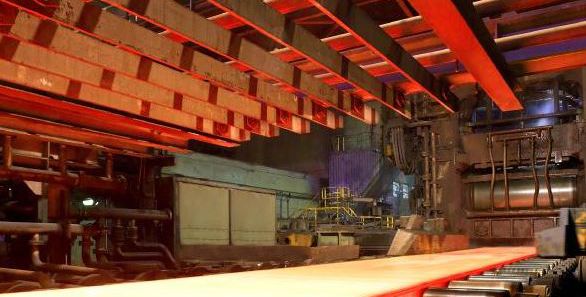
Thyssenkrupp idles BF9 at Duisburg on weak demand, import pressure
This information was also confirmed by the company’s spokesperson on the same day.
“Thyssenkrupp Steel has taken blast furnace 9 at the Hamborn plant out of operation,” the spokesperson said. “This is the company’s response to the further consolidation of structural changes in the European steel market. In particular, overcapacity and – to an increasing extent – the pressure of imports are significantly blunting the competitiveness of domestic production.”
The company did not comment on the date of possible restart.
BF 9 has capacity of 1.7 million tonnes per year of pig iron, according to Fastmakrets’ information.
Thyssenkrupp’s Duisburg facility has a designed production capacity of around 11.7 million tpy of pig iron from four blast furnaces (BFs) and produces around 11 million tpy of crude steel per year.
Steel shipments from thyssenkrupp’s steel assets amounted to around 9 million tonnes over the past three years, according to Fastmarkets data.
By the end of 2024, thyssenkrupp already announced plans to cut steel output by 2.5 million tpy, with 11,000 jobs likely to be lost, consequently, Fastmarkets reported.
Market brief
There was a short-lived rebound in apparent demand for flat steel at the end of July and into early August, related to restocking activity, expectations of the implementation of Europe’s Carbon Border Adjustment Mechanism (CBAM) and the introduction of new, tougher, steel safeguard measures to limit import trade flows in 2026.
But in September, prices have stabilized and European mills have struggled to push through increases because of insufficient end-user demand.
In mid-October, shortly after the European Commission had proposed a new, stricter trade measures to replace steel safeguards, European mills started to announce price rises for the first quarter delivery hot-rolled coil.
Under the new plan, only 18.3 million tonnes per year of steel would enter the EU without being subject to tariffs. Steel shipments exceeding that volume would face duty at 50%.
For comparison, carbon steel imports into the EU in 2024 amounted to 26.36 million tonnes, up by 6.4% from 2023’s 24.78 million tonnes, according to European steel association Eurofer.
On October 13 leading European steelmaker ArcelorMittal has raised its offers for HRC scheduled for delivery in December by €20 ($23) per tonne to €630 per tonne ex-works or delivered, depending on the region, sources told Fastmarkets on Monday October 13.
Meanwhile, for January delivery, offers were as high as €650 per tonne ex-works or delivered.
During the steel trade fair Blechexpo, held in Stuttgart on October 21-24, other European mills followed the move, aiming for €620-630 per tonne ex-works for Janaury delivery HRC.
According to both buyers and sellers, the introduction of CBAM and new trade regime was anticipated to heighten uncertainty, thereby limiting new imports or aligning import prices more closely with those in Europe. Consequently, domestic HRC prices were projected to rise.
It remains to be seem if the market can fully absorb the increase, considering lack of real demand.
“We do expect an increase for the first quarter delivery coil, but the question is, how much and for how long it will last since demand from end-users is not rising,” a buyer in Germany said.
Fastmarkets’ daily steel hot-rolled coil index domestic, exw Northern Europe was €600 per tonne on October 23, up by €2.86 per tonne from €597.14 per tonne on Wednesday October 22.
The index rose by €8.75 per tonne week on week and by €21.25 per tonne month on month.
Earlier in October, ArcelorMittal idled one BF at the Fos-sur-Mer plant in France after an accident, halving steel output at the site for at least one month, Fastmarkets reported.
These stoppages along with lower imports could result in some supply tightness in the first quarter 2026 and therefore support a domestic price rebound, sources said.
The market for imported HRC has been very quiet lately because most of the overseas suppliers are offering HRC with delivery in the first quarter of 2026.
Therefore, prices for these tonnages will be subject to EU’s CBAM.
Turkish offers were indicated at €530 per tonne CFR, inclusive of the anti-dumping duty. According to a local buyer, when factoring in CBAM charges, which are estimated at €55 per tonne, along with unloading and delivery costs, the effective price would approach European levels, at approximately €620–630 per tonne delivered.
Meanwhile, offers from Indonesia were reported at around €470 per tonne CFR, excluding CBAM-related expenses.

BAUTA Metal opens steel cutting and stocking facility in Norway
BAUTA Metal officially opened its state-of-the-art steel cutting and storage facilities in the heart of the country’s maritime cluster. The celebration also included a symbolic moment – the cutting of the first steel for the closed fish cage VARIG, developed by BAUTA Fishfarms.
The facility is located in Vestnes, Møre og Romsdal, on Norway’s west coast. Positioned between the cities of Molde and Ålesund, it lies at the heart of the Norwegian maritime cluster and shipbuilding industry. With a deepwater quay and direct access to the region’s main highways, the location offers significant logistics advantages for customers. BAUTA Metal acquired the site in 2024 and has since upgraded it to a state-of-the-art standard.
The 3,200-square-meter production hall is equipped with large crane capacities and advanced machinery for shot blasting and priming. It features a plasma cutter with two cutting robots and a 3.6 x 34-meter cutting table capable of handling plates up to 300 mm thick, as well as Norway’s only 5-axis fiber laser, designed for plates up to 2,000 x 6,000 mm. The facility also includes industrial saws for cutting pipes and profiles.
In combination with a 2,000-square-meter storage hall for aluminum and stainless steel, and 20,000 square meters of outdoor storage, the facility offers substantial capacity.
“This celebration not only marks a new chapter for BAUTA Metal, but also represents an important step forward for the Norwegian industry — enhancing capacity, flexibility, and capability for the future,” says John Arve Sundet, founder and chair of the board of BAUTA Group.
The opening ceremony attracted around hundreds of guests and featured speeches by Geir Inge Lien, Member of the Norwegian Parliament, and Sidsel Sæterøy, Chair of the Board of the Confederation of Norwegian Enterprise in Møre og Romsdal.
During the event, the steel cutting ceremony for the first closed fish cage of the VARIG design by BAUTA Fishfarms took place. The cage is constructed in steel, offering significant industrial opportunities both in Norway and internationally. This innovation not only helps reduce the environmental footprint of today’s aquaculture industry, but also supports sustainable growth for the future. By drawing water from deeper, cooler layers, adding oxygen, and collecting fish waste, the VARIG cage can help double the capacity of Norwegian aquaculture while opening new markets worldwide.
“This is a big day for us and for the aquaculture industry. The world’s demand for protein is growing, but it must be produced with as little environmental impact as possible. With VARIG, we can help meet that demand through a low-impact, long-lasting solution,” says Gjermund Kvernmo Langset, General Manager of BAUTA Fishfarms.
BAUTA Group is a family-owned industrial consortium based in Tomrefjord, Vestnes, Norway. The group consists of 19 companies and employs more than 600 people. Its core activities are in steel construction for the maritime and offshore industries, while other companies within the group specialize in electrical installations, construction, property development, aquaculture, welding wire distribution, and training services.

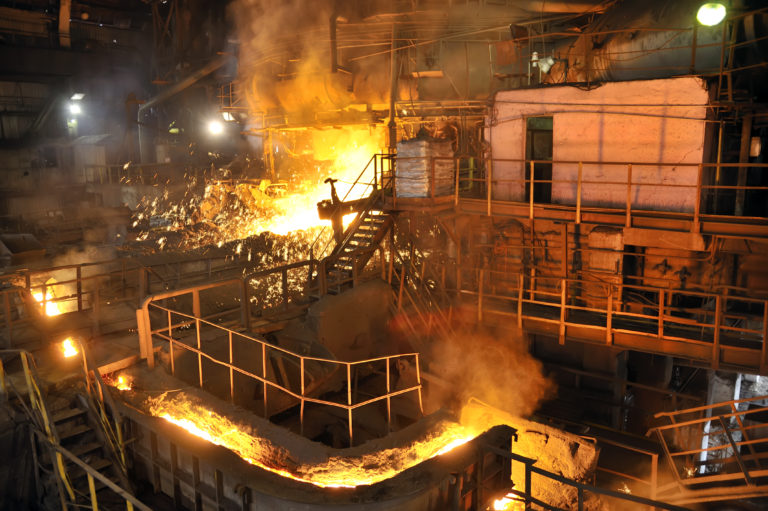
German crude steel output down 10.7 percent in Jan-Sept 2025
In September this year, Germany’s crude steel output went down by 0.6 percent year on year to 2.97 million mt, according to the information provided by the German Steel Federation Wirtschaftsvereinigung Stahl (WV Stahl). In the first nine months of this year, crude steel production in Germany declined by 10.7 percent year on year to 25.38 million mt.
In the given month, Germany’s pig iron output amounted to 1.95 million mt, up by 6.7 percent, while in the January-September period it decreased by 12.5 percent to 16.07 million mt, both on year-on-year basis.
In September, the country’s hot rolled steel output grew by one percent year on year to 2.60 million mt, while dropping by 6.7 percent to 22.54 million mt in the first nine months this year, both compared to the same periods of the previous year.


Blechexpo: Stainless flats recovery slow to materialise
European stainless flat products prices are expected to continue rising, though the consolidation of recent increases is likely to take longer than anticipated.
Downstream consumption remains difficult, mirroring trends seen in the carbon flat steel sector, stainless steel mills and processors confirmed at this week’s Blechexpo trade fair in Stuttgart attended by Kallanish.
While European coil procurement is projected to increase as buyers shift towards local sourcing amid strong protectionist measures, stainless steel processors do not expect an equivalent rise in their sales volumes.
“The situation should improve during the first quarter as coil prices climb and we purchase more European material. Mills will benefit from the European Commission’s new protectionist policies. Margins may improve somewhat in the coming months, but consumption levels are expected to remain similar to those seen recently,” a German stainless steel processor commented.
European mills are raising prices, although some erratic commercial behaviour is still evident on the production side. “Nobody can afford to lose orders. We’ve had many difficult months with low or negative margins, so mills are also acting aggressively at times,” another processor said
All sources at the event agreed that a market recovery remains out of reach. More decisive price increases are expected to materialise during the first quarter. There is currently little appetite for imports, as Asian prices are not competitive with European levels.
Large buyers nevertheless continue to source from the import market. “We don’t have a choice,” one buyer explained. “We cannot accurately calculate CBAM costs, so we are buying almost blindly. Our projections may be wrong, and we’re taking risks knowing that CBAM payments will begin in 2027.”
A mill source reported that end-user demand is stable, neither falling nor improving. Stock levels remain elevated across Europe and are particularly high in slower markets such as Italy. The automotive sector continues to underperform, reflected in delayed purchasing activity, while investments in heavy industry are being delayed amid uncertainty.
According to market participants, it will take at least six months for the market to adjust to the new CBAM and safeguard regulations, with purchasing patterns expected to be restructured during this period. Certain low-cost finished steel imports remain outside protectionist measures, causing further pressure on the downstream sector, another source noted.
Buyers at Blechexpo widely agreed that flat steel prices have bottomed. European mills have announced coil price increases of approximately €30/tonne ($35) for December delivery and are evaluating further hikes of up to €50/t for January. While there are early signs of stabilisation, market participants at the event remained cautious. Confidence in mills’ ability to enforce higher prices is limited, given the ongoing uncertainty in downstream demand through Q4 and extending into Q1.
In northern Europe, mills’ stainless cold rolled coil quotes stand at around €2,240-2,250/t ($2,621-2,633/t) delivered. However, it is unclear if these have been accepted by the market. One source believes levels could reach €2,300/t by January.
Natalia Capra France


Blechexpo: EU coil players see stronger CRC, HDG
As the European coil market keeps hoping for stronger prices and that mills’ new offers will gain ground despite a weak economic environment, some say that processed coil could strengthen relatively faster than substrate.
A Dutch buyer of cold-rolled and hot-dip galvanized coil sees the price spread between CRC/HDG and hot rolled coil widening somewhat. “In normal times we assume a premium of €80/tonne [$93] for CRC over HRC, and for galv another €20 more. At the moment, it is trending more towards +€100 and +€120,” he told Kallanish on the sidelines of this week’s Blechexpo trade fair in Stuttgart.
Lower mill capacity for CRC and HDG compared with HRC means prices for downstream coil grow faster, he argues. A German buyer concurred and also pointed to the EU’s antidumping case on CRC. This will put a brake on orders from typical supplier countries for CRC, like Turkey and India, he added.
In fact, CRC could temporarily eclipse the price of galv due to the shortage of imports. He noted that the main spot market supplier of CRC in Europe is ArcelorMittal, while many other mills feed their CRC directly to carmakers.
The Dutch buyer does not necessarily agree about CRC eclipsing galv, but conceded that both could be equal in price going forward. He also highlighted the typical role of CRC in northwestern Europe, in that it is the base material for galvanizing for customers in the automotive industry, among others.
European mills’ HRC offers for new contracts start with a six, reaching up to €650/tonne ($754) delivered in the first quarter of 2026. Offers for CRC and HDG would then be clearly at above €700/t.
Christian Koehl Germany

Blechexpo: European coil buyers question increases, Asian purchases continue
Market uncertainty and sharp mill price increases continue to weigh on the European coil market. Buyers across spot, annual, and index contracts are resisting the proposed hikes and postponing purchasing decisions.
At the Blechexpo trade fair in Stuttgart this week, attended by Kallanish, producers presented higher price levels; however, no new commitments were finalised. According to market sources, steelmakers are seeking increases of around €100/tonne ($117/t) for new automotive contracts or proposing revised pricing structures with higher extras on indexed contracts.
While annual and indexed customers appear open to moderate increases, they are unwilling to meet the full extent of the requested increases. Producers meanwhile remain firm and unwilling to compromise.
Some producers are currently refraining from offering HRC prices, while others are quoting between €620-630/t base delivered for December delivery and €640-650/t for January.
The overall sentiment at Blechexpo was marked by uncertainty regarding the outlook for the European steel value chain. Participants pointed to Germany’s weak economic growth and the lack of recovery in downstream consumption as key concerns. Steel processors at the event confirmed that price increases for coil derivatives remain insignificant. Many consider producers’ ambitions to implement substantial hikes as unrealistic and unsupported by the supply/demand balance.
Coil buyers at the fair expected consumption to remain subdued through the first half of 2026. With the automotive and white goods sectors still struggling and several facilities across Europe idled or closing, steel processors see little potential for a rebound in steel demand in Q4 and next year.
One steel processor pointed out that the loss of competitiveness of downstream sectors will become palpable in the coming months. European coil prices will rise further, due to protectionist measures. However, Turkish buyers will continue to secure competitively priced coil from Asian suppliers, enabling them to produce lower-cost downstream products. This dynamic is expected to significantly challenge European steel processors and manufacturers, who risk losing global market share and export competitiveness.
Major buyers meanwhile continue sourcing material from Asia, which remains competitive against European asking prices even after including all import-related costs and duties. Lower Asian market values remain the key reference, with Chinese HRC prices being the global benchmark. When accounting for approximately €60/t in CBAM costs, other duties, and logistics, HRC prices from China may reach around €600-610/t cfr Europe, undermining the upward price momentum in the regional market, sources believe.
One steel processor noted that 2025 has been a challenging year, with the company managing to repay investments but reporting disappointing financial results. Another coil buyer said that, given current Chinese price levels, he expects European HRC prices to reach around €630/t base delivered by mid to late Q1 2026. A further market participant added that the trajectory of European prices will largely depend on the implementation schedule of the new safeguard measure.
Natalia Capra France

NLMK Verona reduces carbon footprint by 12%
Despite the ongoing economic slowdown in the European steel sector, NLMK Verona has made significant progress in sustainability.
In its 2024 Sustainability Report, the company reaffirmed its commitment to the environment, people, and society. The Verona-based producer was awarded a Gold Medal by the international sustainability rating agency EcoVadis, placing it among the top 5% of companies evaluated globally.
The report reveals that the company reduced its carbon footprint by 125,942 tons of CO₂ equivalent compared to 2023, representing a roughly 12% decrease. It noted that 90% of emissions originated from the supply chain, highlighting the need to focus on emissions from externally sourced steel slabs. In 2024, NLMK Verona obtained ISO 50001 Energy Management System certification, cutting non-renewable energy consumption by 38.5% while increasing the share of energy from renewable sources from zero to 23%. As a result, the company’s Scope 2 emissions from purchased electricity were reduced to zero.
Strengthening its circular economy approach, the company optimized production processes to cut total waste by 30% in one year, from 57,055 tons to 39,898 tons. Waste sent for recycling increased by 32%, and the use of electric arc furnace technology enabled the company to use over 90% scrap on average in steel production.
NLMK Verona maintained its goal of zero fatal accidents and zero serious injuries in 2024. Its ISO 45001-certified Occupational Health and Safety Management System covers all employees and contractors, with 97% of employees on permanent contracts. During the year, the company provided a total of 9,285 hours of training, 4,503 of which focused on occupational health and safety.
In governance, NLMK Verona made further progress by initiating its first alignment with the Corporate Sustainability Reporting Directive (CSRD) principles and conducting a Double Materiality analysis. The company also implemented an Anti-Corruption Policy in line with ISO 37001. No reports of corruption or anti-competitive behavior were filed throughout 2024.
Highlighting its commitment to sustainable growth despite economic challenges, company management stated: “We continue to face the challenges of the future with determination. Our goal is to create lasting and shared value together with our stakeholders.”


EU approves new sanctions package targeting Russia
The move aligns the EU with U.S. sanctions, targeting Russia’s capacity to continue its war in Ukraine.
EU Commission President Ursula von der Leyen announced on social media Thursday that EU member states had approved the 19th sanctions package against Russia.
“For the first time, we are hitting the heart of Russia’s war economy — the natural gas sector. We will not back down until the people of Ukraine achieve a just and lasting peace,” von der Leyen said.
According to Denmark, the new sanctions will ban imports of Russian liquefied natural gas (LNG) from 2027. In addition, the package tightens restrictions on two major Russian oil companies and adds 117 “shadow fleet” vessels previously used by Russia to evade sanctions to the EU blacklist.
Danish Foreign Minister Lars Løkke Rasmussen said Thursday that the sanctions are having a tangible impact and are inflicting significant damage on the Russian economy. He added that the measures make it harder for Russia to finance its war against Ukraine.
The EU sanctions package had been delayed for weeks due to objections from Austria, Hungary, and Slovakia. However, it was adopted a day after the U.S. announced sanctions on Russia’s two largest oil producers, Rosneft PJSC and Lukoil PJSC.
The new EU measures target 45 entities that helped Russia circumvent previous sanctions, including 12 companies based in China and Hong Kong.

MEPS International: understanding the EU’s steel defence proposal
The European Commission has unveiled sweeping reforms to the way it will protect the European steel industry from global overcapacity, setting the stage for one of the most significant shifts in EU trade policy in a decade.
Its proposed replacement for the EU’s existing steel import safeguard measures will recalibrate tariff-free quotas, redefine country allocations and tighten trade controls. However, with few technical details yet released, much of the market impact remains open to interpretation.
In this analysis feature, MEPS explores how the new framework could redistribute quotas among key exporters, identifying potential winners and losers based on available data and the allocation logic used in previous safeguard measures.
The plan to reset EU safeguard measures
The European Commission unveiled its long-awaited proposal to replace the EU’s existing steel import safeguard regime on October 7.
Under the proposal, the tariff-free quota volume for steel imports would be reduced by around 47%, from roughly 33 million tonnes to 18m tonnes. The tariff rate on imports exceeding that quota would double from 25% to 50%.
The proposal would also end the practice of carrying unused quotas into the next quarter, require importers to disclose the origin of steel in “melted and poured” declarations and give the Commission the power to extend the measures’ application to new products in future reviews.
If approved, the measures are expected to take effect on July 1, 2026, and remain in force until 2031, with a scheduled review in mid-2027.
Because the Commission has not yet published its detailed implementing regulation or country allocations, key questions remain unanswered. These include which exporting nations will receive country-specific quotas, which will fall under residual (all others) quotas, and which developing countries may be exempt under WTO rules.
Confirmed details of the EU’s steel import quota allocations
The European Commission has confirmed that its proposal introduces a two-tier approach to setting limits for EU steel imports. This is designed to balance long-term data with up-to-date import trends.
The EU’s total tariff-rate quota (TRQ) volume for each steel product category will be based on the bloc’s 2013 import volumes. The Commission selected this year as the reference because it predates the global steel overcapacity crisis and is considered a neutral benchmark for normal trade conditions.
The distribution of quotas into each product category will be calculated from average import shares recorded between 2022 and 2024. The Commission says that this approach will ensure that the system reflects the most recent trading patterns while maintaining continuity with the structure used in the expiring safeguard regime.

Steel import quota allocations…missing details
Although the Commission has not yet confirmed the exact methodology for applying country-specific quota allocations, the available evidence strongly suggests that the new system will follow the same allocation logic as the current safeguards. The Commission’s October 7 press release confirmed that it will continue to offer country-specific allocations to major trading partners under the Article XXVIII GATT process and that the new framework will remain fully WTO-compliant.
On this basis, it is reasonable to assume that the allocation of TRQs will, again, be divided into three principal groups:
- Country-specific quotas: exporting countries accounting for more than 5% of total EU imports in a particular product category are expected to receive country-specific quotas.
- Residual quotas: exporting countries with import shares below 5% in a particular category will likely be grouped together under a common “all others” quota.
- Exemptions for developing countries: a developing country’s imports are exempt if they are 3% or less of the total imports of that product. However, this exemption does not apply if collectively, all developing countries with imports at or below 3% account for more than 9% of the total imports.
In practice, this means that the proposed measures are likely to replicate the existing allocation model, recalibrated with updated reference years by using 2013 for total volumes and 2022-2024 for import shares.
Applying the framework
While the Commission has not yet published the detailed implementing regulation or specific country allocations, the figures presented below represent indicative estimates based on MEPS data.
This approach provides a realistic projection of how a total proposed TRQ of 5,198,712 tonnes could be distributed if the new system mirrors the allocation structure of the expiring safeguard regime.
A MEPS chart, entitled ‘Estimated quota distribution’ in the image carousel, above, presents our estimated quota distribution for the largest product category – Category 1A Non Alloy and Other Alloy Hot Rolled Sheets and Strips.
MEPS’s analysis of the potential quota allocations indicates that the combined share of small developing countries amounts to just over 7%, suggesting that they would meet the exemption criteria. As a result, Brazil, Indonesia, Saudi Arabia, Kazakhstan, Thailand and Malaysia, along with other developing nations contributing little to the European import share, are likely to remain exempt from the new safeguard quotas for hot rolled coil.
There is also uncertainty over how Ukraine will be treated under the new system. The European Commission has said that candidate countries facing exceptional security situations, such as Ukraine, will be given special consideration when quotas are set. Ukraine is therefore included in this analysis, but its final status may change depending on how the Commission applies this guidance.
Comparison with current EU safeguard quotas
The shift from the current safeguard regime to the proposed system not only reduces overall quota volumes but also reshapes market access among exporting nations.
Several countries that previously held individual quota allocations, including the United Kingdom, Australia, and Canada, will now move into the collective “other countries” category, while others such as Libya and Algeria are likely to be exempt under developing-nation provisions.
Under the existing measures, quota categorisation has also become more complex. Originally, country-specific quotas were assigned to major exporters with the largest import shares, but the Commission later introduced country caps within the “other countries” quota to prevent dominant suppliers from monopolising the residual share. Under this rule, any single exporting country may use no more than 13% of the residual quota.
A MEPS chart in image carousel, above, summarises how exporter classifications may change between the 2025 and proposed 2026 frameworks. This gives an indication of which countries may retain, lose, or gain individual quotas and which are likely to be exempt.
Winners: which countries may benefit from the changes?
Japan and Taiwan stand out as key beneficiaries of the new framework. In 2025, both were part of the broader “other countries” category, where individual exporters were limited to a maximum of 13% of the total quota. By moving to country-specific quotas under the 2026 proposal, both nations gain direct access to larger allocations.
Among the developing nations, several countries could also find themselves in a stronger competitive position under the proposed safeguard framework. Countries such as Algeria, Brazil, and Indonesia are expected to retain or gain exemptions under the developing-nation provisions, meaning that their steel exports can enter the EU tariff-free. This creates a potential cost advantage compared with major suppliers still subject to quota restrictions.
What sets these countries apart is not simply their exemption status, but their ability to capitalise on it. Each has either an established steelmaking base or active capacity-expansion projects aimed at serving export markets.
Algeria, for instance, continues to expand flat steel output through Tosyali Algeria and other mills, positioning itself as North Africa’s largest exporter to Europe. Brazil, already a key slab supplier to EU rerollers, could increase shipments if domestic demand remains subdued. Indonesia, meanwhile, is rapidly scaling production through new mills and investment from Chinese-backed groups, giving it growing export potential in hot rolled and coated steels.
Together, these developing countries could fill some of the gaps in supply left by quota reductions in traditional supplier nations such as Turkey, India and South Korea. Their success in leveraging this advantage will depend on transport costs, EU product standards and how far producers can pivot towards export-focused output.
Losers: which countries may suffer under new measures?
Turkey’s steel producers are expected to lose out under the Commission’s proposed trade defence mechanism. The country faces a 60% reduction in its tariff-free quota.
Turkish steel exporters have consistently utilised their hot rolled coil quota in the first few days of a quota period, even with the country’s current, much larger limits in place. The new allocation of just over 633,000 tonnes will therefore represent a major constraint.
South Korea is in a similar position, with a 29% quota reduction and a strong record of early quota utilisation in recent quarters. Its smaller allowance will reduce the level at which Korean producers hit the tariff threshold.
Serbia and India also see substantial quota cuts of 50% and 35%, respectively. However, unlike Turkey and South Korea, their quotas have not been consistently filled in recent periods, meaning that the immediate impact on exporters in those countries is likely to be less severe.
Two stand-out cases: China and Ukraine
China and Ukraine stand out as being particularly important to monitor under the EU’s proposed safeguard replacement – each for very different reasons.
China presents a complex case within the proposed framework. Despite being the largest driver of global steel overcapacity and reporting record export volumes, its shipments of hot rolled coil to the EU have fallen sharply in recent years. This is due to existing EU trade defence measures, most notably antidumping duties of up to 37.9% introduced in 2017 on this product category.
As China is no longer a significant supplier of hot rolled coil to the EU market it is unlikely to receive a country-specific quota under the new system. However, given the scale of its exports in other product categories, Beijing is expected to face far tighter restrictions in other areas.
Ukraine occupies a unique position, shaped by both geopolitical and economic considerations. The European Commission’s proposal explicitly states that quota allocations should account for the “situation of a candidate country facing an exceptional and immediate security situation”. This language clearly refers to Ukraine. The EU has already extended trade liberalisation measures to support the Ukrainian economy, and the safeguard framework could become another tool for doing so.
With its proximity to the EU market, substantial pre-war steelmaking capacity, and the prospect of reconstruction-driven recovery, Ukraine could receive preferential treatment, potentially through an expanded quota or continued tariff exemption.
Some industry representatives in Poland have expressed concern over the possibility of an exemption for Ukraine. They argue that allowing Ukrainian steel to enter the EU without restrictions could distort competition, particularly given the sector’s fragile recovery and ongoing restructuring efforts in Central Europe.
Should Ukraine be granted full exemption or a distinct preferential regime, the balance of market access could shift significantly, reshaping supply patterns and competition dynamics within the EU market.

Conclusion: reshaping the market landscape
MEPS’s analysis of the European Commission’s proposed steel safeguard replacement demonstrates how the new measures could reshape market access for hot rolled coil exporters from July 1, 2026.
While the headline reduction in total tariff-free quotas suggests a broad contraction, a closer look reveals significant structural changes, with some suppliers facing steep cuts as others gain dedicated allocations or exemptions.
This analysis focuses solely on Category 1A – Non Alloy and Other Alloy Hot Rolled Sheets and Strips, however. This is just one of the 30 product categories covered by the proposed measures.
Each category will have different import patterns during the Commission’s 2022-2024 reference period, which are likely to result in distinct quota levels and country allocations. Consequently, the distribution of winners and losers identified here may differ significantly across other steel products.
However, taken together, these changes mark a clear rebalancing of access to the EU steel market, with significantly reduced scope for tariff-free exports for some long-established suppliers, new opportunities for others, and several key uncertainties yet to be resolved.
