


Liberty Steel official calls SSUK’s compulsory liquidation ‘irrational’
Liberty Steel’s chief transformation officer has described Speciality Steel UK (SSUK) being pushed into compulsory liquidation by the high court in London as “irrational”, Kallanish learns.
Jeffrey Kabel says in a statement that the decision “especially when we have support from the world’s largest asset manager to resume operations and facilitate creditor recovery is irrational.”
The company will now enter administration. It has been placed under the control of special managers appointed by the government’s official receiver.
SSUK previously announced a restructuring in November 2024 and had a winding up petition adjourned in the same month. In May this year, another hearing was adjourned amid a potential sale. The company employs around 1,450 people within the speciality business.
Kabel adds that the plan Liberty’s parent, GFG Alliance, presented to the court “would have secured new investment in the UK steel industry, protecting jobs and establishing a sustainable operational platform under a new governance structure with independent oversight.”
“Instead, liquidation will now impose prolonged uncertainty and significant costs on UK taxpayers for settlements and related expenses, despite the availability of a commercial solution,” he says.
Liberty says it has pursued all options to make SSUK viable, including efficiency improvements, reorganisations and customer support. There have been several attempts to find a buyer for the business and intensive negotiations with creditors to restructure debt liabilities. The company notes that its shareholder has invested nearly £200 million ($268m).
The company says it will now continue to advance its bid for the business in collaboration with prospective debt and equity partners and will present its plan to the official receiver.
“GFG continues to believe it has the ideas, management expertise and commitment to lead SSUK into the future and attract major investment. GFG’s other significant business interests in the UK remain unaffected,” it adds.
In a separate statement, industry association UK Steel says the company provides vital steelmaking capacity in aerospace, defence and power generation. The association welcomes the government’s move.
UK Steel director general Gareth Stace says: “UK Steel welcomes the government’s recognition of the importance of the Liberty Speciality Steel assets and hopes that a new owner is found quickly and can inject the investment and working capital required to return production volumes to previous levels.”
“The assets produce high quality, specialist steels that serve high value markets. The low production levels of recent years have left significant holes in the domestic supply chain that have been filled by imports. We hope to see these holes quickly filled by UK-made steel,” he adds.
Carrie Bone UK


Eurofer: EU-US trade framework leaves steel exposed
European steel association Eurofer warns that the new EU-US trade framework leaves EU steel exports highly vulnerable, as the 50% US tariff on around 4 million tonnes of steel will remain in place until a binding agreement is finalised.
Director general Axel Eggert says the vague wording of the deal risks long delays. Eggert urges the European Commission to introduce in September a strong new trade defence measure in line with the EU Steel Action Plan. He stressed that immediate action is needed to restore preferential access for traditional EU steel exports to the US, Kallanish notes.
“Work must start immediately to get back to preferential access for traditional EU steel volumes to the US as no deadline is set and we already see the huge delay, for instance, in the implementation of the US-UK deal,” Eggert explains.
Eurofer highlights that higher tariffs endanger steel-intensive EU exports such as vehicles and machinery and could wipe out longstanding EU steel trade with the US. Since 2018, the European steel sector has lost around 30mt of demand due to global overcapacity, US Section 232 tariffs, and weaker EU demand, with the latest additional US tariffs of 25% in March and 50% in June worsening the situation.
The joint EU-US statement on Thursday confirms the 28 July deal between President Donald Trump and European Commission President Ursula von der Leyen. The framework includes a 15% tariff on most EU products but a 50% tariff on EU steel, aluminium and derivatives, with the possibility of moving toward a tariff-rate quota (TRQ) system. Both sides pledged to cooperate on shielding their markets from global steel overcapacity whilst ensuring secure bilateral supply chains.
2025.08.21 EUROFER press release US-EU framework
Elina Virchenko Ukraine

German rebar players shore up prices via surcharges
Following an increase in the cost of size extras on rebar products, German observers say that such surcharges are an attempt to end the lull of market prices in which some mills cannot be profitable.
The deterioration of base prices found a rest at around €350/tonne ($407/t) by July, and has since remained at around that mark, with only little success for mills to charge much more.
For the first time in ten years, two rebar mills in Germany and Austria recently announced an increase of their size extras that are the fixed price component, in combination with a base price that is subject to the market.
The previous size extra for the standard thickness of 12mm was €265/t. This would bring the low end of the final delivered price to €615/t. In the new lists, that surcharge is now €280/t, making a delivered price of €630/t.
The size extras vary by thickness from €270/t for 22mm to as much as €350/t for 6mm.
According to a buyer in central Germany, the new pricing brings a shift in the ratio, bringing the extras for bar and coil now closer, but could not explain the logic behind such a move.
A manager at a distributor in eastern Germany agrees that the system of size extras is not necessarily understood at distributors. He sees the adjustment of size extras as a tool to bring up the final delivered prices somewhat.
“Mills are having a hard time bringing up the base price, there is too much competition from imports,” one manager tells Kallanish. “So now they try to support prices via the size extras.”
Downstream, too, benders are banking more on surcharges to break even, the manager says. Benders are charging extra for some services, for example for stirrup bending or for “positioning” – labelling bars according to the position in the construction – he explains. “The competition among benders for construction jobs is fierce, he notes. Via the surcharges, they have some way of making the €70/t on top of the steel intake price they need to break even, he says.
Christian Koehl Germany

European HRC market remains muted as holidays continue, sellers optimistic
Nevertheless, local producers were optimistic about the post-summer uptick in prices amid uncertainty over future regulation on imports.
The most recent offers for material scheduled for delivery in October from mills in the Northern European region varied mainly within the range of €590-610 per tonne ex-works ($686-710), while workable levels were said to vary within the range of €560-580 per tonne exw, depending on volume and supplier.
Fastmarkets’ calculation of the daily steel HRC index, domestic, exw Northern Europe, was €573.75 ($667.34) per tonne on August 22, unchanged day-on-day.
The Italian market continues snoozing due to the ongoing Ferragosto period; therefore, no fresh bookings were heard, with estimates of workable price varying within the range of €540-545 per tonne exw.
Fastmarkets’ daily steel hot-rolled coil index, domestic, exw Italy, was calculated at €540.83 per tonne on Friday, stable day on day.
Italian mills’ price targets for October tonnages are voiced at €570-580 per tonne exw, while some producers from Northern Europe also reported intentions to increase offers further after the summer break.
Mills’ optimism stems from expectations of lower import volumes in the fourth quarter of 2025 because delivery and custom clearance of these volumes will take place at the beginning of 2026 when the Carbon Border Adjustment Mechanism (CBAM) will come into force, while steel delivered prior to this date may be subject to stricter safeguard measures.
Central Europe
Central European HRC prices rose in the week to Wednesday August 20, despite slow demand from buyers, market sources told Fastmarkets.
According to sources, mills are “pushing for higher prices” following months of muted market growth.
This week, market sources assessed the workable market for domestic HRC at €550-570 per tonne ex-works, compared with €545-565 per tonne ex-works during the previous assessment period.
However, suppliers are finding resistance from buyers, with a distributor source saying that Europe needs to “make a turn” to reverse the “low demand” that has been observed in key segments of the market over recent months.
“The automotive industry is not buying [HRC], instead they are reducing volumes because of high energy costs, while the Asian market remains more competitive,” the source said.
The source also stated that the introduction of the Carbon Border Adjustment Mechanism (CBAM) in January 2026 could also have an effect on the market.
“The CBAM is also going to increase prices, but it’s not going to help the industry because costs will also go up as a result of the duty,” they said.
Fastmarkets’ weekly price assessment for steel hot-rolled coil, domestic, exw Central Europe, was €550-570 per tonne on Wednesday, rising from €545-565 per tonne the previous week.


Green steel premiums flat in Europe, demand muted as buyers await regulatory boost
Green flats
Fastmarkets’ methodology defines European green flat steel as “steel produced with Scope 1, 2 or 3 emissions at a maximum of 0.8 tonnes of CO2 per tonne of steel.”
Such steel was on offer at a minimum price of €200 per tonne ($233) among the European mills. However, some suppliers indicated that, on large volumes, €150-180 per tonne was achievable.
Buyers estimated tradable values for green flat products with such specs at €100-120 per tonne and even below €100 per tonne in some cases, citing insufficient demand.
One supplier source said categorically that such low levels, notably below €100 per tonne, were impossible for physically produced green steel due to high costs of production.
“We don’t have many suppliers in the EU who can offer such steel [with emissions below 800 kg per 1 tonne of steel] without mass-balancing. And we have to pay for green electricity for Environmental Product Declarations – there has to be a premium to compensate for that,” a mill source said.
Another supplier confirmed that demand for green steel has recently been more concentrated in Nordic countries, with the Germany and Benelux area “catching up.”
“Green steel demand should be generated through public procurement – and we mainly see that in Scandinavia so far,” a second mill source in Europe said.
Fastmarkets’ assessment of the green steel domestic, flat-rolled, differential to HRC index, exw Northern Europe was €120-170 per tonne on Thursday, unchanged week on week.
Green longs
In the long steel segment, it remains traditionally more difficult for producers to push through premiums among customers, owing to the initially more environmentally friendly nature of production.
Most mills are equipped with electric-arc furnaces (EAFs), which give a maximum of 0.8 tonnes of CO2 emissions per tonne of steel under their standard Environmental Product Declaration (EPD).
Following the improvement of EPD, mills in Europe can provide material with CO2 emissions varying within the range of around 0.2-0.4 tonnes of CO2 per tonne of steel.
Some mills, however, have initial EPDs of 0.35-0.45 tonnes of CO2 per tonne of steel, while customers – mainly located in the countries of Northern Europe such as the Netherlands, Finland, Norway and Denmark – have asked for long steel with an EPD of 0.35-0.5 tonnes CO2 per tonne of steel in their recent tenders, a seller source told Fastmarkets.
Fastmarkets’ methodology defines European green long steel as “steel produced with Scope 1, 2 or 3 emissions at a maximum of 0.5 tonne of CO2 per tonne of steel.”
Green longs premium offers heard in the week to August 20 varied within the range of €30-40 per tonne, according to several sellers.
Nevertheless, in actual deals it is difficult to get even €20 per tonne, one of them said, adding that in most cases no premium is charged.
They added, however, that emission requirements set by customers cut off any material produced outside Europe because mills overseas have not reached EPDs equal to those in Europe.
Fastmarkets’ assessment for the green steel, differential to steel reinforcing bar (rebar), domestic, delivered Northern Europe was €20-30 per tonne on August 20, stable week on week.
Thyssenkrupp Steel launches intelligent scheduling system
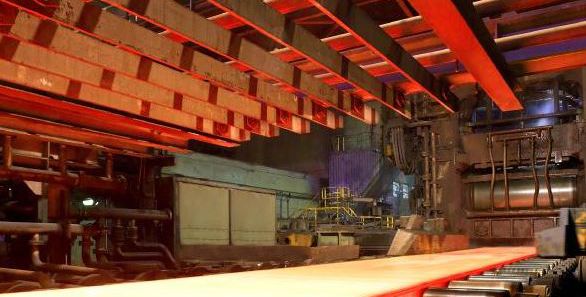
In partnership with German software company Smart Steel Technologies (SST), German steelmaker Thyssenkrupp has successfully launched an intelligent scheduling system designed to enhance automation, efficiency, and product quality in its modernized production network at Duisburg-Bruckhausen.
In partnership with German software company Smart Steel Technologies (SST), German steelmaker Thyssenkrupp has successfully launched an intelligent scheduling system designed to enhance automation, efficiency, and product quality in its modernized production network at Duisburg-Bruckhausen.
A new era in steel production
The new software solution automatically manages scheduling for one of Europe’s most advanced steel plant networks. This network includes:
- continuous casting line No. 4
- hot strip mill No. 4 (fully modernized)
- slab storage facilities
By integrating automation and fast-reactive scheduling, Thyssenkrupp Steel has significantly raised the level of production planning efficiency.
Collaboration with Smart Steel Technologies
The SST Scheduling System was developed and tested in close collaboration before being deployed into production. Project leaders highlighted the project as a “strong impetus for the digital future of the steel industry”.
Smart Steel Technologies will continue to handle both the maintenance and future development of the scheduling platform, ensuring long-term adaptability and technological upgrades.


EU and US finalize trade deal, agree on ring-fencing against global steel overcapacity
The US and the EU have agreed on a new framework on reciprocal, fair, and balanced trade, marking a significant step toward strengthening one of the world’s largest economic partnerships.
The US-EU trade agreement aims to expand market access, cut tariffs, and drive massive investments in energy, technology, and defense, while ensuring fair competition and secure supply chains, according to a joint statement issued by the two sides.
The US and the EU have agreed on a new framework on reciprocal, fair, and balanced trade, marking a significant step toward strengthening one of the world’s largest economic partnerships. The US-EU trade agreement aims to expand market access, cut tariffs, and drive massive investments in energy, technology, and defense, while ensuring fair competition and secure supply chains, according to a joint statement issued by the two sides.
Strategic importance
The US-EU economic relationship already supports $5 trillion in mutual investments. This new framework reinforces both sides’ commitment to strengthening supply chain resilience, boosting green and digital transitions and securing transatlantic economic security against non-market practices.
Key elements of the US-EU trade agreement
1. Tariff reductions and market access
EU has committed to eliminate tariffs on all US industrial goods, while the US has committed to apply the higher of either the MFN (Most Favored Nation) tariff rate or 15 percent tariff on EU-origin goods.
2. Section 232 tariffs and automobiles
US tariffs on pharmaceuticals, semiconductors, and lumber are capped at 15 percent. No Section 232 automobile or automobile parts tariffs will apply to EU goods covered with an MFN tariff of 15 percent or higher.
3. Steel, aluminum and market overcapacity
The US will impose a 15 percent import tariff on most EU products but 50 percent on EU steel, aluminum and their derivatives with the intention to consider working towards a TRQ for EU exports and ring-fencing against global steel and aluminum overcapacity.
According to the European Steel Association (EUROFER), a 15 percent tariff on all products means an additional huge burden on steel, as many EU exports are steel-intensive, such as machinery and vehicles. Commenting on the deal, Axel Eggert, director general of EUROFER, said, “The text remains vague, but we recognize the efforts undertaken by Commission President von der Leyen and Trade Commissioner Šefčovič to find a joint US-EU initiative on steel, aluminum and their derivatives. Work must start immediately to get back to preferential access for traditional EU steel volumes to the US as no deadline is set. Ring-fencing against global steel overcapacity means close alignment of the EU’s and the US’ import regimes. With the proposal in September for a new, highly effective trade measure replacing the EU steel safeguards, the Commission must now prove that they are willing to take bold action that aligns the objective of the EU Steel Action Plan to promote and protect domestic steel capacity and the objectives of the deal with the US.”
4. Energy and technology
- The EU intends to procure US liquified natural gas, oil, and nuclear energy products with an expected offtake valued at $750 billion through 2028.
- In addition, the EU intends to purchase at least $40 billion worth of US AI chips for its computing centers.
5. Investment and defense
- The EU companies will invest $600 billion in US strategic sectors by 2028.
- The EU will increase procurement of US defense equipment, strengthening NATO interoperability and transatlantic defense ties.

CBAM uncertainty is Northern Europe’s main steel price stimulus
Northern Europe’s steel mills and stockists fear that demand will not support an uptick in coil values before the end of 2025, with CBAM providing the market’s only price stimulus.
Despite recent interest rate cuts in the EU and United Kingdom, and positivity around the German government’s plans to invest in infrastructure and defence, sentiment has remained negative, this month.
MEPS’s prices were unchanged month-on-month in Belgium, France, Germany and the UK. This was despite two ArcelorMittal list price increases, totalling EUR50 per tonne.
Sales stalled and most mills implemented maintenance stoppages of two-to-three weeks during the summer holiday period. Some of Europe’s major steelmakers are implementing longer-term production cuts.
Domestic mills’ reduced output and increased offer prices may have mitigated a decline which has left Northern EU values at their lowest point this year. Buyers in France said that prices bottomed in mid-July, before rising moderately. They add that EU mills’ delivery lead times have lengthened to October or November for certain sizes of galvanised coils, possibly helping to stabilise prices of that product.
Importers’ uncertainty intensifies
Uncertainty around the cost of new CBAM taxes, from January 1, and the future of the EU import safeguard measures, are stifling the import market. All MEPS respondents in the EU expect these factors to be the main source of upward price pressure in the coming months.
German importers say that suppliers in Indonesia and South Korea are starting to offer “free on truck” delivery terms or offering to absorb the as-yet-unknown cost of CBAM taxes. Furthermore, hedging against CBAM is now being offered by certain European banks.
The UK government’s tightening of its import safeguard quotas has increased duties on galvanised coil, in particular. High volumes of galvanised coil are now sitting at UK docks, awaiting customs clearance in October.
Offers of Asian-origin hot rolled coil into the UK are around GBP50 per tonne cheaper than the EU equivalent. Furthermore, UK stockholders have high inventories of cold rolled coil.
Automotive sector in decline
Demand from high-margin projects has maintained sales for some stockists in Belgium and the UK. Generally, large projects are in short supply.
Northern Europe’s automotive sector is struggling amid reduced sales and intense competition from Chinese electric vehicles. Despite new EU import taxes, Chinese brands’ sales grew by 91% year-on-year in the first half of 2025, reaching 347,135 units, according to Jato Dynamics.
Eurofer expects EU vehicle production to decline by 2.6% year-on-year in 2025, following a 9.7% dip last year. UK car production was down 7.3% year-to-date, in June, at 385,810 units – its lowest level since 1953.
Steelmakers need coil prices to rise ahead of contract talks with automotive OEMs keen to make cost savings.

Germany approves carbon storage law to secure climate neutrality and industry
The German federal government has announced that it has approved a draft bill amending the Carbon Dioxide Storage Act (KSpG), significantly expanding the legal framework for carbon capture, transport, and underground storage (CCS). Until now, CCS projects in Germany were limited to research and pilot operations.
The German federal government has announced that it has approved a draft bill amending the Carbon Dioxide Storage Act (KSpG), significantly expanding the legal framework for carbon capture, transport, and underground storage (CCS). Until now, CCS projects in Germany were limited to research and pilot operations.
This amendment is considered a crucial milestone in Germany’s plan to achieve climate neutrality by 2045, while also safeguarding the country’s industrial competitiveness.
Why carbon storage is needed
Certain industrial emissions, particularly in steel, cement, and lime, cannot be fully eliminated, even with the latest low-carbon technologies. For these sectors, CCS is indispensable in reaching net-zero targets, the government stated.
Since CCS infrastructure requires seven to 10 years to build, the government stresses that projects must begin immediately to ensure facilities are operational by the early 2030s.
Expanded legal framework
A 2022 review of the KSpG confirmed that CCS and carbon capture and utilization (CCU) are required under Germany’s Federal Climate Protection Act (KSG).
The amendment now provides industries with:
- Legal certainty to justify long-term investments,
- A path to scale CCS from pilot projects to full deployment, only permitted if proven safe for health and the environment.
By laying the legal foundation today, Berlin aims to accelerate project development, ensuring infrastructure is in place to meet climate targets without eroding industrial strength.
Impact on the steel industry
SteelOrbis understands that the German government’s revised Carbon Dioxide Storage Act positions CCS as a necessary pillar for hard-to-abate industries such as steelmaking. While German steelmakers such as thyssenkrupp are testing CCU through projects such as Carbon2Chem®, and ArcelorMittal Germany is linked to cross-border carbon pipeline initiatives, no large-scale capture and storage project has yet been realized at steelworks. The new legal framework ensures that once steelmakers move beyond hydrogen-based decarbonization, they may have access to transport and storage infrastructure, making their pilot projects and infrastructure studies directly aligned with Berlin’s strategy.

Romania’s rebar prices stable, wire rod spot prices under pressure from weak demand
This week, Romanian rebar prices have remained stable as the country’s sole domestic producer and local traders have maintained their offers. In contrast, the wire rod segment has experienced a slight softening, reflecting slower demand.
The ongoing vacation period in Romania, combined with generally subdued activity across the EU, has kept the market quiet. However, with September approaching and the new quota period on the horizon, some interest and unconfirmed deals have emerged this week, particularly involving Romanian buyers sourcing from Turkey.
In the domestic market, ex-works offers from the sole rebar producer have held firm at €585-590/mt, while retail prices across Romania have remained unchanged, at €580-595/mt ex-warehouse.
Conversely, wire rod traders, responding to softer demand, have slightly reduced offers to €575-585/mt ex-warehouse, down from €580-590/mt reported in the previous week.
In the import market, activity has begun to increase as the new EU quota period approaches and the summer vacation period concludes. According to market sources, Romanian buyers have expressed interest in rebar and wire rod from Turkey, with indicative levels of $530-545/mt FOB, although purchases remain unconfirmed. Turkish mills currently quote export offers at $535-550/mt FOB, which, at an exchange rate of €1 = $1.16, correspond to €475-490/mt CFR for delivery to Romania, in line with the previous week. Other non-EU suppliers, such as Egypt, have maintained stable offers for October shipments, with rebar priced at €485-490/mt CFR and wire rod at €495-500/mt CFR. Within the EU, Bulgaria has slightly reduced offers to €595-605/mt CPT, down from €600-610/mt CPT, for September-October shipments. Additionally, Moldova has entered the market this week, offering rebar at €590-600/mt CPT.