

Italian steel production continues to increase
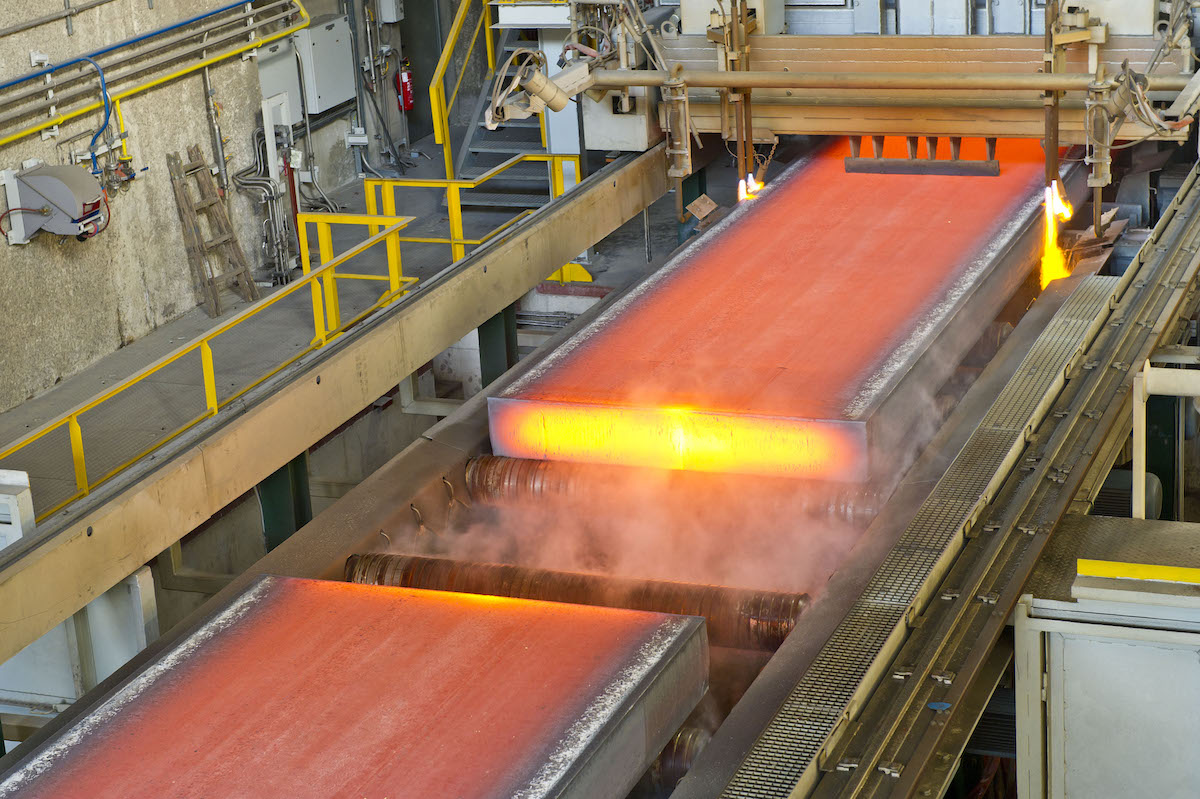
Italian crude steel production increased again in April following a hike in March and in the first quarter, industry association Federacciai says in a note obtained by Kallanish.
April production hiked 6% on-year to just over 1.7 million tonnes. Output in the first four month of the year also increased, by 3.8% on-year, to 7.3mt.
“The improved trend has involved the two families of hot re-rolled products,” Federacciai states. Flat steel production increased by 13.3% to 817,000t in April and by 10.5% to 3.3mt in January-April. Longs output increased 6.5% to 1mt in April and by 0.9% to 4.1mt in the first four months.
Italian production has continued to decline in recent years, falling by 5% on-year in 2024 to 19.9mt, by 2.5% on-year in 2023 to 21mt and by 11.5% y-o-y in 2022 to 21.6mt.
Natalia Capra France


Polish rebar price drops on slow demand; wire rod values stable on lower supply
“The situation is worse with rebar than with wire rod, because rebar supply is not limited [in contrast to wire rod] while demand is low, thus producers are forced to sell at any price,” a buyer source told Fastmarkets.
The long steel market mood in Poland has also shown signs of depression lately due to cheaper European scrap prices.
Over the week to Friday, some Polish mills reported selling their rebar at 2,580 zloty ($682) per tonne CPT, a source said. During the preceding week, however, estimations of the workable market level were at 2,600 zloty per tonne CPT.
While offers for rebar hovered around 2,600-2,640 zloty per tonne CPT during the week to Friday May 16, deal prices were heard at 2,580 zloty per tonne CPT during our latest assessment published on May 23.
Additionally, offers hovered around 2,580-2,600 zloty per tonne CPT the week to May 23.
Fastmarkets’ weekly price assessment for steel reinforcing bar (rebar) domestic, cpt Poland was 2,580-2,600 zloty per tonne on Friday, falling from 2,600-2,650 zloty per tonne on May 16.
However, a distributor source said that they believe prices for rebar steel have bottomed out.
Wire rod
The prices for Polish domestic low-carbon drawing quality wire rod remained stable in the week to May 23, sources told Fastmarkets.
Market participants indicated that workable prices were 2,750-2,850 zloty per tonne CPT in the week to Friday
Fastmarkets’ price assessment for steel wire rod (drawing quality), domestic, delivered Poland was also 2,750-2,850 zloty per tonne on Friday, unchanged week on week.
Some import prices were heard at €580 ($648) per tonne, DAP border, and hovering around €595-620 per tonne CPT.
Marina Shulga in Dnipro, Ukraine, contributed to this report


EUROMETAL at Belmetal Steel Warriors 2025 closing event in Deinze
On Friday, 23 May 2025, EUROMETAL was proud to participate in the Steel Warriors closing event, organised by Belmetal at the Brielpoort in Deinze.
This unique initiative brought together 14 school classes from across Flanders and Wallonia, as part of the national competition Steel Warriors – powered by Belmetal. Over the course of the school year, students worked in teams to develop creative steel-related projects, present them to a jury, and promote them on social media.
The final event celebrated the students’ dedication, talent, and teamwork, culminating in the awarding of “The Drop”, specially designed trophy by artist Kevin Oyen, to the winning team.
EUROMETAL congratulates all participants and applauds the efforts of Belmetal — particularly President Vanessa Espeel and Managing Director Dominique Laurent — for their commitment to promoting steel among younger generations.
Initiatives like these are essential for building bridges between education and the steel industry, and for inspiring the next generation of talent in our sector.


EUROMETAL’s participation also offered a valuable opportunity to engage with Belgian steel distributors and event partners, further strengthening ties with the national steel distribution community.

EUROMETAL gathers Flat SSC leaders in Hamm to tackle industry challenges
Last thursday, EUROMETAL brought together 35 participants from leading German-speaking Flat Steel Services Centres companies in Hamm for a key meeting of the “SSC Arbeitskreis”. The event focused on the strategic challenges ahead for the sector.
The session was opened by Arbeitskreis Chairman Thomas Niederhofer (Knauf Interfer) and Head of Sales Automotive Bernd Tremmel (Becker Stahl-Service), who warmly welcomed the group.
The agenda covered essential topics including a compliance briefing by Alexander Bartsch (Henseler & Partner), an overview of the current challenges in the EU steel market by Alexander Julius (EUROMETAL), and legal insights on CBAM, embargoes, sanctions, and customs duties from Lars Hillmann (Cattwyk).
Stefan Grüll (S1Seven) introduced the role of digital mill certificates in supporting sustainability traceability across the steel supply chain.
Thomas Niederhofer (EUROMETAL) also shared the first ideas from the working group on cargo securing for vertically loaded slit coils.
EUROMETAL President, Alexander Julius emphasized the unknown variables in CBAM, urging companies to factor these into contracts and negotiations for 2026. He also highlighted EUROMETAL’s ongoing advocacy to ensure steel derivatives are properly included in CBAM taxation, and safeguard measures.
The day concluded with a guided visit to Becker Stahl-Service GmbH in Bönen.
These are decisive times for our industry. EUROMETAL will continue to be a strong voice to shape the path forward — with and for our members.


Iberdrola supplies renewable energy to Tubos Reunidos
Spanish seamless tube supplier Tubos Reunidos (TR) has signed a long-term power purchase agreement (PPA) with Iberdrola to power its production facilities in Álava and Biscay with renewable energy, Kallanish learns from the energy provider.
Under the agreement, Iberdrola will deliver 120 GWh of electricity, sourced from nearly 10 MW of its solar photovoltaic portfolio, to support the production of TR’s low-emissions O-Next seamless steel tubes.
“We are undergoing a continuous improvement process involving the entire organisation to ensure our processes and products are increasingly sustainable,” says TR executive chief Carlos López. “This agreement advances our strategy to drive industrial decarbonisation, enabling a green value chain and supporting climate neutrality.”
Iberdrola notes that the partnership highlights its role in electrifying industry, helping TR adopt and scale sustainable solutions in seamless tube manufacturing.
“Iberdrola España and Tubos Reunidos Group share a firm commitment to building a more sustainable and efficient future,” commentss Iberdrola’s customers director, David Martínez. “Collaborations like this are key to supporting renewable development and accelerating the energy transition in the industrial sector.”
Tubos Reunidos became the world’s first producer of seamless tubes with zero CO₂ emissions, having already delivered 2,000 tonnes of O-Next product to clients in Europe and the US (see Kallanish passim).
Todor Kirkov Bulgaria

Thyssenkrupp to install line for medium-wide strip
Thyssenkrupp Steel is planning to convert a continuous casting line at its Duisburg-Nord site amid changes to its offtake supplies for medium-wide strip steel.
A divider is to be installed, which will make it possible to cast the required narrow slabs, it explains. The necessary investment funds in the high double-digit million range have already been approved.
The steelmaker recently announced it will terminate the offtake of supplies from HKM after 2032.
The steelmaker has sourced narrow slabs produced by Duisburg mill HKM (Hüttenwerke Krupp-Mannesmann) to roll them at its Hohenlimburg site to medium-wide strip of 600mm width, used by automotive and other industrial customers.
According to a seasoned industry observer, medium-wide strip in the past used to be produced by various EU steelmakers. This has been widely replaced by normal-width strip, which is then slit into narrower strip.
“Making medium-wide strip with dedicated technology takes more effort, but it has advantages,” he tells Kallanish. For example, higher pressure can be exerted to roll harder steels with a higher carbon content, he says.
A spokeswoman at tk Steel concurs and notes that the final products are often small in terms of tonnage, but with tight tolerances when it comes to small precision parts, like blades, or certain parts used in cars.
Thyssenkrupp Steel is the only European steelmaker left to produce medium-wide strip on bespoke facilities, she says.
Christian Koehl Germany

EU Parliament approves proposed CBAM simplifications
The European Parliament (EP) has approved proposed simplification changes to the Carbon Adjustment Border Mechanism (CBAM), Kallanish learns.
The changes, first proposed by the European Commission in February, as part of its Omnibus simplification package, include a new lower 50-tonne threshold. While the changes remove 90% of small companies from being liable for the carbon tax, the vast majority of steel companies remain within the scope.
Now approved, EP will move to finalise amendments with the European Council on the regulation.
Despite these changes being approved, Belgium-based climate think tank Sandbag and steelmakers’ association Eurofer have separately released statements calling for further changes.
Sandbag has released a position paper outlining reasons why CBAM should be extended horizontally to more products and vertically to include key precursors such as coke, lime and ferro-silicon, alongside international transport emissions. It says this is essential to close remaining emissions gaps.
This expansion is also needed to support the phase-out of free allocation under the EU Emissions Trading System (EU ETS), which currently fails to incentivise decarbonisation in the EU, it adds.
It has also called for scrap to be included within CBAM’s scope.
Eurofer meanwhile notes CBAM remains full of loopholes that need to be fixed. Failure to do this risks undermining decarbonisation investments, accelerating deindustrialisation, favouring production in third countries, and failing to cut global emissions.
It has created a toolbox on how to fix these loopholes. This includes keeping free allocation for exports to avoid carbon leakage in global markets. It notes that 70% of EU steel exports go to countries with no carbon pricing, therefore making European steel uncompetitive.
Other calls include extending CBAM to steel-intensive downstream goods with a simplified emissions calculation system for complex products.
Additionally, it says the origin of CBAM goods must be set where the steel was melted and poured.
It also notes a loophole where steel-intensive goods such as car components, machinery and household items can be imported without paying any carbon price, which puts EU producers of these products at a disadvantage.
Carrie Bone UK

US eyes 50% tariff on EU-origin imports
US President Donald Trump has threatened 50% tariffs on imports from the EU, Kallanish learns.
On Friday, he wrote on the Truth Social platform that the US has an “unacceptable” $250 million trade deficit with the bloc and discussions between the two parties “are going nowhere”.
“I am recommending a straight 50% tariff on the EU, starting on 1 June 2025,” Trump said. “There is no tariff if the product is built or manufactured in the US.”
Maroš Šefčovič, the European Commissioner for Trade and Economic Security, told reporters that he participated in a phone call with US trade representative Jamieson Greer and commerce secretary Howard Lutnick later Friday. Šefčovič emphasised to the US participants that Europe intends to continue working toward a resolution that is satisfactory for both parties.
In televised remarks, US treasury secretary Scott Bessent said the new 50% tariff proposal should serve as a catalyst for more serious concessions from Europe. Trump’s new threat arrived in the aftermath of meetings of the G7 finance ministers in Canada.
“The president believes the EU’s proposals have not matched the quality of offers we’ve seen from other key partners,” Bessent said. “I would hope this would light a fire under the EU.”
Last month, Washington imposed a “reciprocal” tariff of 20% on the EU, but it was reduced to 10% until 8 July to allow for negotiations. The bloc is currently subject to a 25% duty on cars, certain auto parts, light trucks, steel and aluminium, plus a 2.5% tariff on EU-made cars.
Since launching sweeping tariffs on all of its trading partners, the US has signed agreements to ease trade tensions with the UK and China.
Dom Yanchunas USA , Giulia Bottaro

European steelmakers join new green-procurement coalition “Buy Better to Build Better”
Notable steelmakers, steel trade associations and construction firms have launched the Buy Better to Build Better (BBBB) coalition at an event at the European Parliament in Brussels, Kallanish learns.
This initiative is designed to enhance green public procurement practices across Europe. Members of the coalition include steel recycling trade association Euric as well as Italian steelmakers Ori Martin and Riva Group.
The BBBB manifesto suggests that Europe should adopt a more streamlined procurement strategy, integrating criteria aimed at stimulating demand for low-carbon products and circular construction solutions. In a note, the coalition proposes a revision of EU public procurement directives featuring “coherent and horizontal procurement rules beyond lowest price, simpler and standardised EU-wide tracking of GPP [and] continued support for public authorities in implementing GPP effectively.”
Because the purchasing power represents 15% of the bloc’s GDP, if used effectively, “it will accelerate the industrial transition while advancing European competitiveness.”
Over 50% of public contracts within the EU are allocated primarily on the basis of the lowest price, disregarding factors such as quality, innovation and sustainability. A revision of the EU public procurement directives has the potential to establish sustainable procurement as a standard practice, enabling the rapid scaling of green and innovative solutions across Europe. Increasing the production of sustainable products is likely to lead to a reduction in their prices, improving affordability and competitiveness within the market.
The construction industry, where public procurement makes up 31% of overall expenditure, would be most affected. Eurostat indicates that public procurement accounts for no less than of 11% of the total greenhouse gas emissions within the EU.
“The construction and steel industries are at a crossroads. This coalition represents a key opportunity to accelerate meaningful change by advancing construction and public procurement practices that prioritise truly low-carbon and circular materials, based on clear and objective criteria,” Riva Group comments.
According to Carlo Beltrame, chief business development officer for Italian steelmaker AVF Beltrame, the very first premium for green steel will originate from the public sector. There will be an increase in green public procurement, which will mandate the purchase of carbon neutral steel.
“Over the next two years, several things will change … From the steelmaking point of view, but also from the financial institutions perspective, we will start to see a heightened sensitivity towards embedded emissions,” Beltrame told Kallanish in a recent interview.
At present, there is no premium or reward mechanism in place for those who invest in low-carbon steel production. The market for green steel is in its early stages of development, although demand is projected to rise over the next two years.
Natalia Capra France
Trump, USS say ‘partnership’ deal reached with Nippon
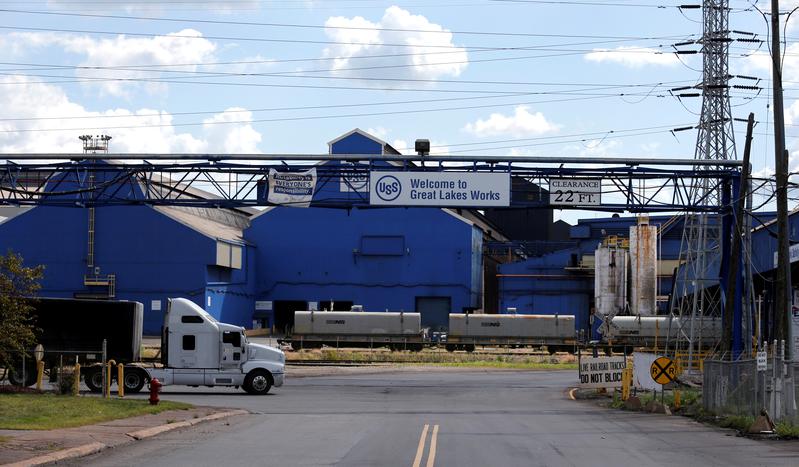
US President Donald Trump says Nippon Steel and US Steel, who had been attempting to merge for 17 months, will form a “partnership.”
In a social media post on Friday afternoon, Trump hailed the milestone as welcome news for Pittsburgh, Pennsylvania-based US Steel and for American industry overall. The president did not explain whether Japan’s Nippon is acquiring US Steel, as per the companies’ original agreement, or pursuing some other type of venture.
“This will be a planned partnership between United States Steel and Nippon Steel, which will create at least 70,000 jobs, and add $14 billion dollars to the US economy. The bulk of that investment will occur in the next 14 months,” Trump contends in his post on Truth Social.
US Steel confirms that an arrangement is occurring, also using the word “partnership” but similarly offering no details, Kallanish notes.
US Steel “will remain American, and we will grow bigger and stronger through a partnership with Nippon Steel that brings massive investment, new technologies and thousands of jobs over the next four years,” the takeover target says in a brief statement.
Nippon Steel in December 2023 agreed to acquire US Steel for $14.9 billion in cash (see Kallanish 19 December 2023) but has been thwarted at every turn by federal reviews on national security grounds.
Both President Joe Biden and Trump repeatedly stated that they opposed foreign ownership of the iconic 124-year-old Pennsylvania steelmaker, which was once the most valuable company in the world. Since his second presidential term started, Trump consistently has said he would prefer that Nippon make an investment in US Steel rather than own it outright (see Kallanish 10 April).
Trump mentions that he will visit Pittsburgh on 30 May for a “big rally” celebrating the agreement.
Some financial market participants interpreted the announcement as approval of the full acquisition. US Steel’s stock jumped more than 20% in late Friday trading to $52/share, approaching Nippon’s longstanding cash offer of $55/share.
The $14 billion investment figure cited by Trump matches Nippon’s most recent promise conditional upon the Japanese company being allowed to own US Steel (see Kallanish 19 May). A few days ago, the Committee on Foreign Investment in the United States issued its second report on the proposed merger.
How 70,000 jobs will be created also is unexplained. US Steel employed approximately 22,000 people as of 2024, according to its government filings.