


Euro area construction output up 0.1 percent in March from February
According to first estimates released by Eurostat, the Statistical Office of the European Union, in March this year the seasonally-adjusted production of the construction sector in the European Union member states (EU-27) increased by 0.1 percent compared to February and decreased by 0.7 percent compared to the same month of 2024. In February, production in the construction sector had moved down by 1.1 percent month on month.
In the euro area, the seasonally-adjusted production of the construction sector in March went up by 0.1 percent month on month and down by 1.1 percent year on year. In February, production had decreased by 1.2 percent month on month.
Building construction in the EU-27 in March moved up by 0.8 percent month on month and down by 1.6 percent year on year, while civil engineering output in the region increased by 2.5 percent month on month and increased by 0.8 percent year on year. In the euro area, building construction was up by 0.9 percent month on month and down by 2.9 percent year on year, while civil engineering output in the region rose by 4.1 percent month on month and by 0.8 percent year on year.
As compared to February, construction output in March increased by 5.9 percent in Austria, by 4.6 percent in Romania, and by 3.5 percent in the Czech Republic, while it decreased by 4.3 percent in Portugal, by four percent in Slovenia and by 3.7 percent in Poland.
As compared to March 2024, construction output in March this year increased by 12.0 percent in the Czech Republic, by 8.8 percent in Bulgaria and by 7.4 percent in Austria, while it decreased by 11.6 percent in Slovenia, by 6.6 percent in Belgium and by six percent in Spain.


US tariffs hit EU stainless longs market
The European market for stainless long steel, including wire rod, bars, and other niche products, is experiencing a persistent decline, with prices reaching their lowest levels in recent years, according to supplier sources.
Two mill executives indicate
In response to contracting consumption, Europe is experiencing what can be characterised as “a new normal”, with mills adjusting their operations by idling equipment for several days each month to align with current demand levels. The stainless longs segment is going through “a recessive phase, not only in Europe but also in the US and Asia”, another northern European mill source comments.
US tariffs are significantly affecting producers in both Asia and Europe. Asian material supply, particularly from China and India, is currently experiencing a shift in direction towards Europe. EU quotas are effectively curbing robust Asia-origin supply but are not entirely halting the flow of material into the market, which “remains huge”, the source adds.
One mill reports ongoing sales in the US; however, US customers have prudently scaled back their orders, opting to purchase only what is essential to mitigate the impact of tariffs. EU mills are believed to have lost about 30% of their sales to the US as a consequence of tariffs.
The EU safeguard revision has proven to be ineffective for the European stainless longs sector. There has been a lack of action at European level to safeguard the segment from significant imports, which is largely attributed to influential lobbying by buyers.
End-user sectors have reported declining longs consumption over the past year. The US oil and gas sector has curtailed investment. One source indicates the current demand driver in Europe is the defence sector, which is anticipated to sustain its momentum due to projected capacity enhancements.
Questioned about potential projections for recovery, both sources concur “there is no outlook”. Certain macroeconomic developments might nevertheless lead to favourable outcomes for the market, including the resolution of the Russia-Ukraine conflict.
European mills are adopting a long-term perspective, navigating challenges using strategic cost management, while simultaneously pursuing investments focused on vertical integration and expansion. The strategy, which has also been adopted by some European flats producers, seeks to mitigate businesses’ exposure to the cyclical dynamics of the steel industry while diversifying production.
Coil producer Aperam has purchased US specialty steel producer Universal Stainless & Alloy Products as part of its strategy to enhance market position, expand geographic footprint, and diversify product offering. It is targeting high-growth sectors, including aerospace and industrial applications.
At its Imphy site in France, the Luxembourg-based producer is doubling capacity and boosting wire rod supply, serving the aerospace, automotive, and welding consumables industries.
Italian longs producer Cogne Acciai Speciali, a subsidiary of Walsin Lihwa, also intends to strengthen its position in the special steel industry by boosting its portfolio and expertise in the global market. The steelmaker recently expanded its operations by acquiring ComSteel Inox, its main stainless steel scrap supplier, and a portion of Outokumpu’s long products business in Degerfors and Storfors, Sweden (see Kallanish passim).
Cogne and Walsin’s growth strategy focuses on increasing market share in Europe and Asia while enhancing the group’s presence in the US market.
Natalia Capra France


Heavy steel plate prices in Europe pulled down by low demand, high stocks
Market participants also expressed concern about the future effects of US import tariffs on the European steel markets with trade negotiations continuing.
Italy
Steel heavy plate prices fell in the latest pricing session, with the market “under pressure from low demand” and limited buying, market sources said.
Fastmarkets’ weekly price assessment for steel domestic plate, 8-40mm, exw Southern Europe, was €620-630 ($703-714) per tonne on Wednesday, down by €10 from €630-640 per tonne on May 14.
“Some Italian re-rollers have lead times as short as just 10 days [because] they need to fill order books,” a trader source said.
Deals were reported at €620-630 per tonne.
New import orders into Southern Europe have been “minimal” due to high stocks of both domestic and imported plate, available at low prices with short delivery times.
Northern Europe
In Northern Europe, the domestic commodity-grade steel heavy plate market widened downward, despite plate mills targeting higher prices, trade sources said.
A German mill was heard selling plate at €700 per tonne from one location and at €670 per tonne from another.
Fastmarkets’ weekly price assessment for steel domestic plate, 8-40mm, exw Northern Europe, was €660-700 per tonne on Wednesday, widening downward by €10 per tonne from €670-700 per tonne a week earlier.
“Customers are still only purchasing what they urgently need to continue their ‘commodity grade’ business model,” a second trade source said.
Headded that more consistent business was seen in other speciality sectors of the steel plate industry – for example, in products used for offshore foundations or monopiles for offshore windfarms, with the delivery times for such speciality products having been extended.


Nordwest lifts steel revenue in first quarter
Nordwest Handel, one of two big purchasing cooperatives for steel, hardware and household technology in Germany, lifted steel segment revenue in the first quarter by 8% on-year to €393 million ($447m).
The organisation attributes the strong increase to higher prices in comparison with Q1 2024, but also to a higher tonnage sold, which it does not specify. Nordwest handles roughly 1 million tonnes/year of steel.
Despite weak construction activity, it lifted import volumes and forged new partnerships with suppliers, Kallanish understands. Nordwest is a partner in the pan-European purchasing cooperative Astedis. It however maintains that 2025 will remain a difficult year for steel distribution, on account of the critical construction sector weakness.
The Q1 increase was foreshadowed by sales growth of 4.4% in the second half of 2024. However, full-year 2024 remained below the preceding year by a considerable 11%, with sales of €1.509 billion, due to a drop in demand and prices, Nordwest says.
Christian Koehl Germany

Fives installs combustion system at Megasa’s SN Maia
Technology supplier Fives tells Kallanish it has completed the upgrade of the combustion system at Megasa’s SN Maia Siderurgia Nacional Maia plant in Portugal.
The oxygen enrichment project, carried out on an existing billet reheating furnace, included new technology aimed at reducing natural gas consumption. The upgrade also involved the potential for on-site oxygen production, lowering operational costs.
The so-called PREMIX equipment injects additional oxygen into the combustion air duct upstream of the burners. This process increases oxygen levels to 25%, resulting in around 6% fuel savings.
The technology was entrusted to Fives’ Spanish unit, which had previously modified the combustion system of the same furnace.
“By introducing additional oxygen, we are improving combustion, which allows for higher temperatures without increasing fuel usage. This contributes to cost savings and lower CO₂ emissions,” explains Fives Spain’s research & development manager, Oiane Gerrikagoitia.
The technology was designed to be easily integrated and have minimal impact on production.
“We were able to perform the majority of the installation while the furnace was still running, ensuring that production continued smoothly and without significant delays,” adds Koldobika Tafalla González, technical director at Fives.
SN Maia is the largest rebar production plant operated by the Megasa Group.
Todor Kirkov Bulgaria
UK Steel welcomes linking with EU carbon markets
Industry association UK Steel has welcomed the agreement by the EU and UK to work towards formally linking their Emissions Trading Systems (ETS), as well as to improve the EU quota for UK sections, Kallanish notes.
It says this will enable better access to the UK’s biggest export market, with 75% of UK steel shipments going to the EU, worth nearly £3 billion ($4 billion) annually. It points out it has advocated the linking of the carbon markets since 2019, noting the UK’s minimal size and illiquidity.
The move will exempt UK steel exports to the EU from Carbon Border Adjustment Mechanism (CBAM) costs and administrative burdens.
“We understand that the improved EU steel quotas will relate to arrangements in relation to the EU’s steel safeguards, which will ease export restrictions for steel angles and heavy sections,” its statement notes.
The European Commission says the EU and the UK agreed to safeguard historic tariff-free trade in steel products under category 17. The EU will thus make a legislative proposal for a country-specific quota for UK steel in category 17 – angles and sections – under the current safeguard.
Without linkage or the improved market access in place, UK producers faced the prospect of increased trade friction, UK Steel notes. EU importers would have had to pay CBAM levies and face tight safeguard quotas on UK steel products – costs that would likely be passed back to UK exporters or result in lost market share.
Gareth Stace, director general at UK Steel, says: “UK Steel welcomes the formalised plan to link the UK and EU Emissions Trading Schemes and new, improved market access. This will be a significant step in reducing trade frictions in steel with the EU, our biggest export market, by ensuring equivalent carbon costs and easier exports. It also eliminates the risk of costs from the EU Carbon Border Adjustment Mechanism, where the burden particularly falls on SMEs.”
“Crucially, linking the schemes lowers costs for the sector and provides long-term security, particularly if UK ETS prices were to exceed those in the EU in the years ahead, making linkage all the more important for competitiveness,” he concludes.
Carrie Bone UK
Overcapacity weighs on Italian stainless flats
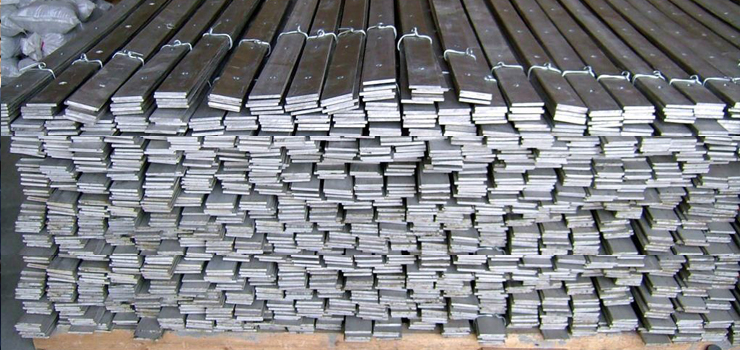
May has seen a continued decline in demand in the Italian stainless flat steel market, participants tell Kallanish.
The performance of the coil, tube and sheet markets indicates a persistent state of low sales volumes and pricing pressure. Organisations are indicating reduced order volumes, quicker lead times, and a generally pessimistic forecast. Downstream companies are experiencing significant financial difficulties.
“It is quite challenging to avoid operating in the negative [margins],” states a service centre representative.
Northern European service centres share this view. Prices are falling faster in Italy than in northern Europe, making the situation graver. In comparison to northern European coil and sheet, Italian pricing is approximately €30-50/tonne ($33-56/t) lower.
“Today, we cannot cover costs as we’re receiving cold rolled coils at €2,400/t and over,” the Italian service centre source comments.
A local stainless steel processor notes the substantial supply across the value chain in contrast to the notably weak demand for flat products. The influx of Asian coil being received in the upcoming weeks is likely to exert additional pressure on stock levels and reduce buying of domestic coil.
CRC prices in Italy are at an average of €2,300/t delivered. Steel processors are currently receiving CRC previously bought at a price of €2,400/t delivered and are selling sheet within the range of €2,500-2,550/t.
Hot rolled coil with rough edges is currently set at €2,100/t delivered.
“The market is compromised until August,” the steel processor believes.
Meanwhile, a European mill source also expresses a negative outlook but anticipates that in the latter half of 2025, the market may see fewer imports, due to the start of CBAM on 1 January 2026.
He sees higher stock levels, particularly in Italy. Declining profitability and decreasing prices are hindering processors’ ability to protect the value of their inventory. The Italian processors and mill source note that prices are stable in China and agree that Europe should see some improvement by September or October.
According to Italian steel trade association Assofermet’s latest market note, the oversupply is hindering the anticipated recovery in price levels.
“The limited lead times observed among European producers indicate a lack of depth in their order books. The first-quarter financial results from the main continental producers indicate negative results, which further restricts the potential for price reductions, even in light of the market’s current weakness,” it states.
Mills in Europe are decreasing their prices for June and July delivery. From the high point of the range recorded recently, EU stainless coil values have experienced a decline of over €100/t, while order books continue to face significant pressure (see Kallanish 20 May).
Natalia Capra France

UK and EU reach new deal to set out post-Brexit relations
The Prime Minister’s Office of the UK has announced that the UK and the EU have reached a new deal aimed at setting out post-Brexit relations following extensive negotiations over the last six months. The deal will support UK businesses and jobs, the Prime Minister’s Office said.
In addition, the UK’s steel exports will be protected from the new EU rules and restrictive tariffs, through a bespoke arrangement for the UK, resulting in £25 million savings per year for UK steel exporters. Around 75 percent of UK steel exports go to the EU, a market worth nearly £3 billion.
Meanwhile, closer co-operation on emissions through linking the respective UK and the EU Emissions Trading Systems will improve the UK’s energy security and prevent businesses being hit by the EU’s carbon tax due to come in next year.
“It’s time to look forward. To move on from the stale old debates and political fights to find common sense, practical solutions which get the best for the British people,” Keir Starmer, the UK prime minister, commented.
Gareth Stace, director general of the UK-based trade association UK Steel, said, “UK Steel welcomes the formalized plan to link the UK and EU Emissions Trading Schemes and new, improved market access. This will be a significant step in reducing trade frictions in steel with the EU, our biggest export market, by ensuring equivalent carbon costs and easier exports. It also eliminates the risk of costs from the EU Carbon Border Adjustment Mechanism, where the burden particularly falls on SMEs. Crucially, linking the schemes lowers costs for the sector and provides long-term security, particularly if UK ETS prices were to exceed those in the EU in the years ahead, making linkage all the more important for competitiveness.”

Cleveland-Cliffs CEO tells automakers to shop for steel at home
Gonçalves stood before 1,500 delegates at the Great Designs in Steel Conference on Wednesday May 21 in Novi, Michigan, and chided some automakers for sourcing material – particularly steel – from overseas and for allowing light vehicle import penetration to creep above 50%.
“You created the issue – time to fix it,” he said.
Gonçalves praised domestic steelmakers’ ability to meet demand domestically. Cleveland-Cliffs, in particular, has underutilized capacity, “and we have the ability to grow fast.”
“We have the capacity to supply the steels,” he said. “Engineers, your bosses haven’t been good to you when they move production outside of your country.”
Global supply chains for basic materials like steel might have had a cost advantage at one point, but efforts by the second administration of US President Donald Trump are necessarily chipping away at those in favor of domestic production, Gonçalves said.
“The steel industry and the auto industry, it’s our job to…understand what kind of self-inflicted wounds we are creating for ourselves if we don’t accept this basic truth.”

French steel prices hold steady
French steel prices remain largely unchanged, even in the face of significant declines in scrap values observed in May. Uncertainty persists across the value chain and pressure on margins is leading to financial difficulties, Kallanish notes.
Market participants anticipate a slight decline in prices prior to the summer season. A large buyer says he is not expecting substantial restocking before the summer holiday due to slow demand. Aggressive selling at low prices is being observed downstream, resulting in a competitive environment for both long and flat steel markets.
A buyer in the southern region indicates a sluggish market characterised by competitive pricing. This is attributed to lower offers from Italian and Spanish producers who have a limited presence in the northern French market.
Domestic sections and merchant bar prices remain mostly flat this month. First category beams are at €780/tonne ($877) delivered, while domestic merchant bar prices in France are observed at €245-250/t base delivered, with effective prices, inclusive of size extras, at €665-670/t delivered. Beam producers in both northern and southern Europe are said to have enough orders.
The domestic rebar market is also flat, with values hovering at €640/t delivered on average, sources suggest.
Natalia Capra France