

Liberty Magona attracts several suitors
The Cgil e Fiom unions, which represent 500 workers at Liberty’s Italian re-rolling facility Magona, in Piombino, are requesting that the government ensure the procurement of hot rolled coil in order to recommence production.
The facility is producing very low volumes as a result of temporary layoffs and the absence of HRC feedstock. According to sources with knowledge of the situation, 16 organisations, including foreign funds and steel companies, have expressed interest in acquiring the Magona plant.
Unions are asking the Ministry of Enterprises and Made in Italy (MIMT) to negotiate a supply agreement with Magona’s conventional suppliers, including Acciaierie d’Italia (ADI). Although Magona has ordered 110,000 tonnes of HRC from ADI, only 53,000t has been delivered, a union note obtained by Kallanish says.
Magona’s union representatives met with the MIMT in Rome earlier this week as the sale of the troubled re-roller is currently being supervised by the Italian government. The process, however, is still in a preliminary phase, with the submission of binding offers expected to start in November.
Liberty Steel intends to sell Magona, its Belgian facility in Liege, and Dudelange in Luxembourg. In May, it initiated a strategic assessment of its downstream steel plants in western Europe in response to expressions of interest from multiple parties. The objective was either to establish partnerships through long-term HRC feedstock supply contracts or to divest the units.
The businesses have a combined rolling capacity of more than 2.5 million tonnes/year. Liège and Dudelange produce galvanised HRC, while also offering tinplate for packaging and black plate as a substrate for tinplate. Dudelange is also the sole European producer of Aluzinc. Magona has a long heritage and well respected pre-painted PPGI brand, with its own port access at the plant.
Natalia Capra France

Liberty submits lease offer for Czestochowa
Liberty Steel has submitted an offer for the lease of the Czestochowa plate mill through fully-owned subsidiary Poviglio sp. z.o.o. The offer incudes providing the immediate funds needed to pay outstanding bills and employees’ September salaries.
Bankruptcy proceedings against Czestochowa were resumed in September after a brief pause. Besides bidding to lease the plant, Liberty is appealing the proceedings. The group said last month Czestochowa’s creditors had approved the firm’s restructuring plan (see Kallanish passim). It is awaiting the court’s decision on whether to approve the plan or continue with the selection of a new lessee.
“This [leasing] commitment would protect the value of the company’s assets, avoid the mortgaging of the business’s assets and any potential degrading the creditor position,” a Liberty Steel spokesperson says. Liberty claims it is “the only potential lessee of the steelworks which fully understands the complexities of protecting and maintaining this plant and its machinery before the full onset of winter”.
The lease would be delivered by a new management team, headed by Tomasz Sęk, which is composed of seasoned Polish professionals with extensive experience in leading restructuring processes, Liberty notes.
“Once a responsible staged restart is complete, the plant’s new management team sees significant future opportunities for sales growth given that Czestochowa is the only producer of lower carbon, emissions EAF-based heavy plates in the EU,” says Liberty Steel Europe chief executive Thomas Gangl. “We hope that the Trustee confirms our offer as soon as possible so that we can get into the plant and start restoring its machinery to operational effectiveness before the start of winter.”
Czestochowa’s administrator has been searching for a lessee to take over the plant since it initially entered bankruptcy in July. Multiple firms are in the running, including Metinvest and Weglokoks. Czestochowa idled production last year under Liberty’s management.
Adam Smith Poland

Germany’s automotive sales rebound amid new incentives
Germany’s efforts to support its automotive industry, through new corporate incentives for electric vehicles, may have started to pay off, Kallanish reports.
Following a 69% collapse in all-electric (BEV) car sales in August, the government announced in early September it is strengthening e-mobility with tax improvements. Companies may benefit from a special depreciation allowance for BEVs and other emission-free vehicles, such as fuel cell electric vehicles (FCEVs). Purchases will be exempt from tax, starting at a rate of 40%, and be valid until December 2028.
Additionally, employees who use an electric company car for private purposes will be taxed at a reduced rate, with the cap on the vehicle price now expanded to €95,000 ($103,876), from €70,000 previously.
Data released by the Federal Motor Transport Authority (KBA) this week show BEV sales rebounded in September, rising by 8.7% year-on-year to 34,479 units. Registrations account for 16.5% of the new German car market. FCEV sales rose exponentially in the month, to 39 registrations.
“With the growth initiative, the federal government has set out to support the automotive industry and its employees in the e-mobility modernisation project,” the government says in a statement.
The move comes amid an ailing automotive industry, with rising concerns about weak demand, plant closures and other regulatory and macroeconomic headwinds. By helping the auto sector, Germany will also support growth in associated supply chains such as the steel industry.
In September, overall new car sales rose 6% y-o-y in Germany to 530,805 units. Plug-in hybrid (PHEV) registrations slipped 2.9%, while hybrid electric (HEV) sales increased 4.7%.
Car manufacturing also improved last month, with a total of 390,000 units coming off production lines, according to auto association VDA. The volume represents growth of 8.33% on-year and 25.8% on-month.
Tata Nederland sells Zeremis steel to Lindab
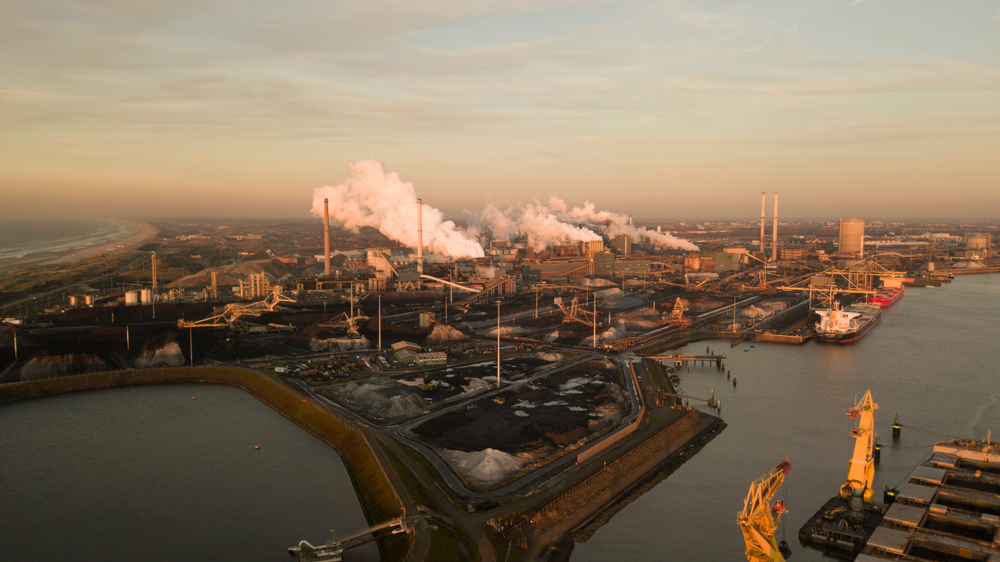
Tata Steel Nederland has entered a memorandum of understanding with another steel-using customer, Lindab, to supply its proprietary Zeremis green steel once the IJmuiden steelworks transitions to hydrogen-based steel production, Kallanish notes.
Lindab is a supplier of ventilation systems, with approximately 80-95% of its products’ environmental impact and around 50% of its total emissions coming from steel, according to Tata. Steel is however a material with many advantages for ventilation systems, such as a long lifespan, or resistance to fire. Lindab therefore wants to be part of the sustainable transition within the steel industry, Tata points out.
“We have a decades-long lasting relationship with Lindab, and they have always been at the forefront of developments in the market,” says Stefan Landesz, director commercial business unit Colors at Tata Steel Nederland.
Earlier this year, Lindab extended an existing agreement for the supply of emission-reduced steels with H2 Green Steel, which has since been renamed to Stegra (see Kallanish 24 May).
Christian Koehl Germany

ArcelorMittal announces higher offer prices for long steel in Europe: sources
The company has made the move to offset increasing production costs, Fastmarkets understands.
Sources said the new prices were effective immediately and follow last week’s announcement of a similar hike in ArcelorMittal’s European flat steel prices.
But the long steel market in Europe has been struggling in recent months with low demand from the construction sector – the key consumer of these products – putting significant downward pressure on domestic prices, Fastmarkets understands.
In Poland, for example, domestic rebar was recently on offer at 2,530 zloty ($645) per tonne CPT, sources told Fastmarket, with deals even completed at lower levels.
ArcelorMittal is one of the key long steel suppliers in the Polish market.
Polish domestic rebar prices have been gradually falling since the middle of July. Usually, the long steel market slows down in the summer period, and a price rebound is seen in September when construction activity picks up again. But weak demand from the construction sector in September means that prices have continued to fall.
In Fastmarkets’ latest weekly price assessment for steel reinforcing bar (rebar), domestic, cpt Poland, on October 4, prices dropped to 2,500-2,530 zloty ($637-645) per tonne, down by 70-75 zloty per tonne from 2,570-2,605 zloty per tonne on September 27.
The average price for the third quarter of 2024 was 2,672 zloty per tonne CPT, compared with 2,800 zloty per tonne CPT in the first quarter.
A lower prices were also seen in the Polish market for low-carbon drawing quality wire rod. Before the ArcelorMittal announcement, the material was on offer at 2,700-2,750 zloty per tonne CPT.
And Fastmarkets’ price assessment for steel wire rod (drawing quality), domestic, delivered Poland, was 2,650-2,750 zloty per tonne on October 4, decreasing by 50 zloty per tonne from 2,700-2,800 zloty per tonne on September 27.
The average price for Polish low-carbon drawing quality wire rod for the third quarter was 2,808 zloty per tonne CPT, compared with 2,913 zloty per tonne in the first quarter.
Market participants shared mixed expectations on whether European buyers would accept the new higher prices.
“After China returned to the steel market following the Golden Week holiday, the Asian import offers of long steel products have been uncompetitive in the European market. This could potentially support a price rebound because buyers will mainly rely on domestic material,” a buyer source in Northern Europe told Fastmarkets.
But other sources said that a sustainable uptrend in European long steel prices remained unlikely.
“Demand remains very weak. Thus, the Polish prices would probably stabilize around their current levels and will stop [falling]”, a distributor source in Poland told Fastmarkets.
Published by: Julia Bolotova, Darina Kahramanova

Acerinox set to suspend steel production in Spain: media reports
Spain’s largest stainless steel producer, Acerinox, is set to halt production from its 1 million metric ton per year smelter in Los Barrios, Cadiz, Spain starting Oct. 12, following a temporary lay-off agreement with workers, Spanish media reported on Oct. 9 citing company sources.
Acerinox did not respond the request for comment on Oct. 9.
According to a report published in Diario de Cadiz citing a message from the company to workers, the halt is due to low demand and loss of clients.
The plant’s hot-rolling mill is due to halt on Oct. 12, the report said, while the cold-rolling mill could halt later, the report said.
The temporary lay-off, known as ERTE in Spain, was agreed upon by unions and management who, in July agreed a new deal through 2027.
This decision followed industrial action at the plant, which resulted in a complete halt of production for approximately four months this year.
As a consequence, the company reported a 17% decline in its worldwide crude steel production in the second quarter, totaling 405,000 t.
Acerinox operates stainless plants in Spain, US, and South Africa as well as production facilities for high performance alloys in Germany, with a combined melting shop capacity of 3.5 MMt/y.
In Asia, the company confirmed it halted production in May from its Malaysian subsidiary Bahru Stainless.
Platts, part of S&P Global Commodity Insights, assessed the Global Daily Dealer Molybdenum Oxide at $22.15/lb on Oct. 8, up from the previous assessment of $22.075/lb.


EU HRC prices hold as demand stabilizes
Domestic European hot-rolled coil prices were largely stable Oct. 9 as demand stabilized at lower levels, even as mills maintained higher offers.
Market sentiment remains uncertain on the long-term success of price increases by large European mills. A Germany-based trader said that despite “aggressive HRC prices by mills over the past two weeks,” some service centers are reselling large volumes of stock at low prices. As a result, service centers are undercutting mills while selling at a low margin for themselves.
A Germany-based distributor source said that “demand remains stable on a low level” contributing to “a trade reduction compared to last year, but at most a one-figure decline.” The source said that there is “no risk at the moment that prices will go down in the next couple of weeks.”
Platts assessed Northwest European HRC at Eur550/mt ex-works Ruhr Oct. 9, stable with Oct. 8.
Offers were reported at Eur550-600/mt EXW Ruhr.
Tradable values were reported at Eur540-560/mt EXW Ruhr.
Meanwhile, Platts assessed domestic HRC in Southern Europe at Eur545/mt EXW Italy, up Eur5 on the day. Offers were reported at Eur590/mt EXW Italy, and tradable values were reported at Eur550-575/mt EXW Italy.
A service center source based in Italy said it was “not convenient, and not a good idea, to buy imports right now.” The source explained that “when there’s a small difference between import and domestic prices it means people choose domestic prices.”
Platts assessed imported HRC in Northwest Europe at Eur535/mt CIF Antwerp, up Eur10 from Oct. 8.
Meanwhile, Platts assessed imported HRC in Southern Europe at Eur535/mt CIF Italy, also up Eur10 from Oct. 8.

Ratan Tata passes away at 86
Ratan Tata, chairman emeritus of one of India’s largest conglomerates, Tata Sons, has passed away at the age of 86.
In a late-night statement on Wednesday, N Chandrasekaran, Chairman of Tata Sons, announced Mr. Tata’s death, praising the industrialist’s steadfast dedication to excellence, integrity, and innovation.
“It is with a profound sense of loss that we bid farewell to Mr. Ratan Naval Tata, a truly uncommon leader whose immeasurable contributions have shaped not only the Tata Group but also the very fabric of our nation,” said Mr. Chandrasekaran.
“For the Tata Group, Mr. Tata was more than a chairperson. To me, he was a mentor, guide, and friend. He inspired by example. With an unwavering commitment to excellence, integrity, and innovation, the Tata Group under his stewardship expanded its global footprint while always remaining true to its moral compass,” he added.
Mr. Fernando Espada, President of EUROMETAL, also paid tribute to Mr. Tata, highlighting his remarkable influence beyond business.
“Ratan Tata has left an extraordinary legacy, marked by both business growth and philanthropy. His unwavering commitment to progress not only drove his companies to excellence but also earned him the deep respect of the communities he served. Through his vision and leadership, he transformed thousands of lives, improving their health, well-being, and fostering greater prosperity for all. May he rest in peace,” Mr. Espada shared in a comment on LinkedIn.
Both remarks underline Mr. Tata’s lasting impact not only on the business world but also on society at large.

US determines no below-fair-market-value German plate sales
The US Department of Commerce has determined certain carbon and alloy steel cut-to-length plate from Germany was not sold under market value in the US, Kallanish learns from the Federal Register.
During the period of review (POR) ranging from May 2022 through April 2023, Commerce finds that German producer and exporter AG der Dillinger Hüttenwerke did not sell steel in the US below fair market value. Therefore, the department assigns a 0.00% weighted average dumping margin.
The Harmonized Tariff Schedule of the United States (HTSUS) item numbers for the merchandise of the order include 7208.40.3030, 7208.40.3060, 7208.51.0030, 7208.51.0045, 7208.51.0060, 7208.52.0000, 7211.13.0000, 7211.14.0030, 7211.14.0045, 7225.40.1110, 7225.40.1180, 7225.40.3005, 7225.40.3050, 7226.20.0000 and 7226.91.5000.
Kristen DiLandro USA
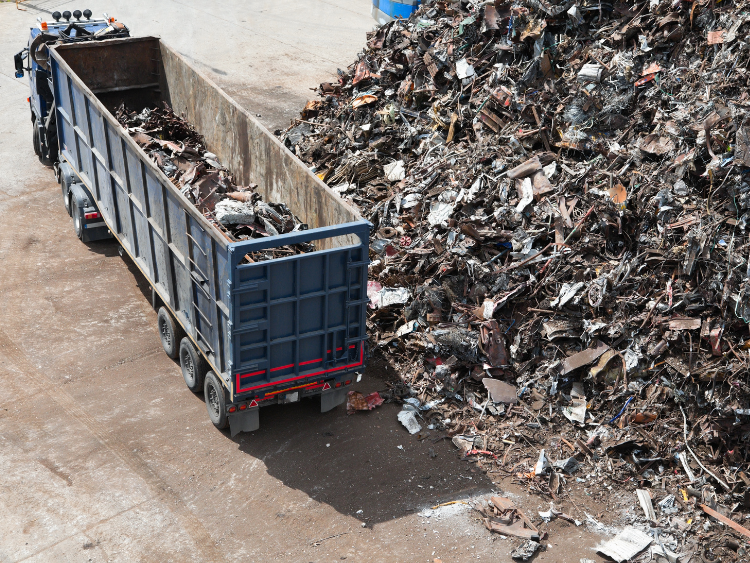
Theo Steil acquires fellow German scrap merchant
Germany-based Theo Steil has acquired fellow scrap supplier Rhein Main Rohstoffe (RMR). The acquirer says this will strengthen its market position and provide high-quality scrap for the domestic steel industry, Kallanish notes.
“We at the Theo Steil are very pleased to announce a significant strategic partnership, because together with RMR we are now forming a strong recycling alliance,” Theo Steil says. “With six locations in Frankfurt (Westhafen & Riederwald), Siegen, Stockstadt, Haiger and Bischofsheim, the alliance with RMR brings not only fresh energy but also valuable expertise to the group. This partnership is a decisive step to strengthen our joint position in the Rhine-Main area and the Haiger-Siegen region and to intensify our joint focus on green steel and sustainable raw material solutions for our customers.”
By merging the two companies, each side brings its own strengths, which combined will lead to a significant boost and “catapult the Steil Group into a leading position in the European market”, it adds.
Theo Steil is primarily active in recycling and trading in western and eastern Germany. The company also has a deep-sea terminal in Dordrecht, the Netherlands, which provides access to all international markets. It has the capacity to handle vessels of up to 50,000 tonnes.
Rhein Main Rohstoffe operates in and around Frankfurt am Main. The company collects and processes around 400,000 t/year of ferrous and non-ferrous material.
The German federal competition authority (Bundeskartellamt) cleared the acquisition in July.
The acquisition is “not expected to significantly restrict competition,” said Bundeskartellamt president Andreas Mundt. “This merger of two medium-sized companies will enhance the industry’s structural diversity in the long run. For the steel industry, using recycled scrap is an essential step towards low-emission steel production. Competition at the level of secondary raw material recycling thus significantly contributes to supplying the steel industry with high-quality input material.”
In contrast to when TSR Recycling, which belongs to the Rethmann Group, announced its intention to acquire RMR in 2021, the present case does not give rise to concerns about the group gaining uncontrolled scope over the purchase and recycling of scrap for processing with shears, according to the Bundeskartellamt.
“The investigations have shown that due to the parties’ market position and competitors’ activities in different markets, it is to be expected that all market participants will continue to experience sufficient competitive pressure in the future,” it noted.
Svetoslav Abrossimov Bulgaria