

Ukraine’s steelmakers will suffer from CBAM: GMK Center
Ukraine’s production of pig iron and rolled products will suffer great losses from the Carbon Border Adjustment Mechanism (CBAM) in Europe from 2026, according to the recent study by Ukraine-based GMK Center.
According to the study, almost 93% of Ukrainian exports subject to CBAM regulation are in the metallurgy sector.
“In Ukraine, 89% of steel is produced by the open-hearth or oxygen converter method, which means a fairly high average carbon intensity — 2.3 tonnes of CO2 per tonne of steel. This indicator applies to both billets and rolled products like rebar, wire rod and other types of rolled products,” it adds.
GMK Center suggests that Ukraine may lose all of its exports of billets and rolled products as a result of the implementation of CBAM. The reason is that Ukrainian billets and rolled products will not be competitive with goods produced by the electric steelmaking process in the EU, where the average carbon intensity of the electric steelmaking process is 0.3-0.4t of CO2 per tonne of steel, it claims.
“Iron sales may also come to a standstill as CBAM iron supply payments could reach $160 per tonne in 2030 and this would mean that the iron segment could be largely replaced by imported HBI, which is booming in the Middle East and North Africa,” the study notes. “Every year, Ukrainian companies export 55,000-60,000 tonnes of steel products to the EU and not all have initial production of pig iron or steel. Since metal products are subject to CBAM regulation, they must also provide data to EU importers for CBAM reports.”
Collecting such data can be difficult, especially if the company does not directly produce iron or steel and CBAM may become a new technical barrier to trade and increase administrative costs for small, medium exporters and importers, the study concludes.
Difficulties in providing data will negatively affect the prices of exported products, it adds. In addition, it is emphasised that CBAM will be distributed worldwide, so access to export markets for Ukrainian goods is under threat.
In the first year of full implementation of CBAM, in 2026, Ukraine will lose $202 million in exports and in 2030 this indicator will increase to $1.44 billion per year, GMK Center calculates.
Earlier, Ukrainian steel association Ukrmetallurgprom urged the Ukrainian government to start negotiations with the EU regarding the postponement of CBAM for Ukraine, taking the war as a force majeure circumstance (see Kallanish passim).
Svetoslav Abrossimov Bulgaria

ADI to abandon blast furnace route
The planned construction of electric arc furnaces at Acciaierie d’Italia (ADI) will lead to the definitive shutdown of the blast furnace route at the Taranto steelworks, ADI special commissioner Giancarlo Quaranta said during the blast furnace no.1 restart ceremony. The event was attended by Italy’s Minister of Enterprises and Made in Italy (MIMT) Adolfo Urso.
The restart of BF no.1 at Taranto will enable adequate output to ensure the financial resources necessary for the survival of the plant. The move is part of the government’s relaunch plan for Taranto, which involves substantial capital allocation aimed at realising sustainable and advanced steel manufacturing through the construction of direct reduction plants and EAFs.
“The first essential step towards decarbonisation and the implementation of electric arc furnaces is the restart of BF no. 1, which has been made possible by substantial investments … This production progress, combined with the implementation of environmental improvement interventions, contributes to strengthening the competitiveness of the site at a national and international level,” the company says in a note seen by Kallanish.
ADI aims to register 1.9-2.2 million tonnes of steel output in 2024. Sources, however, believe the steelmaker’s production will fall short of that. In the first quarter of 2025, BF No.2 is scheduled to be restarted. By Q1 2026, the firm plans to run BFs 1, 2 and 4. The plant is eyeing production of 4.5-5mt in 2025. Until this week, Taranto was operating only BF No.4, while BF No.5 has been inactive for a number of years. BFs 1 and 2 idled production a few months ago.
ADI’s special administration is currently evaluating letters of interest received to acquire the steelmaker. Vulcan Green Steel, based in Oman, along with Canada’s Stelco and Baku Steel Company have submitted letters of interest for the acquisition of all assets belonging to ADI.
Several other firms are evaluating the possibility of acquiring specific assets from the former Ilva in the north of Italy. Among them, Marcegaglia has expressed interest in the tube mills and the Novi Ligure facility, a re-rolling plant situated between Genoa and Alessandria.
According to numerous sources familiar with the dossier, there is no genuine interest in purchasing the entirety of ADI’s assets, and the company will ultimately be divided. The most pessimistic sources are convinced that the Taranto steelworks will eventually close down, as the local authorities intend, or convert into a cold rolling facility.
Natalia Capra France
MP calls for government stake in British Steel
A member of the UK parliament (MP), Richard Tice, has called for the government to take a ‘strategic stake’ in British Steel to ensure the future of steelmaking in the country, Kallanish hears.
He made the comment as part of a five-point plan presented during a Commons debate on the steel industry.
“We need to take a strategic stake in British Steel to guarantee that the blast furnaces in Scunthorpe will not close,” Tice argues. “We cannot run that risk, because otherwise if the EAFs are not built, we’ve got nothing.”
He warns that the country is potentially within six to 12 months of having “zero general steelmaking capacity,” fearing the blast furnaces at Scunthorpe are very likely to close. The MP says that would be “an absolute disaster.”
Tice additionally notes the risks of high industrial electricity prices, which could mean that planned EAFs may not be viable and therefore will not be built. He says National Grid “[informed] us in Scunthorpe we can’t get you a grid connection for the electricity you need to run the EAF.”
His second recommendation is to avoid carbon taxes and the potential carbon border adjustment mechanism. A third suggestion is implementing tariffs or protectionism, if necessary, to “stop the dumping of cheap imports from nations like China.”
“America is doing it to protect their own steel industry. We should do the same,” the MP added.
His fourth recommendation is to buy more British material, citing the increased appetite for wind turbines by the secretary of state.
“If you want more turbines…make it a condition that we use British steel to grow our own economy,” Tice urges.
He claims these four recommendations are all deliverable by the current government, whilst admitting that his final recommendation of it scrapping its commitment to net zero is not going to happen. But he insists that it would be the fastest way to achieve cheaper electricity and increase competitiveness.
The debate comes just days after the government launched its new industrial strategy, and National Wealth Fund, with the Steel Strategy currently in progress. However, Tice says this should be published urgently and urges the government to have it out before Christmas.
In response to the parliamentary debate, industry association UK Steel tells Kallanish that it welcomes the commitments of support for the steel sector.
“We agree that UK-made steel is of critical importance to the future of a strong, resilient national economy, growth and jobs. The Steel Strategy is the best mechanism to take forward a bold, long-term plan to drive growth and investment for British steelmaking,” an association spokesperson states.
“We look forward to engaging with the government and supportive members of parliament to develop an approach that transforms our sector into an innovative and competitive industry, that underpins the strategic expansion of steelmaking, and supports well-paid jobs across the country,” the spokesperson adds.
Carrie Bone UK

European HRC prices remain largely unchanged despite limited demand
Demand turned out to be too limited to support a significant price rebound, Fastmarkets understands.
Fastmarkets calculated its daily steel hot-rolled coil index domestic, exw Northern Europe at €555.00 ($604.81) per tonne on Wednesday, up by just €0.62 per tonne from €554.38 per tonne on Tuesday.
The index was up by €9.00 per tonne week on week, but down by €11.42 per tonne month on month.
Mills in Northern Europe were heard offering HRC at €580-600 per tonne ex-works, but were also willing to grant a discount of €15 per tonne for firm bids, sources said.
Some producers in the region were not satisfied by the current demand and offered HRC at levels from about two weeks ago at around €540 per tonne ex-works, a buyer source told Fastmarkets.
Most buyers estimated the tradable market level at €540-550 per tonne ex-works.
“I do not think that anyone will book at €580-590 per tonne ex-works. There are currently not enough negotiations and deals to gain a clearer perspective on the real market price,” a second buyer source told Fastmarkets. “Besides, consumers do not usually book much for the year’s end.”
The buyer added that most final consumers would probably wait for the beginning of 2025 to see how HRC prices develop.
But some Northern European market participants said price increases were imminent.
“Soon we will see prices at around €590 per tonne ex-works. Apparent demand is currently stable, but end users are buying more domestic [HRC] because of the anti-dumping investigations against imported HRC from some origins and the [generally] higher import prices,” a third buyer source told Fastmarkets.
In Southern Europe, meanwhile, Fastmarkets’ daily steel hot-rolled coil index domestic, exw Italy was calculated at €551.67 per tonne on Wednesday, up by €2.92 per tonne from €548.75 per tonne a day earlier.
The Italian index was up by €11.34 per tonne week on week, but down by €17.08 per tonne month on month.
Sources reported an offer from one local supplier at €580 per tonne ex-works, but added that discounts of €15-20 per tonne were possible for big volumes.
Buyer sources estimated the workable market level at €540-560 per tonne ex-works.
A fourth buyer source told Fastmarkets that deals for HRC in the Italian market had been few and far between recently, adding that the bullish sentiment will gradually start to fade because real demand remains insufficient.
“Buyers are not willing to pay significant price increases,” the buyer source said.
Imported HRC was on offer at high levels that buyers described as “unworkable.”
Offers from Taiwan, Japan, and South Korea were heard at €580-590 per tonne CFR Italy, while Vietnamese HRC was on offer at €555-560 per tonne CFR Italy, sources said.
And Turkish HRC was on offer to Italy at €580-590 per tonne CFR, they added.
But the workable level for imports was estimated at just €520 per tonne CFR, with some bids heard at that level, but no deals confirmed.
Published by: Darina Kahramanova


Beneva develops auto sheet scrap reuse technology
Czech steel sheet processor Beneva has developed a system to reprocess prompt/industrial scrap arising from automotive blanking into steel sheet for use by automotive companies, without the need for remelting. The “SATURNIN” system enables steel reuse, thereby reducing carbon footprint and cost, Beneva tells Kallanish.
The system collects scrap data about arising post-industrial steel scrap and material needs across steel processing companies. It then searches for the best matches according to geometry, steel grades, volumes, location and other information. The system ensures the purchase, collection, inspection and reprocessing of steel scrap into low carbon footprint input material and its shipment to the end customer, Beneva notes.
Beneva cooperates with regional steel service centres, as well as OEMs, such as Škoda Auto. “The system has great scaling potential, so the production site is still expanding and other SATURNIN hubs are going to be launched soon,” the firm observes.
The scrap is collected from the blanking/stamping line and placed in a separate box, before being transported to the firm’s warehouse for tensile and OES tests in an accredited material lab. The pieces are then placed in regular stacks on pallets, with any flaws eliminated on an autonomous robotics line.
The pieces are then processed on the autonomous robotic blanking line and transformed into regular shapes, such as rectangular or trapezoid, required by the customer – stampers or OEMs. Those blanks are stacked on a pallet, wrapped up and delivered to the customer. The material is identical to the automotive sheet delivered by a service centre or mill, Beneva claims.
The firm estimates around 400kg of scrap sheet metal are produced per car manufactured, meaning tens of millions of scrap globally per year. The firm’s technology currently focuses on scrap generated from the blanking process, where the material is not influenced by stamping, meaning it can save around 2-3% of the total scrap.
It is working on developing new technologies to be able to process the portion of scrap that arises after stamping operation – stamping influenced scrap. This could result in 5-10% of total scrap being reused.
Benva will be present at EuroBLECH 2024 in Hannover from 22 -25 October – Stand 17-E156, Hall 17.
Adam Smith Poland
Worldsteel elects new chair
The World Steel Association (worldsteel) has announced its executive board of directors for the 2024-2025 period, Kallanish notes. Tata Steel chief executive Thachat Viswanath Narendran has been appointed chair, with Colakoglu ceo Uğur Dalbeler and Nucor president Leon Topalian as vice chairs.
Mark Vassella, managing director and ceo of BlueScope Steel, will serve as treasurer, while Akihiko Inoue, representative director and president of Nippon Steel Stainless Steel Corporation, will chair worldstainless.
This board will guide the steel industry through the coming year.
The board also elected 17 members to the executive committee of worldsteel for the 2024-2025 term. Among the executive members is the re-elected Alexey A. Mordashov, chairman of the board of directors at Severstal, a passive worldsteel member.
Worldsteel reached a mutual agreement in June 2022 to voluntarily and temporarily make its Russian member companies “passive” members. They do not take part in decision-making, and have no access to meeting documentation or industry data via the member extranet.
Elina Virchenko UAE

ArcelorMittal supplies low-emission steel to Velux
Window systems manufacturer Velux will use ArcelorMittal’s XCarb low-carbon steel for several of its components. The companies are working together to lower the carbon footprint of the materials used in Velux roof windows by up to 70% compared with conventionally produced steel, Kallanish learns from ArcelorMittal.
The supply contract is for ten years. ArcelorMittal notes that its XCarb recycled and renewably produced flat steel is made in the Spain-based Sestao plant using a minimum of 75% scrap steel and 100% renewable electricity.
“Velux will use XCarb to manufacture the hinges and installation brackets for its roof windows,” explains ArcelorMittal Europe flat steel commercial director Laurent Plasman. “This long-term agreement sends a powerful message about the importance of steel in the decarbonisation of the everyday materials we all use.”
The supply is part of the company’s efforts on sustainability and reducing CO2 emissions.
“We are pleased to be reducing CO2’s impact through this agreement, which proves that through co-engineering and collaboration with our suppliers, we can reduce our value chain emissions,” adds Jesús Villalba, Velux’s senior director for direct procurement.
Metals, of which steel is the main part and excluding aluminium, account for 5.7% of Velux’s total Scope 3 emissions. The company aims to reduce them by 50% across its entire value chain by 2030.
Todor Kirkov Bulgaria
Low end-use consumption continues impacting European steel: worldsteel
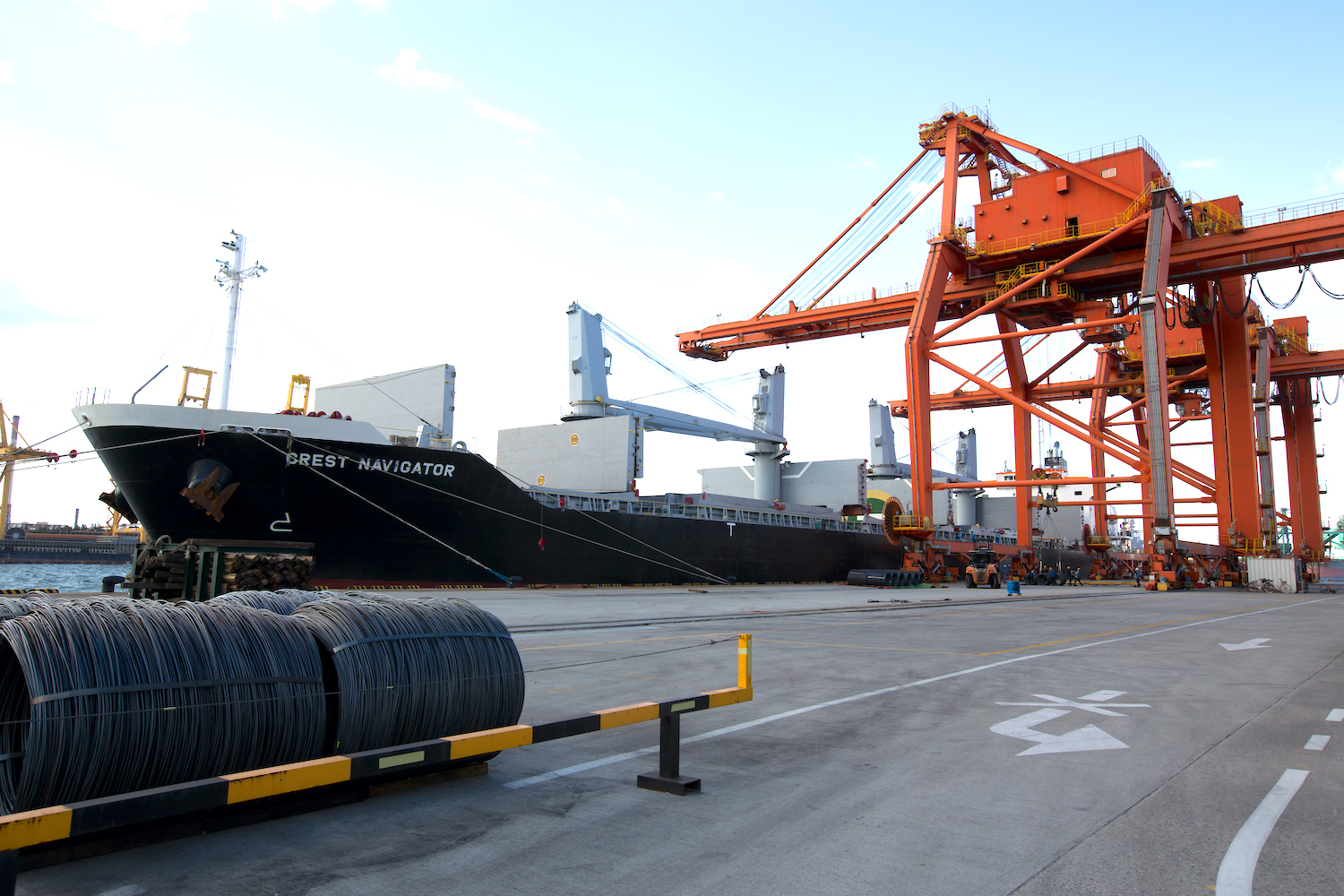
EU plus UK steel demand is forecast to decline 1.5% on-year in 2024 to 136.6 million tonnes, says worldsteel. 2025 demand should rebound 3.5%, Kallanish notes.
The developed world is projected to experience a 2% decrease in steel demand in 2024, as major steel using economies like the US, Japan, Korea and Germany face significant declines. “However, there is optimism for 2025, with a projected growth of 1.9% in developed world steel demand. This anticipated recovery is driven by the long-awaited upturn in steel demand in the EU, and modest recoveries in the US and Japan,” the report states.
Global manufacturing activity is expected to experience ongoing weakness, with a possible recovery anticipated in 2025, supported by improved conditions in major economies such as the eurozone and Japan. Construction sector activity has continued to be subdued in most major markets throughout 2024, particularly in the EU, which has adversely impacted steel demand. Worldsteel anticipates a recovery in EU construction will commence next year.
The automotive industry continues to be a focal point of the industry and a significant factor impacting European steel demand. The association observes a significant slowdown this year and anticipates only modest growth in global automotive production next year.
“Light vehicle production forecasts are being revised downwards across the board due to mounting concerns over rising inventories and a deceleration in battery electric vehicle (BEV) sales in key markets. This shift marks a stark contrast to the previous year’s robust performance, highlighting the industry’s vulnerability to evolving market dynamics and potential challenges ahead,” worldsteel notes.
The expansion of European renewable energy generation capacity will meanwhile result in a substantial boost to steel demand in the medium term.
Worldsteel has revised down its 2024 global steel demand forecast significantly, now expecting a 0.9% on-year decline to 1.75 billion tonnes, amid prolonged manufacturing sector and housing construction weakness. The previous projection was for 1.7% growth (see Kallanish passim).
Natalia Capra France
UK launches Industrial Strategy, National Wealth Fund
The UK government has launched its new Industrial Strategy, and National Wealth Fund within days of each other, both of which should support the manufacturing base in the country, including steel, Kallanish notes.
The Industrial Strategy, the first in seven years, will focus on the key sectors of advanced manufacturing; clean energy industries, creative industries; defence; digital and technologies; financial services; life sciences; and professional and business services.
A green paper has also been published, with the government asking businesses to help shape the industrial strategy. The consultation is open until 24 November.
A new supply chain taskforce is being established by the government, which will work to assess where supply chains critical to the UK’s economic security and resilience could be vulnerable to disruption.
Gareth Stace, UK Steel director general, says: “UK Steel welcomes the government announcements, which set the wheels in motion for the Industrial Strategy and National Wealth Fund to deliver for the UK and its manufacturing base, including steel and our wider supply chain.”
“This is a government with a clear vision to drive growth and investment in our industries and a strong commitment to our steel sector,” he adds.
“We look forward to engaging with the government in helping to shape its ambitious Steel Strategy – one that transforms our sector to a fully decarbonised, innovative and competitive industry, that underpins a strong, resilient UK economy and supports well-paid jobs across the country,” Stace concludes.
The UK Infrastructure Bank is to be reconstituted as the National Wealth Fund (NWF) following a policy paper published on 14 October. The NWF will have a broader mandate, extending beyond infrastructure to support delivery of the new industrial strategy, in areas where there is an undersupply in private finance, it says.
At least £5.8 billion ($7.6 billion) of the NWF’s capital will focus on sectors announced in the manifesto: green hydrogen, carbon capture, ports, gigafactories and green steel.
In July, the government said it would spend £2.5 billion on the country’s steel sector.
Carrie Bone UK

German demand needs longer to recover: steel federation
Steel demand in Germany will no longer see a recovery this year, contrary to forecasts in spring, according to national steel federation WV Stahl.
The federation had predicted in April a slight growth in demand this year, but has had to deviate considerably from that forecast. It now expects a year-on-year drop of 7%, followed by a 6% rebound in 2025. This compares to the 0.9% drop forecast for global demand in 2024.
“There is no sustained recovery in sight for 2025,” says WV Stahl director Martin Theuringer, who is also worldsteel’s economics committee chairman. “The further decline of the market volume to only 26 million tonnes is an absolute low point, which undercuts even the level of the financial crisis by 10%,” he laments in a note seen by Kallanish.
Virtually all the main steel using industries are stuck. Activity will not fully return to a healthy pace in 2025, but will see only a “technical counter-movement” to recover the losses of the preceding year, he says.
Since 2017, Germany’s steel market has lost 35% of its volume, which is more than twice seen in the entire EU, while it has since gone up in other regions, Theuringer reiterates. In terms of output of crude steel, the most recent months did see a slight year-on-year increase, but this is mainly owing to the base effect of particularly low production around mid-year 2023.
Germany, Europe’s long-time industrial engine room, urgently needs political measures to stop this downtrend, Theuringer warns.
Christian Koehl Germany