


Jindal Group to acquire Vitkovice Steel
Jindal Steel Group will acquire a 100% stake in Vitkovice Steel, says the Czech plate maker.
“This is a strategic step and we are convinced that it will strengthen the company and the Czech steel industry. The new industrial owner will bring the company stability and above all development in the form of massive investments in modernisation and expansion of production technologies, sharing of foreign know-how and moving towards environmentally produced low-emission steel,” Vitkovice Steel chief executive Radek Strouhal says in a note seen by Kallanish.
Earlier this year, Vitkovice Steel signed a memorandum of understanding with prospective Omani low-emission steelmaker Vulcan Green Steel, part of Jindal Steel Group, for the future supply of 1 million tonnes/year of slab (see Kallanish passim). The Czech rolling mill has been cooperating with Jindal for more than a year in the field of operational financing, it says.
“We see great synergies between Jindal Group and Vítkovice Steel. We want to be a strategic investor and develop and expand production in Ostrava,” says Harssha Shetty, chief executive at Oman-based Jindal Shadeed Iron & Steel and Vulcan Green Steel executive director marketing.
Jindal plans to invest up to €150 million ($164m) in the development of the Ostrava-based mill in the coming years, mainly in the expansion of plate production capacity and output of higher-added-value products.
A prerequisite for the acquisition was the completion of the Czech Financial Analytical Office’s investigation into Vitkovice Steel’s alleged links with Russia. The probe was closed and preliminary restrictions on the handling of the company’s shares and funds were revoked (see Kallanish passim).
The acquisition is subject to review by the Czech competition office.
It would represent a significant foreign investment into European steelmaking at a time when European economic growth and steel demand is suffering miserably. However, plate demand is touted to have a brighter future than most other steel products due to investments in renewable energy and defence. The leasing/sale of plate mill Liberty Czestochowa in neighbouring Poland has garnered interest from multiple potential investors.
Adam Smith Poland

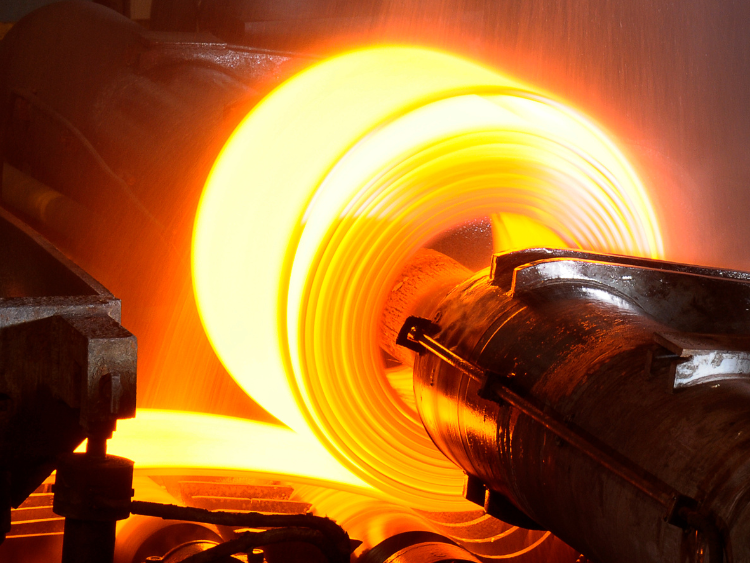
European HRC prices largely flat amid mixed expectations on direction of prices
Fastmarkets calculated its daily steel hot-rolled coil index, domestic, exw Northern Europe, at €546.00 ($599.47) per tonne on Wednesday, up by just €0.62 per tonne from €545.38 per tonne on Tuesday.
The index was up by €1.62 per tonne week on week, but down by €34.00 per tonne month on month.
November/December delivery HRC was on offer in Northern Europe at €560-570 per tonne ex-works, Fastmarkets understands.
And German producers have undertaken more flexible approach, according to sources.
“If you want to book material now, you can get €540-550 per tonne ex-works. But offers for [the first quarter] of 2025 are at €560-570 per tonne ex-works,” a European buyer source told Fastmarkets.
And buyer estimates of the workable level came in at €530-550 per tonne ex-works.
But expectations about the future direction of prices were mixed and the buyer source said there was a good chance of a price rebound in the near term.
“The price decline has stopped. Consumers want to do some restoking, but they want to buy at the price levels from two weeks ago – at around €520 per tonne ex-works. But those prices are no longer available,” the buyer said, adding that prices would stabilize and could even increase in the coming weeks – ahead of the international sheet metal exhibition in Hanover, Germany on October 22-25.
The buyer said the uptrend in prices could continue after, but it would be difficult to predict how things would develop in the mid term.
A second buyer source told Fastmarkets that the current import offers of HRC from Asia were completely unworkable for the European market.
Asian HRC was heard offered at €550-560 per tonne CFR Antwerp, the second buyer said, but the comparatively high price level, combined with the trade risks and the long lead times made that level of offer uncompetitive.
The source added that any need for HRC in Europe, would therefore be covered by domestic production and that would also support a price rebound.
But a third buyer source was skeptical about the sustainability of any potential price rebound during the Hanover event – especially considering the persistent low demand from the main steel-consuming sectors in Europe – and implied that prices were likely to fall after that.
“[Steelmakers] just want to receive higher prices during the [sheet metal] exhibition in Hanover,” the buyer said. “But if I were to buy, I would wait… for the exhibition to be over.”
In Southern Europe, meanwhile, Fastmarkets’ daily steel hot-rolled coil index, domestic, exw Italy, was calculated at €540.33 per tonne on Wednesday, up by just €0.33 per tonne from €540.00 per tonne on Tuesday.
The Italian index was up by €5.33 per tonne week on week, but down by €38.00 per tonne month on month.
HRC in Italy was on offer at €550-560 per tonne delivered, which nets back at €540-550 per tonne ex-works, sources said, with some deals reported at €530-535 per tonne ex-works.
Buyer estimates of the workable level in Italy came in at €530-550 per tonne ex-works.
Import offers of Turkish HRC to Italy were heard at €580-590 per tonne CFR, including the EU anti-dumping duty, while offers of HRC from India to Italy were heard at €585 per tonne CFR and material from other Asian suppliers was on offer at €550-560 per tonne CFR.
Buyers said the workable level for Asia-origin coil was closer to €520 per tonne CFR, but no such offers were available.
Published by: Darina Kahramanova


Italian rebar prices fluctuate on poor activity
Italian rebar prices are fluctuating by €10/tonne ($10.90/t) each week despite a period of general stability as producers fail to secure increases, according to buyers and sellers who spoke to Kallanish.
The low point of the range from has decreased from last week, but the level of orders is reported to be stable in comparison to September.
According to an agent, “activity remains subdued; customers do not intend to commit to volumes in this market and continue to purchase a few hundred tonnes per week.”
Values have remained relatively consistent in recent weeks, despite distributors’ predictions of an additional price decline in the weeks ahead.
Current transactions in the domestic market are at approximately €270-290/t base ex-works.
A buyer reports purchasing about 500 tonnes/week.
Another large distributor says buyers are not adopting a wait-and-see attitude but continue to purchase the necessary tonnage two to three times a month.
Including additional size extras at an average cost of €260/t, current values in Italy are hovering this week at €530-560/t ex-works.
The current price for domestic mesh stands at approximately €380-390/t, not accounting for transport costs. An extra fee of €300/t applies for size extras, sources suggest.
Natalia Capra France
ArcelorMittal increases longs prices in Europe: sources
ArcelorMittal has announced it is to increase its prices for long products throughout Europe, Kallanish hears from market sources.
The decision was driven by the present unsustainability of prices and the increasing costs of raw materials globally.
Companies both upstream and downstream are at risk of financial instability due to the current low prices for long products in Europe, several market participants throughout the value chain report.
The market must regain some profitability, one source comments.
According to sources, ArcelorMittal is increasing prices of all commodity grade longs, including rebar, beams, and drawing quality wire rod, by €40/tonne ($43.90/t).
The current increase is effective immediately for all new bookings.
Natalia Capra France

EU coil price increases start bearing fruit
Some hot rolled coil contracts in the EU are reported to have concluded at higher prices following increases recently implemented by ArcelorMittal, Kallanish hears.
HRC contracts have been heard concluding at €590/tonne ($648.40) base ex-works, up from last week’s average level in Europe of €530-540/t base ex-works, suggesting recent increases implemented by ArcelorMittal have been successful.
The majority of EU producers are currently offering a November lead time and are aligning their quotes with ArcelorMittal’s new HRC quotes, which are priced at €590/t base ex-works.
Nevertheless, volumes are exceedingly low and transactions are still scarce, with numerous buyers and sellers confirming the market requires additional time to absorb the increases.
The market downstream remains sluggish, and some buyers are firmly opposed to the increases.
European producers are reported to have received a high volume of orders at the previous prices in the final days of September and the first days of October, as customers foresaw the increase. Some buyers have adopted a wait-and-see approach as a result of the hikes.
A service centre in Italy reports increased calls from customers and orders in a sudden surge of apparent demand. Customers would prefer to buy coil derivatives at previous prices.
This, however, is not real consumption. Rather, it indicates that buyers are becoming increasingly concerned about the possibility of material scarcity and the potential for price increases.
Another source in Italy indicates the automotive sector, in particular, is experiencing a far greater degree of slowdown than anticipated, which is causing a challenging situation downstream.
The manufacturing sector in Europe is currently experiencing a crisis, and downstream demand for flat steel is expected to remain lacklustre.
However, the EU’s recent turn towards protectionism has virtually eliminated the possibility of purchasing coils through imports. Some Asian suppliers, including India, have also raised their prices to €590/t cfr, while Turkey is also reported to be at €590/t, including duty.
In Italy, re-rollers have continued to purchase from the import market at competitive prices, while service centres are refraining from doing so.
As of 1 October, the majority of Italian HRC import buyers had successfully cleared through customs the stocks they had in consignment at ports, coinciding with the renewal of EU import quotas.
Stocks of this material, ordered in March and April, will deplete rapidly, according to a source, and pursuing import options in future will remain challenging.
Coil prices are expected to rise if European steelmakers reduce production by the end of the year or in the first quarter of 2025.
The source anticipates HRC will increase, if cuts are implemented, to above the €600/t base ex-works level, with the possibility of reaching €650/t base ex-works due to a shortage of available material.
At present, HRC prices as well as coil derivative values are deemed unsustainable.
Following ArcelorMittal’s increases, Italian re-rollers and service centres said coil derivative prices are poised for a price increase.
Natalia Capra France

Steel HRC prices in Europe still below mill target offers
This week, European suppliers have been increasing their offer prices for HRC, citing mounting costs.
“The lowest offers are no longer [available] but buyers are still hesitating,” a buyer source in Europe said. “[There is] no change in real demand. Only an apparent demand improvement could support the price rise that is being asked [for] – if buyers need to restock before the end of 2024.”
Offer prices for November-December delivery HRC were heard at €560-570 ($614-625) per tonne ex-works. And for larger tonnages, prices of €540-550 per tonne exw were still possible, sources said.
Buyer sources estimated tradable values at €530-540 per tonne exw, but mill sources said the lower end of that range was no longer acceptable.
As a result, Fastmarkets calculated its daily steel hot-rolled coil index, domestic, exw Northern Europe, at €545.38 per tonne on Tuesday, up by €7.30 per tonne from €538.08 per tonne on October 7.
The index was up by €8.39 per tonne week on week but down by €35.37 per tonne month on month.
In Southern Europe, meanwhile. Fastmarkets’ daily steel hot-rolled coil index, domestic, exw Italy, was calculated at €540.00 per tonne on Tuesday, unchanged from October 7.
The Italian index was up by €7.00 per tonne week on week, but down by €40.24 per tonne month on month.
Market participants reported transactions for November-delivery HRC in Italy at €540-555 per tonne delivered (€530-545 per tonne ex-works).
But after ArcelorMittal’s move last week to increase HRC prices in Europe by €40 per tonne, Italian suppliers were also mulling a price rise, Fastmarkets heard.
“For December delivery, European and Italian mills want a €20-40 per tonne price rise as a first step,” a buyer in Italy said.
Sources also reported high offers for imported HRC in the week started October 7.
New offers from Asia of HRC for November shipment to Italy were reported at €550-560 per tonne CFR, compared with €520-540 per tonne CFR in late September.
But sources told Fastmarkets that this price was totally unworkable for the European market. Buyer price ideas for Asia-origin coil were no higher than €500-520 per tonne CFR, they added, but no such offers were available in the market.
Published by: Julia Bolotova

EU HRC prices fall slightly on day on wider offer levels
Domestic European hot-rolled coil prices inched lower on Oct. 8 as sources continued to cite slower spot market conditions amid wide offer levels.
“The whole market is quiet at the moment, we just need time for the new offer levels to go through,” a Germany-based steel mill source said. “Maybe [offer levels] can reduce a bit in the coming weeks, but import prices aren’t a problem for us, they’re more expensive than domestic price levels.”
The same source pointed to continued difficulty in passing costs along the value chain while discussing carbon-accounted steel premiums.
“There is no demand for green steel, nobody is willing to pay regardless of the offer levels; the downstream customers won’t pay for it,” the source said.
Platts assessed Northwest European hot-rolled coil carbon accounted at Eur615/mt ex-works Ruhr Oct. 8, down Eur15/mt on the day.
Similarly, a service center source said mill offer levels in the market were rising, and confirmed the offers heard Eur590/mt earlier in the week.
“Mills will push prices up, but demand is very poor,” the service center source said. “You cannot convince customers to buy at these levels.”
Platts assessed Northwest European HRC at Eur550/mt ex-works Ruhr on Oct. 8, down Eur5/mt on the day. Offers were reported at Eur590/mt delivered Germany.
Meanwhile, Platts assessed domestic HRC in Southern Europe at Eur540/mt ex-works Italy, also stable on the day.
Platts assessed imported HRC in Northwest Europe at Eur525/mt CIF Antwerp, stable on the day, and assessed imported HRC in Southern Europe at Eur525/mt CIF Italy, stable on the day.
Charles Thompson | Devbrat Saha

Italian HRC buyers clear customs, fear high duties
The hot rolled coil market in Italy is currently facing notable stagnation, characterised by low order volumes and subdued consumption from end-users and coil service centres, industry sources tell Kallanish.
As of 1 October, the majority of HRC import buyers successfully cleared through customs the stocks they had in consignment at ports, coinciding with the renewal of EU import quotas.
It is anticipated that Italian buyers will incur an average duty of approximately 10%, or potentially slightly less, contingent upon the material’s origin. The duty rates for HRC stand at 4.2% from Egypt, 7.5% from Taiwan, 12.5% from Japan and 10.5% from Vietnam.
Contracts that were implemented in March and April at HRC pricing more than €100/tonne ($110.3) higher than current levels will be subject to duty payments. Service centres and re-roller sources indicate they will face significant financial challenges due to the duty, particularly in light of current low consumption levels and soft pricing.
A service centre doubts the recent increases implemented by ArcelorMittal will be successfully passed on downstream. “Certain customers are facing challenges in maintaining production levels throughout the week. Some have resorted to reducing their output. Additionally, the automotive industry, along with other sectors, is currently unable to absorb the existing steel production levels,” the source comments. A re-roller anticipates values may begin to rise gradually and expects customer activity to increase in October, following the sluggish purchasing observed in September.
Another service centre believes existing coil and derivative capacity is excessive. This, coupled with service centres’ high stocks, may hinder any prices hike.
Service centre quality HRC values in Italy are at approximately €530/t base ex-works but the level of €520/t has been heard in Germany. Cold rolled and hot-dipped galvanised coil are at €650-670/t base ex-works, with the low point of the range being paid for CRC.
ArcelorMittal told customers last week it is raising coil offers in Europe, with immediate effect. The steelmaker is now reported to be offering HRC at €590/t base ex-works, up some €40/t compared with offers registered last month. Other northern European producers are following suit (see Kallanish passim).
Natalia Capra France

Federacciai at SteelOrbis Italy Forum: decarbonization risks becoming deindustrialization
Speaking at the SteelOrbis Italy Forum 2024 being held in Milan on October 8, Antonio Gozzi, president of Federacciai, the Italian federation representing steel companies, began his speech highlighting the critical issues that the Italian and European steel industries are facing, pointing out that, since the steel industry is a cyclical sector, the slowing demand – caused by several factors including geopolitical uncertainties and rising interest rates – has brought about oversupply.
These two issues are also affecting the decarbonization issue in the European steel industry, Gozzi commented. Disagreeing with the earlier statements made by Paolo Sangoi, president of the steel section of Assofermet, Gozzi said, “I think we all have to work for climate change, but the way the green deal is being applied to Europe deserves further analysis. In particular, the measures that have been taken did not consider impact analysis and cost-benefit analysis. In this way, decarbonization risks becoming deindustrialization, and that would be a débacle for Europe.”
This is because the closure of integrated steel mills will lead, according to Gozzi, to the interruption of the production of a particular type of flat steel that is essential to the automotive industry, which cannot be manufactured through EAF technology. This forces the suffering European automotive sector to import this product from outside Europe, mainly from Asia, Japan, China and South Korea, i.e., from competing countries in the automobile sector.
According to Gozzi, there will be no major investments in European steelmaking from a structural point of view in the next five to 10 years, because steelmaking is a long-term looking industry, and for now it is hard to make predictions. A key issue, however, is definitely the scrap industry, because as decarbonization of steel production is a global issue, there is a shift of production from electric furnaces from 25 percent to 43 percent around 2030, which will make scrap even a more strategic and critical material.
More than 60 countries have already taken measures to curb exports, and that is why Federacciai is calling for it to become a critical raw material which needs to be protected.
Another issue is that domestic scrap in Italy is more expensive than imported scrap, and one wonders how these many electric furnaces will be fueled. The way seems to be DRI, but the issue is controversial in Europe, as it requires particularly large investments. The plant investment must be accompanied by an investment in carbon capture technologies, because DRI is not neutral, even if it halves the blast furnace’s carbon footprint. Added to this is the cost of gas, which is the main power source for DRI.
Gozzi said he believes instead that as of today the priority is to concentrate all resources in the recovery of Taranto, so that it can return to being a plant that produces at least 6 to 7 million tons, which is the breakeven point.
The last topic addressed by Gozzi was trade policies. He said he believes that Europe made a mistake in not joining the US proposal for free trade through NAFTA (North American Free Trade Agreement), thus closing off a possible profitable market for exports.


Assofermet at SteelOrbis Italy Forum: collaboration across the supply chain is key to decarbonization
SteelOrbis has come back to Italy after seven years with SteelOrbis Italy Forum 2024, attracting almost 200 participants. The conference held in Milan on October 8 opened with an Italian steel market overview by Assofermet, the Italian association representing Italian distributors of scrap, raw materials and steel products.
“We are living through a particularly challenging historical moment,” declared Cinzia Vezzosi, president of Assofermet. The Green Deal, launched in 2019, has given a strong push to complex plans, setting ambitious goals with tight deadlines. In this ecological transition, recycled steel emerges, according to Vezzosi, as the most environmentally friendly raw material and a key component for the future of the steel industry. Recycled steel offers three fundamental advantages: it is eco-friendly, acts as an “iron carrier,” and is immediately available. Additionally, the spread of electric arc furnaces (EAFs) is a key factor in improving the circularity of steel production.
In this context, Italy holds a prominent position. “84 percent of Italian steel production comes from EAs, compared to 46.5 percent in the EU and 72 percent in the United States,” Vezzosi explained. This places Italy at the forefront in Europe and globally. A further increase in the demand for recycled steel is expected, and Vezzosi emphasized that this material is already available in significant quantities across Europe. “Increasing the demand for recycled steel would provide a great boost to the sector, making the entire supply chain more resilient.”
To fully take advantage of the availability of the material, technological advancements are necessary, both in industrial plants and machinery, which will also reduce quality waste and increase the availability of “old scrap”. However, regarding DRI (direct reduced iron), the president of Assofermet pointed out that it alone will not be able to meet global demand, although it can improve the quality of the final product. “Scrap will be needed to make up for the shortages in charge and iron content,” she affirmed.

The topic of transition and the current challenges were also addressed by Paolo Sangoi, president of Assofermet Acciai. Sangoi highlighted how the global economic landscape is impacted by the Chinese economic crisis, the inaccessibility of the Russian market, and conflicts in the Middle East and Ukraine. These factors act as a “drag” on economic recovery, worsened by rising costs and declining service quality in manufacturing. Major issues include commercial defense policies and the risk of excessive protectionism.
Sangoi emphasized the importance of imports to the Italian economy, but recent discussions on antidumping measures against countries such as Japan, Vietnam, South Korea, India, and Turkey, which are already subject to quotas, could trigger retaliatory actions and further difficulties for international trade.
In this uncertain context, the Italian manufacturing system is under increasing pressure, Sangoi said. The efforts required by the European Union to achieve carbon neutrality are substantial, and, while the Green Deal offers opportunities, it could place significant strain on strategic sectors, like automotive, which are already hit by global crises. The challenges that emerged in 2024 have fueled fears of a possible “collapse” of the Italian industrial system, with the risk that many companies might relocate to countries with less stringent regulations.
Sangoi concluded by expressing hope for an open and constructive dialogue among all associations and stakeholders in the steel supply chain, both nationally and across Europe, to ensure a sustainable energy transition while preserving the sector’s competitiveness.