


Swiss Steel discusses industry transformation and future plans
In a recent interview with marketSTEEL, Frank Koch, CEO of Swiss Steel Holding AG, highlighted the company’s pivotal role in transforming the steel industry.
Koch emphasized that the Swiss Steel Group is leading the charge in sustainability by focusing on reducing its carbon footprint through innovative technologies. Notably, the company offers green steel with a CO2 footprint 83% lower than the global industry average, showcasing its commitment to environmental responsibility.
Koch also addressed the ongoing restructuring efforts within the Group, particularly in Germany, where high energy costs pose significant challenges. To mitigate these, the company is implementing more efficient energy systems and exploring alternative energy sources to optimize production and reduce costs.
Looking ahead, Koch outlined the Group’s future as one driven by innovation, sustainability, and customer-centricity. Key initiatives include advancing scrap recycling processes, particularly in their Uginè, France site, and intensifying research and development to create environmentally friendly products that meet customer needs. Koch expressed confidence that these strategies will ensure the company’s continued success and deliver sustainable value to all stakeholders.
The interview underscores Swiss Steel Group’s commitment to leading the industry’s transformation towards a more sustainable and customer-focused future.
Read more: marketsteel.com


Finnish steelmaker Outokumpu sees ongoing slow European recovery in Q3
“Despite the continued recovery, the operating environment in Europe remains quite difficult,” departing Outokumpu President and CEO Heikki Malinen said. “The European economy is confronted with multiple structural challenges resulting from the war in Ukraine, funding of the green transition and growing de-globalization. To ensure our profit generation in this type of an operating environment, we must accelerate efforts to improve our European cost competitiveness, especially within commodity stainless steel production.”
On July 9, 2024, Kati ter Horst was appointed as the new President and CEO of Outokumpu starting from Oct. 9, 2024.
In Q2 Outokumpu saw its total stainless steel deliveries fall by 7% on the year to 468,000 mt due to the European business, partly offset by higher deliveries in the Americas.
Adjusted EBITDA in Q2 dropped to Eur56 million ($61 million) from Eur190 million in the same quarter last year, as it was hit by a widespread strike in Finland. The labor action also indirectly affected the company’s operations in other countries through the disruption to internal material flows in both Europe and the Americas.
In Q2 2024, realized prices for stainless steel increased driven by a rise in Europe, but this was partly offset by a decrease in the Americas.
The profitability of both stainless steel businesses was burdened by the tightened scrap market, while variable costs decreased in Europe due to lower energy and consumable prices. According to Outokumpu the scrap market in Q3 is expected to remain tight and, with current raw material prices, some raw material-related inventory and metal derivative gains are forecast to be realized in Q3.
Platts, part of S&P Global Commodity Insights, assessed the 62%-Fe iron ore index at $99.30/dmt CFR North China on Aug. 8, down $1.30/dmt from Aug. 7, in line with tradables values. In Q2, prices moved from 102.50/dmt on April 1 to 106.70/dmt on June 28.

Turkey determines dumping margins on HRC imports from China, India, Japan and Russia
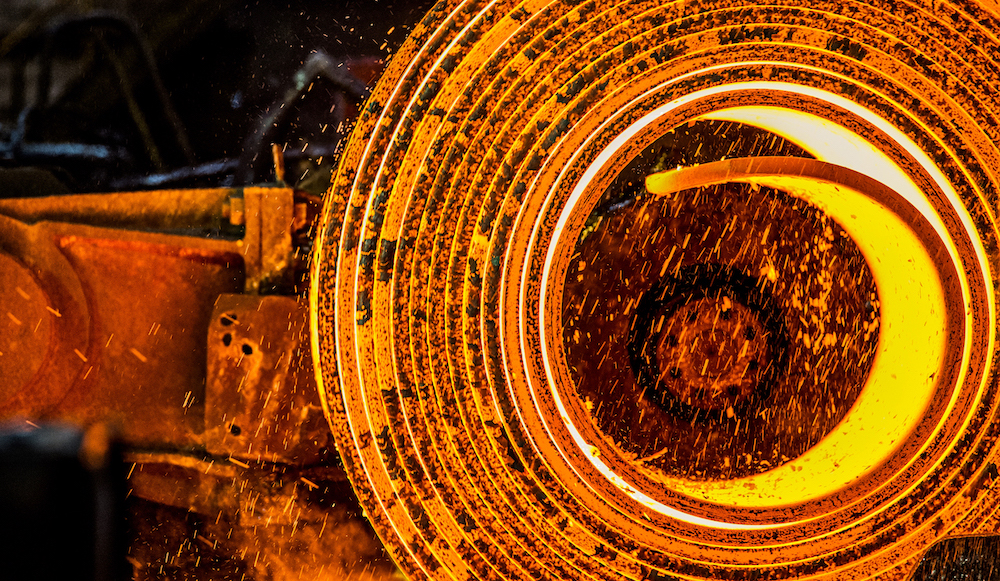
Turkey has determined dumping margins on imports of hot-rolled coil (HRC) from China, India, Japan and Russia ranging between 11.65%-57.75%, according to the final declaration report of the Turkish Trade Ministry late Aug. 7 for the antidumping investigation that the country started on Oct. 31, 2023.
According to the report, the preliminary dumping margins on imports of HRC from China was determined at 20.55%-57.75%, from India 11.65%-18.26%, from Japan 39.20% and from Russia 16.11%-23.58%, depending on producers.
After receiving the opinions of the relevant parties, the final AD report will be submitted to the Board of Evaluation of Unfair Competition for final decision.
The investigation was launched on the complaint by the Turkish Steel Producers’ Association on behalf of Turkey’s largest steel producers Colakoglu, Erdemir, Isdemir, Habas, and Toscelik, and covered the period from Jan. 1, 2020 to June 30, 2023.
Veysel Yayan, general secretary of the Turkish Steel Producers’ Association told S&P Global Commodity Insights Aug. 8 that the Trade Ministry’s latest decision is an important step to prevent unfair competition in the market. He added that low-priced HRC imports, particularly from China, have risen substantially in recent years and is affecting Turkish mills’ capacity usage and profitability.
The final dumping margins are expected to enter into force by publishing in the official gazette soon following a hearing to be made in the coming weeks, Yayan noted.
Although Turkey’s overall HRC imports fell 18% on the year to 2.37 million mt in H1 on low demand amid monetary tightening policies in the country restricting demand, imports from China reached 1.1 million mt, up 10% on the year, according to the monthly Turkish Statistical Institute, or TUIK, data.

Makstil partners with Danieli to upgrade reheating furnace
North Macedonian steel producer Makstil is revamping the reheating furnace at its plate mill in Skopje to enhance energy efficiency and reduce pollution, Kallanish learns from engineering company Danieli.
The project aims to reduce natural gas consumption by up to 10% and decrease the CO2 footprint. The upgrade, scheduled for completion by mid-2025, will also improve product quality and simplify maintenance.
The furnace, supplied by Danieli Centro Combustion and operational since 2008, has an hourly productivity of 100 tonnes of custom-made plates.
The steel shop has a capacity of 550,000 tonnes/year and consists of an electric arc furnace (EAF) for producing liquid steel, a ladle furnace for secondary refining, and three continuous casters that transform liquid steel into slabs with a thickness of 150-300mm, a width of 900-1,550mm, and lengths of 4,800mm and 12,000mm, with a maximum weight of 30 tonnes.
The mill primarily uses scrap as raw material.
The plate mill has an annual installed capacity of 350,000t of HR plates, with a thickness of 5-100mm, a width of 1,000-3,050mm, and a length of 3,500-18,500mm.
The company is owned in its majority by Duferco International Trading Holding (DITH).
Elina Virchenko UAE

EU AD probe of hot roll sparks reactions
“The impact will be significant,” a EU-based trader opines. “Currently, sentiment is negative, and confidence is low, … and customers are only partially understanding the potential impact,” the same EU trader said. “The domestic industry will obviously benefit from this and expects a significant increase in activity upon reopening in September … Turkey will likely exhaust its quota very quickly. End users will suffer because expensive domestic material will become the primary source, making it challenging to compete when exporting finished goods. Traders are losing money, … and will likely decrease in numbers. … Chinese traders are expected to dominate the sector.”
Another EU-based trader suggested that Taiwan and Saudi Arabia, which are not facing anti-dumping measures, may see some advantage. Turkey’s AD is manageable, therefore he also agreed that Turkey may gain. Meanwhile, considering the recent volatility in China, its prices even with duties could be workable.
“I would not be surprised if we see some Chinese coils coming to Europe and paying the AD duty,” the same trader notes.
In Japan and Egypt, sentiment was pessimistic.
“It will be a big challenge to EZZ Steel,” an Egyptian source suggested.
A Japanese trader noted, “15% cap damaged us a lot already and then AD investigation started. It is very negative. We don’t think Japan will book new orders for a while.”
A Vietnamese mill source commented that, “There is a quota limit so anti-dumping is meaningless, we still cannot sell… Vietnamese exports of HRC are limited to 141,950t per quarter between two mills.” In July Vietnam launched an anti-dumping investigation into HRC from China and India.
Indian steelmakers had a mixed reaction. Sources say the EU is unlikely to buy from India during this investigation, and they expect a duty to be levied.
If the duty rate is within a manageable range, Indian mills can try to take orders at lower prices. But, if the duty is high, then the market will be lost for India for some time, a source says.
Another source says, “India is not a very big player. I guess, Indian HRC would still find a way into the EU because EU mills’ cost structure is very high, and if alternatives are cheaper, then [EU should have] no issue. However, yes it will be a setback for margins, hence exports would be strictly need based.”
Several Indian steelmakers meanwhile noted this will spur focus on the domestic steel market. One source said, “Be Indian, buy Indian, sell Indian.”
An Indian mill source added, “India is not export-oriented at the moment. And I expect no major change in the situation in the coming years. India may also initiate an investigation. This means 3-4 million tonnes less supply in the market.”
In July, India’s steel ministry called on the trade ministry to probe Vietnamese and Chinese steel. This could help offset India’s absence from European markets.
Anna Low Singapore , Elina Virchenko UAE , Suhita Poddar India

Negative sentiment in European HRC market puts pressure on prices
Demand for the material remained low, with trading close to nil due to the summer slowdown, sources said.
Fastmarkets calculated its daily steel hot-rolled coil index domestic, exw Northern Europe at €619.02 ($675.97) per tonne on Thursday, down by €0.98 per tonne from €620.00 the previous day.
The index was down by €1.72 per tonne week on week and by €14.73 per tonne month on month.
Mills in Northern Europe reportedly offered HRC for September-October delivery at €630-650 per tonne ex-works.
“However, steel service centers and some mills, which want to clear their stocks, offer the material at €600-610 per tonne ex-works,” a seller source told Fastmarkets.
According to the seller, the market remained quiet and only limited volumes were traded.
Buyers estimated workable prices at €600-620 per tonne ex-works.
“There are few firm offers from mills because no one is asking for material [these days]. There is no demand. The market is absent,” a distributor source told Fastmarkets.
The source estimated that, due to the summer holidays, the need for steel has decreased by about 30% compared with the usual levels.
According to this source, the market direction will be clearer at the beginning of September.
But the seller source hoped that a price rebound would be possible in October-November due to restocking.
According to the seller, the anti-dumping investigation launched by the European Commission against imported HRC from Egypt, Vietnam, Japan and India could also support the expected price rebound.
In Southern Europe, Fastmarkets calculated its daily steel hot-rolled coil index domestic, exw Italy at €618.13 per tonne on Thursday, down by €1.87 per tonne from €620.00 per tonne the previous day.
The index was down by €2.50 per tonne week on week and by €8.12 per tonne month on month.
The Italian market was completely quiet due to the summer holidays, sources said.
Buyer sources estimated workable prices at €600-620 per tonne ex-works.
The latest offers for September-delivery coil were heard in end-July at €640-650 per tonne delivered, which nets back to €630-640 per tonne ex-works.
Local suppliers are expected to attempt a price rise after the holidays, sources said.
The market for overseas coil remained quiet due to the start of the European Comission anti-dumping investigation.
Published by: Darina Kahramanova


EU long steel prices remain stable even as demand improves
The Northwest European prices for rebar and medium sections remained stable in the week ended Aug. 7, even as demand was starting to recover, sources said.
“Market is still a bit quiet,” a distributor source said. “But people are coming back from holidays, and demand is getting better.”
Sources said that some mills are trying to increase prices, since production costs are too high, and profit margins are too low currently.
“Mills want to increase prices by Eur20,” another distributor source said. “Production costs are too high and margins too low.”
Platts assessed the price of Northwest European rebar stable on the week at Eur615/mt ex-works.
Tradable values were heard at Eur615/mt EXW Benelux.
Meanwhile, Platts assessed the price of European medium sections stable on the week at Eur750/mt delivered Benelux.
Tradable values were reported at Eur750-760/mt delivered Benelux.
European HRC prices remain unchanged on weak demand
“There is not enough demand and there is too much material in the market,” a service center source said.
“Zero change from last week,” another service center source said. “The middle of vacation period … is always a slow period.”
Sources said the market remains unchanged despite the European Commission’s investigation into certain Asian countries for antidumping activities, particularly due to the fact that buyer interest for imports remain weak, with consumers looking domestically to stock up on material.
“We will have to see what comes out after the investigation,” a service center source said. “In the meantime, nothing really changed.”
Other sources, however, said there were still shipments coming into European ports, leaving some level of uncertainty, particularly as most import quotas were expected to be used up quickly in the next quarter.
“I don’t expect any movement until the market comes back,” another market source said.
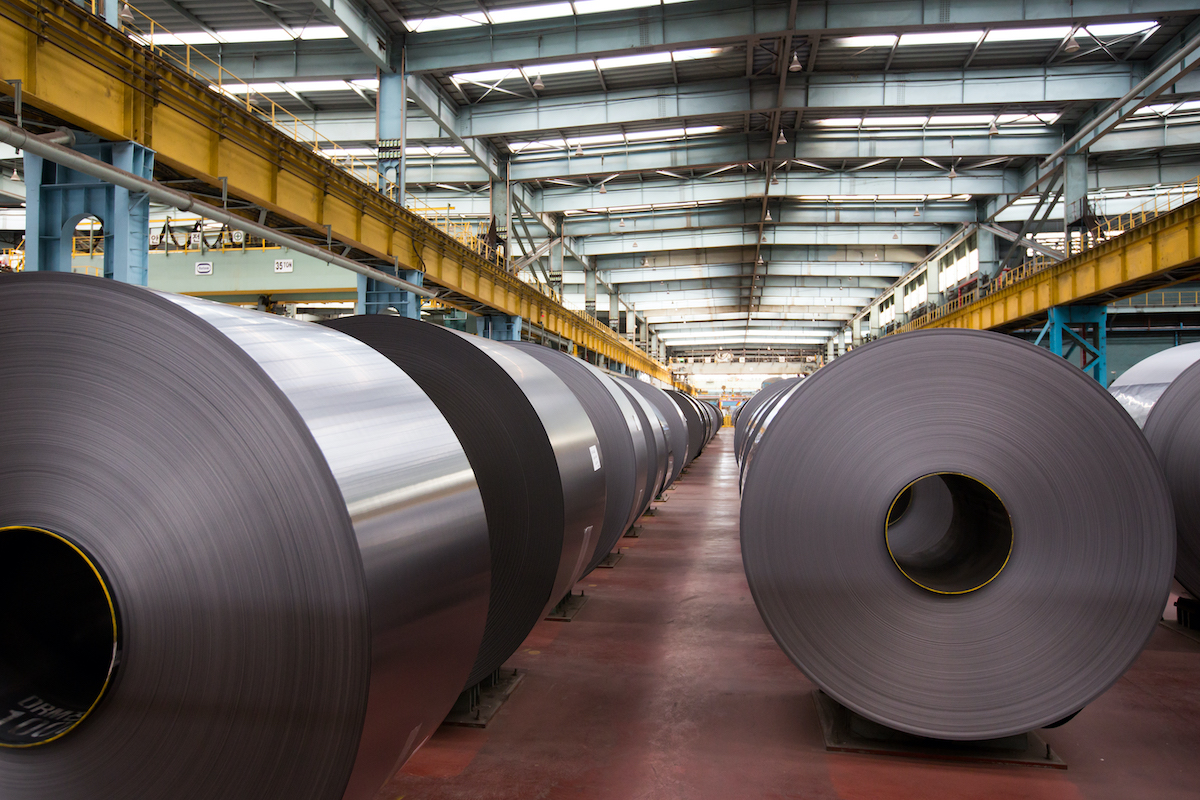
Platts assessed Northwest European HRC at Eur615/mt ex-works Ruhr Aug. 7, stable on the day.
Tradable values were reported at Eur610-620/mt ex-works Ruhr.
Meanwhile, Platts assessed domestic HRC prices in Southern Europe at Eur615/mt ex-works Italy Aug. 7, stable on the day.
Tata Steel Nederland orders pellet pot testing facility from Primetals
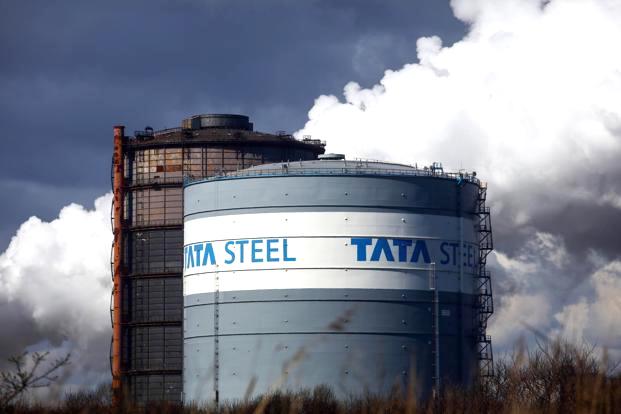
Tata Steel Nederland has chosen Primetals Technologies’ pellet pot testing facility replicating an industrial pelletizer for its pilot plant in IJmuiden, the Netherlands, where the implementation of direct iron reduction and electric steelmaking technologies will require carefully developed pellet-feed mixtures.
The European engineering company said Aug. 7 it will design, supply, and install the equipment for Tata Steel’s R&D subsidiary along with a comprehensive electrical and automation solution. The facility will handle up to six pot grate tests per day and 500 tests annually once it comes online in mid-2025.
Primetals has been operating an innovative pellet pot in Leoben, Austria, since 2014, and with Tata Steel Nederland’s testing facility, the engineering company will take this concept to the next level in terms of capacity, autonomation, and special features, the company said.
“This is one of Tata Steel R&D’s largest investments in years,” said Tata Steel R&D Director Vincent Ritman.
The chosen installation project is meant to make the connection between the pellet plant and the future direct reduction plant, and to facilitate Tata’s pellet research program by testing various concentrates and pellet-feed mixtures to achieve production of high-quality and uniform pellets, by analyzing and determining optimal temperature profiles tailored to Tata Steel Nederland’s pellet quality targets, and by generating insights on emission levels.
Tata Steel Nederland, whose blast furnace-basic oxygen furnace operating IJmuiden steelworks is capable of producing up to 7.5 million mt/year of steel coil, aims to reduce CO2 emissions by 40% by 2030 and to become carbon neutral by 2045, with the ambition requiring transformation of the Ijmuiden’s whole iron and steelmaking processes. This means the mill’s switchover to gas- and hydrogen-powered direct-reduced iron technology along with an EAF-based steel plant.
The implementation of the new plants means that Tata Steel Nederland will operate partly with new types of raw materials, while dealing with higher requirements on pellet qualities, and the Primetals’ pellet testing facility will play a role in ensuring optimal raw material mixes for the future pelletizing plant, and optimal parameters for the induration process.
Tata Steel Nederland is implementing its transition to a green steel producer in three stages, with the first and second ones to be completed by 2030 and during the 2030s with direct reduced iron smelting and electric arc furnaces replacing blast furnaces Nos. 7 and 6 and coke and gas plants Nos. 2 and 1 with the cumulative 80% reduction in CO2 emissions.

ArcelorMittal completes Vallourec acquisition
ArcelorMittal has successfully completed the acquisition of French pipemaker Vallourec. This was done at a price of €14.64 per share, resulting in a total purchase price of €955 million ($1.043 billion). The steelmaker currently has a significant stake in the pipemaker, with 28.4% of the voting rights and 27.5% of the share capital, Kallanish notes.
Genuino Magalhaes Christino and Keith James Howell will be appointed as directors, while Aditya Mittal will serve as an observer. ArcelorMittal has no plans to initiate a tender offer for Vallourec’s remaining shares in the next six months. Any change in this intention will be communicated to the market, a joint statement says.
Vallourec is focusing on developing products for the energy transition. The company is changing its structure to strengthen the performance of its New Energies division. The geothermal energy, hydrogen, carbon sequestration, solar energy and biomass tubular solutions are now integrated into the business line headed by Bertrand de Rotalier. This has been renamed “New Energies, Project Line Pipe and Process”. Vallourec aims to reach 10-15% of Ebitda from New Energies by 2030. Earlier this year, ArcelorMittal agreed to acquire 27.5% of Vallourec. Aditya Mittal said Vallourec has a critical role to play in the energy transition, producing vital products for hydrogen, carbon capture and geothermal applications, for which demand is expected to grow (see Kallanish 13 March).
The acquisition makes ArcelorMittal the largest single shareholder, with most Vallourec shares publicly listed.
Natalia Capra France