

ADI targets 2mt output this year
Italian steelmaker Acciaierie d’Italia (ADI) aims to reach between 1.9-2.2 million tonnes of steel output in 2024. Based on the most recent update of the relaunch plan communicated to workers, ADI’s special commissioners have set a target to restart blast furnace No.1 in October of this year. In 2025, around January or February, BF No. 2 will also be restarted. Production will be assured by BF No. 1, 2, and 4 by the first quarter of 2026. By 2025, the plant is projected to achieve a capacity of 4.5-5m/t.
Currently, Taranto is utilising only BF No. 4. BF No. 5 has been inactive for a number of years, while 1 and 2 ceased production a few months ago. An agreement has been reached between the Labour Ministry and the workers for a temporary layoff scheme that will involve 4,050 employees until 2026. 3,500 workers will be from the Taranto steelworks, while the remaining 450 are from other sites in the north of Italy. To implement the relaunch, ADI will secure a loan of €620 million ($676m).
Last week, the Ministry of Enterprises and Made in Italy and the special commissioners of ADI, the former Ilva, have invited expressions of interest for the acquisition of the struggling steelmaker’s assets. These must be submitted by 23:59 Italian time on 20 September. “The special commissioners intend to jointly carry out … a coordinated sales procedure … with the view to transferring the assets and businesses belonging to Ilva and the Ilva subsidiaries, as well as certain specific assets and contractual relationships belonging to ADI and the ADI subsidiaries, which are functional to the operation of the business and/or the individual business units,” reads the invitation document obtained by Kallanish.
The aim of the sale is to swiftly and effectively reduce CO2 emissions and enhance steel production in Italy, by bringing about a change in the management. The text asks potential buyers to preserve employment, with the view to significantly reducing the use of social safety nets compared to the current scenario.
Meanwhile, representatives of Indian trading company Steel Mont, Metinvest, Oman-based Vulcan Green Steel (VGS) and Canada’s Stelco have visited Acciaierie d’Italia’s plants in Genova, Novi Ligure and Taranto in recent weeks, with a view to potentially acquiring the producer (see Kallanish passim).
Natalia Capra France


Trading on pause in European HRC market; prices static
Fastmarkets calculated its daily steel hot-rolled coil index domestic, exw Northern Europe at €620.00 ($677.73) per tonne on Wednesday, stable day on day.
The index was down by €0.71 per tonne week on week and by €11.00 per tonne month on month.
The summer holiday season was in full swing across Europe, and trading in the HRC market was said to be “non-existent”.
“The market is very quiet, if not fully asleep,” a steel service center source in the Benelux area said.
Firm offers were also rare because mills were considering how to react to weak demand from the market, the pessimistic outlook for the automotive industry and the uncertain outlook for construction, sources said.
“On the one hand, [a] price increase is absolutely necessary, we operate with squeezed margins or no margins, but at the same time, the market fundamentals are not supportive of a price rise,” a mill source said.
Buyer sources estimated the tradeable values for HRC in Northern Europe at €600-620 per tonne ex-works.
Some sources suggested that €590 per tonne ex-works was achievable for larger volumes, but this could not be confirmed with suppliers.
“[The price of] €600 [per tonne ex-works] seems to be a red line for the mills,” a buyer in Germany said.
Some suppliers were aiming for €660-670 per tonne ex-works for October-delivery coil, but it remained to be seen whether the market would be ready to accept high prices after the summer break, sources said.
In Southern Europe, Fastmarkets calculated its daily steel hot-rolled coil index domestic, exw Italy at €620.00 per tonne on Wednesday, unchanged from Tuesday.
The index was down by €0.63 per tonne week on week and by €4.10 per tonne month on month.
The Italian market was completely quiet, with both buyers and sellers absent from trading.
Buyer sources estimated the workable market level at €600-620 per tonne ex-works.
Italian mills were expected to come back with new offers in end-August.
The latest offers for September-delivery coil were heard at €640-650 per tonne delivered (€630-640 per tonne ex-works) in end-July.
But industry sources pointed out that local suppliers were likely to attempt a price rise after the holidays.
The market for overseas coil was also quiet amid news of looming anti-dumping investigations into certain origins, Fastmarkets reported.
Published by: Julia Bolotova

Ukraine’s new green steel law will help integration into EU market, but adds pressure during wartime
The law could help to attract foreign investment into the rebuilding of metal and mining enterprises in Ukraine.
Meanwhile, unification of local legislation with European directives will make Ukraine’s licensing procedures clearer to foreign trading partners, which will also facilitate the rebuilding process.
But businesses in Ukraine have a limited time to meet the requirements of the new law, which is putting extra pressure on them, considering the wartime challenges they already face.
“Ukraine wants to ease its entrance into the European Union. This means that our business will need to switch to new standards faster than was expected,” a spokesperson for key Ukrainian steelmaker Metinvest told Fastmarkets.
“The new law raises concerns because of the [short] time allowed for modernization, and the economic pressure that it will put on Metinvest,” the spokesperson said. “[The] terms under which the best available technologies [a mandatory requirement] should be implemented, and the decommissioning of outdated equipment should happen, could be a challenge during wartime.”
According to the law, within four years of the law being enacted, companies should obtain an integrated environmental permit, which will set specific emissions and waste standards for enterprises.
“By October 2028 [the deadline for permit applications],” a spokesperson for ArcelorMittal Kryvyi Rih told Fastmarkets, “we are obliged to carry out a large number of preparatory actions and to have [a specific] investment plan, and the potential financing sources we will use for modernization of equipment, according to the best available management technologies and methods (NDTM) in production.”
ArcelorMittal Kryvyi Rih (AMKR) is Ukraine’s other large steelmaker.
“Under martial law, when companies are economically unstable, [those requirements] will be extremely complicated,” AMKR said. “[It is] unclear how [we will be able to bring into effect] ecological modernization, and which international companies are ready to visit Ukraine [to perform] construction and engineering works.”
Before Russia’s full-scale invasion of Ukraine, local steel businesses had already been dealing with foreign engineering and technological companies on modernization projects, the company added.
“The law may help to raise funding for our environmental initiatives,” Metinvest said. “However, it is extremely difficult to attract foreign financing for a plant over which missiles fly every day.”
EU’s CBAM affects Ukraine’s decarbonization policy
The hostilities, and the loss of vital logistics routes through ports on the Black Sea and Sea of Azov, have significantly affected export volumes and the sales geography of Ukrainian producers.
Even after late August 2023, when the so-called ‘sea corridor’ allowed iron and steel products to be exported via the ports of greater Odesa, the EU remained the key market for Ukraine-origin products.
According to estimates by market sources, more than 80% of Ukraine’s finished steel goods and 80% of its iron ore are exported to the EU, so it is crucial for Ukraine to align its decarbonization policy with the EU.
The European Carbon Border Adjustment Mechanism (CBAM) is a tool intended by the European Union to put a fair price on the carbon emitted during the production of carbon-intensive goods that enter the bloc.
The CBAM transition period began on October 1, 2023. This phase, when EU authorities will test the mechanism without imposing any duties, will run until the end of 2025, with full implementation to start in 2026.
The CBAM will be gradually phased-in from 2026 to 2034, alongside the phasing-out of the free carbon allowances applicable under the European Emissions Trading Scheme (ETS).
Buyers of imported goods will have to submit CBAM declarations on a quarterly basis. These declarations should contain the following information:
• Total quantity of each type of goods imported in the previous calendar year
• Total embedded emissions associated with the imported goods
• Total number of CBAM certificates to be transferred for surrender
• Copies of verification reports issued by the accredited verifier.
The price of the certificates will be calculated by the European Commission on a weekly basis, based on the average price of the closing EU ETS carbon dioxide (CO2) allowances for each week.
The price of a carbon emissions permit in the EU was €65-70 ($71-77) per tonne in July 2024. The EU intended that the free allocation of such permits would be fully eliminated by 2034.
Market sources have estimated that CO2 allowance prices would jump to €200-250 ($219-273) per tonne when the free allocations are phased out.
CO2 emissions by Metinvest’s Kamet Steel asset, an integrated long steel producer located in central Ukraine, were 2.3 tonnes per tonne of produced steel in 2023.
Two years before, however, the company’s CO2 emissions per tonne of produced steel were at a lower figure of 2.17 tonnes in 2021.
This was because these results included the Ilyich Iron & Steel Works and Azovstal, both of which have now been destroyed by the war but were located in Mariupol, now occupied by Russian forces. Before the invasion, Metinvest had concentrated its ecological initiatives on these assets.
The company also partly owns integrated flat steel-making asset Zaporizhstal Iron & Steel Works in Zaporizhzhia.
In 2022, Metinvest’s CO2 emissions amounted to 2.45 tonnes per tonne of steel.
AMKR, which is also an integrated mill, declined to comment on its emission volumes.
The phasing-out of free allocations to industries under the ETS will start with a 2.50% cut in 2026, along with the CBAM phase-in. By 2030, the free allocations will be almost halved (down by 48.50%), before being completely phased out in 2034.
“[A total of] 80% of ETS carbon allowances is distributed [and] only 20% is paid for. From 2026, the mills will have to start paying for them,” a distributor in Europe said.
The EU’s ambitious decarbonization goals, and the growing cost of carbon emissions under ETS, has been stimulating European steelmakers to invest heavily in the decarbonization of their operations, using steelmaking methods that reduce CO2 emissions.
As a result, European steelmakers see CBAM as a necessary tool to ensure a fair and level playing field for all steel suppliers into the EU.
“We aim to reindustrialize Europe into a green economy,” a steel mill in Europe said, “so we need to measure the emissions [related to the] steel that comes in from abroad, and make sure that we are all competing under the same conditions.”
Modernization ambitions of Ukrainian steel companies
Both of the key Ukrainian steelmakers, Metinvest and ArcelorMittal, currently produce steel via the basic oxygen furnace-blast furnace (BOF-BF) route. But, taking the above into account, they are now considering a transition to steel production via electric-arc furnaces (EAFs) or other technologies that will help to reduce emissions.
This, however, would seem to be possible only after the end of military operations in the country.
“Currently,” AMKR told Fastmarkets, “the company is implementing legislation on monitoring greenhouse gas emissions for large industrial equipment, and is undergoing verification of the monitoring report by an independent accredited organization.
“For the post-war period, we are considering all technologically possible options for CO2 emissions reduction, including the construction of an electric-arc furnace, the installation of solar power plants, etc,” the company added.
“Improving the quality of iron ore products for direct-reduced iron technology is important for low-carbon steel production,” Metinvest said.
“For example, the Central mining and processing plant can already produce 2.3 million tonnes [per year] of high-quality pellets. We plan to design facilities for the production of direct-reduction iron [DRI] and hot briquetted iron [HBI] in Kryvyi Rih,” it said.
“A transition to steel production technologies aimed at significant reduction of CO2 emissions in the short and medium terms is a strategic step toward the gradual elimination of blast- and open-hearth furnaces, and their replacement with electric-arc furnaces or other available technologies,” it added.
Interpipe is the sole EAF-based steel producer in Ukraine, and concentrates on pipes and railway products. It did not respond at the time of publication to a request for comment on its current operations or future projects.
Published by: Julia Bolotova, Marina Shulga, Vlada Novokreshchenova
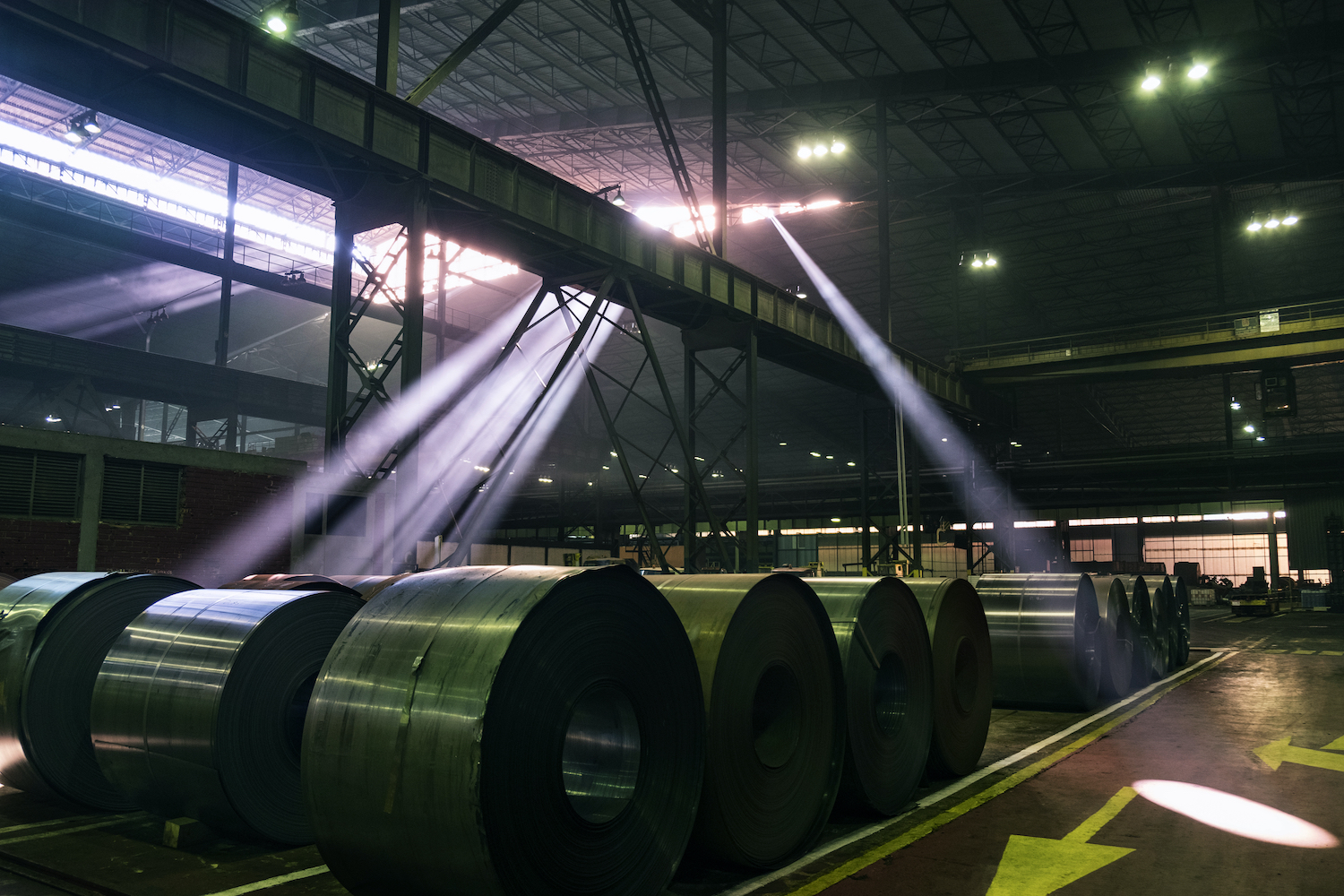
EU starts major hot-rolled flats anti-dumping investigation
The EU has initiated an anti-dumping investigation on imports of hot-rolled flat steel from Egypt, India, Japan, and Vietnam, according to the Official Journal of the European Union on Thursday 8 August.
The complaint was lodged on 24 June by the European Steel Association Eurofer, Kallanish notes.
The product under investigation includes certain flat-rolled products of iron, non-alloy steel, or other alloy steel, whether or not in coils, including cut-to-length and narrow strip products, not further worked than hot-rolled, and not clad, plated, or coated.
The product allegedly being dumped, originating in Egypt, India, Japan, and Vietnam, is currently classified under CN codes 7208 10 00, 7208 25 00, 7208 26 00, 7208 27 00, 7208 36 00, 7208 37 00, 7208 38 00, 7208 39 00, 7208 40 00, 7208 52 10, 7208 52 99, 7208 53 10, 7208 53 90, 7208 54 00, 7211 13 00, 7211 14 00, 7211 19 00, ex 7225 19 10 (TARIC code 7225 19 10 90), 7225 30 90, ex 7225 40 60 (TARIC code 7225 40 60 90), 7225 40 90, ex 7226 19 10 (TARIC codes 7226 19 10 91, 7226 19 10 95), 7226 91 91, and 7226 91 99.
The investigation of dumping and injury will cover the period from 1 April 2023 to 31 March 2024.
The examination of trends relevant to the assessment of injury will cover the period from 1 January 2021 to the end of the investigation period.
The investigation will be concluded within one year, with a maximum extension of 14 months. Provisional measures may be imposed in seven-eight months.

US green steel market continues to face resistance to premium acceptance
“Domestic interest is there… and hasn’t changed much domestically over the past two years. Inquiries continue to come in, but nobody domestically is willing to pay a premium for green steel,” a buyer said.
A US West Coast distributor told Fastmarkets that they were “all for” green steel but said that end users “definitely” would not pay a premium for the material, adding that the price of green steel cannot be more expensive than regular steel.
Globally, steel made in the US is already comparatively greener.
The American Iron and Steel Institute credits electric-arc furnaces (EAFs) in its most recent industry profile with about 71% of US domestic steel production, compared with a global average of 26%.
EAFs have a lower carbon footprint due to their use of electricity, compared with blast furnaces (BFs), which rely on coal and generate higher emissions of carbon dioxide and other pollutants.
The domestic steel industry also has a carbon advantage because US steel producers are 75-320% more carbon efficient than global markets, Brandon Farris, vice president of government affairs at the Steel Manufacturers Association (SMA), said in July.
“The US also has a carbon advantage because we let market forces determine the production route. EAFs are inherently more efficient. Virtually every new mill built in the last 50 years in the US has been an electric furnace,” Farris added. “In contrast, when you look at the rest of the world, only around 5% of steel production in China uses the most efficient process. In Brazil, it’s around 15%.”
A second buyer told Fastmarkets that they were keeping tabs on negotiations between automotive firms and domestic mills.
“You have the mills wanting to get paid for ‘green’ steel and the automakers not wanting to be charged for it,” the second buyer said.
While customers are willing to pay a premium for better materials, steel producers must consider the economics of technological advancements for producing green steel, a mill source told Fastmarkets.
“Incentives are another word for taxes, and someone has to pay the bill,” the mill source added.
On top of buyers resisting to pay a green steel premium, some people are simply not attuned to the latest market trends, sources said.
“Most people aren’t talking about [green steel] because, right now, it doesn’t affect the average manufacturer. Buyers just don’t care about it. I don’t think anyone wants to accelerate it because it means higher costs to the end user,” a second distributor said.
But some mills are optimistic about the development and evolution of the green steel market in the US.
“We are talking to customers every day, and this topic is top of mind with many. Most [people] don’t know what they need yet but are open to discussing the direction. The more that occurs, the more the market will naturally develop,” the mill source said.
Fastmarkets’ weekly assessment of the green steel domestic, differential to US HRC, fob mill was $0 per short ton on Wednesday August 7.
Fastmarkets’ domestic green steel base price, hot-rolled coil fob US mill, weekly inferred was calculated at $679.40 per short ton. The price is the average of the most recent US Midwest and South HRC indices plus the US green steel differential.
Fastmarkets defines US green hot-rolled as having emitted carbon at or below 0.7 tonnes CO2e per 1 tonne of steel. This can be reached via native production, mass balancing, or renewable energy credits. Carbon offset credits are explicitly barred. The full methodology can be found here: fastmarkets.com/methodology.
“Globally, the only movement [toward green steel] is coming from European automotive [original equipment manufacturers]. They are not only ready but are consistently paying a premium on green steel,” the first buyer said.
Fastmarkets’ latest assessment of the green steel domestic, flat-rolled, differential to HRC index, exw Northern Europe was €170-250 per tonne on August 1.
Meanwhile, Fastmarkets’ latest assessment of the green steel import, differential to HRC index, cfr Vietnam was $150-200 per tonne on August 2.

Heine + Beisswenger weiht neues Logistikzentrum in Trossingen ein
Um seine Präsenz im Schwarzwald zu stärken, hat der Stahlhändler Heine + Beisswenger in Trossingen ein neues Hochregal eröffnet. Die Anlage ermöglicht einen breiteren Service und adressiert dadurch auch neue Kundengruppen.
Dem Unternehmen ist es gelungen, das Projekt innerhalb von 15 Monaten zu realisieren. Die Investitionen belaufen sich eigenen Angaben zufolge auf sieben Millionen Euro. „Heine + Beisswenger stärkt mit dieser Investition den Servicegrad für unsere Kunden vor Ort, hier in der Industrieregion Schwarzwald-Baar-Heuberg. Diese Region gehört zu den Herzkammern des Mittelstands in Baden-Württemberg“, sagte CEO Prof. Dr. Rainer Lindner in seiner Rede zur Eröffnung.
Das vollautomatisierte Hochregal ist 45 Meter lang, 23 Meter breit, 22 Meter hoch und enthält über 3.500 Kassetten. Die Bruttokapazität beträgt 15.000 Tonnen, die Lager- und Bearbeitungsmöglichkeiten wurden erweitert und die Energieeffizienz verbessert. Beliefert werden sowohl bestehende als auch neue Kunden aus verschiedenen Branchen wie Automotive, Maschinenbau, Landwirtschaft oder Medizintechnik zu bedienen.
Bei der Einweihung zu Gast waren unter anderem Susanne Irion (Bürgermeisterin der Stadt Trossingen), Thomas Albiez (Geschäftsführer der IHK Schwarzwald) und Tim Wenniges (Stv. Hauptgeschäftsführer der Unternehmer Baden-Würtemberg).
Lesen Sie auch: Heine + Beisswenger schafft neue Position für Digitalisierung

European HRC market quiet amid summer slowdown; expectations mixed
The summer holiday season was limiting trade across the European HRC market; firm offers were rare, and sources pointed out that suppliers preferred a “case-by-case” approach.
Buyer sources estimated the workable market level to be at €600-620 ($657-679) per tonne ex-works.
Some sources suggested that €590 per tonne ex-works was achievable for larger volumes, but this could not be confirmed with suppliers.
The latest offers for September-delivery HRC were heard at €620-650 per tonne ex-works in Northern Europe, while some mills were aiming for €660 per tonne ex-works for October-delivery cargoes.
As a result, Fastmarkets calculated its daily steel hot-rolled coil index domestic, exw Northern Europe at €620.00 per tonne on Tuesday, down by €2.08 per tonne from €622.08 per tonne on Monday.
The index was down by €5.00 per tonne week on week and by €11.00 per tonne month on month.
Meanwhile, the post-summer price direction was still unclear.
On the one hand, sources suggested that the inflow of cheap imports into the EU will be limited by new safeguards, as well as looming anti-dumping investigations against certain origins; and that, along with restocking, would help European mills to achieve higher prices.
“We still expect [HRC] prices to move up from the end of August or beginning of September as buyers will buy more domestically,” a buyer in the Benelux area said.
At the same time, sources said that real consumption remains weak, and is unlikely to recover until the end of the year – a view that was echoed by European steel industry association Eurofer in its quarterly outlook published at the end of July.
“Without consumption rebound we cannot speak about any sustainable price recovery,” a second buyer said.
In Southern Europe, Fastmarkets calculated its daily steel hot-rolled coil index domestic, exw Italy at €620.00 per tonne on Tuesday, unchanged from a day earlier.
The index was down by €1.25 per tonne week on week and down by €4.10 per tonne month on month.
The Italian market was silent on Tuesday. Local suppliers have started summer maintenance work and were expected to come back to the market with fresh offers at the end of August, Fastmarkets heard.
Buyer sources estimated the workable market level to be at €600-620 per tonne ex-works.
In terms of imports, sources reported an offer from one Japanese supplier at €580 per tonne CFR to Southern Europe, for October-shipment HRC.
From Turkish mills, September-October shipment HRC was offered at €570-590 per tonne CFR, including the duty.
From Vietnam, offers were reported at €560-570 per tonne CFR. For large volumes, offers were heard at €540 per tonne CFR to some regions.
Darina Kahramanova in Sofia contributed to this report.
Published by: Julia Bolotova

ArcelorMittal launches HyMatch steel for hydrogen transport
ArcelorMittal is launching a new steel product for the construction of hydrogen pipelines to support the roll-out of hydrogen gas infrastructure.
Its new steel grade to support pipe manufacturers is called HyMatch, featuring fine and homogeneous microstructure and good cleanliness, resulting in low risk of hydrogen embrittlement, Kallanish hears from the company.
It notes that research programmes for steel in hydrogen infrastructure are underway at ArcelorMittal production sites, including in France (Fos-sur-Mer), Germany (Bremen) and R&D laboratories including in Belgium (Gent). Production in Fos and Bremen offers proximity to pipe manufacturers based in the Mediterranean countries and North Sea region.
Natural gas pipelines – including existing and new infrastructure – are expected to be used in the future for the transportation of hydrogen from the production facilities to the main consumption sites. ArcelorMittal highlights that HyMatch steel fulfils the requirements of industry standards such as ASME B31.12 option B, and are being tested according to the latest industry guidelines.
HyMatch steels can be purchased alongside ArcelorMittal’s XCarb steel certificates, allowing customers to report an equivalent reduction in their Scope 3 emissions.
Christian Koehl Germany

Liberty Dunaújváros gets billion euro financing from China
China’s Export and Credit Insurance Corporation (Sinosure) will support the transition of Liberty Dunaújváros to convert to low-emission technology to the tune of €1.3 billion ($1.4 billion), according to media reports.
To that purpose, Sinosure has signed a memorandum of understanding (MoU) with China’s CISDI Engineering, writes the Budapest Business Journal. CISDI was earlier contracted by Liberty to carry out the modernisation of the Hungarian mill (see Kallanish 16 May). The contract includes a 1.5 million tonnes/year capacity EAF installation as well as the secondary metallurgy and hot strip mill upgrade. These will allow the business to deliver high-value products for the automotive sector in Hungary, Liberty said.
The project from an early stage had the support of the Hungarian and Chinese governments, to be funded by Chinese banks led by CITIC Bank and backed by Sinosure, but the amount was not revealed thus far.
The announcement of the MoU was made during a visit by CISDI representatives to Liberty Dunaújváros’ steelworks, according to the local news reports. The officials reportedly consulted with experts of Switzerland’s NPT and Germany’s RCG on optimising systems at the base and building ancillary support for electricity, gas, water and steam.
Christian Koehl Germany

European HRC prices hold steady amid summer slowdown
Fastmarkets calculated its daily steel hot-rolled coil index domestic, exw Northern Europe, at €622.08 ($678.70) per tonne on Monday, up by €1.58 per tonne from €620.50 per tonne on August 2.
The index was down by €1.67 per tonne week on week and by €8.92 per tonne month on month.
Mills in Northern Europe were heard offering September-delivery HRC at €620-640 per tonne ex-works, with some suppliers even offering the material at €610-620 per tonne ex-works, Fastmarkets heard.
Trade sources estimated the workable market level at €600-630 per tonne ex-works.
According to producer sources, a degree of price rebound could be seen in September. This would be supported by the comparatively low stocks across the entire supply chain, combined with limited imports due to the new European safeguard measures.
But another producer source was skeptical about how sustainable such a rebound could be, because of the persistently slow real demand.
A buyer source was even more pessimistic, saying that “there will not be a price rebound any time soon.”
In Southern Europe, meanwhile, Fastmarkets calculated its daily steel hot-rolled coil index domestic, exw Italy, at €620 per tonne on Monday, down by €0.63 per tonne from €620.63 per tonne on Friday.
The index was unchanged week on week but down by €4.10 per tonne month on month.
“The market is dead,” a buyer source told Fastmarkets. Producers in Italy have started summer maintenance work and were expected to come back to the market with fresh offers at the end of August, Fastmarkets heard.
The most recent offers heard at the end of July were at €640-650 per tonne delivered, which would net back to €630-640 per tonne ex-works.
But buyer sources estimated the workable market level at €620 per tonne ex-works.
In terms of imports, last week, offers from Turkey were heard at €570-590 per tonne CFR, including anti-dumping duty.
A Japanese offer was head at €580 per tonne CFR to Southern Europe, for October-shipment HRC.
Vietnamese HRC was offered at €560-570 per tonne CFR. For large volumes, offers were heard at €540 per tonne CFR to some regions.
“Currently, we see that customers are hesitating to buy [such material] due to the possible anti-dumping investigation against imports from ‘other countries’,” a buyer source told Fastmarkets.
The European Commission has received a complaint asking for an anti-dumping investigation to be launched into imports of steel hot-rolled coil from Vietnam.
According to the buyer source, similar investigations are possible for other origins as well.
Published by: Darina Kahramanova