


Iberian HRC market maintains price stability
The Spanish coil market has remained stable for more than one month. Most buyers had ordered what they needed by the end of July. Demand from the major consuming sectors is slowing but the market looks set for a possible recovery in September, Kallanish understands from local service centre sources.
Mills’ S235JR grade hot rolled coil quotes are stable at some €610-620/tonne ($661-672) ex-works base. Some mills are trying to offer material at the higher end of the range, but large service centres are not accepting to pay above €610/t ex-works.
“Demand is low. But not only because of the holiday season. The truth is that some sectors have been underperforming for almost a quarter, such as the automotive sector,” a market participant comments. “Purchasing activity in Spain remains weak. The slow progress of the electrification of the car fleet in Spain has had an impact on the activity of manufacturers, who have also seen their export volumes decrease.”
Another source confirms that the wind energy sector, where consumption of flat steel has been on an upward trend in recent years, is now in a very significant downturn. “We expect a recovery of the [wind energy] sector in September, although we have to be very cautious about how much HRC prices can recover. Consumption is very low and most traders have already reduced their profit margins by some €20/t,” he observes.
According to market analysts, monthly flat steel consumption in Spain now ranges from 250,000-300,000 tonnes.
Todor Kirkov Bulgaria


Europe’s apparent demand for flat steel to grow only marginally in H2, ArcelorMittal says
Although ArcelorMittal confirmed that destocking would not continue this year, after having a negative effect on apparent demand in 2023, the company downgraded its previous forecast. Apparent demand was now expected to increase by 2-4% in 2024.
“Because absolute inventory levels remain low, particularly in Europe, the company remains optimistic that restocking activity will occur once real demand begins to recover,” ArcelorMittal said.
But it expected a decline in real demand from both the automotive and the machinery industries in Europe by the end of the year.
ArcelorMittal added that current market conditions were still unsustainable, with European prices being below the marginal cost.
According to the company’s data, the average steel selling price in Europe dropped by 1.7% to $929 per tonne in the second quarter, compared with $945 per tonne in the first quarter of the year.
Fastmarkets’ daily steel hot-rolled coil index, domestic, exw Northern Europe, also showed that, after the short-lived rebound of apparent steel demand in January-February 2024 related to restocking, market activity deteriorated, with prices for such material under pressure.
For example, in March, the price for HRC in Northern Europe averaged €691.99 ($748.99) per tonne, compared with €731.73 per tonne in January.
The average price for the material in June was even lower. at €632.65 per tonne. The negative trend seemed to be continuing in the third quarter, with the average monthly price of HRC in July at €629.12 per tonne.
But according to Fastmarkets’ sources, a degree of price rebound, mainly driven by restocking, could be seen in the fourth quarter of the year.
ArcelorMittal Europe’s key indicators
ArcelorMittal’s crude steel production from its European operations reached 8.04 million tonnes in the second quarter of 2024, compared with 7.60 million tonnes in the previous quarter.
The company’s steel shipments increased in the second quarter to 7.41 million tonnes, from 7.24 million tonnes in the first quarter.
Sales in the second quarter were largely stable at $7.82 billion, compared with $7.85 billion in the previous quarter.
“[This was] primarily due to improved steel shipment volumes, particularly for long steel products, which increased by 13.7%, offset by the 1.7% decline in average steel selling prices,” the company said.
The operating income of the European division of the company reached $194 million in the second quarter of the year, compared with $69 million in the previous quarter.
ArcelorMittal said that the improved financial result was due to the positive price-cost effect. The company added that it had managed to achieve a significant reduction in costs, enough to compensate for the lower steel selling prices.
Another factor was the higher steel shipments.
Consequently, ArcelorMittal Europe’s earnings before interest, taxes, depreciation and amortization (Ebitda) reached $462 million in the second quarter, up by 34.8% compared with the previous quarter.
Sustainable development
ArcelorMittal was expanding its interest in sustainable development, with the company now focusing on the production of hydrogen transport pipelines and solutions for low-carbon emissions buildings, the financial report said.
The company has launched a new steel brand for hydrogen transport pipelines, HyMatch®, which was intended to support the implementation of hydrogen infrastructure globally. The HRC used to make these pipes was being produced at Fos-sur-Mer, France, and Bremen, Germany, a company spokesperson told Fastmarkets.
Asked whether the pipes under the new brand would be green steel products, the spokesperson explained that HRC supplied by ArcelorMittal Europe Flat Products had an embodied carbon footprint of 2.23 tonnes of CO2e per tonne of steel, calculated according to the ISO 14025 and EN 15804 standards. XCarb® steel certificates reduce this CO2 effect by 2.1 tonnes of CO2e per tonne of steel.
“The EU has high ambitions for the production of green hydrogen [10 million tonnes by 2030], so it is reasonable to expect that there will be significant and growing demand in the coming years,” the spokesperson added.
According to the spokesperson, there was significant interest among customers for HyMatch steel because there were more tenders for pipeline projects requesting compatibility with the transport of hydrogen.
Hydrogen was expected to be the fuel of the future, and would help steel producers to decrease their carbon emissions significantly. But investments in hydrogen transportation infrastructure have yet to be made.
ArcelorMittal has also acquired Italian and Spanish businesses called Italpannelli, the company announced. The move was expected to build on ArcelorMittal’s exposure to insulation panels for low-carbon emissions buildings. The acquisition would also help the company to expand its current offerings in that field under its Steligence brand.
Expansion in the field of low-carbon emission buildings was expected to boost the demand for green long steel products, which currently lags compared with the demand for green flat steel, trade sources told Fastmarkets.
ArcelorMittal added that the construction of its 1.1 million tonnes per year electric-arc furnace (EAF) in Gijón, Spain, has started. The project was part of the company’s decarbonization program, with the new EAF expected to become operational in 2026.
Published by: Darina Kahramanova


CRC, HDG prices in Europe slide on weak end-user demand
Domestic prices for cold-rolled and hot-dipped galvanized coil across Europe were under pressure from weak end-user demand and an unclear post-summer outlook, sources told Fastmarkets on Wednesday July 31.
Subdued demand from major end-user sectors, especially the automotive industry, kept trading quiet in both the CRC and HDG markets across Europe, sources said.
Mills have thin order books, with September lead times still said to be available at some sellers.
Industry sources said that producers who typically focus on sales to the automotive sector have excess tonnage for the spot market due to a lower order intake from end users.
“All of the automotive-centric mills have problems with order books, and this is affecting spot prices [for CRC and HDG],” a buyer in the Benelux area said.
Rare CRC offers from mills in Northern Europe were heard around €730-740 ($790-800) per tonne delivered, equivalent to €720-730 per tonne ex-works, with September lead times.
But buyers’ estimates of tradable prices were closer to €700-720 per tonne ex-works, with transactions reported within that range. Some buyers estimated an even lower achievable price of €695 per tonne ex-works, but this was not widely confirmed by industry sources.
Fastmarkets’ weekly price assessment for steel cold-rolled coil domestic, exw Northern Europe was €700-720 per tonne on Wednesday, down by €10-20 per tonne from €720-730 per tonne on July 24.
For HDG, offers from integrated suppliers were heard at €740-750 per tonne ex-works, but transactions were reported at lower prices — €720-730 per tonne ex-works, and even €710 per tonne ex-works for bigger lots.
“The slide in CRC and HDG prices is mainly caused by a weak auto market, and further developments will depend on how the market restarts after the holidays,” a second buyer said.
Fastmarkets’ weekly price assessment for steel hot-dipped galvanized coil domestic, exw Northern Europe was €720-730 per tonne on Wednesday, down by €10-20 per tonne from €730-750 per tonne on July 24.
No major progress was reported in negotiations for long-term contracts with original equipment manufacturers (OEMs) in the automotive industry for the second half of 2024, sources said.
“It looks like no consensus has been reached [for long-term contracts] yet, but at the same time, that’s why mills don’t want to drop spot prices more,” a second buyer in the Benelux area said.
For the first half of 2024, HDG contracts with OEMs in the automotive industry have reportedly been signed for around €900 per tonne. For the second half-year, OEMs were seeking major discounts of around €100 per tonne, while steelmakers were aiming for a rollover.
“€900 per tonne [for HDG] is no longer possible, but it’s unlikely that mills would step down by €100 per tonne. So, the most possible scenario is that [mills and OEMs] agree somewhere in between,” a third buyer said.
Imports
Overseas HDG offers to Europe were rare, with few suppliers active in the market, sources told Fastmarkets.
Vietnamese suppliers of 0.5 mm HDG with Z120 coating were said to be aiming for $820 per tonne, while Indian mills were heard offering 2 mm HDG with Z140 coating at €740-755 per tonne. Both offers were on a CFR basis to Southern Europe, Fastmarkets understands.
CRC offers from Taiwan, India and South Korea were heard at €665-680 per tonne CFR to Antwerp.
CRC from Ukraine was heard offered to southern Europe at €660 per tonne CFR.
Published by: Julia Bolotova
Slow demand, oversupply drag on European HRC prices
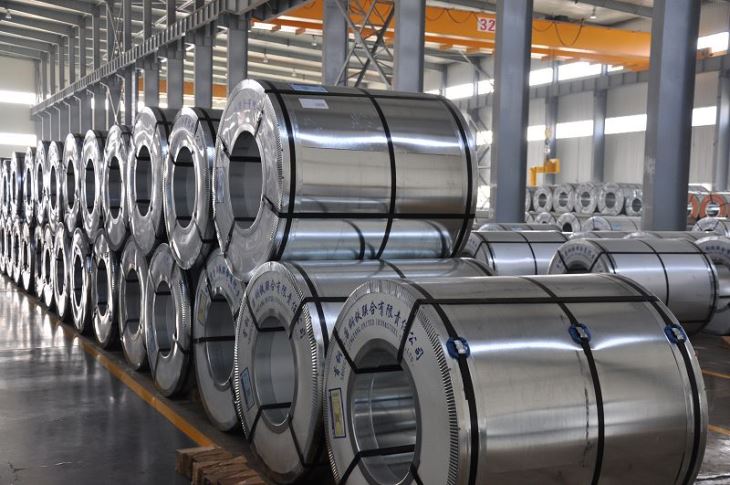
European steel hot-rolled coil prices remained under pressure from low demand among end users, with almost no trading because of summer vacation absences, industry sources told Fastmarkets on Wednesday July 31.
The HRC market in Europe went quiet in late July at the start of the vacation period.
“There is hardly any trading. Mills are quiet [and], despite drastically low demand, they seem to be unprepared to cut prices further,” a buyer sources in the Benelux area said.
Buyer estimates of the tradable price for HRC in Northern Europe were around €610-620 ($660-671) per tonne ex-works, and even as low as €590-600 per tonne ex-works in some cases.
Integrated mills in the region were offering September-delivery HRC at €630-650 per tonne ex-works, with some suppliers in Germany reported to be accepting €610-620 per tonne ex-works for bigger orders.
Two sources reported a transaction at €600 per tonne ex-works in the region, but this was not confirmed with other industry sources at the time of publication.
As a result, Fastmarkets calculated its daily steel hot-rolled coil index domestic, exw Northern Europe at €620.71 per tonne on Wednesday, down by €4.29 per tonne from €625.00 per tonne the previous day.
The index was down by €5.54 per tonne week on week and by €9.17 per tonne month on month.
No significant progress was reported in negotiations for long-term contracts with original equipment manufacturers (OEMs) in the automotive industry for the second half of 2024, sources said.
“It looks like no consensus has yet been reached [for long-term contracts], but at the same time, that’s why mills don’t want to drop spot prices any further,” a second buyer in the Benelux area said.
For the first half of 2024, HRC contracts with automotive OEMs were reported to have been signed at €750-800 per tonne.
Buyers were said to have been seeking discounts of €100 per tonne for the second half of the year, while producers were hoping for a price rollover, market sources said.
In Southern Europe, meanwhile, Fastmarkets calculated its daily steel hot-rolled coil index domestic, exw Italy at €620.63 per tonne on Wednesday, down by €0.62 per tonne compared with Tuesday’s €621.25 per tonne.
The index was also down by €0.62 per tonne week on week and down by €4.37 per tonne month on month.
The Italian market was seasonally quiet, with no major trades reported on Wednesday.
“Starting on August 1, the Italian market will be ‘closed’ for vacations, for two to three weeks,” a buyer in Italy said.
The most recent offers of September-delivery HRC from a mill in Italy were heard at €640-650 per tonne delivered (€630-640 per tonne ex-works). That price has been stable for several weeks, although a European mill was offering HRC to Italy around €620-630 per tonne delivered.
But buyer sources estimated that the workable price was €600-620 per tonne ex-works, although the lower end was not confirmed by sellers.
Sources suggested that local suppliers would undertake longer-than-usual summer stoppages in an attempt to balance the oversupplied market.
“We heard that [an Italian mill] is thinking about stopping production for the whole of August, rather than the traditional two weeks,” a buyer source in Europe said.
As for imports, market sources reported a booking for a large Turkey-origin cargo to Italy at €570 per tonne CFR, including duty. Smaller lots were offered to Southern Europe around €590 per tonne CFR (duty inclusive), or slightly below.
Market sources saw increased interest in Turkish HRC after new safeguard duties came into force in Europe.
“Turkey has a big quota, and quick shipment [times] compared with Asian countries, so those [HRC] buyers who need to book imports look at Turkey,” a second buyer in Italy said.
From Vietnam, offers were reported at €560-570 per tonne CFR. An unconfirmed offer was reported at €540 per tonne CFR to southern Europe and the Balkans, but for large volumes.
But recent news about a possible anti-dumping probe against Vietnamese HRC, along with new safeguard rules, was limiting buying interest in material from that origin.
From Ukraine, HRC was offered to Italy at €580-585 per tonne CFR.
Most overseas suppliers were offering October-shipment coil to Europe.
Published by: Julia Bolotova

Feralpi to start producing coiled products in Germany
Italian rebar maker Feralpi will begin tests by year end of the new rolling mill at its German Feralpi Stahl plant in Riesa, Saxony. This plant will produce coiled rebar weighing up to 8 tonnes for the construction market. The coils will be made through a completely electrified production process that has zero direct emissions, Kallanish learns from the company.
In its 2023 earnings report, the steelmaker confirms the investment despite the market experiencing a contraction at a European level, with a notable slowdown in the German economy.
Last year, Feralpi’s investments in production and logistics amounted to €169 million ($183m). In Germany, a new scrap yard was recently inaugurated, which has significantly improved the efficiency of the scrap treatment process, resulting in enhanced productivity and quality, the firm notes.
In 2024, the new spooler plant in Italy will become operational at the Feralpi Siderurgica plant. This will enhance the product range available to customers. Later this year, a new garret line will start operating at the Caleotto specialty steel plant, which will produce 19-32mm coil, enhancing flexibility.
Last year, Feralpi reduced by 24% scope 1 and 2 emissions. It has vowed to cut by 50% core boundary scope 1, 2 and 3 emissions in the production of hot rolled products, as well as scope 3 non core boundary emissions by 25% by 2030.
“The steel market in Europe is going through a complex period, recording a decline of around 10 million tonnes between 2022 and 2023 … In this context, Feralpi firmly maintains its market shares despite the increase in energy costs and the scarcity of scrap weighing on the electro-steel sector. We want to be ready and technologically advanced when the consumption recovery is also accompanied by ever greater attention to the quality of the product and the production process from a green perspective,” says company president Giuseppe Pasini.
Feralpi Holding maintained consistent production in 2023 at 2.42 million tonnes and generated revenue of €1.7 billion, down 27% on the exceptional result of €2.3 billion in 2022. The company’s global presence was reaffirmed as it generated 61% of its revenue from international markets, slightly lower than the previous year’s 63%.
The decrease in revenue can be attributed to rising production costs, specifically the increase in raw material expenses. This led to a significant increase in the proportion of raw material costs in the overall production value, which rose from 50.9% to 63.8%. The higher production costs caused a substantial decrease in Ebitda, which dropped to €83m from €501m in 2022.
Natalia Capra France
Acciaierie d’Italia aims for Taranto production restart in 2026
Acciaierie d’Italia (ADI)’s special commissioners aim to operate the Taranto steelworks with blast furnaces no.1, 2 and 4 in the first quarter of 2026, with the relaunch plan set to further develop until mid-2026, Kallanish learns from sources close to the company.
Over the coming months, maintenance work will be implemented on BF no.1 and 2, the special commissioners said at a meeting with authorities and unions in Rome last week. During the meeting, the tender for the sale of the assets was presented, with the goal of finalising the operation within the year. The tender incorporates decarbonisation obligations and is centred on maximising employment levels and attracting long-term investors who can bring benefits to local areas and communities.
“Acciaierie d’Italia … will diligently monitor the obligations undertaken by buyers in the industrial plan, as mandated by law,” the firm says in a note. The commissioners also emphasised that the temporary layoff scheme for ADI workers is necessary to cut costs in preparation for the restart. “The implementation of social safety nets … aims to gradually reduce the number of affected workers, starting with 4,700 in the initial phase, in line with the progress of the industrial plan until its completion,” the note concludes.
Meanwhile, potential buyers, including a local re-roller, visited ADI’s Novi Liguri coil processing subsidiary last week. Authorities are exploring the possibility of splitting up the steelmaker and selling its assets to various buyers. At present, Taranto is producing at a significantly slow pace using only BF no.4.
Natalia Capra France

Northwest European plate price takes another dip
Prices of commodity plate on the northwestern European market dwindled further throughout July. The assumption expressed by most market players in June, that the bottom line had been reached, has been proven wrong once more.
“Prices for plate have not reached the bottom, even if it looks close,” one observer stated in mid-July. By then, prices had already slid by roughly another €50/tonne ($54) from June’s level, which saw offers of S355 from integrated mills dip below €800/t ex-works. He now sees S235 at below the mark of €700/t – at €680/t. This would match with another observer’s information that the higher, S355 grade is being offered by one German mill at €730/t delivered Ruhr.
These observations are not necessarily shared by active buyers and other sources. “I have not heard those offers from integrated mills yet,” one buyer who focuses on domestic quarto plate tells Kallanish. He confirms those prices only for Italian offers. One mill source concurs with the buyer, confirming that Italian offers for northern markets are at below €700/t, while northern domestic mills are keeping offers at above that level.
According to the same observer, northwestern mills have sufficient “project business” for higher plate grades and sizes, and have reasonably well filled orderbooks, with six weeks’ delivery.
Christian Koehl Germany

Service centres, Turkey most pessimistic, says EUROMETAL survey
Flat steel service centres gave the most pessimistic view of market conditions in European steel distributors association EUROMETAL’s maiden market sentiment survey published in late July, Kallanish notes.
A total of 29 respondents in this customer segment said their assessment of current activity is slightly negative, as is their view of activity in the next quarter and their view of their stock position in the next quarter. Their expectation for prices in the next quarter is however to remain flat.
In the steel trading segment, 50 respondents indicated their assessment of current activity is slightly negative. However, their view of activity in the next quarter is slightly positive, with their view of their stock position being neutral. Their expectation for prices in the next quarter is to decline slightly.
In the stockholding distribution segment, 27 respondents said current activity is slightly negative, with the other three survey question responses coming back as neutral.
Split by customer region, almost all respondents said expectation for prices in the next quarter is to remain flat. However, in Iberia, respondents indicated a slight increase, despite being slightly negative in the other three survey question responses.
In Turkey, respondents foresaw a slight decline in prices. All regions except the Visegrad, UK + Ireland and the Balkans foresaw a slight decline in activity in the next quarter.
Turkish respondents were the most negative across the four survey questions, providing slightly negative responses for all of them.
By responder activity, only the energy and tube sectors foresaw a slight increase in activity in the next quarter. All sectors had flat price expectations for the next quarter.
Once a month, EUROMETAL will publish a summary of the survey responses. The report will present the combined opinions and previous data, aiding the market in forming a comprehensive view of trends, the association says.
“This first report conducted in July already demonstrates very different feelings in our industrial sectors (Stockholding, Flat SSC and Trading),” says the association’s director general, Ricardo Silva. The sentiment rating is split into positive/slightly positive/neutral/slightly negative/negative.
EUROMETAL divided the replies into three sets – “customer sector”, meaning association member type; “customer region”; and “responder activity”, referring to the end-use sector served.
Adam Smith Poland , Christian Koehl Germany

Revista InfoAcero Julio 2024
En el siguiente enlace pueden acceder a la edición de Julio de nuestra revista INFOACERO
Destacamos a continuación algunos de sus contenidos:
- Opinión – D. José López de Diego- Junta Directiva UAHE
- Información Asociativa: Resumen Jornada UAHE 4 de Julio- Asamblea General, Conferencias y Premios UAHE 2024
- Metal– Informe de Coyuntura Confemetal Julio – Actividad Productiva y Comercio Exterior
- Formación UAHE: cursos programados septiembre y octubre 2024
- Próximos Eventos: 20 º Fórum Productos Siderúrgicos- 16 Octubre, Castelldefels; Kallanish Flat Steel-17 Octubre, Estambul


European HRC market remains weak amid persistent demand lull
European hot-rolled coil domestic prices remained largely unchanged July 30, as weak market fundamentals persisted, with sources noting that mills need to cut capacity to support prices.
“There is very low interest in purchasing,” a distributor source said.
Sentiment remained mixed over the outlook on prices, with some sources noting that they are yet to bottom out, and others disagreeing.
“I don’t think prices will go down [below Eur600],” a trader source said.
Sources also noted that mills need to cut production to support prices, although the likelihood of this, particularly in Southern Europe, remains unknown.
“I hope [mills] cut production for prices, but in Italy it is difficult it will happen,” a trader source said. “It is one of the hardest times to make forecasts.”
Platts assessed Northwest European HRC at Eur620/mt ex-works Ruhr July 30, down Eur5 on the day.
Tradable values were reported at Eur620/mt EXW Ruhr, and at Eur590-600/mt for larger volumes.
Meanwhile, Platts assessed domestic HRC prices in Southern Europe at Eur620/mt EXW Italy July 30, stable on the day.
Tradable values were reported at Eur620-640/mt.
Geraint Moody | Devbrat Saha
