Feralpi’s new rebar mill in Germany will work with zero direct emissions
The unit was expected to address the need for long steel materials produced with reduced carbon emissions.
“For the first time in Germany, [rebar] in coils weighing as much as 8 tonnes will be produced for the construction industry, using an innovative, fully electric process with zero direct [carbon] emissions,” Feralpi said.
The construction of the new rolling mill is part of the company’s 2021-26 industrial development plan, which was intended to reduce its environmental effects through electrification.
According to Fastmarkets’ information, the new facility will have capacity for about 500,000 tonnes per year of rebar.
The company added that the technical investment related to its industrial development plan reached €169 million ($183.3 million) in 2023.
As well as the new rolling mill, the funds were invested in a new scrapyard in Germany, and technical improvements to existing facilities in Italy.
According to Feralpi Group, the investments helped the company to address the “need to offer low-emissions steel for both the infrastructure and mechanical engineering industries.”
Currently, the demand for carbon-reduced and green steel was stronger in flat steel products such as hot-rolled coil, trade sources told Fastmarkets. Such products are more expensive due to the premiums charged by producers, with the automotive industry being the main consumer.
Fastmarkets’ weekly assessment of the green steel domestic, flat-rolled, differential to HRC index, exw Northern Europe, was €170-250 ($184-271) per tonne on July 25, stable week on week.
And the assessment of the flat steel reduced carbon emissions differential, exw Northern Europe, was €40-60 per tonne on July 25, unchanged since May 30.
Regarding carbon-reduced and green long steel products, the practice of charging premiums was not widespread, trade sources told Fastmarkets. The construction sector was usually the main consumer of long steel products such as rebar and wire rod, but many companies in this field were not ready to pay additional costs.
Premiums have been charged sporadically for particular investment projects that required carbon-reduced and green steel products.
“We still need to educate the market about the advantages of green long steel products,” a producer source said.
Ambitious green goals
Feralpi Group planned to decrease its emissions of CO2 and other climate-affecting gases by 50% by 2030, the company said, adding that this referred to the Scope 1, 2 and 3 emissions related to its hot-drawn products. This goal has already been approved by the International Science-Based Targets Initiative SPTi.
In 2023, Feralpi Group reduced its Scope 1 and Scope 2 emissions by 24% year on year, the financial report said.
Challenging environment for steel products
In 2023, Feralpi Group produced 2.42 million tonnes of steel, down by 1.06% from the previous year.
But revenue dropped to €1.73 billion, compared with €2.40 billion in 2022. The decrease in revenue resulted in a significant reduction in earnings before interest, taxes, depreciation and amortization (EBITDA), which fell to €83.2 million compared with €501.7 million in 2022.
Feralpi noted that several factors weighed on the reduced steel demand, including the shift in consumption from goods to services, the weakening of European industry, and the more difficult conditions for investments.


Italian longs prices flatten in quiet market
Italian merchant bar prices remain stable on-week. Sales have nevertheless failed to pick up in July after a lack of demand in the first half of the year, Kallanish notes.
Based on reports from various buyers and sellers, it appears the consumption crisis in Europe has become a long-term structural issue. The current range for domestic merchant bar is at €280-320/tonne ($302-346) delivered. Deals achieving the peak of the range has been a rare occurrence lately, happening in recent days only for one truckload.
Material from other EU countries is priced at approximately €20/t less. Prices are currently fluctuating at around €700-740/t, including size extras.
Sales volumes for products derived from wire rod have however shown consistent strength, both in July and throughout the first seven months of the year. Two agents selling various long products claim they were able to achieve satisfactory sales volumes due to the high-added-value products derived from wire rod. A distributor mentions that apart from merchant bar, he experienced average sales, thanks to better demand for other longs like beams.
Sections producers, including ArcelorMittal, have decided to raise prices by €20/t for July contracts (see Kallanish 24 July). Beams supply is extremely limited in Italy and demand is stronger compared to other long products. According to sources, prices for the first category are at around €770-790/t delivered, which includes a €20/t increase. Some sellers agree this price is effective, but it needs to be consolidated.
Natalia Capra France


Eurofer lowers EU demand forecast amid ‘worsening’ uncertainties
Eurofer has revised down its EU apparent steel consumption forecast for 2024 to 1.4% growth – from 3.2% – amid a steeper-than-expected downward trend. Steel-using sector output is now seen declining 1.6% – versus 1% – while imports’ share in EU steel consumption remains at a historically high 27%, Kallanish notes.
This comes after first-quarter apparent consumption slumped 3.1% on-year to 31.9 million tonnes. Although moderate quarterly improvements are expected throughout 2024, volumes will remain below pre-pandemic levels, with the overall evolution of steel demand remaining highly uncertain, Eurofer observes.
Domestic deliveries contracted 5.8% in Q1, after a moderate, 1.3% increase in the preceding quarter. Imports continued increasing, growing 12% in Q1.
Despite proving resilient in 2023, EU steel demand is suffering from “a worsening combination of uncertainties”, including high energy prices, persistent inflation, economic uncertainty and geopolitical tensions, Eurofer notes. These are exacerbated by a manufacturing crisis affecting the largest steel-using sectors.
Steel-using sector output fell 1.9% in Q1 as a result of a continued downturn in the construction, mechanical engineering, domestic appliances and metalware sectors. Following a strong 2023, automotive output also entered negative territory, a trend expected to continue throughout 2024, with Eurofer revising down the sector’s 2024 forecast to 3% contraction versus the previous 0.4% contraction forecast.
The overall steel-using sector output growth forecast for 2024 was revised down from the previous 1% contraction due to the second consecutive year of recession forecasted for the construction sector, persistent geopolitical tensions, and the lagged impact of high interest rates on manufacturing.
“The situation requires urgent action at EU level, as both European steel production and related clean tech value chains are at risk,” says Eurofer director general Axel Eggert. The association looks forward to the European Commission delivering a European Clean Industry Deal with a Steel Pact at its core, he adds.
Adam Smith Poland
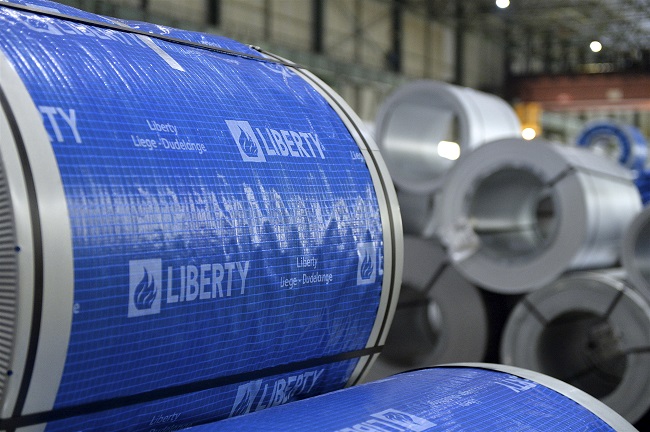
Liberty Galati restarts BF amid plate, coated demand
Liberty Galati will restart its blast furnace No.5 in the coming days, on the back of healthy demand for plate and coated products, the firm says.
Galati temporarily idled its hot end in May to “ensure a profitable and sustainable production”, with rolling continuing using slab from stock. Liberty’s Dunaújváros plant in Hungary had been supplying coke feedstock to Galati but began the process of closing its two coke oven batteries in June.
The restart comes after Liberty Group executive chairman Sanjeev Gupta met with Romanian Deputy Prime Minister Marian Neacsu in Bucharest this week. The meeting covered Galati’s imminent restart plans to serve local customers in infrastructure and shipbuilding, and Liberty’s plans for investment in green steel in Romania.
The company requested government support related to CO2 certificate allocation and the existing incentives for energy intensive consumers. The Romanian government will work with the company to identify solutions to support the restart of the blast furnace, Liberty notes.
“With the business now in a more stable position, the restart of blast furnace No.5 will help to exploit the advantages the business has in supply of plate and coated products to our customers that includes critical infrastructure projects in Romania and across Europe,” Liberty says. Galati is a “standalone ringfenced business, unaffected by the issues faced by its sister plant in Ostrava,” it adds.
The Ostrava regional court commenced insolvency proceedings against Liberty Ostrava on 13 June, while Liberty initiated the sales process for the steelworks and filed for a judicial reorganisation of the Czech plant (see Kallanish passim). It is unclear if the Ostrava works will find a buyer given the weak steel demand and investment climate in Europe.
Adam Smith Poland

Stahl Gerlafingen cuts output in summer
Swiss steelmaker Stahl Gerlafingen has announced short-time working for August and has filed for state subsidies, which will support some of the wages for the lost working time.
In spring, already announced that it will discontinue the production of merchant bar and sections. Together, they accounted for one third of overall approximate annual output of 700,000 tonnes. The company is since confined to making rebar.
In a statement sent to Kallanish, it details that standstills will occur in the coiling shop from 1 to 13 August, in the meltshop from 9 to 21 August, and in the finishing line from 5 to 19 August. Subsidies for short working have been approved by the regional state government, it notes.
While it is not clearly stated in the press statement, the standstills come in addition to the current summer maintenance break, writes local daily Solothurner Zeitung.
The company notes that “order intake has not developed according to expectations.” However, it is banking on a recovery in the market situation over the course of the second half year.
Christian Koehl Germany

European HRC prices remain mostly steady on weak demand, muted activity
In the first half of this year, demand for flat steel products has been lower compared to last year, primarily due to unfavorable market fundamentals stemming from slow growth in both the automotive and construction industries.
Similarly, consumer demand for imported coils has remained mostly muted due to the implementation of EU safeguard measures. There has been some interest in coils of Turkish origin, mainly due to comparable lead times, sources said.
Platts assessed Northwest European HRC at Eur625/mt ex-works Ruhr July 26, down Eur5/mt.
Tradable values were reported at Eur610-640/mt ex-works Ruhr.
Meanwhile, Platts assessed domestic HRC prices in Southern Europe stable on the day at Eur625/mt ex-works Italy July 26.
Tradable values were reported at Eur620/mt.
Geraint Moody | Devbrat Saha


Thyssenkrupp lowers full-year steel sales outlook on challenging market environment
German steelmaker Thyssenkrupp has lowered its sales outlook for the 2023-24 financial year ending Sept. 30 due to a continued challenging market environment, it said late July 25.
The conditions had resulted in a “significant decline in sales in the current financial year, among other things,” it said in a statement, with the company now expecting sales to fall 6%-8% year on year.
The lower expectations were informed by preliminary results for the third quarter of the October 2023-September 2024 financial year and its updated forecast for the full year, it said.
Preliminary, unaudited sales for Q3 were worth around Eur9 billion ($9.8 billion), although the company did not provide any sales volumes.
“The market is not expected to stabilize in the short term in the current fiscal year. The efficiency improvement measures introduced as part of the APEX performance program are successfully mitigating the negative developments of the market, but cannot fully compensate for these effects,” Thyssenkrupp said.
The company had previously said in its quarterly results statement released May that it expected sales to be below the previous financial year due to volume reductions and lower prices at its Steel Europe and Materials Services units, with the macroeconomic outlook for the rest of 2024 to remain “overall challenging.”
German steel product sales fell 2% year on year in the first half of 2024 to 4.9 million mt, according to German steel stockholders’ association BDS data released July 26.
Both real and apparent demand in H1 has been lower year on year, mainly due to slow growth in the construction and automotive sectors that has put a strain on the industry, forcing producers to sell at close to breakeven levels, market sources said.
There has also been uncertainty around EU safeguard duties and the feasibility of importing some steel products, such as hot-rolled coil, adding to concerns.
Platts, part of S&P Global Commodity Insights, assessed domestic HRC prices in Northern Europe at Eur630/mt ex-works Ruhr July 25, down 8.7% from the start of 2024.
Jacqueline Holman | Devbrat Saha | Geraint Moody

ArcelorMittal increases offer prices for long steel products across Europe
The new prices were effective immediately and the company has been offering its long steel products across Europe at the higher levels. But, according to industry sources, the increased prices have not yet been accepted in deals.
The main reason behind the decision to increase the offer prices was the high production costs, according to market sources.
ArcelorMittal tried to increase its prices for long steel products across Europe at the beginning of June.
But due to slow demand from the construction sector, the main consumer of long steel products, prices in Northern Europe have been gradually declining since the start of June.
For example, Fastmarkets’ weekly price assessment for steel reinforcing bar (rebar) domestic, delivered Northern Europe, averaged €635 per tonne for the 7 days from June 1 to June 7, compared to €622.50 per tonne for the period from July 13 to July 19.
A price rebound has also not been observed also in Northern Europe’s mesh-quality wire rod market, Fastmarkets’ data shows.
According to Fastmarkets’ weekly price assessment for steel wire rod (mesh quality), domestic, delivered Northern Europe, the price for this product was stable at a weekly average level of €632.50 per tonne since the end of May.
European long steel producers hope that the new steel safeguard measures of the European Commission, effective from July 1, would have a positive effect on prices.
Notably, the European Commission approved a 15% cap per country on residual quotas for steel wire rod initially available for each quarter. The measure would impact imports from destinations like Algeria, Egypt, Malaysia, Indonesia, and India, which usually give the most competitive prices.
Thus, each country falling under the “other countries” category will be limited to delivering no more than 70,850 tonnes of wire rod to the EU in one year, Fastmarkets understands.
However, according to industry source, European buyers are still keen to book from these destinations due to the price gap with domestic prices.

Egypt’s Suez Canal revenue shrinks 23% amid attacks on shipping, political tensions
“The effect on the Egyptian economy of the continuing conflict in the region is severe,” a producer source from a steel mill said.
“Not only are we losing the Suez Canal revenues, but the conflict is halting exports to East Asia. The higher freight costs also affect import costs of raw materials from that region,” he said. “Nobody knows when these issues will resolve themselves.”
Income gained from the shipping trade through the Suez Canal fell to $7.2 billion in the financial year ended July 1 this year, from $9.4 billion in the financial year 2022-23, the chairman of the Suez Canal Authority, Osama Rabie, announced on Thursday July 18.
The Red Sea-Suez Canal corridor was a major maritime route between Asia and Europe before the violence began in November 2023, when the Houthis started to strike at vessels which they believed were involved in trade with Israel. The Houthis are aligned with the Palestinians in Gaza, who are in conflict with Israel.
Since the escalation of the attacks from bases in Yemen, shipping operators have diverted vessels away from the Red Sea to avoid the conflict, trade sources said.
Yemen borders the Gulf of Aden to the south and the Red Sea to the west. At its narrowest, the strait between them is only 26km wide.
The loss of the income gained from transits through the Suez Canal, at the northern end of the Red Sea, linking to the Mediterranean Sea, has further intensified Egypt’s pre-existing struggles with a deficit of foreign currency, weakening the country’s import and export trade, market sources said.
A second steel mill source said that, because income from the canal was a source of foreign currency, the loss of that would increase the deficit in Egypt’s balance of trade. He added that the country needed to find a way to compensate for the drop in dollar-denominated funds.
Other sources said that any improvement in the situation for Egypt would depend on how the war in Gaza progressed and how the Houthis would respond.
EUROMETAL members expect stable steel prices in 4Q
Steel distributors’ association EUROMETAL’s inaugural market sentiment survey shows that members expect fourth-quarter steel prices to remain generally stable, despite below-average activity in the third quarter.
Respondents across different European markets that are exposed to different end-use sectors all agreed that current market activity is below average. Most major markets expect final-quarter activity to remain below average, but the outlook for the UK and Ireland, the Balkans and the Visegrad region is slightly more optimistic, with average or stable activity anticipated. Yet prices in all geographical markets are forecast as stable, except for Iberia, where respondents see higher prices in the fourth quarter.
Most major end-use sectors are likely to remain subdued, with forecasts for continued below-average activity in the automotive, construction, packaging, machinery and white goods segments. Respondents expect activity to tick up to above-average in the tubes and energy sectors from below average at present.
Stock levels going into the fourth quarter appear to be mostly stable, although flat steel service centres report below-average inventories. Perceptions about stocks in Italy, Iberia, the Nordics and Turkey are also down. Stocks in the white goods, automotive and packaging sectors are perceived as being below average and average in all other end-user segments.
By Lora Stoyanova