


Electric smelting could reach DRI-EAF cost parity: WoodMac
The direct reduced iron-electric smelting furnace-basic oxygen furnace (DRI-ESF-BOF) route could reach near cost parity with traditional DRI-EAF over the long term. In some cases, it could even be cheaper, depending on regional dynamics and whether the fuel feedstock used is natural gas or hydrogen, says Wood Mackenzie.
The ESF-BOF process could bridge the gap between existing EAF and BF-BOF technologies. The initial ESF process utilises electricity, instead of coal/coke, as fuel like an EAF, but unlike the EAF process it can accept DRI produced with low and medium-grade iron ores as a feedstock. ESF-produced liquid hot metal can then be processed into steel in a traditional basic oxygen furnace, the consultancy notes.
ESF-BOF can potentially be rolled out at BF-BOF facilities using existing BOF footprints, helping to reduce blast furnace use and cut emissions while reducing capital expenditure, operational complexity, and project execution time, it adds.
“ESF technology offers steelmakers greater flexibility. They can either use their own DRI or trade all ranges of DRI products based on their value-in-use (VIU) analysis; in contrast DRI-EAF producers are technically limited to high-grade iron ore products,” Daniel Carvalho, Wood Mackenzie global research director, metals and mining processing, says in a note seen by Kallanish.
DRI stands out as a preferred route to low-emission steelmaking. “Using green hydrogen instead of natural gas or coal to produce DRI as the metallic feedstock eliminates the sources of carbon from the steelmaking process and is the route closest to carbon neutrality. As a result, DRI’s share in the metallic mix is projected to more than double by 2050,” Carvalho continues.
The consultancy foresees seven potential hubs for DRI-based steel production by 2050. Each will have a distinct technological mix and development timeline.
The Middle East, China, Australia and Europe are likely to lead DRI capacity additions. The US and Brazil will see some traction, but high scrap use may dampen DRI demand. India is expected to shift from coal to gas-based DRI only gradually, limiting its potential contribution to green steel production.
Adam Smith Poland

Metinvest increases exports to Poland, border bottlenecks remain
Metinvest Group increased the export of steel products to Poland in 2023 by 16% year-on-year, says the head of the logistics department of Metinvest Polska, Yulia Mezentseva.
“The increase in cargo flow is facilitated by the unblocking of routes. However, transshipment at ports and border crossings remain bottlenecks,” she tells Poland-based Puls Biznesu, published on the company’s web site. “2023 was a little better for us than the previous one. There were no longer so many traffic jams and queues on the Polish railway network, which contributed to increased transport efficiency.”
A total of 1.9 million tonnes of Metinvest products were transported through Polish railways and ports.
“Of these, about 1.3mt are metal products, 378,000 tonnes of iron ore and 237,000t of coking coal,” Mezentseva specifies. “Of the total volume of products delivered from Ukraine to Poland, 939,000t were exported to other countries through Polish ports, in particular Germany, Italy and Slovakia. At the same time, transshipment at Polish ports is four times slower than at Black Sea terminals.”
Despite the improvement in the situation with the export and transit of Ukrainian goods through Poland compared with 2022, problems with transportation still exist and relate directly to mining and metals industry products, Kallanish notes.
Metinvest Polska hopes that the suspension of the protests at the Polish-Ukrainian border will facilitate smooth transport by road and rail. The company is interested in building long-term business relationships in the Polish market.
“We talk about challenges, but at the same time we are ready to develop solutions together with the Polish side. We want to simplify procedures and transportation,” Mezentseva states.
In 2024, Metinvest Polska expects to at least maintain, and perhaps even slightly increase, the volume of supplies of certain goods to the Polish market.
“At the same time, local producers fear that Ukrainian steel may flood the Polish market, although for comparison: In 2021, 1.2mt of the company’s steel went directly to the Polish market, a year later 700,000t and in 2023, 0.8mt, so this looks like temporary ‘political’ speculation against Ukrainian exports,” she concludes.
Svetoslav Abrossimov Bulgaria
British Steel submits Scunthorpe EAF planning application
British Steel has submitted a planning application to North Lincolnshire Council for its proposed electric arc furnace in Scunthorpe.
This follows its application in December to Redcar and Cleveland Brough Council to build an EAF at Teesside Beam Mill.
The submissions are part of the steelmaker’s £1.25 billion ($1.58 billion) proposal to transform to electric arc furnace steelmaking. The proposal, still subject to approval by the UK government, would see one EAF each installed at the firm’s Scunthorpe headquarters and manufacturing site in Teesside, with commissioning potentially by end-2025 (see Kallanish passim).
The firm said in November it had agreed for its proposal to be reviewed by an external specialist on behalf of trade unions.
This comes after Tata Steel confirmed last month it was closing both blast furnaces at its Port Talbot works by year-end and commissioning a 3 million tonnes/year EAF by 2027. This was despite receiving an alternative proposal from unions and consultancy Syndex that advocated for blast furnace no.4 to remain operational alongside a smaller EAF until 2032.
While Tata Steel UK has secured $500 million in UK government funding for its EAF transformation, British Steel is yet to agree on its sum of funding.
“EAF technology is the only solution to significantly reducing our carbon emissions in a relatively short period of time. It is prudent to evaluate different operational scenarios to help us achieve our goals and we are continuing to assess our options. However, we firmly believe electrification will provide a rapid and sustainable solution to our decarbonisation challenge,” the Scunthorpe-based steelmaker says.
Adam Smith Poland
Europe longs: Slow demand weighs on sentiment
European producers of long products grappled with slow demand during the winter season, trying to attract local customers with discounts.
Argus’ weekly Italian rebar assessment softened by €5/t to €610/t ex-works, but the drawing-quality wire rod index was flat at €665/t delivered.
Sale levels for Italian rebar plummeted to €600-610/t ex-works this week, including extras for sizes (€340-350/t base), down by €10/t from the last completed sales and down by €20-30/t from offers. Demand has been low in recent weeks and producers are unable to reverse the trend, an Italian participant said. Also, scrap sentiment slightly softened in the international market, with some participants expecting costs to decline in Europe in the near term. But others expect prices to rebound as soon as mills improve their order books.
Offers for Italian rebar and rebar in coils to other European regions remained at €600/t fca and €620/t fca, respectively, but some mills were heard willing to discount for sizeable volumes. Fob offers were at €610-630/t fob, mainly coming to Greek customers. In Bulgaria, Italian rebar was available at €665/t delivered, but received no feedback as local and other origins were quoted lower.
The Italian wire rod market was stronger and mills continued targeting €680-700/t delivered for drawing-quality grade locally and to central European countries. But a level of €660-670/t delivered was considered workable depending on volume.
Despite increases in local rebar offers indicated by most European producers a few weeks ago, sales levels in central Europe remained low as colder temperatures delayed a recovery in the construction sector. It will take at least a couple of months to see any improvements after EU funds were allocated to Poland, a participant said. But demand for some steel products in Poland has also been driven by the conflict in nearby Ukraine, with the need to produce more finished products to supply there, another participant added.
Rebar was heard being still available at about 2,780-2,860 zlotys/t ($689.24-709.08/t) delivered in Poland last week, the equivalent to €640-660/t delivered. Tradable values for wire rod in Poland were indicated at about 2,900-3,000 zlotys/t delivered, which translates to about €670-690/t delivered.
But some central and eastern European buyers restocked from Moldova last week, with prices for wire rod indicated at €630-640/t delivered and up to €20/t lower for rebar.
In the Balkans, Bulgarian rebar was available at €640-650/t delivered locally and €650-670/t delivered to Romania late last week. Romanian rebar of 12mm and above was still quoted at $620-630/t delivered.
But in Romania, traders were offering import rebar and wire rod from €630/t to €660/t delivered. Egyptian and Algerian rebar was available at $600-615/t fob to European buyers, with Turkish rebar and wire rod quoted at $610-620/t fob and $630-640/t fob, respectively. Buyers restocked mainly with small volumes of Egyptian rebar and Turkish wire rod a few weeks ago, while a 30,000t lot of Turkish wire rod was heard booked to the Netherlands slightly below the offer level last week. Since then, buyers have largely adopted a wait-and-see stance, awaiting clarity on price direction. Some European buyers were reported showing interest in wire rod from Vietnam and other origins, given that the “other” country quota was exhausted and Turkey filled more than 50pc of its allowance. Spanish buyers were heard bidding €610/t cfr for drawing-quality grade.


Mikael Nyquist passed away
We are deeply saddened to learn and announce the passing of Mikael Nyquist.
Mikael Nyquist was a member of the EUROMETAL presidency in charge of Steel Distribution in the Nordic countries.
For several years, as manager of Tibnor, he was actively involved in EUROMETAL’s mission since its start, to inform, boost and promote the distribution and trade of steel, with a particular focus on the Nordic countries.
EUROMETAL shares its deepest condolences to the entire family.

Rest in peace, Mikael

Kaltenbach.Solutions receives “Top 100“ award as top innovator
Smart factory specialist Kaltenbach.Solutions from Freiburg has been recognized as a top innovator by an independent jury. The prestigious “Top 100” seal is awarded annually to particularly forward-looking medium-sized German companies. Kaltenbach.Solutions impressed the expert jury in all the categories tested and received the award for the first time.
The organizer compamedia has been conducting the “Top 100” innovation competition since 1993; innovation researcher Dr. Nikolaus Franke is the scientific director. Together with his team from the University of Vienna, he examines the innovative strength of the participating companies using extensive criteria from the categories of innovation-promoting top management, innovation climate, innovative processes and organizations as well as external orientation and innovation success. Kaltenbach.Solutions was particularly successful in the areas of innovation success, external orientation and top management, making it one of the top innovators in the size category of up to fifty employees for the first time. The official award ceremony will take place on June 28 as part of the German SME Summit in Weimar.
Kaltenbach.Solutions is delighted to receive this award, which it sees as confirmation of its continuous innovation work, and would like to thank all its customers and partners, without whom this success would not have been possible.
Kaltenbach.Solutions GmbH is a smart factory specialist with decades of experience in the steel industry. They develop innovative web- and AI-based industry solutions to increase performance in the area of operations.


German government agrees on converting national power generation
The German government announced on Monday a strategy for the country’s future power supply, from power plants that will be driven by natural gas and, eventually, hydrogen. The announcement follows months-long debates within the governing coalition of Social Democrats, Greens and Liberals.
The new strategy foresees the construction of gas power plants with a joint capacity of 10 gigawatts, which will be supported by the government’s Climate and Transition Fund, Kallanish understands. The cost for this endeavour is estimated to reach €16 billion ($18 billion) over the next 20 years.
Germany has been phasing out coal-based as well as nuclear power production for years. The new plants will initially operate on natural gas and be suitable for conversion to hydrogen, as soon as hydrogen production costs allow. That conversion is projected to occur in the second half of the 2030s.
In a statement following the announcement, German steel federation WV Stahl says it welcomes the government’s decision as “an important stepping stone for our supply safety”.
Its managing director, Kerstin Maria Rippel, underlines the importance of securing the way towards climate neutrality, while also keeping Germany functional as a location for manufacturing industries. “In addition to the urgent expansion of renewable energies, we need to make sure that our steel production has safe power supplies even in times of little wind and sun,” she says.
Christian Koehl Germany
Assofermet notes weaker scrap demand but sustained offers
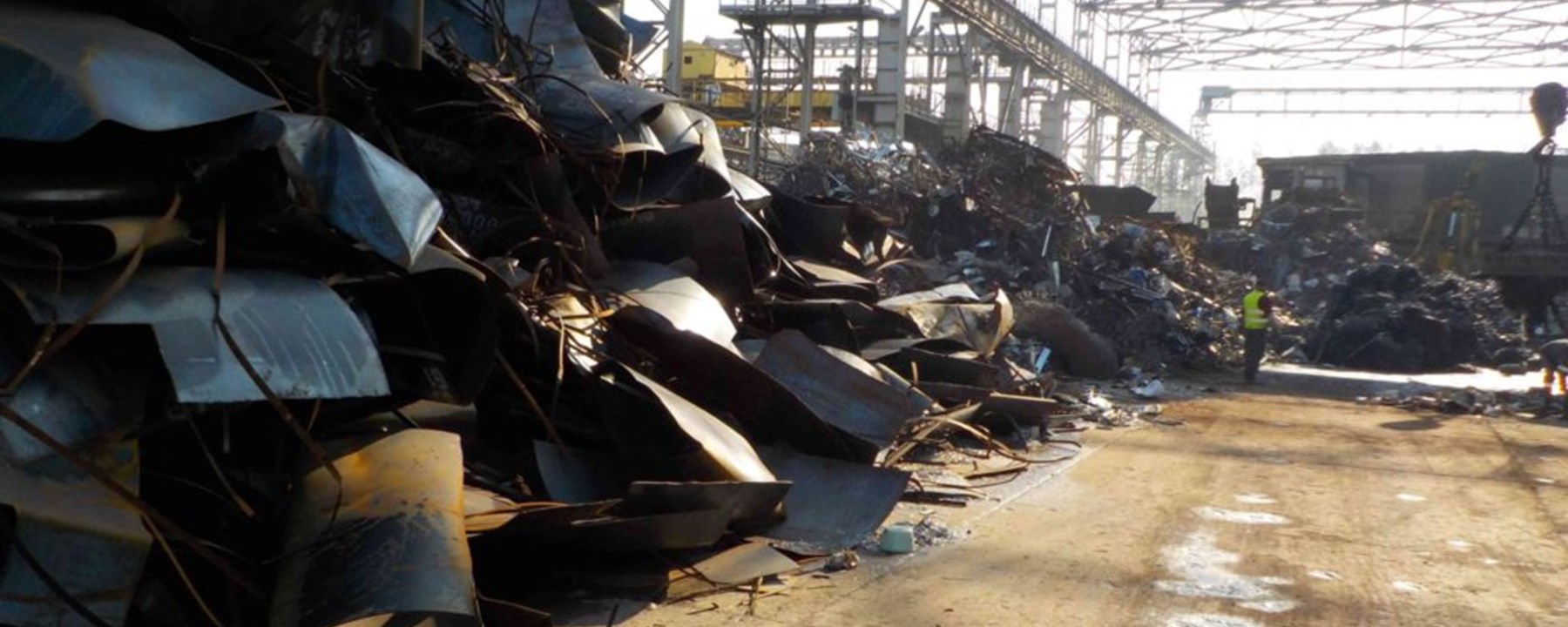
Declining Italian scrap demand at the end of January has created some concern among suppliers, says local steel trade association Assofermet in its latest market note obtained by Kallanish. The low availability of quality scrap is persisting and has contributed to the price stability observed in the market.
“It is important to remember that the sale of finished products has essentially remained unchanged, with consequent difficulty in passing on the scrap price increases already recorded in December to the finished product … January started with price hikes and a good flow of deliveries … Offers from collection companies, merchants and traders were at good levels, satisfying the needs of all steel mills, reducing warehouses’ stocks, partially giving up hope of further increases,” the note states.
It adds however that the picture at the end of January appeared less positive compared to the beginning of the month, with demand weak but offers sustained overall. This “could become a point of concern for the month of February, also in light of a possible slowdown and output cuts by two important producers,” the association adds.
Assofermet recorded relatively low demand for pig iron last month. At the same time, supply from Russia and Ukraine also decreased. Prices in Turkey are in line with the Italian market, as well as those recorded on the Chinese and Indian markets. The pig iron price differential of about $50-60/t persists between the European and US markets.
While scrap prices are stable for the moment in Italy, pig iron values increased last month to $440/t cfr and are seen rising further, Kallanish notes.
Natalia Capra France
Eurofer urges decarbonisation support following EU 2040 target
EU steelmakers back carbon neutrality by 2050 but require further much needed support, says Eurofer in response to the latest announcement by the European Commission of a 90% target on decarbonisation by 2040.
“The EU steel industry has launched over 60 projects that will deliver major emission reductions by 2030 if supported effectively. A 90% headline target for the whole of the EU by 2040 means almost a full decarbonisation of energy intensive industries such as steel. In the absence of the right enabling conditions and of a drastic ramp-up of investments required for the transition, such a target puts the economic and technical feasibility of EU climate policy and its interaction with other policies such as energy, trade and competition to the test,” says Eurofer director general Axel Eggert.
The association adds there is a concrete risk of deindustrialisation in Europe if the transition is not supported, Kallanish notes.
Eurofer has called again for the EU to ensure the supply of affordable clean electricity and hydrogen to support the transition. It also reminded the European Commission that only an “assertive trade policy levelling the playing field with other regions that do not share the same climate ambition” can make EU industry viable.
The Commission published on Tuesday a detailed impact assessment on possible pathways to reach the agreed goal of making the EU climate neutral by 2050. Based on this impact assessment, the Commission recommends a 90% net greenhouse gas emissions reduction by 2040 compared to 1990 levels.
“With their integrated innovation ecosystem across the full manufacturing value chain, European steel companies have already identified the technological solutions for the transition to climate neutrality. However, as acknowledged also in the Commission Communication, the enabling conditions still fall short. In view of the next legislative cycle, we call on the EU institutions to urgently put in place an investment-friendly framework for a successful industrial transition in Europe,” Eggert concludes.
Emanuele Norsa Italy
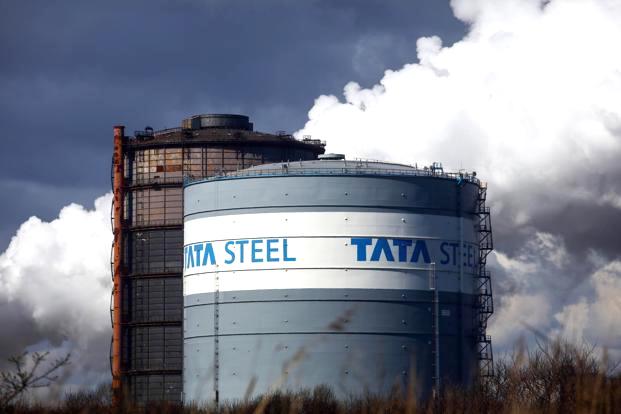
Tata Steel confirms relaunch of BF6 at IJmuiden
Blast furnace number 6 at Tata Steel IJmuiden, in the Netherlands, is once again producing pig iron, after being fired up last week following long-lasting renovation works, Kallanish notes.
With the relaunch of BF6, IJmuiden returns to operation at full capacity. Last week, TV Narendran, chief executive of Tata Steel, anticipated the relaunch of production at the furnace and stressed that this will also help the supply of feedstock to the UK, where the group has decided to close all blast furnaces at Port Talbot.
“BF6 is one of the most efficient operating blast furnaces in the world. This means CO2 emissions per tonne of steel are lower than almost all other blast furnaces in the world,” Tata Steel notes. During the relining, extractor hoods were installed to further reduce emissions.
The relining of BF6 was the last to be carried out by Tata Steel in Europe. The furnace will be permanently decommissioned from 2035 as part of Tata’s plan to produce steel without the use of coal or coke.
Emanuele Norsa Italy