


German steel market sees prices remaining strong, production weaker
German steel traders and producers expected prices to remain strong during February, though the expectation was less firm month on month as mills tried to aim for higher prices but buyers held back, according to an S&P Global Commodity Insights survey.
The February index for traders’ sentiment stood at 60 points, compared to 68.75 points in January, data from S&P Global’s German Steel Sentiment Survey showed.
The index for producers’ sentiment was 62.50 points, compared with a January index of 87.50 points, showing that producers were significantly less firm compared to traders regarding near term price increases.
The overall index for prices was at 61.25 points, compared with 78.13 points for January.
Overall, steelmakers in Europe were aiming for higher prices for steel products.
One European long steelmaker expected prices in Germany for long steel products to remain stable or firm up. “We could cut down capacities rather than lowering prices,” the source said, adding there did not seem to be any fundamental reason for prices to go down.
“Medium sections prices are the lowest level in the last three years,” the source said. “Energy prices are still high. Not at [Russia-Ukraine] war levels but still high. Scrap seems to be still strong, but market is not ready to accept current high prices which is not workable for mills.”
One long steel distributor in the Benelux region expected prices to remain stable during February. “Demand is overall too weak, for prices to be able to increase.”
Platts assessed European medium sections price (category 1, S235 JR) unchanged week on week on Feb. 7 at Eur780/mt ($840/mt) delivered, according to S&P Global Commodity Insights data. Platts assessed Northwest Europe Rebar down Eur2.50/mt week on week at Eur632.50/mt ex-works.
On the flat steel side, sources reported strong prices, though trading activity in the European hot-rolled coil market remained muted. Platts assessed domestic prices for hot-rolled coil in Northwest Europe unchanged day on day at Eur745/mt ex-works Ruhr on Feb. 8.
The overall index for German inventory sentiment reflected that the market unanimously expected stock levels to remain stable during February. The index for the month stood at 50 points compared with 46.88 points in January.
The index for steel producers for February was at 50 points, compared with 37.50 points in January. The index for traders’ sentiment stood at 50 points, compared with 56.25 points for the previous month.
One European long steelmaker said while inventory levels were low, “everyone is waiting for prices to cut down”, so he expected inventory levels to remain stable at current levels.
The long steel distributor also expected inventory levels to remain stable at low levels “due to weak demand and near-term uncertainty regarding price direction.”
“The market is very quiet, buyers do not need material as they have enough coil in stocks,” a German service-center source said. “And prices are rather high now, distributors often struggle to transfer the rising prices to their clients.”
Production to fall
Market sources expected production levels to either be cut or maintain low capacities due to weak demand.
Some long steel producers had already cut production, sources said. The Benelux-based long steel distributor source also expected that mills might cut production levels during the month due to weak demand.
The index for production outlook was around at 38.75 points, compared with 46.88 points for January. The index for traders’ sentiment was 40 points, down from 43.75 points. The index for producers’ sentiment was at 37.50 points, down from 50 points as producers were more bullish regarding production activity than traders.

UK reviews temporary suspension of hot-rolled coil import safeguard quotas following Tata BF closures
The UK is to review the suspension of the safeguard import quotas on hot-rolled coil in response to Tata Steel UK’s plan to idle its two blast furnaces later this year ahead of building an electric arc furnace, the UK Trade Remedies Authority said Feb. 9.
The TRA’s preliminary view would be to suspend the measure for nine months because Tata Steel is the UK’s sole HRC producer.
Tata Steel hopes to commission its EAF early 2027 and will import steel products for customers from its Dutch and Indian operations or third parties until then.
“Given the importance to the UK economy of managing the projected reduction in domestic production of hot rolled flat and coil steel, we are carrying out the reviews in parallel with the consultation between Tata Steel UK and trade unions,” the TRA said.
Tata’s UK blast furnaces have an installed capacity of 5 million mt/year but produced 3.2 million mt in the past few years. The new EAF will have a capacity of 3 million mt/year.
News of the possible suspension of quotas was welcomed by market participants.
“A suspension would open the market up to free and fair competition and will be welcomed by traders, service centers and traders alike,” one UK trader said.
The TRA has opened a tariff rate quota review parallel to the suspension review as Tata Steel and UK trader Kromat have applied for a review whether the current tariff-rate quotas would be appropriate overall. The TRA expected the TRQ review to take longer than the suspension review.
It is considering whether it is appropriate to change the method of allocation to give importers an individual allocation of TRQs. The proposed scheme would not tie quotas to an individual country so that importers would be free to choose the source of imports.
TRA is collecting feedback until Feb. 25 for both reviews.
Similar to the EU’s safeguard import quotas on steel, the UK’s were set to expire June 30 but the TRA has been investigating whether they should be extended by two years.
UK HRC import quotas balances differ by origin.
UK steel trade organization ISTA said earlier this year the import quota system would need to be overhauled not only because of the idling of blast furnaces but also because Tata Steel has already been importing HRC from India to substitute its UK production over the past year.
The UK is a net steel importer. In 2022, the UK met 55% of its demand with imports, according to UK Steel.
The import quota for hot-rolled coil of the other country quota — which includes Indian material — in the current quota period (Q1 2024) was exhausted by Jan. 18. The quota was set at 22,589 mt. Any excess material faces a 25% duty.
The quota for the EU remained open as 262,006 mt of material — as of Feb. 9 — can still be imported. The quota for Taiwanese material has achieved critical status, which means a duty deposit needs to be paid as the quota is at risk of exhaustion — 1,378 mt could still be imported Feb. 9. The quota for Turkey remained open, at 37,100 mt.
Author Laura Varriale, laura.varriale@spglobal.com

European Commission investigates extending steel safeguard quotas
The European Commission initiated a review into a possible extension of safeguard quotas on steel imports into the European Union, according to a notification in the Official Journal Feb. 9.
According to the EC, 14 EU member states sent a request to extend the tariff-rate quotas to 2026.
“The request contains sufficient evidence suggesting that the safeguard measure continues to be necessary to prevent or remedy serious injury and that Union producers are adjusting,” the EC said.
As part of the extension investigation, the EC will review the allocation of tariff rate quotas, products as well as categories. The deadline for feedback is Feb. 26.
Market participants mostly welcomed the investigation Feb. 9.
“We need the safeguard extension,” an Italian flat steel service center source said. “Otherwise imports would flood the European market, and the prices would collapse. Neither mills nor distribution need the removal of safeguard.”
European market participants have been warning of the redirection of trade flows while the US is holding up its section 232 measures on imports as European producers are making costly technical changes at steel plants to decarbonize.
“The mills need the steel prices to remain higher to cover the costs of green transition, and exposure of the European market to import without safeguard would make it more challenging,” a European flat steel mill source said.
One European long steel buyer hoped for an update of specific country quotas.
In the current quota period, running from Jan. 1 to March 31, the hot-rolled coil as well as the wire rod other country quotas were exhausted swiftly after opening Jan. 3. The country-specific quota for hot-dipped galvanized coil for automotive use was also exhausted swiftly. Other steel import quotas remain open as of Feb. 9.
“The safeguard is a legitimate and indispensable tool for stabilizing the EU steel market and ensure the sustainability of the European steel industry, which is on its way to decarbonisation,” Axel Eggert, director general of the European Steel Association, or Eurofer, said Feb. 9.
“Massive, market-disruptive import surges from third countries, mostly with little or no climate ambition, further jeopardize the transition,” Eggert said.
Eurofer particularly warned of excess capacity being directed toward Europe without safeguard quotas, as particularly in Southeast Asia, the Middle East, and North Africa steel production is increasing, while China was close to record steel exports in 2023.
“Consequently, the European Union has become a primary target for trade deflection, with steel exports increasingly redirected towards its market,” Eurofer said.
The UK, which has set up its own steel safeguard quotas, is also investigating extending its safeguards while reviewing a temporary extension of the HRC import restrictions for nine months as Tata Steel UK will idle its two blast furnaces this year and not produce HRC until its electric arc furnace starts 2027.

Authors: Laura Varriale, laura.varriale@spglobal.com, Maria Tanatar, maria.tanatar@spglobal.com, Rabia Arif, rabia.arif@spglobal.com
Weak demand continues to paralyze Northern European long steel market; mills remain firm on prices
Despite depressed market conditions, mills were resistant to offering any discounts due to continuing higher input costs, Fastmarkets heard. As a result, rebar and wire rod prices were stable in the week to Wednesday.
Higher costs of energy, scrap and operations all contributed to prices remaining stable despite slow demand, sources said.
Fastmarkets’ price assessment for steel reinforcing bar (rebar), domestic, delivered Northern Europe was €650-660 ($700-711) per tonne on Wednesday, unchanged week on week.
The construction industry had a slow start to the year, with new building projects still delayed due to higher raw material costs and higher interest rates, but the long steel market could pick up toward the warmer months, Fastmarkets heard.
“Demand is dead now. No one is buying,” a trader source in Germany told Fastmarkets. “There are no import offers now either — demand is just not there. Rebar import quotas are still mostly unused because of lack of appetite.”
Fastmarkets’ price assessment for steel wire rod (mesh quality) domestic, delivered Northern Europe was €650-660 per tonne on Wednesday, stable week on week.
“This period is normally quite slow as we are now mid-month. Any buying that did happen was done at the beginning of February. Now buyers are more in a wait-and-see mode,” a wire rod producer source said.
IREPAS Outlook
A bearish outlook and unfavorable market conditions continued to hamper any growth in the global long steel market, according to the monthly IREPAS Short Range Outlook, published on Tuesday February 6.
Mills across the world are trying to not reduce prices below costs despite higher feedstock and operational costs.
“Overall, demand was down by 17% for reinforcing bars and down by 10% for wire rods in Europe, but Germany was affected the worst,” the outlook said.
Long steel demand in the EU was constrained by a range of factors, according to the outlook.
“The reasons are, of course, higher interest rates, higher costs and the increase of bureaucracy due to environmental regulations by Brussels and local governments. EU mills’ prices have increased slightly due to costs. Going forward, a lot of wire rod and reinforcing bar shipments are expected from North Africa and Turkey,” the outlook said.
Published by: India-Inés Levy


European flat steel demand to grow in 2024 due to end of destocking: ArcelorMittal
“The destocking that impacted apparent demand in 2023 is not expected to continue in 2024,” the company said in its fourth quarter report and full-year 2023 results.
Indeed, improved apparent steel demand in January allowed European steelmakers to secure price rises in the spot market.
Notably, the price of hot-rolled coil in Northern Europe moved up steadily in January. Fastmarkets’ daily steel hot-rolled coil index domestic, exw Northern Europe averaged €731.73 ($787.81) per tonne for the month, the highest since May 2023.
But the trend seems to be changing in early February. Sources told Fastmarkets that in recent weeks buyers have been trying to reduce inventories and were not interested in purchasing new hot-rolled coil tonnages.
Due to sluggish trading, prices for HRC were even slightly down in Northern Europe. Fastmarkets calculated its daily steel hot-rolled coil index domestic, exw Northern Europe, at €755.38 per tonne on Wednesday February 7, down by €4.20 per tonne from €759.58 per tonne on February 6.
HRC prices have been decreasing in the spot market since February 2. According to Fastmarkets’ sources, a full-on downtrend is unlikely because mills have healthy order books, and import options are limited.
ArcelorMittal added that a marginal decline in real demand is expected this year, mainly regarding the construction sector. But the company remained positive on the medium- and long-term steel demand outlook, despite the economic headwinds.
ArcelorMittal Europe’s key indicators in Q4 2023
ArcelorMittal’s crude steel production from its European segment reached 6.63 million tonnes in the fourth quarter of 2023, which was a decrease of 11.3% compared with the previous quarter.
“[The decline in production was] impacted by a reline of blast furnace A at Gent, Belgium, and planned maintenance of blast furnace No2 at Bremen, Germany,” the company said. They added that both blast furnaces (BFs) restarted in early December 2023.
ArcelorMittal noted that some production cuts were also initiated at BF1 in Fos-sur-Mer, France, and the company has confirmed that BF1 remains idled and did not give any timeline for its restart.
ArcelorMittal’s European steel shipments were stable in the fourth quarter of 2023, reaching 6.51 million tonnes compared with 6.54 million tonnes in the previous quarter.
“[This was] due to the continued weak apparent demand driven by destocking and construction-related demand,” ArcelorMittal said.
Sales in the fourth quarter declined by 10.2% from the previous quarter, to $7.99 billion, due to a decrease of 4.4% in average steel selling prices.
According to ArcelorMittal Europe, the average steel selling price in the fourth quarter of 2023 was $975 per tonne, compared with $1,020 per tonne in the third quarter.
The operating income of the European division of the company reached $11 million in the fourth quarter, compared with $160 million in the previous quarter. According to the company, the main reason for that was the negative price-cost effect.
The same factor influenced ArcelorMittal Europe’s earnings before interest, depreciation and amortization (Ebitda) results, which decreased by 28.9% to $336 million in the fourth quarter compared with $473 million in the previous three-month period.
Sustainable development
ArcelorMittal continues with its efforts toward low-carbon steel production in Europe. According to its report, the company expects that its 1.1 million tonne per year electric-arc furnace (EAF) in Gijon, Spain, will become operational in the first half of 2026. Thus, the site will be able to switch to producing low carbon-emissions steel for the long products sector.
The contracts for the construction of the new capacity were signed in November last year.
According to Fastmarkets’ information, ArcelorMittal operates two BF’s in Gijon with a total capacity for 4.65 million tpy of pig iron. The Gijon steelworks has capacity for about 600,000 tpy of heavy plate, 600,000 tpy of wire rod and 400,000 tpy of steel rail.
In July 2023, the company started low-carbon plate production in Gijon.
The steel producer also noted that it signed a Letter of Intent with EDF in January for the long-term supply of low-carbon electricity to ArcelorMittal’s steelmaking sites in Fos-sur-Mer and Dunkirk, France. ArcelorMittal added that its direct-reduced iron/electric-arc furnace (DRI/EAF) project in Dunkirk was subject to final approvals.
“ArcelorMittal has seen increasing demand for its low carbon steel — XCarb® recycled and responsibly produced steel,” the company said.
But the overall demand for steel with reduced carbon dioxide emissions remained quite patchy in Europe, mainly driven by the automotive and construction industries, with the biggest uptake of the material being observed in the Nordic states, the Benelux region and Germany, Fastmarkets heard.
Fastmarkets’ weekly assessment of the green steel domestic, flat-rolled, differential to HRC index, exw Northern Europe was €150-250 per tonne on Thursday, unchanged since December 14.
Sources expect demand for green steel to rise exponentially in the next few years while supply will likely remain limited until new capacity comes online in 2026-2027, so premiums are likely to remain high.
Some mills noted positive dynamics in green steel sales already in 2023, despite overall volumes still being limited.
ArcelorMittal Europe intends to reduce CO2 emissions by 35% by 2030, and to reach carbon neutrality by 2050.
In November last year, Schneider Electric and ArcelorMittal announced a partnership to supply XCarb® steel for Schneider Electric’s electrical cabinets and enclosures.
And on January 16, Vestas and ArcelorMittal announced a low-carbon partnership, and the first project will use XCarb® heavy plate steel for an offshore wind farm built by Baltic Power in Poland.
Published by: Julia Bolotova, Darina Kahramanova
European steel beam market remains slow; prices flat
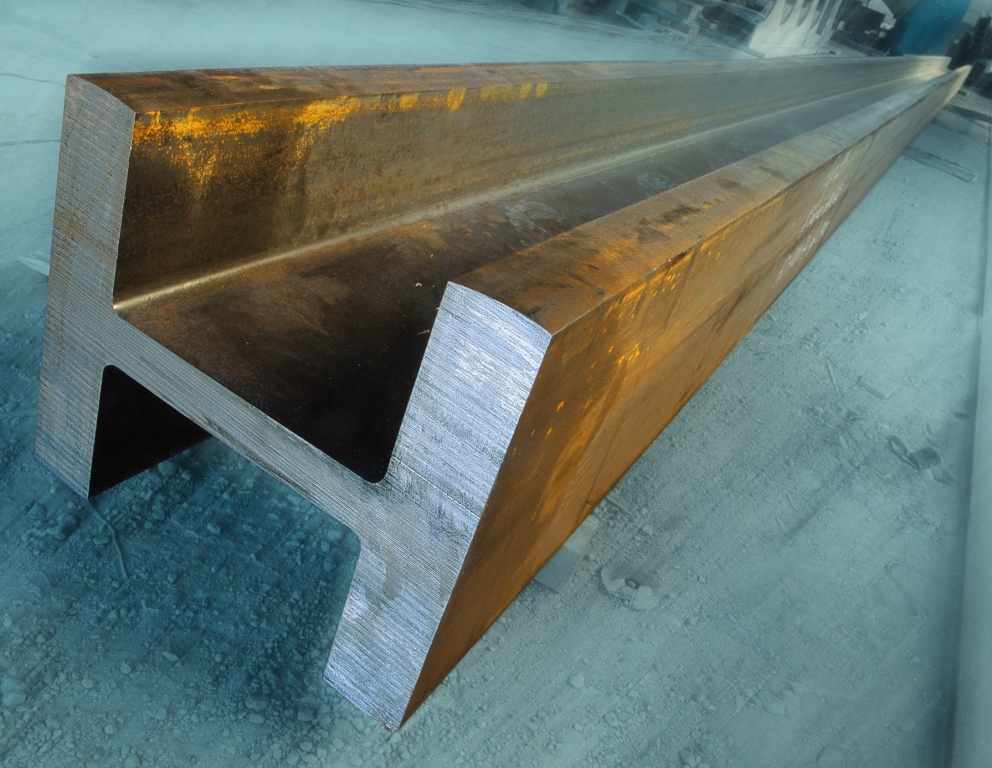
Fastmarkets’ price assessment for steel beams domestic, delivered Northern Europe was €760-790 ($818-851) per tonne on Wednesday, unchanged week on week.
Similarly, Fastmarkets’ price assessment for steel beams domestic, delivered Southern Europe was €760-790 per tonne on Wednesday, flat week on week.
The market was “really quiet” in the week, with little activity amid slow demand, sources told Fastmarkets.
A carnival celebration observed in Northern Europe in areas surrounding the Rhine River would mute the market in that region over the next week, sources added.
Meanwhile, scrap feedstock costs in Turkey’s bellwether market remained strong but largely flat throughout January and into February, Fastmarkets heard.
“[Turkish] scrap is on a side step, with a plus or minus $10 per tonne range,” a trader said.
Fastmarkets’ calculation of its daily index for steel scrap HMS 1&2 (80:20 mix) North Europe origin, cfr Turkey was $417.74 per tonne on Wednesday, up by $4.27 per tonne week on week and by $1.56 per tonne month on month.
Upward pressure on scrap prices in Turkey, caused by increased collection costs, has weakened because local mills have been struggling with finished steel sales, market participants said.
Meanwhile, steel beam market sources expressed bearish sentiment about future demand from the construction industry and expected the slow consumption to last for weeks, if not months.
Published by: Holly Chant

European HRC buyers hold back from restocking amid uncertain outlook
Fastmarkets calculated its daily steel HRC index, domestic, exw Northern Europe, at €754.79 ($812.64) per tonne on Thursday, down by €0.59 per tonne from €755.38 per tonne on February 7.
The index was down by €7.21 per tonne week on week but was up by €49.16 per tonne month on month.
Market sources pointed out that trading has been slowing down over the past couple of weeks, with buyers preferring to book only minimal tonnages.
Buyer sources claimed that they had enough HRC in stock and therefore were not chasing additional volumes, especially considering the lack of a clear price direction for the second quarter of 2024.
Buyers’ estimates of tradeable HRC prices in Northern Europe were mainly between €750 per tonne and €760 per tonne ex-works.
Several sources told Fastmarkets that some mills had begun to be “more flexible” and to provide discounts on reasonable volumes to encourage buying.
“We have noticed that, since early February, mills were considering price discounts to stimulate demand,” a steel service center in the region said.
Offers from integrated mills in the region were heard at €740-770 per tonne delivered, “with some room for negotiation,” market sources said. Local mills were currently selling March-production, April-delivery HRC. But the lower end of that price range was only available from one supplier, market sources said.
Expectations regarding future price trends were quite mixed among buyers and sellers.
Buyers were limiting their purchases, expecting prices to decline toward the end of the first quarter amid lackluster end-user demand.
“Mills are not successful in getting higher prices for second-quarter [delivery] orders,” a buyer in Germany said. “Nobody buys anything for stock, just daily business. There are no positive changes from the demand side – that’s the key problem.”
Producers, for their part, expected a stabilization in February, because domestic supply was still reduced, and the pressure from imports has eased recently, with imports of HRC becoming increasingly difficult because of EU import safeguards and the Red Sea shipping crisis.
Fastmarkets calculated its daily steel HRC index, domestic, exw Italy, at €750.00 per tonne on Thursday, down by €2.75 per tonne compared with €752.75 per tonne on February 7.
The index was also down by €5.50 per tonne week on week, but up by €58.75 per tonne month on month.
Italian buyers estimated tradeable prices at €740-760 per tonne ex-works for domestically produced coil with March-April lead times. This was in contrast with offers reported at €780 per tonne delivered (€765-770 per tonne ex-works).
Trading was dull in the local market because buyers have been keeping to the market sidelines, and not restocking.
Import offers, meanwhile, were broadly stable day on day and, despite quite a significant gap to domestic prices, buyers were largely avoiding overseas bookings.
“There are too many risks with imports,” a buyer source said. “All the cheapest options are for delivery in the third quarter, and we are not sure about the quota allocations and safeguards extensions for that period.”
Offers from Vietnam for April shipment were heard at €635 per tonne cfr to Italy.
A Japanese supplier was also offering April-shipment coil at €650 per tonne CFR to Southern Europe.
And an Indian mill was offering April-shipment HRC to Europe at €670 per tonne CFR.
Published by: Julia Bolotova

Eurofer welcomes the new EU steel safeguard investigation
The initiation of a new steel safeguard investigation announced today by the European Commission is a pivotal step that could ensure the continuation of current measures beyond June 2024. This welcome move comes in response to worsening challenges in the global steel market, where carbon-intensive steel imports originating from excess capacity are inundating the EU market, posing a risk to the sustainability of the European steel industry, says the European Steel Association.
“The conditions for initiating such a procedure are undeniable. The U.S. Section 232 tariffs are still in place, while we see protectionist measures proliferating in other markets and overcapacity escalating across the globe. All this poses significant challenges to European steel producers”, said Axel Eggert, Director General of the European Steel Association (EUROFER). “China is now very close to the massive export levels of a decade ago, current global overcapacity has reached 600 million tonnes, and further 150 million are underway in the next three years. These figures speak for themselves: the current steel trade picture is far from fair”, he added.
The unprecedented expansion of China’s steel capacity over the past two decades has resulted in a profound imbalance in global steel markets. Those repercussions were firstly deeply felt during the steel crisis of 2015-2016, when Chinese domestic steel demand stagnated, leading to massive export surges totalling around 100 million tonnes. Today, data point to a potential repetition of the same scenario, as China’s steel exports in 2023 nearly matched these historical highs, reaching 94 million tonnes.
Adding to the complexity of the situation, new dynamics of excess steel capacity are emerging also on a regional scale, particularly in Southeast Asia (ASEAN countries, India), the Middle East, and North Africa. These new capacities are shifting trade patterns, as traditional exporting countries are being replaced and faced with reduced export opportunities and more closed markets, compelling them to seek alternative export markets. Consequently, the European Union has become a primary target for trade deflection, with steel exports increasingly redirected towards its market.
“The safeguard is a legitimate and indispensable tool for stabilising the EU steel market and ensure the sustainability of the European steel industry, which is on its way to decarbonisation. Massive, market-disruptive import surges from third countries, mostly with little or no climate ambition, further jeopardise the transition. We count on the Commission for a thorough assessment of the global situation and take the necessary measures to safeguard European steel production”, concluded Mr. Eggert.


UK Trade Remedies Authority expects steel HRC safeguard to be suspended
The UK’s safeguard on hot-rolled coil (HRC) may need to be removed, the UK Trade Remedies Authority (TRA) said today, announcing both suspension and tariff-rate quota reviews on the product.
The TRA has initiated both reviews following applications from Tata Steel UK and Kromat Trading, each in response to Tata’s plan to close its blast furnaces and import HRC and slab, it said today.
“Based on the applications and from other evidence available on the current state of the market, it is the TRA’s preliminary view that the measure should be suspended,” the TRA said. Tata’s plan would mean the current level of duty-free quota for HRC would be insufficient for UK needs, it said, suggesting imports are already facing duties because of the increase on volumes contributed to by Tata’s importation of HRC.
The TRA provisionally believes the safeguard on HRC should be suspended for nine months.
Its review considers the plan Tata submitted to trade unions on 19 January, and if these plans change, it will take this into account during its review. Once the TRA has completed its review, it will make recommendations to the Secretary of State for Business and Trade, who makes the final decision.
If any suspension recommendation is made and accepted by the government, the TRA will use the period to rework the quota system, enabling sufficient volumes for the market going forward. The quota could be global and importers potentially would be apportioned their own volumes, but it is not yet clear how this would be worked out, or if the plan could be amended in the course of the review.
“These reviews are designed to prepare the current steel trade regime for future changes in production at Port Talbot,” TRA chief executive Oliver Griffiths said. “We want to avoid a situation where new imports needed to backfill reduced domestic production pay tariffs of 25pc, loading additional costs on to the UK economy.”


EU Safeguard Measure is to be reviewed for a possible extension
The European Commission officially announced today that the EU Safeguard Measure is to be reviewed for a possible extension. This is backed by 14 member states who had already requested a review from the EC in January 2024.
The European Commission officially announced today, Friday, February 9, 2024, that the EU Safeguard Measure on certain steel products, which was due to expire in mid-2024, is to be reviewed for a possible extension at the insistence of 14 EU member states.
In addition, the measure is most likely to be extended to the longest possible and WTO-compliant period of 8 years.
US Section 232 tariffs have come to stay
Since the US Section 232 tariffs of the Trump Administration from 2018 are still in force and it is not to be expected that they could be repealed in the foreseeable future, the EC has now also recognized: “…that there are no elements suggesting that the US will be removing the Section 232 measures on steel”.
The introduction of the US punitive tariffs triggered a backlash from the European Union and led to the existing EU Safeguard Measures against steel imports to Europe in 2019.
German steel regions had called for EU Safeguard extension
Last Wednesday, we reported on the German steel regions’ call for the German government in Berlin to support a continuation of the Safeguard measure and that it is therefore only a matter of time before the EC takes action.
Source: steelnews.biz