


Investment breeds US success, scrap imports likely: Tayfun Iseri
The success of the US steel industry comes down to investment and location management, whereas Europe has fallen behind in this regard. With electric arc furnace-based flat steelmaking capacity growing, competition will increase for prime grade scrap, which mills in the US South will start importing. So says Turkish Flat Steel Import, Export and Industry Association (Yisad) chairman Tayfun Iseri.
US mills have reinvested bumper profits into building 10 million tonnes/year of EAF capacity in the last five years. They have taken obsolete blast furnaces offline and invested into EAFs amid the push for decarbonisation. Europe has meanwhile fallen behind, implementing improvements to existing production processes rather than greenfield investments, according to Iseri.
While most BFs were built in the Midwest and Great Lakes areas, the new EAFs have been built in the South. Midwest/Great Lakes BF capacity shrunk from 44.5m t/y in 2019 to 39.6mt in 2023, while EAF capacity in the South rose from 34.8mt to 38.3mt. This will result in reduced US scrap exports.
“Most EAF investments in the US are coming from flat steel. You need better scrap for this. Higher knowhow, better raw material. Everything is possible in an EAF. If somebody tells you it’s not possible, it is possible!” Iseri told delegates at Kallanish Steel Scrap 2024 in Istanbul on Thursday.
While prime grade scrap competition will increase, local generation will decrease amid consumers holding onto their cars for longer, and car ownership reducing in general. Mills in the South will therefore import the required scrap through Gulf of Mexico ports, Iseri continued.
Increasing Mexican EAF capacity will also compete with US mills for scrap supply, which will lift prices. Meanwhile, “Europe is not ready to consume its prime scrap yet”, so will continue to export material, Iseri noted.
Overall, the US and EU will continue generating more scrap than they can consume, meaning export restrictions are unlikely to be implemented, as “they can’t sit on this big pile of scrap”, he added.
Iseri also challenged the assertion that Turkey dictates scrap prices. Since US mills have bought out multiple scrap collectors, they control 60% of the US scrap market. “The US dictates what the price will be,” he concluded.
Adam Smith Poland

SSAB operates Italian plant with renewable energy
SSAB is now operating its Italian service centre in Ghedi fully with clean energy after investing last year in solar panels installed on the roof of its production facility, Kallanish notes.
The solar panels will generate an estimated 830 megawatt-hours annually. Ghedi will consume approximately 50% of the solar energy for production, office buildings, and for the charging of electric vehicles, while the rest will be sold back to the grid.
The steelmaker is accelerating the design and production of its two “zero emission” steel products. It is working on a new product that will be commercialised from 2026, while the so-called SSAB Zero is currenlty available, made of recycled steel with fossil-free electricity and biogas.
“The new steel roof… uses a trapezoidal profile provided by Ruukki Construction, a division of the SSAB Group, and is made from sustainable GreenCoat colour coated steel. GreenCoat colour-coated steels use Swedish rapeseed oil in the coating. This unique, patented solution from SSAB reduces the environmental footprint and makes the GreenCoat colour-coated steel product portfolio the greenest offer for roofs, faҫades and rainwater systems on the market,” the company says in a note obtained by Kallanish.
The SSAB Steel Service Center in Ghedi has capacity of 80,000 tonnes/year of cut-to-length products from the steelmaker’s brands such as SSAB Laser, Strenx, SSAB Domex and SSAB Boron.
Natalia Capra France

Distribution reports weaker demand in February: Assofermet
After acceptable sales in January, demand from end-users is weak in the first days of February. Buyers seem to be “disoriented” by steelmakers’ further price increases despite the contracting levels of consumption. Weak demand is attributable to the EU economic crisis and the conflicts in Ukraine and the Middle East, Italian steel trade association Assofermet says in its market note sent to Kallanish.
EU steel prices are supported by the strong limitations on imports and by the reduced use of European production capacity. This adds to the Acciaierie d’Italia crisis that is operating with only one blast furnace out of the four available. Offers from non-EU countries, in particular from Asia, appear to be more competitive compared to European steel despite the increase in freight rates through Suez. However, the risk that import quotas will will rapdily exhausted are making Asian offers less attractive and causing Italian buyers’ prudent behaviour.
Despite the weak downstream market, Assofermet forecasts possible increases in sales prices from distributors in the short and medium term in light of the significant increases in costs the sector suffered in January. “It is worth highlighting the lead time lengthening from coils steel mills that will impact coils availability of coils in service center warehouses in the coming months”, the note concludes.
Natalia Capra France

Megasa to improve energy self-sufficiency in Portugal
Portuguese long steel producer SN Maia, part of Grupo Megasa, will significantly increase the use of renewable energy in its production, Kallanish notes.
The steelmaker says it is transforming its energy matrix with the installation of more than 8,000 photovoltaic solar panels at the production site near Porto. The execution of the project has been awarded to the company Greenvolt Next Portugal.
The modules will have the capacity to produce a 5.06 megawatt peak, with an average annual production of 8,127 MWh.
“With this investment we show our commitment to the energy transition, betting on the use of renewable energy,” says Megasa’s executive director for Portugal, Álvaro Álvarez. “We plan to expand the use of renewable energy and reduce our dependence on the national electricity grid. The authorization process for the installation of solar panels in our SN Seixal unit is in a very advanced phase and is already being evaluated by local authorities.”
The Maia and Seixal operations produce wire rod, rebar and welded mesh.
Todor Kirkov Bulgaria

Eurofer trims outlook for 2024 steel consumption
According to Eurofer, approximately 129 million tonnes of steel represented the apparent steel demand of Europe last year. This levels is the same as 2020, when Europe suffered the impact of the first wave of the Covid-19 pandemic. As a consequence, demand fell by more than 6% y-o-y in 2023, the fourth annual decline recorded during the last five years.
In 2024 apparent steel demand is set to recover by about 5.6%, not enough to return to the volumes achieved in 2022.
The slower-than-expected recovery of apparent consumption is caused by the persistent weakness of real steel demand expected for 2024. This year, real demand should drop 0.4% below 2023, folowing the last year’s y-o-y decline of 3.1%.
“In 2024, conditional on more favourable developments in the industrial outlook and improvement in steel demand, apparent steel consumption is set to recover (+5.6%) albeit at a slower pace than previously forecasted (+7.6%). The overall evolution of steel demand remains subject to very high uncertainty,” Eurofer explains.
Within a framework of weak steel demand, in 2023 the market share of imports out of the total consumption in Europe remained high. Eurofer calculated that in Q3 2023, the share was still 27%, including finished and semi-finished products.
Emanuele Norsa Italy

CBAM hits small German companies hard: Stahlmarkt
In August, the European Commission published the details to be considered in the implementation of CBAM regulation in practice. The document of 102 pages “was full with legal and technical terms which most companies will have never heard of,” writes industry observer Andreas Schneider of Stahlmarkt Consult. In his latest blog titled “The Introduction of CBAM: A Disastrous Start,” Schneider points out that the new duties are a burden especially for smaller enterprises with limited staff for legal matters.
Schneider often advocates the interests of the steel and metals working industry, which accounts for 4,000 mostly small and medium-sized companies in Germany. Among other factors, he criticises a last-minute extension of the rules to include certain products such as screws, which are imported in large volumes by small traders.
He points at one particular flaw that occurred in Germany, when the government appointed its authority for CBAM matters only two days before Christmas. That is in contrast with many other countries, where the new authorities were announced early in the fourth quarter, Kallanish reads in Schneider’s blog. With 31 January as the deadline for the first report to be filed by the companies, “they had hardly one month to get acquainted with the process, and to meet the deadline,” he writes.
That authority, the “National CBAM Service Desk” defies its name because it does not provide personnel for inquiries, Schneider notes. “We apologise as we cannot answer individual questions. You will find all relevant information on our website,” the website says.
Christian Koehl Germany

Scrap not gold, trade regulations ineffective, say panelists
“Will scrap be the new gold?” asked Turkish Flat Steel Import, Export and Industry Association (Yisad) chairman Tayfun Iseri. “I’m not sure.” Technological innovation will see alternatives developed to scrap in future, he predicted.
Decarbonisation and CBAM, meanwhile, are just new means of “protecting their own”, he said in reference to EU authorities. In the past, the EU has levied anti-dumping or countervailing duties, but “this will be thrown out of the window” after the huge subsidies being given to EU steelmakers to decarbonise, Iseri added.
“I think protectionism is self-defeating,” observed Marcel Genet, founder and president of consultancy Laplace Conseil. “What we forget is that if we don’t do something with steel, the product has no value.”
He emphasised scrap trade restrictions are unlikely. “It’s pure nonsense for countries to limit trade when it is more efficient to do it in one place than the other,” he noted. “Turkey is not trying to steal scrap from the EU or US. They are very nice to create an outlet for countries that do not have capacity to consume their own scrap.”
Moreover, monthly price negotiations between scrap suppliers and steelmakers must be scrapped and all parties should work towards the goal of maximising steel recycling, he added.
“Regulation will not move needle, the scrap industry itself will. More scrap will be kept in Europe, knowing that demand for it is increasing. So yes, there will be less available for Turkey but it is not regulation that will cause it,” said McKinsey senior expert Steven Vercammen.
Turkey’s dependence on scrap imports is a big problem, meanwhile. The country must “reengineer its capacities and type of steel it is producing,” noted Muammer Bilgic, managing director of Bilecik Demir Celik. CBAM and environmental regulations will hit Turkish steelmakers, with its integrated mills likely to soon lose competitiveness.
Scrap shortages are unlikely to be a problem in the next ten years, Iseri observed. China could enter the scrap export market, while consumption of steel will decline in the coming decades. Car owners are holding onto their vehicles for longer, and car ownership in general is decreasing. “That’s why I’m saying scrap may not be the new gold,” he concluded.
Adam Smith Poland

EU HRC prices likely to soften in near term, sources say
Buyers focused on need-based procurement, prompting some mills to consider lowering offers.
Supplies increased after several idled blast furnaces came back online, while real demand remained muted.
“The buyers are not accepting current prices for coil,” a German service center source said. “It can only work for small tonnages for back-to-back trading. We will see a Eur25/mt decrease next week. I heard that the mills are considering price correction.”
Tradable values for domestic HRC were estimated at Eur710-770/mt ex-works Ruhr, with the majority of tradable values heard around Eur750/mt ex-works Ruhr. Offers were reported at Eur740-760/mt ex-works Ruhr.
Platts assessed the price of domestic hot-rolled coil in Northwest Europe down Eur5/mt on day at Eur745/mt ex-works Ruhr Feb. 7.
In South Europe, tradable values were estimated at Eur740-750/mt ex-works Italy.
Platts assessed the price of domestic HRC in South Europe down Eur5/mt at Eur745/mt ex-works Italy Feb. 7.
Interest in imports remained dull due to uncertainties about safeguard quotas for Q2 and Q3, which also made smaller buyers prefer domestic material.
Geopolitical conditions also pushed up freight rates, which impacted buyers’ sentiments.
“It is safer to buy material for shorter lead times from service centers as they are looking to destock, and competition is tough now,” another German service center source said.
Deals were reported at $710-$720/mt CIF Spain and at $700-$710/mt CIF Italy from Japanese mills.
Platts assessed the price of imported HRC in South Europe down Eur15/mt on the day at Eur660/mt CIF Italy Feb. 7.
Author Rituparna Nath, rituparna.nath@spglobal.

European CRC market dominated by imports; domestic mills avoid giving offers
CRC
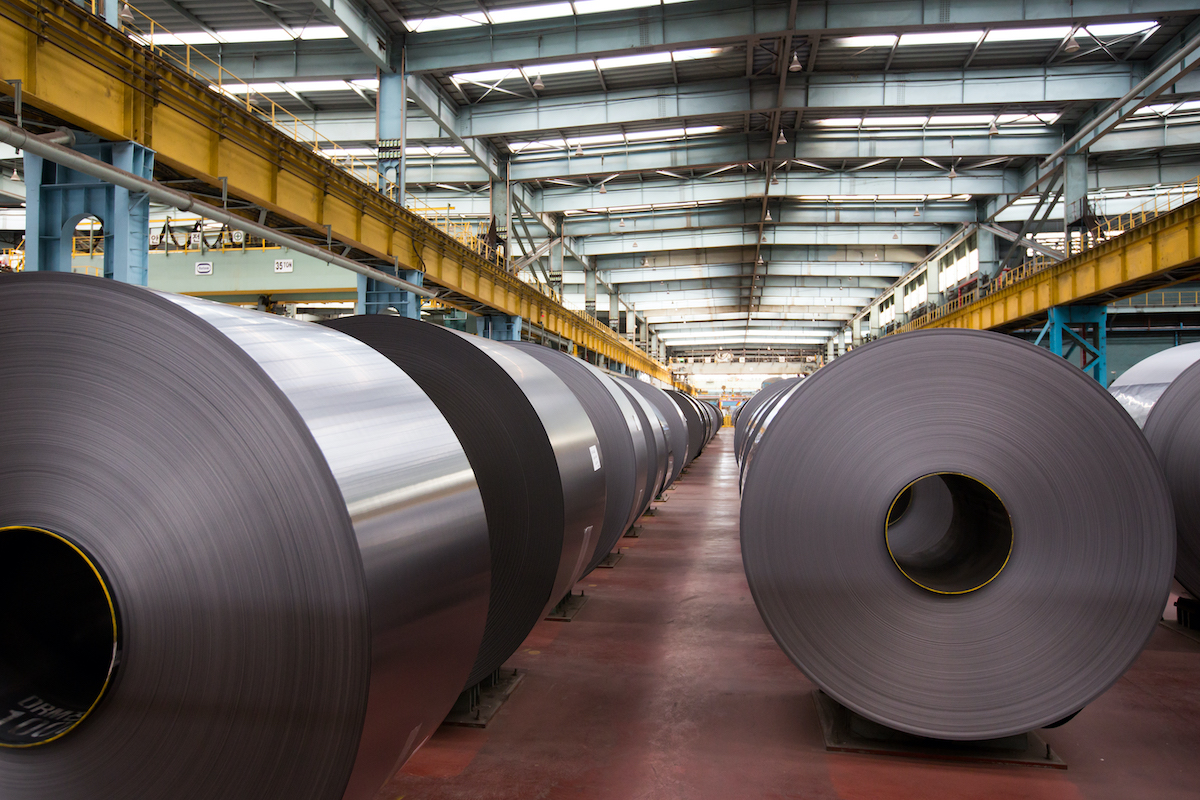
Firm offers of CRC from European mills were rare in the market, sources said.
“EU mills cannot supply the market [with CRC at competitive prices],” a buyer source told Fastmarkets. “[EU mills] limit CRC production and try to produce more hot-dipped galvanized coil instead because they are more competitive in that sector.”
Rare CRC offers in Northern Europe from local mills were heard around €870-880 ($935-946) per tonne, with lead times in April.
Buyers’ estimates of tradeable price ranges were as high as €830-850 per tonne ex-works, with some buyers giving lower estimations of €800-830 per tonne ex-works.
Fastmarkets’ price assessment for steel cold-rolled coil domestic, ex-works Northern Europe was €830-850 per tonne on Wednesday, down by €10 per tonne week on week from €840-860 per tonne.
Firm offers in in Southern Europe were also scarce. Only one supplier was heard to be active in Italy, offering CRC around €850 per tonne delivered (€840 per tonne ex-works), with March delivery still reportedly available. Buyers’ estimates of tradeable values were heard around €820-830 per tonne ex-works.
As a result, Fastmarkets’ price assessment for steel cold-rolled coil domestic, ex-works Southern Europe was €830-840 per tonne on Wednesday, down by €10 per tonne week on week from €840-850 per tonne.
Slow demand from end users, as well as competitive overseas offers, were major factors putting downward pressure on domestic prices, sources said.
Notably, suppliers from Vietnam, Japan, Taiwan and South Korea reportedly offered CRC at €740-760 per tonne CFR to Antwerp and to Italy for April shipment.
Deals were reported at €740-750 per tonne CFR for Japan- and India-origin coil.
A booking of around 5,000 tonnes of South Korea origin was heard in late January at €745-750 per tonne CFR to Southern Europe.
HDG
In the HDG market, competition from imports was less intense because overseas mills were unable to supply the full range of grades and dimensions required by European buyers, Fastmarkets understands.
But trading was slow, and sales were limited, due to sluggish end-user demand.
European mills were offering HDG at €880-920 per tonne ex-works in Northern Europe, mainly for April delivery. Some producers reportedly still could supply March shipment HDG.
But tradeable values were estimated as high as €860-870 per tonne ex-works.
Italy-origin HDG was heard offered to Northern Europe at €870-890 per tonne delivered, with bids for such material coming in at €840-860 per tonne delivered.
Fastmarkets weekly price assessment for steel hot-dipped galvanized coil domestic, ex-works Northern Europe was €860-870 per tonne on Wednesday, stable week on week.
Southern European producers were heard to be aiming for €900-920 per tonne delivered (€885-905 per tonne ex-works) for HDG.
In Italy, one supplier was heard offering HDG at €870-880 per tonne ex-works.
Buyers’ estimations of tradeable values for HDG in the region were around €860-870 per tonne ex-works.
As a result, Fastmarkets’ price assessment for steel hot-dipped galvanized coil domestic, ex-works Southern Europe was €860-870 per tonne on Wednesday, unchanged week on week.
Overseas HDG offers to Europe were rare, with few suppliers active in the market, Fastmarkets heard.
Notably, Vietnamese suppliers of 0.5mm HDG with Z100 coating were said to be aiming for $880-890 per tonne CFR to Southern Europe.
Published by: Julia Bolotova


Voestalpine expects higher steel shipments in January-March despite gloomy economic outlook
Restocking in January supported some price upticks in the European flat steel market, Fastmarkets reported.
The price of hot-rolled coil in Northern Europe moved up steadily; Fastmarkets’ daily HRC index domestic, ex-works Northern Europe averaged €731.73 ($786.27) per tonne in January, the highest monthly average since May 2023.
But Voestalpine expects sluggish demand from main industry sectors and predicts a gloomy economic outlook in Europe for January-March.
“The expected economic downturn is noticeable in some areas,” the company said in its report, referring to interest rate sensitive sectors such as construction, mechanical engineering and consumer goods industries. “And, from today’s perspective, [they] will not show any signs of recovery for the remainder of the business year 2023/24.”
Voestalpine’s current business year goes from April 2023 to March 2024.
Voestalpine had a similar outlook for investments in industrial production facilities, but the company said it expects the automotive industry sector to remain stable in January-March.
In terms of different regions where the company operates, the outlook for Europe is the gloomiest.
“Europe is expected to see the weakest economic trend worldwide for the remainder of the 2023/24 business year. The Eurozone has been teetering on the brink of recession in the last two quarters and no positive impetus is expected for [January-March],” the company said.
Voestalpine’s key indicators
Revenue from Voestalpine’s steel division was €1.37 billion ($1.51 billion) in October-December — the third quarter of its business year 2023/24 — down by 7.4% from the previous quarter.
The drop in revenue happened because “product prices for shorter-term contracts fell slightly,” the company said; its steel division sells products exclusively via contracts.
The decline in steel prices first became apparent in the spot market then moved to the contract business, Voestalpine said.
Indeed, Fastmarkets’ daily steel HRC index, domestic, ex-works Northern Europe averaged €847.77 per tonne in April — its highest monthly value in 2023 — and decreased gradually during the next few months.
The index was at its lowest in October, at €616.63 per tonne. Since then, average monthly prices have been increasing again.
Earnings before interest, taxes, depreciation, and amortization (EBITDA) from the steel division were €156.9 million in October-December, down by 13.4% compared with the previous quarter.
Voestalpine said that delivery volumes fell slightly quarter on quarter, without mentioning specific figures, adding that the decline in sales volumes was the main driver for the earnings drop in the steel division.
Meanwhile, Voestalpine Group’s total revenue was €3.87 billion in the third quarter of the business year 2023/2024, down from €4.07 billion in the previous quarter.
And the group’s EBITDA was €368.3 million in the third quarter of 2023/24, down from €410.1 million in the previous quarter.
Voestalpine’s decarbonization targets
Currently, 52% of Voestalpine’s revenue is generated by operations with “no material carbon footprint,” the financial report said. The company plans to grow this share to 65% by 2030.
Voestalpine intends to replace coal-fueled blast furnaces with climate-friendlier electric-arc furnaces (EAFs) powered by green electricity at its Austrian sites in Linz and Donawitz by 2027; construction is already “in full swing,” the company said.
In early January, Voestalpine awarded Primetals Technologies the contract to supply the new EAF for its Linz site; and in September, the company announced that Danieli would supply the EAF for its Donawitz site.
Voestalpine has its own green steel brand, called “greentec steel.”
By 2035, 80% of its revenue will be generated by operations with no material carbon footprint, the company said; its steel division will then consist of two EAFs and only one blast furnace. Meanwhile, its Metal Engineering division will have a twin EAF, Voestalpine said.
Published by: Julia Bolotova, Darina Kahramanova