


Vallourec, Bekaert invest in components for green hydrogen
French pipemaker Vallourec has developed a large-scale hydrogen storage technology under the brand name “Delphy.”
The company has inaugurated its vertical compressed gas hydrogen storage demonstrator at its site in Aulnoye-Aymeries, northern France. It is a modular system that stores the green gas in “demanding industrial environments,” the firm says. The demonstrator made of tubes and connections equipped with sealing technology and corrosion resistance is installed underground and can store up to 100 tonnes of hydrogen for industrial applications and heavy mobility.
“Growth prospects in the global hydrogen sector are substantial, with a projected installed capacity of 61 million tonnes by 2030, providing Vallourec with an estimated revenue of several tens of millions of euros per storage unit… This project offers reliable, modular and competitive large-scale storage capacity. Vallourec offers a unique value proposition for the development of the hydrogen economy,” the re-roller says in a note seen by Kallanish. The demonstrator is part of the pipemaker’s strategy to expand its product offerings in the energy transition segment. The company expects its so-called “New Energies” segment to contribute between 10% and 15% of its Ebitda by 2030.
Belgian wire rod specialist Bekaert is continuing to develop hydrogen components for electrolysers and will invest $ 5 million in Vancouver-headquartered Ionomr Innovations, a specialist of advanced proton and anion exchange membranes in electrolysers for green hydrogen production. The two firms have collaborated in the past to develop AEM electrolyser components.
Bekaert has developed porous transport layers for both PEM and AEM electrolysers with the brand name Currento and is expanding its production to multiple gigawatts capacity. The company’s focus is to improve the performance of key electrolysis components. “We want to contribute to accelerating the innovation and scale-up of advanced solutions in our ecosystem. This will make the vision of a global hydrogen economy a near term reality, and we see Ionomr Innovations as a key contributor to that reality,” a company note states. Ionomr Innovations is backed by investors such as Shell, Chevron, Samsung, Asahi Kasei and several other industrial groups.
Bekaert is investing in a new manufacturing plant in Wetteren, Belgium, to double production of its “Currento” porous transport layers (PTL) technology for electrolysis. The new plant will increase PTL capacity to over 2 GW. In parallel, the steel processor will build a hydrogen lab at the Bekaert Technology Center in Deerlijk to develop products for green hydrogen production. Bekaert is investing to adapt its “Armofor” steel cord lightweight reinforced tape for use in pipelines for hydrogen transport at high pressure. It is currently used in oil and gas pipes. Vallourec is developing a new protocol to test its tubular solution for safe hydrogen transport. A research team is studying Vallourec’s VAM 21 connection behaviour at temperatures and tensions relevant for the storage of hydrogen (see Kallanish passim).
Natalia Capra France


AST to stop production on low orders
Italian stainless steel coils maker Acciai Speciali Terni, part of Arvedi, is to implement a longer production stoppage this year for the Christmas holiday break, the company confirms.
The hot end area will be idle from 19 December until 7 January.
“The stoppage is a consequence of the contraction of the steel market in general and the high cost of energy that AST is forced to pay compared to its competitors,” a company spokesperson tells Kallanish. The steelmaker has already idled production for three days from 28 November to 1 December due to the contraction in orders that is affecting the European market, following better demand in September and October.
Economic uncertainty and slow orders are hitting Italian stainless steel margins and volumes. Demand continues to be sluggish but processing costs are simultaneously increasing, local steel trade association Assofermet has warned last month. The sector is experiencing the worst margin contraction in 2023, which has become worse over the past 90 days (see Kallanish passim).
Natalia Capra France

NW European plate buyers feel Italian hikes
Plate buyers north of the Alps confirm the price hikes reported from Italian re-rollers in the offers they have received lately.
The hikes from Italy are somewhat stronger than those tried by northwestern European mills. They were also higher than the prices offered to domestic customers in Italy.
“Currently, we could buy from Italy S235 for €800/t ($863) delivered Germany, based on a domestic price of €740 ex-works,” says one southern German manager who usually buys Italian. That ex-works domestic price is in line with the price reported for grade S275 (see Kallanish 1 Dec). However, a bigger difference opens when looking at S355, the grade Germans mainly ask for.
While normally the difference is €20-30 at most, one buyer sees ex-works offers stretching up to €790, meaning a premium of €50 over the lower grade. He notes that premiums vary between mills from €30 to €50. A third-party deal to his customers would result in €850 delivered for the consumer, he says. It is not quite clear if the premium of €50 is a temporary or arbitrary phenomenon.
One Ruhr-based buyer tells of Italian offers at €820/t for S235 delivered, and says he would pay €30 more for S355.
According to the southern German buyer, Italy currently has the lowest offers, undercut only by a UK mill for certain grades. According to a mill source, however, offers in eastern Europe are altogether lower, at €750 delivered in Poland, but could be charged higher when selling westward.
Prices from mills to buyers in northwestern Europe are currently seen at €800-820 delivered.
Christian Koehl Germany
European plate producers push for higher prices
European steelmakers have been aiming to achieve higher prices for heavy plate in the week to Dec. 8, although demand remained muted.
Although projects have been showing healthy demand for plate, big distributors have been avoiding purchases of larger tonnages as they had already restocked when plate prices were lower in the first half of the fourth quarter.
“Plates are not really moving on real deals in respect to the previous week, despite the fact that re-rollers are targeting higher prices,” an Italian trader said. “Big stock holders have already restocked.”
While other sources also confirmed that traded volumes have decreased, the cheapest material has disappeared from the market as Italian re-rollers need to cover high slab prices.
Platts assessed domestic prices for heavy plate in South Europe up by Eur15/mt on week to Eur750/mt ex-works Italy Dec. 8.
Deals and tradable values have been heard at Eur730-750/mt ex-works Italy.
Platts assessed prices for import slab in South Europe stable on the week at $635/mt CIF Italy Dec. 8.
The assessment was based on latest deals settled at $630-$640/mt CIF Italy for the material from Asia.
In Northwest Europe, plate prices also moved up although German steelmakers have remained largely focused on long-term contracts supply.
Platts assessed domestic prices for heavy plate in Northwest Europe up Eur30/mt on the week to Eur830/mt ex-works Ruhr Dec. 8.
Offers have been reported at Eur840-850/mt delivered Germany.
Author Maria Tanatar


German steel market expects prices to strengthen, inventory to remain low: survey
German steel traders and producers unanimously expected steel prices to strengthen during December as mills tried to aim for higher prices, according to data from an S&P Global Commodity Insights survey.
The December index for traders’ sentiment stood at 80 points, compared to 60 points in November, data from S&P Global’s German Steel Sentiment Survey showed. The index for producers’ sentiment was at 81.25 points, compared with a November index of 75 points. The overall index for prices was approximately 81 points, up from 67.50 points for November.
Overall, steelmakers in Europe were aiming for higher prices for steel products. One long steel distributor source reported that long steel producers were aiming for higher prices for January deliveries amid seasonal low demand as the end of the year neared. The source expected long steel prices in Germany to gain during December, adding that mills were trying to book orders at elevated prices amid high costs including scrap, energy hikes and increased transportations costs.
The Platts assessment of Northwest Europe Rebar was up Eur15/mt week on week to Dec. 7 at Eur620/mt ex-works. Alongside, Platts’ assessment of European medium sections price (category 1, S235 JR) increased Eur10/mt week on week on Dec. 7 to Eur760/mt delivered. Platts is part of S&P Global.
On the flat steel side, good order books of European steelmakers and lack of competitive imports supported domestic hot-rolled coil prices. Platts assessed domestic prices for hot-rolled coil in Northwest Europe up Eur5/mt day on day to Eur690/mt ex-works Ruhr on Dec. 8.
Production levels to remain low
Sources reported that mills were offering February and March shipments for flat steel products amid good orderbooks, however, buyers were reluctant to build inventories amid uncertainties about prices in the near-term.
“The market has slowed down now as buyers don’t want to build stocks and the mills are focused on long-term contract negotiations,” a flat steel trader said. “The buyers are also concerned that an increase in production would put an end to price recovery.”
The overall index for German inventory sentiment showed slight softening, reflecting market’s expectation of continuous low inventory levels in December, with an index of 35 points in December, down from approximately 36.67 points in November. The index for steel producers for December was at 25 points, compared with approximately 33.33 points in November. The index for traders’ sentiment stood at 45 points, compared with 40 points for November, showing that producers were more bullish regarding the near-term trend compared to traders.
Market expected European steelmakers to continue to operate at low capacities during December as demand was seasonally slow at the end of the year.
The index for production outlook was around 30.63 points for December, compared with 30.83 points for November. The index for traders’ sentiment was at 30 points, up from 20 points in November. The index for producers’ sentiment was at 31.25 points, down from 41.67 points in November, as producers were more bullish regarding production activity compared to traders.
Author Rabia Arif
Poland’s Bowim earnings take bigger hit than volumes
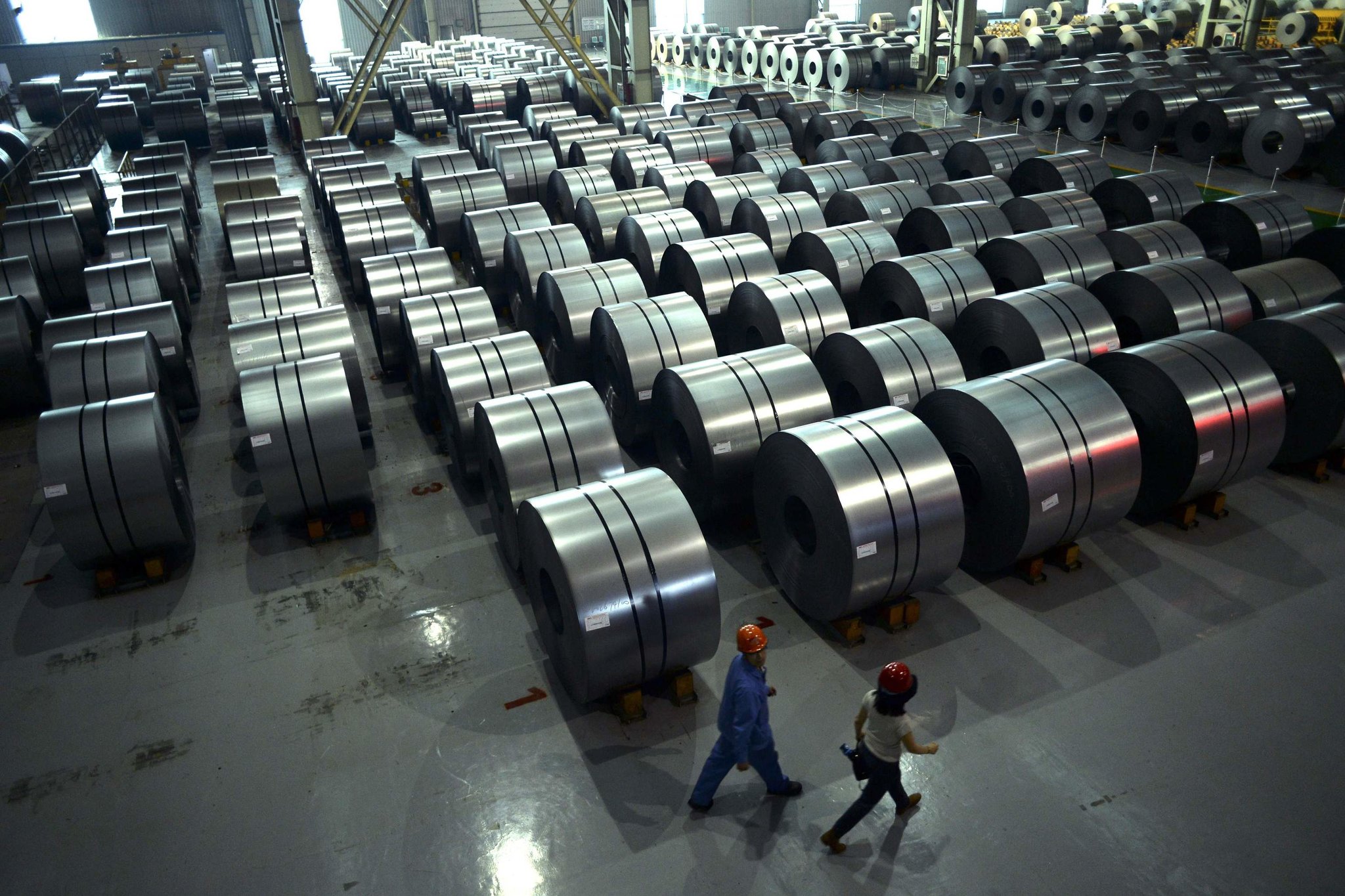
Poland’s largest listed steel distributor, Bowim, saw consolidated revenue fall 33% on-year in the third quarter to PLN 514.9 million ($127.6m) while net profit was down 76% to PLN 2.3m, Kallanish notes.
In the nine months through September, steel sales dropped 2.1% on-year to 376,976 tonnes. Sheet represented 151,018t, up 2%, while pipe and tube sales were up 4% to 72,718t and rebar sales surged 20% to 61,086t. Prefabricated reinforcement deliveries however fell 31% to 28,582t.
Nine-month revenue was down 27% to PLN 1.61 billion and net profit plummeted 93% to PLN 7.34m.
Earnings were impacted by a 40% drop in sales prices following a continuous downward correction seen since May 2022, the firm says. However, volumes fared better, given the Polish Steel Association forecasts a 6% on-year drop in Polish steel consumption in 2023.
Adam Smith Poland
Vattenfall to source SSAB fossil-free steel
SSAB has agreed to deliver fossil-free steel to energy group Vattenfall produced using feedstock from Hybrit, the green ironmaking joint venture in which both companies participate.
In addition to Hybrit, Vattenfall and SSAB are thus starting another in-depth collaboration, the firms say. LKAB is the other Hybrit joint venture partner, Kallanish notes.
Vattenfall needs high-strength steel for several different components, which SSAB will supply. According to the plan, Vattenfall will gain access to fossil-free steel, produced using sponge iron from the Hybrit pilot plant, as early as next year. The volume of delivered steel will increase once production is scaled up.
Vattenfall plans to start developing pilots next year, with potential applications including power line pylons, hydroelectric dams, grid stations, anchoring structures for onshore wind power and parts of foundations for offshore wind power.
Vattenfall also aims to work with subcontractors that use fossil-free steel, and in doing so, will require that at least 10% of the steel that Vattenfall purchases each year be fossil-free from 2030. Vattenfall and SSAB will also collaborate on sustainability calculations and the life cycle assessment (LCA) method of calculating CO2 emissions to ensure an entire fossil-free value chain.
Christian Koehl Germany
Groebler remains Salzgitter chief until 2029
Gunnar Groebler will remain chief executive of Salzgitter for almost the remainder of the decade, Kallanish hears from the German steelmaker.
The supervisory board of the company has extended his contract until 2029. Groebler has been active as a member of the executive board of Salzgitter AG since May 2021 and chairman of the executive board since July 2021.
“During his tenure to date, Gunnar Groebler has initiated and driven forward key decisions for the Salzgitter Group,” says Heinz-Gerhard Wente, chairman of the supervisory board. He cites the implementation of the new “Salzgitter AG 2030″ strategy with its focus on the circular economy, and the acceleration of the SALCOS – Salzgitter Low CO2 Steelmaking transformation programme.
Wente highlights the quality of Groebler’s communication with all of the group’s stakeholders. “The task now at hand is to further advance the ongoing transformation of the Group with energy and persistence,” the chairman says.
Christian Koehl Germany

Italian sections prices may increase again
Section prices may increase in Italy again before the Christmas holiday stoppages due to high production costs and scrap values hiking strongly this month.
The sector saw some restocking in November but order intake is now slowing. Transaction prices in Italy have already increased by some €30/tonne ($32) this month. Asking values for the first category of beams are now at €800/t delivered but, to cover the high costs of production, another round of increases is necessary. This is particularly in Italy where energy costs for hard-to-abate sectors are amongst the highest in Europe, Kallanish notes.
The November sales increase was due to very low stocks at distributors. There is no rush to purchase this month and the habit of purchasing low volumes but frequently seems to be back. Sales values for the first category of beams have reached €780-800/t delivered including size extras, sources suggest.
This month, Spanish long steel producer Celsa is said by its customers to be increasing prices in Europe for all long products by €30/t. It is also mulling a second increase driven by increasing scrap hikes in Europe. Celsa’s quotes in Central Europe for the first category of beams are being pushed up to €750/t ex-works on average (see Kallanish passim).
Natalia Capra France

French rebar contract prices increase
French rebar deal values are ticking up by €20/tonne ($21.5) on-month, in line with the wave of increases on long products registered in Europe. Despite the hike, demand remains relatively slow, with distributors’ purchasing volumes weak.
December has not brought any significant restocking so far. Buyers’ common intention is to keep stocks low and play it by ear. Sellers are turning over material from day to day, with little forward visibility. A source believes that some restocking will happen in January after the poor sales seen in recent weeks. Purchasing groups are trying to resist increasing prices and are resorting to buying abroad.
French rebar prices are hovering at €640-650/t delivered on average, Kallanish learns from market sources.
The construction industry in the country is giving no signs of recovery. The sector’s crisis is deepening, particularly in the private residential segment, and is now expanding to non-residential construction (see Kallanish passim). In the third quarter, the fall in new building sites exceeded 20%, while permits for new construction collapsed by almost 30%. The outlook remains negative.
Natalia Capra France