


EU HRC market supported by full order books, uncompetitive imports
Good order book of the EU steelmakers and lack of competitive imports supported domestic European hot-rolled coil prices Dec. 7, while demand remained limited.
Most mills in Northwest Europe made offers for February and March shipments although buyers remained reluctant about building inventories amid uncertainties about prices in the near-term.
“The buyers are avoiding buying big volumes as they understand the risks that the uptrend might end abruptly,” an Italian mill source said.
Mills continued to offer domestic HRC at Eur690-720/mt ex-works Ruhr with no deals heard during the day. Tradable values were reported at Eur680-690/mt ex-works Ruhr.
Platts assessed the price of domestic hot-rolled coil up Eur5/mt on the day at Eur685/mt ex-works Ruhr Dec. 7.
The market also remained concerned about capacity increases in the absence of real demand.
Some major Northwest European mills are expected to restart their blast furnaces in coming weeks.
Buyers have been more focused on the domestic supply due to high offers for the overseas coil and longer lead times.
Indonesian mills offered HRC at Eur650/mt CIF Antwerp and Turkish mills made offers at Eur670/mt CIF Antwerp, including anti-dumping duty. However, no transactions were reported.
Platts assessed the price of imported HRC in Northwest Europe up Eur10/mt on the day at Eur645/mt CIF Antwerp Dec. 7.
Platts is part of S&P Global Commodity Insights.
Author Rituparna Nath, Maria Tanatar

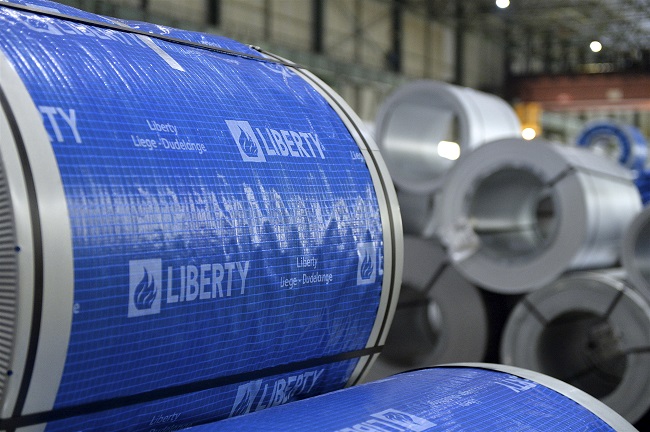
Liberty Steel successfully uses 100% biomass to replace anthracite in UK EAFs
Liberty Steel Group said Dec. 7 it has successfully used a 100% biomass anthracite coal substitute from CPL Industries in trials in the UK this year, diversifying use of coal products in electric arc furnace steelmaking.
CPL’s Ecoke, is a new sustainable material to replace coal and trials with 100% biomass product have proven to be effective in cutting emissions, Ed Heath-Whyte, Liberty Steel UK’s head of environment and sustainability, said at the World Steel Association’s Breakthrough Technology conference in Abu Dhabi. Ecoke promises to transform the steel industry’s carbon footprint following trials at Liberty Steel UK, which supplies high-precision steel products for strategic sectors such as defense, aerospace and energy, the steel group said in a statement.
The Breakthrough Technology conference took place this week on the sidelines of COP28, focused on new steel technologies with potential to decarbonize the sector, using hydrogen, renewable energy and new ferrous scrap and direct-charged metallic iron inputs.
The full cost per ton of using ecoke100 compared with anthracite, when UK Emission Trading System charges are included, were very positive, Heath-Whyte said.
Anthracite trade has been affected by sanctions on Russian coal products in the UK and the EU, following the war in Ukraine. Russia is a major supplier of anthracite and pulverized coal injection grade material to seaborne markets, with Europe previously a key market. Alternative anthracite suppliers include South Africa, Vietnam, Peru and the US, which may be limited in volumes and specific qualities to replace Russian coals for various steel and iron ore applications. Met coke, such as coke breeze, has seen stronger demand as a result.
Platts, part of S&P Global Commodity Insights, assessed Chinese export 65/66 CSR blast furnace coke at $372/mt FOB North China on Dec. 7.
CPL has also delivered Ecoke to Spanish EAF steel producer Sidenor earlier this year, and previously launched pilot trials with several steelmakers to test new product applications.
Ecoke briquettes replace anthracite, which is the main source of charge carbon used in EAFs to optimize steel production and electricity use along with steel quality. Use of Ecoke may cut the need for purchasing carbon allowance permits, under regulated markets in Europe.
Liberty’s first trials in 2022 used ecoke30 — a 30% biomass and 70% anthracite product which cut direct carbon emissions from EAFs by up to 30% — while since the middle of this year it has used ecoke100, made up of 100% biomass, it said.
“There had been concern that ecoke100 might reduce performance, and increase costs because ecoke costs more per ton than anthracite,” Liberty said.
“The great news is that ecoke100’s melting performance is just as good, and the Environment Agency has confirmed that Ecoke has no impact on water, ground, or waste. Additionally, since it is considered biomass and is not subject to the UK’s ETS, the cost impact is minimal.”
Trial data presented by Liberty showed higher natural gas consumption for ecoke100, compared with anthracite, along with “slightly higher” other costs including for power.
Liberty has been able to reduce its carbon footprint immediately with ecoke100, while maintaining high quality steel production, it added.
Ecoke opens up significant opportunities across Liberty’s global business and steel industry worldwide, the company said. Liberty produces steel in Europe and Australia at several EAFs and blast furnace works.
CPL has positioned Ecoke for use by the steel and metals industries with existing production processes and handling equipment. The company was expanding to offer various ecoke grades, while seeing the EAF charge carbon market as a significant area for growth, based on CPL’s existing ecoke capacity.
CPL procures and processes a range of solid fuels and biomass materials for a range of its business activities, and has its own briquetting plants at Immingham, facilitating shipments from the North Sea.
Author Hector Forster
COP28: EU ‘absolutely confident’ CBAM complies with WTO rules
The European Union is “absolutely confident” its Carbon Border Adjustment Mechanism is compliant with World Trade Organization rules and is keen to discuss the true purpose of the instrument with skeptical nations, Wopke Hoekstra, EU Commissioner for Climate Action, said Dec. 6 at the UN Climate Change Conference in Dubai.
CBAM is a carbon tax on emissions-intensive commodities imported into the EU covering cement, iron and steel, aluminum, fertilizer, electricity and hydrogen sectors. The levy is designed to reflect the difference between costs under the EU Emissions Trading System (ETS) and carbon costs in exporting countries.
Countries exposed to the tax, notably China, India, Brazil and South Africa, have raised strong concerns, accusing the EU of insufficient communication, violation of WTO principles, and a lack of a clarity on how CBAM proceeds are to be spent.
“Just to be crystal clear, we’re absolutely confident this is also being seen by the WTO [as] an instrument that does nothing more, nothing less, than creating a level playing field that helps the environment and climate at the same time,” Hoekstra said.
Indeed the impact of CBAM would be “very, very small” and should not be exaggerated, the EU official said.
“I’ll give you a number. Our assessment is that by 2030… the total value of CBAM will be roughly Eur3 billion ($3.24 billion),” he said.
This would be spread across all the relevant companies importing to the EU, “but only to the extent they have not taken carbon reductions into account like European companies are doing,” he said.
“No one gets a better position. No one gets a worse position,” he added.
With CBAM based on EU ETS prices, and those prices set to rise over time, S&P Global Commodity Insights forecasts the instrument could raise more than $80 billion per year by 2040.
Chinese rebuttal
Earlier, at an event held in COP28’s China Pavilion Dec. 4, Chinese environment ministry official Sun Zhen had told the European Commission’s DG for Climate Action “if you want to lead the world, you should stop your CBAM, that’s the simple message.”
Seeking to calm tempers, Hoekstra invited “all companies or countries that might be worried to look into the specifics and the mechanics [of CBAM] and have a dialogue with the European Union.”
Sooner or later more countries would implement CBAM-style policies, the EU official said.
“Maybe CBAM will evolve into a plurilateral mechanism, a carbon club. That’s what China, and its allies in CBAM-related negotiations, are really worried about,” an EU and China climate policy researcher told S&P Global Commodity Insights at COP28.
Australia, the US and the UK are all developing CBAM-alike policies.
Platts, part of S&P Global Commodity Insights, assessed the price EU Allowances (December 2024) at Eur71.58/mtCO2e ($77.20/mtCO2e) Dec. 5.
The weighted average price of China’s compliance emission allowances or CEAs was Yuan 70.53/mtCO2e ($9.88/mtCO2e) as of Dec. 1, Shanghai Environment and Energy Exchange data showed.
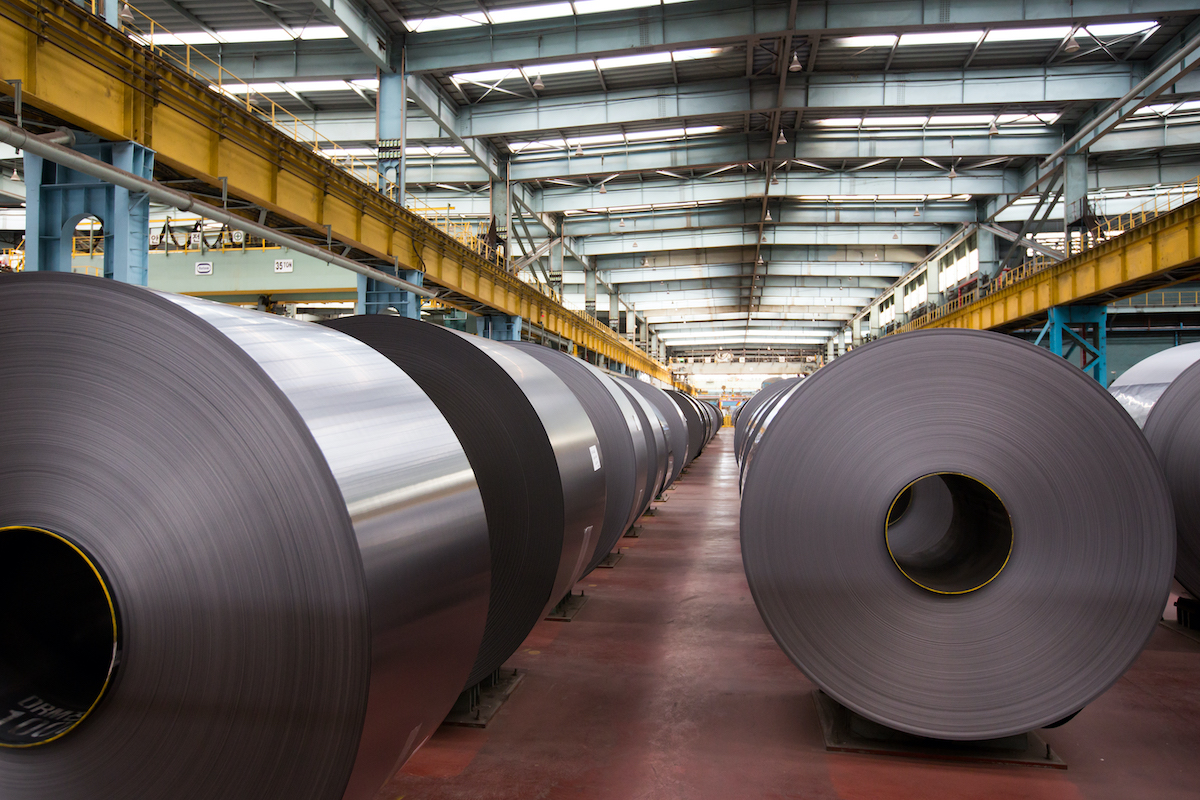
EU aims for higher CRC, HDG prices despite limited demand
“Bookings are limited as [a] majority of buyers had already made deals when prices were lower,” a German service center said.
In addition, the mills have been focused on settlement of the half year and full 2024 contracts and remained fairly inactive in the spot market, some sources said. The mills have been trying to achieve contract price rollover in 2024 despite low real demand and largely pessimistic outlook. As a result, the increase of spot offers was used as an argument in the long-term agreements negotiations, sources said.
The bullish mood of the mills has been driven by good order books—the mills have been offering February delivery coil and longer lead times for imported material.
Platts assessed domestic prices for CRC in Northwest Europe at Eur775/mt ex-works Ruhr Dec. 6, up Eur15/mt on the day and Eur5/mt on the week.
Tradable values have been heard at Eur770-780/mt EXW Ruhr and offers at Eur800/mt EXW Ruhr.
Platts assessed domestic prices for HDG coil in the region increased Eur10/mt on week to Eur785/mt EXW Ruhr Dec. 6.
Tradable values have been heard at Eur770-800/mt EXW Ruhr and offers at Eur800-835/mt EXW Ruhr.
Author Maria Tanatar, Rituparna Nath

EU mills maintain higher HRC offers due to healthy order books
“Major mills in the south are sold out for January and are now offering for February. There is no real demand, but prices are being supported by the lack of imports,” an Italian service center source said.
Market participants were pessimistic in the short-term real demand outlook. They also said that the restarting the blast furnaces idled earlier would further add to availability, which is unlikely to keep supporting prices. Due to those factors the buyers preferred to buy smaller volumes and have been unwilling to build stocks.
German mills have been offering HRC at Eur700-720/mt ex-works Ruhr and a Northwest European steelmaker had limited volumes still available at Eur670/mt ex-works.
Limited deals heard with one source reporting a deal at Eur680/mt ex-works Ruhr.
Platts assessed the price of domestic hot-rolled coil stable on the day at Eur680/mt ex-works Ruhr Dec. 6.
Buyers have been showing little interest in imported coil due to longer lead times and concerns about exhaustion of safeguard quotas.
“The major destinations for import are Japan, South Korea and Taiwan and there are not many offers from there and also concerns about lead times. The offers from Turkey also are too high and seeing not much interest,” a service center source said.
Offers from Turkish mills including anti-dumping duties were reported at Eur670-680/mt CIF Antwerp. Asian mills made offers at Eur630-640/mt CIF Antwerp.
Platts assessed the price of imported HRC in Northwest Europe down Eur5/mt on the day at Eur635/mt CIF Antwerp.
Author Rituparna Nath, Maria Tanatar
Trading slow in European HRC market, but mills maintain high offers
In Northern Europe, January-delivery coil was largely sold out, and all producers are seeking higher prices for February deliveries.
Some mills even claimed to be sold out for February and have started to offer material for March, sources said.
“Lead times are getting longer,” a buyer in the Benelux area told Fastmarkets, adding that a producer in Europe had already mentioned March.
“So the trend is for higher prices,” the buyer said. “But what will [happen when] ArcelorMittal restarts capacity in Germany and Salzgitter restarts a furnace?”
Import prices have also been rising and the gap between domestic and import prices is too narrow, he said.
Integrated producers in Germany were reported to be offering at €700-720 ($757-779) per tonne ex-works, with lead times reported at a minimum of eight weeks.
One mill was reported to be offering coil slightly lower, at €690-695 per tonne ex-works.
An offer of January-rolling HRC from a re-roller in the region was heard at €685 per tonne ex-works, compared with €650 per tonne ex-works for December-rolling coil.
Buyer estimates of achievable prices were heard at €670-690 per tonne ex-works, with transactions recently heard at €680-690 per tonne ex-works – although only for limited volumes.
“Everyone is buying only what’s strictly necessary. People are not sure if the current prices can be sustained next year,” the Benelux buyer told Fastmarkets.
A source at a steel service center in the region said: “Higher prices in Europe are not demand-driven, but the consequences of higher import prices, higher raw materials costs and pressure from mills – in combination with continuing negotiations on automotive [supply] contracts.”
Fastmarkets calculated its daily steel HRC index, domestic, exw Northern Europe, at €682.13 ($737.86) per tonne on December 6, up by €4.63 per tonne from €677.50 per tonne the previous day.
Fastmarkets calculated its corresponding daily steel HRC index, domestic, exw Italy, at €665.00 per tonne on December 6, stable day on day.
But Italian index was up by €5.50 per tonne week on week and by €37.50 per tonne month on month.
Restocking activity has slowed down in Italy recently and the higher offer prices have not yet been sealed in deals, sources said.
Notably, February-delivery HRC was on offer in the country at €700-720 per tonne delivered (around €685-705 per tonne ex-works).
This was in sharp contrast with the most recent transaction, which was heard at €680 per tonne delivered (€665 per tonne ex-works) for January-delivery HRC.
Italian mills have good order books, so are keen to maintain high offers.
And reduced supplies, caused by output cuts and uncompetitive imports, were supporting the bullish trend – although real demand was quite slow.
In the secondary market, prices for hot-rolled sheet continued to be reported at a minimum of €750 per tonne CPT, unchanged week on week. But sales in the secondary market were reported to be slow, because buyers have already secured January volumes and were in no rush to buy for February.
Imported HRC offers, meanwhile, were increasing as well, with the cheapest options no longer available.
Notably, Asia-origin coil for February shipment was on offer to Italy at €630-650 per tonne CFR, sources told Fastmarkets.
January-shipment HRC from Turkey was reported to be available to Italy at €660-680 per tonne CFR, including anti-dumping duty.
“[HRC] import prices are rising and the gap between domestic and import prices is too narrow,” a buyer source said. “Therefore, imports are not attractive, and lead times are too long.”
Published by: Julia Bolotova

Major governments commit to green steel procurement
At the COP28 meeting in Abu Dhabi this week, major purchasers of emission-intensive materials used in public construction projects strengthened their commitment to create market demand for low-emission steel, cement and concrete.
The governments of Canada, Germany, the UK and US, member countries of the Industrial Deep Decarbonization Initiative (IDDI), pledged to adopt timebound commitments to procure low-emission steel, cement and concrete, says the United Nations Industrial Development Organisation (Unido). Alternatively, they pledged to adhere to emissions reduction thresholds for whole project life cycle assessments to achieve net zero emissions in public buildings and/or built infrastructure.
The commitments were made through IDDI’s Green Public Procurement Pledge.
The commitments are “an important milestone to help drive the global decarbonisation of heavy industries by creating a market for low and near-zero emission steel and cement. Governments are among the top buyers of materials for major infrastructure projects. Public procurement is estimated to be responsible for 25% of global construction revenue,” says Unido director general Gerd Müller in a note seen by Kallanish.
Stefan Wenzel, German parliamentary state secretary for economic affairs and climate action, deems accelerating demand for green steel to be “one of the major levers for decarbonising our industries”.
“Governments have the power to instigate change through public contracts, kick starting the improvements needed to decarbonise heavy industry,” says UK energy security and net zero minister Graham Stuart.
The four governments also committed to support innovation and the deployment of breakthrough technologies by stimulating demand for, and the commercialisation of, near-zero emission materials.
They also committed to support the development and use of harmonised emissions accounting standards and definitions for low and near-zero emission construction materials, starting with steel, cement and concrete. To accelerate this process, at COP28 the IDDI Secretariat is releasing a white paper outlining a potential pathway towards harmonised greenhouse gas emissions accounting standards.
In addition to the four signatories, the governments of Austria, Japan and United Arab Emirates have endorsed the GPP Statement of Intent to work towards key aspects of the Pledge.
Adam Smith Poland

Metinvest has significant potential to increase exports: cfo
Metinvest generated $1.3 billion in foreign currency earnings in the first nine months of this year and has significant potential to increase exports, says company chief financial officer Yulia Dankova.
“The very first factor contributing to the development of the company’s export capabilities and the growth of foreign exchange earnings is the safe shipment of products across the Black Sea,” she said during the Export Credit Forum 2023. “We must have a constant possibility of receiving ships, insurance for these ships, and the possibility of cooperation with financial institutions, so that the opportunity to receive funds would be not after passing the Bosphorus or Suez, but as before – after loading the products onto the ship.”
The second factor is the possibility of obtaining financing for small and medium-sized Ukrainian companies that consume Metinvest’s metal products, so that they can export products and have a stable cash flow, Kallanish notes.
“Then we, as suppliers, will be protected. This will also contribute to the growth of export volumes and foreign exchange earnings in Ukraine,” Dankova noted. “Another condition for the growth of foreign exchange earnings is the solution to the issue of customs clearance of goods in transit through European countries. Ukraine should join European initiatives to develop a computerised transit system.”
Expanding the range of non-commodity product groups according to KVED codes supported by the Export Credit Agency could increase the company’s export capabilities. “The list of metal products covers only pipes and does not contain flat and long products – products with high added value,” says the cfo.
Metinvest’s operations have been hampered by a lack of personnel. Business, together with the state, must become a reliable partner for Western consumers even in war conditions, she added.
Earlier, Metinvest said that its steel enterprises are operating at 65-75% of their capacity as of November (see Kallanish passim). The company’s mining and processing plants are operating at 35-40% of their capacity, but ore shipments to Europe are significantly lower than pre-war due to high costs for transportation.
Svetoslav Abrossimov Bulgaria

Sidenor evaluates investment in Reinosa rolling mill
Special steelmaker Sidenor says it is evaluating upgrading the rolling mill at its Reinosa plant in northern Spain. The company considers the project strategic for improving its competitiveness.
¨The investment would represent an important industrial and technological commitment, which would complete the investments made to date by the company to lead the European special steel sector,” Sidenor says in a note. The project was presented at a working group with representatives of the Cantabrian government, the northern regional authority tells Kallanish.
There is no deadline for Sidenor to give the green light for the mill upgrade. The investment is valued at €100 million ($107.7m).
The steelmaker should complete the building of a new 30-kilovolt (Kv) electricity supply line for the Reinosa plant this month. Sidenor is also advancing a project, in collaboration with Basque agency EVE, for the development and use of renewable energy sources. This involves the construction of eight photovoltaic solar plants in Lleida, Tarragona and Barcelona (see Kallanish passim).
The special steelmaker resumed operations at the Reinosa plant’s rolling mill in October, with production involving 20-25 employees working in two shifts, following a forecast for growing market demand in 2024.
Todor Kirkov Bulgaria
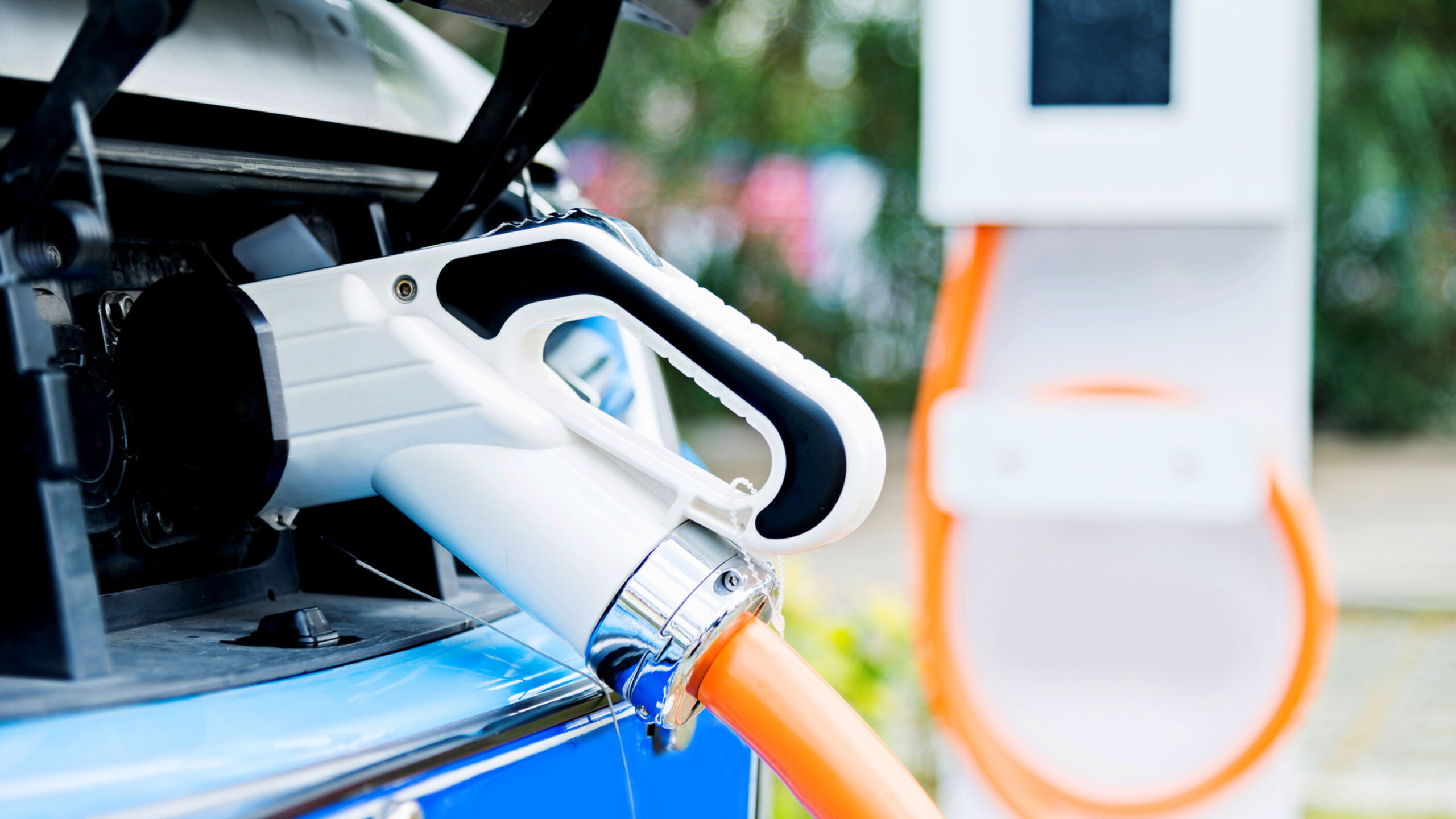
EC proposes extension to EU-UK rules of origin on EVs, batteries
The European Commission proposed on Wednesday a “one-off extension” to the EU-UK current rules of origin (ROO) on electric vehicles and batteries, now to be voted by the European Council.
EC vice-president Maroš Šefčovič told a press conference the proposal was reached after a comprehensive assessment and discussion, with input from the European automotive, battery and chemical industries. It takes into consideration the “unforeseen circumstances” that impacted the European battery industry since the rules were designed in 2020, including soaring energy prices and increased competition from new international subsidy support schemes.
The proposal stipulates that the current ROO remain in place until 31 December 2026, with the stricter requirements entering into force on 1 January 2027, instead of 1 January 2024. It also includes a lock-in mechanism making it legally impossible for the EU-UK Partnership Council to change rules again before 2032.
“We have listened carefully to those concerns and therefore put a balanced, forward-looking proposal on the table. It supports the competitiveness of our industry and protects jobs in the EU,” adds Šefčovič.
The Commissioners have also announced €3 billion ($3.23 billion) in funding for EU battery manufacturers over the next three years. The new instrument will provide support, possibly as a fixed premium, to the European manufacturers of the most sustainable batteries. They expect the new investment, to start next year through the Innovation Fund, will also create spill-over effects on the entire value chain, including its upstream segment.
European automotive trade body ACEA welcomed the proposal on a three-year extension and urged the Council to approve the deal. “This is vital to ensure the well-being of not only EU BEV manufacturing, but also of the whole European battery value chain,” ACEA director general Sigrid de Vries says in a note.
Failure to approve the proposal would come with a “hefty price tag of €4.3 billion over the next three years for EU vehicle makers,” ACEA says. BEV production could shrink by 480,000 units, which the association estimates to be equivalent to the output of two average-size auto factories.
The UK’s Society of Motor Manufacturers and Traders (SMMT) did not immediately reply to Kallanish’s request for comment.
The EC says it will closely monitor whether the European automotive and batteries industries are “on the right track” to complying with the permanent rules of origin of the trade agreement, and achieving a headline benchmark of supplying at least 70% of their demand for batteries through domestic sourcing.