


Outokumpu completes Long Products division divestment to Marcegaglia
Outokumpu has completed the divestment of the majority of its long products division to Italian re-roller Marcegaglia, the Finnish steelmaker tells Kallanish.
Marcegaglia agreed last July to acquire Outokumpu’s Long Products division for €228 million ($243m). Last month, the European Commission and US competition authority approved the move.
“I want to thank the personnel in Sheffield, Richburg and Fagersta for our joint journey as part of Outokumpu. It makes us pleased that the new owner, Marcegaglia, is a responsible and committed owner to develop Long Products business even further. As for Outokumpu, we can now fully focus on our core business of stainless steel flat products and ferrochrome according to our strategy,” says Outokumpu chief executive Heikki Malinen.
Adam Smith Poland

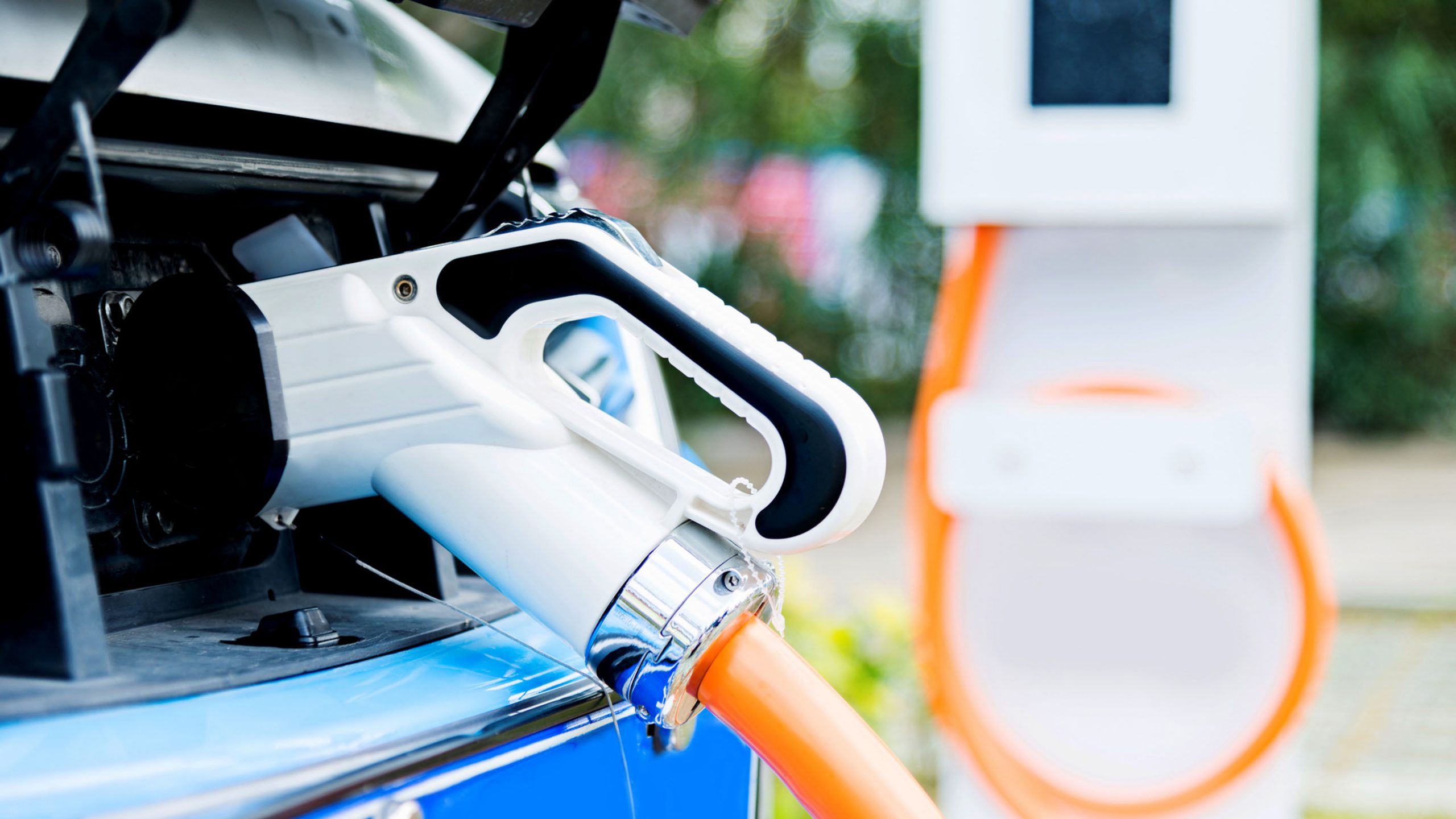
SPAIN DATA: Electric vehicle sales in 2022 rise 21%
Spanish electric vehicle sales in 2022 increased to 100,425 units, up 21% from 2021, although total vehicle sales declined 5%, according to figures published Jan. 2.
Fully electric vehicle sales were 52,224, up 32%, while hybrid vehicle sales increased 11% to 48,201, Spanish EV associations AEDIVE and GANVAM said.
The 2022 additions mean that around 325,000 EVs are currently on Spain’s roads, meaning the country is behind its target of 5 million EVs under its decarbonization plans for 2030, the groups said.
“The administration should put measures in place to accelerate this transition, such as financial incentives to make demand more dynamic and make efficient mobility a more affordable option,” they said.
The EV sales target for 2022 had been 120,000 units.
Increased demand for EVs has driven up battery metal prices; Platts, part of S&P Global Commodity Insights, assessed seaborne lithium carbonate and lithium hydroxide at $75,000/mt CIF North Asia and $81,300/mt CIF North Asia Jan. 3, up 124% and 156.5% year on year, respectively.
From Jan. 1, Spain plans to roll out a program to create low emission zones in all towns and cities with populations of more than 50,000, affecting 25 million people.
Meanwhile, total Spanish vehicle sales in 2022 fell 5% year on year to 814,000 units, due to rising fuel prices and inflation, according to figure from auto association ANFAC published Jan. 2.
The volume was below the forecast of 830,000 units, it said, with the group also expressing pessimism for 2023 due to supply chain bottlenecks and higher raw material prices, among other factors.
— Gianluca Baratti

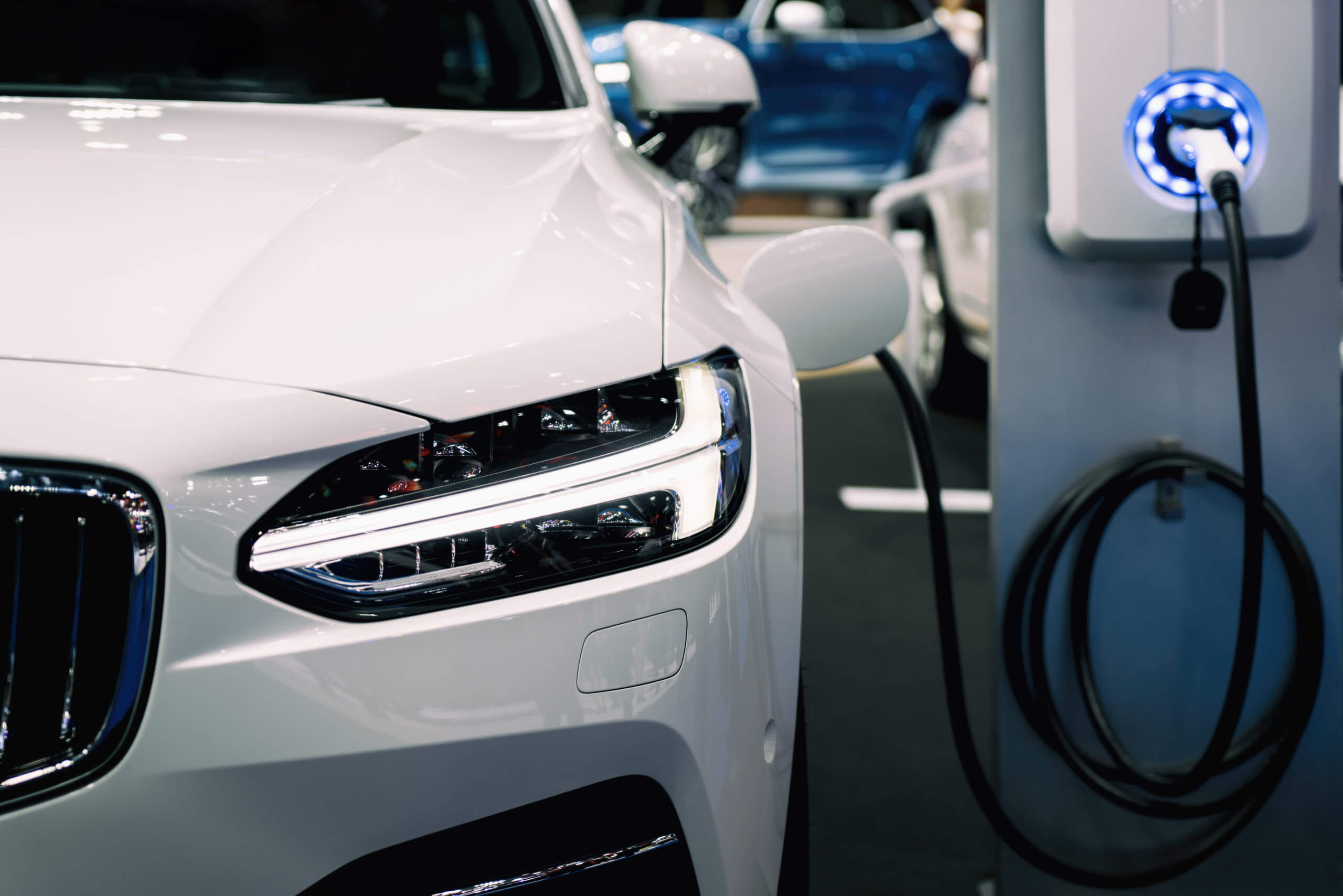
NORWAY DATA: 2022 EV sales rise 21.6% to record high: OFV
New zero-emission electric or hydrogen vehicle sales in Norway more than doubled year on year in December 2022 to a record monthly high of 32,713 units, bringing the full-year total to a record 138,285 units, up 21.6% from 2021, according to the latest data released Jan. 3 by the Norwegian Road Information Authority, or OFV.
The December volume was also more than double from November’s previous record monthly high of 15,915 units.
The December EV volume made up 82.8% of the month’s total new passenger car registrations, which at 39,497 units were also up 92.1% year on year and 102.4% higher than November and was also at a record high, the data showed.
Increased demand for EVs has driven up battery metal prices. Platts, part of S&P Global Commodity Insights, assessed seaborne lithium carbonate and lithium hydroxide at $75,000/mt CIF North Asia and $81,300/mt CIF North Asia Jan. 3, up 124% and 156.5% year on year, respectively.
“The car industry worked hard to get new cars registered and delivered before the new year – because then new and higher car taxes were expected, including a new weight tax and VAT on electric cars for the part of the price that exceeds NOK500,000 [$50,132.50],” OFV Director Øyvind Solberg Thorsen said in a statement.
“Almost 40,000 first-time registered new passenger cars in December alone, means that just over 22% of the entire year’s new car registrations were made during the last month of the year,” he added.
Total 2022 vehicle sales down 1.1% on year
Overall, total passenger vehicles sales slipped 1.1% year on year to 174,329 units in 2022, with EV’s making up 79.3% of the total share.
The overall passenger vehicle sales for the year were impacted by a new wave of COVID-19 and the Russia-Ukraine war causing major production and delivery challenges in 2022, Solberg Thorsen said, adding that few thought that the full-year volume would be so high, with higher interest rates and rising food and electricity prices also hitting consumers’ buying power.
Meanwhile, registrations of new hybrid cars in December dropped 38.5% year on year, but increased 12.4% from November to 3,293 units, the highest monthly volume since December 2021 and making up for 8.3% of the total sales.
Of these, 1,905 were rechargeable hybrids and 1,388 were not rechargeable.
Hybrid sales for the whole of 2022 totaled 24,321 units, down 49.3% year on year and making up 14% of the total passenger car sales, down from a 27.2% share in 2021.
December sales of petrol engine cars amounted to 2,503 units, or 6.3% of total new vehicle sales for the month, the highest level on record since S&P Global’s records began in 2020.
The monthly total was much higher than December 2021’s 686 units and up from 229 units in November.
Full-year petrol engine vehicle sales, however, dropped 16.4% year on year to 6,280 units, a 3.6% share of the overall total sales for the year
Sales of diesel engine cars in Norway in December also climbed 37.1% from a year ago and more than doubled from November’s four-month low to 987 units, a 2.5% share.
This brought total diesel engine vehicle sales for 2022 to 5,441 units, down 23.3% year on year and a 3.1% share of the total sales for the year.
According to S&P Global Commodity Insights analysts, Norway’s plug-in light duty EV sales are forecast to reach 200,520 units in 2025 and 206,800 in 2030.
Norway has been one of Europe’s front-runners in EV adoption, with its total 2021 light duty PEV sales ranking sixth in the world after China, Germany, the US, the UK, and France, according to S&P Global.
EV sales have been boosted by government incentives, including no purchase/import taxes, exemption from 25% VAT on purchase, reduced annual road tax, 50% toll road and ferry charges, cheaper municipal parking fees and access to bus lanes, among others.
— Jacqueline Holman

European HRC market monitors sustainability of price increases post-holidays
Market participants were said to be keeping a close watch on the flat steel market Jan. 3, assessing the sustainability of recent price increases post-holiday period.
Platts assessed hot-rolled coil in Northwest Europe up Eur5/mt on the day, at Eur685/mt ex-works Ruhr.
Market participants reported offers at Eur730-740/mt ex-works Northern Europe, expecting cheaper prices to disappear as the market proceeds through January.
That said, uncertainty remains as to whether buyers will accept higher prices, as some distributors continue to report a lack of supporting end-user demand that would incentivize higher purchasing costs.
Tradable value indications were received at Eur690-700/mt ex-works Northern Europe, from primarily trader sources, with most expecting this price level to increase in the near-term, especially for those that failed to restock in December.
“I think most are watching the market now to see if this price level will survive in January,” said a trader source.
When asked if buyers were ready to accept higher prices, another trader replied with cautious positivity, estimating prices of Eur700/mt ex-works as workable in the post-holiday market.
Platts is part of S&P Global Commodity Insights.
— Benjamin Steven

Blastr Green Steel to build low-carbon steel plant in Finland
Decarbonized steel supply developer Blastr Green Steel plans to construct a low-carbon steel plant and integrated hydrogen production facility in Finland, the company said in a statement Jan. 3.
Capable of producing approximately 2.5 million mt/year of hot and cold-rolled steel, the Eur4 billion plant ($4.2 billion) will be constructed on an existing industrial site in Inkoo, Southern Finland, owned by Nordic energy company Fortum.
Production is scheduled to begin by the end of 2026.
Utilizing hydrogen rather than traditional energy feedstocks such and coke and coal, Blastr aims to reduce carbon emissions at the plant by 4.6 million mt/year compared to conventional steel production methods.
In addition, the company also plans to procure a “significant share” of the plant’s power requirements from “directly or indirectly owned” wind farms.
“Finland is an ideal location for our project. It has an ambitious low-carbon target, supportive and predictable operating conditions for the green industry, fossil-free energy, and a highly qualified workforce,” said Blastr Green Steel CEO Hans Fredrik Wittusen.
“The ice-free deep-sea harbor enables efficient, low-carbon logistics all year round and close access to the European market,” he added.
More companies are investing in low carbon steel projects as global demand for low carbon steel is expected to increase from below 5 million mt/year of steel products in 2021 to 200 million mt/year in 2030, with European demand rising to nearly 40 million mt by then, driven by the automotive and construction sectors.
Platts, part of S&P Global Commodity Insights, assessed Northwest Europe hot-rolled coil at Eur680/mt ($716/mt) ex-works Ruhr on Dec. 30, unchanged on the day but down 34.4% since the start of 2022.
— Euan Sadden
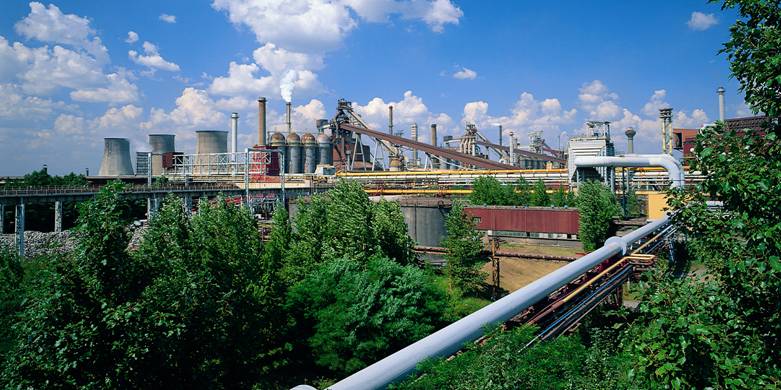
ArcelorMittal Poland contracts slag, coke infrastructure maintenance
ArcelorMittal Poland (AMP) has contracted a consortium of Remak-Energomontaz and Zarmen to carry out maintenance on its Dabrowa Gornicza slag granulation units and Zdzieszowice coke plant boiler and gas tank. The total value of the three contracts is PLN 71.4 million ($16.4m), says Remak-Energomontaz.
The revamp of the pumping station and technological pipelines for slag granulation units no.3 and no.4 at blast furnace no.2 at the flagship Dabrowa Gornicza steelworks is scheduled for completion by September 2023, Kallanish notes.
The repair of the K3 – ECII boiler at Zdzieszowice should be completed by January 2025, while gas tank no.3 at the coke plant should be repaired by December 2025.
Last month, AMP pushed back the restart of blast furnace no.3 at Dabrowa Gornicza beyond the end of the year after a recovery in European steel demand failed to materialise (see Kallanish passim). The steelmaker has guaranteed it will restart BF3 before BF2 begins its long-awaited maintenance, most likely next February or March.
Adam Smith Poland
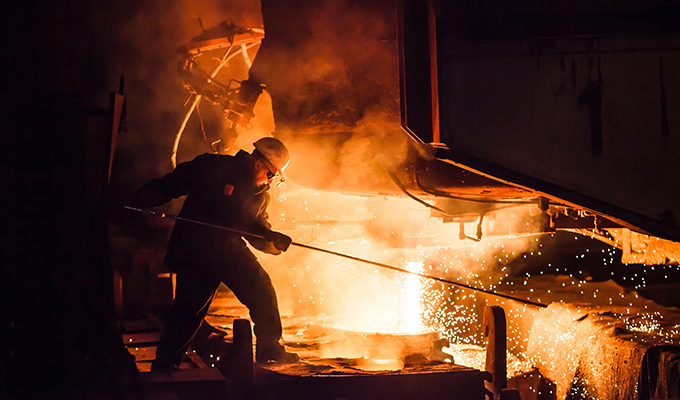
German fabricators begin 2023 on pessimistic note
Germany’s steel and metals fabricating companies have expressed concern over order activity towards the end of the year 2022, and will carry their reservation into the new year.
Order intake in the third quarter for upcoming deliveries was 5% below the preceding quarter, according to association Wirtschaftsverband Stahl- und Metallverarbeitung (WSM). While this appears logical at first sight in the wake of the Ukraine invasion, the quarter-on-quarter drop in production was only 0.7%. This implies that the full impact of the war, and other negative factors, was yet to arrive. “The figures do not give reason to expect a promising last note to the year,” economist Holger Ade said in WSM’s latest statement on the matter.
In a year-on-year comparison, production in Q3 was actually 1% up on the corresponding 2021 period, which, however, had been particularly weak due to the semiconductor shortage. And, in fact, order intake was down a considerable 7% y-on-y, Kallanish learns from WSM. It therefore anticipates that the final figures for 2022 will show another drop of business, as they did already in 2021. “The lining on the horizon is not silver, and it is even greyer than it was in 2021,” the federation says in its statement.
Christian Koehl Germany

Belgian re-rolled coil exports increase: Benelux source
Exports of coil from Belgium rose notably in 2022, quite likely because of Russian slab rolled in the country and then sent overseas, says a source.
According to a Benelux market observer, exports of hot rolled coil from Belgium to Turkey increased fivefold last year. “This remarkably increased export was mainly originating from a Belgian steel rolling mill with Russian roots, which makes it from slabs supplied from Russia,” he tells Kallanish.
In another example of Russian steel indirectly coming to Europe, the observer says, some 40,000 tonnes of Turkish coils recently came to the UK, for which the base material is believed to have originated from Russia.
“Russia is reportedly trying to supply rolled steel to Europe via stealth routes, thus circumventing sanctions on various products,” the observer says. The European Commission has meanwhile become aware of the issue and prepared the way for banning Russian material processed in third countries.
In its eighth round of sanctions on Russia, the Commission said steel products processed in third countries using steel originating from Russia will not be accepted in Europe as of 30 September 2023 (see Kallanish passim).
A German distributor of plate adds that German warehouses have volumes of Russian material – finished as well as semi-finished – in stock which they cannot use. Much of it has not been fully paid, and will not be, he adds. “All that benefits Russia’s economy and businesses is banned now, and that includes residual payments,” he explains.
Christian Koehl Germany

European hot-rolled coil market approaches 2023 with cautious optimism
Bullish sentiment is prevailing in the European coil market, reinforced by a demand revival that is generally expected to continue in the first quarter of 2023.
The sustainability of the price rise and recovery in market activity, however, have been questioned by many market participants. In addition, following the turbulent market in 2022 due to effects of the global geopolitical situation, sources have been reluctant to make forecasts that stretch into the second half of 2023.
“I think over the past years the traditional market yearly cycles have changed, so it’s hard to predict the market over the course of the year,” a Southern European distributor said. “There are more important factors except for usual restocking in the first quarter or September.”
For the beginning of 2023, however, the outlook is upbeat, with lower domestic availability, reduced competition from imports and a revival in demand among the factors cited that are supporting a higher coil price. But market participants have questioned whether the uptrend, which began in December, can be sustained as end-user demand declines and the economic and geopolitical situation remains uncertain.
Impact from production cuts
In 2022, European steelmakers faced skyrocketing energy costs. In response to low demand and high costs a number of steelmakers stopped steelmaking equipment, cutting production in an attempt to support domestic coil prices.
The effects of the output reduction, however, were not visible until the close of the year and this is expected to remain a price supporting factor in the first half of 2023.
“I think the mills have been delaying stoppages this year as they feared the post-lockdown scenario when supply rose slower than demand,” a source at a German service center said. “So we see the reduction of material availability only now, at the year’s end. Buyers need to get rid of their stocks first, and now they are looking for orders. Oversupply is over, so prices will continue to rise.”
A North European trader agreed: “European mills are going to have more power in the first quarter as inventories are not as strong and import prices aren’t competitive enough.”
Less competitive imports
The anticipated start of new antidumping investigations against imported HRC has also made exporters less active in Europe and buyers have been cautious when planning bookings of non-EU material. Market participants cite hot-rolled coil from India, South Korea and Japan among possible subjects of a new trade case.
“With rumors about new antidumping cases and the imminent introduction of the Carbon Border Adjustment Mechanism, buyers will have to strengthen their relationship with European mills to secure volumes,” a source at a Southern European service center said.
In addition, overseas suppliers already increased offers in the second half of December by about Eur20-30/mt for HRC and they are expected to push for further price rises in January, sources said.
“There isn’t enough confidence in the domestic price increase yet on the domestic side to encourage import buying, so domestic steelmakers will have a majority market share as buyers have been very patient,” a trader said.
Shaky ground for recovery
Although sentiment has been largely upbeat towards the end of December, there are still concerns that the price recovery will end after buyers restock their required volumes by mid-January.
European steel association Eurofer said steel demand contraction was expected to continue for at least the first half of 2023, predicting a decline of 1.9% year on year in the period to 142.4 million mt of steel products.
“I think we might see a similar picture as we saw in September — prices rose as it seemed that demand improved, but as soon as restocking was over it became clear that end-user demand was not there to support,” a steelmaker source said.
Mills have not yet finalized long-term contracts negotiations, and there is likely to be at least a 30% reduction in steel demand from automotive sector in the first quarter, a source at a Central European service center said.
“I think that this price rise is more wishful thinking than the reality,” the source said. “Sure, it is needed to cover energy costs, but without the backing of real demand I do not think that a recovery is possible until the geopolitical situation stabilizes.”
Volumes this year will be lower than last year but still at a relatively reasonable level, according to a trader.
“It’s next year when we’ll see the real dampeners on the market,” the trader said. “Especially in the first quarter, or even first half of the year, activity will be substantially reduced but a recovery isn’t outside the bounds of possibility — just unlikely when considering the macroeconomic picture.”
Platts, part of S&P Global Commodity Insights, assessed North European domestic hot-rolled coil prices at Eur680/mt ex-works Ruhr Dec. 29, reflecting tradable values reported at Eur650-700/mt ex-works Ruhr. One German steelmaker had also increased official offers to Eur740/mt ex-works Ruhr in the second half of December and another mill moved HRC offers up to Eur730/mt ex-works Ruhr.
A negative trend had sustained in the European coil market from mid-March to late November due to high distributor inventories, competitive import offers, reduced demand from end consumers and general uncertainties caused by the war in Ukraine.
— Maria Tanatar, Benjamin Steven

EU HRC stable in slow market, upward trend to restart in January
Domestic prices for hot-rolled coil were unchanged on Dec. 30 due to slowdown in seasonal activity by the year end.
The prices are expected to resume the positive trend that had started in December after both buyers and sellers return to the market by mid-January, sources said.
“Market seems positive for January, but now the market is just dead,” a trader said.
Northern European steelmakers have increased HRC offers to Eur730-740/mt ex-works Ruhr. But tradable values have been heard at Eur680-700/mt ex-works Ruhr.
Platts assessed North European hot-rolled coil unchanged on the day at Eur680/mt ex-works Ruhr Dec. 30.
The bullish market sentiment has been supported by improved demand from distributors those need to restock, reduced domestic supply caused by production cuts and less competitive import. In addition, the steelmakers need higher coil prices to cover energy costs, sources said.
The assessment for domestic HRC in Southern Europe was also stable day on day at Eur670/mt ex-works Italy Dec. 30.
Platts is part of S&P Global Commodity Insights.
— Maria Tanatar