

Italian flats output tumbles in November
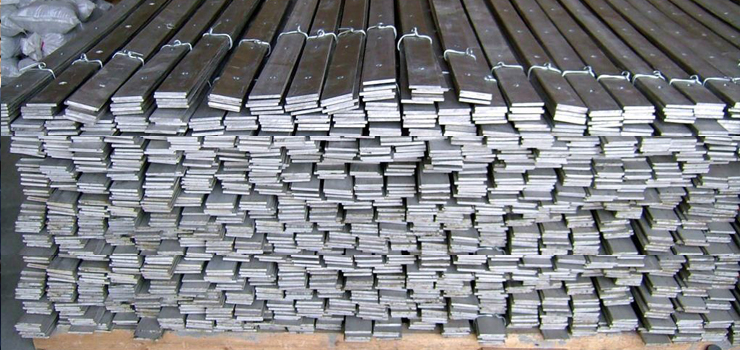
Italian flat steel production tumbled by 30.4% on-year to 731,000 tonnes in November, and by 13.5% on-year in January-November to 8.9 million tonnes, according to data issued by local steelmakers association Federacciai.
Longs output fell by 9.5% in November to 1.1mt, and by 11.3% in the 11 months to 11.3mt, Kallanish notes.
Italian crude steel output dropped 15.1% in November to 1.8mt, and by 11.2% over the 11 months to 20.3mt.
Crude steel output in 2021 rose by 19.8% on-year to 24.4mt.
Natalia Capra France

SSAB updates supplier code of conduct
SSAB has updated its suppliers’ code of conduct (SCOC) to further clarify expectations towards suppliers, Kallanish hears from the steelmaker.
The new version of the SCOC includes topics such as human rights, modern slavery, biodiversity, recycling and fair competition and antitrust in alignment with international standards. “The updated SCOC allows us to better explain our expectations toward SSAB’s suppliers and the responsibility they have toward us,” says Christina Friborg, head of Sustainability at SSAB. “This is an important step in the sustainability journey that we want to take together with our suppliers.”
The company underlines that its approximately 20,000 suppliers are important in bringing SSAB closer to its own sustainability goals as well. The code is aligned with international conventions like the United Nations (UN) Global Compact, OECD Guidelines for Multinational Enterprises, International Bill of Human Rights and the UN Guiding Principles on Business and Human Rights.
“We continuously review our suppliers’ sustainability efforts as sustainability criteria are key when taking our purchasing decisions,” says Lisa Lidén, sustainability manager for procurement. SSAB’s suppliers will be able to download the new supplier code of conduct at www.ssab.com/suppliers.
Christian Koehl Germany

Blastr plans hydrogen-based steelworks in Finland
Norwegian start-up Blastr Green Steel (Blastr) plans to establish a “green” steel plant with integrated hydrogen production facility in Inkoo, Finland.
Blastr has entered into a Letter of Intent with Nordic energy company Fortum that provides exclusive rights to utilise an existing industrial site located in Inkoo. The investment is estimated to amount to €4 billion ($4.24 billion) and expected to create up to 1,200 direct jobs in the operations phase. Production is planned to start by end-2026, Kallanish learns from Blastr and Fortum announcements.
“Finland is an ideal location for our project. Inkoo was selected as our location due to its high-quality infrastructure and access to clean power. In addition, the ice-free deep-sea harbour enables efficient, low-carbon logistics all year round and close access to the European market,” says Blastr Green Steel chief executive Hans Fredrik Wittusen. He adds the venture will systematically address all parts of the value chain to reduce overall carbon footprint, reduce waste and develop circular solutions.
The green steel plant together with the integrated hydrogen facility will be among the largest industrial investments planned in Finland to date. It is projected to produce 2.5 million tonnes/year of high-quality hot and cold rolled coil.
Only two months ago, Blastr entered the public eye with a cooperation agreement with Cargill Metal for the sourcing of raw materials (see Kallanish 17 November). Blastr is backed by Vanir Green Industries, a Nordic investment company that invests in, develops and scales up green, robust and profitable businesses for the energy transition. It is the second such venture in Scandinavia to build a hydrogen-based steel mill after H2 Green Steel in Sweden. Hybrit will meanwhile produce hydrogen-based iron to feed steelmaking at SSAB.
Christian Koehl Germany
Coil derivative prices to increase, say Italian distributors
Some price increases and an improved level of orders were reported in December by the Italian distribution sector following a long period of destocking, uncertainty and low sales.
Sheet and tube prices are slowly ticking up. Re-rollers and service centres are implementing gradual price increases as, despite the better sales of the past two weeks, they see persisting uncertainty in the market. Sheet prices, which recently went below the level of €700/tonne ($743/t), will increase in January to €750/t ex-works for February delivery, in line with hiking coil prices. Clients are still trying to resist the increases, but some are beginning to accept.
Distributors tell Kallanish that demand for sheet is increasing and prices have reached rock bottom. They forecast some dynamism in the first weeks of January as the sector is coming out of a period of destocking. Despite there still being some caution, stocks have lowered, and the downstream industry will buy this month. However, some distributors will chase sales volumes which may result in aggressive prices and strong competition, sources believe.
In December, large distributors in Italy, France and Germany started to replenish their tube stocks. Welded tube prices have been under pressure for many months, as supply has exceeded demand. Discounts are now lowering from 37 and 38 points to 36.
The distribution sector also expects hikes for welded tube prices in January, pushed up by coil increases and improved European demand. Tube prices are forecast to reach 33 points of discounts when the sector resumes working this month, starting on 9 January.
Natalia Capra France
UK government support ‘required’ for steel decarbonization: British Steel
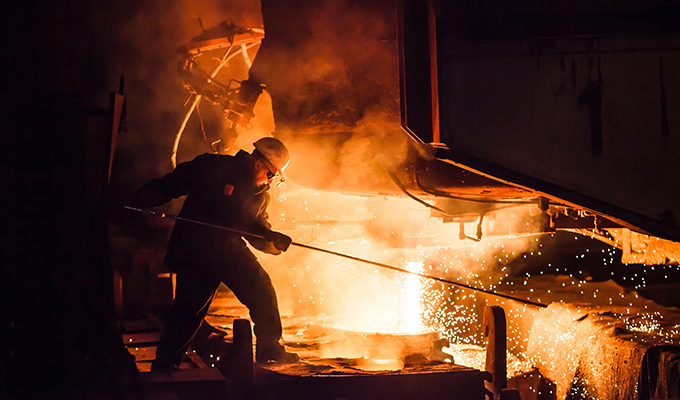
The UK government’s support is now “required” for the successful decarbonization of British Steel, according to a statement issued by the Chinese-owned UK integrated steelmaker Jan. 4.
“We’re continuing formal talks with the government about decarbonization, along with the global challenges we currently face,” British Steel said in the statement sent to S&P Global Commodity Insights. It did not provide a value for the amount to be spent on decarbonization of the steelmaker, which has a total steel products capacity of about 3 million mt/year, including rails and constructional steel.
Earlier in the day, The Financial Times reported that UK Chancellor Jeremy Hunt was “being urged by colleagues to find GBP300 million ($361.63 million) in subsidies to help China’s Jingye protect the blast furnaces at British Steel in Scunthorpe.”
China’s Jingye Steel Group has itself invested GBP330 million at British Steel since it acquired the business in March 2020, taking it out of liquidation. At that time the Chinese steelmaker pledged to invest around GBP1.2 billion to modernize and improve British Steel, including by construction of an electric arc furnace in Teesside, in the north of the UK.
The London-based newspaper held as “almost certain” that the government would “step in again” to provide some assistance.
In July 2020, Spanish-owned Celsa Steel UK, the largest UK manufacturer of reinforcing steel with an annual production capacity of 1.2 million mt of long products, was granted an emergency loan by the UK government to allow the company to continue trading amid difficult market conditions caused by the coronavirus pandemic.
Celsa UK produces steel in Cardiff, South Wales, using EAF technology which typically has a lower carbon footprint than the blast-furnace production route. The Celsa loan — estimated at GBP30 million by local media — was linked to a series of conditions, including job-protection, climate change and net-zero targets.
Jingye’s ‘long-term’ commitment
“Jingye are committed to our long-term future but we also require the UK government to provide the necessary support, policies and frameworks to back our drive to become a clean, green and sustainable company,” the British Steel statement said.
“To make sure we can deliver the steel Britain requires, we’re undergoing the biggest transformation in our 130-year history. To support the journey to net zero, our owners, Jingye, have invested GBP330 million in capital projects during their first three years of ownership and they continue to invest unprecedented sums of money in British Steel.”
Major ongoing projects at the steelmaker include installation of a new billet caster, and a mast service center, both of which are scheduled to come online this year.
Steelmaking is one of the UK’s biggest carbon emitters, and is responsible for around 9% of carbon emissions globally.
British Steel added that “the government understands the significant impact the economic slowdown, rising inflation and exceptionally high energy and carbon prices are having on businesses like ours, particularly during such a key period in our transformation.
“British Steel can play a significant role in the UK’s economic recovery and we look forward to working with the government and to making the home-made steel Britain needs for generations to come.”
The UK’s department of industrial strategy BEIS offered no immediate confirmation of ongoing talks between the government and British Steel. However, talks between the parties were already widely reported to have taken place during the COVID-19 markets crisis.
Tata talks
Talks are also reported to be underway between Indian-owned integrated steelmaker Tata Steel UK and the government, including on support for Tata Steel UK’s blast furnace operations.
Tata Steel UK, the country’s biggest steelmaker, has a crude steelmaking capacity of 5 million mt/year and is currently producing around 3.5 million mt/year.
It is understood that the UK government may be more inclined to lend support to the UK’s blast-furnace based steelmakers — namely Tata Steel UK and British Steel — following its approval in December 2022 of a controversial new metallurgical coal mine project in Cumbria in the country’s northwest, which is now facing a new round of opposition by environmental group Friends of the Earth.
West Cumbria Mining’s Whitehouse Colliery project at Whitehaven, with an expected 3.1 million mt capacity to produce coking coal for steelmaking, could potentially supply coal to both Tata Steel UK and British Steel.
Platts, part of S&P Global Commodity Insights, assessed hot-rolled steel coil in Northwest Europe up Eur15/mt ($15.91/mt) at Eur700/mt ($742.56/mt) ex-works Ruhr Jan. 4.
— Diana Kinch


European HRC producers watch market, weigh new year price levels
Mill offers were heard as largely withdrawn Jan. 4 while steelmakers assessed new-year prices, with activity expected to resume in the hot-rolled coil market from next week.
What few offers were heard in the market were reported higher at Eur750-780/mt ex-works Ruhr — a distributor source reported small tonnage deals on the same range.
Generally, however, market participants considered tradable value at a Eur700/mt minimum, ex-works Ruhr and Northern Europe, above transactional levels seen in December
Indeed, sentiments in the market were overall bullish.
“It’s still very calm, but expectations are quite positive, especially from the mills,” a distributor said. “Those that agreed contracts in December are lucky as mills are asking for more now and are increasingly stiff and inflexible in negotiations.”
A mill source echoed the sentiment.
“Most are out the market this week, but we’re seeing inquiries backed with real demand,” the source said. “Production is down, and we’ve not heard much from import recently, so the majority expect European mills to have a lot more control over prices now and in the first quarter.”
However, some were less positive.
“There is bullish momentum, but a lot of restocking happened in December, so activity will struggle in January, especially with Chinese New Year approaching,” a trader source said. “We see this as a restocking rally following the brutal selloffs last year.”
Platts assessed hot-rolled coil in Northwest Europe up Eur15/mt Jan. 4, at Eur700/mt ex-works Ruhr.
Platts is part of S&P Global Commodity Insights.
— Benjamin Steven
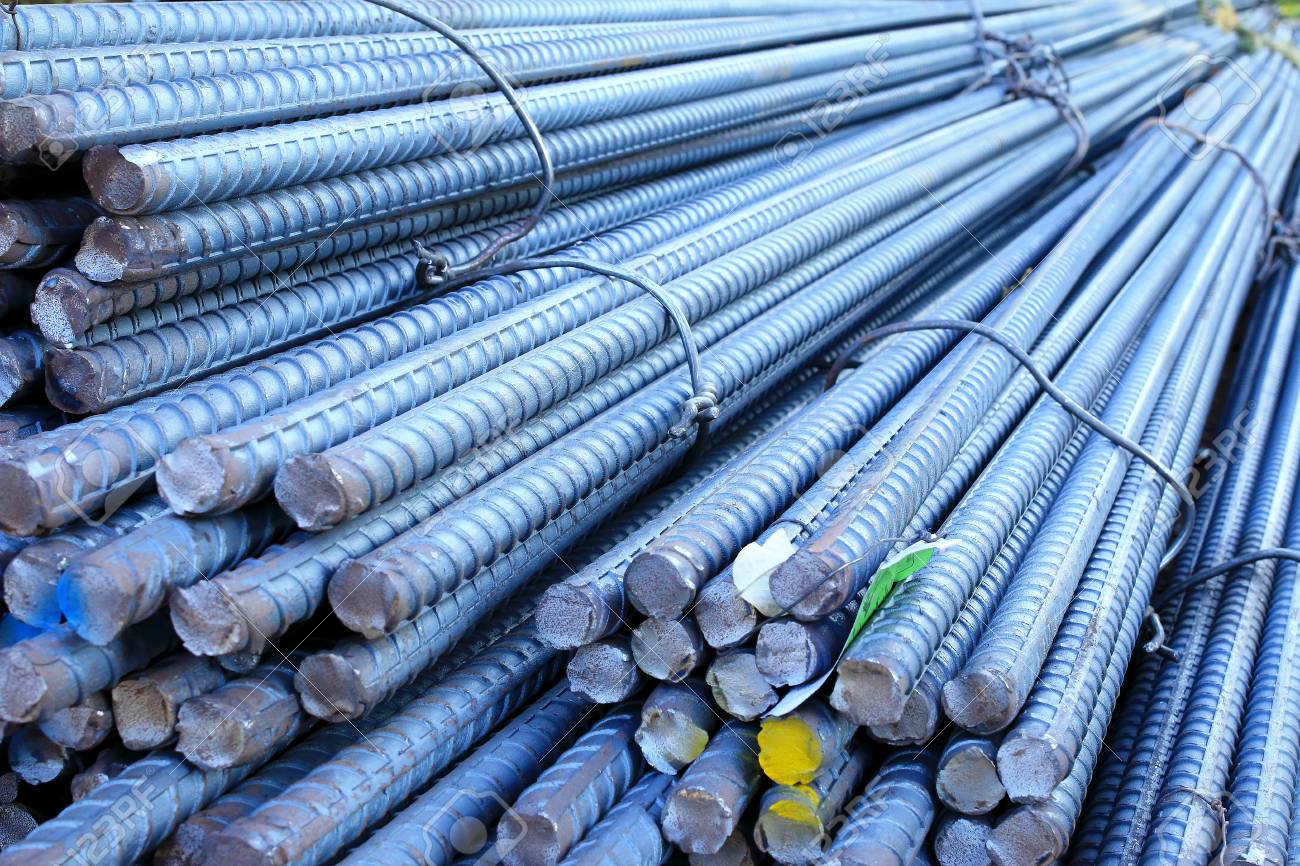
German rebar group Lotter adds bender
Lotter, one of Germany’s large distributors of rebar, sanitary equipment, and ironware, has extended its range of sites in a joint venture with local distributor and bender C. A. Weber Eisenhandel.
Effective 1 January, the latter will figure as Weber Stahlhandel, owned equally by Lotter group and the former owners of C. A. Weber. Located in Bad Kreuznach, Weber will retain its management, with Kai Lehmann as managing director, Kallanish learns from an announcement. The house employs a staff of 75 and buys some 15,000 tonnes of rebar per year. Weber is currently building a new 8,000 square-metre warehouse and production hall in nearby Rüdesheim.
For Lotter’s rebar activities, this will be the ninth site in the group, and marks a regional move, as Weber’s location in Rhineland-Palatinate is more north than Lotter’s other houses in southern Germany. The larger Lotter group, including sanitary and building equipment and miscellaneous ironware, achieves an annual revenue of €900 million ($949m) with some 2,000 employees. Its joint venture with Weber covers only the latter’s rebar activities.
Christian Koehl Germany
Italy approves rescue funds for Acciaierie d’Italia
With its new decree “Urgent Measures for Strategic National Installations,” the Italian government has approved the injection of €1 billion ($1.06 billion) into troubled steelmaker Acciaierie d’Italia (ADI), the joint venture formerly known as Ilva between ArcelorMittal and state financial body Invitalia, Kallanish learns from the government. A first cash injection of €680 million will be followed by a second €320m instalment. The funds will help Invitalia to become the majority shareholder in 2024.
Made in Italy minister Adolfo Urso told the Council of Ministers the new agreement between ADI’s shareholders ArcelorMittal and Invitalia provides for investments related to the industrial development of Taranto, the relaunch of the production site, with employment guarantees and production targets higher than those achieved by Acciaierie d’Italia in the last two years, the Presidency of the Council of Ministers says in a note obtained by Kallanish.
ADI is going through a strong liquidity crisis that is threatening its survival. The company has piled up several million in debt to some of its main suppliers, including large Italian energy companies Snam and Eni. Its output collapsed from 10 million tonnes in 2005 to approximately 3mt last year, when the target of the industrial plan was to reach 6mt.
Amid a liquidity crisis and several workers’ strikes in November and December, ADI’s management decided to suspend its use of contractors. This, on top of almost 3,000 workers being temporarily laid off, is putting in doubt production continuity. In 2021, ADI posted a turnover of €3.3 billion, up from €1.6 billion in 2020. In 2021, the company produced 4.1mt of crude steel, an increase from 3.4mt in 2020.
Natalia Capra France
Swedish steel production falls in November
In November 2022, a total of 344,000 tonnes of crude steel were produced in Sweden, Kallanish learns from national steel association Jernkontoret. This is 14.9% less than in the same month of 2021.
From January through November, 4.079 million tonnes of crude were produced, which marks a drop by 4.5% from the first 11 months of 2021. Back then, output had seen an on-year upsurge by 7.0% to 4.272mt, which meant a return to pre-crisis levels, Jernkontoret highlighted then.
The production statistics are compiled by Jernkontoret and are based on data from 11 steel producers in Sweden.
Christian Koehl Germany
Southeast Europe steel output decreases in November
Southeast Europe (SEE) crude steel production decreased in November compared with the same month of 2021, according to the latest worldsteel data monitored by Kallanish. Regional output amounted to 380,165 tonnes, down by 11.7% year-on-year.
Output was also less than in October, when SEE production was 385,700t (see Kallanish passim).
In January-November, regional production was at 4.34 million tonnes, down by 4.8% on-year.
Serbia was again the largest steel producer among the seven countries of SEE, which also include Bulgaria, Croatia, Slovenia, Bosnia, North Macedonia and Moldova.
Serbia’s production of crude steel totalled 1.57mt in January-November, up by 2.1%.
Second-largest producer in the region Bosnia and Herzegovina saw crude steel output at 820,000t, more 13.6% on-year.
Third-largest steel producer Slovenia saw eleven-month production drop by 6.7% to 565,243t.
Fourth-largest steel producer Moldova saw its crude steel output down by 0.3% on-year at 513,400t.
Fifth-largest Bulgaria’s production was 482,200t, down by 4.5%.
North Macedonia produced 232,374t, less by 8.8% on January-November 2021, and Croatia produced 154,532t, down by 2.3%.
Special steelmaker Slovenian Steel Group (SIJ) said earlier it anticipated a 40% reduction in production volumes in the fourth quarter due to extremely high energy costs and customers being unlikely to accept still higher steel prices (see Kallanish passim).
HBIS Group Serbia Iron & Steel’s production in January-September was stable and the firm has increased exports to the EU, despite the energy crisis and global logistical problems. In July, the plant nevertheless idled blast furnace No.1 at its Smederevo works due to low global demand for steel products (see Kallanish passim).
Svetoslav Abrossimov Bulgaria