


ArcelorMittal acquires steel scrap recycler Lawrie
ArcelorMittal has acquired Scottish steel scrap recycler John Lawrie Metals to secure raw material supply that will aid its steelmaking carbon reduction goals, the companies said March 2.
“We have identified strong potential for growth in the ferrous scrap processing business, with demand growth in Europe facilitated by the European Union’s initiatives to achieve higher metal recycling rates, reduce CO2 emissions and underpin the EU’s net-zero ambitions,” ArcelorMittal Europe CEO Geert Van Poelvoorde said in a statement. “[The acquisition] represents a further step in our strategy to increase the use of scrap steel across our steelmaking sites.”
The Luxembourg-based steelmaker said it intends to increase scrap consumption in both its electric arc furnaces and blast furnaces to meet its decarbonization goals.
The acquisition follows ArcelorMittal’s recent confirmation that it has secured all necessary funding to add a 2.4 million mt/year electric arc furnace at its Dofasco steelmaking complex in Hamilton, Ontario.
Lawrie currently operates four recycling sites in Scotland and has access to diversified sources of high-quality scrap steel from the UK’s oil and gas industry, according to the statement.
“With decommissioning of oil and gas wells in the North Sea increasing due to the energy transition, supplies of scrap are expected to grow significantly over the next decade,” ArcelorMittal said.
Lawrie collects about 200,000 mt/year of metal scrap, according to the company’s website.
— Nick Lazzaro


US Steel Košice looks for EU, government funding to decarbonize Slovakian plant
US Steel Košice, the largest Slovakian steel plant, plans to invest an estimated Eur1 billion in its mill to make the company more sustainable, a company spokesperson confirmed March 2.
“This is part of the decarbonization plan, and the implementation of this intention will depend on the approval of the relevant institution of EC, and the full support of the government of the Slovak Republic and the readiness of the energy infrastructure for the operation of the new technology,” the spokesperson said.
The new investment will not increase the company’s output. As reported in the local press, the investment is aimed at modernizing the steel production process, its casting and rolling into coils, while reducing energy and raw material intensity and securing the sustainability of production.
According to the company website, U.S. Steel Košice produces 4.5 million mt of crude steel annually and finished products for applications in the automotive, packaging, electrotechnical, consumer goods and building industries.
The Slovakian government did not reply to Platts when contacted for a comment.
— Annalisa Villa
Russia’s Severstal stops steel shipments to EU on sanctions against shareholder
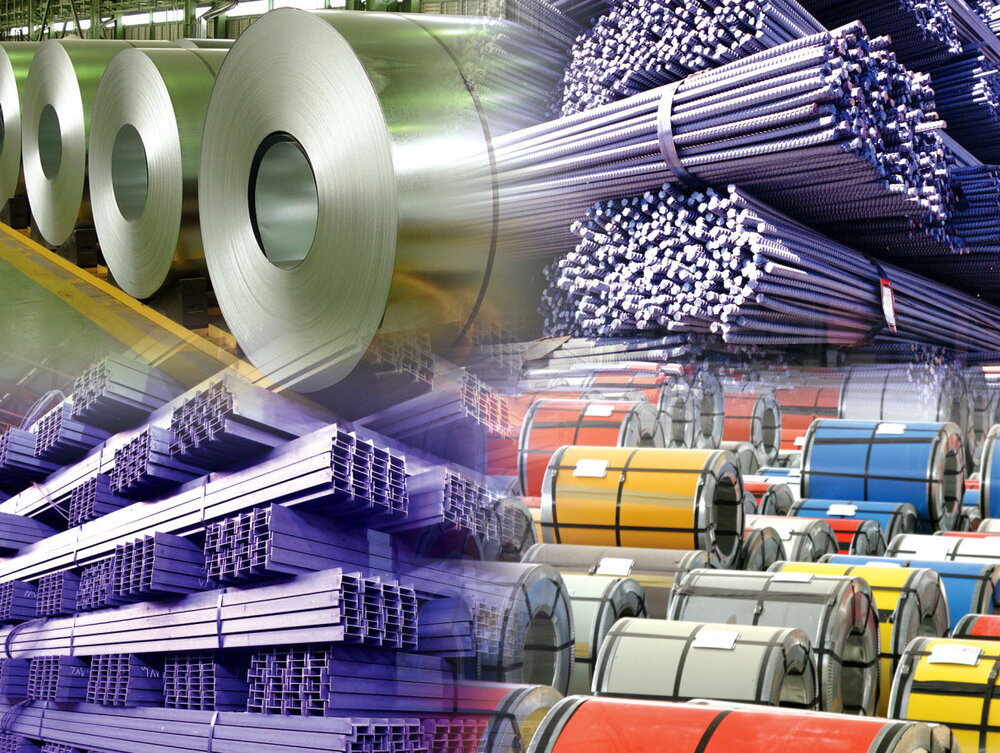
Russian mining and steel company Severstal said March 2 it has ceased shipments to the European Union due to the sanctions the bloc imposed on its majority shareholder as a consequence of Russia’s actions in Ukraine.
The company is redirecting commodity flows to alternative markets “due to problems in interaction with European customers,” it said in a statement.
Severstal’s redirection of its commodity flows should help maintain its steelmaking capacity utilization, the company said in a statement, adding its production costs are among the lowest in the world, and this should facilitate redirection of products for sale. It exports mainly flat rolled steel products, and is also a major producer of rebar, metalware, plate and large diameter pipes.
The company’s financial position remains strong and its debt level is low with net debt being 0.23x EBITDA as at the end of 2021.
Last year, Severstal sold 3 million mt of steel to Europe. This represented just over half (57%) of the company’s 5.3 million mt overall exports and just over a quarter (27%) of its total steel sales of 11.1 million mt, according to the company’s 2021 report.
On Feb. 28, the EU imposed restrictive measures against a number of Russian state and public figures and entrepreneurs. These included Alexey Mordashov, a majority shareholder of Severstal, and Alisher Usmanov, the founder of iron ore miner, leading HBI producer and steelmaker Metalloinvest.
On March 1, Metalloinvest said in a statement the sanctions will not affect its operations, as Usmanov owns less than 50% of USM Group – which holds 100% of Metalloinvest – and so does not control the group’s enterprises.
Mordashov holds a controlling, 77%, stake in Severstal and is the chairman of the company’s board. The terms of the sanctions prohibit the EU from dealing with the legal entities under the control of sanctioned individuals.
EU flat steel prices have risen in recent days on concerns that restrictions on material flows from eastern Europe could tighten supplies.
S&P Global Commodity Insights assessed the Platts Northwest European hot-rolled coil March 1 up Eur10/mt at Eur970/mt ($1,1078.25/mt) ex-works Ruhr.
Selective sanctions
Where Russian industrial billionaires are concerned, the EU was selective in imposing personal sanctions. Vladimir Potanin – who through the Interros group holds 34.5% in nickel and palladium producer Nornickel and is the company’s president and chairman of the board – avoided restrictions, as did Vladimir Lisin, chairman of the board of steelmaker NLMK, who through Fletcher Group controls up to 79.3% in NLMK.
“All things being equal, sanctions would have been imposed on all Russian oligarchs, but Europe evaluates each individual case and how sanctions on each of them may backfire,” said a metals and mining industry analyst.
“Nornickel supplies 40% of the world palladium market and imposing sanctions against Potanin would land a strong blow on the EU market, palladium availability and prices. In the case of NLMK, sanctions against Lisin could bring to a halt the mills NLMK has in Europe,” said the analyst.
“As for Severstal, on the one hand, the company has no substantial assets abroad, but at the same time exported (in 2021 just under half of) its production, with sales to Europe representing a large share. On the one hand, sanctions against its majority shareholder hurt the company’s business, but not so much the EU market,” said the analyst.
Some media reports suggest that if Mordashov steps down from the company’s board, which he chairs, this could ward off the impact of the personal sanctions on Severstal.
However, “control (of sanctioned individuals over businesses) can be interpreted quite broadly within the framework of these sanctions, and leaving the company’s governing body might not be enough,” said the analyst.
When in 2018 both Oleg Deripaska and Russian aluminum producer Rusal were sanctioned, with the company sanctioned on the grounds of being under control of the sanctioned businessman, the US agreed to lift sanctions on Rusal only after Deripaska cut his stake in the metals company to below 50%.
Severstal has its steelmaking raw materials and steelmaking and rolling operations in Russia, but has a service centre in Latvia, and several joint ventures with western companies in Russia. These include steel service center Severstal-Gonvarri-Kaluga with Spanish steel processor Gonvarri, Linde Severstal with German industrial gases and engineering company Linde, which produces coil-wound heat exchangers for LNG plants, and wind tower manufacturer Bashni VRS (also known as WRS Towers) that Severstal jointly owns with Spanish renewables company Windar Renovables.
It is unclear whether the western partners will leave these enterprises. However, the Russian government has imposed a ban on foreign investors pulling out of projects in Russia, a representative of Severstal told S&P Global Commodity Insights.
A representative of Linde told Global Commodity Insights that Linde is closely tracking the events unfolding in Ukraine while taking steps to guarantee the safety of its employees and the continuous production and delivery of critical medical oxygen. “The situation is changing rapidly and we are assessing the evolving sanctions framework to ensure full compliance in the context of our existing contractual obligations,” said the representative.
— Ekaterina Bouckley

EUROMETAL president at Siderex event
The president of EUROMETAL, Fernando Espada, participated today in an event by Siderex, the Spanish Cluster Association of Steelworkers. This event had more than 40 participants.
Siderex is a non-profit entity created in 1996, whose objective is to improve the competitiveness of the sector through cooperative actions between companies and other agents.
Siderex works so that member companies strengthen their activities in areas such as Internationalization, Technological and Business Innovation, as well as the defense of the interests of their associated companies.
ArcelorMittal resumes Spain-based ACB operations
ArcelorMittal tells Kallanish it is restarting operations at its Acería Compacta de Bizkaia (ACB) plant in Sestao, northern Spain. Activities are gradually resuming from 3 March with three working shifts. The company estimates production at the site will reach almost 45,000 tonnes/month of hot rolled, pickled and oiled coils by April.
ArcelorMittal halted ACB operations on 7 December to undertake one-month maintenance work and an upgrade of the second continuous casting line. In January, however, the steelmaker extended the shutdown period due to costlier energy in Spain.
ArcelorMittal meanwhile confirms its rail and heavy plate mill, as well as galvanizing steel lines, have been affected by the latest workers’ protests in Gijón. The company admits to having production losses, although did not reveal tonnages.
The workforce’s demands are mainly related to the impact of the decarbonisation plan of the Asturian plant and the relief contract for temporary personnel. Although there is an open working group with the unions at the national level, CC.OO. and CSI do not support the negotiations and maintain their 12-day protest plan in March.
Todor Kirkov Bulgaria

Turkish consumption declines, CIS supply shortages concern steelmakers
Turkish steelmakers aim to ramp up capacity utilisation to plug any potential steel supply gaps in the domestic market left by the absence of Russian and Ukrainian material.
“There is a possibility that Russia’s invasion of Ukraine will cause production losses in these countries, which are two important steel producers, resulting in global and regional shortages of supply and accordingly price increases,” says Turkish Steel Producers’ Association (TCUD) general secretary Veysel Yayan.
TCUD is concerned that the continuation of the war in Ukraine will cause difficulties with raw materials supply to Turkey. Yayan says: “In order for our country’s domestic market not to be affected by the lack of supply that may arise from this conflict, our steel producers are striving to increase the capacity utilisation rate as much as possible and to give priority to the domestic market. Minimising uncertainties in the coming weeks is important for establishing stability in the sector.”
Meanwhile, taking into account the $100 billion trade target agreed between Turkey and the US, it is important to ensure the US negotiates steel quota allocations with Turkey, as it has done with other countries, says TCUD.
Similar negotiations must take place with the EU and countermeasures taken within the framework of reciprocity principles if no results are obtained, the association adds.
The US-EU steel trade agreement has paved the way for similar quota allocation negotiations with Japan, South Korea and the UK. Apart from Turkey, there is no other country whose trade with the USA is balanced but where protection measures are still applied, TCUD says.
Turkey’s January crude steel production fell 7.8% on-year to 3.2 million tonnes due to energy cuts and contraction in demand.
Finished steel consumption decreased 3.7% to 3mt, Kallanish notes.
January exports of steel products grew 2.7% to 1.3mt and increased 58.9% in value to $1.2 billion. Exports of semi-finished and long steel products decreased by 21% and 5%, respectively, while exports of flat products, which mainly constitute manufacturing industry inputs, increased by 26%.
Imports, on the other hand, continued their 2021 upward trend in January. They rose 14.6% on-year to 1.4mt, and by 58.9% to $1.4 billion.
The ratio of exports to imports remained unchanged at 84.6:100 in January.
Burcak Alpman Turkey

NIM Group buys Plateplus plant in Colorado
Steel service center NIM Group has acquired Plateplus Inc’s plant in Windsor, Colorado, the company announced on Monday February 28.
The terms of the deal were not disclosed but the Windsor plant’s ability to process hot-rolled coil into sheet and plate products adds to NIM Group’s western United States portfolio.
With consolidation continuing to be a hot topic in the industry, NIM Group now has 17 locations in the US with daily deliveries available in 30 states.
Plateplus’ Windsor plant processes hot-rolled steel coil into sheet and plate products.
“We are pleased to welcome the Windsor team to the NIM Group family,” NIM Group president and chief operating officer Arnie Robinson said in a statement. “This facility is a great fit to continue our growth and investment in the western United States.”
By Mark Burgess

Europe HRC steel spread edges up, as steel outpaces higher coking coal, iron ore
The European hot-rolled coil steel to raw materials price spread edged up 1% in February, rebounding after January’s significantly fall, as steel prices outpaced a rise in coking coal, iron ore and ferrous scrap, according to an analysis by S&P Global Commodity Insights March 1.
The Northwest European HRC steel-raw materials spot spread rose to Eur538/mt ($602/mt) in February, from Eur532/mt in January. The spread had fallen from a record of over Eur795/mt in August, as costs steadily increased, according to S&P Global calculations.
Following Russia’s invasion of Ukraine, market participants are monitoring its impact on steel raw materials availability in Europe. Shortages could lead to potentially higher operating costs, exacerbated by declines in hot metal rates.
European steelmakers strongly depend on the ongoing supplies of PCI coal, or pulverized coal injection, and iron ore pellets from Russia and Ukraine.
Along with steel market demand and forward sentiment, how European steel pricing reacts to steel prices in surrounding markets, which have risen quickly due to a drop in Black Sea steel exports, may determine how margins respond to any cost pressure.
While the indicative NWE steel margin has continued to decline from August, stronger-than-average HRC prices have supported available cash cost margins above typical steel industry levels, according to S&P Global data.
Spot HRC prices have increased supported by higher European mill offers for production and deliveries in the second quarter, and contract demand.
Coking coal prices hit record highs in February, while iron ore prices rebounded. Pellet and lump premiums, high-grade fines and concentrate prices and demand got support from wider 62%-65% Fe fines spreads and buying interest in lower alumina ores.
Higher raw materials costs further boosted the overall cost of pig iron produced in Europe, as higher European shredded scrap prices lifted steel costs.
S&P Global tracked costs using major steel feedstock cost references, including a basket of iron ores with high-grade fines, lump and pellets typically consumed by NWE blast furnaces.
HRC, iron ore prices rise
The NWE HRC spread averaged around Eur645/mt in Q4, down from Eur771/mt in Q3 and Eur695/mt in Q2, according to S&P Global.
Platts NWE HRC prices averaged Eur959.25/mt ex-works Ruhr in February, up 3.5% from January. In July, monthly average pricing hit a record high of Eur1,172.64/mt ex-works. Platts NW Europe HRC was assessed at Eur960/mt ex-works Ruhr Feb. 28.
Spot prices for commodity-grade HRC are not fully reflected in sales and deliveries by steelmakers, due to earlier negotiated pricing terms and long-term contract pricing.
Iron ore import prices in China, used as a benchmark for global contracts, rose further in February on stronger forward demand and interest in securing higher quality products.
Prices averaged $141.99/dry mt CFR China for benchmark Platts IODEX 62% Fe fines, up 8.3% from January.
Spot lump ore premiums in China rose 24% to 34.16 cents/dmtu, or around $21.35/dmt, in February, more than double the lump premiums in November and December.
Platts Atlantic blast furnace contract pellet premiums in February remained at $66.50/dmt, tracking contract premiums and pricing terms settled for Q1 volumes. Premiums rose from Q4 average of $55.50/dmt.
Coking coal prices on a delivered net forward basis into Rotterdam in February rose 8.9% to $460.31/mt CFR Rotterdam, a record high for the price reference using Capesize vessel rates from Queensland.
Regional northern European shredded scrap prices increased to Eur430/mt last month, from Eur405/mt delivered basis in January.
China, US spreads
In China, the spread between HRC export prices and imported iron ore and coking coal costs rose to $335.48/mt in February, from $313.31/mt in January, on higher steel prices.
Even with higher raw materials costs, a mix of supply disruptions and steady demand for steel in various sectors is keeping prices and offers relatively strong, with stronger indicative profitability.
China HRC spreads remain stronger than a year earlier, and higher than 2020 levels, which were below the $300/mt mark.
The unraveling of record-high flat steel prices in the US back toward levels in other global markets punished indicative margins. US HRC to Midwest shredded scrap spreads fell sharply to $678.41/st in February, from $966.98/st in January.
US flat steel prices declined, moving in line with HRC in Europe and other regions.
S&P Global’s Europe HRC to raw materials price spreads are indicative operating margins that do not account for inland logistical costs, power, natural gas or other blast furnace and steel-making inputs, such as ferroalloys, anodes, and refractories. Costs to operate sintering and coke plants are not included.
There may be further upward pressure on typical operating breakeven levels at regional blast furnace mills, due to higher energy, carbon permit, and logistical costs.
Before the pandemic, an HRC-raw materials spread of Eur250/mt was described as close to operating breakeven for commodity grade steel, based on operating facilities at higher capacity utilization, according to steel industry sources. However, with higher logistics, trade financing, operating, and facilities costs stemming from the sudden shutdown of furnaces and mills in 2020, industry costs have risen. In 2019, the Northwest European HRC spread averaged Eur241/mt.
Breakeven levels in Europe are partly dependent on the mix of logistical costs and raw material configurations.
S&P Global’s estimated European HRC spreads are based on commodity-grade flat steel specifications. Contract steel sales may have additional grade- and specification-based premiums, and terms may lag spot indexes.
Producers with higher grade steel portfolios may be less exposed to commodity-grade steel margins against underlying steel raw materials costs.
— Hector Forster

Ukraine’s largest steelmaking company Metinvest declares force majeure
Ukrainian mining and steel company Metinvest, which normally manufactures around 40% of the country’s steel, declared force majeure March 1 due to the Russian invasion, the blocking of sea shipments and a ban on cross-border payments.
“We regret to inform you that, like many other Ukrainian and Ukraine-related companies, Metinvest enterprises are facing what we consider to be a force majeure situation,” the company said in an address to clients and partners.
“The ongoing hostilities in Ukraine, military blockades of sea ports, destruction or threat to land infrastructures could impair the performance of our contractual obligations,” it said.
Martial law was declared across Ukraine on Feb. 24. In addition, the National Bank of Ukraine imposed a moratorium on cross-border payments.
“Please consider the above as a declaration of force majeure,” the company said.
Metinvest suspended hot-end and rolling operations at its two iron and steel works — Ilyich and Azovstal in Mariupol — in the wake of Russia’s military invasion of Ukraine on Feb. 24.
In 2021, the company provided just over 40% of Ukraine’s 21.4 million mt of steel output. It also produced 31.3 million mt of iron ore concentrate.
Ukrainian iron ore miner and pellet producer Ferrexpo already declared force majeure, while another major steelmaker, ArcelorMittal Kryviy Rih, said last week it would slow production to a technical minimum.
Last year ArcelorMittal Kryviy Rih made 4.9 million mt of steel, or 23% of total Ukrainian production.
Steel pipe manufacturer Interpipe said it has had to halt operations due to the disruption to shipping and risks to personnel and assets.
— Ekaterina Bouckley
EU sanctions hit Severstal, Metalloinvest owners, trade impacted
The list of Russian businessmen and public persons in the new, expanded EU sanctions list, published on Tuesday, includes Alexey Mordashov and Alisher Usmanov, owners of Severstal and Metalloinvest, respectively.
This makes them “subject, under EU Sanctions, to an asset freeze and the prohibition to make funds and economic resources available to them”, meaning that neither steelmakers’ production will be available for EU buyers.
Out of the two companies, Severstal appears to have been hit more significantly, having been a staple supplier of hot rolled coil to the European market for many years. Last year, the firm exported around 3.5 million tonnes of flat and long steel products, mostly HRC, to Europe. As Mordashov is the company’s majority owner, it is almost certain that these supplies will have ceased with immediate effect for the duration of the sanctions.
Severstal also has a significant infrastructure of service centres and offices in Europe, whose future is uncertain at present. Latvia-based Severstal distribution, the former Severstallat, is the largest service centre in the EU belonging to the company, producing long and flat products, Kallanish understands. Its fate is also now uncertain.
Mordashov issued a statement on Monday night, citing his remote attitude to politics and a lengthy engagement “in the development of economic, cultural and humanitarian cooperation with many European countries.” He concluded that he failed “to understand how these sanctions against me will contribute to the settlement of the dreadful conflict in Ukraine”.
The company is understood to be looking at alternative routes of supply for its products, understandably looking at Asia, and other, currently non-sanctioning regions, Kallanish understands.
Meanwhile, Metalloinvest appears to be significantly less impacted by the sanctions. The company issued a statement explaining that sanctions “are of a personal character and will not affect Metalloinvest”. It adds: “Mr Usmanov owns less than 50% of USM Group’s parent company and does not control the Group’s enterprises.” Metalloinvest continues to carry out business as usual, fulfilling obligations to its employees and partners, it continues.
The latter is likely to produce a collective sigh of relief from its many European buyers of iron ore in Eastern and Central Europe, and metallics and pig iron in southern and Western Europe, which the company supplies on long-term formula-based contracts. US pig iron buyers are also likely to be relieved, as Ural Steel, the main supplier of merchant pig iron to the US and Europe, no longer belongs to Metalloinvest. The sale of the mill to Zagorsk Pipe Plant (ZTZ) was completed on 1 March.