
Aperam pushes up February alloy surcharges
French stainless steel producer Aperam has increased its February alloy surcharges for its austenitic range of flat stainless steels for Europe by another €100/tonne ($112) on average versus January. This comes on top of the €100/t increases announced each for December and January, Kallanish notes.
The surcharge for grade 304 (1.4301) has gone up from €2,427/t to €2,519/t effective 1 February. For grade 316 it has increased from €3,643/t to €3,791/t. Grade 309S, a heat-resistant stainless steel used in high-temperature applications, has also seen its value increase from €3,267/t to €3,409/t. The surcharge for the most popular ferritic grade, 409, however, has gone down from €922/t in January to €898/t in February, the company reveals.
Offers for nickel cash buyers reached $20,925/t on 31 December and went up to $23,500/t on 24 January, Kallanish notes.
Natalia Capra France

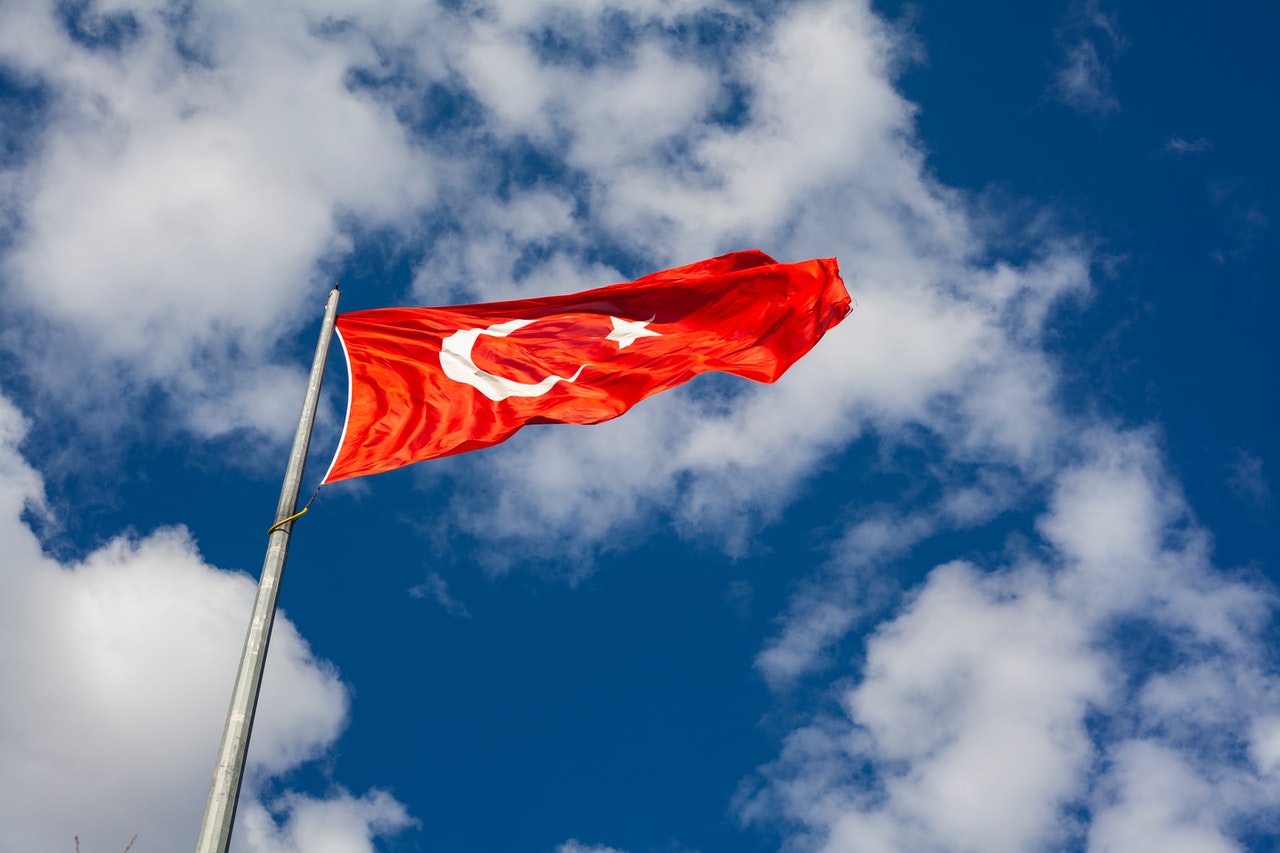
Turkey’s Yildiz to build a 4 million mt/year melt shop and a hot-rolling mill
Turkish coated coil producer Yildiz Demir Celik is planning to start hot-rolled coil production by building a melt shop with a liquid steel capacity of 4 million mt and a hot-rolling mill with a finished product capacity of 3.5 million mt, the company said in an official document submitted to the Ministry of Environment and Urbanization.
According to the document seen by S&P Global Platts, the facility which will be built in Kartepe, Kocaeli, western Turkey is scheduled to start production within 36 months.
An Environmental Impact Assessment (EIA) process has started for Yildiz Demir Celik’s new mill project, the ministry said January 24. The project is expected to be accelerated following the EIA approval.
Yildiz Demir Celik’s cold-rolling mill complex in Kocaeli, western Turkey, started production on its new continuous pickling tandem line in late 2019, with an annual capacity of 1.5 million mt.
The company currently has a production capacity of 400,000 mt/year for HDG coil and 150,000 mt/year for pre-painted galvanized iron (PPGI), as well as 300,000 mt/year of cold-rolled coil.
The company is targeting to reach 900,000 mt/year of galvanizing capacity with a new line to be started in the coming months of the year.
Flat steel capacity in Turkey has been rising in recent years with new investments. Another coated coil producer, MMK Metalurji, the Turkey-based subsidiary of Russian steelmaker Magnitogorsk Iron & Steel Works (MMK), started hot rolled coil production at its EAF facility with a casting and rolling module in July 2021.
Tosyali Demir Celik, one of Turkey’s largest steel producers, is also currently building a new flat steel mill with a liquid steel capacity of 4.55 million mt.
As some other Turkish HRC producers started work to raise their HRC output, Turkey’s total HRC production capacity is expected to rise more than 9 million mt/year in the coming few years, while some new coated coil capacities are also on the way.
— Staff, Cenk Can


Reibus joins EUROMETAL as associate member

We are pleased to inform you that the company Reibus has joined as an Associate Member of EUROMETAL.
Reibus was founded in 2018 as the only independent and anonymous, SaaS-enabled marketplace, utilising technology to solve ingrained supply chain problems in the industrial material market.
Reibus uses its advanced technology and deep industry knowledge to revolutionize supply chain efficiency by shortening lead times, reducing inventory, and streamlining finance and freight services.
For more information, please visit Reibus at www.reibus.com
Where is my stuff? The international trade impact
In the final article of his three-part series of three, Prof. Benny Mantin from the Centre for Logistics and Supply Chain Management at the University of Luxembourg explains the effect international trade and global politics sometimes have on supply chains.

International trade and global politics sometimes have an impact on supply chains. Countries around the globe seek to protect their local economies while facilitating smooth and effective trade agreements. Nevertheless, the objectives of different countries may conflict at times, leading to tariffs and duties slapped on certain goods (see the case of the Trump era tariff friction between the US and the EU, a dispute that was resolved only very recently), import and export restrictions imposed on certain goods (as in the ongoing tension between China and Australia), or to general restrictions imposed to change a government’s policy (as is China to restrict exports of rare earth metal and phosphate). The entangled web of world politics is complex—as we have recently witnessed during the Cop26 negotiations. This is particularly true nowadays as supply chains become ever longer, with trade dispute somewhere leading to some unwanted consequence elsewhere on the globe.
Cop26 brings up a related topic: the strive for more sustainable operations. Consumers and policymakers alike play a critical role in influencing supply chains. Consumers by demanding and preferring greener products, and policy makers by setting the boundary conditions that define how firms should and could operate. Recently, within the European Green Deal framework, two resolutions have been adopted. One to reverse EU-driven deforestation and another on corporate due diligence and accountability, both of which define mandatory frameworks that firms need to follow. These can lead to enhanced supply chain transparency, as was discussed in the first article, and can improve the choices we all make.
Another aspect is the EU Emission Trading System (EU ETS), which has seen the price of carbon soaring to record high levels (more than doubling in one year), and the implementation of the EU’s carbon border adjustment mechanism. These two have an enormous potential to induce firms to rethink their supply chains. Some argue it may lead to decoupling of supply chains creating bifurcated chains, with one—greener—heading to Europe and another to the rest of the world; hence, it is important that other nations follow through and adopt similar mechanisms. Nevertheless, if decoupled, the chances of reshoring, which means shorter supply chains, increases.
Final thoughts
The current situation is a perfect storm that was brewing for a long period of time. The Covid pandemic was merely the last straw that broke the camel’s back. Moving forward, all stakeholders need to be engaged in the discourse that will determine the shape of things to come.
Discussions around supply chains stress tests are certainly a step in the right direction. Governments and coalitions of like-minded countries need to engage in policy making to determine how to support certain, likely critical, supply chains. To that end, a whole set of tools and instruments shall be developed to assess strength and resilience of supply chains and to determine the mechanisms to support them.
As discussed above, another important step in the right direction are the emerging regulations on supply chain transparency and due diligence as well as the carbon tax mechanisms. These shall enhance the level of trust that consumers and firms have in upstream tiers of supply chains and shall, hopefully, provide decision makers with further insights to take corrective action and possibly to shorten their supply chains.
Lastly, we as consumers can sometimes influence supply chains. Sometimes we do have choice and we can voice our concerns to kickstart a change. For instance, the right to repair movement is an inspiring shift in consumer demand. The transition is not complete, but repairable cellphones are finally hitting the market such as Fairphone and the recent Apple announcement to follow suit. Consumers can demand transparency and traceability so that they know where their products come from, how they were made, how durable and repairable they are and so forth. Informed consumers can ultimately make educated decisions.
In the meantime, as the ongoing supply issue is expected to persist for a while, I would like to conclude with a recent quote from a Maersk executive : “We need lower [consumer demand] growth to give the supply chain time to catch up”. Again, we as consumers, can take a pause and give supply chains the opportunity to recover. Until the next time.


Global Light Vehicle sales in 2022: Reasons to be cheerful?

After a very difficult couple of years, heading into 2022, significant challenges remain for the automotive industry, notably in the form of ongoing supply shortages and the spread of Omicron.
In the final few months of 2021, the global Light Vehicle (LV) selling rate crept back above 80 million units/year, from the year’s low point of 74 million units/year in September. The latest months’ data suggest two things. First, the worst of the sales hit from the supply disruption may have already taken place. Second, market activity remained well below pre-pandemic norms of 90+ million units/year.
As it stands, market volumes are falling well short of underlying demand — inventory remains tight while discounts are lower and transaction prices are higher. Omicron only adds to a complicated picture, with this latest variant of coronavirus proving more transmissible, though as it appears to be leading to a smaller increase in hospitalisations, the disruption is expected to be more muted than with previous virus iterations. That is not to say there is no impact, whether via government measures, increased voluntary social distancing, or absenteeism from work, but the risk of a major economic downturn is more modest. The current base forecast from our partners at Oxford Economics assumes 4%+ global GDP growth for 2022, even if caution around the Q1 performance has increased. That growth will be supported by recovering household spending, itself benefitting from the partial release of accumulated savings built up during the pandemic, even though household budgets are facing generally higher inflation.
Yet, despite a supportive backdrop for underlying demand, the shadow cast by the supply shortages, most notably relating to that of semiconductors, will continue to act as a drag through 2022 — Toyota’s recent announcement that it would miss its annual production target because of parts shortages and the pandemic only reinforces that view. And even if the Omicron variant does not knock demand off course, it still poses a further threat to the global supply chain.
With the above in mind, our baseline view for global LV sales remains one of generally improving selling rates through the year, as supply constraints ease and vehicle plant output picks up, though annual volume will continue to lag pre-pandemic levels until 2023.
GLOBAL LIGHT VEHICLE SALES (MILLION) & YOY GROWTH


German production rebounds in 2021
In line with optimistic forecasts, German crude steel production in 2021 reached the 40 million tonne mark, totalling 40.1mt, according to national steel federation WV Stahl.
The federation points out that this was the first time in three years that annual output saw a year-on-year increase. In comparison with 2020, the increase was 12.3%. For oxygen-route mills, the increase was more pronounced at 15.9%, reaching a total tonnage of nearly 28mt.
In 2020, oxygen-route mills were most hit by the impact of the initial coronavirus outbreak as they could not react flexibly to the sudden change in demand. Their output dropped massively as many conceded technically complex temporary standstills.
Due to that base effect, electric arc furnace-route mills saw a lesser y-o-y output increase in 2021 of 4.8%, totalling 12.1mt. Strikingly, though, EAF production plummeted 20% y-o-y in December, Kallanish notes. This output downtrend could be observed in the earlier autumn months, and it is probably attributable to production breaks due to rising electricity costs.
The drop in output was especially pronounced in December likely due to an extraordinary overhaul at one rebar mill, which has carried over into January and is still impacting national production.
Christian Koehl Germany
Power outages suspend Turkish steel production
Turkish steel production has been curtailed by electricity outages, following last week’s cut in natural gas supply and significant hike in gas prices. Electric arc furnace mills have been forced to halt production for at least three days, with output planned to resume on Thursday.
The move to suspend power supply to industry for three days as of 00:00 local time on Monday follows last week’s gas supply cut by 40% (see Kallanish passim).
Veysel Yayan, general secretary of the Turkish Steel Producers’ Association (TCUD), says industry was informed of the power outage in an official letter.
“The steel industry is one of the sectors that use the most electricity in Turkey. Every second of the outage is a financial loss for the steel industry,” says Yayan. All of Turkey’s industrial sectors will suffer as a result of the power outages, he adds.
“It creates an extraordinary, serious problem for all industries. We hope that Turkey will overcome this trouble as soon as possible. Every second causes financial damage. We hope that lessons will be learned from this problem and that we will not encounter similar situations in the coming years,” Yayan concludes.
A Turkish merchant bar mill tells Kallanish: “As we are dependent on electricity, we were not much affected by the natural gas cuts. But the electricity outage has come unexpectedly and hit our industry. These cuts are untimely given we are receiving serious demand for merchant bar in the global market.”
Another producer says there is a risk of electricity cuts continuing for more than three days.
“The natural gas cut and the accompanying power outages are an unexpected development that could have a serious negative impact on the production and exports of our industry in January,” says Turkish Automotive Manufacturers Association (OSD) chairman Haydar Yenigun.
“In this process, it must be taken into account that the coordination of all stakeholders in the value chain is critical for the efficiency of production plans,” he continues. “Another important issue is that when developments that will affect production come to the fore, informing as much as possible in advance in order to be able to prepare for the application will allow the automotive industry to adapt to the process.”
“When we consider the export of $30 billion, the domestic market of $40 billion, and when we include the whole ecosystem of service and dealers, a three-day cessation of production means a loss of $1 billion dollars by the simplest analysis,” adds Vehicle Supply Manufacturers Association (TAYSAD) president Albert Saydam.
Burcak Alpman Turkey

W Europe mills keep HRC offers high despite lower E Europe offers
The European HRC market was short of pricing clarity Jan. 24, with buyers still shying away from booking premature orders, and domestic mills still firm on higher prices amid safeguard quota allowance struggle causing a decline in import prices. Vast discrepancies in offers between Eastern and Western European mills have made it difficult for the market to arrive at a standard coil price, sources told S&P Global Platts.
A German steel distributor reported the workable range for hot-rolled coil as Eur930-960/mt ex-works Ruhr, with “special offers not really available anymore,” While a German supplier source heard offers from Eastern mills “firmly below” Eur900/mt ex-works Ruhr.
The same source said Eastern mills were more prone to import exposure and heavily involved in the spot business, whereas Western mills have been keen to keep prices up due to contract negotiations.
Beyond regional spreads, market participants are working around safeguard limitations. Some market participants feel at a loss for options with the safeguard combined with anti-dumping cases. Middle Eastern imports were heard as low as Eur760/mt CIF Antwerp, duty paid, a Benelux Wholesaler source said.
Platts assessed North European HRC prices down Eur5/mt at Eur925/mt ex-works Ruhr, and in Southern Europe, HRC prices were assessed stable at Eur830/mt ex-works Italy.
— Catherine Brown
Where is my stuff? The global logistics pain point
In the second of a series of three articles, Prof. Benny Mantin from the Centre for Logistics and Supply Chain Management at the University of Luxembourg looks at the challenges faced by the logistics and transport sector.
Global logistics is a pain point for many stakeholders in the industry. With shipping cost soaring, airfreight rates sky-rocketing, and truck drivers heavily sought after, many firms are experiencing challenging trade-offs and have tough decisions to make: how to ship goods to their destinations? Does it make sense to pay more and expedite? Ultimately, given the higher shipping cost, who shall pay for the added cost?
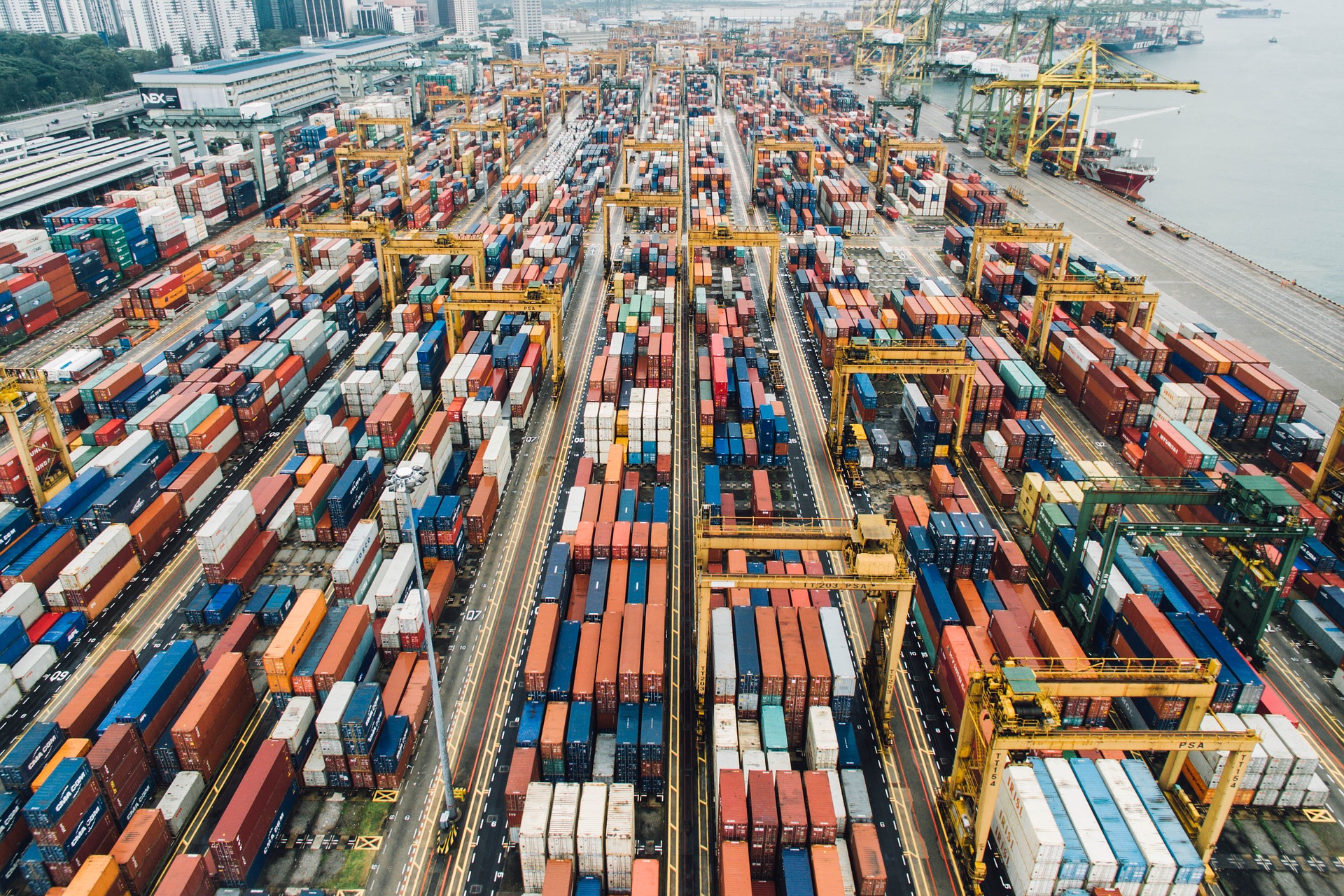
The shipping industry is going through an arms race as container ships are getting larger and larger. The largest container ship at the moment is the HMM Algeciras with a jaw dropping capacity of 24,000 TEUs (Twenty-foot Equivalent Unit, the standard intermodal container). That’s an increase of about 20% in only five years. This increase allows the vessels to ship goods at a lower operational cost.
Concentration of traffic
However, this marks a magnificent degree of consolidation. There are only a handful of ports that can handle such large vessels. What we observe is a steady concentration of traffic at a small number of global ports. It should not come at a surprise that once a terminal closes down due to covid (as was the case at Ningbo-Zhoushan—the world’s busiest cargo port), shockwaves are felt throughout. That is, long and complex supply chains that heavily rely on a limited number of distribution hubs are more susceptible to become bottlenecks when disruptions take place. And the current bottlenecks trigger excessive shipping rates. As one practitioner stated recently: “We now pay airfreight rates for ocean shipping”.
While different, the passenger airline industry has terminated its carrying capacity arms race recently (with a little help from covid) as the A380 is now breathing its last.
Similar to shipping, airfreight demand and rates are higher than ever. Earlier the industry benefited from the elimination of the under-the-belly capacity, that is the cargo space in passenger airplanes that disappeared once airborne passenger traffic ground to a halt during the early days of the pandemic. Now passenger flows are resuming, but nevertheless, airfreight is still the king. Given the excessive delays and higher rate in ocean shipping, air cargo carrier can continue enjoying a surge in demand.
Truck drivers in decline
Trucks offer a versatile and flexible door-to-door service. While attractive to shipping companies, truck driving is becoming less and less attractive as an employment opportunity. The decline in the number of truck drivers has been visible for a while, and covid made things worse. Over the years, cost-saving measures have pushed firms to install sleeping cabins on their trucks and many drivers—instead of spending the night at motels or hotels—now end up staying in lay-bys for the weekend. This is accompanied by shrinking wage premiums, tough working conditions, and elimination of military Heavy Good Vehicles (HGV) licensees. This male dominated sector—only 3% of drivers are female—experiences severe shortages, with some estimating the need to amount to about 400,000 truck drivers in Europe alone. Relief can come through improvement of work conditions, investment in automation, smoothening of operations and reduction of dwell times, and possibly allowing higher capacity trucks on major highways.Trucks can and need to operate in better unison with rail
More importantly, trucks can and need to operate in better unison with rail. Rail is not flexible and requires major investments, but it can offer 24/7 services and connect major nodes at higher speed, in particular distant nodes. The rail system in Europe has suffered from under-investment in the past decades and it still resembles a patchwork of connections. A functioning rail system should relax some of the restrictions currently in place (such as language requirements and constraints on number of wagons) and harmonise the network across the continent (such as the voltage and signalling system used) which is something the EU has been working on for more than two decades with limited progress.
Ultimately, the objective shall be to facilitate fast flows of cargo between major nodes in the European network from which it will be distributed via trucks to their final destinations. Naturally, rail is not the solution to everything, but careful long-term planning can offer substantial relief.
Container is king
International logistics is characterised by the dominance of the standard carrying unit: the container. One might speculate that well-balanced global flows of goods imply that containers always move around goods from one point to the next. However, reality is far from that. One of the key challenges in logistics is managing of the flow of empty containers. While some empty containers sit idle at ports—there were some 65,000 of them at the Port of Los Angeles recently—and other waiting areas, shippers elsewhere are scrambling to find empty containers to ship their goods to their customers. It is much more profitable to ship loaded containers, but the run to move goods amplifies the severity of the challenge as trucks and vessels avoid wasting time handling empty containers and would rather head to the next customer with goods to ship.
As a solution to ease the situation, a pooling mechanism for better rotation of containers needs to be developed. They can be regional pools between companies (some receiving containers, some sending containers), and global pools between large shipping companies. This will require the coordination of many players in this industry, which will be challenging. Hence, alternatives such as investing in collapsible containers should be considered. The technology exists and it is estimated to save up to 57% of inland transportation costs, but firms are reluctant to embrace it given its higher investment price. Further, operators need to find the right balance between collapsible containers and regular ones: to make it affordable, one needs several collapsible containers to go the same way.

CO2-Grenzausgleich der EU-Kommission könnte stahl- und metallverarbeitende Unternehmen zwei Milliarden Euro kosten
Aktuelle Studie des Instituts der deutschen Wirtschaft – WSM fordert Nachbesserung
Zwei Milliarden Euro Zusatzkosten könnten auf stahl- und metallverarbeitende Zulieferer zukommen – als Folge des von der EU-Kommission vorgeschlagenen europäischen CO2-Grenzausgleichsmechanismus. Das ist das alarmierende Ergebnis einer Studie des Instituts der deutschen Wirtschaft (IW) in Köln zu den Auswirkungen des Carbon Border Adjustment Mechanism – kurz CBAM. Er würde die Stahlhütten vor ausländischer Konkurrenz mit größeren CO2-Belastungen bei geringerem CO2-Preis schützen, die Stahlverarbeiter aufgrund steigender Vormaterialkosten aber in den Ruin treiben. Und das Abwanderungsrisiko stark erhöhen. Auftraggeber der Untersuchung ist der Wirtschaftsverband Stahl- und Metallverarbeitung (WSM). Er fordert von der EU-Kommission dringend Nachbesserung und die Einbeziehung der gesamten Wertschöpfungskette.

EU-Vorschlag greift zu kurz
„Der EU-Vorschlag vom 14. Juli 2021 greift zu kurz“, kritisiert WSM-Hauptgeschäftsführer Christian Vietmeyer. „Nur mit ganzheitlichem Blick auf alle Akteure der Lieferkette lässt sich ein Carbon-Leakage verhindern.“ Das IW Köln rechnet vor, dass sich die Kosten der Stahlverarbeiter in Deutschland um zwei Milliarden Euro und etwa 3,5 Prozent der Wertschöpfung der Branche erhöhen würden, „wenn der CO2-Preis auf Stahl dank Grenzausgleich und damit verbundenem Wegfall der kostenfreien Zuteilung von Emissionszertifikaten voll durchschlägt.“ Diese fatale Entwicklung würde die komplette, rund zweiprozentige Umsatzrendite der Stahlverarbeiter schlucken, zumal die meist mittelständischen Betriebe die Kosten nicht weitergeben können. Sie wären nicht mehr wettbewerbsfähig.
Verteuerung könnte unzählige Arbeitsplätze kosten
Unzählige Jobs wären damit in Gefahr – die zehn am stärksten von hohen Stahlpreisen betroffenen Branchen stellen ein Sechstel der deutschen Arbeitsplätze. Einen ähnlichen Negativeffekt hatten vor ein paar Jahren die Stahlzölle in den USA: Sie sicherten laut Schätzungen rund 1.000 Jobs in der Stahlproduktion, vernichteten aber 75.000 in nachgelagerten Branchen.
CBAM: Im Prinzip gut, aber einseitig
Der Verband bezweifelt nicht die Notwendigkeit des Grenzausgleichs. Vietmeyer: „Der Ansatz ist im Prinzip gut. Klimaschutz ist für die europäische Industrie teuer – sie verringert ihre CO2-Emissionen durch Investitionen und bezahlt einen steigenden CO2-Preis. Wenn sie am Standort weiter produzieren soll, braucht sie international vergleichbare Wettbewerbsbedingungen und den Schutz vor günstiger hergestellten Importprodukten.“ Gefährlich ist die einseitige Begrenzung des Ausgleichs auf die pure Erzeugung von Zement, Aluminium und Stahl.
Exportnachteile ausgleichen – Stahl- und Metallverarbeiter führen 25 Prozent aus
Stahl- und Metallverarbeiter wären auch auf internationalen Märkten benachteiligt, da der Grenzausgleich nur für Importe vorgesehen ist. Die stahlverarbeitende Industrie exportiert aber ein Viertel ihrer Produktion in Staaten außerhalb der EU, weitere 25 Prozent entfallen auf Produkte, die wiederum ausgeführt werden. „Sie ist auf den Export angewiesen – ohne Rabattierung der Kosten kann sie auf den Weltmärkten aber nicht mehr konkurrieren“, unterstreicht Christian Vietmeyer.
Der WSM vertritt stahl- und metallverarbeitende Branchen mit rund 5.000 Unternehmen und circa 400.000 Mitarbeitern. Hier seine Forderungen auf einen Blick:
- Folgen für die gesamte Wertschöpfungskette einschätzen: Die EU-Kommission muss die Auswirkung des CO2-Grenzausgleichsmechanismus auf allen Stufen eingehend prüfen. Ziel ist die Sicherung der Wettbewerbsfähigkeit nachgelagerter Industrien.
- Carbon-Leakage verhindern: Nur die ganzheitliche Einbeziehung der gesamten Wertschöpfungskette kann die Abwanderung bei nachgelagerten Verarbeitungsstufen vermeiden. Und so die Arbeitsplätze in der Stahl- und Metallverarbeitung sichern.
- Exportkosten rabattieren: Diese Maßnahme erhält die Wettbewerbsfähigkeit stahlverarbeitender Industrien auf den Weltmärkten.
Hier finden Sie diese PM zum Download, hier die Studie des IW Köln „Kurzgutachten Wertschöpfungskette Stahl“.
mehr Informationen: WSM
Fotos: Vietmeyer: Mourad ben Rhouma