


Turkey’s Tosyali to raise capacity of new flat steel mill to 4.5 million mt
Tosyali Demir Celik, one of Turkey’s largest steel producers, plans to raise the liquid capacity of its under-construction flat steel mill project in Iskenderun, southern Turkey, to 4.55 million mt from 2.65 million mt, it said.
According to a file submitted Jan. 17 to the Ministry of Environment and Urbanization for an environmental impact assessment and seen by S&P Global Platts, the company will also increase the ladle furnace capacity of the mill to 4.55 million mt from 2.65 million mt with an additional furnace.
The new mill’s vacuum degassing capacity will also increase to 2.23 million mt from 1.33 million mt and continuous slab casting capacity to 4 million mt from 2.5 million mt.
The board of inspection and survey of the Ministry of Environment and Urbanization will meet for first time on the matter Jan. 27.
Tosyali’s new $1 billion integrated flats mill project is expected to accelerate after receiving approval from the ministry.
Tosyali Demir Celik is part of Tosyali Group, which already operates another steel plant — Toscelik in Osmaniye, Turkey — as well as a DRI direct hot-charge melting plant in Algeria named Tosyali Iron Steel Industry Algerie.
The company also runs a number of rolling mills and is well established in the markets for flat products and welded pipes with a total of 6 million mt of steel production capacity.
— Cenk Can


Where is my stuff? The Bullwhip effect
In a series of three articles, Prof. Benny Mantin from the Centre for Logistics and Supply Chain Management at the University of Luxembourg takes a comprehensive look at the state of affairs as supply chain problems continue to mount.
Shortages, delays, empty shelves, higher prices, stockpiling. Supply chain problems have been mounting since the beginning of the pandemic and the effects are being felt by almost every sector of the economy. Construction, for instance, was severely affected by drastic shortages of materials coupled with high steel and wood prices. The automotive sector still cannot deliver cars due to sustained chips shortages. Consumers are stockpiling, again leaving shelves at supermarkets empty.
What happened, what is the state of events?
Production and supply, the Bullwhip effect and how to avoid it
The current situation is a complex, delicate and entangled series of events, which involve the pandemic, long term trends in the evolution of global industries and supply chains, as well as trade and politics. The pandemic is the most visible culprit, having sent shockwaves of disruptions throughout supply chains. During the early stages, social distancing and quarantine measures hampered demand on the one hand, and severely affected supply on the other hand. With many countries relaxing their measures, demand is picking up and supply is striving to match the pace. Two main impediments here are production and long chains of supply.
As demand slowed down so much during the pandemic, many facilities took significant measures to remain afloat. They did so by slowing down production, sometimes even running their facilities on “empty” when possible, writing down inventories, laying off employees, and in extreme cases shutting down facilities. Resuming operations is far from trivial. Employees need to be hired and trained again; many facilities require long set up times. For example, furnaces at steel production take several weeks to reach the right temperature before production can take place.

The CFL intermodal terminal at Bettembourg is a key supply chain hub connecting much of Europe. © LaLa La Photo
Even when the resources are ready to produce and spit out goods, a company might still face issues in their supply for necessary materials. Inventories throughout supply chains (wood, metals, chemicals and plastics, components for electronics, …) have dried up during the pandemic and filling them up takes time. Rome was not built in a day. This period of time is very sensitive to the behaviours of the different decision makers along the supply chain. This is exactly when the increase in end-consumer demand triggers the Bullwhip effect.
The Bullwhip effect is a well-known phenomenon in supply chains, describing how small fluctuations in demand at the retail level can cause progressively larger fluctuations in demand at the wholesale, distributor, manufacturer and raw material supplier levels. A famous instance from Procter & Gamble (P&G) illustrates the phenomenon. When the company decided to study the irregularity of the order patterns of Pampers, it noticed that sales at retail stores exhibited some minimal variability. After all, demand for diapers is fairly stable. Moving up the supply chain, distributors’ orders amplified these fluctuations. Then, even further up the supply chain, P&G’s orders to its own suppliers showed some significant swings. Again, two factors play a key role here: delays and lack of transparency.
Delays
As information flows up the supply chain in the form of orders, it is subject to processing delays. Orders are entered into the system, integrated into the production planning system and scheduled, before an order to the next tier in the supply chain is generated. These delays can occur due to production times, logistics and delivery times, which tend to be rather congested these days.
Transparency
Once the order to a supplier is placed, the firm usually has limited insight into the state of the order. Suppliers tend to keep their information about their own suppliers close to their chest. In this configuration many firms assume that order is not arriving and hence place another order, or, because orders are not arriving fast enough, they decide to place orders right now for future jobs. Some even place orders with alternative suppliers as well. Thus, orders placed with suppliers are now amplified by a factor of 2, 4, or even 10.
Naturally, many of these orders are phantom orders by firms, mounting some pressure on their suppliers, who in turn ask their suppliers for even more supply. When the units finally arrive, the firm either accepts only the first delivery and the supplier get stuck with the extra units, or the firm takes it all in and gets stuck with excess inventory. Either way, we have excess supply in one of the tiers.
The upward swing in demand is now over, giving rise to the down swing in demand along the supply chain. This major swing in demand and supply is often followed by subsequent similar, but less profound tremors, which ultimately subside. Usually this Bullwhip subsides after 6-9 months, but firms can speed up the process. Sharing information, embracing digital solutions, and facilitating coordination between suppliers and customers enable smoother supply chains that can overcome such impacts much faster.
While in the past researchers have mostly studied isolated effects – changes in demand (or supply) and how these changes fluctuate up (or down) in the supply chain -, the ongoing situation is more of a systemic challenge. Some suggest that it may take 2-4 months for such a Bullwhip to stabilise.
Another culprit entails a number of long-term trends whose weaknesses existed for a longer time already but where only recently exposed by the pandemic. One such trend is the globalisation and lengthening of supply chains. Value chains strive to specialise and reduce cost, which results in the breaking down of production and fragmentation of supply chains whereby facilities are relocated to the place where production is cheapest. This results in global supply chains that are unfortunately less transparent than ever, and that take longer to recover when disruptions hit.
Ways to alleviate the Bullwhip effect: lean
Another trend is the reliance on lean, wherefirms along the supply chain coordinate their moves and share information. Lean is often interpreted as maintaining a low level of inventory to reduce cost and remain competitive. But it is an instrument to achieve coordination between firms along the supply chain, not an end in itself that can be implemented in isolation.
The concept was perfected by Toyota. Toyota determines its optimal inventory levels while considering the respective levels at its suppliers. If a supplier can easily deliver units to Toyota, then the latter can reduce its inventory level. However, if a supplier is exposed to longer recovery time when a disruption hit, Toyota will then keep higher levels of inventory to protect itself against such occurrences. It comes as no surprise that the current chip shortage barely fazed Toyota.
In the absence of transparency and as many firms strived to remain competitive, many have trimmed their inventory levels more than necessary. Firms that embrace lean need to do so by engaging their suppliers and other supply chain partners to properly cushion themselves against such disruptions.

Tata Steel UK restarts kiln at Cumbrian lime site
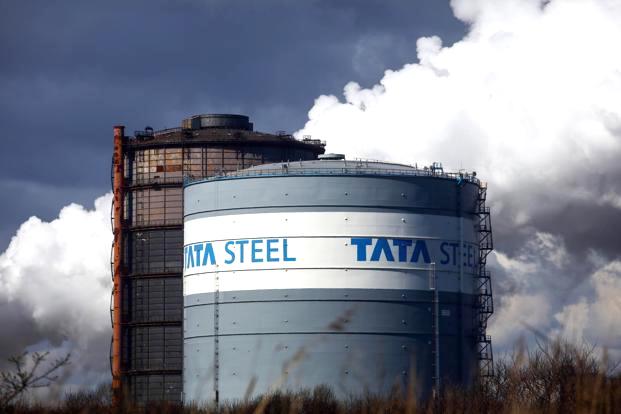
Tata UK has restarted production at a lime kiln, Kiln 4, at its Shapfell site in Cumbria, northwest England, after a £4 million refurbishment to reline it was completed, in a move to boost energy efficiency across all its supply chain, the company said in a statement.
Over a 12-year period, Kiln 4 will produce nearly 1.5 million mt of calcium-rich lime, a product that is key to improving the quality of steel as well as removing impurities during steelmaking.
The products will be used in Tata Steel’s Port Talbot mill in South Wales, the company’s largest operational site, which has a capacity of 5 million mt/year of crude steel production, a spokesperson told Platts on Jan. 17.
“We have four kilns at the Shapfell site (which has been operating normally). This kiln was mothballed some time ago, but we have brought it back as another one is due to end its campaign soon,” the spokesperson said.
It took 10 months to complete the refurbishment of Kiln 4, which was mothballed in 2016.
According to the release, a hot gas blower system — instead of traditional wood — which is used to give increased control and provide reduced and cleaner emissions had been installed, allowing Tata Steel to save on overall energy use and costs.
“This investment has led to a crucial upgrade for the site…We had an opportunity to bring it back on stream to cover production as another kiln comes to the end of its normal lifespan, while also using new technology which means we’re being more sustainable and cost-effective,” John Baird, Shapfell’s operations manager, said.
Tata Steel, the largest UK steel producer, aims to produce net-zero steel in the country by 2050 at the latest and to have cut CO2 emissions by 30% by 2030. The vast majority of that work will happen at Port Talbot.
Tata Steel is a partner in the South Wales Industrial Cluster which is examining a range of options to reduce emissions, from carbon capture to hydrogen.
— Annalisa Villa

European HRC market sees further price increases on horizon
European HRC prices were heard higher Jan. 17 with the market expecting an uptick in prices from domestic mills looking to support the leading European mill increase of around Eur30-50/mt.
However, some remained hesitant to make sudden moves amid continued pricing uncertainty.
The Platts daily Northern European HRC assessment increased Eur7/mt on the day to Eur932/mt EXW Ruhr Jan. 17, while the Southern European assessment also went up Eur7/mt to Eur844/mt EXW Italy.
A German mill source said the automotive industry was becoming more active across Europe, however there is a concern that increased buying interest could potentially cause material demand to outpace supply.
“The semiconductor shortage is the biggest problem, we now have to prepare for the a possible demand increase that is far from current supply levels,” the source said.
A German distributor expressed concern over an estimated Eur70-80 spread between contract price and spot prices.
“I think mills are moving too fast, it is currently very unclear where prices actually stand, we need more transactional activity for full transparency,” the source said.
In the Italian market, there is little appetite to commit to new non-European supply, in the current climate.
“Prices will not decrease – energy costs in Europe are too high, raw material costs also a factor and imports are not worth the risk,” an Italian mill source said.
The same source anticipates an upward trend on the back of the US lifting Section 232 tariffs on EU steel and aluminum effective Jan. 1, 2022.
— Catherine Brown

EU confirms duties on certain electrical steel imports
The European Commission has confirmed the extension of existing anti-dumping duties on certain grain-oriented electrical steel (GOES) imports from China, Japan, Korea, Russia and the US, Kallanish learns from the Official Journal of the European Union.
A review of the measures was launched last year. As a consequence of the extension, measures imposed back in 2015 will remain in place, with ad valorem duties ranging between 21.5% and 39% on imports of grain-oriented flat-rolled products of silicon-electrical steel from the included countries.
In this case, the duties will be applied only on the difference between the sale prices and a set minimum import price established for each provenance and quality. If the sale price is below the minimum set level, no duties will be collected.
Emanuele Norsa Italy


Asian stainless CRC rises on jump in nickel prices
Asian stainless cold-rolled coils increased in the week to Jan. 14, supported by the strong rallies seen in nickel prices which reached multiyear highs despite the slowdown in trade activity with the Lunar New Year holidays approaching.
S&P Global Platts assessed 304 grade 2 mm 2B stainless CRC at $3,090/mt CFR East and Southeast Asian ports Jan. 14, up $40/mt on the week.
Market sentiment was supported by strong nickel prices, which surged to their highest in a decade during the week. The official nickel cash price on the London Metal Exchange settled at $22,125-$22,130/mt Jan. 13, up $1,652.5/mt on the week.
The strong nickel prices have also boosted the sentiment in Chinese stainless futures, market sources said. Spot stainless steel market in southern China increased by above Yuan 300/mt in the week, although market activity was winding down as the Lunar New Year holiday falls end of the month, they said.
“Sellers have suspended offers for cargoes for immediate delivery, especially for 304 CRC, due to the market volatility,” said a Chinese trader. “Market inventory is relatively low now, and even if we could find the materials, it’s also tough to arrange the delivery as warehouses would be closed soon.” It’s also too tight to find the vessels now, he added. Both buyers and sellers preferred to wait on the sidelines until the Lunar New Year holidays get over.
Some major mills’ export offers, which are usually announced late of the month, expected to be above $3,000/mt FOB, sources said.
Meanwhile, Taiwanese and Japanese mills were also heard stopped providing offers due to strong nickel and more positive market outlook supported by raw material prices, said a regional trader. Taiwanese mills are likely to raise offers by at least $100/mt to $3,100/mt CFR, he said.
The most actively traded February 2022 stainless steel contract on the Shanghai Futures Exchange closed at Yuan 17,895/mt Jan. 14, up Yuan 985/mt, or 5.8%, week on week and marked the highest level in about two months.
— Staff

Europe may see Q1 steel ‘shortage’ if auto demand recovers: Vanilla Steel
European steel market participants expect another quarter of high product prices on the back of surging electricity prices and import restrictions despite rather slow activity levels at present, according to Alexis Ducros, co-founder of Vanilla Steel, a digital platform for the auctioning of excess steel products and capacity.
The ongoing quotas system under the European Union’s steel imports safeguards system is preventing further imports and could provoke ongoing tightness, Ducros said in an interview.
“Framework contracts are still being negotiated with difficulties given the new highs and players are trying to source complementary procurement solutions,” he told S&P Global Platts. “[The] big unknown factor is the automotive industry as it was paused with ongoing semiconductors shortage. If automotive resumes its consumption, we can expect further shortage of steel in Europe in 2022.”
Ongoing logistics issues, including high prices, transport shortage and delays, have recently limited export market activity, Ducros said.
European flat and long steel prices reached record levels in the third quarter of 2021, as the market spiraled to recovery on stimulus funds following 2020’s COVID-19-related market slump. Furnaces halted near the start of the pandemic regained production levels slowly, leading prices to ease in Q4, especially as demand from the automotive sector continued weak on the semiconductors shortage, which is expected to last well into this year.
Overall, the European steel market remains tight, however. While the lifting of US Section 232 tariffs on EU steel has renewed the region’s export opportunities in that market, with reciprocal opportunities in Europe, the EU continues to exercise a tariff-rate quota (TRQ) import safeguard system which restricts its overall import levels.
A major steelmaking source with mills in Europe said this week that the EU’s quotas for India’s cold rolled steel, Chinese auto grade and Turkey’s wire rod had already been exceeded after one week of this year’s TRQ regime.
Auto demand still ‘sluggish’
European hot rolled coil market participants said Jan. 13 it was unclear whether the market would soon strike a balance between supply and demand as automotive demand continued sluggish. With little purchasing activity heard as buyers took a step back from inquiries, mills were keen to keep prices high despite slowness on import material, the sources said. Mills were heard mostly booked for January and February.
Platts assessed North European HRC prices down Eur2.50 at Eur922.5/mt ex-works Ruhr, and in Southern Europe, prices remained stable at Eur835/mt ex-works Italy Jan. 13.
In the hot-dip galvanized sheet market, where the automotive sector is a major consumer, some market participants said this week they were expecting uptake from import material to slow on account of increasing protectionist measures, with a lot of material waiting at Italian ports.
An Italy trader source said that although imports were looking less attractive, prices were not likely to fall.
“Prices will not decrease, energy and raw material costs are too high to do so,” an Italian trader told S&P Global Platts. “European mills will reduce production before lowering price.”
Platts assessed North European HDG prices stable at Eur1,100/mt ex-works Ruhr and in Southern Europe Jan. 12, while prices softened by Eur5/mt to Eur1,075/mt ex-works Italy.
Enabling ‘slow mover’ sales
Ducros said that during the period of material supply scarcity in Q2-Q3 2021, Vanilla Steel had aimed to enable suppliers to either sell “slow movers” or to sell material in high demand at higher prices via a competitive bidding process on its Berlin-based auction platform, launched in 2020. “The main usage is still to allow European suppliers to auction their excess inventory … to help the suppliers to requalify materials in the European domestic market,” he added.
Carbon and stainless steel flat and long products and tubes are made available on the platform for a four-day period each week at a minimum price and incoterms defined by the supplier. Tinplate and aluminum have been added to the platform this year.
Around 160 steel suppliers from 60 countries now trade on the platform, with German long steel products producer Saarstahl having announced its adhesion to the system this week. Other authorized suppliers include Vitkovice, a plate producer in the Czech Republic and German steel service center Stahlo, Ducros said.
“For the sake of logistics efficiency, most of the auctions are of fully-loaded truck size lots and the average transaction value last year was around Eur18,000,” he said.
Vanilla Steel is now building a secondary market with spot trading for the EMEA market, to closely accompany market cycles, he said.
Currently, 90% of spot steel trading is being done offline including prime and excess steel (slow movers, overrollings or declassified material), according to a statement issued by the platform.
— Diana Kinch
US hot-rolled prices continue to drop, floor uncertain
US hot-rolled coil’s precipitous price decline from last September’s all-time high continued on Jan. 14 as any talk of a pricing floor appeared to be more of a trap door.
The daily Platts TSI US HRC index fell by $40/st to $1,400/st on an ex-works Indiana basis. Prices are now down nearly 29% from Sept. 2021’s peak.
Most market participants were not even attempting to put a number on where prices could bottom out as steelmakers remain extremely profitable given input costs as finished steel prices decline. In addition, there remained an uncertainty from both buyers and sellers about what price level would even generate buying activity given the existing margins for steelmakers and potential for further declines.
One mini-mill source said sellers were basically competing against themselves if they started approaching customers with lower numbers. Even if a mill was to lower pricing it was unlikely to generate any new orders, added the source.
“Something has got to give,” said the mill source, as buyers were still shedding higher-priced inventory and reluctant to place new orders.
A Midwest service center source said his contacts at a Midwest mini-mill maintained prices were still at a minimum of $1,400/st. Still, the buyer was skeptical the mill had booked much of anything during the week. There were still “massive inventories in spots,” according to the source.
Even if mills lowered numbers significantly it was no guarantee of an order. A service center source reported an offer from an established domestic mill at a value closer to new import offers but still did not buy. “We are over-inventoried,” said the source.
A Midwest mill was still able to sell small commodity orders at $1,500/st but admitted there were not many transactions or large-tonnage orders over the past week. He expected larger buyers to start negotiating tons next week.
— Michael Fitzgerald
Italian sections producers seek strong increases
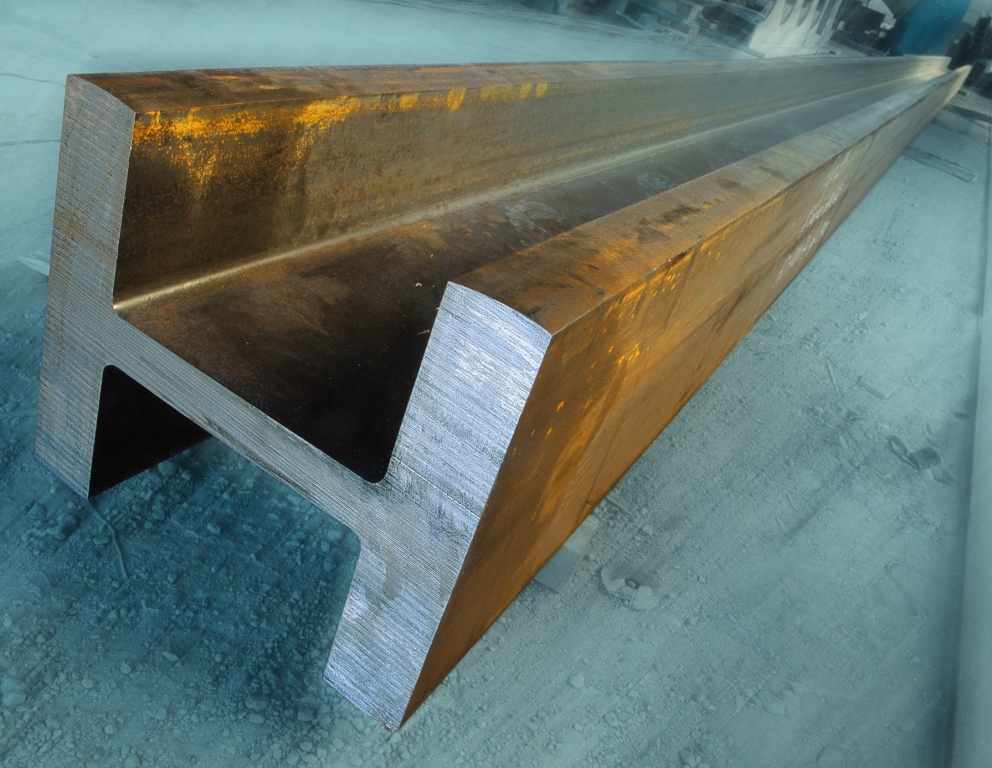
Italian sections producers have increased their prices by €100/tonne ($114) compared to December, in line with other long products makers in Italy, Kallanish hears.
The largest sections mill in the market is quoting at €670-680/t for the first category of beams. Prices increase by €20/t for each subsequence category. This is happening after it stopped sales for several days.
Contract prices for the first category of sections are also increasing, in line with the current hikes, and are hovering at €640-660/t ex-works. Values for the first category of beam were at €570-580/t base ex-works last month. Including €380-390/t average size extras, domestic beams start from €1,050-1,060/t ex-works, sources suggest.
Meanwhile, merchant bar prices remain stable compared to last week at €510-550/t base ex-works. Including size extras, values stand at €930-970/t ex-works.
Natalia Capra France
China’s steel exports rebound but imports slump
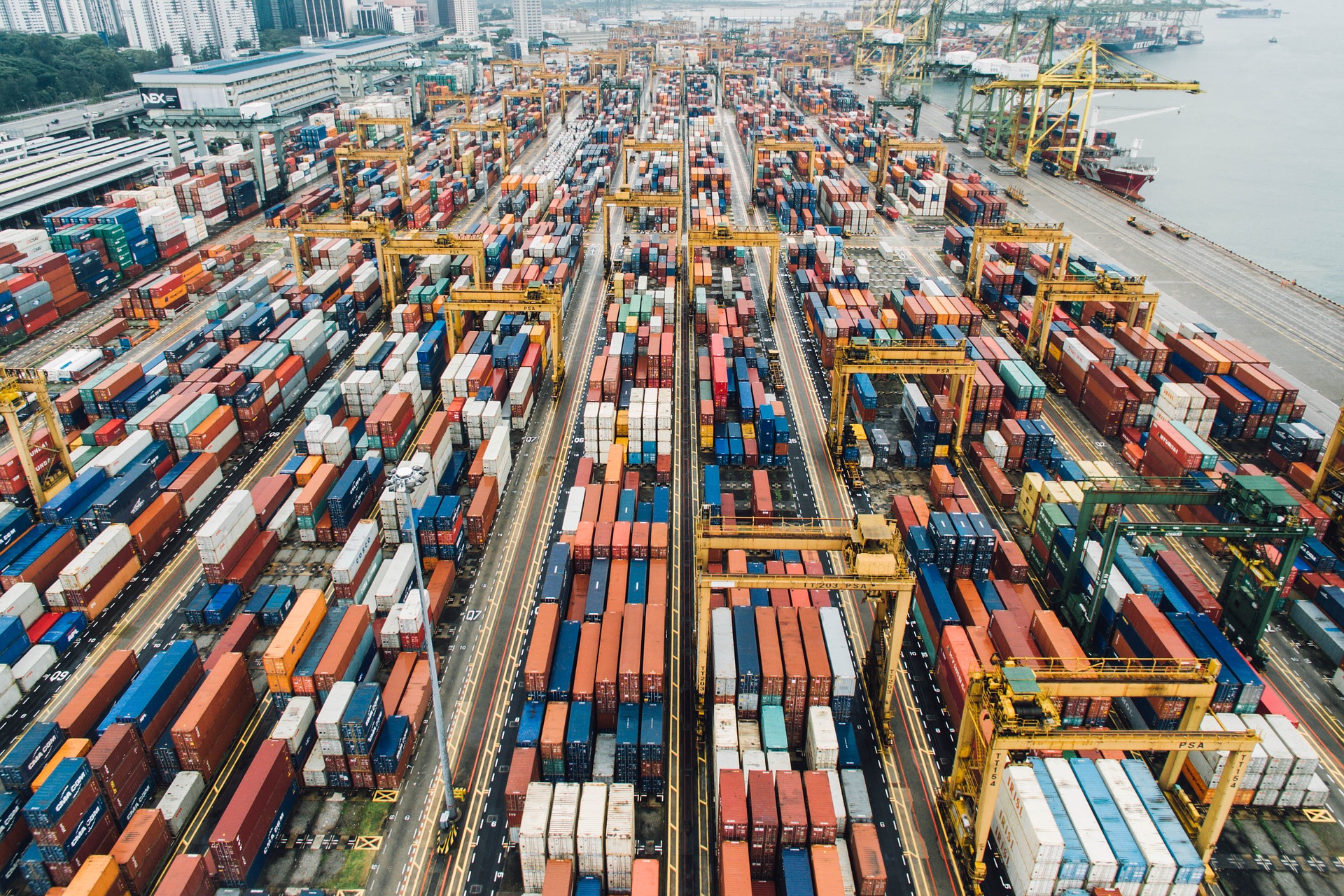
China’s steel exports snapped a five-month decline and rebounded in December 2021, but imports fell due to sluggish steel demand. Full-year 2021 exports also increased after a weak 2020, and imports were down from their surge in late 2020, Kallanish notes.
In December, China’s steel exports rebounded by 15.02% from November to 5.026 million tonnes, which was also a 3.6% increase on-year. Steel mills resumed production after meeting their annual output reduction targets in November, and the increase in supply has meant greater export availability. Traders took advantage of this with short selling even as mills held their prices steady.
According to customs data, finished steel product imports in December declined by 26.93% from November to 1mt. Chinese domestic demand has been very weak and interest in imports fell away towards the end of last year despite very low domestic production. This data does not include imports of semi-finished steel, which have followed a similar trend.
Over the full year, exports were up 24.6% y-o-y to 66.895mt. Although China had expressed its intention to limit exports to advanced steel products, and removed tax rebates on some products, traders still found more opportunities to export last year. Overseas demand recovered from 2020 lows, while Chinese steel output was high during the first half. Covid-19 waves in Southeast Asia however meant that other destinations such as South America grew in importance.
Full-year imports were down 29.5% y-o-y to 14.268mt. Imports remain high by historical standards, but could not replicate the surge of late 2020, which saw China briefly become a net importer of steel. This was mainly due to much weaker demand in the second half of 2021 compared with a year earlier.
Kallanish Asia