


EU metals groups call for concrete measures against high power prices
The European Commission must take concrete action to address the high power costs that are harming the EU’s metals industries, industry associations Eurometaux and the European Aluminium Association said in a letter to the EC.
As a result of a quadrupling of electricity prices, over half of the EU’s aluminum and zinc smelters are currently operating at reduced capacity or have temporarily closed, they said in a letter Jan. 18.
All nine electrolytic zinc smelters in the EU have been heavily affected by the power crisis, Eurometaux said, with some EU zinc smelters having halted production and others curtailing output by between 10% and 50%.
In addition, an estimated 650,000 mt/year of primary aluminum capacity, about 30% of its total, has been temporarily lost as well, despite the growing demand for aluminium in Europe and globally.
“It’s alarming to see that European aluminum producers face curtailments, closures and job losses due to unbearable energy-related costs while our global competitors increase their primary aluminum capacity,” the European Aluminium Association’s director general Gerd Götz told S&P Global Platts.
“We need quick and effective policy measures to ensure an abundant and reliable renewable energy supply at an affordable cost, in conjunction with flexible emergency state aid tools to ensure the EU’s overall strategic autonomy and climate-neutrality ambitions can be met.”
The associations want to see an emergency state aid framework that provides clear conditions and rules allowing member states to take quick action to help national industries during times of high energy prices.
Among the concrete measures requested, Eurometaux suggested in the short term the use of national strategic gas reserves to stabilize market prices and a cap on carbon prices on the EU Emissions Trading Scheme, which have hit successive record highs.
In the medium term, “any phase-out of traditional power sources must be preceded by the deployment of new dispatchable generation in order to ensure a smooth transition and avoid power shortages and volatile prices,” the associations said.
Metals including aluminum, copper, nickel, zinc, and silicon are all significantly more electricity-intensive to produce than other materials and are priced globally as commodities. Power costs make up around 40% of their production costs.
— Annalisa Villa

Thyssenkrupp to supply low-emissions steel to E.ON power stations
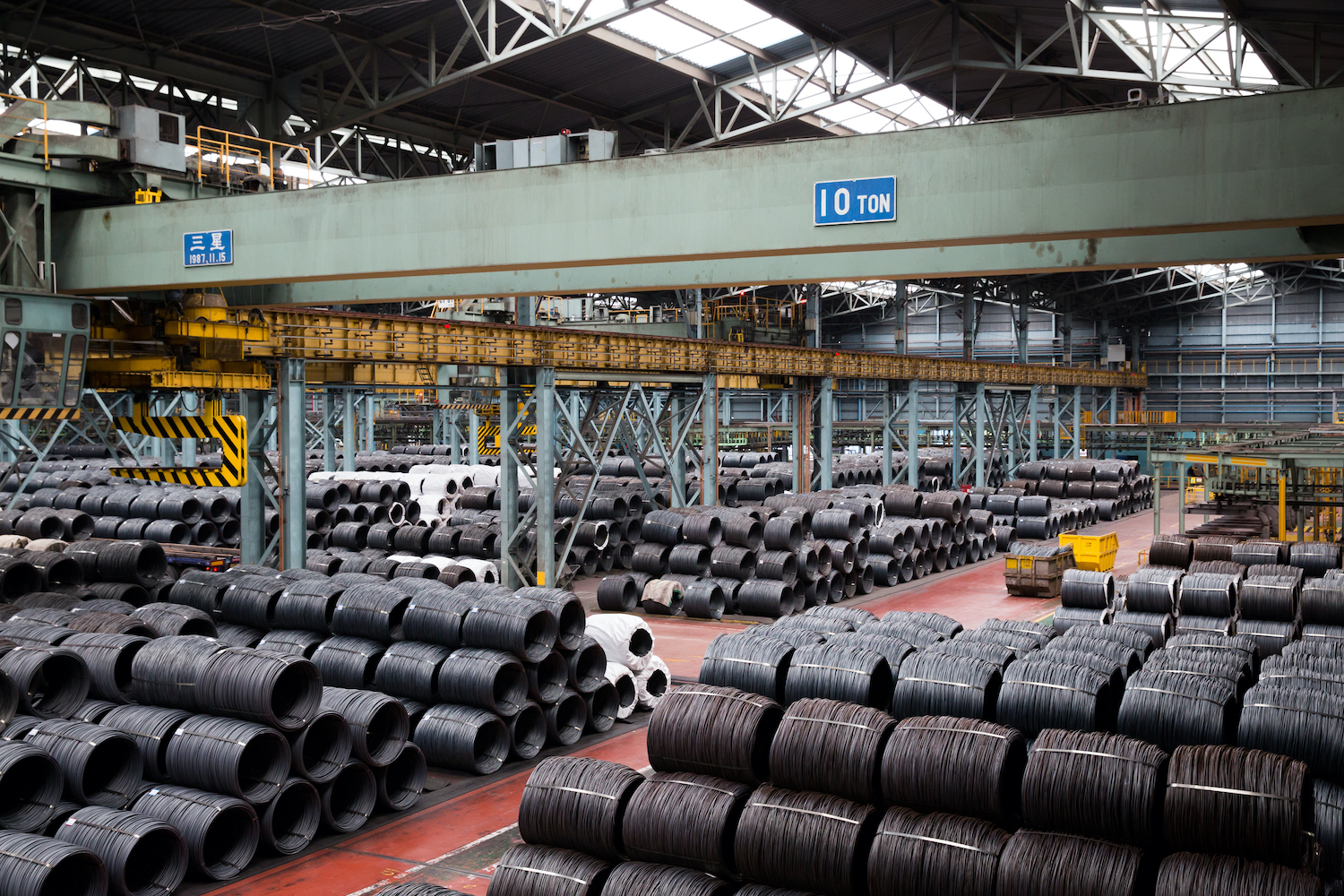
German steelmaker Thyssenkrupp’s Electrical Steel unit is to supply first batches of its “bluemint” low carbon emissions steel to Regensburg-based SGB-SMIT for the production of transformers for new digital E.ON medium-voltage substations in Germany, the company said Jan. 19. The first delivery will be of 50 mt of bluemint powercore steel which has 50% lower CO2 intensity than conventional steel products, the company said.
Electrical Steel, based in Gelsenkirchen, specializes in the production of grain-oriented electrical steel, used for transmission and forwarding of electrical energy in low-loss power transformers. Grain-oriented electrical steel of Thyssenkrupp’s powercore brand is also used in charging columns for electric vehicles, the company said. The use of these kinds of steel already contribute to customers’ energy savings, and will now contribute to the overall decarbonization effort, according to the steelmaker.
Various EU steelmakers are trialing low-emissions or “green” steel with their customers. ArcelorMittal, Europe’s largest steelmaker, started to offer its first green steel solutions to customers in 2020. Sweden’s SSAB said last November it was starting deliveries of low-emissions heavy plate and strip products from its Borlange site to several auto and construction sector buyers who had showed interest in pilot products.
Surcharges are expected to become part of the new cost structure of green steel, with prices at a premium to conventional steel.
Swedish special steel producer Ovako said late last year that from this month it will introduce a “climate surcharge” to support initiatives and new technology investments as its production goes carbon-neutral.
Duisburg blast furnace
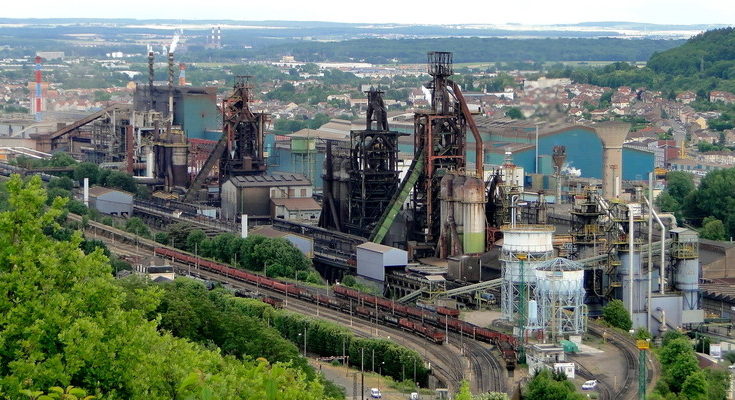
Thyssenkrupp Steel has been offering certified CO2-reduced steel under the bluemint brand since October 2021. Production is initially taking place via the classic blast furnace route at the steelmaker’s Duisburg site before the company advances to hydrogen-based direct reduction technology from 2025, it said.
For the batch now delivered to SGB-SMIT, reduced iron has already been used in the blast furnace, enabling a reduction in coal usage, Thyssenkrupp said. This results in actual CO2 savings in the primary steel route, which are converted on balance to a specific quantity of certified bluemint steel, it said.
Including all further processing steps in Duisburg and in Gelsenkirchen, a CO2 saving of 50% per metric ton of bluemint is being achieved compared with conventional electrical steel. This means a reduction in the CO2 intensity of 1 mt of bluemint powercore to 1.8 mt from 3.7 mt. The Gelsenkirchen site is aiming for complete climate neutrality in the medium term, for example by using green electricity and biomethane in production as early as this year, the company said.
— Diana Kinch
US, UK begin talks on metal tariffs, overcapacity
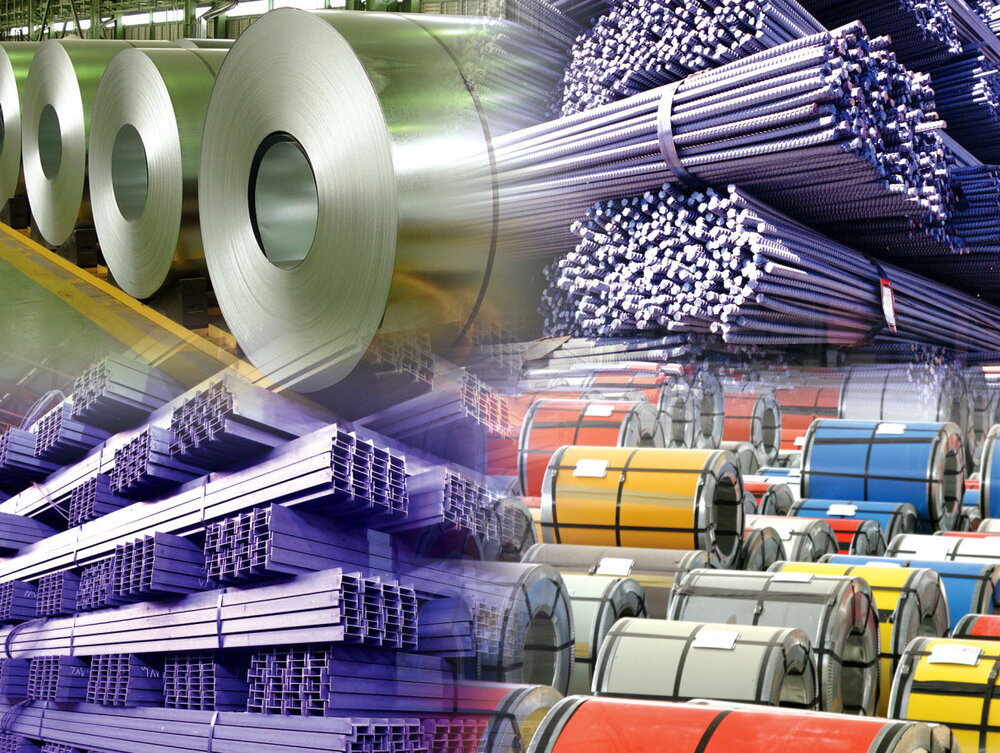
The US and UK officially began bilateral discussions Jan. 19 to address global steel and aluminum excess capacity and a tariff dispute between the two nations.
“The distortions that result from this excess capacity pose a serious threat to market-oriented steel and aluminum industries in the US and the UK, and to the workers in those industries,” trade representatives from both nations said in a joint statement.
The statement was issued following a meeting involving US Commerce Secretary Gina Raimondo, US Trade Representative Katherine Tai and the UK Secretary of State for International Trade Anne-Marie Trevelyan.
Regarding trade between the two countries, the representatives agreed to resolve issues stemming from the US’ Section 232 steel and aluminum tariffs on imports from the UK and the UK’s retaliatory tariffs on certain US exports.
“[The trade representatives] agreed that, as the US and the UK are close and long-standing partners, sharing similar national security interests as democratic market economies, they can partner to promote high standards, address shared concerns and hold countries that practice harmful market-distorting policies to account,” the statement said, adding that overcapacity in China particularly posed a threat to the global market.
The trade representatives will seek a prompt resolution to address global excess metal production capacity and the “deployment of effective solutions, including appropriate trade measures, to preserve our critical industries,” according to the statement.
The US began talks with other world governments in 2021 concerning overcapacity and trade disputes in the steel and aluminum industries. In October, the US modified its Section 232 tariff program to allow a certain volume of metal shipments from the EU to enter the US duty-free under a quota.
The Section 232 tariffs were imposed on most countries in 2018 under former President Donald Trump.
Europe HRC market activity subdued on signs of availability
European HRC prices on Jan. 19 were little changed in Northern Europe at Eur940/mt ex-works Ruhr, as a decline in Italian HRC prices widened the regional spread.
The spread between NW Europe and Italian ex-works HRC prices widened by Eur10/mt to Eur110/mt on the day, as the Platts HRC ex-works Italy assessment fell to Eur830/mt ex-works.
HRC prices looked stable from year-end in a Eur820-Eur830/mt ex-works Italy range, a trader said, noting larger volumes would be bid at lower prices. Delivered HRC pricing may be Eur840-Eur850/mt in Italy from local producers who may be able to accommodate shipments as early as February, another local market source said.
The market showed some hesitancy to book volume at offer levels, and higher availability, especially for HRC, was talked about across supply chains and for imports.
Buyers were looking to assess stocks at suppliers, service centers and at ports, and gauge changes to import pricing ahead of the Lunar New Year, a trader said.
New price offers by European mills are reportedly yet to find much traction, with one source citing a failure to secure any increase in Germany.
Another participant urged caution, seeing more time for offers to be defined across more producers and see feedback.
Import HRC and CRC prices edged lower, taking into account weaker purchasing sentiment in the run-up to the fiscal year with available forward offers.
Indications were seen to book March HRC production from Asian steel mills in a low-to-high Eur700/mt CIF range, depending on origin. However, deliveries would take well into the second quarter.
Indian HRC offers were heard at Eur730-740/mt CIF Europe, and $720-$730/mt CIF Italy, for material arriving well beyond the 6-12 week forward delivery window used for Platts import HRC assessments. Japanese and South Korean HRC pricing were higher, with Chinese HRC heard offered at $750/mt FOB.
For CRC, new import prices were indicated at Eur860/mt-Eur900/mt CIF Europe, for March shipment from Asia.
European CRC prices were said to be around Eur1,050/mt ex-works for March or April delivery.
“I don’t have very positive expectations,” a trader said of the flat steel market.
“Last year it was totally different. There was strong restocking and strong automotive demand. The situation is different now.”
He said HRC stocks in Western Europe were high, and similarly for hot-dipped galvanized steel, limiting restocking demand in the short term.
Heavy plate markets was said to see more potential trade, due to relatively low stocks. Plate of Indonesian origin was heard traded at Eur810/mt CIF Antwerp, April delivery.
— Hector Forster, Wojtek Laskowski
EU steel sections prices up as mills hold firm
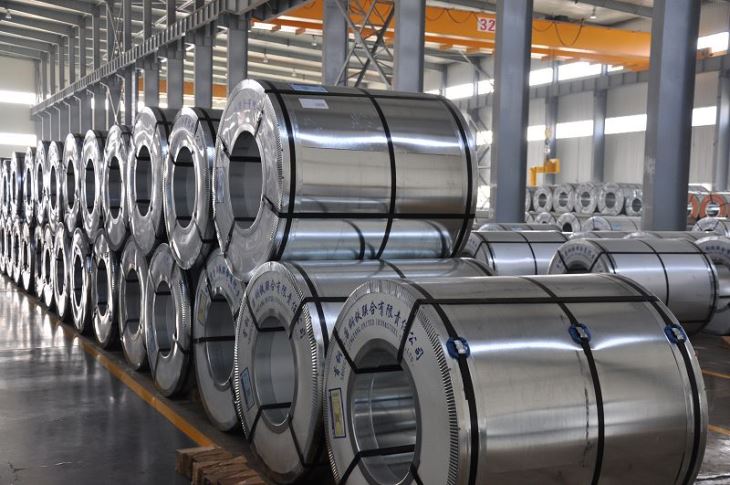
European domestic steel sections prices increased on the week to Jan. 19, as mills maintained elevated levels amid high costs.
S&P Global Platts’ European medium sections price (category 1, S235 JR) was assessed at Eur1,090/mt delivered Jan. 19, up Eur20/mt on the week.
One distributor source in the Benelux region highlighted that continuously high energy costs in the region were pushing prices up with mills increasing offers for steel long products and trying to maintain elevated workable levels. “All mills are complaining about energy prices, saying that they have to account for them now while determining sales prices,” he told Platts.
The source put a tradable value for category 1 medium sections at Eur1,090/mt delivered Benelux.
One European mill source also put a tradable value for category 1 medium sections at Eur1,090/mt delivered.
“Demand is better than last week as it was the first week after holidays, so demand was slow people were still returning from holidays,” he told Platts.
“Scrap prices went down a bit in Italy but then recovered immediately as international scrap prices in Turkey also picked up,” he told Platts. “In addition, energy prices are still high. But it is too early to say if mills will be increasing prices again in the near-term, picture will be clearer next week,” he said.
Platts assessment for Southern European shredded scrap was at Eur447.50/mt delivered to the mill for January contracts on Jan. 10, down slightly from Eur452.50/mt delivered in December. Workable levels were largely heard between Eur440-450/mt delivered to the mill in Italy and Spain. S&P Global Platts assessed Turkish imports of premium heavy melting scrap 1/2 (80:20) Jan. 19 at $469.75/mt CFR, unchanged on the day.
— Rabia Arif, Staff
Italian rebar prices continue to tick up
Italian rebar contract prices are continuing to tick up, confirming the slow upward trend that started at the beginning of the month, market participants tell Kallanish.
Local producers are now quoting at €580-590/tonne ($657-669) base ex-works, mostly due to high energy and transport costs. Today’s contracts for low tonnages range between €540-570/t base ex-works. Including size extras, domestic values are now at €800-830/t ex-works, sources suggest.
Demand however remains weak and deals are done only back-to-back for relatively small tonnages. While public infrastructure projects are absorbing the increases, the private residential sector is slowing down most new projects due to uncertainty and the latest wave of Covid-19, distributors say.
According to national statistical institute Istat, in October 2021, the construction industry registered a growth of 0.8% compared to the previous month. In the first ten months of last year, the sector grew 25.5% compared to the same period in 2020, Kallanish notes.
Natalia Capra France


Günther + Schramm adds machinable stainless grades
Günther + Schramm (G+S), a German distributor specialising in special bar qualities (SBQs) has added the stainless ferritic chrome steel 1.4104 to its portfolio, Kallanish hears. The grade is particularly suitable for machining applications in mechanical engineering, G+S explains.
With its high sulphur content, 1.4104 with the specification X14CrMoS17 is available in various flat dimensions and also in large round dimensions. However, flat dimensions are not common on the market for 1.4104. They are used especially in mechanical engineering because they can be processed better during machining and are gentler on tools. “Often the parts to be produced by the customer have difficult contours or long bores,” says Oliver Schoppe, head of stainless steels at G+S.
“At the same time, 1.4104 is a relatively inexpensive stainless material due to its alloy components,” he adds. The company’s steels are sourced from European mills, including wear tests, to warrant a continuous level of quality.
Christian Koehl Germany
ArcelorMittal Poland revamps Krakow CR mill, ups capacity
ArcelorMittal Poland (AMP) is investing PLN 100 million ($25.2m) to modernise the cold rolling mill at its Krakow site by year-end, with a view to increasing production capacity but at stable electricity consumption.
The work will involve the replacement of the rolling mill motors, modernisation of the sheet pickling line and the purchase of a new grinding machine. The replacement of three DC motors in one of the rolling stands with one AC motor has already been completed.
The greater power of the motor means faster rolling mill speed, thereby lifting overall capacity. By year-end, the sheet pickling line revamp will enable a larger number of hot rolled coils to be prepared simultaneously for treatment. The grinder will meanwhile ensure coil surface deviations do not exceed 0.002mm per meter.
AMP did not respond before deadline to Kallanish request for clarification on CRC mill capacity.
This follows the PLN 30m environmental investment announced at the end of last year into Krakow’s coke plant. “This is the best proof that ArcelorMittal Poland has an appetite for investing into the Krakow unit and that we want our Krakow rolling mills to work in a sustainable manner and be ready to meet the growing needs of our customers,” says AMP chairman Sanjay Samaddar.
AMP decided in October 2020 to close its Krakow hot-end for good after demand failed to recover to satisfactory levels (see Kallanish passim). The BF was initially idled in November 2019 on account of reduced demand and a large volume of imports into the EU. The firm produced 3.9 million tonnes of crude steel in 2020, down 19% on-year.
Adam Smith Germany

European car market drops further in 2021
Car sales in Europe fell 2.4% year-on-year to 9.7 million units in 2021, worsening the already weak performance registered in 2020. Final production data on the continent are yet to be released, but all indicators point towards full-year production figures being in line with 2020.
The second half of 2021 was particularly negative for car sales and December figures marked the sixth consecutive monthly decline compared with 2020. “This fall was the result of the semiconductor shortage that negatively impacted car production throughout the year. Indeed, last year total EU car registrations were still 3.3 million units below pre-crisis sales in 2019,” European car manufacturers association ACEA says in a note seen by Kallanish.
Germany, the largest market in Europe, saw registrations falling 10.1% y-o-y. Italy, by contrast, saw the highest increase of 5.5%, followed by Spain (1%) and France (0.5%).
According to the latest data published by OICA, the global carmakers association, during the first nine months of 2021 European vehicle production was up 5% y-o-y to 11.8 million units. This figure was nevertheless down 25% compared with 2019.
It is understood that activity at European carmaking facilities was particularly hit during the fourth quarter of 2021. For this reason, the overall 2021 production figure could well fall in line with or drop below 2020 output.
Emanuele Norsa Italy
Eurofer welcomes extension of antidumping measures on G-O sheet
European steel producer association Eurofer said Jan. 18 that it welcomes the extension of European anti-dumping measures for a further five years on imports of grain-oriented flat-rolled products of silicon-electrical steel from China, Japan, South Korea, Russia and the US.
Grain oriented electrical steel, or GOES, is a highly specialized steel product manufactured by only around 20 mills globally, of which four are located in the EU, at Stalprodukt, in the Czech Republic; ThyssenKrupp Electrical Steel in Isbergues, France; ThyssenKrupp Electrical Steel GmbH, in Gelsenkirchen, Germany; and Stalprodukt Bochnia in Poland.
GOES is a key component in the production of transformer cores and is crucial for the maintenance and expansion of the EU electrical grid and for further development of the e-mobility sector.
“The EU energy security and climate objectives can only be met by maintaining a viable European GOES industry,” said Axel Eggert, director general of Eurofer. “GOES is a strategic, high-end product, and the European Union cannot be dependent for its supply on foreign mills located in Asia, Russia or the United States.”
According to an official document from the European Commission, the bloc has decided that variable duties under the form of three minimum import prices (MIPs) for three different product categories of GOES are the most appropriate measures.
“The three MIPs would allow the union producers to recover from the effects of injurious dumping as well as they would enable them to return to a sustainable profitability and incentivise them to make the necessary investments,” the EC said.
MIPs currently in force range between Eur1536/mt and Eur2043/mt and “they apply to the individual producers for which individual dumping margins were established from all the countries concerned, i.e. the PRC, Japan, Korea, Russia and the USA,” it said.
— Annalisa Villa