

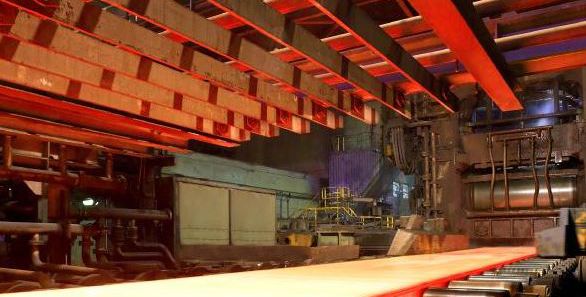
Acciaierie d’Italia confirms 2025 production target
Acciaierie d’Italia, the joint venture between ArcelorMittal and state-owned Invitalia, will produce 8 million tonnes in 2025, the management confirmed during a meeting with the unions and authorities at the Ministry for Economic Development Ministero dello Sviluppo Economico (Mise) in Rome.
Acciaierie d’Italia’s president Franco Barnabè and ceo Lucia Morselli revealed that the key element of their 10-year industrial plan for the Taranto steelwork is complete decarbonisation that will be achieved using green hydrogen at the end of the decade, Mise says in a note. The plan also involves transitioning from the integrated steelmaking route to the electric arc furnace route.
The total investment to upgrade Taranto over the next years will stand at €4.7 billion ($5.3 billion), Morselli said. The main objectives of the plan are production continuity in the coming years, the return to full employment by 2025 and achieving environmental sustainability of steel production through the transition from coal to hydrogen complemented by the use of electric arc furnaces and a new direct reduced iron facility. The final aim is “to obtain a competitive product on the market, in terms of quality and cost, which will allow us to reach the levels of production growth expected of 8mt by 2025. By this date, investments in innovative technologies, some already started, will already allow a reduction of about 40% of CO2 and 30% of fine particles,” Mise explains.
While no more details were revealed, minister Giancarlo Giorgetti said that the industrial plan outlined during the meeting is “realistic” but not easy to implement, as the transition to hydrogen in steelmaking will need time, Kallanish notes.
The Taranto steelworks has mothballed blast furnace No.4 from 1 December because of a technical issue. Meltshop No.1 is also idled, together with continuous casting units No.1 and 5. BF No.4 and the rest of the idled equipment is planned to be restarted on 20 January. Acciaierie d’Italia posted approximately 4.4mt of output in 2020. Unions believe the target of 5mt for this year may not be reached.
Natalia Capra France

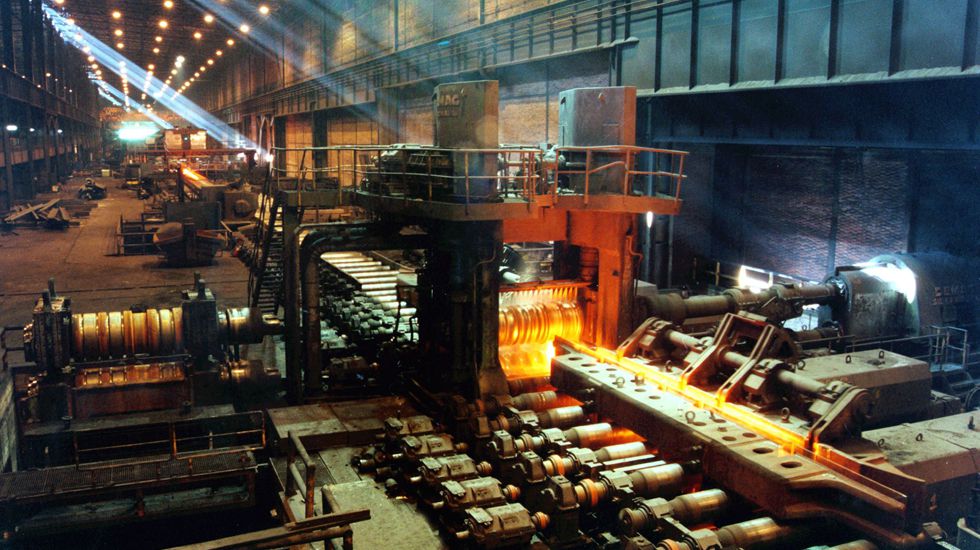
ArcelorMittal invests in green electricity at Fos-sur-Mer
ArcelorMittal Fos-sur-Mer is teaming up with French energy firm Reservoir Sun to produce renewable electricity in line with its objectives of decarbonisation. The steelmaker is installing 12,000 solar panels over two buildings in the Fos-sur-Mer complex.
The solar farm will become operative next year and will have a capacity of 4.6 megawatts.
“The electricity produced will be sent to RTE’s public network and will thus contribute to the objectives of the climate plan for the South Provence-Alpes-Côte d´Azur Region…The two buildings that host this project are used to store finished products (coils and steel sheets) before their shipment by rail and road (respectively 24% and 6% of shipments from the site in 2020). These buildings will remain in operation for the duration of the work,” ArcelorMittal says in a note.
Reservoir Sun, a joint venture between Engie and GreenYellow, will maintain and operate the infrastructure, Kallanish notes.
Natalia Capra France
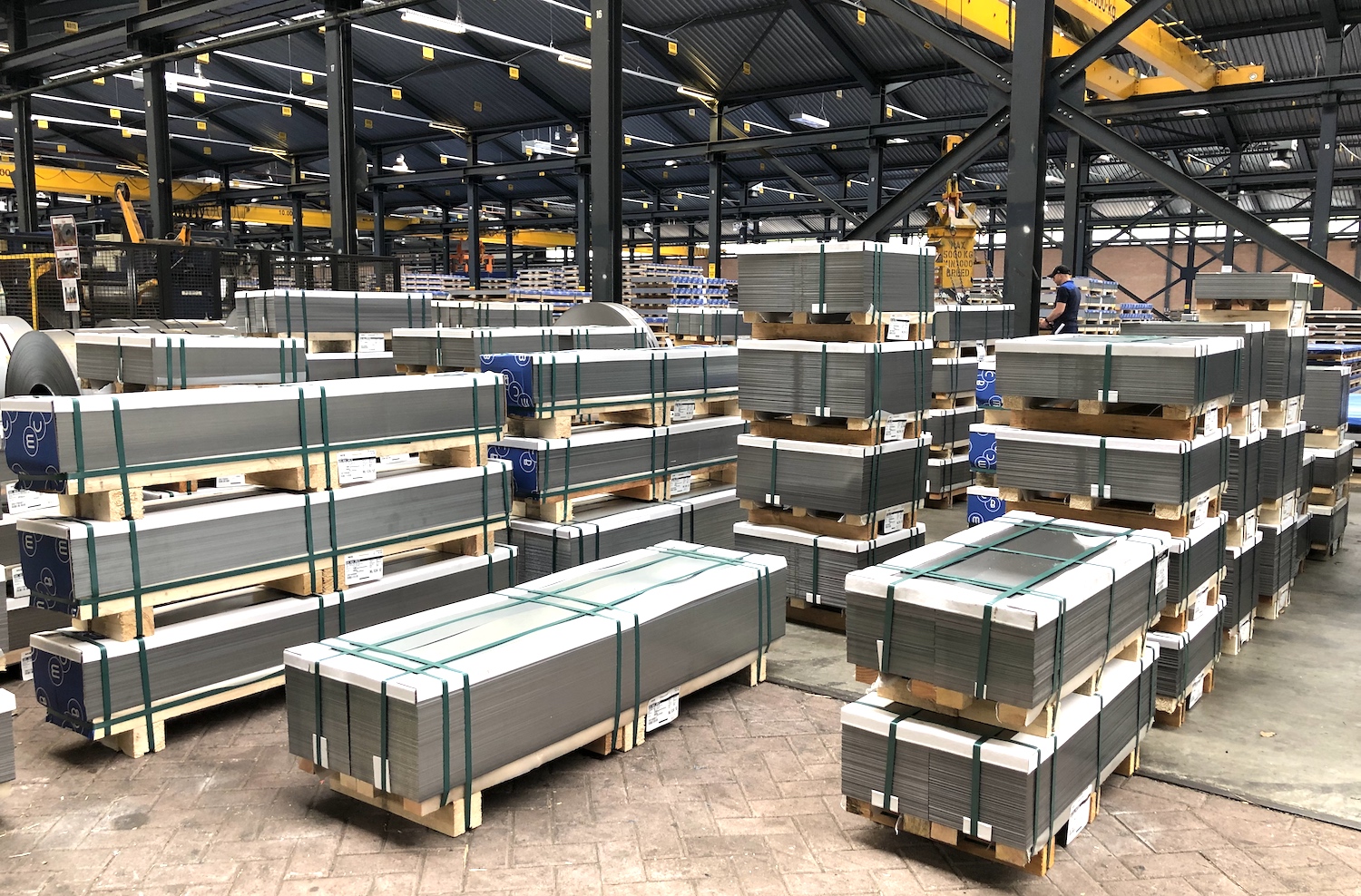
Steel Technologies agrees to purchase Calstrip Industries
Kentucky-based processor Steel Technologies is set to acquire flat rolled processor Calstrip Industries. Financial details were not released.
Once the deal closes later this month, Steel Technologies’ portfolio will include 31 facilities, including joint venture operations, throughout North America. Steel Technologies is owned by NuMit LLC, a 50-50 joint venture between steelmaker Nucor and Mitsui & Co USA.
Calstrip supplies flat rolled carbon steel, stainless steel, galvanized, pre-painted, and aluminium through its facilities in California, New Mexico, Texas, and Arkansas. Its end markets include the appliance, electrical lighting, construction, HVAC, and automotive industries.
“This acquisition supports our dynamic growth strategy by deepening our ability to serve key customers in the southwest US and northern Mexico markets,” comments Steel Technologies president and ceo Thad Solomon in a news release seen by Kallanish.
Laura Miller USA
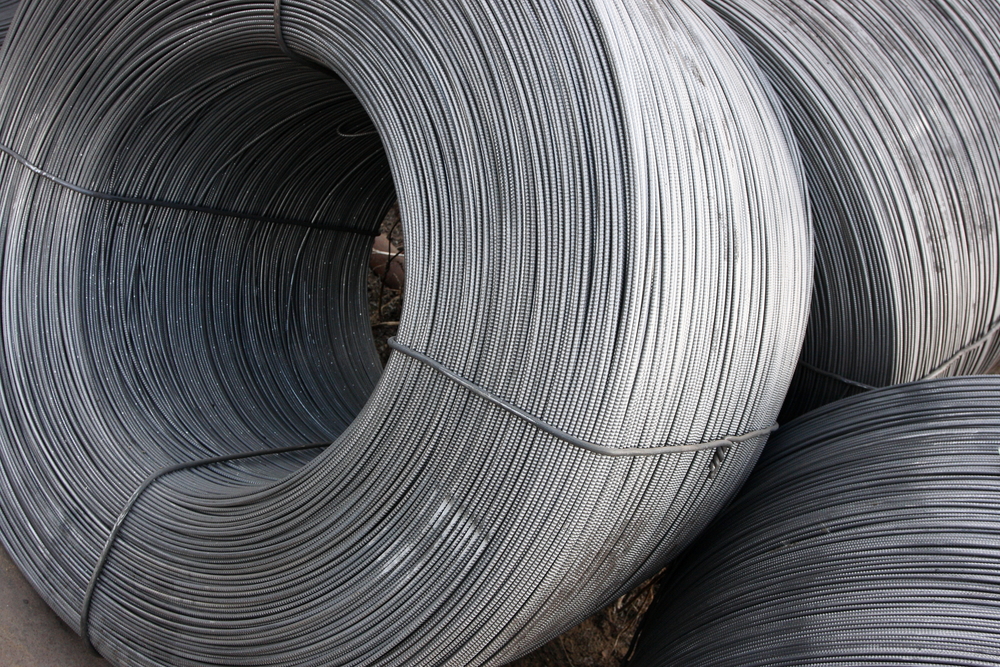
Early 2022 EU longs prices to increase: mill source
The European longs market has been moving erraticly in H2 2021, with prices in North Europe lately stabilising and some upward trends reported in Italy after a softening period. As 2022 approaches all eyes are now on energy and natural gas costs, considered by steelmakers high enough to justify a further increase for longs.
A source at a large steelmaker in Europe noted that demand and high input costs will force EAF steelmakers to lift longs prices further going into Q1 2022.
“We calculated that energy and natural gas costs for an EAF on 10 December were up by €200/t compared with Q1 2021,” the source said to Kallanish. “In mid November the increase was of €115/t compared with Q1 2021, but prices have continued to increase during the last month.”
The demand forecast for long products in Europe remains good as the construction sector is performing well across the continent and a further recovery is expected in 2022. In its latest forecast Euroconstruct said 2022 construction activity in Europe should increase a further 3.6% y-o-y in 2022.
“Since the end of the summer EAF-based mills have been applying selective hourly stoppages when the price of the energy reaches its peaks. If the price of finished longs does not increase further we expect the supply to be reduced further,” the source added. “Observing the forward prices for energy we can say without a doubt that in Q1 2022 costs of energy will continue to rise, forcing the steel market to accept new increases.”
Emanuele Norsa Italy

Reliance acquires Admiral Metals
Service centre chain Reliance Steel & Aluminum has acquired northeastern metal distributor Admiral Metals, Kallanish learns.
In a statement today, Reliance announced the acquisition of Admiral Metal, for an undisclosed amount, as part of the company’s ongoing growth strategy.
“Admiral Metals fits within Reliance’s growth strategy and disciplined methodology of acquiring companies that are immediately accretive to our earnings, and complements Reliance’s existing business by increasing our product breadth,” explains Reliance ceo Jim Hoffman.
Admiral Metals, based in Woburn, Massachusetts, is a distributor of aluminum, brass, bronze, copper, and steel products for a wide range of end markets. Admiral operates eight service centre locations throughout the eastern US, distributing metal products to the semiconductor, automotive, medical, infrastructure, aerospace, and industrial markets. In 2020, the company’s net sales reached $134 million.
“We believe this acquisition will enable Admiral Metals to leverage Reliance’s scale in order to capitalise on further growth opportunities while maintaining its strong brand recognition,” Hoffman adds.
Zach Johnson USA
LME scrap, rebar contracts gains but backwardation remains
Near-term scrap and rebar futures contracts on the London Metal Exchange saw gains over the week to Dec. 9, although expectations of near-term weakness in physical prices persisted.
Platts assessed the December contract up $10.50/mt week on week to $465.50/mt on Dec. 9. The January contract rose $15/mt week on to $456.50/mt, while the February contract rose $10.50/mt to $444.50/mt. The March contract inched up $3.50/mt week on week to $429.50/mt on Dec. 9.
The backwardated structure for the December-March forward curve remained largely unchanged week on week, suggesting that futures traders’ continue to hold firm expectations of a near-term drop in physical scrap prices, albeit with near-term decreases likely to be smaller than previously expected.
Spot prices for physical imports of premium heavy melting scrap 1/2 (80:20) dropped $12.50/mt week on week to $467.50/mt CFR Turkey on Dec. 9, as US and Baltic sellers cited lower workable levels.
Multiple trading sources predicted $460/mt CFR or lower to soon be achievable by Turkish mills, although sell-side sources cited firm collection prices and competing demand from other markets, such as Latin America.
Weekly LME scrap futures trading volumes over the week to Dec. 9 totaled 21,420 mt, down from 58,230 mt recorded last week.
Near-term rebar futures contracts also saw gains week on week, while physical Turkish export rebar prices continued to soften amid consistently weak demand.
Platts assessed the December contract up $7/mt at $699.50/mt in the week to Dec. 9. The January contract jumped $25/mt to $694.50/mt, while the February contract was unchanged week on week at $676.50/mt. The March contract inched down $2.50/mt week on week to $665.50/mt on Dec. 9.
The backwardated structure of the December-January portion of the forward curve softened week on week, suggesting that futures traders’ continue to expect a weaker near-term physical price downtrend than previously expected.
However, the temporary contango over the January-February portion of the curve reverted to a backwardation over the week to Dec. 9, pointing to sustained physical price weakness over the first quarter of 2022.
Turkish physical rebar export prices dropped $10/mt week on week to $707.50/mt FOB on Dec. 9.
Mills in the Iskenderun region said workable prices were closer to $700/mt FOB, while Marmara-based producers tried to hold firmer prices, citing $710/mt FOB as workable for 10,000 mt.
Sharp volatility in the Turkish lira has led to very low rebar sales in the domestic market. Turkish integrated long steel producer Kardemir reduced its rebar list prices for 12-32 mm material by $20/mt to $700/mt EXW without VAT Dec. 9, after the previous level had failed to elicit enough orders. At least 28,000 mt was sold by Kardemir, sources said.
Platts assessed the Turkish lira at an all-time low of 13.7842 against the dollar at 4.30pm London time on Dec. 9, weakening from 13.6838 on Dec.8.
Turkish president Recep Tayyip Erdogan has continued to defend recent interest rate cuts despite soaring inflation. Under pressure from Erdogan, the Turkish central bank has lowered interest rates by 400 basis points since September, to 15% by Nov. 18.
Rebar futures weekly trading volumes this week on the London Metal Exchange totaled 3,770 mt, down from 12,750 mt traded last week.
The daily outright spread between Turkish export rebar and import scrap was assessed at $240/mt, up $2.50/mt week on week.
Elsewhere, Indian scrap futures saw three consecutive days of trading over Dec. 6-8, with a total of 240 mt traded, matching a previous run of three consecutive trading days in early October. A total of 2,670 mt has traded so far on the contract, which settles basis the Platts CFR Nhava Sheva shredded scrap index, since its launch in late July.
— Viral Shah


Threat of expanded US sanctions holds little to fear for Russia’s steel industry
The effect on the Russian steel industry from the potential imposition of expanded US sanctions would be negligible because trade in the metal between the two countries is so small, while industry insiders believe the US would not go as far as to exclude Russia from the SWIFT banking communications system.
The Biden administration has signaled it is prepared to block the startup of the Nord Stream 2 gas pipeline from Russia to Germany and to impose harsh economic sanctions, including additional restrictions on Russia’s energy sector, in the event of a Russian military escalation in Ukraine.
“Sanctions will target sensitive sectors, but I will be very much surprised if they will be extended to the steel industry. The volume of steel trade between the two countries is too insignificant,” said a Switzerland-based steel distributor.
Over January-September, Russia’s export of steel in both semi-finished and rolled forms, including rails and pipes, is estimated at 22 million mt. Shipments to the US equated to less than 1% (up to 138,000 mt) of this volume, according to data published by the Eurasian Economic Commission, the regulatory authority overseeing the customs union between Russia, Belarus, Kazakhstan, Armenia and Kyrgyzstan.
In the first nine months, Russia also exported 2.7 million mt of direct reduction iron products, 2.3 million mt of steel scrap and 0.7 million mt of ferroalloys; none of these went to the US, but the latter absorbed 45% (1.3 million-1.4 million mt) of Russia’s pig iron exports.
Russia’s ferrous imports from the US in the reported period were even tinier: the country shipped a little over 1,500 mt of steel in various forms and 500 mt of ferroalloys, scrap, ferrous granules and powders, according to EEC’s statistics.
Meanwhile, industry sources said exclusion from the SWIFT system, a secure communications platform used by financial institutions, would be the most uncomfortable of the measures for Russia but that they did not see it as likely even in the event of a Russian invasion of Ukraine.
Today, only Iran and North Korea are cut off from SWIFT.
Any exclusion would see SWIFT lose a big chunk of its market, a source at an exporting mill told Platts, adding that such a move could encourage other countries like China to accelerate development of their own systems to be able to do without SWIFT should they become the targets of sanctions. “This is not a good prospect for SWIFT,” he said.
A Moscow-based steel trader said that, in the highly unlikely event that Russia was excluded, it does have its own payment system, called Mir, and many countries buying oil and gas from Russia would have to switch to that.
“The worst could only be a full embargo on energy and metal supplies from Russia, but for the initiators, it will be the same as to shoot themselves in the stomach,” the trader said.
A SWIFT suspension would be digestible though, according to sources. “Most metallurgical companies, which export, are doing so through their own trading firms in the EU and other countries, and customers are paying to those firms’ accounts. Moving their revenues to Russia bypassing SWIFT is not an issue,” said the mill source.
— Ekaterina Bouckley

Hyundai cuts bid price for Japanese scrap
South Korea’s leading electric arc furnace operator, Hyundai Steel, has once again lowered its bid prices for Japanese scrap in its recent purchase auction.
The steelmaker placed bids on 9 December for H2 grade scrap at JPY 47,000/tonne ($414/t) fob Japan. It posted a bid at JPY 52,500/t fob for shredded scrap and JPY 55,500/t for HS grade scrap. It also bid at JPY 58,000/t for Shindachi Bara (loose) scrap in the same auction, Kallanish notes. The mill’s bid prices were JPY 500/t lower for all grades scrap with the exception of Shindachi Bara grade which was a steeper drop of JPY 2,000/t.
In comparison, the Japanese domestic scrap market is firmer. Tokyo Steel is currently paying JPY 54,500/t ($480) for H2 grade scrap trucked to its Utsunomiya steelworks, effective 10 December. The mill’s procurement price for H2 was holding at JPY 55,000t during 13 November-9 December, having peaked at JPY 56,000/t on 28 October-10 November.
Anna Low Singapore

Merchant pig iron market lull intensifies
The inertia that has been gripping the merchant pig iron market continued throughout the past week with no deals taking place and buyers’ indications moving further down, Kallanish reports.
In the Mediterranean, only one sale was heard of Russian origin material to Italy, at an approximate fob level of around $530/tonne ($565/t cfr). Considering indications from buyers at much lower $530-540/t cfr levels during the week, the sale could either be of a higher quality material, or an older one. There are still considerable stocks in the port of Meghera and a large number of offers from non-CIS suppliers, at $540-550/t cfr (see related story).
Turkey is also not in a mood for buying, as scrap imports prices have softened by around $25/t from the $500/t cfr peaks, and the national currency remains at historically low levels against the US dollar, complicating import trade. Sliding prices of finished products are weighing also, but some sources anticipate a change in scrap direction in January, amid CIS scrap export restrictions expectations to wipe out offers for a while.
Meanwhile, US domestic scrap settlement levels with November prices kept US buyers remained on the fence, wiping away CIS sellers’ hopes to sell at $570-590/t cfr Nola and keeping Brazilian indications at $500-510/t fob, or $540-550/t cfr Nola. Brazilian sellers have, as expected, started offering to Italy, in the knowledge of high stocks and low appetite for pig iron in the US before Christmas. February loading is still available from Brazilian suppliers, which is still further ahead than CIS material, giving the latter buyers’ preference.
Asian importing interest has gotten even quieter, with Indian pig iron offers down around $10/t on-week to $480-490/t fob this week, with China indicating the same level on cfr basis as a possible interest. Very few sales – if any at all – are expected this side of the new year, traders say, amid ongoing uncertaintly, new Covid-19 variants fears and generally low demand.
Russia’s stainless exports to EAEU decreases
Russia’s exports of stainless steel to Eurasian Economic Union (EAEU) countries decreased in January-October, says national special steel association USSA.
Shipments amounted to 16,230 tonnes, down by 10.2% on-year, Kallanish notes. Almost 2/3 of Russian exports of stainless steel go to the EAEU countries, the association observes.
Russia’s additional export duties meanwhile impact only a part of Russian exports of stainless products because most of them are delivered to EAEU countries, USSA said previously.
Russia’s imports of stainless steel increased in January-October, with the main supplier again being China (see Kallanish passim). Russia’s 10-month stainless intake was up 13.7% on-year to 368,170t.
Russia’s production of stainless steel increased in January-October to 175,200t, up by 3% on-year, USSA says. In October alone, Russian steelmakers produced 17,700t of stainless steel, up by 7.6%.
Stainless production at Russia’s Krasny Oktyabr (Red October) decreased in October to 12,500t, down by 51.2% on-year. Red October managed to maintain its leading position in the production of stainless steel in the first half of 2021. Moreover, it had a 22.4% share in Russian stainless exports, according to USSA.
Earlier this year, TMK announced it will begin the production of stainless flat rolled products. The design capacity of the proposed complex is up to 500,000 t/year. Total investment is over RUB 100 billion ($1.36 billion). The production site will be located in Volzhsky, but the timing of the project has not yet been specified.
Svetoslav Abrossimov Bulgaria