

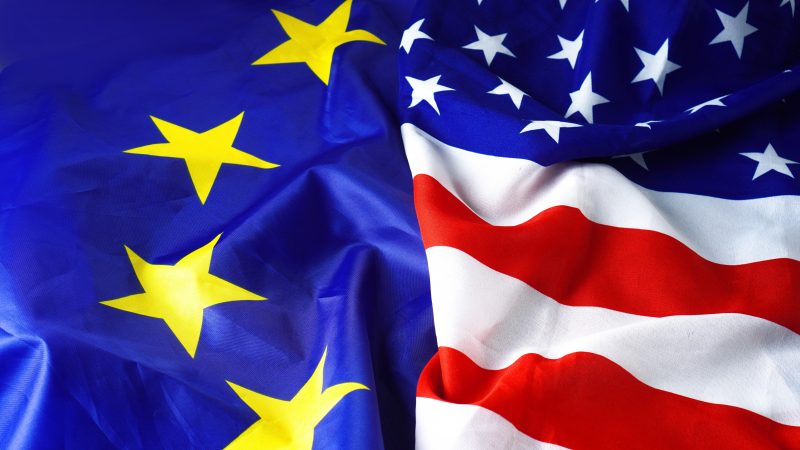
UK launches bid for USA to end tariffs on steel, aluminum
UK Secretary of State for International Trade Anne-Marie Trevelyan is visiting the US this week as part of a push for an end to Trump-era tariffs on steel and aluminum imports, the UK government said in a statement Dec. 5.
During her three-day trip to New York and Washington, the UK trade secretary will meet with US Commerce Secretary Gina Raimondo to discuss how trade and investment can support each country’s leveling-up agendas and find a resolution to the s232 steel and aluminum tariffs, the UK government said.
“The visit offers an opportunity to build support for state-level cooperation that offers significant opportunity to unlock trade and investment wins for UK and US businesses,” according to the statement.
In March 2018, then US President Donald Trump imposed a 25% tariff on steel imports and a 10% tariff on aluminum imports from most other countries, as part of his “America First” policy.
In October this year, the US and the EU agreed bilaterally to remove the tariffs.
The UK steel sector has called on the country’s government to request a similar lifting of the tariffs.
“On the 1st January, steelmakers in the EU will gain a significant price advantage over their UK counterparts,” according to Gareth Stace, the director general of industry group UK Steel. “Already, customers in the United States will be factoring in January 2022 prices to their plans for the next year, which of course risks the UK sector losing market share in the US, to EU exporters.”
According to UK Steel, since the tariffs came into force, the UK’s exports to the US have declined from 350,000 mt in 2018 to 200,000 mt in 2020.
“While many of our US customers have stood by us, it is imperative that all parties work together to come to an agreement that provides the UK with the same tariff free quotas the EU has already secured, and that such an agreement is arrived at as soon as possible,” the association added.
— Annalisa Villa

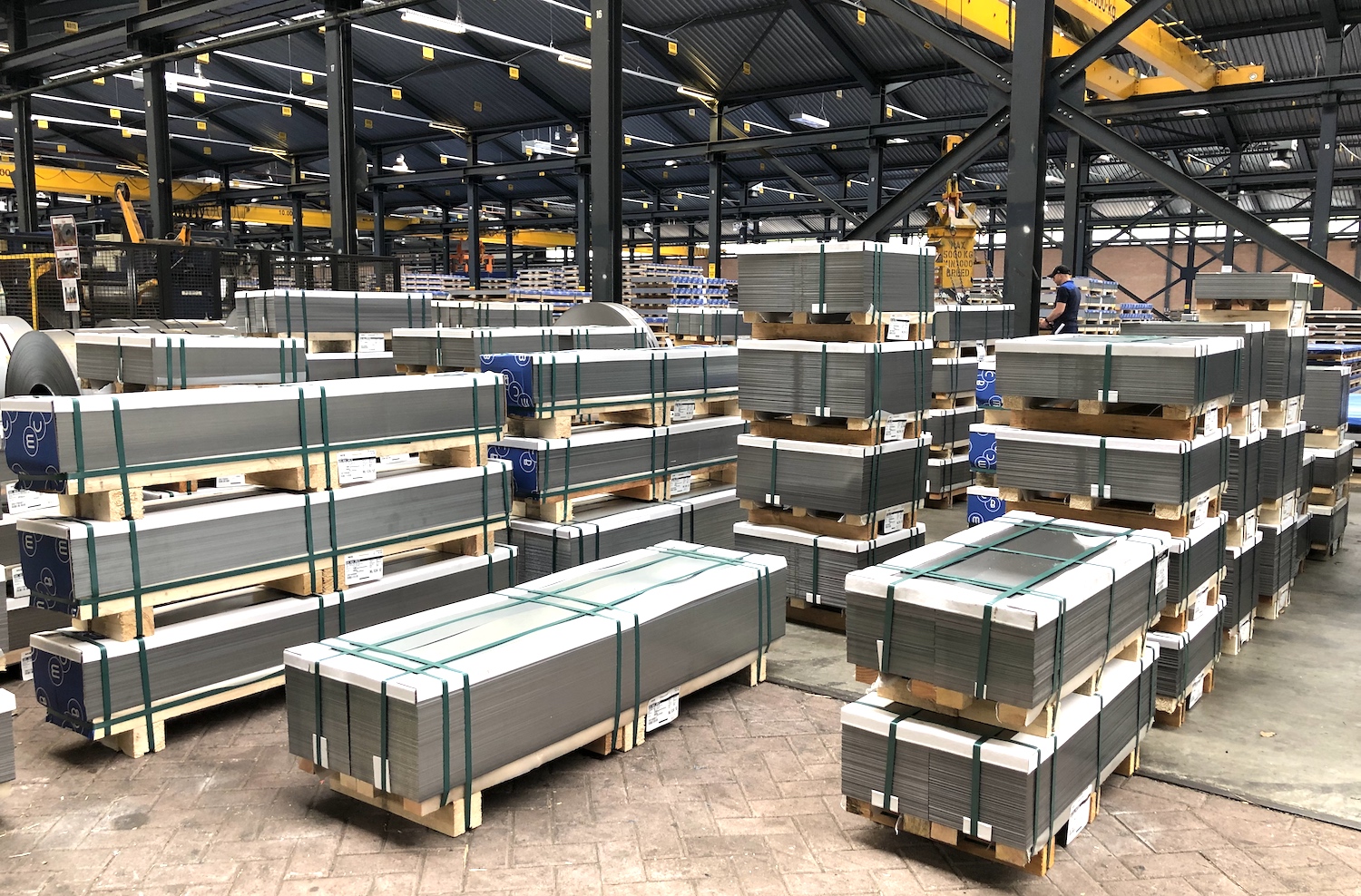
German steel processor Wuppermann to produce CO2-neutral HDG by 2025
Germany-headquartered steel processor Wuppermann said Dec. 6 that it would achieve “CO2-neutral” galvanized steel strip production by 2025 across all sites.
Wuppermann found that the largest share of the company’s energy requirements is generated in strip galvanizing. The company has adopted the “heat-to-coat” process for the production of 1 million mt of strip galvanized steel a year at its three glavanizing sites, which saves more than 30% of CO2 emissions compared to conventional galvanizing, the company said.
“While conventional galvanizing processes are based on fossil energies, our process is electricity-based. This means we can galvanize our strip on the basis of green electricity — a significant competitive advantage in terms of sustainability,” said Johannes Nonn, spokesman of the Wuppermann executive board, adding that about half of the CO2 emissions come from zinc smelting and the company is having discussions with zinc suppliers on the issue.
The processor will only use renewable energy for the production. Since the beginning of the year, the Austrian production sites are powered exclusively by hydropower and the Dutch site in Moerdijk will switch to wind power from 2022. The electricity supply contracts at the production sites in Hungary and Poland will also be successively converted to CO2-free or green electricity.
The company did not say whether they would be looking at the emissions of the pre-material of the galvanized strips as well.
— Laura Varriale

Russia’s stainless output increases in October
Russia’s production of stainless steel increased in January-October, show national statistical service Rosstat data monitored by Kallanish.
Output amounted to 175,200 tonnes, up by 3% on-year. In October alone Russian steelmakers produced 17,700t of stainless steel, more by 7.6%.
In September, Russian steelmakers produced 20,700t of stainless steel, up 34.1% on-year (see Kallanish passim).
Stainless production at Russia’s Krasny Oktyabr (Red October) decreased in October to 12,500t of stainless steel, down by 51.2% on-year. Red October managed to maintain its leading position in the production of stainless steel in the first half of 2021. Moreover, it had a 22.4% share in Russian stainless exports, according to national special steel association USSA.
In October, JSC RSL Group, associated with Russian pipemaker TMK, completed the acquisition of shares in Red October. However, the latter is still in bankruptcy proceedings. RSL Group said its immediate tasks will be restoring pre-crisis production indicators, expanding sales markets, developing industry cooperation and implementing a plan to modernise production.
Earlier, TMK announced it will begin the production of stainless flat rolled products. The design capacity of the proposed complex is up to 500,000 t/year. Total investment is over RUB 100 billion ($1.36 billion). The production site will be located in Volzhsky, but the timing of the project has not yet been specified.
Russia’s additional export duties meanwhile impact only a part of Russian exports of stainless products because most of them are delivered to Eurasian Economic Union (EAEU) countries, USSA said previously.
Svetoslav Abrossimov Bulgaria

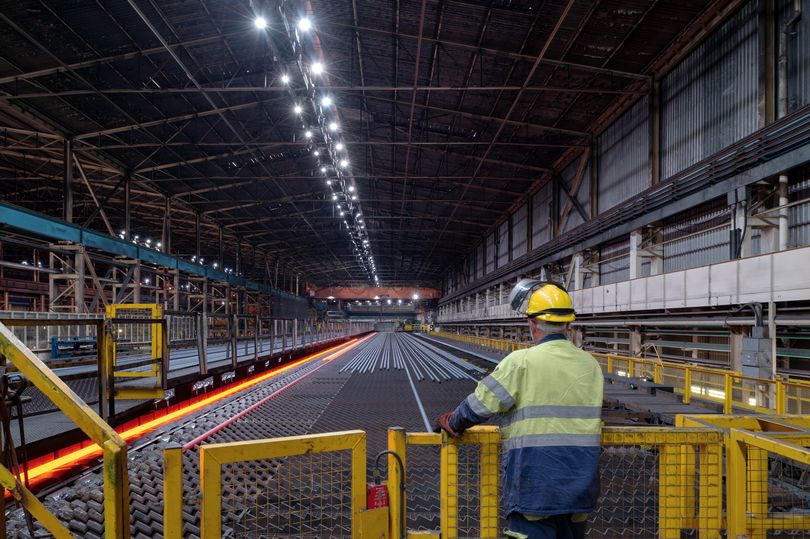
Liberty moves forward restructuring of Benelux units
Liberty Steel says it has taken some steps forward in the process of reorganising the structure of its Benelux units, in Liege and Dudelange.
The group confirms to Kallanish that Belgian authorities have validated the restructuring plan presented by Liberty for the Liege unit. Similarly in Luxembourg, an agreement on the restructuring was reached with the government and local trade unions.
“Following the agreement of its restructuring plan, Liberty Liège will now restart its operations, start to implement a creditor reimbursement plan and continue its social dialogue to ensure its transformation plan can be implemented as soon as possible,” the company says.
“Following the decision to undertake a technical restructuring at Liberty Dudelange to protect its employees, the management team will continue to work collaboratively with its stakeholders to identify new sources of financing and develop sustainable business plans for its future.”
In Liege and Dudelange, Liberty controls ten rolling lines for coil, producing mainly galv and packaging products. Since September, local trade unions have been expressing their concerns over the future of the Benelux plants as the company intends to cut jobs and restructure heavily.
In early November, the Luxembourg trade unions said the Dudelange mill was operating at only 20% of its installed capacity, while a recovery in output was expected in the first quarter next year.
Emanuele Norsa Italy

Margins gradually returning to ‘typical’ distribution levels: Stalprofil
Stalprofil’s consolidated revenue fell 10% on-year in the third quarter to PLN 370 million ($90.9m) due to a drop in the number of infrastructure segment contract awards.
However, steel trading segment revenue surged 75% thanks to continued strong steel demand and elevated prices, albeit with a slight correction. Consolidated net profit also soared almost seven-fold to PLN 26.9m.
The end of the price uptrend in the second half of Q3 is seeing the gradual return of margins to levels typical for the steel distribution sector, Stalprofil says. The reduced infrastructure segment revenue is due to a lack of orders from main customer Gaz-System. The firm sees deliveries to the Polish gas pipeline operator resuming in the coming months.
Consolidated revenue in the nine months through September thus fell 2% to PLN 1.14 billion but net profit attributable to majority shareholders soared over 470% to PLN 87.2m.
In the first half of 2021, Stalprofil saw steel product sales rise 15% on-year to 94,916 tonnes, but export sales revenue almost halved amid competition and influx of cheap steel into the EU from the Far East and CIS (see Kallanish passim).
Adam Smith Germany
Spain’s crude steel production rebounds strongly in October
The Spanish steel sector saw production and scrap melting increase for the second consecutive month in October, Kallanish notes.
According to Spanish steelmakers’ association Unesid, the local steel industry produced around 1.28 million tonnes of crude steel in October. This was 2.6% more than September’s output of 1.25mt and 8.8% higher year-on-year. According to Unesid data, crude steel production in October was just 69,000t down on the 2021-high in May.
During the first ten months of the year, Spanish output reached 12.16mt. Unesid did not disclose an on-year comparison in its latest report, but taking worldsteel figures into account, the growth is estimated at 35%.
Spain used 1.03mt of ferrous scrap for steelmaking in October, up 1.8% month-on-month. This volume was also almost 48,000t more over the same month in 2020. Cumulative scrap usage was 9.6mt, representing 78.9% of total crude steel production in the ten months.
Todor Kirkov Bulgaria

Steel industry needs $278 billion to decarbonise: BloombergNEF
Steelmaking could happen with almost no carbon emissions through $278 billion of extra investment by 2050, with hydrogen and recycling to play a key role, says a BloombergNEF (BNEF) report.
By 2050, green hydrogen could be the cheapest production method for steel and capture 31% of the market. Another 45% could come from recycled material, and the rest from a combination of older, coal-fired plants fitted with carbon capture systems and electric processes to convert iron ore into iron and steel, says the research firm.
Today, around 70% of steel is made in coal-fired blast furnaces, with 25% produced from scrap in electric furnaces, and 5% made in direct reduced iron plants, the majority of which are fired by natural gas. In the hydrogen-DRI-EAF scenario, blast furnace production would fall to 18% of capacity, Kallanish notes.
“The steel industry cannot afford to wait for the 2040s to start its transition,” says BNEF head of sustainable materials Julia Attwood. “The next ten years could see a massive expansion of steel capacity to meet demand in growing economies, such as India. Today’s new plants are tomorrow’s retrofits. Commissioning natural gas-fired plants could set producers up to have some of the lowest-cost capacity by retrofitting them to burn hydrogen in the 2030s and 2040s. But continuing to build new coal-fired plants will leave producers with only bad options toward a net-zero future by 2050.”
To achieve the transformation, the steel industry must boost the amount of steel that is recycled, particularly in China; procure clean energy; and design all new capacity to be hydrogen or carbon capture-ready. It must also begin blending hydrogen in existing coal- and gas-based plants to lower the cost of green hydrogen, and retrofit or close any remaining coal-fired capacity by 2050, BNEF observes.
Producing hydrogen-DRI-EAF ‘green’ steel will require massive amounts of clean energy, and a shift to higher grades of iron ore. “This could change where most steel is made, or shake up the mining industry,” BNEF comments. Russia and Brazil both have access to high-quality iron ore reserves and to abundant clean power. Moreover, Brazil is expected to have one of the lowest costs for hydrogen production by 2030. Australia will however have to invest in equipment to upgrade its iron ore quality to avoid losing its number one place in the supply chain.
“Most of the costs to make green steel come from operations, rather than capital costs. Reducing the cost of green hydrogen is thus critical, and BNEF estimates that these should fall more than 80% by 2050 to under $1/kg in most parts of the world,” the firm concludes.
Adam Smith Germany
EU fund uncertainty cools Polish construction optimism: analyst
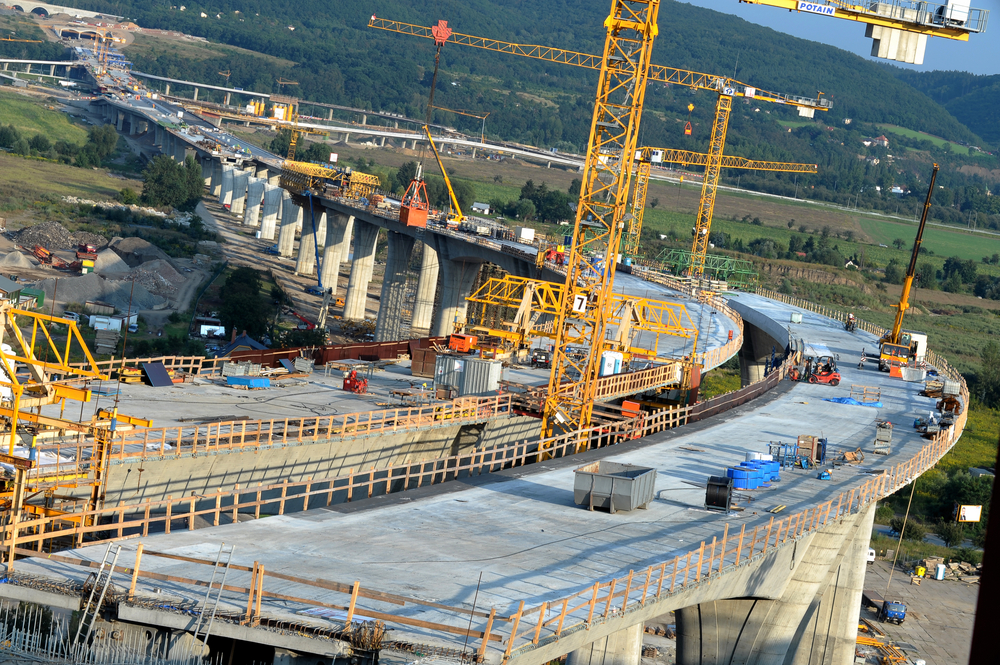
Uncertainty over the allocation of EU recovery funds and instability in China’s real estate market have cooled the optimism seen earlier this year in Poland’s construction industry, Bank BPS analyst Artur Wizner confirms to Kallanish.
Following the initial Covid-19-induced collapse in spring 2020, the WIG Budownictwo construction company subindex was the fastest growing index of the Warsaw Stock Exchange, peaking in September 2021.
This was due to construction investments continuing despite the pandemic, as well as a rebound in the construction sector from the third quarter of 2020. Thirdly and most importantly, the prospect of Poland receiving over €700 billion ($791.5 billion) of overall EU funding for infrastructure investments, such as in road and rail, was a major driver of the strong growth.
However, now, “it’s unknown when they [EU funds] are supposed to appear and what they’ll actually be allocated to,” Wizner says. “This situation has cooled the earlier optimism. Moreover, in September, the sentiment of investors towards the sector was damaged by the information of Chinese construction company Evergrande’s potential bankruptcy.”
The Evergrande situation should not pose a risk to Polish construction companies that do not have contracts in the Asian market. However, high inflation will have a direct impact on company performance, as it creates upward pressure on wage values, “and a rise in labour costs plays a very significant role in this business”, Wizner comments.
Rising raw material prices are meanwhile the main risk factor for the profitability of contracts in the sector, he concludes.
Adam Smith Germany
German steel players welcome new government’s targets
Major German steel industry associations WV Stahl, WSM and BDSV have welcomed in principle the basic declaration of the new government.
Headed by Olaf Scholz as chancellor, the German government will for the first time be made up of three parties: the Social Democrats (SPD), the Greens, and the Liberals (FDP). With red the traditional colour of the SPD, and yellow that of the FDP, the government is referred to as the “Traffic Light Coalition”.
BDSV, the Federal Association of German Steel Recycling, says it approves of the intended goals for climate protection and resource conservation. In the view of the BDSV, German industry plays a central role with regard to climate protection.
“We therefore support the plans of the traffic light coalition to establish an industrial strategy that is aligned with the European Green Deal,” says BDSV managing director Thomas Juker.
“The steel recycling industry will be strengthened and thus remain competitive,” he adds.
However, the new federal government must quickly step up the “steel transformation into turbo gear”, steelmakers federation WV Stahl warns. “In order for steel companies to be able to make the multi-billion investment decisions associated with the transformation, a political framework for it must be built in the first 100 days,” Kallanish hears from WV Stahl.
Some disappointment has been expressed by the Steel and Metal Processing Trade Association WSM. “The coalition agreement gives us hope. But many companies are irritated by the low consideration given to the segment of small and medium-sized enterprises,” says managing director Christian Vietmeyer.
He finds that SME’s, especially, which make up the majority of the steel working sector, are left alone with certain costs. “Unfortunately, the politicians missed the chance to transfer the Fuel Emission Trading Act – whose CO2 price particularly burdens the manufacturing SMEs only in Germany – into a European system,” he says. Only this would create fair competitive conditions in Europe, which would prevent the industry from relocating, he adds.
Christian Koehl Germany

LME scrap, rebar see sharp losses, India hits volume peak
Near-term scrap and rebar futures contracts on the London Metal Exchange saw sharp losses over the week to Dec. 2, as expectations of near-term weakness in physical prices persisted.
Platts assessed the December contract down $24.50/mt on the week to $455/mt on Dec. 2. The January contract fell $22.50/mt on the week to $441.50/mt, while the February contract fell $23 /mt on the week to $434/mt.
The backwardated structure for the December-February forward curve remained largely unchanged on week, suggesting that futures traders’ continue to hold firm expectations of a near-term drop in physical scrap prices.
“The LME December contract at $455/mt has no bearing on today’s physical price – let’s see if $470/mt CFR for HMS 1/2 80:20 is achieved first,” a Turkish mill source said. A UK trader said the LME scrap backwardation was too steep and unlikely to be realized in the physical market.
Spot prices for physical imports of premium heavy melting scrap 1/2 80:20 dropped $11.75/mt on the week to $480/mt CFR Turkey on Dec. 2, as US and Baltic sellers accepted lower bids from Turkish buyers.
A Turkish trader said below $480/mt CFR could soon be workable for Baltic-origin HMS 1/2 80:20.
“It is a finance game so it’s hard to say [if below $480/mt CFR is workable] – everybody will make his own decision as [Baltic region scrap] collection prices are still very high,” a Turkish agent source said. “Selling is gambling and not selling is also gambling, but you still can skip January shipment and ship in February.”
Weekly LME scrap futures trading volumes over the week to Dec. 2 totaled 58,230 mt, up from 30,190 mt recorded last week.
Near-term rebar futures contracts also saw sharp losses on the week, while physical Turkish export rebar prices continued softening amid consistently weak demand.
Platts assessed the December contract down $12.50/mt to $692.50/mt on the week to Dec. 2. The January contract fell $22/mt to $669.50/mt, while the February contract fell $3/mt on the week to $676.50/mt.
The backwardated structure of the December-January portion of the forward curve strengthened sharply on week, suggesting that futures traders’ continue to expect a strong near-term physical price downtrend.
However, the backwardation over the January-February portion of the curve shifted into contango over the week to Dec. 2, highlighting uncertainty in the physical price direction over the first quarter of 2022.
Turkish physical rebar export prices dropped $2.50/mt on the week to $717.50/mt FOB on Dec. 2.
Mills were trying to hold firm around $720/mt FOB minimum, with lower levels dependent “on how mills’ production programs are,” according to one Turkish trader.
“I expect a great rally in two or three weeks as stocks are low everywhere,” a second Turkish trader said.
Sharp volatility in the Turkish lira has led to very low rebar sales in the domestic market. The lira weakened to a new record low against the US dollar after the Turkish finance minister Lutfi resigned Dec. 1 and was replaced by deputy finance minister Nureddin Nebati, a loyalist to President Recep Tayyip Erdogan. Platts assessed the Turkish lira against the US dollar at Lira 13.6971 at 4.30 pm London time Dec. 2, down on day from Lira 13.3664 on Dec. 1.
Rebar futures weekly trading volumes this week on the London Metal Exchange totaled 12,750 mt, up from 7,790 mt traded volume last week.
The daily outright spread between Turkish export rebar and import scrap was assessed at $237.50/mt, up $9.75/mt on the week.
Elsewhere, Indian scrap futures saw an all-time daily trading volume high on Nov. 29, when 1,320 mt traded. A total of 2,430 mt has traded so far on the contract, which settles basis the Platts CFR Nhava Sheva shredded scrap index, since its launch in late July 2021.
— Viral Shah