

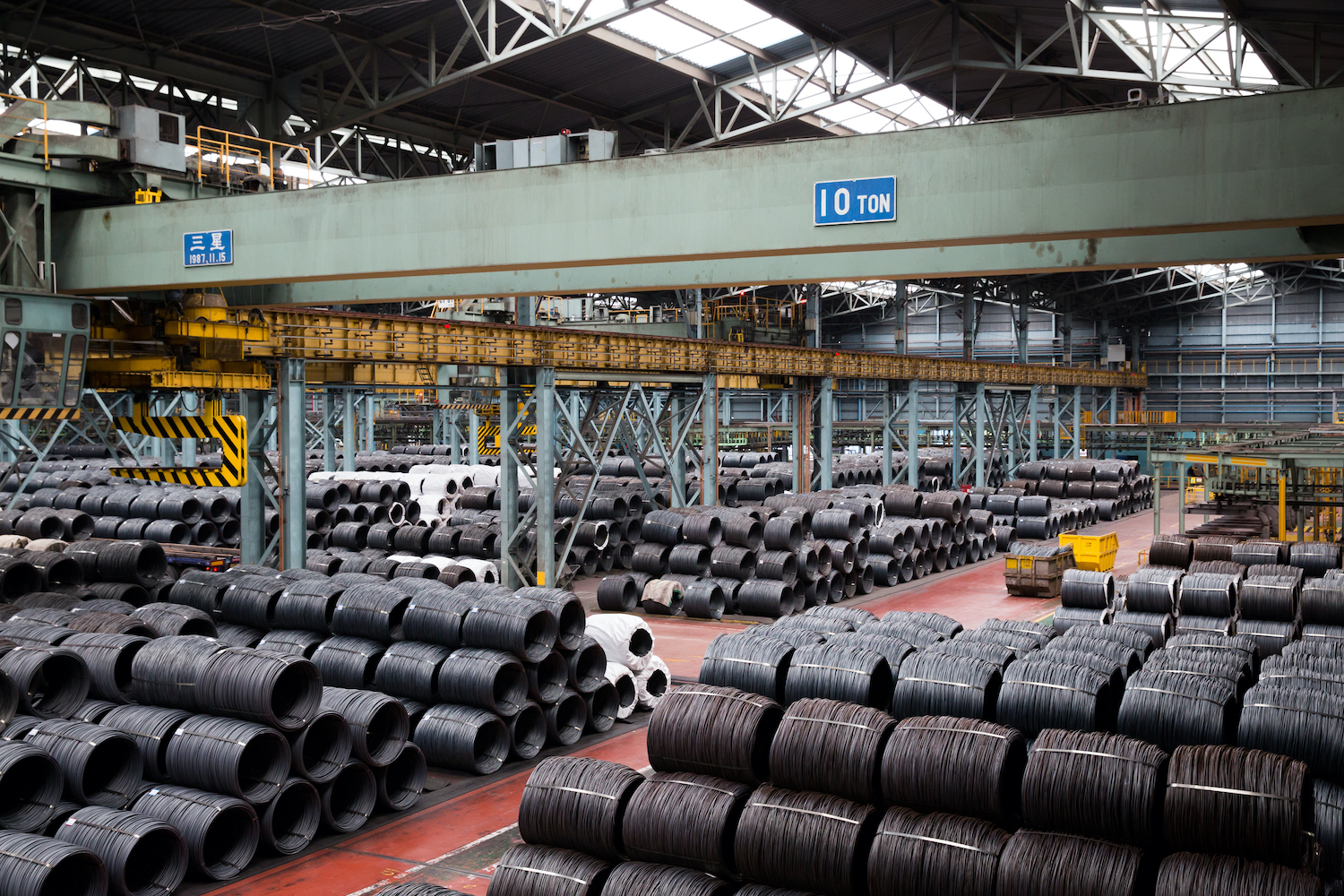
South Korea’s Posco to focus on ‘greening’ steel business after spin-off
South Korea’s Posco plans to focus on expanding and “greening” its steel business after it is spun off into a separate unlisted entity on March 1, 2022 that will be 100% owned by a new holding company, the steelmaker said in a recent presentation to investors.
The move will facilitate the steelmaker’s plan to raise its crude steel production capacity by almost 48% to 68 million mt/year in 2030 from 46 million mt/year in 2021 while furthering its “green” goals that would lower its annual carbon dioxide emissions to 71 million mt from 79 million mt over the same nine-year period, the company said.
Posco has recently given priority to new business such as hydrogen and batteries under “a steel-centered management system,” the company said in a statement Dec. 10 when its board approved the spin-off plan.
“From now on, the steel subsidiary will put aside its role as the group’s management and focus on their own innovative task of eco-friendly steel manufacturing,” Posco said in the statement. Shareholders are expected to vote electronically on the plan by Jan. 28, 2022.
As part of the expansion, two new electric arc furnaces will be built in 2025 and 2027, respectively, while research and development of hydrogen-based ironmaking is expected to result in the construction of a demonstration plant by 2028 that is projected to have a capacity of 1 million mt/year, requiring 100,000 mt/year of hydrogen.
Posco also aims to more than quadruple its overseas crude steel production capacity in nine years to 23.1 million mt/year from 5.1 million mt/year in 2021.
To support its expansion, the steelmaker will set up a base to increase its scrap purchases and take stakes in such overseas scrap suppliers, targeting about 4 million mt/year of scrap.
Overseas ventures
It will also invest in overseas hot briquetted iron plants, which includes investing in a HBI joint venture with Australian miners with about 2 million mt/year of HBI. Posco is working with iron ore supplier Roy Hill to research hydrogen production and develop hydrogen-based steelmaking processes. It also has a similar arrangement with Rio Tinto.
Posco’s aim to use green hydrogen to replace coal, estimating a need for 3.7 million mt/year of the gas. It plans also to become a major producer and supplier of hydrogen, making 5 million mt of green hydrogen by 2050.
Without disclosing details, Posco said it aims to build an integrated steel mill in India using eco-friendly infrastructure such as renewable energy and hydrogen, likely through its local subsidiary Posco Maharashtra Steel, which has 1.8 million mt/year of cold-rolled steel sheet production and 450,000 mt/year of hot-dip galvanized steel capacity.
It will eventually increase its production in Indonesia to about 10 million mt/year via Krakatau Posco, a 70:30 joint venture with Posco the majority stakeholder. The Indonesia JV operates an integrated steel mill at Cilegon in Banten province with a production capacity of 3 million mt/year. The JV plans to increase production to 6 million mt/year under a phase two project.
Posco has also formed a 50:50 JV with China’s HBIS Group to build a 900,000 mt/year plant at Tangshan in Hebei province. Construction will begin in January 2022 and completion is scheduled by the end of 2023.
In the US, Posco plans to form a partnership for an integrated electric arc furnace, aiming for partners with a lead in low-carbon materials and the US steel market. It also has plans to build an EAF with 1.5 million mt/year of crude steel production capacity in neighboring Mexico through a joint venture via its Posco Mexico subsidiary.
— Clement Choo


November EU new car sales down 20.5% on year: ACEA
New passenger car registrations in the EU in November were down 20.5% year on year to 713,346 units, the lowest total for the month since 1993 and the fifth consecutive month to see a year-on-year decline, the European Automobile Manufacturers Association (ACEA) said Dec. 17.
The volume was, however, 7.3% higher than in October and was at the highest level since July, the ACEA data showed.
Germany, the EU’s largest car market saw registrations fall 31.7% year on year to 198,258 units in November, which was 11% higher than October.
France, the second-largest market, saw sales fall 3.2% year on year to 121,994 units, which was up 2.9% from October.
Car sales in Italy dropped 24.6% year on year to 104,478 units, but climbed 3.4% month on month. The trend was the same in Spain, where 66,399 units were sold in November, down 12.3% year on year, but up 12.5% from October.
According to the data, only Bulgaria (plus 24%), Ireland (+22.9%) and Slovenia (+15.8%) showed higher year-on-year volumes of 24,134 units, 1,122 units and 4,126 units, respectively.
Over the first 11 months of 2021, new car registrations in the EU were 0.04% lower at 8.9 million units.
The ongoing semiconductor microchip shortage had dragged year-to-date sales performance into negative territory, despite 2020’s record low base for comparison, ACEA said.
Despite that, vehicle demand remained positive in three out of the four key EU markets over the 11-month period, namely Italy, which was up 8.6% to 1.4 million units, Spain up 3.8% to 773,396 units and France up 2.5% to 1.5 million units, although largest market Germany’s year-to-date dropped 8.1% year on year to 2.4 million units, the ACEA data showed.
— Jacqueline Holman
Odisha approves massive AMNS India steelmaking project
The Odisha state government has approved ArcelorMittal Nippon Steel (AMNS) India’s INR 1.02 lakh crore ($13 billion) investment into a 24 million tonnes/year capacity integrated steel plant in Kendrapara.
The plant, which will also produce up to 18.75m t/y of cement, will be completed in seven years in phases, and employ 16,000 workers. AMNS India will also develop a downstream industry park to promote micro, small and medium enterprises, and support import substitution, the office of Odisha chief minister Naveen Patnaik says in a note seen by Kallanish.
AMNS India also aims to increase production capacity at its existing Hariza plant to 15m t/y, from the existing 8.6mt. In comments to media last week, ArcelorMittal chief executive Aditya Mittal emphasised cost competitiveness efforts during the capacity expansions. “We must consistently strive for stable and cost-effective steelmaking operations,” he said. “Real progress has already been made here, with the commencement of mining operations in Odisha. Also, with the commissioning of a second pellet plant at Paradeep, and strong progress is being made with the debottlenecking project at Hazira.”
The executive stressed building a portfolio of value-added products for stronger financial returns and aims for AMNS India to be a leader in sustainable development.
“The significant, unforeseen disruptions of the past 20 months have not dented that ambition, nor materially hindered our progress. Our business is very strong, our focus on health and safety remains our priority,” the executive concluded.
Sayed Aameer India , Adam Smith Germany

German coil transports face huge impairments
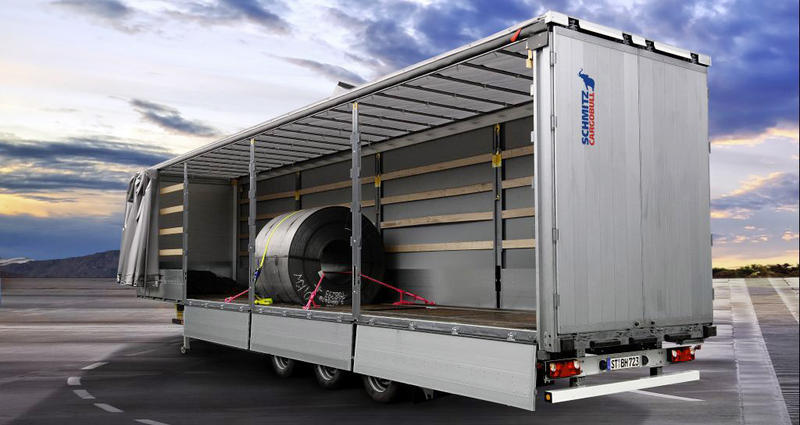
Transports of coil in western Germany are more-so-than-usual exposed to high prices, shortage of truck capacities, and blocked roads.
For one thing, this concerns delivery of imported material from Antwerp, by ship as well as by truck. A Ruhr-based buyer says he nowadays pays €20,000 ($22,660) for a typical inland ship load that not so long ago cost only €6,000. Road trucks are not the alternative they used to be, due to the shortage of drivers and capacities being seen in most European countries at present, he tells Kallanish.
Another issue, especially for border-crossing traffic, is the limitation to a maximum coil load of 24 tonnes. “Now, our coils normally weigh 26 tonnes,” he says. “For that, you need an extra permit, and not enough haulage companies in the Benelux have it.”
Another issue arose three weeks ago in southeastern North Rhine Westphalia when a bridge on the so-called “Sauerland” A45 motorway was blocked due to damage. “I have many customers in the Sauerland, but when I ask for four trucks now, the transport company will give me two and hold two back,” he says.
“A coil transport by truck from the Ruhr to the Sauerland costs about €100, and haulers have little interest in having their trucks spending time in endless traffic jams,” he said on Friday. “Only this morning I myself spent four hours on the way for a customer talk of 45 minutes.”
Christian Koehl Germany
Colakoglu cuts emissions, costs with new equipment
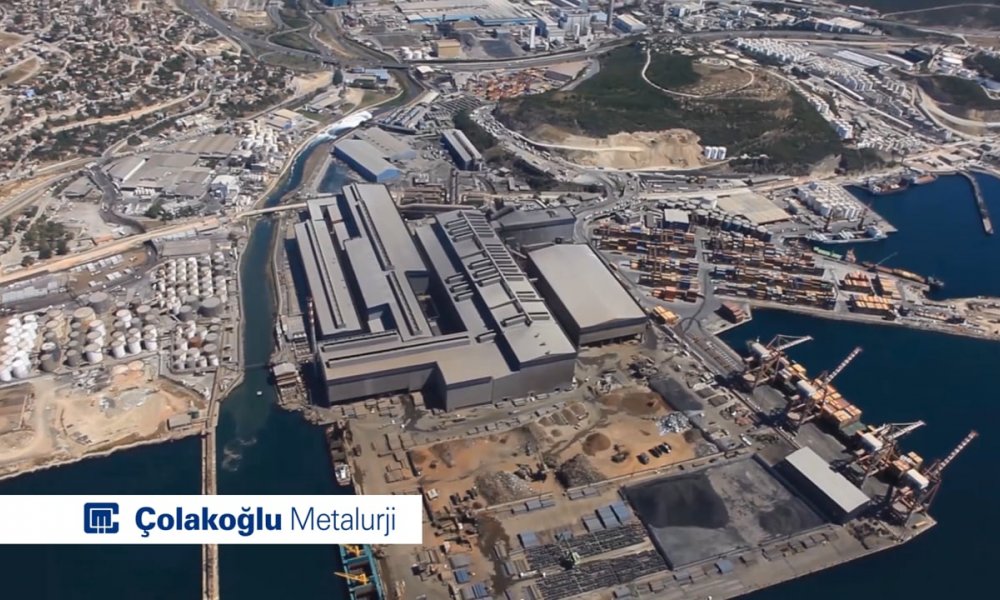
Turkey’s Colakoglu Metalurji is installing new Smart Steel Technologies’ SST Temperature AI software in order to achieve precision temperature control in melts, the company says.
The installation of the technology, which will be implemented live without interruption to the melting process, will enable savings on energy costs and reduction in CO2 emissions, while leading to increased stability of electric arc furnace operations, Kallanish notes.
As a result, the steelmaker will be able to minimise temperature fluctuations while lowering overall temperature of melts. Further cost savings will come through this process stabilisation, when the software is installed at the beginning of 2022.
“Thanks to the use of SST software, Colakoglu will be able to achieve maximum cost savings and take an indispensable step towards a digitalised, CO2-neutral future in steel production,” says Colakoglu chief executive Ugur Dalbeler.
German construction to work though backlog in 2022
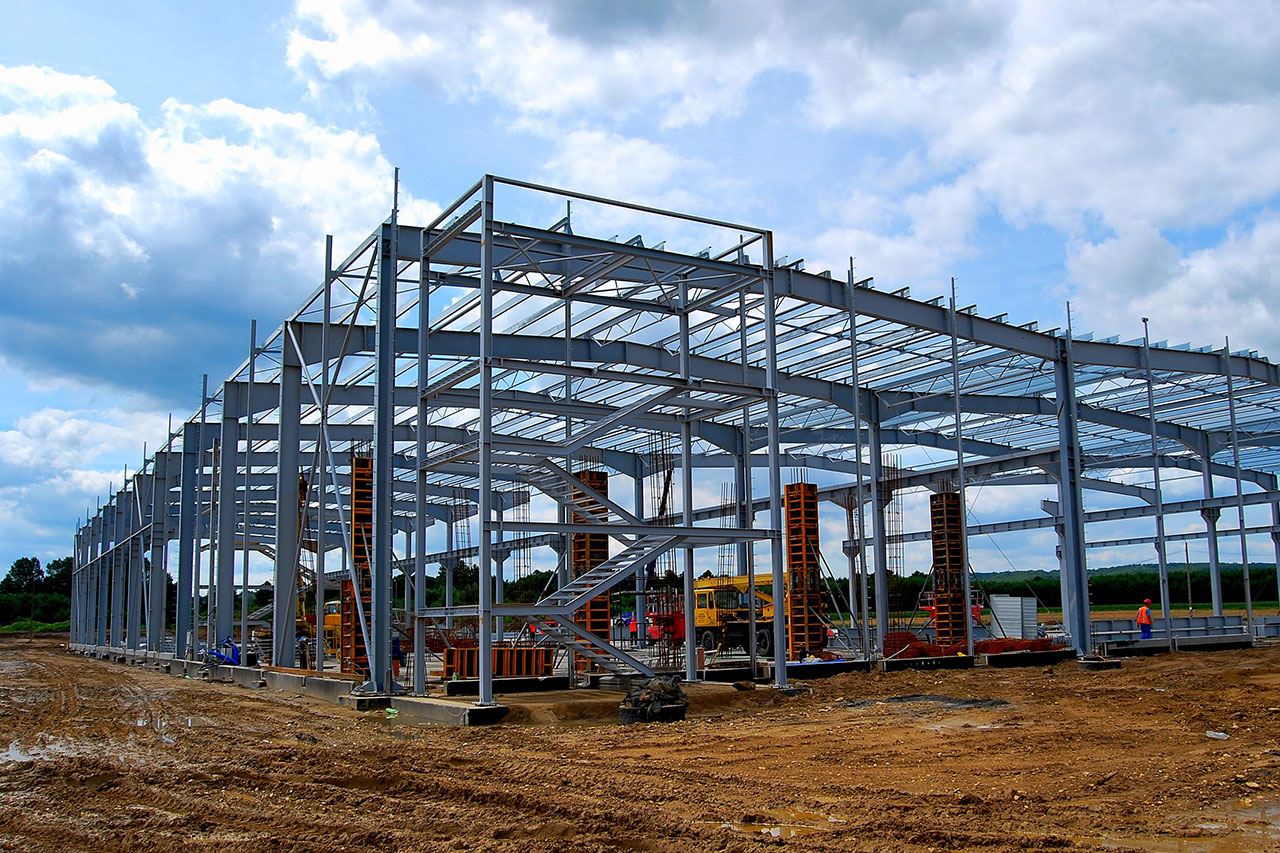
Germany’s construction industry expects an increase in activity and revenue by 5.5% next year versus 2021, Kallanish learned at last week’s joint annual conference of the industry’s main associations, HDB and ZDB.
In 2020, the first year earmarked by the coronavirus, the industry actually saw an increase in revenue from the €135 billion ($153 billion) achieved in 2019, to €143 billion. The latter is also the value forecast for 2021. While activity has remained sturdy despite the pandemic, many projects did not commence as planned, and will now likely be started in 2022.
One reason for this are bottlenecks in materials supply, and/or high prices, which typically delay projects. Steel was arguably the construction material that saw the largest price increase, which the federations put at 70% within one year.
To a certain extent, construction companies are now succeeding in passing this pressure on to the purchasing side of the market, the associations observed. As of September, prices for construction had risen by almost 6% compared to the previous year. This means that revenue in real terms – at a nominally flat value of €143 billion – suffered a decline of 6%.
The associations pointed out that their members will continue to enjoy high capacity utilisation, which has increased the willingness of companies to invest more heavily in new equipment than in other industrial sectors.
The respective presidents also emphasised that the high level of orders is mainly attributable to activity in residential construction, a consumer of mainly rebar. Commercial construction, with a larger share of sections, has been volatile. Until September, the willingness of industries to invest in new warehouses and production plants remained below the level of the previous year, they concluded.
Christian Koehl Germany

Spanish government grants Celsa €2.5m for sustainability projects
Spanish long products supplier Celsa Group says it has received €2.5 million ($2.83m) from the National Ministry of Industry, Trade and Tourism’s €54m fund for innovation and sustainability projects in the manufacturing industry.
The steelmaker will use the aid to accelerate its programme to promote the circular economy and reduce CO2 emissions, Kallanish learns from Celsa.
“The Group is reorganising its operational structure to promote strategic objectives by creating two new positions – chief circular officer (cco) and chief strategy & sustainability officer (csso),” Celsa explains. These will be held by Xavier Cabré and Juan Carlos Orozco Rodríguez respectively. The steelmaker’s main target remains to be “net positive” by 2040.
Celsa is still awaiting approval to access the Spanish government Covid-19 crisis rescue fund (Sepi), to help maintain its solvency. The estimated amount requested is almost €700m, according to media reports.
Todor Kirkov Bulgaria

European Commission approves Derichebourg acquisition of Ecore
The European Commission (EC) has given the go-ahead for the acquisition of French metal recycling group Ecore by scrap French market leader Derichebourg on the condition the latter divests assets, Kallansh learns from the company.
“Derichebourg is the leading metal scrap recycler in France and directly competes with Group Ecore on the collection and recycling of metal scrap in several regions in France,” European Commission competition policy vice president Margrethe Vestager says in a note. “Together, they would have had a strong position in these markets and the acquisition would have eliminated an important alternative for customers and suppliers. We approved the acquisition of Group Ecore thanks to comprehensive divestments that will ensure that competition remains vibrant in the French recycling market.”
For the merger to be successful, Derichebourg offered the EC competition office to divest four plants in France and four collection sites. It also proposed up to five additional collection sites in France in the same area of the divested plants. This will contribute to the supply of metal scrap to shredders, the EC explains. It adds that the company will provide access to all assets and services required to operate the divested facility competitively and independently from Derichebourg.
Thanks to these commitments, the Commission says the merger no longer implies competition issues.
Derichebourg had a turnover of €3.6 billion ($4 billion) for its 2021 financial year. In 2020, Ecore posted a turnover of €880 million – it employs 1,323 workers and recycles 2.8 million tonnes of metal waste.
Natalia Capra France

US Steel sees ‘steel super cycle’ continuing
Despite a seasonal slowdown in end-of-year order activity, US Steel is bullish going into 2022, believing that the current “steel industry super cycle will continue,” Kallanish reports.
In its fourth quarter earnings guidance, president and ceo David Burritt said that “2022 should be another great year for US Steel with robust free cash flow, continued ample liquidity to fund strategic investments, and additional opportunities to enhance our capital allocation priorities. US Steel’s future is bright, and I can confidently say our best days are ahead.”
The Pittsburgh-based company says its fixed price contracts are “resetting significantly higher” for next year, which it says will allow it better earnings stability when compared to competitors with more exposure to the spot market.
The steelmaker’s flat rolled segment is benefiting from higher selling prices and is expected to post Q4 adjusted Ebitda nearing $1 billion. In Q3, the segment had earnings just over $1 billion.
The company notes lower volumes in its Big River Steel mini mill segment, saying “cautious seasonal buying” is being offset by lower metallics usage. Similar margins are expected to the $424 million posted in Q3.
The Q4 performance of US Steel’s European segment is expected to be lower than that of the $394m posted in the prior quarter, with lower steel prices and unfavourable exchange rates impacting the division. The Košice mill in Slovakia recently initiated a planned outage of its #1 mill which will continue into January.
Within the tubular segment, higher steel prices are contributing to improving Ebitda, and the company expects its tubular operations to “become a more meaningful contributor to Ebitda in 2022.”
Site selection for the company’s planned $3 billion investment in an EAF minimill is ongoing, Kallanish notes.
Laura Miller USA
European Commission initiated a new review regarding imports of steel products
European Commission on date of 17 December 2021 has initiated a new review regarding Safeguard Measure on Imports of certain Steel Products.