


European hot-rolled coil remains in wait-and-see mode
The European hot-rolled coil market was quiet Dec. 3, entering a wait-and-see mode amid high stocks, sources told S&P Global Platts.
“The market is very quiet,” a Benelux steel service center source said. “Stocks are high, if not very high. No appetite to place orders must make mills nervous.”
Mills were still offering additional volumes in the market, but most buyers are not willing to buy unless on a back-to-back basis.
“Most SSC and stockholders are working toward end of year, so they don’t buy now,” another Benelux buyer said.
Sources have been more optimistic in recent days with chatter that the German auto industry would be strengthening, having received more semiconductors for Q1, and Northwest European mills were heard mulling exporting more into the US, which could support domestic price levels as it would tighten supply in Europe.
Also, higher energy and logistics costs will need to be passed on across the supply chain in the coming year.
Market participants were also observing potential changes in China because of production curbs, which could set a trend for international steel prices.
However, the HRC spot market remained at an impasse, with sources reporting one Western European tier-2 mill offering Eur920/mt EXW, though sources said that was not reflective of the current market level, which was in the Eur950-975/mt EXW Ruhr range Dec 3.
Imports remained difficult to work with as ports in Italy and Antwerp in Belgium were full. Importers were dealing with delays in getting material processed and lack of warehousing facilities around the ports, while vessels were waiting days to unload at times.
— Laura Varriale


US-EU-Stahlhandelsabkommen: Kein Booster für EU-Stahlexporte
Die USA und die EU haben sich Ende Oktober auf ein Stahlhandelsabkommen geeignet. Die Neuregelung löst ab Januar 2022 die seit 2018 für Stahlexporte aus der EU in die USA geltenden „Section 232“- Maßnahmen ab. Für die Stahlindustrie der EU ergeben sich zweifellos Verbesserungen. Erwartungen an eine deutliche Exportsteigerung oder gar an einen kurzfristigen Exportboost, der am EU-Markt für neue Knappheiten sorgen könnte, sind aber übertrieben. Grund dafür sind nicht nur die Detailregelungen des Abkommens, sondern auch die aktuell schon erreichten Exportmengen und allgemeine Trends im Stahlaußenhandel der EU.
Was wurde vereinbart?
Seit 2018 galt für EU-Stahlexporte in die USA ab der ersten Tonne ein Importzoll in Höhe von 25%, von dem US-Importeure allerdings im Rahmen einer zu beantragenden Ausnahmegenehmigung befreit werden konnten. Ab dem 1. Januar 2022 tritt stattdessen ein „Tarif-Quota-System“ in Kraft, nach dem insgesamt 3,5 Mio. Tonnen pro Jahr zollfrei geliefert werden können. Sobald diese Menge überschritten wird, ist weiterhin ein Zoll von 25% fällig. Das zollfrei gestellte Volumen entspricht den mittleren Liefermengen der Jahre 2015 bis 2017. Die Gesamtmenge wird entsprechend dieser historischen Lieferungen auf die einzelnen EU-Mitglieder und auf 54 einbezogene Stahlerzeugnisse verteilt. Die Jahresmenge wird auf einzelne Quartale aufgeteilt, wobei nicht genutzte Mengen in Grenzen auf Folgequartale verschoben werden können. Zusätzlich wurde festgelegt, dass unter dem alten Regime erteilte Ausnahmegenehmigungen bis Ende 2023 weiter gelten. Das davon betroffene EU-Liefervolumen wird auf 1,1 Mio. Tonnen beziffert.
Welche Folgen sind zu erwarten?
Einige EU-Werke kommunizieren ebenso wie manche Experten, dass das Abkommen zu einer deutlichen Exportsteigerung aus der EU in die USA führen werde. Dieser Materialabfluss könne zu einer neuerlichen Angebotsverengung in der EU führen. Dies wird teilweise sogar zur Begründung von für das 1. Quartal 2022 angestrebten Preiserhöhungen herangezogen.
Auch wenn 3,5 Mio. Tonnen auf den ersten Blick nach einer hohen Zahl klingt, muss diese Menge richtig eingeordnet werden. Dafür ist es wichtig, dass nur ca. 75 bis 80% der Tonnage auf klassische Walzstahlerzeugnisse entfällt. Der Rest umfasst vor allem Stahlrohre, aber auch Halbzeuge und legierte Stähle. Zum zweiten ist der europäische Export in die USA nach der Verhängung der Zölle im Jahr 2018 keinesfalls komplett eingebrochen. Die Lieferungen beruhen vielfach auf etablierten Produktionsnetzwerken oder betreffen laufende Projekte und wurden daher oft fortgeführt – entweder unter Inkaufnahme der Zölle oder durch Ausnahmeregelungen zollbefreit. Zudem bietet der US-Markt gerade im Jahr 2021 erhebliche Preisvorteile, der schon in den vergangenen Monaten zu einem deutlichen Ausfuhranstieg geführt hat.
Der europäische Export wird im kommenden Jahr nicht von Null auf Hundert starten, sondern geht von einem bereits beachtlichen Ausgangsniveau aus. Nach annualisierten Exportzahlen erreichen die Walzstahl-Exporte in die USA in diesem Jahr bereits gut 2/3 des Volumens der Jahre 2015 bis 2017, wobei die Lücke zwischen den aktuellen und den „historischen“ Liefermengen bei Flachprodukten kleiner ist als bei Langprodukten. Bei einigen Erzeugnissen wie zum Beispiel bei Weißblech liegen die aktuellen Mengen sogar schon über dem Referenzniveau. Auf Basis der aktuellen Liefermengen ergibt sich zur Exportsteigerung in die USA rechnerisch ein Potenzial von ca. 500.000 Tonnen bei Langprodukten und von gut 600.000 Tonnen bei Flachprodukten. Dies sind ca. 0,6% der EU-Walzstahlerzeugung.
Schaut man die US-Importe aus Deutschland an, so lagen die mit Stand September annualisierten Mengen des Jahres 2021 um ca. 370.000 Tonnen unter der ab dem kommenden Jahr zollfrei importierbaren Menge. Davon entfallen 153.000 Tonnen auf Flachprodukte, 107.000 Tonnen auf Langprodukte und 98.000 Tonnen auf Rohre. Bezogen auf den Abstand zu früher erreichten Exportmengen besteht bei Rohren, auf die vor Inkrafttreten der US-Zölle ein beträchtlicher Teil der deutschen Exporte entfiel, eindeutig das größte Potenzial, während die Flachstahlexporte bereits ca. ¾ des Ausgangsniveaus erreicht haben.
Zwar ist nicht feststellbar, welcher Teil der aktuellen Lieferungen derzeit mit Zöllen belegt ist und somit direkt von der Neuregelung profitiert. Dennoch legen die Zahlen den Schluss nahe, dass kein allzu großer Mengeneffekt auf den hiesigen Markt zu erwarten ist.
Aufgrund der quartalsweisen Zuteilung der zollfreien Mengen müssen die Lieferungen gleichmäßig über das Jahr verteilt werden. Ein sehr starker Anstieg zum Jahresbeginn 2022 ist daher ausgeschlossen. Wie sich die EU-Exporte in die USA im späteren Jahresverlauf entwickeln werden, ist kaum vorherzusehen. Dies hängt nicht nur davon ab, in welchem Maße neue Kundenkreise erschlossen werden können. Auch ist zum Beispiel offen, wie lange am US-Markt noch deutlich höhere Preise als im Rest der Welt erzielt werden können und wie sich die Nachfrage in der amerikanischen Automobilindustrie vor dem Hintergrund des Halbleitermangels entwickeln wird.
Nicht nur auf die USA schauen
Auch wenn die USA zweifellos ein sehr wichtiger Exportmarkt für europäische Hersteller sind, ist es ohnehin nicht sinnvoll, die Ausfuhren in diesen Markt isoliert zu betrachten. Für die Versorgungswirkungen am EU-Markt ist vielmehr der gesamte Handel mit Drittstaaten, also das Saldo aus Importen und Exporten, relevant. Und hier zeigen die Zahlen ein Bild, in dem potenziell steigende Exporte in die USA nur noch zu einer Randnotiz werden: Zwischen 2017 und 2021 hat sich die Stahlhandelsbilanz der EU netto um mehr als 10 Mio. Tonnen verschlechtert, wovon alleine 6,5 Mio. Tonnen auf Flachprodukte entfallen.
Das neue Abkommen wird zwar dem ein oder anderen EU-Hersteller zu höheren Gewinnen verhelfen, die Lage am europäischen Stahlmarkt aber nicht grundlegend ändern.
Der Beitrag stammt vom Leverkusener Stahlmarkt-Berater Andreas Schneider, StahlmarktConsult.
Der Gastkommentar spiegelt die Meinung des Autors wider, nicht notwendigerweise die der Redaktion von marketSTEEL.
03.12.2021


EUROMETAL General Assembly 2021 was organized online from Madrid
The EUROMETAL 2021 General Assembly was organized online via Zoom on December 2, 2021.
The stream of the meeting was broadcast from Unesid’s premises in Madrid, where the President of EUROMETAL, the General Director and 5 members of the Presidency were physically present.
All the other members of the presidency participated online, except one who was represented by proxy.


Europe HRC steel spread edges down in Nov on further steel price declines
The European hot-rolled coil steel to raw materials price spread fell 0.6% in November on a continued weakening in spot steel prices and weaker iron ore and coking coal costs, according to an analysis by S&P Global Platts Dec. 1.
Spot HRC prices continued to drop after earlier record levels, while ferrous scrap costs rose last month. Iron ore and coking coal inputs retraced from recent highs, pushing down the overall cost of pig iron produced in the Europe to the lowest since January, based on major steel feedstock cost references.
The Northwest European HRC-steel raw materials spot spread fell to Eur669.35/mt ($763/mt) in November, from Eur673.54/mt in October. The spread hit a record above Eur795/mt in August, according to Platts calculations.
As the spread continued to decline since August, stronger-than-average steel prices and logistical disruptions have kept indicative available margins well above typical steel industry conditions, as tracked by Platts.
In the third quarter, the European HRC spot spread averaged at a record Eur771/mt, up from Eur695/mt in Q2, on the back of higher steel prices.
Price declines for HRC in the spot market slowed down in November. On Nov. 30, HRC was assessed at Eur967.50/mt ex-works Ruhr.
Platts Northwest European HRC prices averaged Eur995.95/mt ex-works Ruhr in November, down 3.7% from October, while prices fell 6.2% in the previous month. Monthly average pricing hit a record high of Eur1,172.64/mt ex-works in July, according to Platts assessments.
Spot prices for commodity-grade HRC are not fully reflected in sales and deliveries by steelmakers due to earlier negotiated pricing terms, and long-term contracts.
Iron ore costs
Iron ore import prices in China, used as a benchmark for global contracts, fell sharply in November as China reined in pig iron production. Prices averaged $94.97/dry mt CFR China for Platts IODEX 62% Fe fines, down 22% from October.
Spot lump ore premiums in China fell back to 14.7 cents/dmtu, or around $9.19/dmt, last month from 19.22 cents/dmtu in October.
Atlantic blast furnace contract pellet premiums were stable month on month in November at $55.50/dmt, as assessed by Platts, tracking contract premiums agreed for the quarter. Premiums fell from Q3, when Platts assessed premiums averaged $76.66/dmt.
The basket of iron ore fines, lump and high-grade product prices fell, while scrap costs delivered in Northwest Europe rose in November.
Coking coal prices on a delivered net forward basis into Rotterdam fell 10% to $388.52/mt CFR Rotterdam in November, from October’s record levels.
Premium low-vol coking coal prices net forward to Rotterdam had more than tripled since April, while tight global spot supplies from the US, Canada and Australia continued to support market pricing referenced under contracts.
Regional northern European shredded scrap prices rebounded to Eur410/mt delivered basis in November, the highest in three months and 7.9% up from October.
China, US spreads
In China, the spread between HRC export prices and imported iron ore and coking coal costs weakened slightly to $341.39/mt in November, from $349.43/mt in October
China HRC spreads are still above levels in Q1 2021 and through 2020, which were below $300/mt.
Chinese HRC export and domestic prices fell in November, while major raw materials costs dropped by a similar margin.
US HRC to Midwest shredded scrap spreads fell further to $1,353.99/st in November, from $1,509.40/st in October. Weaker US flat steel prices continued to push the metric lower, from earlier record highs.
Platts Europe HRC to raw material price spreads are indicative operating margins that do not account for inland logistical costs, power, natural gas or other blast furnace and steel-making inputs such as ferroalloys, anodes and refractories. Costs to operate sintering and coke plants are not included.
There may be further upward pressure on typical operating break-even levels at regional blast furnace mills due to higher energy, carbon permits and logistics costs.
An HRC-raw material spread of Eur250/mt is close to operating breakeven for commodity grade steel, based on operating facilities at higher capacity utilization, according to steel industry sources.
Reference break-even costs may be rising from pre-pandemic norms, as plant operating and maintenance schedules were disrupted over the pandemic, and due to volatility in production rates. In 2019, the Northwest Europe HRC spread averaged Eur241/mt.
Break-even levels in Europe are partly dependent on the mix of logistics costs and raw material configurations.
Platts European HRC spreads are based on commodity-grade flat steel specifications. Contract steel sales may have additional grade and specification-based premiums, and terms may lag spot indexes.
Producers with higher grade steel portfolios may be less exposed to commodity-grade steel margins against underlying steel raw materials costs.
— Hector Forster

European Commission to monitor CBAM downstream price impact
The EU’s prospective carbon border adjustment mechanism (CBAM) will increase prices of imported products but should not have a huge impact on prices downstream, says Yiannis Zachariadis, policy officer at the European Commission’s Directorate-General for Taxation and the Customs Union (DG Taxud).
“We didn’t find evidence that CBAM would in fact trigger a carbon leakage in downstream sectors,” he said during this week’s Euranimi online conference attended by Kallanish. “That of course is on the basis of the analysis that we made and on the basis of carbon prices as they stand at the moment.”
However, DG Taxud will monitor the steel market in the future should carbon prices increase considerably, also causing downstream product values to hike. The authority is beginning to consider how to address “the proportion of CBAM products in the downstream products”, Zachariadis added.
“We are not in an anti-dumping situation when we apply a major [tariff] in 15 months,” commented DG Taxud policy officer Roberto de Micco. “We apply a major in 15 years. In 15 years, everything will be different, so whatever evaluation of today’s impact of CBAM on prices is unreliable because it compares export prices with domestic prices, and export prices will be different in 15 years because everyone is increasing their prices due to carbon constraints. That is what the Paris Agreement wants and it is what we asked third country partners at COP26.”
CBAM is designed as a behavioural instrument to push third countries to also apply a carbon price in their own domestic markets. The Turkish and Russian governments are already considering applying a carbon tax. The price of steel products will anyway go up globally amid decarbonisation, De Micco said. “CBAM is helping but the process that is pushing the carbon price up is a climatic process,” he concluded.
Natalia Capra France

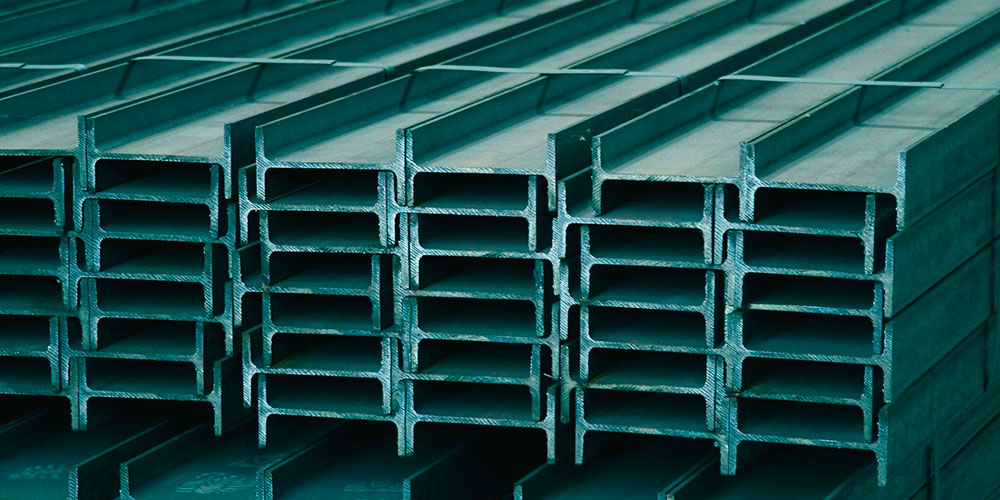
CBAM starts in 2023, incentivises third countries: official
The EU’s carbon border adjustment mechanism (CBAM) will start to be gradually implemented from 2023, says Pasquale de Micco, policy officer at the European Commission’s Directorate-General for Taxation and the Customs Union (DG Taxud).
In the European parliament, a final position from the international trade committee (INTA) and all amendment votes are expected by February 2022. The leading committee for environmental issues, ENVI, should also adopt its position by May, while the plenary will finalise its position in June. “If everything works well as we are working very fast on this new instrument [CBAM], you can expect it to be approved next year.” de Micco said during this week’s Euranimi online conference attended by Kallanish.
CBAM is being introduced gradually with a prudent and slow approach to allow businesses that are subjected to the measure to adjust. Starting from 2023, there will be a phase of three years when the measure will only require importers to report their emissions and carbon prices in their own countries. No financial engagement is required during these three years. At the end of this period, a review of the data collected over the first three years will be implemented. From 2026 onwards, CBAM will be phased in at 10% per year until fully applied after 2036.
“CBAM’s only aim is a climatic aim,” De Micco said. “It is not a trade policy instrument. It has nothing to do with anti-dumping, anti-subsidy and safeguard measures; otherwise, it would have been in the hands of [EU trade defence body] DG Trade. The instrument is just a specific extension abroad of the full international relevant [climatic] rules.”
Countries that are excluded from CBAM such as Norway and Switzerland already pay the same carbon pricing as Europe on their own products, he added.
“As much as the European climate ambition increases, the gap with third countries increases as well, so we risk having higher levels of carbon leakage, which means European companies’ delocalisation abroad or higher imports of carbon-intensive products. CBAM has several flexibilities that take into account the decarbonising actions in third countries … The instrument is automatically adapted to the third countries’ engagement in decarbonisation,” De Micco explained.
The aim of CBAM is to prevent carbon leakage while also incentivising third countries’ producers to reduce their emissions and adopt a green policy frame, he added.
The CBAM design mirrors EU carbon pricing. It complies with the WTO, focusing on carbon-intensive sectors and complementing the EU emission trading system. The main rules are equal carbon prices and no double pricing. As EU businesses pay a carbon price on their production, the European Commission requires third countries’ producers to also pay the same price when exporting their products into the EU according to article 3.4. This creates a level playing field.
No double pricing means that if a non-EU producer can show that they already paid a carbon price on their imported goods, this will be automatically deducted at the moment of import.
Natalia Capra France

Russel closes on Boyd Metals acquisition
Service centre group Russel Metals has closed on its acquisition of the US-based Boyd Metals group of companies, Kallanish reports.
The $110 million deal adds to Russel’s portfolio five Boyd facilities in Arkansas, Missouri, Oklahoma, and Texas, which process carbon, stainless, aluminium, red metal, and tubular products. Russel is based in Mississauga, Canada.
“We are excited to have the Boyd business as part of our operating platform as we welcome Tom Kennon, Brian Newman and all of the Boyd employees to the Russel Metals family,” notes Russel president and ceo John Reid.
Laura Miller USA
New UK EAF steelworks to export ‘green’ steel
Ardersier Port Authority (AP) plans to build a £300 million ($400m) electric arc furnace-based ‘green’ steel plant powered by offshore wind and energy from waste by 2027. It will utilise 1 million tonnes/year of domestic scrap, some of which will be generated by the onsite oil rig decommissioning facility.
This would make the plant the UK’s first greenfield steelworks since the Sheerness Steelworks, on the Isle of Sheppey, Sheerness, was commissioned by owners Co-Steel in 1972, AP points out.
“The energy transition from offshore structures to floating wind has an important missing factor: steel,” Ardersier Port owner Tony O’Sullivan says in a note seen by Kallanish. “Today, the UK exports ten million tonnes of scrap steel annually. By building a new renewable-powered electric arc furnace at Ardersier Port, the first new-build steel mill in the UK for 50 years, we will utilise a million tonnes of scrap each year. This will produce reinforcement steel for the UK construction industry, of which there is currently a shortfall, allow for the onsite construction of floating wind platforms, and enable us to export green steel to global markets.”
Scotland-based Ardersier Port’s new owners plan to turn it into Europe’s first fully circular “Energy Transition Facility”. The site used to be one of the largest oil rig fabrication yards in the world. Now, the owners are about to begin a £20m, nine-month ‘capital dredge’, to remove 2.5 million cubic metres of sand to open up the port once more.
Besides the steelworks, the site will include an oil rig decommissioning facility, waste from energy recovery facility, a concrete production plant, and a dedicated floating wind hub for concrete floating wind foundation manufacturing.
The steel plant will be the only place in the world where the scrap from decommissioning is processed into steel. AP expects to recover over 100,000 t/y of steel scrap from the decommissioning of ageing oil and gas industry assets.
AP has an agreement with BW Ideol to give it exclusive access to the port for the manufacture of floating wind foundations. “In comparison to steel foundations, floating wind offers a unique opportunity to combine both price competitiveness and local manufacturing, thanks to BW Ideol’s unique concrete floater solution,” says BW Ideol chief executive Paul de la Gueriviere.
SSAB to supply plate for US Navy ships
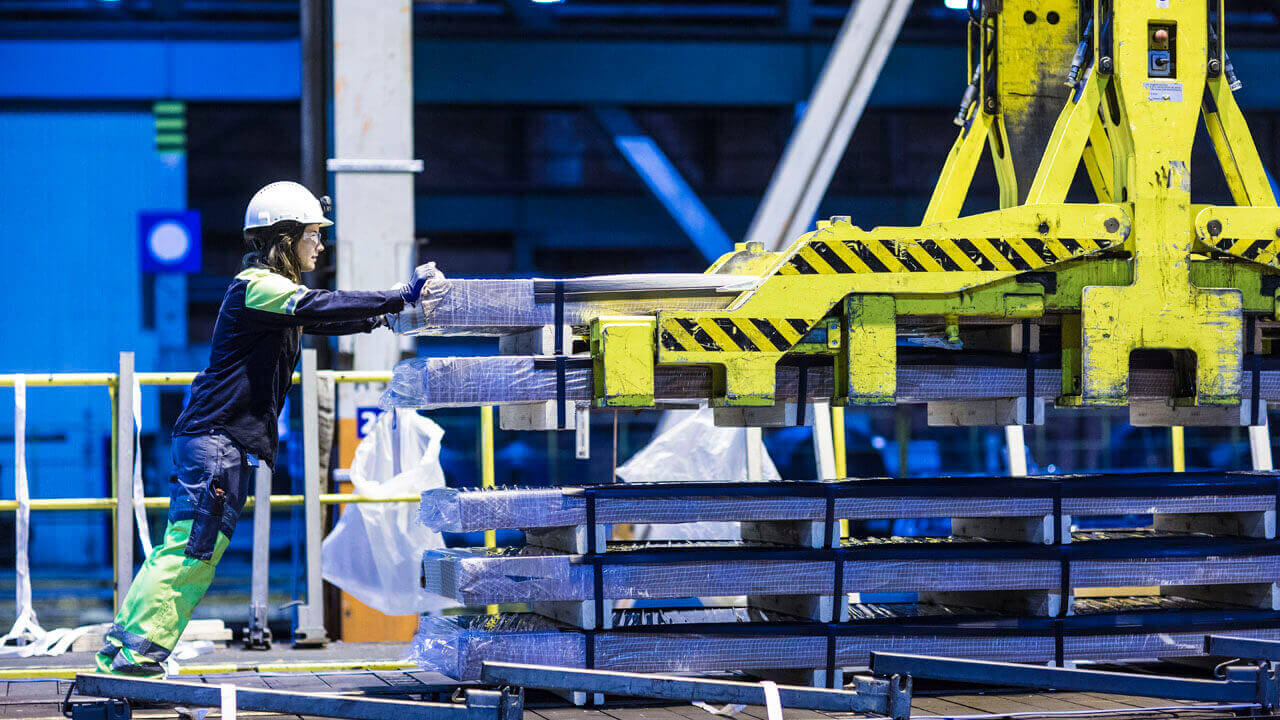
SSAB Americas has bagged a contract to supply steel plate to Austal USA for use in the construction of US Navy ships.
SSAB’s plate in various strengths and sizes will be used for the construction of steel-hulled towing, salvage, rescue and potentially combat ships, Kallanish understands.
Austal USA was awarded a $145 million construction contract from the US Navy in October – the company’s first new steel ship construction project.
Both SSAB and Austal USA have manufacturing locations in Mobile, Alabama.
Austal’s $100m steel manufacturing facility in Mobile is expected to begin cutting steel in April 2022. Ground was broken on the project in March 2020.
“SSAB not only provides us with quality steel, but also great flexibility due to its location adjacent to us here in Mobile,” says Austal USA president Rusty Murdaugh.
“Our participation in such an important and vital project, that will strengthen both the economic and national security of our country, makes this partnership even more meaningful,” comments SSAB Americas senior vp and coo Jeff Moskaluk.
Laura Miller USA

US details EU quotas; Netherlands, Germany big winners
The US Department of Commerce’s Bureau of Industry and Security (BIS) has published detailed tariff-free quotas for European steel applicable from 2022. This is part of the new bilateral agreement between the US and EU regarding Section 232 measures.
As anticipated, overall, European mills will have the possibility to sell into the US 3.3 million tonne/year of steel goods without having to pay tariffs linked to S232 measures. The quotas have been assigned on a country-specific level under more than 50 different sub-categories for specific products, on the base of historical export levels.
In addition to these volumes, suppliers will continue to be able to sell the products previously exempted from the measures, Kallanish notes.
In the rebar segment, for example, Portugal, Spain and Italy have been allocated the majority of quotas, being historically the most active European exporters of such products to the US.
In the flat products and coil sector, on the other hand, the Netherlands and Germany were assigned the largest share of quotas.
The largest quota assignment for a specific country and product has been for tinplate produced in the Netherlands – over 195,000 t/y of quotas – followed closely by German-origin tinplate with over 121,000 t/y.
Emanuele Norsa Italy