

Unfavourable market conditions impact Gestamp revenue
Spain’s Gestamp saw its performance decline year-on-year in the third quarter due to the setback suffered by the international automotive market as a result of the microchip supply crisis, the company says in its latest report monitored by Kallanish. Gestamp is a major supplier of components to the global automotive sector. Nine-month revenue, however, remained high.
“We remain committed to our objectives for 2021 and we have once again demonstrated our ability to grow above the market, even in a challenging and volatile context such as the current one that we are facing”, Gestamp`s executive director Francisco Riberas says. “We will continue to focus on preserving profitability, free cash flow generation and further net debt reduction,” he adds.
Gestamp’s January-September net revenue amounted to €6.01 billion ($7.03 billion), up 15.6% on-year.
In Q3 alone, net revenue was €1.80 billion, down 11.3% y-o-y. The form total, body-in-white and chassis segments together represented €1.48 billion.
Revenue from Western Europe reached €644.7 million, 22.3% less y-o-y. This region registered a decline in volumes y-o-y due to the microchip shortage impact. As a result, production decreased by 29.6% versus Q3 2020. The drop has been well spread across the region, with Germany, the United Kingdom and France having the strongest falls, while Morocco has been the only country in the region to see positive growth in the quarter.
Eastern Europe revenue in Q3 increased by €300,000 to €296.2m, while in Asia it fell 1.6% to €267.4m.
Gestamp saw its activities in the Americas also decrease. In North America, revenue dropped by €39.3m to €474m, while earnings from the South American market were down by €7.1m to €120.8m.
The company’s Q3 Ebitda was €202.5m, 17.1% less y-o-y, while nine-month earnings reached €700.7m or 52.3% more over the same period in 2020.
Todor Kirkov Bulgaria

Salzgitter exceeds market expectations despite supply chain disruptions
Germany’s Salzgitter AG has maintained its strong performance through the third quarter and confirms the guidance it lifted again in September (see Kallanish 8 September).
According to preliminary figures it gives in a release seen by Kallanish, the group generated a pre-tax profit of €604.5 million ($701.6m) in the first nine months, thereby outperforming current market expectations. All segments lifted their results in comparison with the previous quarter. The main drivers were once again the Strip Steel and Trading business units, it says.
External revenues rose to €7 billion, compared with €5.3 billion in the first three quarters of 2020. It mentions that supply chain disruptions and their repercussions have been impacting some units since the end of the summer quarter. Still, it reaffirms its guidance of an increase in revenues to more than €9 billion and a pre-tax profit of between € 600-700m.
Christian Koehl Germany
Italian steelmaker Arvedi working to use more scrap less metallics
Italian flat steel producer Acciaieria Arvedi plans to adapt its processes to use more ferrous scrap and cut down use of imported pig iron and hot-briquetted iron (HBI), as steel industry executives warned greater global demand for scrap and metallics to cut emissions may impact tradeflows.
Arvedi operates two electric arc furnaces (EAF) and wants to use more scrap to reduce carbon emissions further and benefit from recycling local supplies, Maurizio Calcinoni, vice president of Arvedi, said at an Association for Iron and Steel Technology webinar on Oct. 28.
Cremona-based Arvedi uses around 2.4 million mt/year of scrap, mostly sourced from Italy and Europe, with 600,000-700,000 mt of pig iron and 400,000-500,000 mt of HBI a year. The company is working with scrap suppliers, to monitor received qualities, and working with new shredding processes to help clean the scrap for use.
Italy is a major scrap-based steel producer, accounting for 17-19 million mt of scrap demand, and importing around 4 million mt of scrap, as well as around 1 million mt of pig iron and around 700,000 mt of HBI, he said.
Arvedi has 20-25 years of experience using scrap and has been paying close attention on the mix of grades, and on how to improve scrap quality as well as reducing residuals in the scrap, he said. Arvedi is closely monitoring copper content in scrap, and the mix of scrap and metallics with the steel grade being produced, along with electricity consumption, slag volume and tap-to-tap operating metrics.
Calcinoni expects the European and global steel industry to place a greater attention on the overall qualities and impurities in scrap, along with origins and grades required to maximize benefits and cut down on emissions from processes and transportation.
Pig iron and HBI have higher associated carbon emissions compared with scrap, and reducing use of the metallics, which help compensate for scrap qualities, can bring down emissions.
With the energy transition and move to use more scrap in new EAFs and through the blast furnace- basic oxygen furnace process, there may be a greater depending on national and regional scrap supplies, he said.
Scrap tradeflows and export volumes could be impacted by changes in consumption, reducing volumes available and leading to higher prices for EAF-focused steel markets such as Turkey and the US, which import scrap from the EU and the UK.
Scrap demand is set to grow with climate targets and steel industry plans to use more scrap and reduce carbon may have a bigger impact on EAF mill operations and sustainability plans, said Sara Hornby, president of Global Strategic Solutions at the AIST webinar.
She said a global ferrous scrap rating system will be difficult to implement and gain consensus. Scrap markets have different grades and classifications in national and regional markets.
While using DRI and HBI cuts carbon emissions compared with typical blast furnace emissions, carbon is necessary for the EAF process, she said. Carbon adds to energy used by EAFs melting scrap and metallics, improving yields and improving operating conditions, Hornby added.
Supply and demand for scrap is set to change with decarbonization targets, on a local and regional level, the Materials Processing Institute’s CEO Chris McDonald told the AIST event. McDonald cited scenarios modelled by Cambridge University on steel and scrap flows and availability. The changes imply a shift from blast furnaces to EAF steelmaking over time, and little need for an expansion in iron ore-based steelmaking. Less reliance on iron ore imports may lead to a reduction in globally exported scrap.
— Hector Forster

US, EU reach deal to replace Section 232 tariffs with tariff-rate quota
The US and EU have reached an agreement to replace the former’s Section 232 tariffs on steel and aluminum with a tariff-rate quota on metals imports from the EU, according to a joint fact sheet Oct. 31.
Under the tariff-rate quota arrangement, historically-based volumes of EU steel and aluminum would enter the US without application of the Section 232 tariffs, according to a Commerce Department statement.
The import tariffs of 25% on steel and 10% on aluminum were introduced by former President Donald Trump in March 2018 using a national security justification under Section 232 of the Trade Expansion Act of 1962.
In addition to moving to a tariff-rate quota, both sides have agreed to expand their coordination involving both trade remedies and customs matters, and to meet regularly to consult and develop additional actions to address non-market excess capacity in these sectors, according to the joint statement.
As a result of the agreement, the EU will suspend the additional duties imposed on US goods and have agreed to suspend the disputes they have initiated against each other regarding the US Section 232 tariffs with the WTO.
In exchange for removing the tariffs, the EU will ensure market-oriented conditions in its market, including through the application of safeguards and other appropriate measures, according to the statement.
Additionally, the US and EU will negotiate further arrangements for trade in the steel and aluminum sectors that take account of both global non-market excess capacity as well as the carbon intensity of these industries. The US and the EU agreed to form a technical working group to enhance their cooperation and facilitate negotiations on these arrangements and will invite like-minded economies to participate in the arrangements, they said.
“The United States looks forward to partnering with other trading partners and key stakeholders to address the common global challenge of steel and aluminum excess capacity,” the White House said in a statement.
The US is consulting closely with Japan on bilateral and multilateral issues related to steel and aluminum, with a with a focus on the impacts of overcapacity on the global steel and aluminum markets, the need for like-minded countries to take collective action to address the root causes of the problem, and the climate impacts of the sectors, Commerce said in a statement Oct. 31.
— Justine Coyne

Joint EU-US Statement on a Global Arrangement on Sustainable Steel and Aluminium
The United States and the EU have today taken joint steps to re-establish historical transatlantic trade flows in steel and aluminium and to strengthen their partnership and address shared challenges in the steel and aluminium sector. As a part of that partnership, they intend to negotiate for the first time, a global arrangement to address carbon intensity and global overcapacity.
The European Union and the United States have a shared commitment to joint action and deepened cooperation in these sectors and are taking joint steps to defend workers, industries and communities from global overcapacity and climate change, including through a new arrangement to discourage trade in high-carbon steel and aluminum that contributes to global excess capacity from other countries and ensure that domestic policies support lowering the carbon intensity of these industries.
In a demonstration of renewed trust, and reflecting long-standing security and supply chain ties, the United States will not apply section 232 duties and will allow duty-free importation steel and aluminium from the EU at a historical-based volume and the EU will suspend related tariffs on U.S. products.
As a first step, the United States and the EU will create a technical working group charged with developing a common methodology and share relevant data for assessing the embedded emissions of traded steel and aluminum.
The global arrangement reflects a joint commitment to use trade policy to confront the threats of climate change and global market distortions, putting their workers and communities at the center of the trade agenda. The global arrangement will be open to any interested country that shares our commitment to achieving the goals of restoring market-orientation and reducing trade in carbon intensive steel and aluminium products.


Reliance Steel remains highly focused on M&A
Service centre behemoth Reliance Steel & Aluminum remains highly focused on growth through the opening of new facilities, expansion and upgrading of current facilities, and merger and acquisition activities.
Executives discussed the company’s growth goals and their excitement over the recent acquisition of master tubular distributor Merfish United on their third quarter earnings conference call last week.
“First and foremost, [Merfish is] a really cool company. And we’re glad we got to bring them to the family of companies. It’s a little different, but it’s still distribution, some different products. They go to market differently,” ceo James Hoffman says of the Merfish acquisition.
Hoffman says the Merfish purchase is in line with Reliance’s strategy of “acquiring immediately accretive companies with strong management teams and significant customer, product and geographical diversification.”
Merfish, a master distributor of tubular building products, is not a traditional service centre, but the transaction is one of the larger acquisitions ever completed by Reliance, Kallanish understands.
“We think where [Merfish] operate[s] is also a very fragmented industry,” Reliance president Karla Lewis notes on the call. “So we think there’s a lot of potential opportunity for growth through acquisitions, but also organically, them on their own expanding into more locations, more products, but also getting to know our other Reliance companies and seeing how they can leverage each other and create some growth opportunities there.”
In addition to M&A activity, the company’s “2021 capital expenditures will also be focused on opening new facilities as well as expanding, upgrading and maintaining existing operations, including renewable energy investments at many of our facilities,” Hoffman says.
Hoffman estimates that half of Reliance’s $310 million capex budget will be used to purchase new processing equipment or upgrade existing equipment.
Reliance is one of the largest service centre chains in North America, operating more than 300 locations in 40 states and in 13 countries outside the US.
Laura Miller USA

Un immense auvent en acier pour le pavillon Opportunity à l’Expo 2020
Mission Possible, le pavillon Opportunity de l’Expo 2020 (qui se déroule pour l’instant) de Dubaï, a été conçu par AGi Architects. Opportunity est l’un des trois thèmes principaux de l’expo de cette année, avec la durabilité et la mobilité.
Le pavillon comprend un auvent qui flotte à 32 mètres du sol, symbolisant les rêves que les gens veulent réaliser. L’élément ressemblant à un nuage est composé de six couches de textile sur des structures en acier qui protègent la place d’une exposition directe au soleil.
La structure ressemble à une grande place publique dont l’identité architecturale est universelle, car cet élément a transcendé les générations, les cultures et les époques.

Stellantis car output hit by component crisis
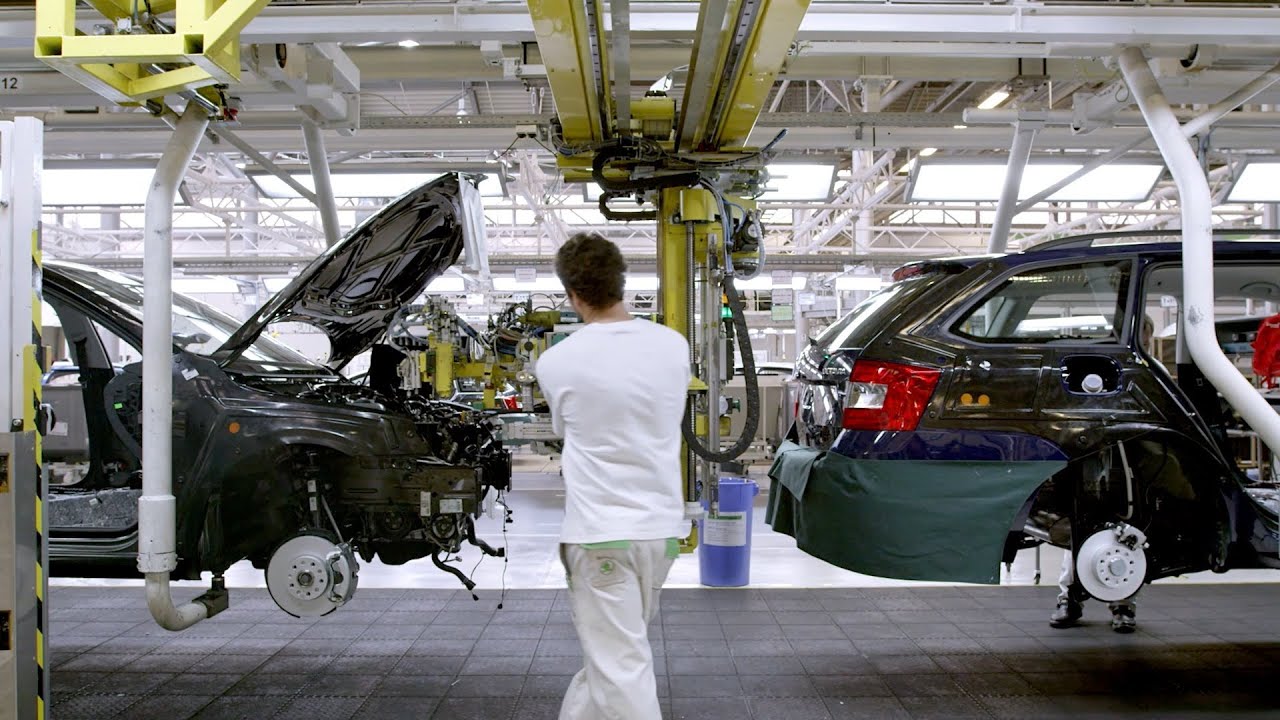
Automaker Stellantis reports poor visibility of component supply and significant production losses, Kallanish learns from the company’s Q3 financial statement. Shipments during the third quarter of 1.131 million units were down 27% compared to Q3 2020 caused by a loss of 30% of Q3 planned production. Unfilled semiconductor orders caused a production cut of 600,000 vehicles.
In North America and Europe shipments were down 29% and 36%, respectively. In the Middle East and Africa, shipments were also down 22%.
Stellantis reports Q3 net revenues of €32.6 billion ($37.8 billion), down 14% year-on-year. At the end of September, total new vehicle inventory stood at 689,000 units.
The automaker forecasts “no further deterioration of semiconductor supply and no further significant lockdowns in Europe and US.”.
Opel, part of Stellantis, will halt production in Eisenach, Germany, until at least the end of the year because of the global semiconductor crisis and Renault forecasts a significant production loss in 2021. While the Q3 production reduction amounts to 170,000 units, Renault predicts a drop of approximately 500,000 vehicles for full-year 2021 but says that visibility on Q4 remains low.
Natalia Capra France
Eurofer increases EU demand outlook despite economic uncertainties
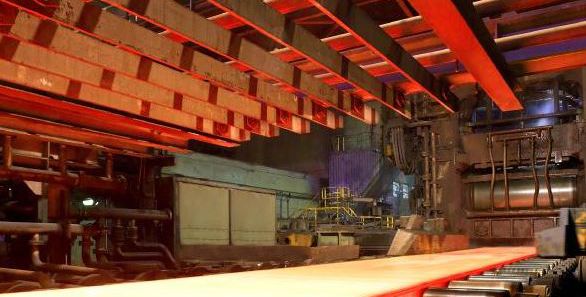
Eurofer, the European steelmakers association, has increased further its apparent steel demand outlook for 2021 despite acknowledging that the peak of the positive economic sentiment has been reached and a number of uncertianties lie ahead.
In its latest report seen by Kallanish, the association noted that 2021 European apparent steel demand is set to jump 13% y-o-y. In the latest outlook issued in August, the recovery was forecasted at 11.2% y-o-y. Real consumption will also jump 7% y-o-y this year, after the fall of 9.8% y-o-y in 2020.
Alessandro Sciamarelli, director of market analysis at Eurofer, confirmed that economic momentum seems to have peaked in Europe in August. Confidence in the industrial and economic sectors has started to ease due to growing disruptions affecting the supply chain and increasing energy prices.
The automotive sector is now reported to be the most troubled.
“The ongoing disruptions in the supply chain have continued to affect the automotive industry in the first half of 2021 and are expected to persist up to the first quarter of 2022,” Eurofer says. “Even assuming that from the second half of 2022 onwards the current supply chain issues will disappear, it will take time before pre-pandemic activity levels will resume. Another source of uncertainty is the consumer demand for new cars, which is expected to remain weak at least until the macroeconomic picture and consumer disposable income substantially improve.”
Meanwhile the construction sector, using some 35% of the total steel consumed in Europe, is receiving strong support by the Next Generation EU plans and ongoing housing schemes across the continent.
In regard to trade, Eurofer highlights that Europe continues to have a negative trade balance during the first seven months of 2021. The association calculated that on average the European trade deficit was of 1.5 million onnes/month during the January-July period. Alessandro Sciamarelli confirmed that Europe turned into a net importer of steel back in 2016 and that this situation is now seen as systemic.
Emanuele Norsa Italy

Northwest Europe coil contract negotiations heat up
The season for negotiating long-term coil contracts for 2022 has arrived, but sources note that the market is still quiet and tense with buyers trying to delay talks towards year-end.
For Germany and some neighbouring markets, the annual period of contracts coincides with the big sheet fairs Blechexpo Stuttgart and Euroblech Hanover, taking turns annually, staged in October and November.
This year, participants at the Blechexpo in Stuttgart tell Kallanish that they might not agree to a deal this week, and they do not expect too many others to do so. As spot prices keep coming down from record highs, it seems better for buyers to wait and see.
Mills nevertheless are coming out with their indications for Q1, H1 and full year 2022 contracts. ArcelorMittal, for example, is reported to be indicating levels of €1080/t ($1,261.79/t) for HRC and €1220/t for HDG.
While these levels are currently above the latest spot prices registered in the market, ArcelorMittal has told clients they need to understand the volatility of the prices and the need for customers to secure volumes going into 2022.
“We hope to close negotiations in the next days and weeks. Buyers should have understood that they need to cover their needs with domestic supplies from reliable European mills as they prepare for 2022, which should be characterised by strong demand [excluding the automotive sector],” a source among suppliers says.
“Mills will be trying for a stabilisation at the present level,” a visitor from Benelux says regarding spot prices, as though it is understood that an increase is out of the question. It is hard to tell just where the present level is. For cold-rolled as well as hot-dip galvanized coil, spot prices can be anywhere from €1,100-1,200/t, he says, without a nominal gap between CRC and HDG.
Due to the slowdown at the carmakers for lack of semiconductors, the mills are building up larger inventories planned for automotive customers that now refrain from calling off the volumes they had booked. Other customers can now again order material for delivery within a couple of months, he says.
One mill manager indirectly confirmed the sentiment, also using the word stabilisation for the mill’s goal this year. He cites the rising costs for input materials and energy, and to some extent dismisses that the slowdown at the carmakers will release too much tonnage. Other industries are doing quite well, he notes, citing economic statistics.
According to one buyer of large volumes for automotive applications, very few deals have been signed with carmakers so far.
Christian Koehl Germany , Emanuele Norsa Italy