


UK car registrations fall to weakest Oct since 1991: SMMT
New car registrations in the UK dropped 25% year on year in October to 106,265 units, the lowest October volume since 1991, according to data released Nov. 4 by the Society of Motor Manufacturers and Traders.
The October volume was also to fourth consecutive month to see year-on-year drops, despite 2020 experiencing stronger pandemic restriction.
“The current performance reflects the challenging supply constraints, with the industry battling against semiconductor shortages and increasingly strong economic headwinds as inflation rises, taxes increase and consumer confidence has weakened,” SMMT CEO Mike Hawes said.
While gasoline and diesel cars fell 31% and 66% year on year, respectively, to 48,384 units and 7,028 units, sales of plug-in vehicle uptake remained positive in the month before COP26, SMMT said.
Battery electric vehicles equaling their September market share of 15.2% with 16,155 units sold, up 73% on the year. A year ago, BEVs had made up a 6.6% share of total vehicle sales.
Plug-in hybrid EVs sales rose 7.5% year on year to 8,382 units, equivalent to a 7.9%, up from the previous month’s 6.4% share and 5.5% a year ago.
However, hybrid EV sales dropped 21.5% year on year to 8,649 units, although their market share rose slightly from 7.8% a year ago to 8.1% in October.
Hawes said that almost one in six new cars registered in 2021 were “capable of zero-emission motoring, growth that is fundamental to the UK’s ability to hit its net zero targets.”
“With next year looking brighter, and even more new models expected, the continuation of this transition will depend on the preservation of incentives that overcome the affordability barrier, and the ability of the public and private sectors to increase public on street charging to allay EV driver concerns,” Hawes said.
Gasoline cars kept their majority market share of 45.5%, but this was down from 49.5% a year ago, while diesel sales only made up 6.6% of the whole market, down from 14.9% in October 2020.
While October was traditionally a quieter month after September’s plate change, KPMG UK head of automotive Richard Peberdy said in emailed comments to the media that the “gloomy picture is compounded by fewer cars rolling off production lines due to supply chain challenges, and the beginnings of shakier consumer confidence with the looming threat of interest rate rises.”
He said these factors were contributing to a booming second-hand market at the cost of new car sales.
“The impact that record high fuel prices will have on pushing motorists towards EV options shouldn’t be understated. Yet EVs aren’t insulated from the wider energy crisis. A tough winter for energy companies will make plug-in drivers think carefully about their tariffs to avoid unexpectedly high bills,” Peberdy added.
According to the SMMT data, the Volkswagen Polo was the best-selling car during October, followed by the MINI and the Nissan Qashqai.
— Jacqueline Holman


Outokumpu Q3 stainless steel deliveries rise 17.8% on year to 575,000 mt
Europe’s largest stainless steel producer Outokumpu delivered 575,000 mt of stainless steel in the third quarter, down 8% quarter on quarter, but up 17.8% from a year ago when the COVID-19 pandemic hit global demand, the company said in a Nov. 4 results statement.
This brought total nine-month stainless steel deliveries to 1.8 million mt, up from 1.6 million mt in the same period last year.
Sales revenues for the quarter increased 55.4% year on year to Eur1.95 billion ($2.2 billion), also up 4.1% quarter on quarter.
Profitability in the third quarter of 2021 was supported by increased realized prices for stainless steel in both Europe and the Americas, as well as higher ferrochrome sales price, Outukumpu said in the results statement.
However, it added that the result was burdened by increased prices driven by the strong COVID-19 rebound, an exceptionally long order book and augmented raw material prices, which offset the higher energy and consumable prices.
Outokumpu reported EBITDA of Eur295 million for the quarter, well above the $10 million reported a year ago and a 32.3% increase from the previous quarter.
The Q3 EBITDA was the best quarter in Outokumpu’s recent history, Outokumpu president and CEO Heikki Malinen said in the statement, adding that the quarter’s stainless steel deliveries were in line with expected seasonal patterns.
“The result is supported by a combination of strong market environment and our own decisive actions in strategy execution,” Malinen said.
The Business area Europe saw deliveries decrease by 13% in the quarter, but it’s EBITDA was Eur149 million, he said.
Meanwhile, the company’s turnaround at its Business area Americas continued to be successful, improving for a fifth consecutive quarter to an EBITDA of Eur84 million, with stainless steel deliveries remaining flat, Malinen said.
He added that the ferrochrome operations performed well, with a Eur64 million addition to the group’s adjusted EBITDA.
“Sustainability is at the core of our operations, and we are continuously taking steps towards our ambitious Science-Based Targets initiative of 1.5 degree emission reduction target,” Malinen said. “In the third quarter, our energy efficiency was at a good level due to high volumes and development projects.”
The company also announced an increased share of wind power in its electricity procurement during the quarter as part of its sustainability journey.
Outokumpu previously committed to reducing emissions by approximately 30% by 2030 compared to the company’s 2020 level.
The company expects its overall steel deliveries in the fourth quarter to remain stable from the third quarter, while adjusted EBITDA in the fourth quarter is forecast to be higher quarter on quarter.is expected to be at a similar level as in Q2.
“We are well on track with our strategy execution, targeting a Eur200 million EBITDA run-rate improvement by the end of 2022,” Malinen said. “Given the strong momentum, we decided to increase the target by Eur50 million to Eur250 million by the end of 2022.”
— Jacqueline Holman

US and EU demand supports Turkey’s September HRC exports
As higher demand from the US and some EU countries continued to support Turkish mills’ hot-rolled coil export volumes in September, Turkish mill exports of HRC totaled 317,800 mt in that month, 31% higher on year, S&P Global Platts observed from the latest monthly Turkish Statistical Institute (TUIK) data.
As prices in the US market stood notably above other market prices, US buyers booked notable hot-rolled coil tonnages from Turkey again in September, and this country became Turkey’s one of Turkey’s top HRC market with 62,500 mt in that month, tenfold higher year on year.
Turkish mills’ nine-months HRC exports to the US totaled 291,500 mt, sharply up from 14,300 mt exported in January-September 2020. However, taking into account that this country was one of Turkey’s top HRC markets, importing more than 500,000 mt per year before the Section 232 tariffs, it could still be considered a low figure.
The deal that the US and EU reached on Oct. 30 to replace the Section 232 metals tariffs with a tariff-rate quota on imports from the EU, could also harm Turkish steel exports to the US in the coming months, Ugur Dalbeler, VP of the Turkish Steel Exporters’ Union (CIB) and CEO of major Turkish steelmaker Colakoglu told Platts.
Turkish mills’ HRC exports to some EU countries also remained relatively strong year on year in September.
Despite a 10,000 mt on-year decline, Italy became Turkey’s top HRC market in September with 79,000 mt, while Turkish mills HRC shipments to Belgium reached 60,450 mt in that month, although no notable HRC cargo was shipped to that country in the same period the previous year.
Spain bought 35,000 mt of Turkish HRC in September, more than sixfold higher on year, while shipments to Canada reached 25,300 mt, compared to zero in September 2020.
Turkish mills also shipped 10,300 mt of HRC to the UK in September, the latest data showed.
— Cenk Can
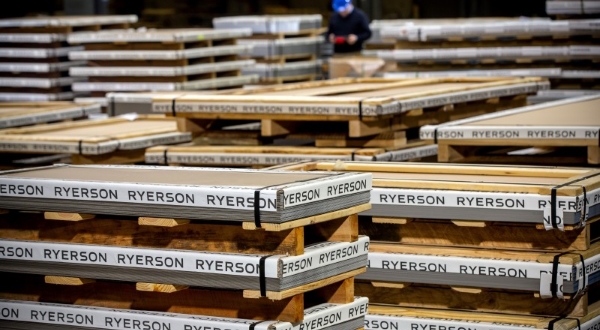
Ryerson sees supply constraints restricting reliable demand
Supply chain constraints continue to hamper realisable demand, says US-based service centre group Ryerson.
The company is optimistic about current demand trends, which it sees as growing, but it is expecting a further decline in shipments in the current quarter due to normal seasonality combined with persistent supply-side issues.
Ryerson reported a 7% quarter-on-quarter decline but a 6% year-on-year rise in shipments which totalled 519,000 short tons in the third quarter. Carbon steel and stainless steel shipments reached 399,000 st and 68,000 st, respectively, in Q3.
The company posted Q3 net income of $49.7 million on sales of $1.575 billion. Revenues were up 11% q-o-q and 89% y-o-y. Net income was down 56% from Q2 income of $113m, but up significantly from the $40m net loss posted in Q3 2020. It anticipates Q4 revenues to be $1.5-1.6 billion.
Ryerson president and ceo Eddie Lehner commended his employees for performing well “alongside the myriad of unique frictions and fractures present in the world in our operating environment that permeated the past quarter.”
During the quarter, the company began working on two new facilities in Centralia, Washington, and University Park, Illinois, Kallanish notes. It also acquired Specialty Metals Processing, a toll processor in Stow, Ohio.
Laura Miller USA

Stahl- und Metallhändler Klöckner profitiert von hohen Preisen
Guido Kerkhoff, Vorsitzender des Vorstands der Klöckner & Co SE: „Dass wir zum wiederholten Male ein Rekordergebnis vorlegen können, zeigt, dass wir die richtigen Weichen gestellt haben: Dank Projekt Surtsey haben wir eine starke operative Basis für die erfolgreiche Umsetzung erster Maßnahmen unserer Strategie ‚Klöckner & Co 2025: Leveraging Strengths‘. Wir arbeiten weiter konsequent daran, uns an den Bedürfnissen unserer Kunden und der Gesellschaft auszurichten. So sichern wir beispielsweise mit unserer jüngsten Partnerschaft mit H2 Green Steel unseren Kunden frühzeitig den Zugang zu grünem Stahl und entwickeln uns zum Vorreiter der nachhaltigen Stahlindustrie.“
Konsequente Umsetzung der Strategie „Klöckner & Co 2025: Leveraging Strengths“
Im dritten Quartal konnte die Umsetzung der Strategie „Klöckner & Co 2025: Leveraging Strengths“ weiter vorangetrieben werden. Mit der Strategie möchte das Unternehmen zur führenden digitalen One-Stop-Shop-Plattform für Stahl, weitere Werkstoffe und Anarbeitungsservices in Europa und Amerika werden. Die im zweiten Quartal initiierte EU-Europa-Struktur wurde bereits erfolgreich implementiert, und es wurden wichtige, damit verbundene Maßnahmen angestoßen. Zur Verbesserung des Produkt- und Serviceangebots fördert Klöckner & Co insbesondere die grenz- und funktionsübergreifende Zusammenarbeit. Das neue Center of Excellence in Finance & Administration wird in diesem Zuge die Harmonisierung von internen Administrationsprozessen verbessern und Strukturen effizienter ausrichten.
Vorreiter einer nachhaltigen Stahlindustrie und Erweiterung des Partnernetzwerks
Als wichtigen Bestandteil der Konzernstrategie hat sich Klöckner & Co zuletzt auf die Ausweitung des Partnernetzwerks fokussiert und treibt in diesem Zusammenhang seine Nachhaltigkeitsaktivitäten weiter voran. Hier sieht das Unternehmen gesellschaftliche sowie große unternehmerische Chancen. Um diese zu nutzen, hat Klöckner & Co eine Partnerschaft mit dem schwedischen Start-up H2 Green Steel geschlossen und sich damit als einer der ersten Distributoren den Zugang zu signifikanten Mengen an nahezu CO2-neutral produzierten, sogenanntem „grünen Stahl“ gesichert. Ab dem Jahr 2025 sollen im Rahmen der Partnerschaft zunächst bis zu 250.000 Tonnen „grüner Stahl“ geliefert werden – mit einer möglichen zukünftigen Erweiterung der Liefermengen. Mit der Kooperation baut Klöckner & Co sein nachhaltiges Produkt- und Dienstleistungsspektrum deutlich aus. Gleichzeitig unterstützt das Unternehmen seine Kunden bei dem Aufbau einer emissionsfreien Wertschöpfungskette und geht als Pionier einer nachhaltigen Stahlindustrie voran.
Zusätzlich wurden die Digitalisierung und Automatisierung im Konzern mit dem Ziel „Zero-Touch“ im dritten Quartal weiter beschleunigt. Die Neuaufstellung der kloeckner.i-Organisation wurde erfolgreich abgeschlossen und der neue kloeckner.i-Hub in den USA gegründet. Die KI-getriebene Applikation Kloeckner Assistant wurde ebenfalls weiter verbessert und soll durch die angestoßenen Maßnahmen künftig 80 % der Verkaufsprozesse digitalisieren und automatisieren können. In Zukunft soll der Kloeckner Assistant auch in anderen Bereichen der Wertschöpfungskette von Klöckner & Co zum Einsatz kommen. Im Jahresverlauf hat die Applikation bereits Umsätze von rund 750 Mio. € abgewickelt. Insgesamt stieg der Anteil des über digitale Kanäle erzielten Umsatzes im dritten Quartal auf 46 % und lag damit vier Prozentpunkte über dem Wert des Vergleichszeitraumes im Vorjahr (Q3 2020: 42 %).
Im vierten Quartal rechnet Klöckner & Co im Vergleich zum Vorquartal beim Absatz und Umsatz mit einem leichten, saisonal bedingten Rückgang. Für das Gesamtjahr 2021 geht das Unternehmen weiterhin von einem EBITDA vor wesentlichen Sondereffekten von rund 800 Mio. € aus. Dies entspräche dem besten operativen Ergebnis seit dem Börsengang im Jahr 2006. Vor dem Hintergrund des erwarteten Rekordergebnisses für das Geschäftsjahr 2021 wird Klöckner & Co der Hauptversammlung eine Dividende in Höhe von voraussichtlich 0,90 € bis 1,10 € je Aktie vorschlagen. Zudem wurde ein Projekt zur Verbesserung des Deckungsgrads der Pensionsverpflichtungen des Konzerns initiiert. Hierzu ist beabsichtigt, Vermögenswerte auf einen Treuhänder zu übertragen und damit zweckgebunden für die Bedienung von Pensionsleistungen zu verwenden. Die Dotierungen werden zu einer signifikanten Reduzierung der ausgewiesenen Pensionsrückstellungen um mehr als 200 Mio. € führen und damit die Struktur der Bilanz von Klöckner & Co substanziell verbessern. Darüber hinaus gewährleistet diese Maßnahme eine nachhaltige Verbesserung des Cashflows aus der betrieblichen Tätigkeit des Unternehmens von jährlich mehr als 10 Mio. € ab 2022.
Quelle und Foto: Klöckner & Co SE
03.11.2021 von Hubert Hunscheidt

Prices seeing ‘gentle’ rebound, says Klöckner
Distribution group Klöckner & Co cashed in massively in the third quarter on considerably higher steel prices, as well as on windfall effects brought by the price surge. While most steel prices have meanwhile seen a downward correction from their record peaks in summer, this trend seems to be turning again at the moment.
“Right now, I think we are seeing a gentle resurgence of prices,” chief executive Guido Kerkhoff told Kallanish during a telephone conference, pointing at “many positive signals” in that direction. He cited a lack of Chinese-origin imports into the EU as well as to the USA, Klöckner’s main playgrounds, which are now feeding on their domestic production. Also, he sees transatlantic EU exports on the rise.
At most customer groups in both regions, demand is stable or inching up, with mechanical engineering especially providing full order books, Kerkhoff said. Demand from the automotive industry is still seen flat for the time being, “but the bottleneck of semiconductor chips will be opening at some point next year”, he said. Klöckner is the largest mill-independent steel distributor in the joint markets of the EU and the USA, so its assessment of the climate has some weight.
On the causes for the continued price surge seen this year, Kerkhoff explained that they include ancillary costs that go beyond the pure materials price. These include higher prices for truck transport, for containers on sea, and even for the wood used for the pallets in the warehouses. Another factor are wage costs linked to steel prices, like provisions for sales staff.
Christian Koehl Germany

Cognor earnings surge, sees scrap-based cost advantage turning
Cognor says the competitive advantage of scrap-based steelmakers over iron ore-based mills is narrowing after the Polish firm recorded a massive surge in third-quarter earnings, Kallanish notes.
The competitive advantage currently enjoyed by electric arc furnace mills over their blast furnace-oxygen converter-based counterparts could soon reverse after the gap in feedstock costs between the two routes narrowed in Q3. This would put pressure on Cognor’s profitability and semi-finished steel sales tonnages, it observes.
Cognor nevertheless increased crude steel production by 16% on-year in Q3, while overall sales, including of scrap, rose 4.5%, the firm says without providing tonnages. However, finished steel sales fell 4%.
Revenue surged 93% on-year in Q3 to PLN 716.9 million ($180.7m) and net profit soared to PLN 113.48m versus PLN 1.5m in Q3 2020. Spreads widened considerably in the quarter thanks to the faster rise in steel prices compared to scrap prices.
The extraordinary steel market boom seen in Q3 has prompted Cognor to delay the finalisation of two large investment projects until Q1 2022.
In the nine months through September Cognor thus reported a 57% on-year revenue surge to PLN 2.02 billion, while net profit ballooned over nine-fold to PLN 238.2m.
Adam Smith Germany
Steel execs see dynamism continuing in US industry
With incredibly strong demand and an agreeable tariff quota deal solidified between the US and European Union, American steel executives see good times continuing for the US industry well into 2022.
Although 2020 was quite the roller coaster ride, it did not stop the dynamism of the US steel industry, says American Iron and Steel Institute ceo Kevin Dempsey. He was speaking at a press conference held during the joint annual meetings of AISI and the Steel Manufacturers Association this week in Washington, DC.
The 232 steel tariffs imposed by the US in 2018 have worked as intended to stabilise the domestic industry and to protect the nation’s national security interests, Dempsey told Kallanish and other reporters.
A report from the Economic Policy Institute earlier this year revealed that American companies have invested upwards of $16 billion since the tariffs were put in place to upgrade and expand the industry. And since that report was released, Dempsey said another $6 billion in planned investments have been announced.
“It’s an incredibly exciting time when you see our companies spending billions of dollars,” says Mark Millett, president and ceo of Steel Dynamics and current chairman of the SMA.
“We’re happy that 232 stayed in place and allowed us to invest our money to improve our industry to produce steel in our country,” says Lourenco Goncalves, president and ceo of Cleveland-Cliffs.
When asked about the current price competitiveness of the domestic industry, Goncalves said: “[The] question implies that excessive prices are artificial. There are no excessive prices. There’s nothing artificial in the old laws of supply and demand.”
Steel prices in the US remain elevated when compared with the rest of the world, Kallanish notes.
“We’re in a cyclical business….It’s a supply-demand driven business, and we understand that,” says Leon Topalian, president and ceo of Nucor, noting that demand is incredibly robust at the moment and is expected to remain so well into next year. Topalian was also elected chairman of AISI in May.
“Yeah, prices are high, but we are investing those dollars. This is a good time for steel,” Millett adds.
Laura Miller USA
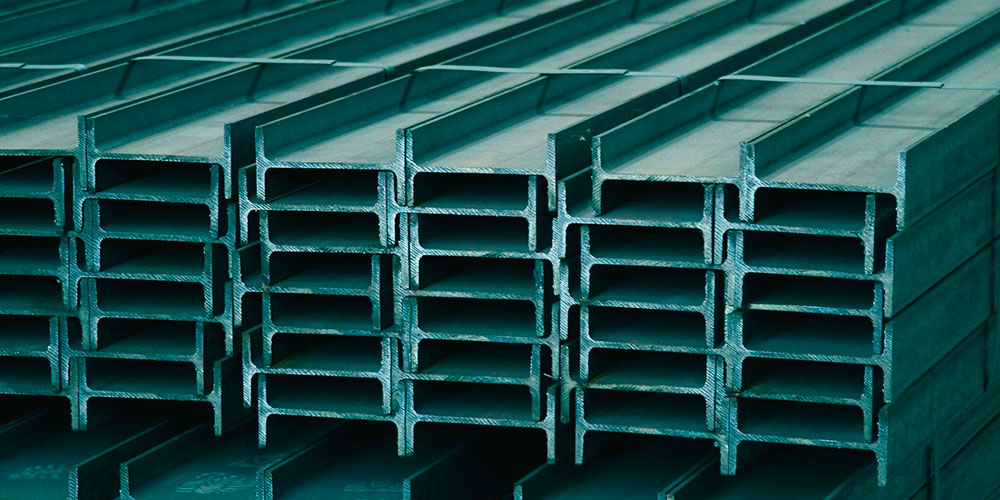
Ukraine’s Metinvest Jan-Sept steel output up 13% on year
Metinvest, Ukraine’s largest steel and mining group, saw steel output over January-September rise 13% year on year to 6.933 million mt.
Metinvest said Nov. 3 it increased production of steel, pig iron and rolled steel after it acquired Dniprovskiy Metallurgy Plant (DMK), one of the largest metallurgy plants in Ukraine, in July 2021. The group started consolidation of production data of DMK in its reports from August.
The company controls Ilyich, Ukraine’s No. 2 steelmaker, Azovstal, the No. 3 steelmaker and DMK, the No. 6 steelmaker.
Over January-September, Ilyich increased output of steel 7% on the year to 3.202 million mt, Azovstal produced 3.346 million mt, up 6% and DMK produced 340,000 mt of steel in August-September.
Metinvest is a vertically integrated group that owns massive iron ore, coking coal mining and steel smelting assets.
Metinvest’s production of rolled steel over January-September increased 23% to 5.345 million mt, up from 4.359 million mt in January-September 2020, but output of pig iron rose 11% to 7.056 million mt.
In the Q3, Metinvest produced 2.575 million mt of steel, up 16% in comparison with 2.229 million mt produced in the Q2.
Metinvest produced 2.651 million mt of pig iron in the Q3, up 18% from 2.254 million mt in the Q2, and production of rolled steel rose 2% to 1.863 million mt in the Q3 from 1.819 million mt in the Q2, the group said.
Metinvest is the world’s No. 7 producer of iron ore and accounts for about 60% of Ukraine’s overall iron ore output. The group controls three major Ukrainian iron ore producers: Pivnichniy HZK, Tsentralniy HZK and Inhuletskiy HZK.
The company’s output of iron ore concentrate and pellets rose 4% on the year to 23.678 million mt from 22.817 million mt produced in January-September 2020.
At the same time, production of coke fell 3% on the year to 3.461 million mt from 3.583 million mt.
Among overseas assets, Metinvest owns Ferriera Valsider and Metinvest Trametal plants in Italy, Spartan UK in the United Kingdom and Promet Steel AD in Bulgaria. Metinvest also owns United Coal Company (UCC), the sixth-biggest coal mining company in the US.
In January-September, Metinvest increased output of coal concentrate at its US-based coal mines by 80% to 4.055 million mt.
UCC is a producer of coking and steam coal located in the Central Appalachian region of the US.
— Alexander Bor
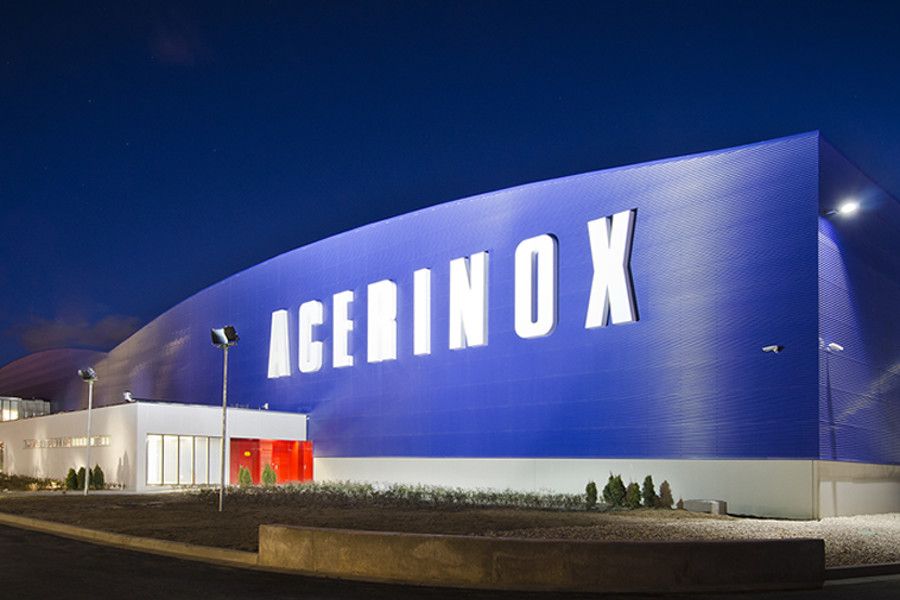
Acerinox sees record 2021 results after 20% Q3 production increase
Spanish stainless steel group Acerinox said Nov. 3 it expects record earnings in 2021 after it increased production volumes and widened margins in the third quarter.
The Madrid-based company expects the momentum to carry on for the first half of 2022, CEO Bernardo Velazquez said, noting that its order books are full “everywhere” and that its production facilities are running close to full capacity.
Acerinox operates plants in Spain, Kentucky, South Africa and Malaysia with a combined melt shop capacity of 4.5 million mt/year, as well as production facilities for high performance alloys in Germany.
The company’s EBITDA in Q3 was the best in 14 years at Eur293 million ($339 million) and this is expected to lead to the company’s best year on record in 2021, Velazquez said.
Production in the fourth quarter is expected to be boosted after Bahru’s site returned from around a three-month halt due to COVID-19 restrictions that spanned the second quarter and Q3.
The halt meant that Q3 melt shop production volume was down 4% versus Q2 at 629,000 mt, although this was a 20% increase from Q3 2020.
Cold rolled production was at 408,000 mt in Q3, up 23% year on year while hot rolled long production was 59,000 mt, up 15% year on year.
VDM recovers
Production was seen at pre COVID-19 levels in its Germany-based alloy business VDM that the company bought in 2020, Velazquez said.
In Q3, it produced 19,000 mt in its melting shop, up 35% year on year and 11,000 mt in its finishing shop, up 11% over the period.
Synergies of the merger were also becoming apparent, Vazquez said, with Acerinox starting to produce HPA in its stainless sites.
The company said it saw strong conditions in all markets with demand, inventory levels, prices and lower import competition all bullish factors, with just the risk of energy prices in Europe a lingering concern.
Increased energy costs in Spain are currently costing around an extra Eur8 million or Eur9 million/month, Acerinox estimates, although the company has moved to secure more long-term supply at better prices and increased its use of power purchase agreements, Velazquez said.
Additionally, the better margins obtained in Q3 had been sufficient to offset the rising energy costs, he said.
— Gianluca Baratti