


European scrap to remain structurally high, outlook bullish
High European scrap prices and strong demand will continue until the end of the year, with competition for high-grade scrap firm and market forecasts bullish.
Prices for high grades will remain strong for the next five years, with some degree of volatility and downward and upward corrections, Casier Recycling’s Alain Eeckman said at last week’s Kallanish Europe Steel Markets virtual conference.
The decarbonisation drive will add more constraint on scrap, which will gain a central role in low-carbon steelmaking. This will contribute to future high values and demand.
“Production of steel, particularly flat steel, went down last year because of Covid-19,” Eeckman said. “We should not forget that most of our domestic mills generate quite a bit of internal scrap usually of a high grade. The other main source is the automotive industry that has been struggling for quite a while even before Covid-19. Now with rampant steel output, there is less supply and huge demand.” The situation is worsened by protectionism which is causing a “self-generating” bubble in steel and scrap prices, he added.
Given the current need for scrap, Eeckman believes “it is a given” that an export ban on European scrap will be implemented. The strongest lobby to push for a ban on high-grade exports will be the flat steel mills.
Since supply of lower qualities is in excess, there is no need to ban exports of the lower grades. There is however a trend among European mills to use more HMS grades. ArcelorMittal is said to be actively looking into that, pushed by the structural shortage of new arisings E8 and E40 grades.
So far, China has been sourcing scrap in Asian countries but rarely in Europe. China is however going to provide a significant flow to international scrap trade. The country is forecast to increase its seaborne scrap imports massively as EAF capacities are being added, said Shanghai Metals Market chief executive Ian Roper.
In June contracts, northern European E8 stood at €450-460/tonne ($536-548) delivered on average. In Italy E8 and E40 are being transacted at €490-505/t delivered, Kallanish notes.
There will be an alignment with the higher Italian prices, “for the simple reason that it is all connected … Northern Italy and the flat steel mills are desperately looking for scrap and sourcing it in Eastern Europe and southern Germany,” Eeckman explained. If southern German scrap flows to Italy, there will be a shortage in Germany and players will need to adapt their prices or start looking elsewhere, he concluded.
Natalia Capra France

ArcelorMittal to close Birmingham automotive blanks site
ArcelorMittal proposes to close its Tailored Blanks site in Birmingham due to considerably reduced EU demand for vehicles and lower levels of UK car production, a company spokesperson tells Kallanish.
A strategic review of the business has concluded the Birmingham site is not sustainable for the long term.
“I want to acknowledge the considerable efforts made by employees at the site in recent months, to secure the site’s future in a challenging market,” says Bertrand Jacquier, chief executive at ArcelorMittal Tailored Blanks. “However, we have reached the very difficult decision to propose the closure of ArcelorMittal Tailored Blanks’ site in Birmingham. Today marks the beginning of a consultation phase; we take consultation very seriously and will not make any final decisions until we have considered employees’ views.”
If the proposal to close the site is agreed, all employees will be helped with their employment search by specialist consultants, the spokesperson comments.
ArcelorMittal Tailored Blanks is a leading supplier of laser-welded and unwelded blanks for the automotive industry worldwide. In Europe, it has sites in Belgium, France, Germany, Slovakia, Spain and the UK.
Adam Smith Germany
European car registrations up again in May as recovery continues
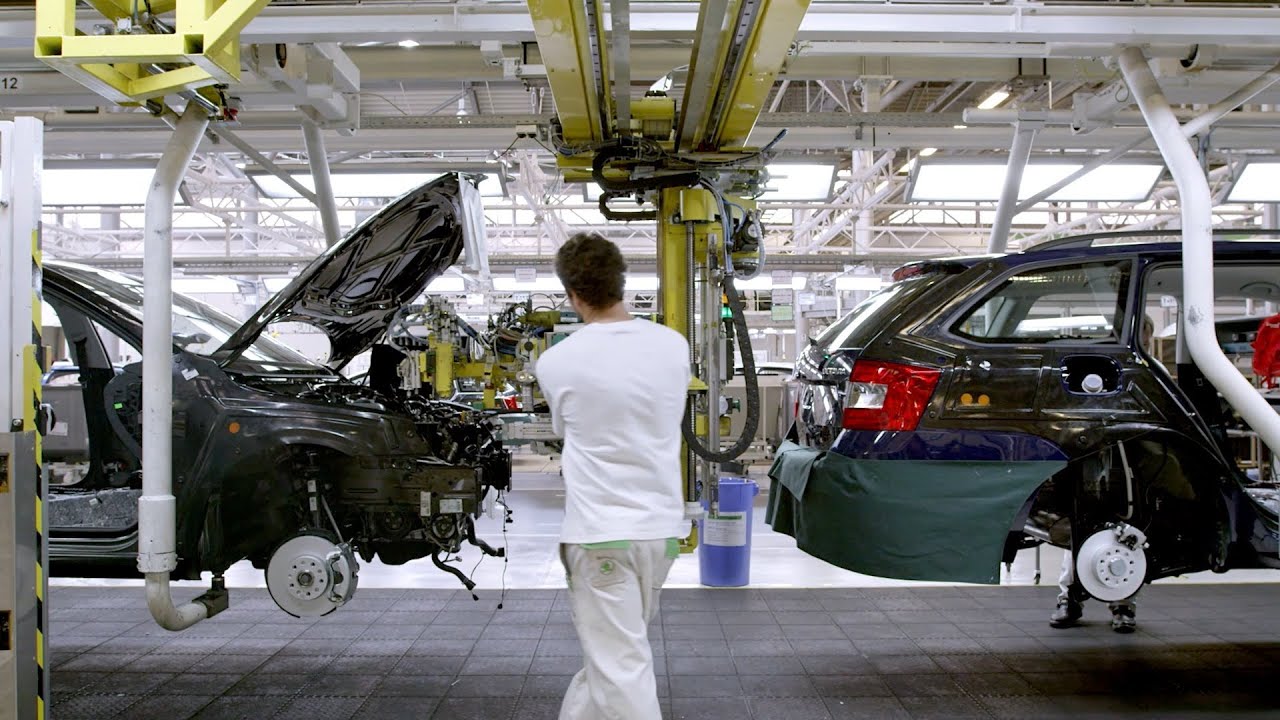
European car registrations rose year on year in May, for the third month in row, as sales recover from the low level registered in 2020 due to coronavirus lockdowns, according to data from the European Automobile Manufacturers’ Association (ACEA) on June 17.
Total EU, EFTA and UK sales were up 74% to 1.1 million new cars in May and 31% higher at 5.2 million over January-May.
Within that, EU new registrations in May were up 53% year on year to 892,000 units, which was below the May 2019 figure of 1.2 million new cars. The Spanish car market saw the biggest rise, of 178%, with France up 46.4%, Italy up 43.0% and Germany up 37.2%.
That meant January-May registrations rose 29.5% to reach 4.3 million units.
Year-on-year rises in March, April and May came after sharp falls in January and February, with the four major markets of Italy (62.8%), France (50.1%), Spain (40.0%) and Germany (12.8%) all recording double-digit gains in the first five months of 2021.
Automotive is a key industry for steel producers, with a turnover that represents over 8% of EU GDP and that generates a trade surplus of Eur74 billion ($90 billion) for the EU. On average, 900 kg of steel is used per vehicle.
According to ACEA data, automobile manufacturers source almost all their steel (over 90%) in the EU. The association recently underlined the difficulties finding raw materials, mainly coils as “since manufacturing restarted in summer 2020 there has been a serious shortage of steel in the European market”.
Market safeguards
ACEA, as others, associations of large steel buyers were vocally against of the European Commission proposal to the WTO regarding a possible three-year extension of market safeguards against imports. Buyers are concerned not only that prices will continue to increase but that raw material market will tightening even more.
On June 11 the EC notified the WTO about a proposal to extend the EU Safeguard Measures on Steel Imports, which is set to expire on June 30, reducing to 3% the annual liberalization of quota levels compared to 5% previously.
The current safeguards were put in place in response to the US Section 232 tariffs in July 2018 — using import data from 2015-2017 — to prevent economic damage to European steel producers, while analyzing the statistical data reported in the text of the European Commission proposal to the WTO it emerges that the period examined is now 2018-2020.
Because demand for products made with a large percent of steel is keep rising as marked also by ACEA last data on car registrations buyers said that the evaluation for new safeguards should consider also in somehow forecasts relating steel demand for the years 2021 and 2022.
According to S&P Global Platts data, European hot-rolled prices are at their higher historical level, after having been plateauing in the last few days, coils prices have registered further gains, with market sentiment that is now bullish, industry sources said.
North European HRC prices, Platts benchmark, increased Eur10.50/mt to Eur1,148/mt ex-works Ruhr on June 16. Since the end of last year prices have gone up by Eur483/mt.
— Annalisa Villa

Heavy congestion of containers at Liverpool Port on IT outage, understaffing
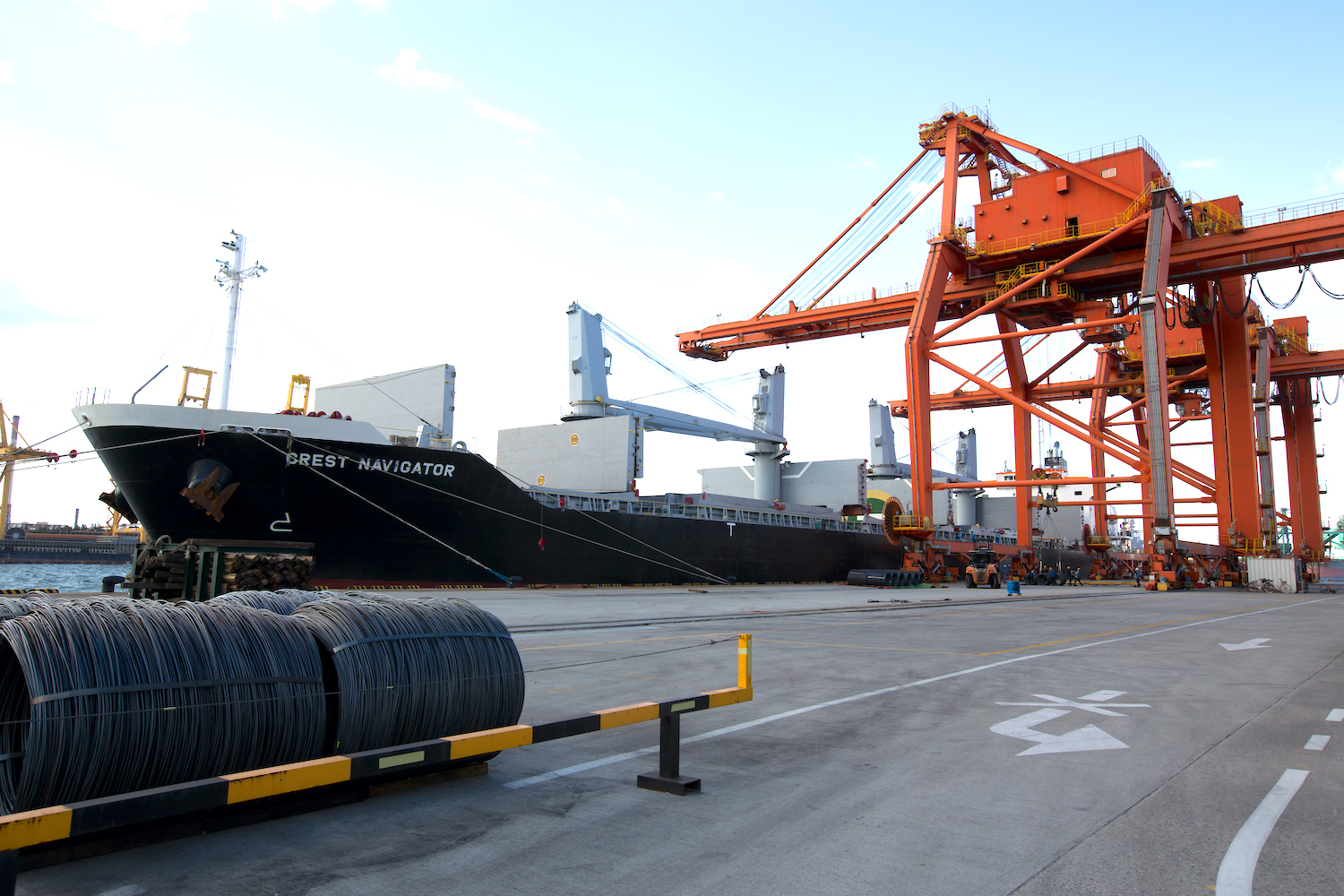
The Port of Liverpool is undergoing a congestion of shipping containers, with ships suffering delays arriving and exiting the port due to understaffing, an IT outage and high density of stock, sources told S&P Global Platts June 17.
Containers have been delayed for several hours, with a lack of stevedores on site to aid in discharge of goods and hauliers struggling to book entry into the port amid lags in cargo flow.
“It is shockingly bad, they don’t have enough manpower at the port,” a European coils trader complained. “Painful delays, these containers need to be cleared within seven days and it’s getting expensive. The lack of haulage and drivers is a separate thing, but even if you have a lorry, you’re waiting hours.”
Haulier jobs normally lasting a few hours were now taking up a better part of the day, sources said, with the availability of slots limited and labor costs increasing due to waiting times.
“They’re taking ages to unload – they have taken on too many vessels,” the same trader said. “You must collect your container from the dock, unload and return within the agreed period of time. If you don’t give it back to them in this one-week period, it’s a penal cost.”
The delays were not segregated to flat steel, with difficulties in sourcing containers also a problem for some scrap yards.
“I’ve heard Liverpool is a nightmare, especially for hauliers – it’s not so much an issue for scrap traders as we tend to get an all-in freight rate,” a UK scrap trader said. “But I’ve heard that for some scrap yards, it’s difficult to source containers due to the backlog in Liverpool.”
The Port of Liverpool saw increasing stocks among carriers amid the decline of the Felixstowe Port in Suffolk, UK, last year.
In November, the Felixstowe port — UK’s busiest container port — came under extreme pressure in the lead-up to Christmas, with the Brexit decision looming. Significant backlogs caused by a container shortage due to surging Asian demand resulted in the reallocation of some ships to Rotterdam.
The owner, Hutchison Ports, blamed pre-Brexit stockpiling and the coronavirus pandemic for the backlogs, with delays expected to continue into 2021.
“Peel Ports [Liverpool port operator] tried hard to make Liverpool a solid destination after Felixstowe collapsed last year. So many more ships calling,” a UK-based container source said.
“Due to longer wait times onshore for hauliers, they are refusing to go, causing further pile-ups. Costs are increasing for detention charges,” the same source said.
In a company statement, Peel Ports said the delays were a result of several factors impacting the Terminal 1 turnaround times, including an IT outage and high stock density.
A Peel Ports spokesperson confirmed delays of up to 2.5 hours, with normal discharge turnaround times usually between 1-2 hours.
“We understand that any issues with the smooth running of the port are frustrating for customers and we recognise an efficient haulier interchange is critical to the port’s and haulier’s offer,” David Huck, the Managing Director of Group Ports said.
“We have spent much of this week working through the backlog caused by last week’s delays and whilst some issues may remain into next week, we hope that service levels will return to the high standards usually offered by the Port of Liverpool.”
According to the statement, the Group had employed 150 people by the end of 2020, with extended weekend opening hours already implemented.
— Amanda Flint, George Griffiths, Viral Shah
Olympic Steel increases credit funding, extends maturity
US service centre chain Olympic Steel has increased funding and extended the maturity of its existing credit facility, Kalllanish understands.
According to an announcement by Olympic Steel, the company has amended its existing $475 million, five-year asset-based revolving credit facility by increasing available funding by up to $200m. Along with this increased funding, the company extended the maturity of its revolving credit facility by five more years through 16 June, 2026.
“The amendment and five-year extension of our revolving credit facility provides us with an excellent source of low-cost capital to sustain our ongoing operations, as well as additional capital to fund acquisitions and our organic growth,” explains Olympic Steel cfo Richard Manson.
Upon implementation of the amendment and extension, Olympic Steel had approximately $190m in available funds under the credit facility. The company intends to use the additional funding for capital needs, acquisitions, and future growth initiatives.
“Our continued focus on working capital management and operating expense efficiency has afforded us a great deal of liquidity and flexibility under the revolving credit facility. We appreciate the ongoing support of the syndicate of banks involved in the credit facility,” Manson adds.
Zach Johnson USA
Tariff removal would hinder efforts on steel overcapacity: AISI
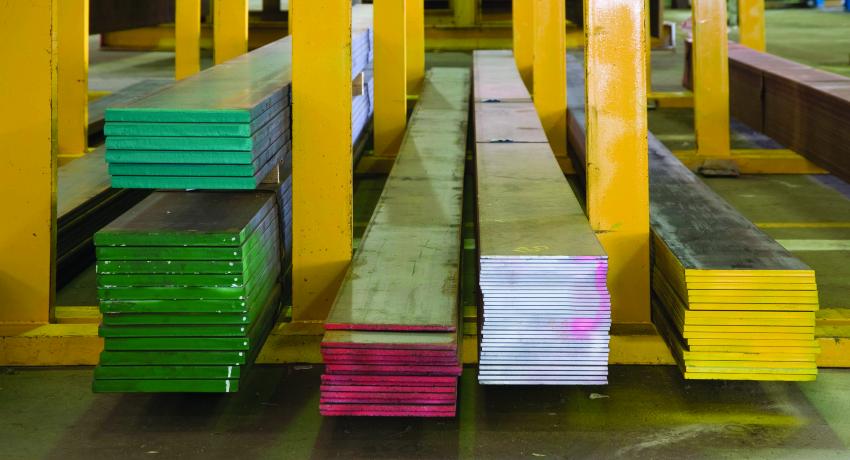
The recent joint statement from the US and EU shows that the governments share concerns regarding their domestic metals industries that must be cooperatively addressed, such as global excess capacity, but a removal of the US’ steel and aluminum tariffs on the EU would run counter to such initiatives, American Iron and Steel Institute CEO Kevin Dempsey said June 16.
“There is a desire for the US to find ways to work together with the EU for common issues of concern such as addressing the global overcapacity crisis, and that is definitely worth the effort, but it is not an easy item and can’t be done quickly,” Dempsey told S&P Global Platts in an interview.
“While we are making those efforts, we still need to maintain an effective trade measure to deal with the global overcapacity and the threat of renewed surges.”
A simple lifting of US trade restrictions under Section 232 on the EU will only create a new problem if the two sides come to such an agreement, he added.
The US-EU joint statement, released after an international summit of world leaders June 15, expressed a commitment to resolve tensions arising from the US tariffs on EU steel and aluminum imports by the end of the year.
“It just creates a new way for the steel to flood into the US from overseas because steel is a widely traded global commodity, and it finds its way into every market in the world,” Dempsey said. “The EU recognizes this because they imposed their own global safeguards on steel imports, and they’re considering extending that for another three years.”
Dempsey said the EU views the US tariffs as solely a bilateral issue. However, this perspective overlooks the global nature of steel trade distortions caused by overcapacity in certain parts of the world that have harmed both the US and EU steel industries.
“[The US tariffs] were a global action to deal with the fact that there has been recurring surges of imports coming into the US for a number of years, all growing out of this steel overcapacity crisis,” the executive said. “That kept us at continually low capacity utilization rates that undermined the viability of the industry over the longer term and the tariffs were necessary… and to be effective they needed to be a measure that was global in nature.”
Future of US, EU metal trade talks unclear
Dempsey said it was difficult to predict how negotiations will play out this year between the US and EU regarding overcapacity and tariffs.
“I don’t think the current [Biden] administration has made up its mind on reversing the [steel tariff] approach that was put into place by the previous administration,” he said. “If they wanted to remove that, they could have done that on day one, but they haven’t done that.”
While no clear plan exists for the US and EU to battle excess capacity in other parts of the world, Dempsey said any agreed upon solution must put pressure on countries that overly subsidize their steel and aluminum industries.
“Until countries feel some cost to engaging in these types of behaviors, like subsidizing their domestic industry or intervening to keep uneconomic facilities afloat, they are going to keep doing it,” he said.
Other groups disappointed
US business and trade groups expressed disappointment that the US and EU’s joint statement did not clearly provide details on how the metal tariffs would be handled this year.
“We reiterate the urgency of terminating these tariffs imposed under the previous administration while discussions continue on how best to address China’s oversupply of steel and aluminum,” the Coalition of American Metal Manufacturers and Users said in a June 15 statement.
CAMMU added that the tariffs “should have never been implemented in the first place.”
“They have only served to increase the costs of goods manufactured in America compared to overseas competitors who can simply import the finished product to the US, and thus continue to erode the ability of the US manufacturing sector to compete and survive in the global market,” the coalition said.
In a separate statement, the US Chamber of Commerce expressed a similar desire to remove the tariffs as quickly as possible.
“We had hoped for more movement towards lifting the US Section 232 tariffs on imports of steel and aluminum as well as Europe’s countermeasures,” the chamber said June 15. “Businesses across multiple sectors have felt the pain of these tariffs, and we encourage the working group to move quickly towards resolution.”
— Nick Lazzaro
GM, Ford each unveil new EV investments for next decade
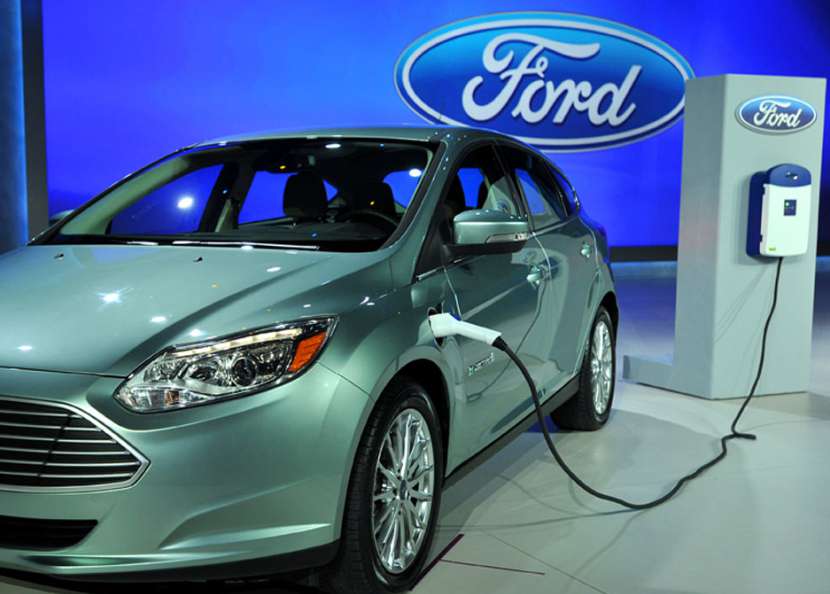
General Motors and Ford each announced June 16 new increases to their respective investment programs to boost their production of electric vehicles over the coming decade.
GM said it will invest $35 billion towards EV and automated vehicle production through 2025, a 75% increase from the company’s original investment package proposed in early 2020, according to a statement.
“GM is targeting annual global EV sales of more than 1 million by 2025, and we are increasing our investment to scale faster because we see momentum building in the US for electrification, along with customer demand for our product portfolio,” GM CEO Mary Barra said.
To support increasing EV production, GM said it is accelerating its plans to build two new battery cell manufacturing plants in the US by mid-decade.
“[This will] complement the Ultium battery cell plants under construction in Tennessee and Ohio,” GM said. “Further details about these new US plants, including the locations, will be announced at a later date.”
Meanwhile, Ford said its Lincoln Motor luxury vehicle brand will debut its first global full EV next year, serving as the first step in electrifying the brand’s entire portfolio by the end of the decade.
“By mid-decade, Lincoln expects half of its global volume will be zero-emissions vehicles and plans to electrify its portfolio of vehicles by 2030,” the automaker said in a statement. “This is part of the company’s Ford+ plan and planned investment of more than $30 billion in electrification by 2025.”
Lincoln’s EV will join its lineup of existing hybrid vehicles, which includes the Corsair SUV.
— Nick Lazzaro

Russia’s Severstal invests $2.8 mil in steel service center to boost processing
Russian mining and steel company Severstal is investing Rb200 million ($2.8 million) this year in new processing equipment of its Kolpino steel service center in northwest Russia’s Leningrad region.
The modernization will expand the center’s capabilities, increase its productivity and help it move from blank production to sub-assembly at some point in the future.
The center is to get a laser cutting machine designed to cut 1mm-20mm thick sheets and plate. Together with the facility’s existing equipment, this will enable Kolpino to process the entire 1mm-40mm range of flat rolled steel thicknesses.
It will also get a gas-plasma cutting machine, which will ensure higher precision of cutting.
A third piece of new equipment, a coordinate drilling machine, will provide high accuracy in hole marking and drilling.
The edge milling machine will finish plate or blank edges to high precision, and the last unit of the new equipment — a straightening machine — will ensure up to 0.2 mm/meter flatness in steel-made parts and blanks.
As a result of the investment, the company said that the Kolpino center will significantly improve its metal processing capabilities, offering customers new products and delivering larger output quantities, which will help it reduce operational costs and increase profitability.
— Ekaterina Bouckley
Steelmakers formalize offers for Hayange and Ascoval
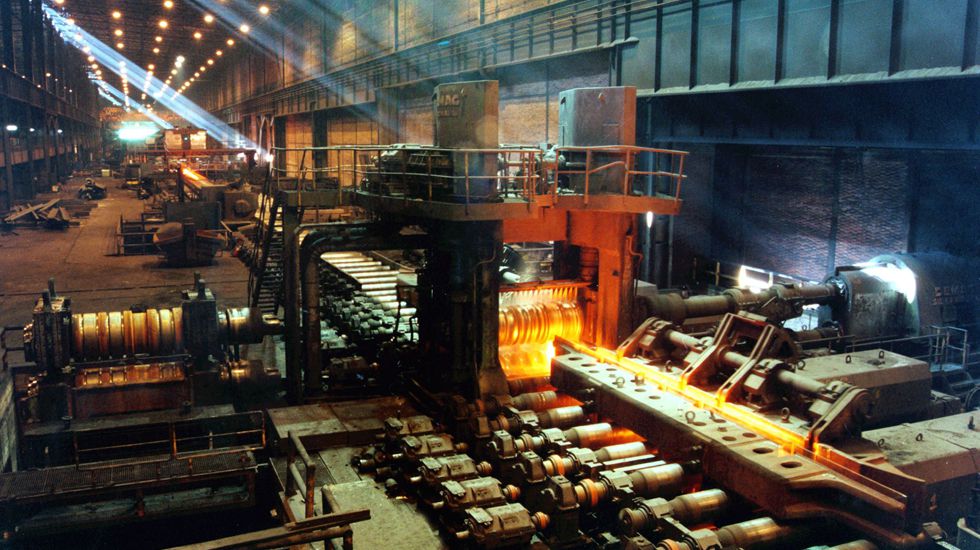
Steelmaker ArcelorMittal, Italian long products maker Beltrame and German steelmaker Saarstahl have now all submitted bids to purchase French steelmakers Hayange and Ascoval, put on the market by the troubled Liberty Steel Group, the bidders have confirmed. The deadline to present offers to purchase Liberty’s French units has been reported to be June 15, sources told S&P Global Platts June 16.
Liberty put specialty steelmaker Ascoval and rail producer Hayange on the market together in May amid the metal group’s ongoing financial troubles after its main financier, Greensill Capital, filed for bankruptcy in March. The French government that month loaned Eur20 million ($24.2 million) to the two plants to cover working capital and capital expenditure costs, according to sources. The French government obliged Liberty to refinance operations by the end of May with an additional Eur20 million, or put the two companies up for sale if it could not, sources have said.
Of other steelmakers understood to have shown interest in Hayange and Ascoval, Acciairie Venete declined to comment and JSW did not answer Platts’ requests for comment. Sources said JSW is unlikely to have formalized an offer while Acciairie Venete may have bid for the two French mills.
German long products maker Saarstahl released an official statement June 16 confirming its offer. “This bid supports an industrial project for the future of the two plants, but also for an enduring development of industrial activities in the Nord and Moselle regions,” said Karl-Ulrich Kohler, chairman of Saarstahl’s management board. “In the face of international competition in the steel market, Saarstahl is offering a permanent acquisition of the Ascoval and Hayange plants based on a strong geographical and industrial integration of Hayange and Ascoval into the production network of the current plants of the group.”
Saarstahl’s project would aim to integrate a new rail market into Saarstahl’s commercial and industrial strategy, to diversify its portfolio, adding blooms and rails and to access electric arc furnace technology. “This project is fully aligned with the strategy of our Saarland Group, both in terms of strengthening competitiveness and structural transformation,” said Kohler.
The company has a continuously casting blooming line in Volklingen which could supply Hayange with some blooms in particular sizes that Ascoval doesn’t supply and which are currently supplied by British Steel, market sources told Platts.
Sources said there are however growing expectations that ArcelorMittal could win the bid as it is probably in a position to offer more for the two companies in terms of financial capacity and industrial plans, although there is the caveat that such a deal might not go ahead for competition reasons as the European Commission may consider ArcelorMittal’s existing strength in the rail market.
ArcelorMittal’s assets in the steel rail sector in Europe includes one plant in Spain, one in Luxembourg and two in Poland, which supply key rail markets including high-speed, metro, heavy-haul, urban transport and port operations. Sources said the company is checking if this might pose a problem in terms of already having a dominant market position within the EU. According to a Reuters report, EU antitrust regulators will decide by July 9 whether to clear ArcelorMittal’s bid for Hayange and Ascoval.
ArcelorMittal declined to comment on antitrust issues when approached by Platts, but it confirmed that it had submitted an offer to acquire the Hayange and Ascoval steel plants: “The Hayange and Ascoval plants would benefit from ArcelorMittal’s significant R&D capabilities in products and processes, particularly in the rail business, market knowledge and sales footprint, investment and business development capacity, logistics and storage capabilities. ArcelorMittal would also commit to maintaining employment at existing levels and would leverage its know-how and experience in HR development.”
ArcelorMittal produced approximately 8 million mt of steel in France last year, employing 15,500 people.
Italy-based longs producer Beltrame confirmed its interest. The company already has mills in France with LME (Lamines Marchands Europeens), located not far from Ascoval and has a mill in Romania that could benefit from Ascoval blooms, a company executive told to Platts. Beltrame’s Donalam mill in Romania is a new customer for Ascoval, which shipped 500 mt of blooms as a trial last month, sources told Platts.
None of the companies cited above said how much they had offered for the French companies, or other details.
Acciaierie Venete makes quality long steel products and is owned by the family of the head of the Italian Steel Association, Federacciai, Alessandro Banzato, who was always keen to expand his family business overseas but up until now had not done this, industry sources said. Market sources said that Acciaierie Venete is very solid, has cash and is very keen to increase its production mix so “it could be the right time for them to shop abroad.”
JSW Group produces blooms for rails in India and also produces rails at its steel plant in Italy in Piombino. Union sources indicated however that JSW has slowed down its investment in its Italian mill, which is largely at a halt.
— Annalisa Villa
Supply to catch demand by year-end: Tata’s Adam
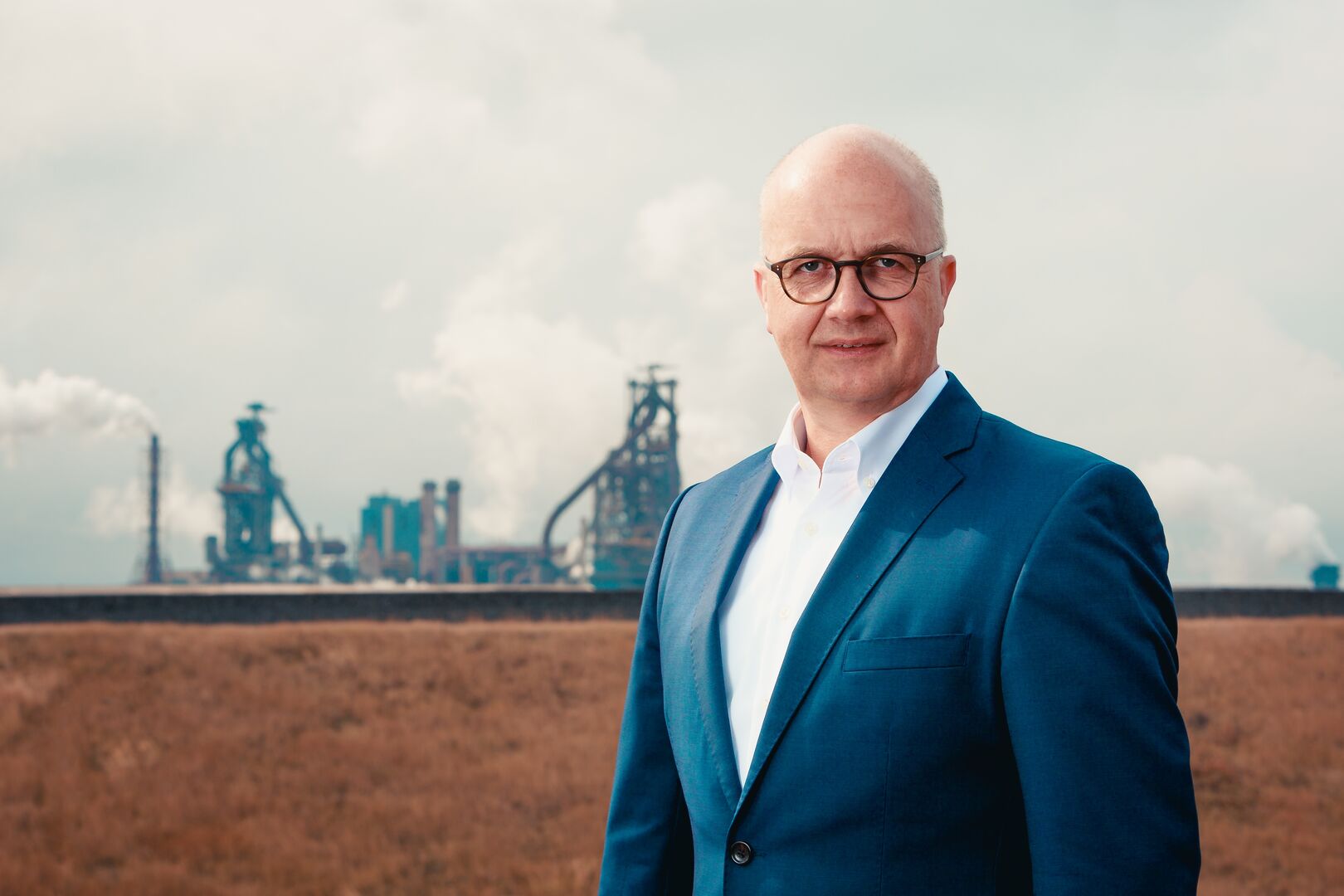
Steel demand and prices are forecast to remain structurally high, while supply and demand should become rebalanced post-Covid-19-impact at the end of this year, Tata Steel Europe chief executive Henrik Adam said at the Kallanish Europe Steel Markets virtual conference on Wednesday.
“Our cost of supply has increased with iron ore being at record high levels … I think the price level will remain high and also with a more local focus after the pandemic,” Adam observed. “The pricing will be at a different level compared to what it was in the past for quite some time.” High steel values are not the result of volatility and speculation but a structural change, he added.
Overcapacity has been halved globally over the last year. It went down from 800 million tonnes/year to 400mt. The pandemic took producers by surprise and reduced demand from some sectors by 90% “more or less overnight”, the ceo commented.
Producers are still struggling to return to a supply-demand balance because the overall supply chain has been shaken by unexpected lockdowns. “Since the beginning of the year we are getting back on track,” Adam observed. “It is not a one-time effort … From one cast of liquid steel we serve different customers and not just one group, so we need to constantly reshuffle our production schedule which is causing delays. We think it will be some time until we go back to a normal performance.”
It may take 6-9 months to rebalance supply and demand after the pandemic market disruption. Towards the end of the year customers should see the beginning of a normal supply situation from most mills, Adam forecasted.
Decarbonisation will also make steel more expensive due to increasing carbon costs and heavy investment to produce “green” steel. Tata Steel has decided to implement a carbon surcharge as a new structural element in its pricing. The CO2 price per tonne has increased from the end of last year from €30/tonne ($36) to €50/t. The surcharge will be applied for every new contract, the ceo confirmed.
Tata Steel is Europe’s third-largest producer with a crude steel output of 12m t/y. It has steelmaking sites in the Netherlands and UK, and distribution sites across Europe and other parts of the world. The company is heavily investing in decarbonisation of steelmaking, including in hydrogen technology, and looking at scrap as a means of decarbonisation to start moving away from iron ore.
Natalia Capra France