

Riva steel mill in Belgium faces 2 week shutdown following fire: Sources
Long steel products producer Riva Thy-Marcinelle in Belgium has suspended production following a fire at its Charleroi mill, market sources told S&P Global Platts June 23.
Riva Group — owner of the plant — declined to comment on the shutdown when contacted by Platts. the Riva Thy-Marcinelle mill has a design capacity of around 800,000 mt a year and produces wire rod, reinforcing bar and welded steel mesh, according to the company website.
The industry source said the incident impacted the the plant’s electric arc furnaces transformer and may require at least two weeks to resolve.
The European rebar and wire rod market is already tight, with prices impacted by higher demand. Northwest European domestic rebar prices have gained since April 16, when the Platts index stood at Eur620/mt ex-works. Platts assessed TSI Northwest Europe Rebar at Eur810/mt ex-works June 18, inching closer to the index’s highest level since July 23, 2008, when it sat at Eur815/mt ex-works.
“When the problem is a transformer it is unlikely that the mill can restart to produce before two to three weeks. It is very difficult to find materials and mills are very confident, safeguards make it impossible to import and scrap prices are high. Production is limited so if we want the products we just have to accept their prices,” another source with knowledge of the matter in Belgium told Platts.
“We were just informed that Riva had a fire, but we don’t know the full extent of its consequences,” said another Benelux-based distributor of steel.
As the mill is one of the major rebar producers in the European market, they expect rebar prices to react accordingly.
— Annalisa Villa, Rabia Arif

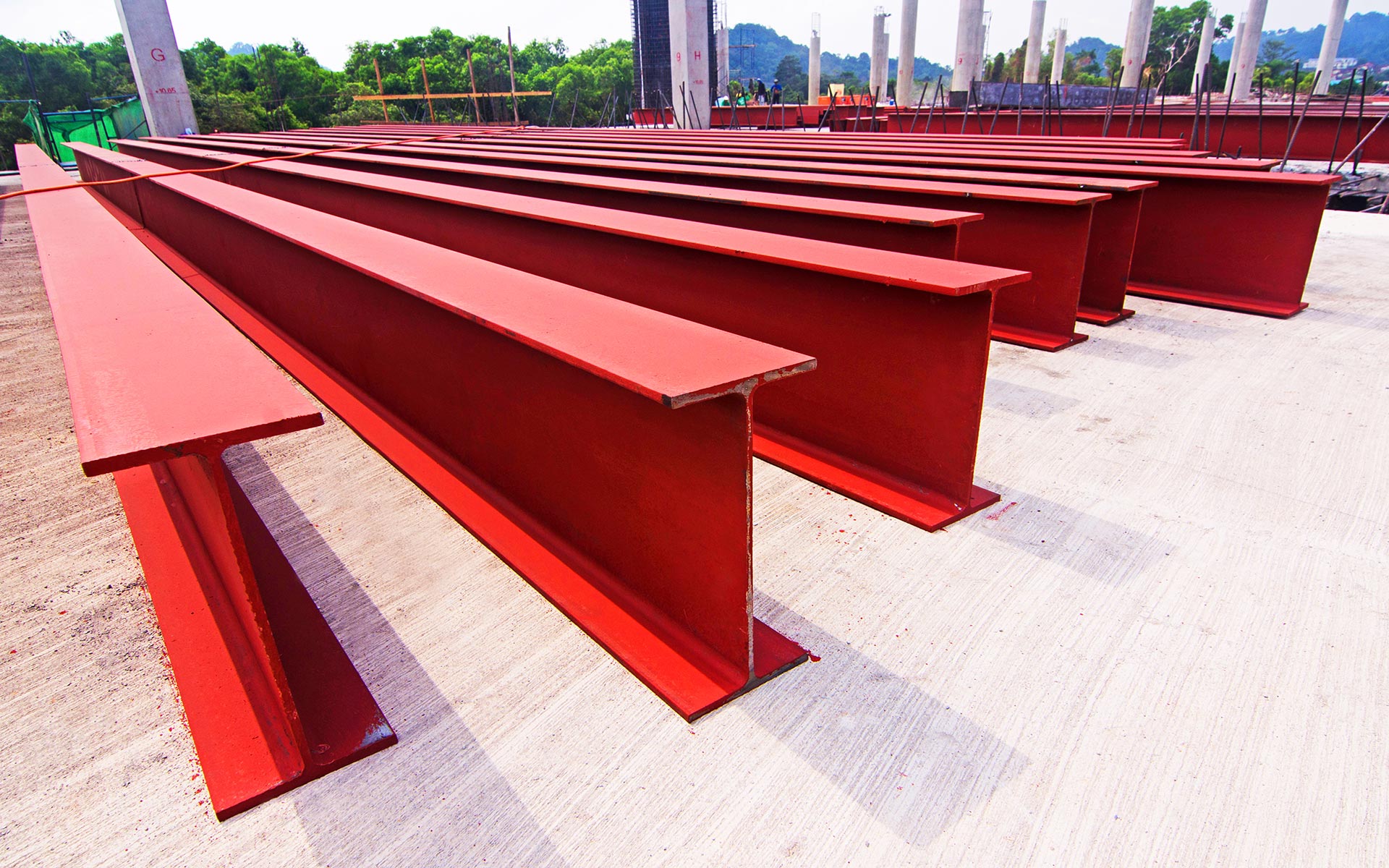
EU steel sections prices reach a 24-year high
European domestic steel sections prices gained for another week through June 23, as sources cited fresh deals amid limited supply and transportation issues.
S&P Global Platts’ European medium sections price (category 1, S235 JR) was assessed at Eur1,012.50/mt delivered June 23, up Eur32.50/mt week on week, reaching its highest level in 24 years.
One Benelux-based distributor source cited a deal for 1,000 mt at Eur1,025/mt delivered as most mills continued to hold back offers. “We could buy a small quantity, as the mill was offering limited tonnage and the rest of the mills are still out,” he told Platts.
“Demand is still very strong. Prices are moving up almost on a daily basis,” he said, highlighting transportation issues in the domestic market: “All of Europe is booming like crazy so logistics is not good. Trucks are not available. Normally the availability was same or next day, but now it is taking around three days to one week and even that at completely different price levels. Transportation prices have increased 40%-45% from earlier levels.”
Another distributor source in the Benelux region reiterated the logistics constraint: “There really is a lack of transport. It’s difficult to get trains, trucks, or barges. Material is not coming in as it should. We expect this logistics issue to continue until the end of September.”
The source also expects steel long products prices to remain strong in the near term as mills have continued to report strong orderbooks. However, he expects some price correction in September as the market usually experiences low demand during the fourth quarter. The source cited a tradable value for category 1 medium sections at Eur980/mt delivered.
One European mill source cited mill offers at Eur1,000/mt delivered for category 1, adding that deals were also booked at Eur1,000/mt delivered, though for low quantities. “The orderbooks for all mills are extremely strong. July production is fully booked for us and the German mills,” he said, adding that it is thus perfectly normal to see a slight slowdown in demand, but “nothing to be concerned about.”
— Rabia Arif
Italian High Court gives Acciaierie d’Italia green light to continue steel output
Acciaierie d’Italia, the largest Italian flat steel producer, will be able to keep open its hot end, the steelmaker confirmed June 23.
The Italian State Council overruled on June 23 a decision by the Lecce regional administrative court, thus allowing the continuation of crude steel production at the Taranto plant. The decision put an end to months of uncertainty for the major player, in what is the second largest European steel market.
As reported on Feb. 13, the Lecce regional administrative court said that Acciaierie d’Italia (at that time ArcelorMittal Italia) had to shut all hot-end operations within 60 days at its Taranto plant to curb emissions. ArcelorMittal, then the main shareholder, appealed against this decision to the Italian State Council.
“The hope is that now with this decision it is possible to establish a ‘legal’ and ‘political’ starting point from which to restart the industrial activity of the site, without any further situations of uncertainty that have characterized the operation and management of the most important industrial site of our country,” Alessandro Banzato, president of Italian steel federation Federacciai told Platts June 23.
“We welcome the decision of the Court, Italy is a major transformer market so we need a strong domestic player in particular in a period when it is not so easy to find materials,” Paolo Sangoi, the new president of ASSOFERMET Acciai, the Italian service center association, told Platts. “This is a very important decision because it puts an end to uncertainties on the future of the former Ilva and it will mark a new beginning for the company that can now put in place a serious green industrial plan.”
Acciaierie d’Italia released a statement June 23 in which the company said “that it is ready to present its proposed plan for the ecological transition of the Taranto plant with the aim to produce green steel.”
The company did not elaborate on its future green plan, but according to union sources, a series of investments are expected to make Taranto one of the main green steelmakers in Europe, including a larger than usual EAF, capable of producing around 2 million mt/year. Acciaierie d’Italia declined to comment further when questioned by Platts about its green plans but a spokesman underlined that the “most advanced green technologies” will be put to use.
Acciaierie d’Italia used to be the largest steel producer in Europe. At its peak it used to produce 10 million mt/y of crude steel with five blast furnaces, but it was also considered one of the main steelmaking polluters in Europe. Italian magistrates said in 2012 that said it had to be cleaned up or shut down, starting one of the longest court cases in the industry’s history. Two brothers of the Riva family, once the steelmaker’s owner, were in May sentenced to 22 and 20 years in jail, respectively.
Acciaierie d’Italia is currently working with only it’s No. 1 and No. 2 blast furnaces. No. 4 has been temporarily shut for maintenance and should restart by July. it was supposed to restart in mid-June but due to a battery issue the restart had to be postponed. The company is targeting 5 million mt of crude production by year’s end.
Each blast furnace has a design capacity of 1.8 million-1.9 million mt/y of crude steel, but they are not operating at capacity. Blast furnace No. 5, the largest in Europe with a production capacity of around 3.5 million mt/year, was idled in 2015. Blast furnace No. 3 has a capacity of about 2 million mt/y of crude steel but was idled in 1994 and is to be dismantled.
The Italian market consumes around 12 million-13 million mt of coils annually, market sources told Platts. Last year, according to Federacciai, the country produced about 20 million mt of crude steel.
The Italian market is reported stable with prices that have started to decrease slightly, after having recently reached their highest-ever.
Since the beginning of the week, hot-rolled coil prices have fallen by Eur10 to Eur1,130/mt south EU ex-works, according to the Platts index.
“Buyers are now in waiting mood, but this news about Ilva is such good news because although stocks are higher than before it’s still not easy to find materials,” a source from a large Italian service center said. “Prices went down a bit in the wake of the downturn of the Chinese and Vietnamese prices downturn. Italy imported few material from Vietnam and this is a bit of domino effect that we can see now in the market.”
— Annalisa Villa
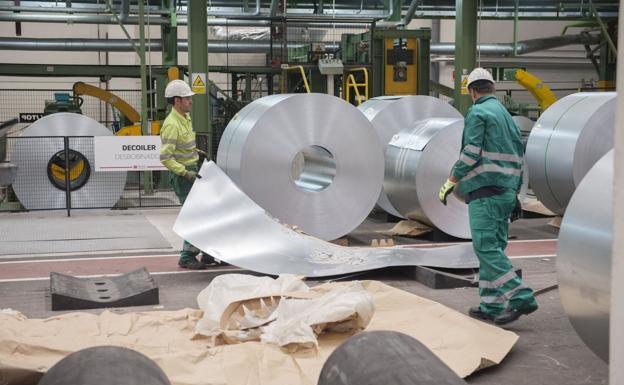
Italy’s Fimi bags order from NLMK
Fimi Group has bagged an order with Russia’s NLMK, the Italian equipment maker tells Kallanish.
Fimi will install two cut-to-length (CTL) lines for high-strength steel at the NLMK plant in Lipetsk, capable of processing material up to 25mm thick.
The agreement provides for the supply of a slitting line of 1,850mm x 2.0mm and a levelling and CTL line of 1,850mm x 3.0mm.
The CTL line for high-strength steel will be the first ever line to be installed in Russia capable of processing material up to 25mm thick, a Fimi representative says. Installation is scheduled for the first quarter of 2022, the source adds.
Fimi Group is partnering with US-based Janus Automation with the aim of gaining market share in the North American market and is also pursuing its strategy to reach markets such as Germany and Switzerland, as well as the CIS region (see Kallanish passim).
Natalia Capra France

Metinvest to build HRC plant in Italy
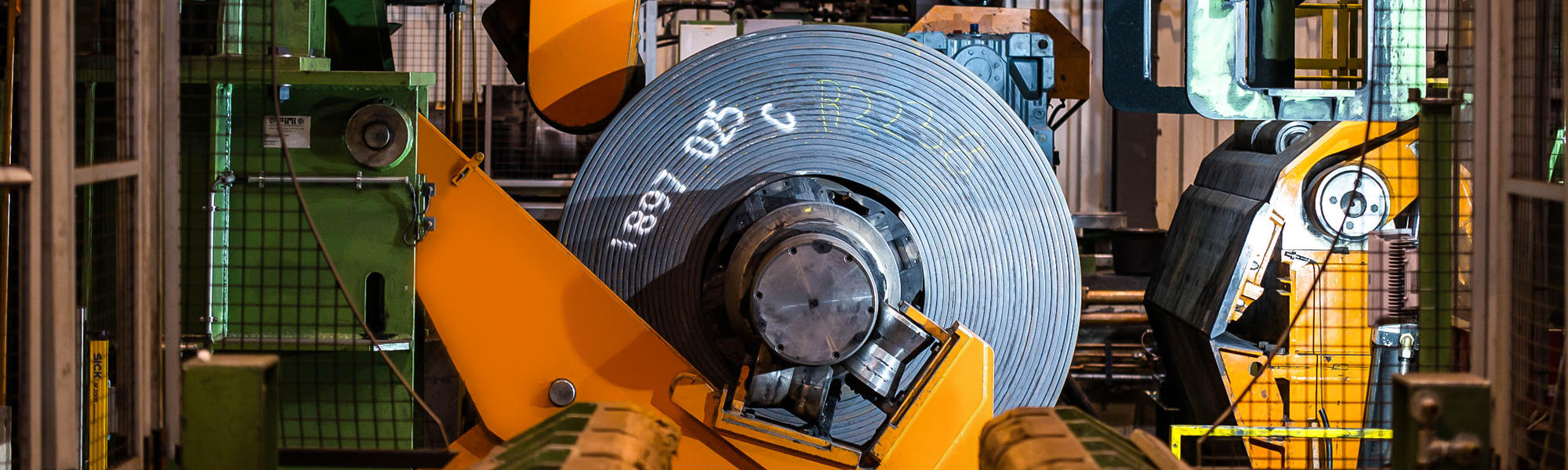
Ukraine’s Metinvest is exploring the possibility, together with Danieli, to build a new hot rolled coil plant in Italy, Kallanish notes.
“The project involves the construction of a new production facility in Italy, where Ukrainian slabs will be rolled into hot-rolled flat products,” Metinvest general director Yuri Ryzhenkov said at a press conference in Kiev on the company’s 15th anniversary on Wednesday.
“We already have two factories in Italy, where flat-rolled products are produced from Ukrainian slabs … Metivest is seriously considering building a new hot coil mill and we are negotiating with the potential owners of the site, and with Italian officials,” he added. “However, we did not make a final decision on this project and it is now at the pre-feasibility stage, but the construction of a plant is planned.”
The steelmaker’s strategy involves producing semi-finished product in Ukraine and then rolling it into high-quality finished products in target markets, said Ryzhenkov. “Italy is one of this key target markets for us and one of the main importing markets in the EU,” he concluded. Metinvest plans to make an official statement about its final decision for this project in the future.
The new plant should be built in the industrial area of Trieste, in the town of Muggia. The Friuli Venezia Giulia region officially approved last month a letter of interest received from the town of Muggia and the local economic development association for the construction of the new steelworks.
Danieli president Gianpietro Benedetti told Italian press that project is estimated to have a value of between €600-700 million ($716-835m) for a capacity of 2.5 million tonnes/year, and provide over 400 new jobs.
Earlier this month, Metinvest announced the beginning of construction of a new cold-rolled, galvanised and colour-coated coil production facility at its Ilyich Steelworks in Mariupol (see Kallanish passim).
The plant’s capacity will be 1.6m t/y. Total investment will exceed $1 billion. The company intends to complete the project by 2025. The group signed a contract with Danieli to supply the equipment.
Metinvest decreased consolidated crude steel production in the first quarter by 2% on-year to 2.13mt. Hot metal output however rose by 3% to 2.15mt.
Natalia Capra France , Svetoslav Abrossimov Bulgaria

Market anticipates further EU coil anti-dumping investigations
Anti-dumping measures on coil imports into Europe could see further changes in the coming months, as additional investigations are expected.
Market sources tell of rumours circulating of an imminent EU investigation into Turkish and Russian hot-dip galvanized coil. The investigation has not yet been announced, but market participants hear it is ready for launch.
According to official data, second-quarter EU safeguard quotas for category 4a metallic coated sheet – not used in the automotive sector – have been 83% exhausted. 4b quotas – specifically for the automotive sector – have been less used, except for the UK, China and South Korea, which have almost exhausted their respective quotas.
Russia and Turkey do not have specific country quotas allocated for either of the sub-groups. Nevertheless, both have seen their HDG sales to Europe jump since 2016, according to Eurofer data. Turkey could this year supply over 1.2 million tonnes of HDG to the EU; in 2016 it was slightly more than 80,000t. Russia should close the year with sales of some 450,000t, up from less than 40,000t in 2016.
A trader confirms to Kallanish that everyone is expecting an investigation into Turkish and Russian HDG to be announced soon. He adds that Russian steelmakers are also trying to convince the European Commission to review the existing AD duty on Russian cold rolled coil, but the Commission is unlikely to accept their request.
Emanuele Norsa Italy
Global steel output in May up by 16.5% on year: worldsteel
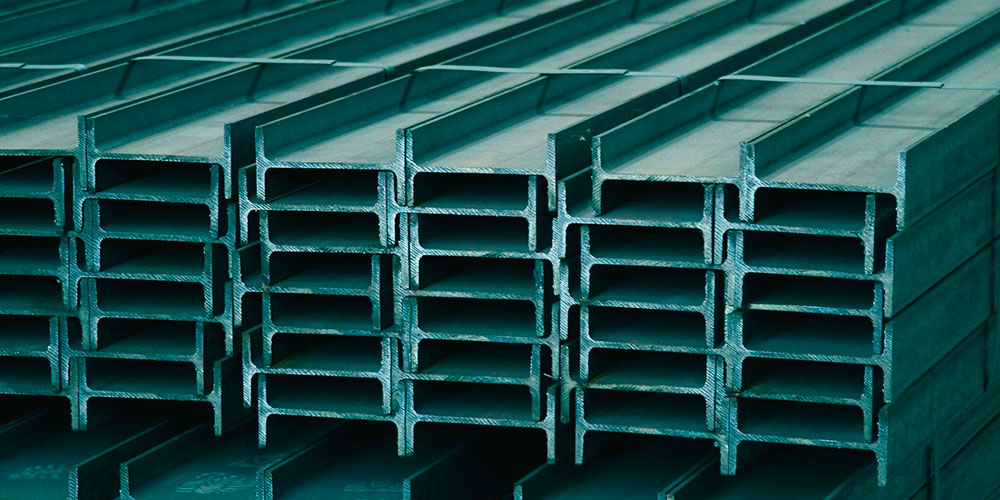
Global crude steel production went up in May by 16.5% year on year to 174.4 million metric tons (mt), marking a continuing recovery by the sector from the impact of COVID-19, the World Steel Association reported June 22.
The rise in production was triggered again by China, the world’s top producer and consumer of steel, registering an output increase of 6.6% on year to 99.5 million mt in May.
Top 10 steelmaking nations
Following China’ substantial lead, India was the next biggest May producer at 9.2 million mt, up 46.9%. Japan produced 8.4 million mt, up 42.2%. The US produced 7.2 million mt, up 47.6%.
Russia is estimated to have produced 6.6 million mt, up 14%. South Korea is estimated to have produced 6 million mt, up 10.5%. Germany produced 3.5 million mt in May, up 35.5%.
Turkey produced 3.2 million mt, up 42.4%. Brazil produced 3.2 million mt, up 40.1%, and Iran is estimated to have produced 2.6 million mt, up 7.7%, worldsteel said.
Blast furnace iron
Iron produced in blast furnaces amounted to 117.22 million mt in May, up by 7.6% from May 2020. In January-May, this amounted to 570.67 million mt, up from the 531.4 million mt registered during the same period a year ago.
Direct reduced iron output in May was 8.65 million mt, up from 7.27 million mt registered in May 2020. In January-May, DRI output was 42.85 million mt, up from 36.84 million mt a year ago, worldsteel reported.
— Annalisa Villa
Europe’s steel buyers seen ready to buy green steel at higher prices
European steel markets are developing customers interested in securing low carbon emissions-based steel products at higher prices, according to the Austrian Mining and Steel Association.
New low-emissions steel plants and investments will require breakthrough technologies, finance and competitive energy prices, as well as supportive markets and legislation, Roman Stiftner, managing director of the Austrian Mining and Steel Association, said June 22.
“We need the customers, we need a green market,” Stiftner said in a presentation to the Sustainable Steel Strategies Summit, in association with Steel Times International.
“We are seeing already that there are a lot of customers that are ready to pay a bit more for so-called green steel, and therefore maybe for a different price level,” Stiftner said. “I think this is a good situation that we have all this transformation available in the society and together with industry we can solve it.”
Higher production costs for low-emissions steel and demand for increasingly high-grade steel raw materials and clean energy as well as metals supporting the energy transition, will need to be supported by consumers and regulation, such as the EU’s proposed Carbon Border Adjustment Mechanism (CBAM), he said.
Austria’s Voestalpine plans to use hybrid and hydrogen-based steel technology in several phases with renewable power to slash emissions by 80% in 2050, which will likely increase operating costs, said Stiftner. ArcelorMittal is using hydrogen and carbon-based steel processes at several sites in Europe to cut emissions and is already selling flat steel with certificates for carbon emissions reductions achieved.
Steelmakers SSAB and Ovako are working with truckmaker Volvo Group on separate initiatives to use hydrogen-based steel products, with lower emissions. SSAB and partners produced its first hot-briquetted iron from the HYBRIT direct reduction iron pilot plant in northern Sweden, using green hydrogen biofuels-fired iron ore pellets, which will be used to make steel for trials with Volvo.
Ovako said June 22 it is developing Sweden’s largest hydrogen facility with a 17 MW electrolyzer at Hofors for heating steel, in collaboration with Volvo, Hitachi ABB Power Grids Sweden, H2 Green Steel and Nel Hydrogen. The investment of SEK180 million ($21 million) is supported by the Swedish Energy Agency, via the Industriklivet initiative.
Steelmakers may need a financial state aid regime for green sustainable investments, in addition to the CBAM.
“We have to finance this transition, we have a lot of funds available in the EU, and overall we are now on the way to find a sustainable financing regime, a so-called taxonomy regime” Stiftner said. “Definitely the steel sector must be a part of it, and must be the main affected sector in a positive way for sustainable finance.”
Stiftner is also managing director of the Austrian Non-Ferrous Metals Association and Secretary General of EUMICON, the European Mineral Resources Confederation.
— Hector Forster

Swedish steelmaker Ovako to use hydrogen power for steel rerolling
Swedish steelmaker Ovako will install an electrolyzer for the production of fossil-free hydrogen at its site in Hofors, the company said on June 22. The 17 MW plant will generate 3,500 cubic meters of fossil-free hydrogen per hour and is expected to be completed by the end of 2022, provided that permits are secured as planned, the company said.
The new unit, once functional, will make Ovako the first in the world to use power generated from hydrogen to reheat steel before rolling.
The use of the hydrogen will enable Ovako to reduce its CO2 emissions during steel production in Hofors by 50%, the company said. The steel industry, which accounts for 7-8% of total CO2 emissions worldwide, has been under pressure to reduce its emissions as the EU strives for carbon-neutrality with net-zero greenhouse gas emissions by 2050, S&P Global Platts reported earlier.
Ovako produces around 400,000 mt/year of long steel products in Hofors, mainly for the automotive and mining industries as well as wind power sectors. Ovako produces around 1 million mt/year of steel products. The company targets to use the hydrogen that it produces in all of its steel rolling units by 2030.
The project, worth approximately SEK 180 million ($21 million) aims to establish an industry-wide use of fossil-free hydrogen. There are also good opportunities for cost-effective and large-scale use of hydrogen in other areas, such as transportation but it can also improve electricity grid stability, while the residual heat can be utilized in district heating networks, the company said.
The project is also supported by Volvo Group, Hitachi ABB Power Grids Sweden, H2 Green Steel, Nel Hydrogen and the Swedish Energy Agency.
“Decentralized hydrogen production in the steel industry fits very well with the transport industry’s need for fossil-free fuel. This technological solution is scalable because it can be used by the steel industry in large parts of the world. Working in partnership with other industries to be involved in the entire value chain around our transport solutions is essential,” said Lars Stenqvist, Chief Technology Officer at Volvo Group. A filling station for hydrogen-powered heavy vehicles is also planned to be built beside the hydrogen plant.
“This exciting collaboration will test new value chains, and we look forward to acquiring knowledge about how an electrolysis plant can interact with the existing electricity network and become an important resource for its stability,” said Jenny Larsson, Managing Director, Hitachi ABB Power Grids, Sweden.
— Annalisa Villa
Merkel eyes ‘gigantic’ support for industry energy transition
Germany will have to spend huge sums and make more reforms in order to build a climate-friendly economy, German chancellor Angela Merkel said on Tuesday. One challenge will be to retain the national steel industry will pushing towards climate neutrality.
“We will have to spend gigantic sums in the next few years,” she said during Industry Day in Berlin. “On the one hand, this is the task of the economy, but there are areas in which it cannot be done without government support. This means also the expansion of European microchip production or the production of battery cells for electric vehicles (EVs).”
Merkel said the planned higher climate targets had not yet been spelled out.
“A new forecast about electricity demand up to 2030 is urgently needed and it can be assumed that more electricity will be needed,” she observed.
The chancellor also said approval procedures would have to be accelerated when expanding renewable energies and power lines, so planning management has to get better, Kallanish notes.
CDU party leader and potential next chancellor Armin Laschet said: “We want to be a climate-neutral industrial country. However, Germany must still have an auto, chemical and steel industry in 20 years and still be climate neutral.”
The Federation of German Industries (BDI), which organised Industry Day as a hybrid conference, warned that supply bottlenecks and raw material shortages were jeopardising the economic recovery.
“A shortage of semiconductors is already leading to sometimes far-reaching production restrictions in the automotive industry,” said BDI president Siegfried Russwurm. “The problems affect the entire supply chain.”
According to Russwurm, there are bottlenecks not only in semiconductor chips, but also a lack of plastics, packaging material, steel and metals. “It remains to be seen how strongly this topic will ultimately have a negative impact on economic indicators,” he added.
Green party chancellor candidate Annalena Baerbock offered the industry solidarity in climate protection. “We will only be able to do it together,” she said at the forum. Baerbock reaffirmed the idea of an “industrial pact”. The basic idea behind this is that the state should bear additional costs for more climate-friendly production methods until they pay off.
In the case of hydrogen, Baerbock spoke out against funding it with a watering can. “There will probably not be enough hydrogen to be used in all industries. You don’t need hydrogen in small cars, there are alternatives there, but not in the steel industry.”
Svetoslav Abrossimov Bulgaria