

Klöckner expects significant profit growth in second quarter
Distribution group Klöckner & Co expects a significantly stronger-than-forecast second-quarter profit, on the basis of further considerable steel price increases, Kallanish learns from an ad-hoc release.
Against this background, the company says it now expects an operating profit – Ebitda – before material special effects of €260-290 million ($317-353m), contrary to the previous expectation of €130-160m.
The announcement echoes a similar ad-hoc release from February, which announced a bigger-than-forecast Q1 profit even earlier during the still ongoing quarter.
Germany-based Klöckner & Co is the largest steel distribution group with activities on both sides of the Atlantic, in Europe and in the USA. It notes that price increases on both markets are contributing to the profitable performance.
Christian Koehl Germany
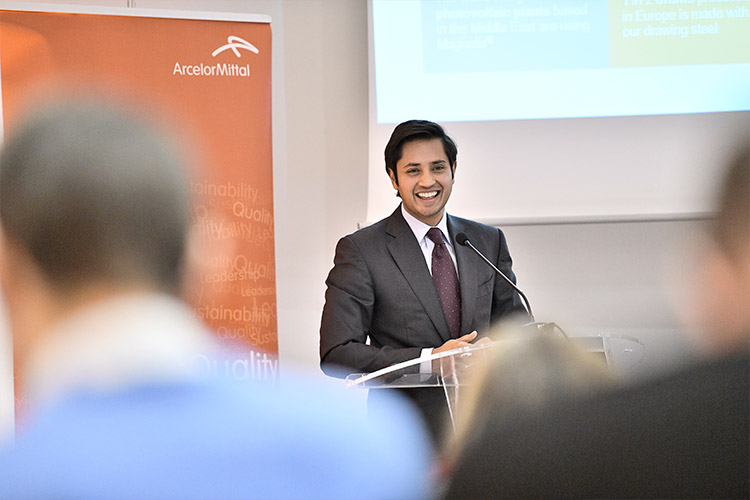
ArcelorMittal fast-tracks Liberty Ascoval, Hayange takeover bid
ArcelorMittal is fast-tracking its takeover of Liberty Steel’s French facilities, Ascoval and Hayange, by submitting an official request to the European Commission for acquisition approval.
The company is among other bidders to have shown interest in the French mills (see Kallanish passim). An EU document states: “ArcelorMittal … plans to acquire the majority of the shares in or the assets of Liberty Steel France … Liberty Steel France includes two main assets: France Rail Industries (‘Liberty Rail’) and a steel mill (‘Liberty Ascoval’).”
Meanwhile, ArcelorMittal confirms to Kallanish that it plans to invest in and grow the assets “in the short- to medium-term, improve the sustainability and profitability of both operations and integrate them into ArcelorMittal’s European network”. It adds: “The Hayange and Ascoval plants would benefit from ArcelorMittal’s significant R&D capabilities in products and processes, particularly in the rail business, market knowledge and sales footprint, investment and business development capacity, logistics and storage capabilities.”
ArcelorMittal would also commit to maintaining employment at existing levels, the firm adds. The acquisition would further enhance ArcelorMittal’s industrial footprint in France and complement its existing rail assets.
ArcelorMittal produced approximately 8 million tonnes of steel in France last year and employs 15,500 people.
Liberty Ascoval is a steel manufacturer, which produces continuous cast rounds and forged products at a production facility in Saint-Saulve, France. Recently, Liberty Ascoval started the production of blooms and square billets for a variety of applications, including rail blooms, which are supplied solely to Liberty Rail. Liberty Rail produces rails at its production facility in Hayange.
Natalia Capra France

Arvedi to increase its investment in Trieste
Italian coil maker Arvedi will increase its investment in the conversion of Ferriera di Servola in Trieste, to boost the cold-end area. This comes after the shutdown started this year of the hot-end at the former pig iron plant, a union source tells Kallanish.
The dismantling of the equipment and the coke plant will last until the end of this year. Arvedi is looking to invest €100 million ($121m) in the plant revamping, to install a galvanizing, coating and continuous annealing line. The plant currently has a pickling line and cold rolling mill.
This further investment adds to the €227m already allocated for the conversion of the Trieste site. The Italian economic development ministry (Mise), together with government investment entity Invitalia, the region of Lombardy and the region of Friuli Venezia Giulia, will support the operation.
Arvedi already secured a “green loan” of €240m from a pool of banks. The funding is in line with the New Green deal, the European plan that promotes industrial sustainability and circular economy (see Kallanish passim).
Natalia Capra France

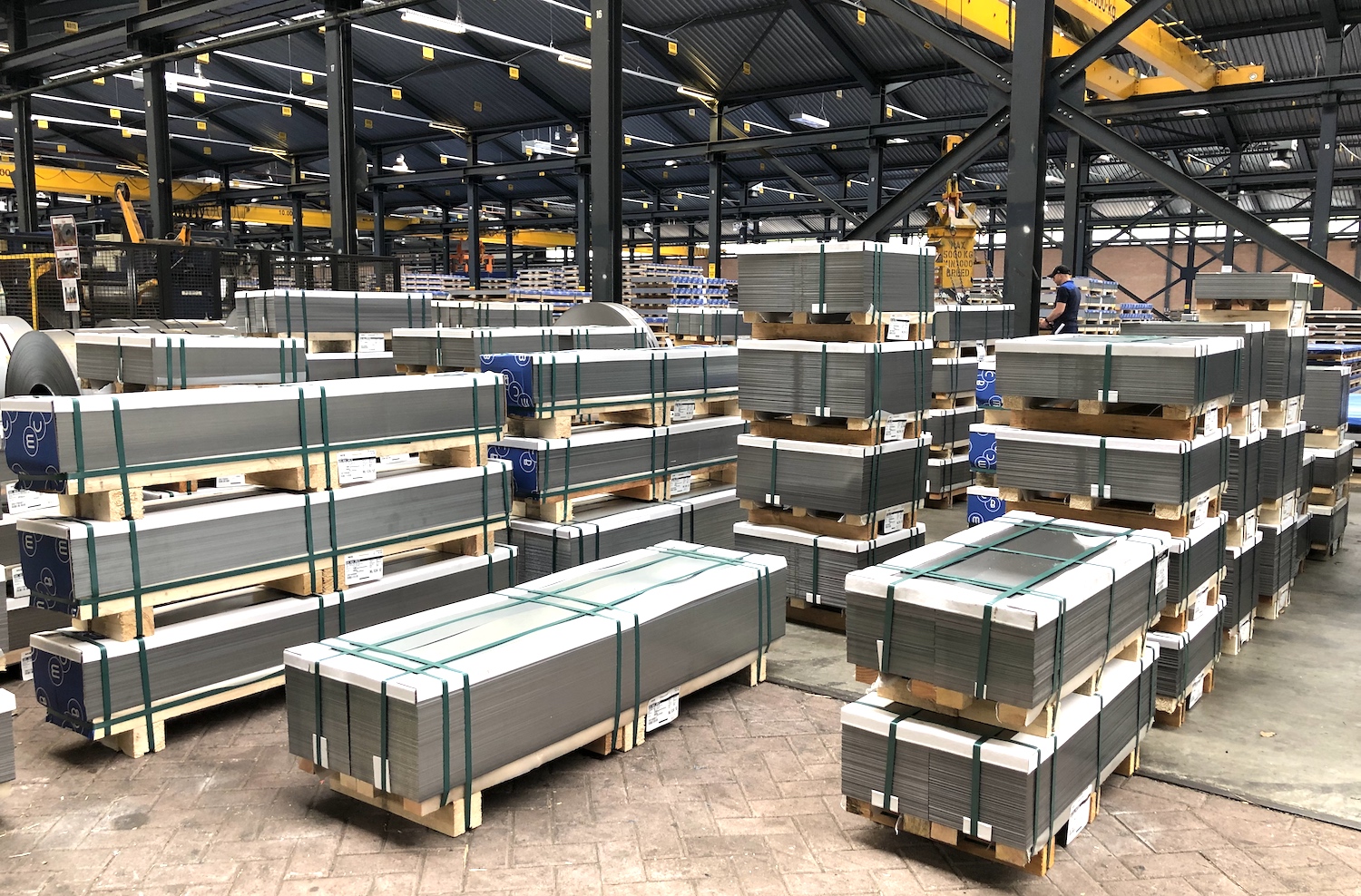
SSC Fischer Stahl commissions new cutting line
Fischer Stahl, a steel service centre in Germany’s Siegerland region, has invested in a new cut-to length line, Kallanish hears from the company.
The new line is designed for widths of up to 1,650mm, and thicknesses of 0.5-5mm, at a maximum running speed of 40 metres per minute. It can handle coils of up to 15 tonnes weight. It was supplied by plant-builder Burghardt+Schmidt through its subsidiaries Schnutz and Delta.
Fischer Stahl had sufficient space at its location to have the line equipped with two levellers, made by Schnutz, with rolls of 70mm and 45mm diameter, which cover the full range of Fischer’s materials. The cutting line is equipped with a sliding shear, so that it can do without a loop pit. It allows Fischer Stahl to supply even smaller lots than before, with a smoother handling of sensitive surfaces, the company notes.
Fischer Stahl has 50 employees and focuses on coated material – galvanized as well as aluminium-zinc and zinc-magnesium coatings.
Burghardt+Schmidt and its subsidiaries Schnutz and Delta started trading jointly a while ago under the name of b+s group. Most recently, the Delta Technik sub-unit was renamed to b+s Automation.
Christian Koehl Germany
Belgian authorities prepare Liberty Liege support loan
Belgian authorities are closing in on agreeing a loan to support production and the activities of the Liberty Liege rolling lines, Kallanish learns from a statement issued by Willy Borsus, the vice-president of the Liege region.
The loan should be granted through public investment company Sogepa. The Liberty Liege-Dudelange unit has been under judicial reorganisation since the beginning of March and is at risk of being forced to stop production due to a lack of funds, mainly to procure raw materials.
The loan would be granted to support the activities under the condition that the sale process of the unit is accelerated and that Sogepa will be involved in the final decision over the new owner. At the same time, contact between Belgian authorities and their Luxembourg counterparts is ongoing to make sure that support for the unit comes also from the Luxembourg government.
Liberty Steel coil rolling mills in Belgium-Luxembourg and Italy are struggling due to difficulties in financing raw materials supply. At present, the sole solution seems to be finding a new owner for the Italian unit of La Magona and the Benelux mills of Liege-Dudelange.
Emanuele Norsa Italy
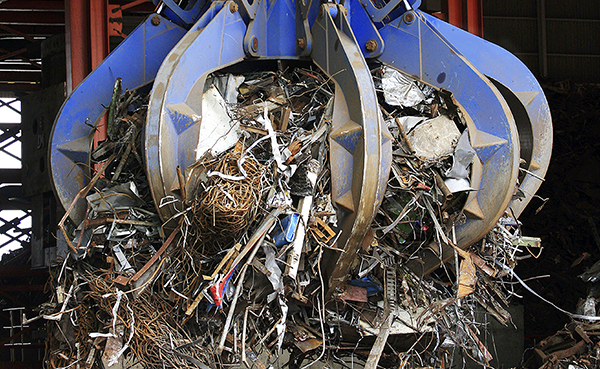
Strong domestic demand hampers Benelux scrap exporters
The Benelux domestic scrap market has decoupled from export markets. While demand remains strong, with higher-than-expected buying prices from European mills, demand in major export destinations is stagnant. As a result, most Benelux exporters are following a wait-and-see stance before committing to new material.
As a result of sharp domestic market increases, European scrap exporters have been forced to increase their dock prices from €350-360/tonne last week to €355-360/t ($433-439) delivered for HMS 1&2 80:20. However, it seems that this increase is far from being sufficient to secure material.
A Benelux exporter tells Kallanish: “We have changed our procurement strategy from ‘first buy’ to ‘first sell’. The risk is getting bigger each day. We initially have to confirm what levels Turkey is paying and then procure that material.”
Due to different market trends by region, Benelux scrap exporters are refraining from building inventories.
As European mills announce their June-trading prices, sharp increases are being recorded in the EU. German mills have increased their scrap buying prices by $40-50/t, depending on grade. The average price rise is expected to exceed €30/t for new-production material in the EU.
In Turkey last week, demand remained sluggish for the second consecutive week. Turkish mills showed no interest in imported scrap offers and prices remained under pressure. Some European suppliers were heard offering at $495-500/t cfr Turkey for HMS 1&2 80:20 on Friday.
“One of the reasons why Turkish mills were confidently halting purchases for two weeks was the availability of a sufficient number of offers in the market. However, we have to check once again if those offers are still available. Prices have increased very sharply both in the EU and the US and demand shifts towards obsolete grades in these markets,” says a scrap supplier.
Despite weak demand due to ongoing lockdowns, shredded scrap offers in India, another important export destination, have increased due to strong shredded demand in the EU and Pakistan. Containerised shredded scrap offers, which stood below $500/t cfr Nhava Sheva last week, increased above $515/t cfr on Monday.
Market participants in Turkey wonder how Turkish import prices will be affected by the sharp rises seen in the two main scrap suppliers, the EU and the US. While some say there will be no impact as Turkey is importing mostly HMS 1&2 80:20, others think there is no escape for Turkish prices.
The definite rise in shredded scrap premium, however, is agreed to by all. As a result, Turkish mills will most likely have to pay higher prices for cargoes containing shredded.
Burcak Alpman Turkey
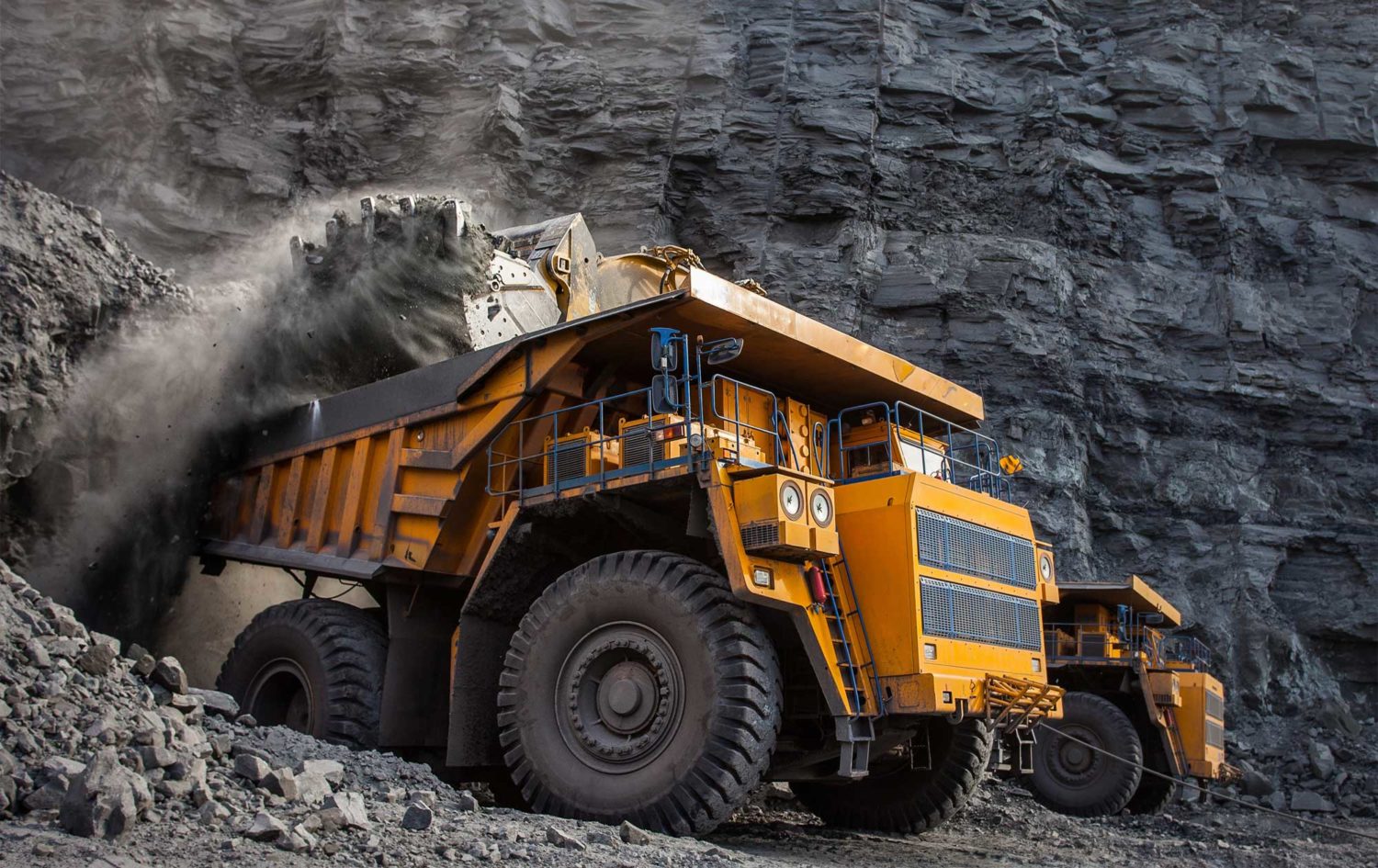
Swedish miner LKAB consolidates its stake in steelmaker SSAB
State-owned miner LKAB has increased its stake in SSAB to 16% of the votes and 10.5% of the capital, the company said on June 7.
This was achieved by buying class A-shares while selling class B-shares during the last few weeks, a company spokesman told S&P Global Platts.
LKAB has been a shareholder in SSAB since its IPO in 1989. In February 2020, LKAB increased its ownership to 10.5% of the votes and 10.5% of the capital.
“You could view it as a move to consolidate our new position as the majority shareholder due to our strategic interest in SSAB developing their leadership position in fossil-free steel,” the spokesman said.
SSAB is one of LKAB customer and the two companies are working together in the HYBRIT project. The venture project was started in 2016 also with Vattenfall, a Swedish multinational power company, to create the world’s first fossil-free steel-making technology, with virtually no carbon footprint replacing coking coal, traditionally needed for ore-based steel making, with hydrogen. The goal is to have a solution for fossil-free steel by 2035 that can reduce Sweden’s CO2 emissions by 10% and Finland’s by 7%.
“We are now consolidating our influence in SSAB in order to take responsibility and ensure that the company continues to have a clear industrial ownership influence at a time when the steel industry is facing major change, not least linked to the climate issue,” said Jan Moström, president and CEO of LKAB.
“The change in the value chain we are facing requires that we jointly develop our value chain. With our transition to a supplier of carbon dioxide-free sponge iron, we have a strategic interest in SSAB continuing to develop its leading position in fossil-free steel,” Moström explained.
LKAB is a small player on the global iron ore market, but for the seaborne iron ore pellets, the company is the world’s second-largest supplier.
— Annalisa Villa

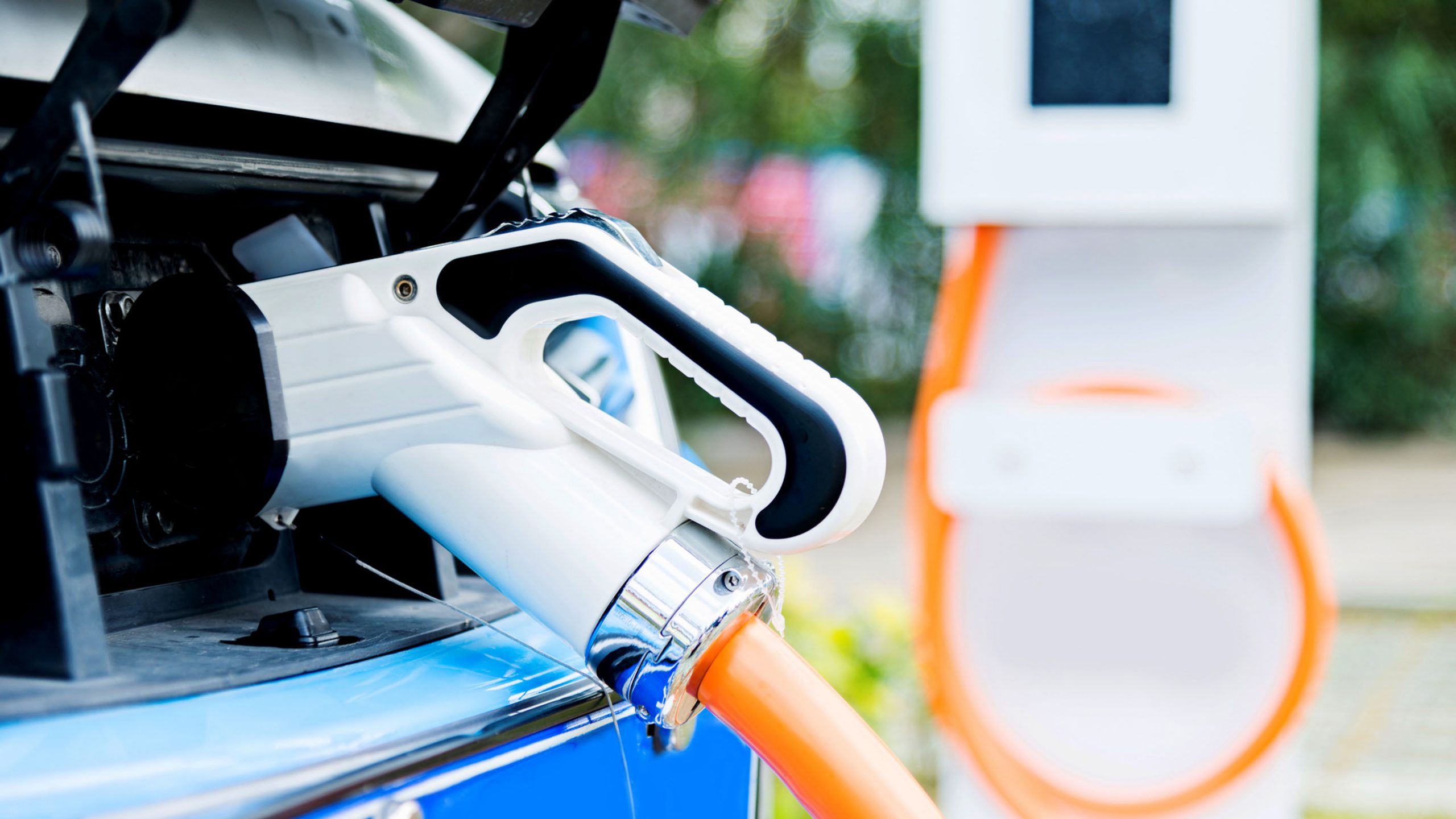
Automotive sales in Turkey jump in May on base effect
Automotive sales in the Turkish domestic market jumped year on year in May, mostly on base effect, as domestic sales in Turkey fell sharply in the same month the previous year during the COVID-19 pandemic.
Domestic passenger and light commercial vehicles sales rose by 69.8% on year to 54,734 units in May, the latest monthly Turkish Automotive Distributors Association (ODD) data showed.
Domestic sales of passenger vehicles increased by 72.1% on year to 43,138 units, while light commercial vehicle sales rose more 61.9% to 11,596 units, according to the data.
Domestic passenger and light commercial vehicle sales in May 2021, however, were a 20.7% decline compared to the May sales average of the last ten years.
Domestic passenger and light commercial vehicle sales in the first five months of the year totaled 314,882 units, up 72% on year.
The rising trend in auto sales in Turkey is expected to continue in the coming months with the easing of the COVID-19 pandemic amid progressing vaccination, which could also increase automotive steel demand.
The Turkish government’s TOGG domestic electric car project is also expected to support automotive steel demand in Turkey. The factory, based in Gemlik, Bursa province, with an annual capacity of 175,000 vehicles, is expected to be completed by 2022 and will be Turkey’s first domestic car engineering, design and production center.
— Cenk Can
Boom continues in global longs market, Q4 correction possible: Irepas
Although the boom has been continuing in the global long steel market amid an ongoing steel shortage, some price corrections could be possible in the last quarter of the year in line with the rise in global steel production, International Rebar Producers & Exporters Association (Irepas) said in its latest short-range outlook published June 7.
“There is still a shortage of steel everywhere in the global long steel products market and demand remains high in the sheltered markets. On the other hand, there is pressure from the Chinese government to reduce steel prices. It is hard to imagine that this will lead to anything but more supply shortages,” the association observed.
Noting that circumstances were different in previous global price booms, Irepas said: “While obviously we are in new territory, it may be noted that the 2008 boom ended with strongly falling prices. Last month, steel production was up by 23%. This trend will continue and, as a result, there may be some price correction in the last quarter of the current year.”
Highlighting that buyers in the EU have their hands tied and have no option but to accept new higher prices, Irepas said strong demand and scarce supply still prevailed in the US market.
“The world market will be in better equilibrium as China is almost completely out of the export market,” Irepas noted, adding that any downward trend – such as expected by some for Q4 – will certainly be much softer in this situation.
Noting that demand for ferrous scrap continued to increase as steel production globally strengthened, Irepas said well-booked steel mills at high prices will mean strong demand for raw materials through the next quarter.
“Another major positive for the market is that global raw material prices have seemed to be levelling off at the recent high prices, which brings some stability for future sales. The attempt by China to push raw material prices down has not succeeded,” Irepas noted.
Noting that overall demand is strong due to public spending, Irepas said the current status of the market can be described as generally stable with some short-term fluctuations possible.
“The outlook is certainly satisfactory if it cannot be described as outstanding. Going forward, competition will probably only be seen in Asia with some see-saw fluctuations, but it seems the overall market will remain ‘perfect to proceed,'” Irepas concluded.
— Cenk Can

Severstal eyes ‘disruptive’ technologies for hydrogen-based steelmaking
Disruptive technology is needed to make hydrogen a viable fuel for steelmaking, given its current prohibitively high cost, Severstal tells Kallanish.
The Russian steelmaker views hydrogen as one of the most important drivers of steelmaking decarbonisation in the medium and long term.
“There is a need for hydrogen with a low carbon footprint and at a low cost, but hydrogen from an electrolytic cell powered by renewable electricity costs $5-7 per kilogram,” the firm’s press office says. “This is prohibitively expensive if we do not want low-emission steel to cost significantly more …30% to twice as much. That’s way we need disruption – low-carbon hydrogen for $1.5 and cheaper, and such hydrogen will certainly find demand in other heavy industries as well.”
Taking into account the energy transition and the abandonment of less environmentally friendly fuels, Severstal sees the possibility of replacing coal with hydrogen in the production chain. Hydrogen will thus be used for ore processing, hot iron production and steel production.
“Today, we see that reducing greenhouse gas emissions is important not only for minimising negative environmental impacts, but also important for our main stakeholders, investors, employees, insurers, customers and society, and sustainability our business in general,” the enterprise observes.
The steelmaker and Russia’s largest independent natural gas producer, Novatek, have signed a memorandum of cooperation to develop hydrogen, alternative energy, and greenhouse gas emissions reduction technologies.
Under the agreement, the parties will consider launching a joint pilot project for the production of blue hydrogen from natural gas, using carbon capture and storage technology.
The companies intend to jointly develop the capabilities, necessary standards and engineering solutions for the production and supply of hydrogen transportation pipelines, turbines, and hydrogen storage systems and transport tanks, Severstal says.
Both companies also agreed to partner on the production and supply of hydrogen and the development of technological solutions for the use of fuels based on hydrogen and its carriers, including ammonia.
“With the collaboration with our strategic partner Novatek, we are continuing to develop a number of solutions to reduce the carbon footprint of its activities and expand its range of products produced using carbon-free fuels,” says Severstal chairman Alexey Mordashov. “We expect to see rapid growth in technologies and projects for the capture and storage of CO2 as well as for the production of hydrogen, both in Russia and globally.”
Svetoslav Abrossimov Bulgaria