

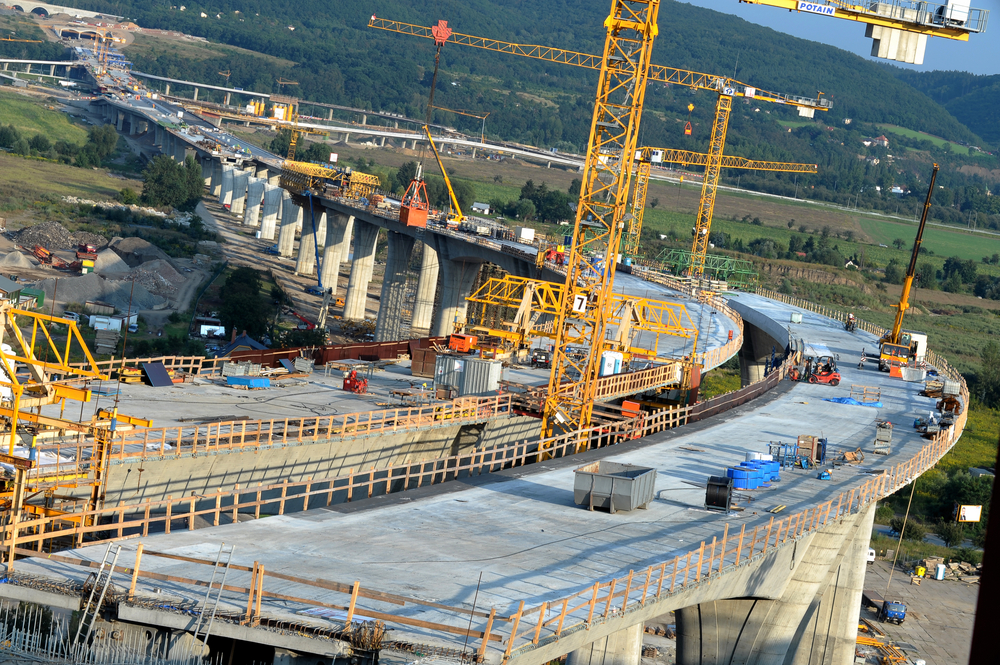
Panic purchases harm German construction, stockist warns
The current rush on the German construction market to secure rebar volumes is likely to aggravate shortages and fuel price hikes even further, a German stockholder and bending firm warns.
In a letter to its customers, the company recommends to make bookings far in advance, but only to the extent needed for projected production. It warns of speculation, and recommends to make deals only on the basis of current purchasing prices.
The company normally informs its customers several times per month, but hesitated to do so in the course of May “because it would have meant ongoing news of shortage and price increases. This would have led to more panic buying, and stressed the tension on the market”, Kallanish reads in the letter. The firm compares the buying attitude with last year’s panic purchases for toilet paper during the first wave of Covid-19.
Rebar base prices from German mills have recently reached a peak of €550/tonne ($669), translating to a delivered price of €815. The construction industry’s main association, Hauptverband der Deutschen Bauindustrie, attributes the increase of steel prices to the overall high utilisation of mills due to higher activity at preferred customer groups like automotive and mechanical engineering. This argument, however, does not explain the surge in rebar prices, a product made by mills exclusively for construction purposes.
Christian Koehl Germany

Spain’s crude steel production continues to recover: Unesid
Spanish steel sector activity has continued its post-Covid-19 recovery, registering in April the second-highest monthly production of the last 12 months.
According to Spanish steelmakers’ association Unesid, the local steel industry produced around 1.3 million tonnes of crude steel in April. This volume was just 0.9% less compared to the record output of 1.31mt in the previous month, but 108.6% higher on-year.
During the last seven months, Spanish monthly output ranged between 1.05mt to 1.31mt, except in December when activity is typically reduced, data show.
Since the beginning of 2021, the country saw its crude steel production reach 4.78mt. Unesid did not disclose an on-year comparison in its latest report, but taking worldsteel figures into account, the growth is estimated at 23.4%, Kallanish notes.
Spain used 1.01mt of ferrous scrap for steelmaking in April, the highest monthly volume over the last 12 months, Unesid confirms. During January-April, scrap usage was 3.7mt, representing 77.4% of total crude steel production in the period.
Todor Kirkov Bulgaria
Miner Vale’s Q3 iron ore pellet premiums rise $10/mt
Steel producers may face higher contract iron ore pellet premiums in the third quarter, as Vale reported an increase to premiums, and other producers indicated offers would rise from Q2 premiums.
Vale told S&P Global Platts on June 4 it had defined a $62/dmt premium against 65% Fe fines CFR China pricing, for BF pellets in Q3, which is up $10/dmt from Vale’s reported Q2 premiums. Vale sells limited quantities of pellets under contract in Europe, which mainly buys BF pellets.
For direct reduction pellets, Vale said Q3 premiums were defined at $70/dmt, up from $60.20/dmt reported for Q2.
The DR premiums also apply to 65% Fe fines pricing.
Vale pellet definition
Vale, the world’s largest pellet supplier, said it has concluded its “pellet premium definition process” with buyers. Vale is said to have agreed with customers a single premium per grade, which matches supplies available with contract commitments, and any unperformed or unplanned volumes would be directed to other customers or spot markets. Vale has seen lower pellet output in the past two years, on restricted supplies of pellet feed in Brazil.
The company typically uses fixed freight netback terms for its contracts, which would lead to higher FOB iron ore prices compared with spot Capesize rates between Brazil and China references, using May data, according to a supplier familiar with the terms.
In Europe, Q3 negotiations were at an early stage, sources said, with several companies yet to offer firm levels or enter into premium discussions. Europe may stick to largely pricing BF pellets on a 62% Fe fines basis, with increases expected from settlements for Q2, a producer said this week.
A DR pellet buyer confirmed Vale’s Q3 premium after the reported settlement. BF pellet buyers contacted on June 4 still saw limited settlements, and tight supply from Vale determining a premium offer, rather than demand alone leading to the quarterly increase.
Q2 pellet premiums were heard in a low $60s to low $70s per dmt range, with large volumes of higher-grade pellets agreed at mid-$60s/dmt premiums to IODEX 62% Fe fines, according to market sources.
Pellet premiums were earlier expected to rise due to strong demand in Atlantic and Asian markets, and continued supply constraints and disruptions.
Vale’s pellet indications are in line with the market view on high demand and tight supply, with customers maintaining full contractual quantities, a supplier said.
Steel order books appears to be full into Q3, and steel producers have progressively increased steel prices, with no signs of change outside China, he added.
Iron Ore Co. of Canada’s Sept Iles terminal remains at below-capacity loading after a fire at the end of March affected storage and the loading of pellets and concentrates onto vessels, according to sources close to the operation.
Vale sells pellets under contracts to global markets, including to joint venture partners at its Tubarao pellet complex.
S&P Global Platts Americas and EMEA steel prices, and Europe and US steel mill spreads with raw materials, have seen strong increases through May. This may help absorb increased iron ore costs, after iron ore prices reached record levels in May, and remain at higher levels than in Q1.
The wider 62%-65% Fe fines spread in April and May was expected to support blast furnace pellet premiums, as the market in Europe largely uses premiums off the 62% Fe IODEX index. Suppliers may seek to close the gap by raising premiums to compensate or, alternatively, sell pellets and concentrates off the 65% Fe fines index.
— Hector Forster

Czech steelmakers call for prolonged EU measures against imports
Czech industry association Steel Union has written to the minister of industry and trade, Karel Havlicek, to ask him to back continued EU measures against steel imports.
The letter, seen by S&P Global Platts June 4, said the Czech steel sector was still in a fragile state despite strong price increases in recent months.
Prolonging the measures are expected to have a positive effect on the Czech steel industry whereas steel imports into the EU are likely to flood in if the EU measures, adopted in 2018, are dropped, Steel Union said.
The reasons for adopting the original measures to protect EU steel producers were, if anything, even stronger now than they were then, it said.
The biggest reason is that the US is still imposing 25% duties on imports with Joe Biden’s administration showing no sign of changing that situation.
The European Commission was expected to decide in coming days whether to continue the measures against imports. These include quotas on imports from various countries based in exports to the EU between 2015 and 2017 plus 5% with 25% duties on imports beyond those levels. The quotes were increased by 3% in July 2020, the same level as the increase in the previous year.
Auto manufacturers
Some steel users, such as auto manufacturers, have called for the EU measures to be dropped.
The Steel Union letter, which was also supported by the biggest Czech union representing steelworkers, KOVO, said the annual increase in quotas reduced the impact on consumers and the threat of retaliatory measures against the EU.
Recent rises in the price of steel were not directly caused by the EU measures against imports, Steel Union said, but were primarily caused by strong demand from China, fiscal measures to encourage demand in most large global economies, and the fact that most steel stocks were severely run down in Europe during the COVID-19 pandemic with not all production capacity fully returned to operation.
The Czech steel union counts the country’s biggest steelmakers, Liberty Steel Ostrava, Trinecke Zelezarny, and Vitkovice Steel, among its members.
— Chris Johnstone
Global 2020 steel output rises, demand holds, despite pandemic: worldsteel
Global crude steel production inched up in 2020 as demand held relatively steady despite coronavirus pandemic disruptions, the World Steel Association said June 4.
Despite the influence of the pandemic, through its different regional impacts, the global steel industry was fortunate to end 2020 with only a minor contraction in steel demand,” worldsteel Director General Edwin Basson said in a report. “We look forward to normalization in demand during 2021, owing to steady progress on vaccines and changed behavior in the global society.”
Steel output reached 1.88 billion mt in 2020, rising slightly from 1.87 billion mt in 2019.
Production was led by China, which accounted for 56.7% of global output at 1.06 billion mt, according to the worldsteel report.
Following China, top steel-producing countries included India (100.3 million mt), Japan (83.2 million mt), the US (72.7 million mt), and Russia (71.6 million mt).
Apparent steel use worldwide totaled 1.77 billion mt in 2020, down only slightly from 1.78 billion mt in 2019.
Rather than slash demand, Basson said the pandemic “has accelerated some key trends” to support long-term prospects in the steel market.
“The steel industry will see exciting opportunities from rapid developments through digitization and automation, infrastructure initiatives, reorganization of urban centers, and energy transformation,” he said.
Steel usage in China rose 9% to 995 million mt in 2020. The country accounted for 56.2% of global demand.
— Nick Lazzaro
Italian plate makers maintain lion’s share of EU spot market
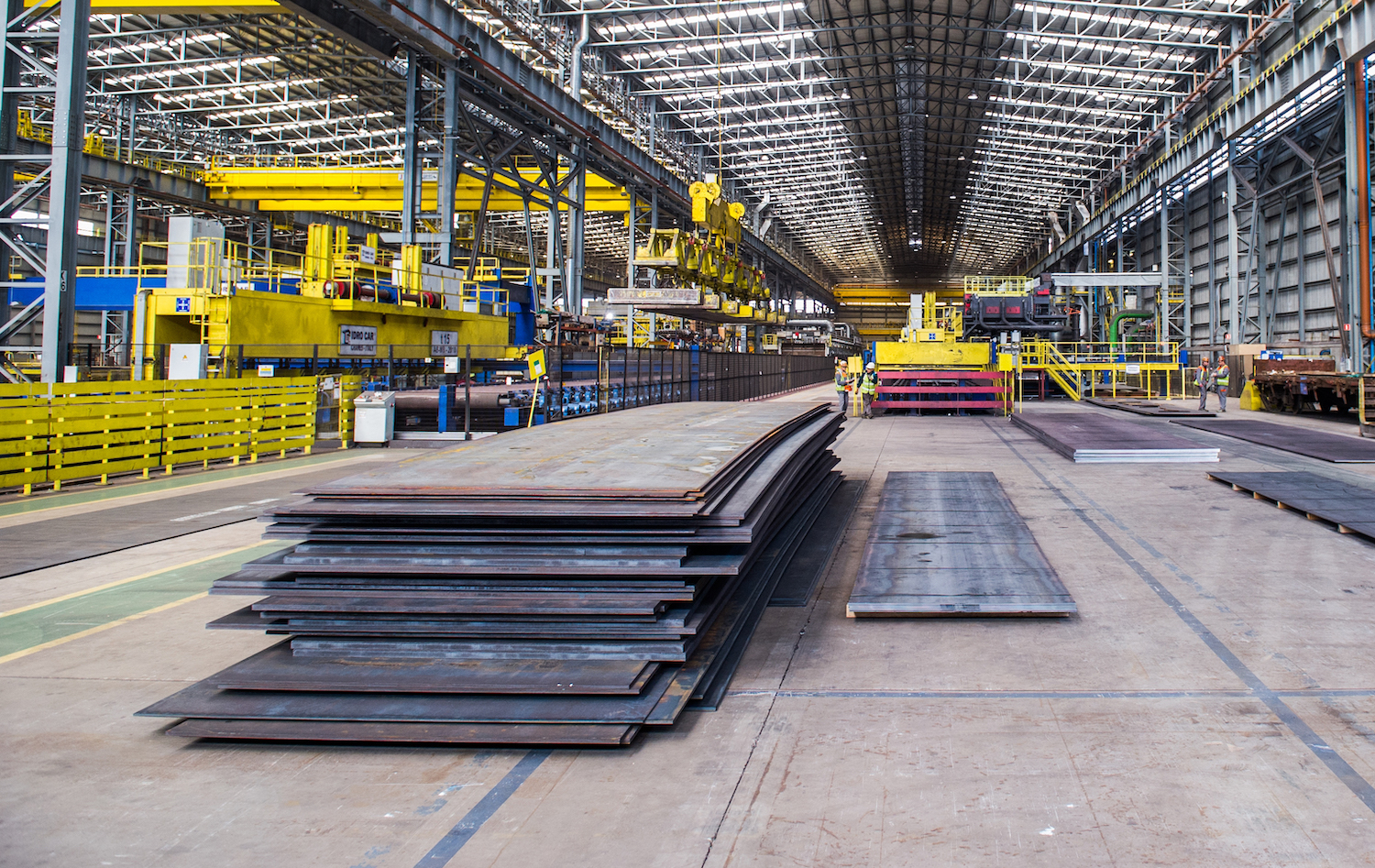
North European plate prices are rapidly catching up to hot-rolled coil prices, with some sources expecting them to surpass HRC by year-end, reinstating the usual premium plate prices have held over HRC. Demand has cooled down slightly over the last few days but market participants were optimistic the positive pricing trend would continue, sources told S&P Global Platts June 4.
While HRC prices saw insurmountable levels, plate prices climbed in the background as slab prices sustained steep prices and plate supply dwindled due to continuous destocking in Germany.
A European mill source said the plate market is healthy and that prices were moving faster than HRC due to scarce availability.
“[Plate] prices are well above [Eur1000/mt ex-works Ruhr] and catching up to HRC rapidly,” the mill source said. “Lead times are already for October minimum for new orders from mills.”
The same source said he expected North European prices to near Eur1100/mt ex-works Ruhr.
In the Italian market, prices were catching up to Ruhr, with offers heard at Eur1050/mt ex-works, according to one mill source.
“Main German players are struggling to offer prices because their lead times are so long so they would rather not offer – it opens up the market for us in Italy,” the mill source said. “The pace is catching up, if someone is in need of material, any price will work.”
The same mill source did notice that demand was starting to lag, as was evident in the coils market.
“The demand for volume is stalling, some buyers are waiting to see where this is going, whether it’s a real or new push. The reality is that slab prices are not going downward, so no reason for prices to change,” the mill source said.
Despite the lag in demand, producers remain optimistic that if HRC prices remain where they are, and government incentives begin to kick in, the market will stay buoyant.
“Recovery plans from all over Europe haven’t materialized yet but when they do, many infrastructure projects will start up, and these projects will take capacity out of the market,” said the same mill source.
Italian plate producers have been wrapping up July orders and looking to offer Eur50/mt more for August delivery, whereas German producers were offering as late as November for new production.
— Amanda Flint

BIR: EU regulation revision could threaten scrap exports
The European Commission is considering changes to EU waste shipment regulations that could prove to be of “tremendous importance” and potentially highly damaging to ferrous scrap export flows. So said Olivier François of Galloo at the Bureau of International Recycling (BIR)’s World Recycling Convention on Tuesday.
One of the priorities established for the revision of the regulations is to restrict exports of materials designated as “waste”, including many of the high-specification materials produced by the recycling industry. Europe generates surpluses of “quality secondary raw materials” that could not be absorbed by its domestic market and so “we don’t think waste shipments should be restricted even further”, said Julia Blees, Senior Policy Officer at the European Recycling Industries’ Confederation. François agreed that such a move could lead to “tension” given that “many developing countries need the raw material”.
According to both speakers, the key phrase in the new Commission proposals is that users in importing countries should be operating under “broadly equivalent conditions” to those applying to consumers in the EU. This is in terms of both human health and environmental protection.
Aurelio Braconi, Senior Manager – Circular Economy and Raw Materials at European steel association Eurofer described the changes likely on account of the European Green Deal as a legislative “tsunami”. He expressed concern at the potential for a growing gap between practices and standards in Europe compared to the rest of the world. It is important, he said, that countries importing scrap applied “equivalent conditions” in terms of, for example, environmentally sound management.
Describing scrap as “an essential raw material”, Braconi observed: “We want to use more ferrous scrap, to recycle more ferrous scrap into new steel and new products, to increase our resource efficiency.” Many producers were looking at ways to “enlarge their product portfolio coming from scrap”. But to achieve this, it was a matter not just of supply and demand but also of quality, he added at the event attended by Kallanish.
BIR Trade & Environment Director Ross Bartley meanwhile explained BIR would be surveying relevant companies later this year. This will be to assess the cost burden of installing and running systems to detect radioactive metals inadvertently included in consignments arriving at scrap yards. There has to be an appreciation, he said, that the recycling industry was “doing a good job for society” by taking on costs in respect of radioactive sources lost or misplaced mostly by other industries.
Burcak Alpman Turkey

European tight steel supply seen continuing through year-end: Tata
The European steel supply shortfall will likely continue until next year, Chris Wooffindin, manager of price policy and forecasting at Tata Steel Europe, said during a webinar organized by Eurometal on June 3.
The imbalance between demand and supply has been the leitmotif of 2021 and it is likely to continue until the end of this year. Domestic mills have restarted around 95% of their pre-COVID output but as demand was stronger than expected this capacity is struggling to satisfy it.
Wooffindin underlined how a portion of the restarted capacity is currently servicing previously agreed contracts and how mills are struggling to keep up with such strong demand with their bookings nearly full for most of this year “which is very strange to say in the middle of year, a situation that I have never seen before.”
Due to unbalanced demand and supply prices in Europe reached their highest historical level, climbing from the end of last year by Eur665/mt for hot-rolled coil to a record high Eur1,140/mt base ex-works Ruhr in June, according to Platts data. US prices are even higher due to short supply and not expected to ease any time soon.
According to the Tata Europe executive, while Chinese prices are easing a little, US prices continue to be strong and this is supporting global prices, making the US market at the same time very attractive, even with that country’s Section 232 tariffs.
Although the tightness in the European market is expected to ease eventually, some issues remain unresolved. The big uncertainty is linked to Liberty Steel’s finances as well as the political issues of Acciairie d’Italia, the former Ilva, which could lead to more market supply problems if these two players decrease production even further or if some other European steelmakers have some unplanned outages.
Among other factors that could impact future price levels apart from the market imbalance is inflation pressure as all prices have gone up – not just for steel.
— Annalisa Villa

US HRC demand stays strong despite higher prices
US hot-rolled coil prices extended gains on June 3 amid strong demand from end-users despite record-high prices.
The daily Platts TSI US HRC index was up $2 at $1,634/st on an ex-works Indiana basis.
“Business is good if we have the stock but we are not quoting more due to low inventory,” a Midwest service center source said. He added that his inventory levels were 40% below where it should currently be.
“Prices are rising but demand has not taken a hit from that,” another service center source said. “We are trying to get some spot availability from mills but it is really tough to find tons and whatever availability opens up, gets taken so quickly too.”
The market was at $1,820-$1,880/st and an integrated mill was at the upper-end of the range, according to the second service center source. He anticipated no change in pricing environment in the short term as most mills have not been more flexible in their contractual supplies either.
With struggles in finding availability from domestic mills, the second service center source placed an order at $1,560/st delivered Houston from a Mexican mill with a late-September delivery time.
A third service center source also reported a transaction from that mill at $1,550/st delivered Houston with an October delivery time.
The combined Platts TSI price index uses a volume — weighted-average calculation — according to TSI’s standard, to determine value on an ex-works Indiana basis.
— Ali Oktay
EU HRC softens as buyers lay low, market awaits safeguard decision
There was less panic among buyers in the European HRC market June 3, with sell-side sources noting an apparent relaxation in inquiries as more grow cautious with their decision making and look to import material to quell the effects of the domestic shortage, sources told S&P Global Platts.
Mills were also heard to have hastened their delivery of backlogged orders, in turn alleviating some of the supply and demand pressure.
“Backlogs are suddenly gone and mills are running out. It gets better every week,” a Benelux buyer said. “They are catching up now and I’m struggling with transport [logistics] because all of a sudden, material is ready!”
Over the last few days, some have pointed towards an evident lag in demand from the automotive sector, with its production largely hindered by a shortage of semiconductors.
“Automotive have less demand, and now there is material available for other customers,” the same buyer source said.
Meanwhile, a European mill source said demand was slowing down from the buy-side, but producers were not necessarily desperate to sell either due to tepid automotive demand.
“For three weeks we had serious problems – automotive needed more material. Then they needed slightly less because of semiconductors,” the mill source said, though he warned this would not solve the supply-demand imbalance in Europe.
“It has only diminished the problem; it does not solve it. When we once had a lack of 1,300 mt to sell, [today] it is now only 1,200 mt,” the mill source said.
Pricing volatility in China was also having an impact on market uncertainty, with Chinese prices increasing just days after a slight dip.
“China is showing its real face, they just manipulate the prices, curbing inflation,” a second European mill source said. “demand [in Europe] is still good and pricing is stable.”
In Italy, a trader said it was normal for the market to expect 2-3 weeks of weakness after such high increases but emphasized that he did not expect a pricing downturn so long as material remained scarce.
Italian mill offers were heard between Eur1,120-1,180/mt ex-works Italy, with many producers drastically slashing previously agreed volumes to customers.
“A customer of mine begged [Italian mill] for some 4,000 mt cold-rolled coil and hot-dipped galvanized, and [mill] kept him waiting 2-3 weeks only to confirm October delivery for just 400 mt,” the trader said.
Even as more import offers circulate, the same trader said people were still lying low until a decision about import safeguards was confirmed by the European Commission July 1.
“Protectionism is not going anywhere. They will keep safeguards as they are, and increase them by 5% which is nothing,” he said. “the main problem are the duties on HRC material from Iran, Russia, Ukraine and China. These are bif producers of HRC with availability at cheaper prices, but they still have strong duties.”
However, appetite for imports is still there, with the second European mill source confirming there were currently volumes in the port of Antwerp waiting for the new quota period to commence.
— Amanda Flint