


Indonesia to become No.2 stainless steel producer
Driven by huge capacities commissioned by Chinese companies, Indonesia is about to overtake India as the second largest stainless steel producer in the world in 2021, according to projections presented at the International Stainless Steel Forum (ISSF) annual conference held virtually last week, Kallanish notes.
Indonesia, which presently ranks fourth in global stainless steel production, will produce 4.2 million tonnes this year, up 75% year-on-year, the Indian Stainless Steel Development Association (ISSDA) said. On the other hand, ISSDA predicts that India’s output is expected to reach 3.5mt this year, an increase of 9.4% y-o-y following 2020’s 17.9% y-o-y decrease.
Indonesian surplus production may be targeted at Indian markets, ISSDA president KK Pahuja said.
“Stainless steel capacity of 5.5 MT is ready in Indonesia. On the other hand, the Chinese government has withdrawn export tax rebate in May 2021, which will restrict the export of stainless steel from China. As a result, exports from China may come down, while exports from the same Chinese companies in Indonesia will rise significantly. We estimate that import intensity from Indonesia will nearly double,”he explained.
By Kallanish Team


Supply issues in EU flats market to continue
The supply issues affecting the European flat steel market are expected to continue until the end of the current year, only to ease slightly going into 2022, Kallanish learns during the latest webinar organised by EUROMETAL, the European distributors association.
Chirs Wooffindin, manager for price policies and forecasting at Tata Steel Europe, notes that in Europe domestic capacity is now the biggest issue – more so than imports. He said that according to his calculation 90% of the capacities idled during the peak of the pandemic are now fully back on stream, but they are still facing delays in supply due to the need to fullfill delayed long-term contracts. Other elements limiting supply have been severe weather conditions, as well the need to catch up with some delayed maintainance works.
While the tightness of the supply is expected to ease, Wooffindin believes it will take time and the situation should improve significantly only in 2022.
The issues with supply are set to continue support prices in the market, Kallanish understands. Many believe the market clearly needs to correct from the record price levels reached, but the correction is not expected to be as sharp as the one seen back in 2008 because the tight supply will continue support prices even if the global market sentiment turns negative.
Going forward, Wooffindin believes one element that could be central in the steel market will be the concern for inflationary pressure on all raw material prices in Europe and elsewhere.
“At some point inflation will become a problem,” he explains, adding that authorities will then need to address the point.
Emanuele Norsa Italy
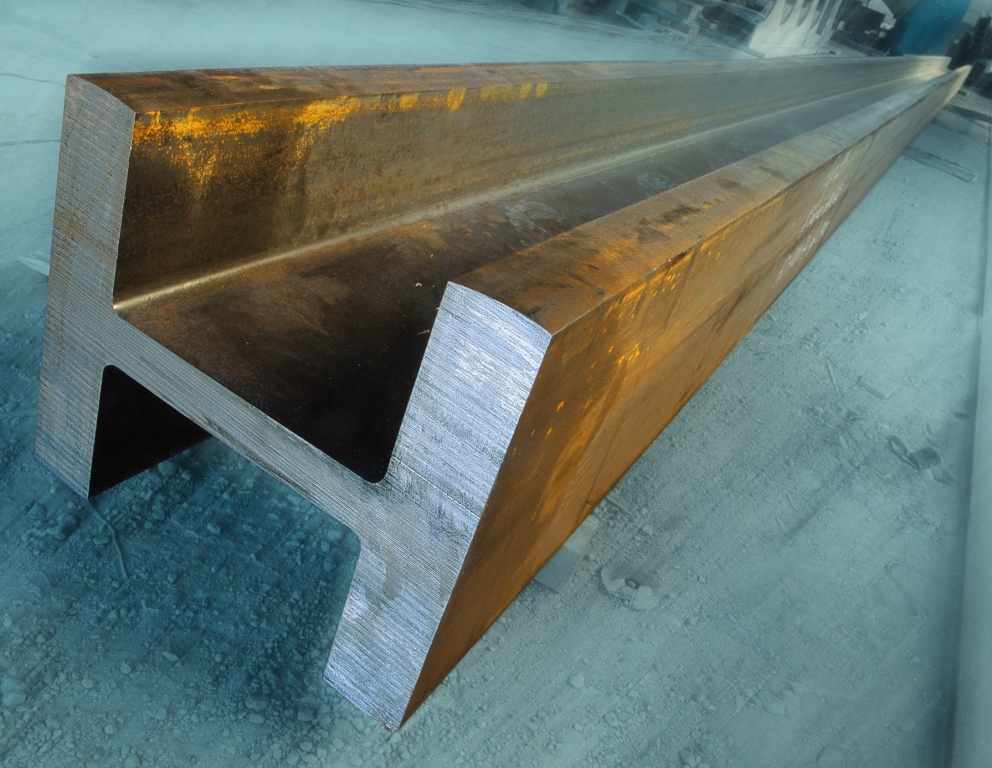
Italian sections prices jump
Italian beam producers are seeking €40/tonne ($48/t) hikes compared to May, due to the current strong demand and increasing values of scrap and all steel products in the country, Kallanish learns from market sources.
Producers are now asking for €520/t base ex-works for the first category of beams. At the beginning of May they were asking €380/t base ex-works. They are said to have full order books and lengthening lead times.
Transactions are currently at €480-520/t base ex-works for the first category of beams but sellers say they are consolidating the high point of the range. Including €385/t average size extras, values are reaching €865-900/t ex-works, the highest levels seen in the past decade. Prices increase by €20/t for each subsequent category, sources suggest. According to sellers, next week a further increase is expected to be implemented on sections.
Meanwhile, Italian merchant bar mills are also increasing asking prices to €450-470/t ex-works on strong export demand (see Kallanish 31 May). This week’s domestic contracts are at €820-880/t ex-works including €420/t size extras, sources say.
Natalia Capra France
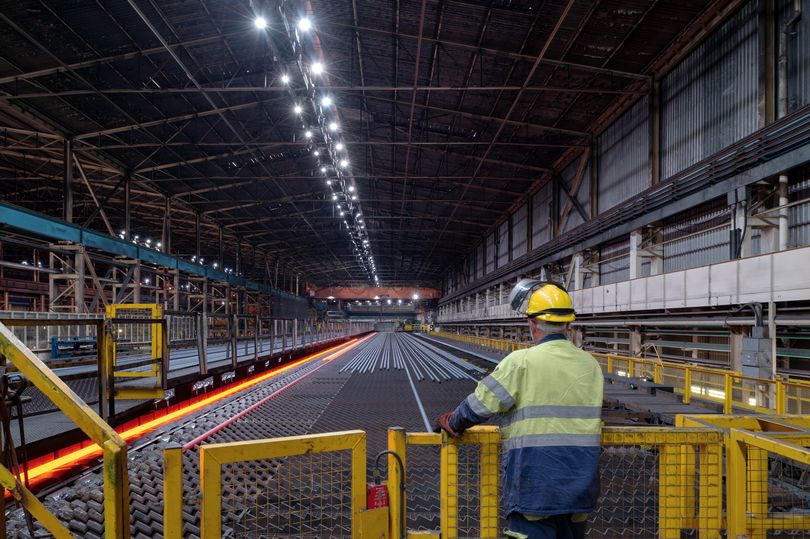
Plusieurs candidats à la reprise de l’usine Liberty Steel de Hayange
Le dépôt des candidatures s’est terminé ce mercredi 2 juin pour les candidats à la reprise de l’usine – spécialisée dans le rail – de Hayange (Moselle). Une douzaine d’offres sont arrivées sur la table.
La chute annoncée du groupe Liberty Steel, propriété du magnat anglo-indien Sanjeev Gupta, a précipité la mise en vente de plusieurs sites de production lui appartenant, dont celui de l’usine de rails de Hayange en Moselle. Cette dernière lamine notamment les rails du TGV.
Selon la presse française, les repreneurs se pressent pour visiter les installations. À commencer par ArcelorMittal et Saarstahl, qui avaient été éconduits l’été dernier, quand l’État français avait privilégié Liberty Steel.
La direction française du site mosellan a confirmé «une douzaine d’offres, dont huit significatives». Parmi elles, on note deux groupes sidérurgiques italiens, dont Beltrame, et l’espagnol Sidenor. Ce mercredi 2 juin était la date limite pour le dépôt de candidatures.
Le changement d’actionnaire sur le site de Hayange doit avoir lieu en juillet prochain.
Quant à l’usine dudelangeoise de Liberty Steel, elle tourne toujours au ralenti et suscite forcément des inquiétudes. Un piquet de protestation devant celle-ci est d’ailleurs prévu ce vendredi 4 juin par l’OGBL et le LCGB .
Écrit par Julien Carette
Publié 03.06.2021

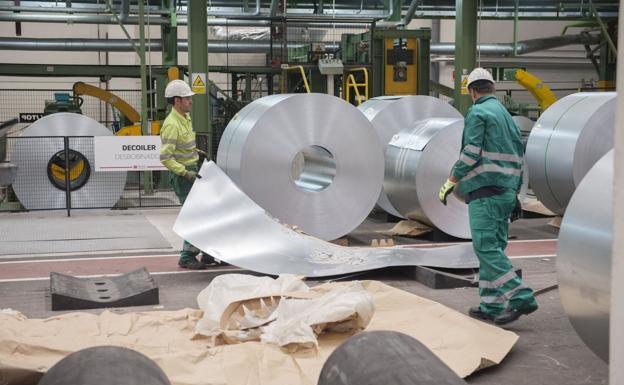
Stainless market to return to 2019 levels, BIR
Stainless steel production in Europe, the Middle East and Asia could well return to 2019 levels this year. This however is not predicted to happen in the USA, Japan and India, Nornickel analyst Alina Racu said at the Bureau of International Recycling (BIR) convention this week attended by Kallanish.
Racu also sees a swift post-Covid-19-pandemic recovery in the global stainless steel market. The 2.4% reduction in global stainless consumption in 2020 “was actually smaller than the declines witnessed at the time of the global financial crisis of 2008 and 2009,” Racu observed. “Steep year-on-year falls in the USA (-17%), Europe (-9%) and Japan (-6%) were largely counterbalanced by consumption growth of more than 6% in China on the back of its government’s metals-intensive stimulus plan.”
Olivier Masson, senior analyst at Roskill, said at the meeting: “If China were to put a cost” on mills’ carbon emissions and on the environmental footprint of raw material production processes, this could bring greater use of scrap.” He forecasts a very small hike in scrap consumption in China because of increased nickel pig iron availability.
The stainless steel sector is forecast to remain the main driver for global nickel demand despite a surge in demand from the automotive industry for electric battery grade nickel, BIR says.
The global stainless market is currently affected by a significant shortage of stainless coil, particularly cold rolled coil for which prices are going over the level of €3,000/tonne ($3,656) (see separate story).
Natalia Capra France

EU service centre, distribution shipments rebound in March
EU-27 plus UK service centre (SSC) shipments rose 2.8% on-year in the first quarter, but shipments at multi-product and proximity steel stockholding distributors were down 0.2%, according to European distributors’ association EUROMETAL.
Strip Mill Products shipments surged 21.7% on-year in March after falling 1.7% on-year in February, Kallanish notes.
When expressed in days of shipments, stocks at EU SSC reached 57 days in March versus 76 days in March 2020. For March 2021, the index of stock volumes dropped to 83, compared with 91 in March 2020. The index is based on 100 as the average for 2018.
Multi-product and proximity steel stockholding distributors saw lower shipments for all long steel in Q1 but higher strip mill product, tubular product and stainless steel deliveries.
Shipments in March rose 8.6% on-year, with only rebar seeing a decline.
When expressed in days of shipments, stock volumes levelled in March at 54 days of shipments, compared to 65 days in March 2020. Stock volumes index fell to 76 in March from 84 a year earlier, with the 100 base as the average for 2018.
Adam Smith Germany

Scrap trade inches down, US overtakes Korea: BIR
Global external steel scrap trading – including internal EU-28 trade – amounted to 99.3 million tonnes in 2020, down only 1.3% on-year despite the Covid-19 impact on major scrap-using regions, the Bureau of International Recycling (BIR) points out.
The EU-28 remained the world’s leading steel scrap exporter, growing its outbound shipments in 2020 by 4% on-year to 22.63 million tonnes, the main buyer being Turkey with 14.06mt, up 17.5%. Shipments also grew to Pakistan by 18%, but fell to Egypt and India by 3.8% and 33% respectively. The largest EU-28 steel scrap exporter was the UK with 5.66mt.
The US reduced scrap exports by 4.6% last year to 16.87mt, despite increases to Turkey, Mexico, Malaysia and Bangladesh. Vietnam reduced intake considerably, BIR says in a note seen by Kallanish.
Japan, Russia and Canada also grew scrap exports in 2020 by 23%, 15% and 3% respectively to 9.4mt, 4.7mt and 4.5mt.
Global crude steel production totalled 1.877 billion tonnes in 2020, up 0.1%, with electric arc furnace-based output down 5.7% to 493mt.
Steel scrap consumption jumped 2% in China last year to 220.3mt from 215.9mt a year earlier, underlining China’s position as the world’s largest steel scrap user. The proportion of steel scrap used in the country’s steel production was slightly lower in 2020 at 20.7%, a result of higher oxygen furnace production.
Steel scrap usage also increased in Turkey last year, by 7.8% to 30.08mt, while the country’s crude steel production climbed 6.1%. The proportion of steel scrap used in the country’s crude steel production increased to 84.1% in 2020.
Conversely, there were declines in steel scrap consumption in the EU-28, the USA, Russia, Japan and the Republic of Korea. The EU-28 recorded a steel scrap consumption drop of 10.3% to 77.54mt, while US use fell 17.6% to 50mt.
Turkey remained the world’s largest scrap importer, growing intake by 19% to 22.44mt. It was followed by India, despite a decline in intake of 23.7% to 5.38mt. The US overtook Korea as third-largest importer, increasing intake 5.7% in 2020 to 4.51mt.
Adam Smith Germany

Steel shipments from EU distributors 2.8% up January-March: EUROMETAL
Steel shipments from the EU 27+ UK flat steel service centers rose 2.8% year on year in first three months of 2021, the EUROMETAL steel stockholders and distributors association said June 2.
EU multi-product & proximity steel stockholding distribution, mainly long products, were down 0.2%.
Flat products shipments in March rose 21.7%, on the year and were down 17% from February.
The March 2021 index of stocks volumes dropped to 83 from 91 in March 2020, as the pandemic had not yet hit year-ago month volumes. Stocks at EU steel service centers reached 57 days in March 2021, compared to 76 days in March 2020, EUROMETAL said
Demand for flat products in Europe have risen since end-2020, with prices climbing Eur665/mt to a record high Eur1,140/mt base ex-works Ruhr in June.
EU Multi-Product & Proximity Steel Stockholding Distribution
In the first three months of 2021, EU27+ UK Multi-Product & Proximity Steel Stockholding Distribution registered lower shipments for all long products and higher shipments for flat mill products, tubular and stainless steel products.
In March, “total steel products” shipments increased year on year by 8.6%. Only rebar saw a negative trend, as the first three months of the year are typically not strong due to its use in seasonal construction.
Stock volumes index of EU27+ UK Multi-Product & Proximity Steel Stockholding Distribution registered at 76 in March, down from 84 in the year-ago month (average 2018 = Index 100).
Stock volumes in March saw 54 days of shipments, compared with 65 days in March 2020.
— Annalisa Villa

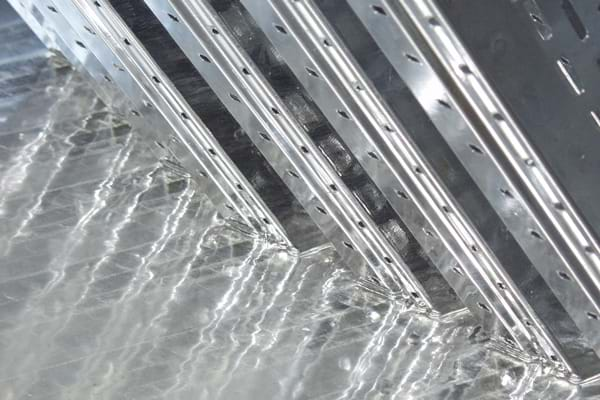
European HDG demand softens as buyers assess pricing viability
European hot-dipped galvanized prices were heard higher in the week ending June 2 as steel mills looked to adapt their pricing strategies to reflect those of market-leading mill ArcelorMittal, having raised HDG and CRC offer prices by Eur20/mt to Eur1,320/mt delivered across Europe May 28.
The chronic shortage of semiconductors seen over the last few months has also resulted in lower automotive demand, with more steel availability for other buyers, sources told S&P Global Platts.
In the Benelux area, some HDG offers were heard as high as Eur1,400/mt ex-works Ruhr, with transactions heard by one service center source at Eur1,350/mt ex-works Ruhr.
“It’s not the price that matters, it’s the delivery times and the possibility of getting material,” the same source said. “It’s difficult to see the prices these days.”
The source also noted a softening in demand as buyers take a wait-and-see approach to determine the viability of ever-changing prices in a heated European market now slowing ahead of the summer slump.
“Most customers know that no one has any material, so they are waiting for projects to start,” the source said. “We hear from other service centers that they are waiting a little bit [to buy], and this says something. If mills receive less orders, I think they will decrease prices — I think. Maybe not this year, but from the beginning of next year, definitely.”
In the Italian market, the supply situation for HDG and CRC was also tight, with a service center source painting a bleak outlook for production given the partial closure of the Liberty Magona steel plant.
“I do expect significant tension on galvanized steel,” the source said.
Mills were heard to be offering at Eur1,285/mt ex-works Italy for CRC, and Eur1,295/mt for HDG, with some said to be asking for even more at Eur1,320-1,325/mt for smaller quantities.
— Amanda Flint
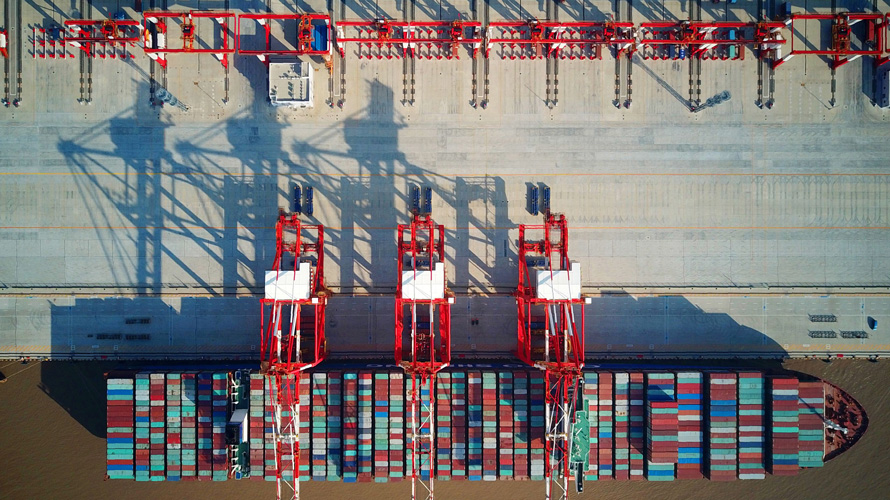
BIR: Container issues unlikely to ease in 2021
The Bureau of International Recycling (BIR) expects current issues with container shipments to remain until the end of 2021.
The market needs to prepare for more challenging times, as container production is insufficient, resulting in a shortfall of a several thousand containers, said participants at BIR’s annual convention on Tuesday attended by Kallanish.
On the other hand, China’s policy shift is expected to imply major repercussions for global steel scrap flows.
Objectives enshrined in China’s 14th Five-Year Plan include cutting domestic crude steel production capacity and boosting the use of scrap-intensive electric arc furnaces over the more traditional blast furnace route. China’s policy shift implies reducing its reliance on iron ore and increasing its consumption of scrap and billet imports.
Japan exported 31,496 tonnes of steel scrap to China in March alone, equivalent to more than 65% of total imports. One of the attractions was that Japan was able to supply sought-after plate and structural (P&S) scrap in relatively small tonnages suitable for trial cargoes.
A relatively short sailing time was another reason why Japan, and also South Korea, emerged as leading suppliers to the Chinese market, explained Jiak Lim, Senior Trader at Singapore-based Zhejiang Metals and Materials. The choice of Japan was also influenced by the fact that many of its large companies had established offices in China. He advised prospective exporters to China to focus initially on P&S and shredded scrap in 20-foot containers for ease of conforming to the country’s import specification requirements.
China’s policies aimed at reducing carbon emissions “will definitely drive up prices globally for scrap”, he concluded.
Tom Knippel of SA Recycling in the USA pointed to a previously unseen “decoupling” of new steel and scrap prices, adding that the former were “not sustainable in the long term”.
Knippel and Denis Reuter of TSR Recycling in Germany agreed the USA and Europe were witnessing significantly lower generation of prime scrap, partly as a result of production issues in the automotive sector.
Reuter also acknowledged concerns over proposed changes to EU shipment regulations that would potentially limit exports of materials designated as “waste” only to those facilities which operated in accordance with EU standards (see separate story). He insisted: “I do not think it will be realistic that we will see a total ban on exports from the EU.”
The root of the problem, argued Schnitzer, was that steel scrap fell under the “waste” definition in Europe when in fact it deserved proper credit for being a “recycled raw material”.
Burcak Alpman Turkey