


EU stainless coil short supply, high prices continue
Stainless steel coil prices in Europe are increasing again and achieving the level of €3,000/tonne ($3,673) delivered for cold rolled coil, market participants tell Kallanish.
Short supply and high prices have continued this month as stocks at flat steel distributors are said to be low and deliveries for coil and coil derivatives stretch in some cases to the first quarter of 2022. Demand for coil and flats is reported strong in all European countries. Despite the steady increases on coil, all buyers continue their purchasing as they are in need of material.
Coil offers from Asian countries have come down and the few import prices available are at European levels. While Chinese sellers are not quoting for Europe, Indian material is offered in very small quantities, traders confirm.
The main European mills are quoting stainless hot and cold rolled coil for December delivery. Prices have increased by a further €100/t on average compared to the beginning of May. CRC now starts at €2,980/t and may reach €3,000/t delivered, while HRC is at €2,900/t delivered depending on tonnage, sources say.
Values for coil and sheet are forecast to increase again in June on the material shortage. Demand for European coil remains strong from service centres and end-users, sources say.
Natalia Capra France


Marcegaglia, other investors join H2 Green Steel project
H2 Green Steel (H2GS) has secured $105 million of initial funding to push forward its plan for a greenfield hydrogen-based steelmaking plant in Boden-Luleå, northern Sweden, Kallanish notes. One new investor to the party is Italy’s Marcegaglia.
“The strong investor interest and high-quality investor base demonstrate a firm belief in H2GS and the market potential for green steel. New investors include a broad spectrum of companies and individuals ranging from strategic off-takers, technical partners and long-term investors focusing on green impact, sustainability and industry 4.0,” H2GS observes.
Among the investors are companies already in the steel business, such as steel supplier Marcegaglia and recycler Stena. Other investors include Mercedes Benz, Kingspan, Scania and Exor.
Italian re-roller Marcegaglia confirms it will also become an industrial partner for the plant.
H2GS construction is expected to start by mid-2022, with 2.5 million tonnes/year of hot and cold rolled coil capacity to be reached by 2026. Production will begin in 2024, with a capacity of 5m t/y targeted by 2030 (see Kallanish passim).
H2GS, to be headed by current Scania chief executive Henrik Henriksson, will integrate a giga-scale green hydrogen plant into the steelworks, which will also produce galv. Power will be sourced from hydroelectric power plants in the Luleå area, as well as wind farms.
Marcegaglia intends to buy 5% of the green steel coil production and will re-roll 5% of H2GS output as the steelmaker intends to reach southern and Eastern European markets. Marcegaglia will re-roll a total of 250,000 tonnes in 2024 and will double this figure to 500,000t when H2GS’s production reaches 5m t/y.
Natalia Capra France , Emanuele Norsa Italy
UK to review measures against US metals tariffs as trade talks progress
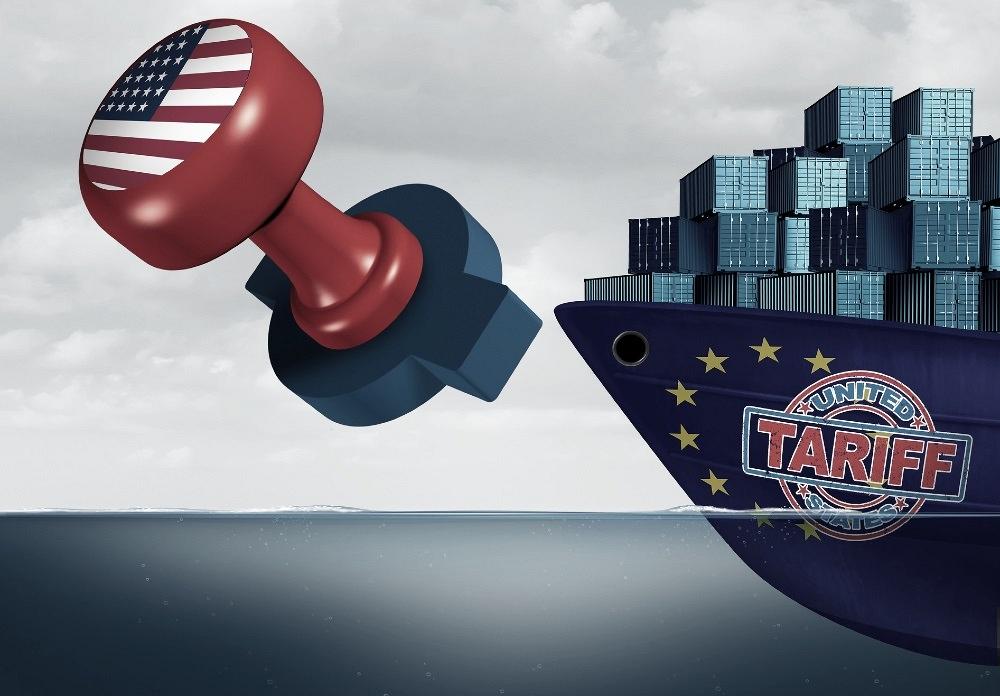
The UK is launching a review of its trade policies in place against the US’ steel and aluminum tariffs, but any new measures could be avoided if the US repeals its tariffs following recent bilateral discussions, the Department for International Trade said May 24.
“A public consultation has opened aimed at ensuring any future tariffs applied in response to the US’ unjustified Section 232 duties on aluminum and steel imports are shaped to UK interests,” the DIT said in a statement.
UK International Trade Secretary Liz Truss said the UK is now able to tailor new protective trade policies to its own economy and industries after splitting from the EU.
“The UK will do whatever is necessary to protect our steel industry against illegal tariffs that could undermine British industry and damage our businesses,” Truss said in the statement.
However, following “positive discussions” with the US about trade tensions, Truss said the UK is pressing the US to repeal its Section 232 tariffs, thus removing the UK’s need for further trade action.
“Ultimately, we want to deescalate these disputes so we can move forward and work closely with the US on issues like WTO reform and tackling unfair trade practices by non-market economies,” she said.
The DIT said the UK prefers the full removal of the US’ duties and any further retaliatory measures to progress a more constructive trading relationship.
“The ongoing tariffs are unjustified under WTO rules and unfairly target UK steel and aluminum manufacturers and should be removed,” the department said. “Any claim that UK steel and aluminum imports harm US national security is false and without foundation.”
The UK currently has duties in place on products such as whiskey, motorcycles and tobacco in response to US tariffs.
The six-week trade review and consultation will consider input from UK businesses, industry leaders and other various stakeholders, the DIT said.
The DIT’s review follows a joint announcement May 17 from US and EU trade officials that pledged a cooperative approach from the respective governments to address excess, state-subsidized capacity in the steel and aluminum industry.
As talks between the US and EU continue, the two sides agreed to avoid any changes to trade measures that would negatively affect bilateral trade, according to the announcement.
In separate statements, the United Steelworkers and American Iron and Steel Institute speculated that such talks with the EU could pave the way for the US to remove its steel tariffs. However, both groups strongly urged President Joe Biden to leave the duties intact.
— Nick Lazzaro

South America demand boosts Turkey sections exports, Peru top destination
Turkish mills’ sections exports in the first quarter totaled 441,600 mt, relatively flat year on year, as market diversification and strong demand, especially from South America and the Middle East North Africa (MENA) region, supported mills’ export volumes in that period.
According to monthly Turkish Statistical Institute (TUIK) data, Peru became the largest importer of Turkish sections in Q1 at 35,600 mt, around fourfold higher on year.
Turkish mills’ sections exports to Morocco totaled 33,300 mt, 26% higher on year, while Turkish mills’ also exported 22,500 mt of sections to Egypt in the three-month period, sharply lower than 43,900 mt exported in the same period the previous year.
Argentina bought 21,600 mt of Turkish sections in Q1 but no notable sections cargo was shipped to that country in Q1 2020, while exports to Colombia totaled 19,200 mt, up 26% on year.
Turkish mills also exported 19,100 mt of sections to the UK in Q1, 10,000 mt higher on year.
Turkey’s section exports to Israel totaled 16,300 mt in Q1, down 11% on year, while exports to Romania totaled 14,600 mt, relatively flat on year.
Turkish mills’ sections exports to the US rose more than double on year to 14,100 mt in Q1, while the country’s other sections export markets in that period were: Malaysia (12,800 mt), Greece (11,400 mt) and UAE (11,300 mt), the latest data showed.
— Cenk Can

Hot-rolled crests $1,600/st in US
US hot-rolled prices appear to have hit yet another historic milestone, topping $1,600/short ton, Kallanish reports.
Market concern last week about a China-led pullback appears unfounded, says a source at one top-tier domestic mill.
“The pullback in China seems only related to China, and the sustainability of the pullback is something I question as they never seem to make less steel, like they say they are going to,” he says.
The source notes that hot-rolled was sold in the US for $1,600-1,620/st last week, with the bulk of transactions being north of 1,000 st.
Cold-rolled and coated, moreover, were sold from $1,800-1,830/st.
A Midwest buyer confirms that he now cannot source hot-rolled for under $1,600/st, while a West Coast buyer adds that lingering quotas on South Korea are insulating the US from any Chinese market shocks.
“Obviously, China cannot ship direct, but they could ship into South Korea,” he says. “But the strict quota should prevent South Korea from dumping.”
Kallanish raised its hot-rolled assessment Monday to $1,600-1,620/st, with cold-rolled likewise moving up to $1,800-1,820/st. All prices are ex-works, domestic mill.
Dan Hilliard USA
Meeting on inflation hits steel futures
Chinese rebar and steel futures prices on Monday were hit by a joint meeting held by five national departments last Sunday. The meeting mentioned the upcoming regulation of spot and futures markets and sent sentiment spiralling downwards, Kallanish notes.
On the Shanghai Futures Exchange the October rebar contract closed CNY 138/tonne lower than the previous Friday at CNY 4,974/t ($773/t), while the same contract for HRC closed down CNY 177/t at CNY 5,316/t.
The Sunday meeting was composed of the National Development and Reform Commission, Ministry of Industry and Information Technology, State-owned Assets Supervision and Administration Commission, State Administration for Market Regulation, and Securities Regulatory Commission. In addition to mentioning regulation, they talked with some powerful steelmakers and industry associations and issued requirements related to actions that could support higher prices.
The meeting stated that excessive speculation in the market had disrupted normal production and sales, and pushed up prices. Although China has yet to detail actions it will take to control inflation, speculators are fleeing commodity futures in expectation of a crackdown.
By Kallanish Team
ISTA disappointed at UK safeguard proposal review
ISTA, the International Steel Trade Association with headquarters in the UK, said it is “disappointed” at the latest review of safeguard measures published by the local UK authorities, Kallanish reports.
According to the association the decisions over the future of the measures “do not go far enough to allow the flexibility of supply and demand needed in today’s market in order to support UK consumer industries and economic recovery. In particular, the restrictions placed on reinforcing bars and structural hollow sections would actually hamper that recovery.”
According to ISTA the decision to maintain the 25% duty for imports beyond quotas is also wrong, because it just carries forward the level imposed three years ago without a further assessment of the current situation.
The association is set to press the UK authorities to include in the measures a “shipping clause” to protect those orders made at the beginning of the year that are planned to be delivered in Q3. “It can take five months to deliver an overseas contract to ensure a smooth supply to the UK customer; we (and our customers, and their customers) will be given less than one month’s notice of any applicable quota or safeguarding duty unless a shipping clause applies,” ISTA notice.
“Cost-efficient producers are enjoying record margins at the expense of the downstream industries and do not need this level of protection. However, as ISTA doubts that TRID will be prepared to drop restrictions completely, it proposes that quotas are significantly increased, especially where the quotas have been fixed at such a low level that they will simply not get used at all due to the risk of incurring the 25% penalty,” the association concluded.
After the formal proposal from UK authorities on safeguard measures, the market is now awaiting a decision from the European Commission on the same issue.
Emanuele Norsa Italy

Swiss Steel gets new big stakeholder
The transfer of 10% in Swiss Steel by the main shareholder to a new investor on Friday was hailed by the group as a “significant change in the shareholder structure,” Kallanish reports.
“Swiss Steel Holding AG has been informed that BigPoint Holding AG has sold 306,000,000 shares ( …) to PCS Holding AG,” the maker of special long products wrote in a very brief statement. PCS is the investment vehicle of Swiss Entrepreneur Peter Spuhler, main owner of trains maker company Stadler Rail.
The announcement was preceded by the news that Liwet Holding had failed with an appeal to block a capital increase at the group. The investment vehicle of Russian billionaire Viktor Vekselberg had opposed the move, which was instigated by Martin Haefner, the man behind BigPoint (see Kallanish passim).
In an interpretation of the latest development, Swiss business daily Handelszeitung criticises mistakes by the group’s management and expresses belief that the new owner could bring some movement going forward. Among other things, the paper points out that an intended sale of Ascometal would have been a “bad idea,” given that the French unit returned to profit in the first quarter.
The author notes that Ascometal was originally acquired to facilitate a reshuffle of activities with Deutsche Edelstahlwerke, which suffers from high costs. He speculates that in the long run, one of the four German mills could be closed, with production moved to Ascometal.
Christian Koehl Germany
Liberty Steel cherche à vendre ses sites français
Liberty Steel cherche un repreneur pour ses sites d’Ascoval et de Hayange, en France. Au Luxembourg, la situation est toujours incertaine.
Voici quelques jours, Sanjeev Gupta, le patron de GFG Alliance, a confirmé à la presse française avoir mandaté la banque Rothschild pour la vente de deux sites de production de Liberty Steel, à savoir Ascoval, situé à Saint-Saulve (Nord), et l’usine de rails de Hayange (Moselle).
La maison mère de Liberty Steel est en proie à des difficultés financières après la faillite de Greensill, le principal créancier du groupe sidérurgique. Depuis, Sanjeev Gupta et GFG Alliance sont à la recherche de liquidités afin de faire fonctionner l’ensemble des usines dans le secteur sidérurgique.
Dudelange tourne au ralenti
La situation du groupe sidérurgique laisse craindre le pire au Luxembourg . Pour le moment, le site de Liberty Steel à Dudelange tourne au ralenti. «Les approvisionnements sont de 5.000 tonnes, c’est 10 fois moins que la normale. Pourtant, la demande est là, et la conjoncture est bonne. Mais Liberty Steel n’a pas les liquidités pour davantage d’approvisionnements», glisse Robert Fornieri, secrétaire général adjoint de la coordination Fédération Industrie-Sidérurgie au LCGB.
Conséquence directe, l’usine ne tourne qu’avec 25 à 45% de ses effectifs. Le reste du personnel est au chômage partiel. L’avenir reste donc très incertain pour le site luxembourgeois, et les syndicats commencent doucement à perdre patience.
Seul fait rassurant: la prise en main du dossier par les équipes de Franz Fayot (LSAP). Le ministère de l’Économie étudie les solutions afin de pérenniser les activités sur le site , mais aussi sécuriser l’activité sidérurgique du pays. Liberty Steel produit à Dudelange de l’Usibor pour ArcelorMittal. La fermeture ou l’arrêt du site dudelangeois pourrait mettre plus de 300 employés sur la touche, mais également toucher ArcelorMittal. Le géant sidérurgique se refuse de commenter la situation chez son partenaire. «Nous ne commentons pas les relations contractuelles avec Liberty Steel», indique la Communication d’ArcelorMittal.
Le dossier est complexe. Le site de Dudelange a été vendu à Liberty Steel par ArcelorMittal sous la pression de la Commission européenne afin de valider le rachat d’Ilva en Italie par ArcelorMittal . Dès lors, un rachat du site de Dudelange par ArcelorMittal semble improbable. D’ailleurs, la question d’un rachat est balayée d’un revers de la main par ArcelorMittal. «Concernant la reprise de Dudelange, la question ne se pose pas, puisque la Commission européenne a fait de la cession des différents sites d’ArcelorMittal un point de son autorisation pour la reprise d’Ilva, et cela impacterait directement les conditions de concurrence en Europe», indique la Communication d’ArcelorMittal.

US HRC May-October contracts move higher on LME
The London Metal Exchange’s US hot-rolled coil forward curve registered gains for the front- to six-month contracts the week ended May 21, while the further end of the curve saw significant losses.
The front of the forward curve regained strength over the week following decreases for most contracts the week ended May 14, with the May-June spread’s contango widening from $40 the previous week to $57 as HRC prices were expected to continue rising in the near term.
Still, the remainder of the forward curve maintained a backwardated structure and continued to suggest HRC prices would move significantly lower after July. The July-October spread widened from $150 the previous week to $220.
The May contract increased by $13.50 to $1,537.50/st, settling $57.25 below the latest daily Platts HRC spot price of $1,594.75/st.
The June contract rose by $59.50 to $1,594.50/st, while the July contract ended the week $55 higher at $1,575/st. The October contracts increased by $40 to $1,355/st.
Both contracts on the further end of the curve dropped over the week amid lingering uncertainty over the long-term market outlook. The 12-month contract moved $85 lower to $1,060/st, while the 15-month contract dropped by $58.50 to $1,050/st.
The contract’s weekly trading volume totaled 1,400 st the week ended May 21, down from 4,990 st the week prior. The contract has traded a total of 616,520 st since its launch in March 2019.
Rising contract prices in the futures market were supported by ongoing firm market conditions in the physical market. As availability remained limited and continued to support HRC prices at all-time highs, more buyers reported transactions at around $1,600/st amid constrained supply options.
— Ingrid Lexova